Chinook vs Coho Salmon: Key Differences for Anglers
If you've ever spent time fishing the incredible waters of Lake Michigan here in Indiana, you know there's nothing quite like the thrill of hooking into a powerful salmon. But for many anglers, especially those new to the big lake, telling the difference between a Chinook and a Coho salmon can feel like a guessing game. It's a common frustration, especially when regulations or preferred fishing techniques vary slightly between these two fantastic sport fish. This guide is going to walk you through all the key distinctions, helping you identify, target, and appreciate both Chinook and Coho salmon with confidence.
Telling Them Apart: Key Identification Markers
When you've got a salmon on the line, and it finally comes to the net, the excitement can make it tough to focus on the details. However, there are some really clear physical traits that can help you distinguish between a Chinook and a Coho, even in the heat of the moment. Knowing these markers isn't just about curiosity; it's essential for adhering to potential regulations, and understanding what kind of fight you just experienced!
Mouth, Gums, and Teeth: The Most Reliable Clue
Hands down, the easiest and most reliable way to tell a Chinook from a Coho is to look inside its mouth. This is the first place veteran anglers check, and once you know what you're looking for, it becomes second nature.
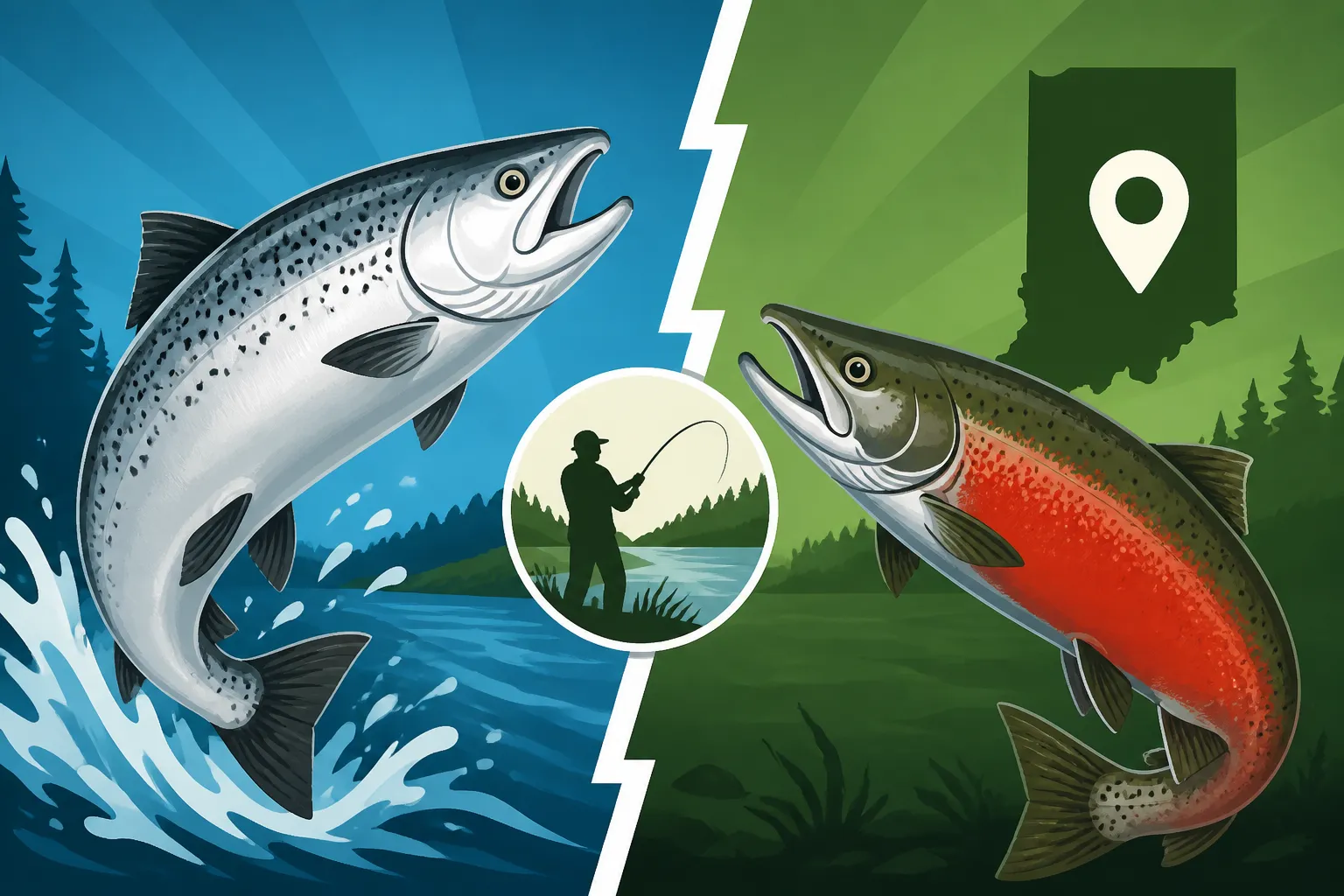
For a Chinook Salmon, often called a "King" salmon, you'll notice that the gum line along their lower jaw is entirely black. It's a solid, dark color, almost like they've been using black lipstick. Their teeth are usually fairly sharp, but it's that distinct black gum line that gives them away. You might also see small, irregular spots on both lobes of their tail fin, which we'll discuss in more detail shortly, but the mouth is the primary identifier. Imagine yourself holding the fish, gently opening its mouth, and looking right at those lower gums – if they're jet black, you've got yourself a Chinook.
Now, for a Coho Salmon, also known as a "Silver" salmon, the story is quite different. When you check their lower gum line, you'll see that it's white or very light-colored. It stands in stark contrast to the black gums of a Chinook. While they also have teeth, it's this absence of black on the gums that is the absolute tell-tale sign of a Coho. Sometimes, a Coho's mouth might have a grayish tint, but it will never be uniformly black like a Chinook's. This distinction is so critical that many experienced anglers will tell you to ignore almost everything else until you've checked the mouth. It's the ultimate tie-breaker when you're unsure.
Tail Fin Markings: Subtle But Important
While the mouth is your best friend for identification, the tail fin also offers some clues, though they can be a bit more subtle and sometimes harder to see clearly, especially on a thrashing fish.
Chinook Salmon typically have small, irregular spots on both the upper and lower lobes of their tail fin. These spots can sometimes extend onto their back and dorsal fin as well. The key here is the presence of spots on both halves of the tail. The tail itself is often somewhat squared or only slightly forked. When you look closely, you'll see those pepper-like spots scattered across the entire fin, not just concentrated on one section. This characteristic spotting, combined with the black mouth, paints a clear picture.
In contrast, Coho Salmon generally have spots only on the upper lobe of their tail fin, if they have any spots at all. Often, their tails appear quite clean, or with very few, sparse spots. Their tail fin is usually more deeply forked than a Chinook's, giving it a more V-shaped appearance. It's not uncommon to catch a Coho with a completely unspotted tail, which can sometimes make identification a bit trickier if you're not also looking at the mouth. However, if you see heavy spotting on both lobes, you can be pretty confident it's not a Coho. These tail differences, while not as definitive as the mouth, provide excellent secondary confirmation.
Body Shape and Coloration: Seasonal Variations
Beyond the mouth and tail, the overall body shape and coloration can also offer hints, though these can vary significantly depending on the time of year, the fish's diet, and its proximity to spawning.
Chinook Salmon are known for their robust, powerful build. They are typically thicker-bodied, with a deeper profile and a broader caudal peduncle (the narrow part of the body leading to the tail). Their coloration in open water is often a steely blue-green or silver on their back, fading to silvery sides and a white belly. As they approach spawning, their bodies can darken dramatically, taking on a bronze, olive, or even reddish hue, particularly on males. They can develop a pronounced "kype" or hooked jaw during this time. For anglers targeting these fish on the Lake Michigan shoreline, especially during the Fall Salmon Run Fishing on Lake Michigan in Indiana, their darkening colors are a strong indicator of their readiness to spawn.
Coho Salmon, while still powerful, tend to have a more streamlined and slender body shape compared to Chinooks. They are often described as having a more "torpedo-like" form. Their open-water coloration is generally a bright, brilliant silver along their sides, with a darker blue or green back, hence their "Silver Salmon" nickname. Their scales often appear larger and more iridescent. Like Chinooks, Cohos also undergo dramatic color changes as they near spawning, often turning a deep reddish-maroon color, especially on the males. While both species change color, the Coho's pristine silver is often more striking in its pre-spawn phase. Knowing these subtle differences can help you confirm your catch, particularly when fishing out in the open waters of Lake Michigan.
Size, Growth, and Trophy Potential
When it comes to bragging rights and the sheer thrill of a big fight, size definitely matters to many anglers. Both Chinook and Coho salmon grow to impressive sizes, but there's a clear hierarchy when it comes to trophy potential. Understanding their growth rates and maximum sizes can help set expectations and even influence the gear you choose to bring along.
Chinook: The King of Size
There's a reason Chinook salmon are often called "Kings." They are, without a doubt, the largest of the Pacific salmon species found in Lake Michigan. These fish are built for power and can reach truly massive sizes, making them a top target for many dedicated salmon anglers.
A typical Chinook salmon caught in Indiana's Lake Michigan waters might weigh anywhere from 10 to 20 pounds, which is already a fantastic catch. However, they frequently exceed this, with fish in the 25-30 pound range being caught regularly, especially during peak seasons. Trophy Chinooks can push the scales much further, with fish over 40 pounds certainly not unheard of. Imagine the fight a fish of that size puts up – it's an experience that tests your tackle and your resolve! Anglers often invest in heavier trolling gear, stout rods, and powerful reels specifically for these battles. If you're looking to land a true monster, focusing on Chinook salmon is generally your best bet, and for those long trolling sessions, having comfortable, durable gear sourced from places like Amazon can make all the difference.
Coho: A Smaller, Agile Fighter
While Cohos don't typically reach the behemoth sizes of their King salmon cousins, they are by no means small fish. In fact, their slightly smaller stature and aggressive nature often make them incredibly fun to catch, especially on lighter tackle.
Most Coho salmon caught in Lake Michigan will fall into the 5 to 10-pound range. This is a very respectable size for any freshwater fish and provides an exciting fight. Occasionally, you'll hook into a "big one" that might reach 12-15 pounds, offering a memorable challenge. While a 20-pound Coho is a rare and exceptional catch, it's much less common than a 20-pound Chinook. What Cohos lack in sheer mass, they more than make up for in acrobatic displays and hard runs. They are known for their aerial acrobatics and violent head shakes, which can throw hooks with surprising ease. This often means anglers might opt for slightly lighter rods that still have backbone, but allow for more sensitivity to enjoy the fight. For specific details on where to target these species, consider reading Lake Michigan's Salmon Run: Indiana's Fall Fishing Season.
Growth Rates and Age
The significant difference in size between Chinook and Coho salmon is directly tied to their growth rates and lifespan. Both species have a relatively short life cycle once they enter freshwater, but Chinooks simply pack on the pounds faster and live slightly longer.
Chinook Salmon typically spend 3-5 years in the lake before returning to spawn and complete their life cycle. During these years, they are voracious eaters, consuming large quantities of baitfish like alewives, rainbow smelt, and sculpins. This rich diet, combined with their genetic predisposition for size, allows them to grow very quickly. A young Chinook might only be a few pounds, but by its third or fourth year, it can easily be in the 20-pound class. This rapid growth makes them a thrilling target for anglers looking for quick rewards.
Coho Salmon, on the other hand, usually spend 2-3 years in the lake before their spawning run. They also feed heavily on baitfish, but their growth trajectory is naturally less steep than Chinooks. A first-year Coho might be small, but by its second year, it's a solid 5-8 pound fish, and by its third year, it could be pushing that 10-15 pound mark. While their growth is fast, it simply doesn't reach the same potential as a Chinook. This difference in lifespan and maximum size is a key factor when considering what kind of salmon fishing experience you're after.
Here's a quick comparison of the two species:
| Feature | Chinook Salmon (King Salmon) | Coho Salmon (Silver Salmon) |
|---|---|---|
| Lower Gum Line | Entirely black | White or very light-colored |
| Tail Fin Spots | Irregular spots on both upper and lower lobes | Spots primarily on the upper lobe or no spots at all |
| Tail Fin Shape | Often squared or slightly forked | More deeply forked, V-shaped |
| Body Shape | Thick-bodied, deep profile, powerful | More streamlined, slender, torpedo-like |
| Average Size (Indiana) | 10-20 lbs, often larger (25-40+ lbs possible) | 5-10 lbs, occasionally larger (12-15 lbs possible) |
| Open Water Coloration | Steely blue-green/silver back, silvery sides | Brilliant silver sides, darker blue/green back |
| Spawning Colors | Dark bronze, olive, reddish; pronounced kype on males | Deep reddish-maroon, especially males |
| Lifespan (Lake) | 3-5 years | 2-3 years |
| Fight Style | Powerful runs, deep dives | Acrobatic, aerial jumps, violent head shakes |
Habitat Preferences and Angling Behavior
Knowing the physical differences between Chinook and Coho is one thing, but understanding where these fish like to hang out and how they behave is crucial for actually putting them in your net. They both inhabit Lake Michigan, but their preferred zones and feeding habits often differ, guiding anglers to adjust their strategies accordingly.
Chinook: Deep Water and Thermocline Hunters
Chinook salmon are often found in deeper, cooler waters for much of the open water season. They are highly attuned to the thermocline, which is the layer of water where the temperature rapidly changes. This zone often concentrates baitfish and offers optimal oxygen levels and temperature for Chinooks.
During the spring and early summer, Chinooks might be found in shallower waters as the lake warms up, especially near river mouths or areas with current. However, as the summer progresses and surface temperatures rise, these powerful fish retreat to the cooler, deeper parts of the lake. They often hold along structural elements like drop-offs, underwater points, and humps, where they can ambush schools of alewives and other forage fish. Trolling is the dominant technique for these open-water giants, often employing downriggers, divers, and lead core to present lures at specific depths, sometimes 50 to 100 feet down or even deeper. Targeting these depths requires specialized gear, and having a reliable fish finder, which you can easily find on Amazon, becomes an indispensable tool to locate the thermocline and baitfish schools. For more on how these fish behave, check out Reading Water Clarity to Find Chinook Salmon in Fall.
Coho: Surface Feeders and Aggressive Biters
Coho salmon, particularly early in the season, are notorious for their preference for the upper water column. They are often found cruising closer to the surface, frequently within the top 30 feet, sometimes even right behind your boat in the prop wash! This makes them an exciting target, as they are often more accessible without complex deep-water presentations.
Cohos are incredibly aggressive feeders, known for striking lures with a ferocity that can be startling. They love chasing fast-moving baits and are often found in areas where baitfish are schooling near the surface. In the spring, you might find them just a few miles offshore, actively feeding. As the season progresses, they'll still be in the upper water column, perhaps moving a bit deeper during the brightest parts of the day, but rarely as deep as a Chinook. This surface-oriented behavior makes them a prime target for various trolling setups, including planer boards and dipsy divers, but also for casting from shore or piers when they move in closer. Their aggressive nature means you often don't need to be as precise with your depth, just get a lure in front of them, and they're likely to hit it!
Spawning Runs: Where and When They Congregate
Both Chinook and Coho salmon undertake incredible spawning runs into tributary rivers of Lake Michigan, providing unique angling opportunities, especially along Indiana's short but productive shoreline. These runs are a biological imperative, marking the final stage of their lives.
For Chinook Salmon, the spawning run typically peaks in late summer and early fall. As water temperatures cool, they begin their migration, staging near river mouths before pushing upstream into the rivers. During this time, they become extremely concentrated, offering fantastic fishing from piers, riverbanks, and boats near the river mouths. They are looking for specific gravel beds to lay their eggs. While they largely stop feeding aggressively once in the rivers, they will still strike at lures and baits out of instinct or aggression. Anglers target them with a variety of methods, including casting spoons, crankbaits, and drifting roe bags or spawn sacs. The sheer power of a river-run Chinook is legendary, and knowing the best spots for Chinook Salmon Fishing on Indiana's Lake Michigan Shore can significantly increase your chances.
Coho Salmon also make spawning runs, usually a bit earlier and sometimes overlapping with the Chinook run in late summer and early fall. They also seek out tributary rivers, though they might not push as far upstream as some Chinooks. Like Chinooks, Cohos stage near river mouths, and this is where many shore-based anglers find success. When they are on their spawning run, Cohos can still be quite aggressive, often striking brightly colored lures or flies. You might find them in shallower river sections, especially during overcast days or at dawn and dusk. The fall run is a prime time to target both species, and understanding Coho Salmon Identification: Spotting the Fall Run can help you discern your catch during this exciting period.
Best Fishing Techniques and Baits
Targeting Chinook and Coho salmon effectively means adapting your fishing techniques and bait choices to their unique behaviors. While there's certainly overlap, understanding the nuances for each species can dramatically improve your success rate on Lake Michigan.
Trolling Strategies for Chinook
Trolling is undeniably the most popular and effective method for consistently catching Chinook salmon in Lake Michigan. Because these fish often hold in deeper water, trolling allows you to cover vast amounts of water and present lures at precise depths for extended periods.
A typical Chinook trolling spread involves a combination of equipment designed to reach different depths. Downriggers are essential for getting heavy spoons, flasher-fly combos, or plug baits down to the thermocline or near the bottom, sometimes over 100 feet deep. Dipsy divers and slide divers, weighted and adjustable, also play a key role in spreading lines out and achieving depth, often with large spoons or meat rigs. Lead core line and copper line are old-school but highly effective methods for running baits at various depths without mechanical assistance, especially when targeting fish that might be suspended. The general strategy is to run a diverse spread of lures at multiple depths and distances behind the boat, trying to intercept active fish. Popular Chinook lures include large spoons (like Magnums and Super Slims), plug baits (such as J-Plugs and Magnum Rapalas), and flasher-fly combinations. For those venturing out onto the big lake, a solid set of Trolling Techniques for Salmon and Steelhead can significantly improve your odds.
Casting and Jigging for Coho
While trolling is effective for Cohos too, their tendency to feed higher in the water column and their aggressive nature make them excellent targets for casting and jigging, especially from piers, breakwalls, or small boats.
When casting for Coho, particularly during the spring and fall near shore, hardware like casting spoons (silver, orange, or chartreuse are popular colors) are incredibly effective. You want something that can be cast a good distance and has an erratic action when retrieved. Crankbaits and stickbaits can also draw strikes. The key is to cover water, cast, retrieve, and repeat. For shore anglers, patience and persistence are vital. When jigging for Coho, especially in deeper channels or when they are staging, vertical jigs can be deadly. Dropping a jig down and imparting a sharp upward snap followed by a flutter on the fall can trigger aggressive bites. This is a very active form of fishing that allows you to feel every strike. Fly fishing with streamers can also be incredibly productive for Cohos, particularly in rivers during their spawning run.
Shore Fishing Opportunities for Both
One of the most accessible ways to target salmon in Indiana is from the shore, especially during the spring and fall migrations. Both Chinook and Coho offer great opportunities for shore-bound anglers, though the timing and specific locations are crucial.
During the spring, as Lake Michigan waters begin to warm, both Chinook and Coho will move closer to shore to feed. This is a fantastic time for pier fishing in cities like Michigan City or Portage. Anglers often cast spoons, stickbaits, or even drift spawn sacs under floats. The key is to be present when the fish are moving through. In the fall, the spawning runs bring both species right to our doorsteps. Piers, breakwalls, and river mouths become prime locations. You'll see anglers casting heavy spoons, drifting cured salmon eggs, or jigging. It's important to remember that during these runs, the fish are in transition, and their feeding behavior can be unpredictable. Persistence, a variety of lure choices, and adapting to conditions are key. For detailed information on where to go, a guide on Best Fishing Spots on Lake Michigan in Indiana would be invaluable. And don't forget to pack reliable rain gear, which you can easily purchase from Amazon, as conditions on Lake Michigan can change in an instant!
Seasonal Fishing Patterns in Indiana
Understanding the seasonal movements and behaviors of Chinook and Coho salmon is paramount for successful fishing on Lake Michigan. Their presence near Indiana's shore and their preferred depths change throughout the year, offering different types of angling experiences depending on the season.
Spring and Summer Offshore Action
The open water of Lake Michigan is where many anglers spend their spring and summer chasing salmon, especially the impressive Chinooks and energetic Cohos.
Spring fishing for salmon on Lake Michigan can start as early as April, depending on water temperatures. At this time, both Chinooks and Cohos often cruise in relatively shallower waters, sometimes only a few miles offshore. Cohos, in particular, are very active near the surface in the cooler spring waters, often providing fantastic action for trollers running planer boards or flat lines with small spoons and dodger-fly combinations. Chinooks will also be present, often a bit deeper, but still more accessible than in mid-summer. This is a prime time for consistent action before the lake fully stratifies.
As summer progresses and the surface waters warm significantly, both species will generally move further offshore and deeper, seeking the cooler, more stable temperatures found around the thermocline. Chinooks will be especially focused on these deeper thermal breaks where baitfish congregate. Trolling becomes almost exclusively a deep-water game, requiring downriggers and divers to reach fish that might be 50 to 150 feet down. Cohos will also move deeper but still tend to stay higher in the water column than Chinooks, perhaps in the top 50 feet. Targeting these summer fish means long days on the water, meticulously monitoring your fish finder for bait balls and temperature breaks. Having your Indiana Fishing License Year Explained before the season kicks off will ensure you're ready for these prime fishing months.
The Fall Salmon Run: A Unique Opportunity
The fall salmon run is perhaps the most anticipated and exciting time for many anglers along Indiana's Lake Michigan shoreline. This is when mature Chinook and Coho salmon, having spent years growing in the lake, return to their natal or stocked rivers to spawn.
From late August through October, and sometimes even into November, the Fall Salmon Run transforms the fishing scene. As lake temperatures begin to drop and shorter days signal the time to spawn, mature salmon stage near the mouths of tributary rivers, like the Little Calumet River, Trail Creek, and St. Joseph River. Both species become highly concentrated, offering incredible opportunities for shore anglers, pier fishermen, and those in boats near river mouths. This is when you can see massive Chinooks, their bodies darkened by the spawning urge, and bright red Cohos pushing upstream. While they are not actively feeding in the same way they were offshore, their aggressive instincts mean they will still strike at a variety of lures and baits. Spoons, crankbaits, jigs, and spawn sacs are all effective. This is also a fantastic time to pursue Steelhead Fishing in Indiana: A Fall Run Guide, as rainbow trout, also known as steelhead, will follow the salmon runs into the rivers to feast on their eggs. The sheer number of fish and the accessible nature of the fishing during the fall make it an unforgettable experience.
Winter Holdovers and Early Spring Prospects
While the fall run gets the most attention, there are still salmon to be found in Lake Michigan during the colder months, particularly for those willing to brave the elements.
As winter sets in, many of the spawning salmon will have completed their life cycle. However, immature salmon, those that haven't yet reached maturity, will remain in the deeper, stable waters of Lake Michigan. These fish can still be targeted by dedicated ice anglers in certain protected bays or harbors, or by boat anglers on warmer winter days if access allows. Success usually involves vertical jigging or slow trolling. It's a much more challenging endeavor, but the rewards can be great.
By early spring, as ice recedes and water temperatures begin their slow climb, salmon start to become more active again. The period between late March and early May can be excellent for targeting "post-spawn" steelhead (which are technically rainbow trout and not salmon, but share similar habits) and immature Chinooks and Cohos that are beginning their feeding cycle. These fish will be found closer to shore, especially in areas warmed by shallow flats or river discharges. This is a great time to be out on the water, getting a head start on the season before the crowds arrive. Understanding Timing a Fishing Trip Around Indiana's License Year is also crucial, as the new license year begins in April.
Taste and Table Fare: Which Salmon Wins?
After all that hard work, the ultimate reward for many anglers is enjoying a delicious meal of fresh fish. Both Chinook and Coho salmon are highly regarded for their culinary qualities, but like their physical characteristics, there are subtle differences in their flesh, flavor, and texture that make each unique.
Chinook: Rich, Fatty Flavor
Chinook salmon are widely considered to have the richest, most flavorful, and fattiest flesh among the Pacific salmon species. This high fat content contributes to their incredibly moist and succulent texture, making them a favorite for many gourmands and chefs.
The flesh of a Chinook salmon is typically a deep orange-red, a result of their diet rich in crustaceans and baitfish. This vibrant color is often associated with premium quality. When cooked, the flakes are large, firm, and juicy, almost melting in your mouth. Their robust flavor stands up well to a variety of cooking methods, whether grilled, baked, smoked, or pan-seared. Many anglers choose to smoke their Chinook catch, as the high fat content holds up exceptionally well to the smoking process, resulting in a buttery, flavorful product. If you're looking for a rich, hearty salmon experience that feels incredibly decadent, the Chinook is definitely your fish. This is why it's often the most sought-after salmon species for the dinner table. If you’re unsure about preparation, there are countless recipes online that walk you through turning your Is Largemouth Bass Good to Eat? into a delicious meal.
Coho: Milder and Flakier
While Chinooks are celebrated for their richness, Coho salmon offer a different, yet equally delightful, culinary experience. Cohos tend to have a milder flavor and a slightly firmer, flakier texture compared to Chinooks.
The flesh of a Coho salmon is usually a lighter orange-red or pinkish-orange. This can vary depending on their diet and time of year, but it's generally not as deep or dark as a Chinook's. When cooked, Coho flakes more delicately and has a clean, less intense "fishy" flavor. This milder profile makes them incredibly versatile in the kitchen, appealing to those who prefer a less overwhelming salmon taste. They are excellent grilled, baked, broiled, or pan-fried, and their texture holds up well in dishes where you want the salmon to be a component rather than the sole star. Some even prefer Coho for canning due to its flakier texture. If you enjoy a lighter, more delicate salmon dish, or if you're introducing someone new to salmon, a fresh Coho can be an excellent choice. Both species are fantastic table fare, but personal preference often dictates which one truly "wins" the flavor contest for any given angler.
Handling Your Catch for Best Quality
No matter which salmon species you catch, proper handling of your fish from the moment it hits the net to the moment it hits the plate is crucial for ensuring the best possible table fare. A poorly handled fish, even a prime Chinook or Coho, can quickly degrade in quality.
The first step after landing your salmon is to dispatch it quickly and humanely. A swift blow to the head or severing the gills to bleed the fish immediately will greatly improve the flavor and texture of the meat by preventing lactic acid buildup. After bleeding, get your fish on ice as quickly as possible. A cooler filled with a good ice-slurry is ideal. The colder you keep the fish, the slower the spoilage process. Avoiding direct sunlight and keeping the fish off warm boat decks are also important. When you get home, fillet your salmon promptly and either cook it fresh, or package it properly for freezing. Vacuum sealing is highly recommended for freezing to prevent freezer burn and preserve the quality for months. Remember, the journey from lake to plate starts with careful handling, ensuring that the delicious qualities of both Chinook and Coho salmon are fully appreciated. Don't let your hard-earned catch go to waste; treat it with the respect it deserves, and you'll be enjoying fantastic meals for days to come.
Disclaimer
This article is for general informational purposes only and does not constitute professional advice. Laws, prices and regulations vary by location and change over time. Consult a qualified professional for guidance on your specific situation.