Yellow Perch Identification: Vertical Bars and Golden Sides
There's nothing quite like the thrill of feeling a tug on your line, reeling in a fish, and wondering what treasure you've just landed! But let's be honest, sometimes those freshwater panfish can look mighty similar, and telling one apart from another can be a real head-scratcher, especially for new anglers. This comprehensive guide is here to clear up any confusion, focusing specifically on how to confidently identify the beloved yellow perch, a true Indiana classic, so you can enjoy your catch and know exactly what you've got.
The Hallmarks of a Hoosier Yellow Perch: Those Iconic Stripes and Golden Hues
When you pull a yellow perch from the cool waters of an Indiana lake or river, you're looking at a fish that's instantly recognizable once you know what to look for. These aren't just any old panfish; they're distinctive, and knowing their key features will make you a confident identifier on the water. Their visual appeal is part of why they're so popular, with a combination of color and pattern that truly sets them apart.
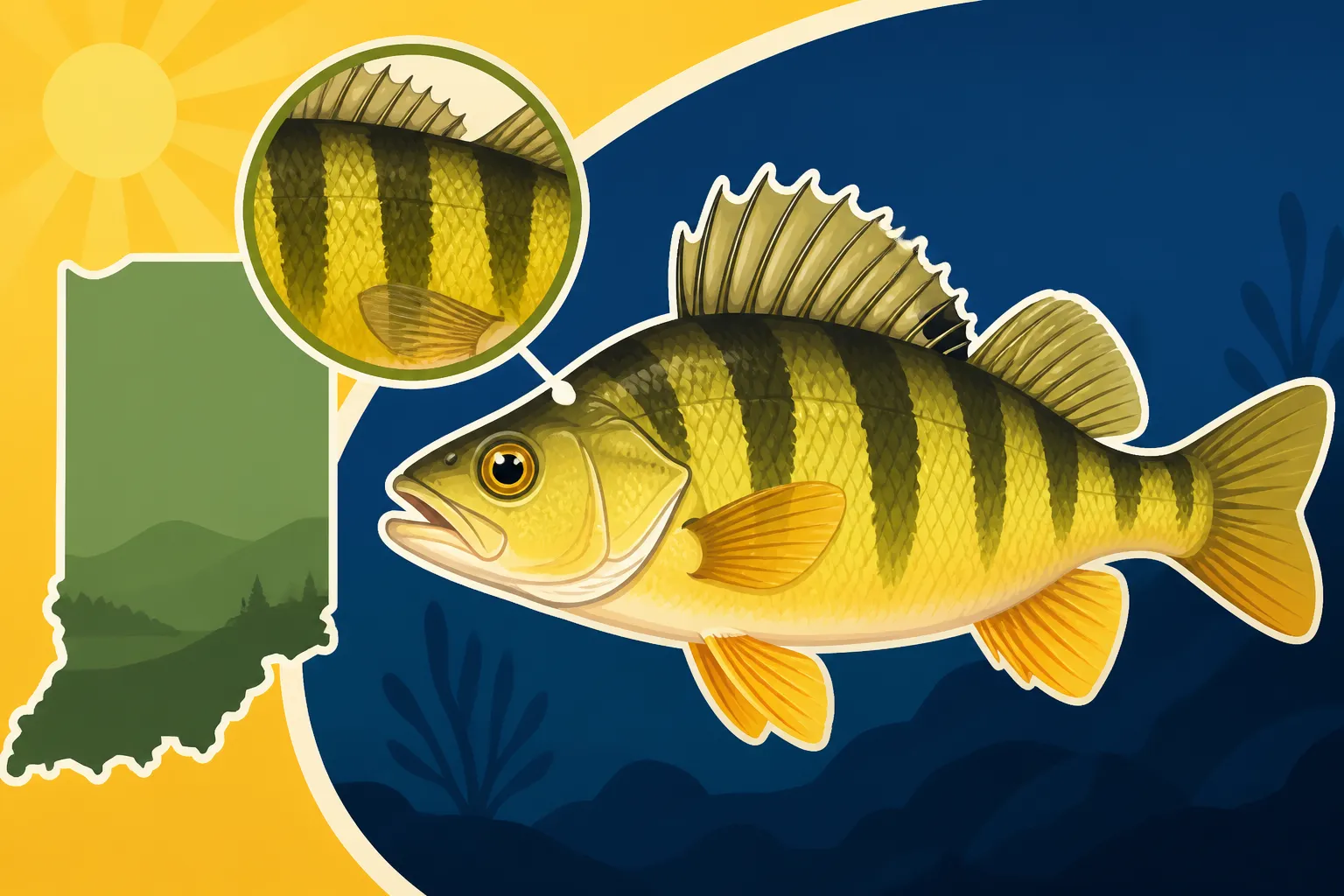
First off, let's talk about their namesake color: that beautiful, vibrant yellow. While the exact shade can vary depending on water clarity, diet, and even the time of year, yellow perch typically boast a striking golden-yellow to brassy-green body. This isn't a subtle undertone; it's usually quite pronounced, especially on their flanks. It's often brighter on their belly, fading into a darker olive-green or even brownish hue along their back. This gradient of color gives them excellent camouflage in the varied aquatic environments they inhabit. You'll notice this golden sheen really pops when they're fresh out of the water, a sight that often brings a smile to any angler's face.
But the golden sides are only half the story. The absolute giveaway for a yellow perch is their distinctive pattern of vertical bars. They typically have between six and eight dark, olive-green to black vertical bars that run down their sides, starting from their back and fading as they reach their belly. These bars are usually quite prominent and well-defined, not mottled or splotchy like some other fish. Think of them as tiger stripes, but on a fish, and they're one of the most reliable features for positive identification. These bars might appear slightly faded in some individuals or in certain lighting conditions, but they are almost always present and form a crucial part of their identity.
As for their body shape, yellow perch have a relatively deep, compressed body. They're not as long and slender as a walleye, nor as round and disc-like as some bluegill. They strike a nice balance, giving them a somewhat stocky yet elegant appearance. Their mouth is moderately sized, terminal (meaning it's at the very end of their snout), and slightly upward-pointing, which is perfectly suited for snatching up insects and small baitfish. Their fins also offer clues: they have two distinct dorsal fins. The first is spiny and well-developed, while the second is softer and rayed. Their caudal (tail) fin is typically forked, and their pelvic and pectoral fins often have a reddish or orange tint, especially in males during spawning season, adding another splash of color to their golden-barred bodies.
Deeper Dive into Distinguishing Features: Beyond the Obvious
While the golden sides and vertical bars are your go-to indicators, a closer inspection of a yellow perch can reveal even more specific details that help confirm your identification. These subtle characteristics become incredibly useful when you're trying to differentiate them from similar-looking species that share Indiana's waters. It's like finding a secret handshake for fish identification!
One key feature to examine is the spiny dorsal fin. Unlike their cousins, the walleye, yellow perch do not have a prominent dark spot on the rear-most membrane of their spiny dorsal fin. This is a crucial distinction, especially when you're trying to quickly tell the two apart. Instead, the spiny dorsal fin of a yellow perch will generally be uniform in color, matching the darker olive tones of their back, perhaps with some lighter speckling but no definitive black blotch. Knowing this one detail can save you a lot of guesswork out on the boat or by the shore. Many experienced anglers carry a small, waterproof field guide (easily found on Amazon) to reference these specific markings on the spot.
Another excellent diagnostic tool is to observe the scales on their cheeks. Yellow perch have fully scaled cheeks, meaning the area between their eye and their operculum (gill cover) is covered in small, rough scales. This might seem like a minor detail, but it's another distinct difference from walleye, which typically have scales only on the upper portion of their cheeks, leaving the lower half bare. If you gently run your finger over the cheek area, you'll feel the rough texture of the scales on a yellow perch. This kind of hands-on identification, performed carefully to avoid injury to the fish, provides definitive proof.
Let's also consider their overall size and typical growth patterns. Yellow perch are generally a smaller species compared to the much larger walleye or even northern pike, which might share some similar coloration. While some exceptional yellow perch in Indiana can push towards 15-16 inches, the majority you'll catch will be in the 6 to 12-inch range. If you're consistently catching fish with yellow sides and vertical bars that are well over 20 inches, you're likely dealing with a different species entirely. A good ruler or fish measuring board, easily found on Amazon, can be invaluable for confirming lengths and ensuring you stay within legal limits. Understanding their average size helps contextualize your identification efforts. For instance, knowing How Fast Do Yellow Perch Grow? can also help you gauge the age and health of your catch.
Finally, take a moment to feel their texture. Yellow perch have a somewhat rough, "spiny" feel due to their ctenoid scales. This isn't a distinguishing feature from all other fish, but it's part of their overall sensory profile that contributes to their identity. When you combine the prominent vertical bars, the golden-yellow coloration, the lack of a dorsal spot, and their fully scaled cheeks, you have a solid checklist for identifying a yellow perch in Indiana waters.
Yellow Perch vs. The Look-Alikes: Avoiding Common Mix-Ups in Indiana
One of the biggest frustrations for anglers, especially those new to Indiana fishing, is telling similar fish species apart. Yellow perch, while distinctive, do have a few doppelgangers that can cause confusion. Knowing the key differences can save you from misidentifying your catch, which is important for understanding Panfish Daily Limit in Indiana: 25 per Species regulations and for simply knowing what you're putting on the dinner table. Let's break down the main contenders you might mix up with a yellow perch.
Walleye: This is probably the most common mix-up. Both yellow perch and walleye belong to the perch family (Percidae), so they share some general body characteristics. However, there are crucial differences. As mentioned, the most definitive visual cue is the dark spot on the rear base of the spiny dorsal fin of a walleye – yellow perch simply don't have it. Walleye also tend to be much more elongated and cylindrical than the deeper-bodied yellow perch. Their overall coloration is typically more olive-brown or golden-green, often with faint, mottled patterns rather than the crisp, vertical bars of a perch. Furthermore, walleye have a white tip on the lower lobe of their caudal (tail) fin, which is absent on a yellow perch. Lastly, remember the cheek scales: walleye have bare cheeks on their lower half, while perch are fully scaled. If you're ever in doubt, remember that clear dorsal fin spot and the white tail tip. For a detailed comparison, check out Walleye vs Yellow Perch: How to Tell Them Apart.
Sauger: Another close relative in the perch family, the sauger, can also be confused with a yellow perch or a walleye. Sauger typically have a more mottled, brownish coloration than the golden-yellow perch, and instead of clear vertical bars, they have distinct dark blotches or saddle-like marks along their back and sides. A key identifying feature for sauger is the presence of multiple distinct dark spots scattered across their spiny dorsal fin, unlike the single spot on a walleye or no spot on a perch. Sauger also lack the white tip on the caudal fin that walleye possess, making them visually distinct from both. They are generally smaller than walleye but can grow larger than most perch.
White Bass: While not as common a mix-up as walleye, some anglers might momentarily confuse a schooling white bass with a perch due to its general shape and schooling behavior. However, white bass are much more silvery-white in color, with several distinct horizontal stripes running down their sides. They completely lack the vertical bars and golden-yellow hue of a perch. Their dorsal fins are also typically closer together and less distinctly separated than a perch's. White bass also tend to have a slightly deeper body shape and a more aggressive, schooling nature.
For those really struggling with identification, a waterproof fish identification card set, often sold on Amazon, can be a handy tool right on the water. It can visually summarize these key differences at a glance.
Here's a quick comparison table to help solidify the differences between yellow perch and their most common look-alikes in Indiana:
| Feature | Yellow Perch | Walleye | Sauger | White Bass |
|---|---|---|---|---|
| Overall Color | Golden yellow to brassy green | Olive-brown to golden-green | Mottled brown to yellowish-gray | Silvery-white |
| Body Markings | 6-8 distinct, dark vertical bars | Faint, mottled patterns; no clear bars | Distinct dark blotches/saddle marks | 4-7 distinct dark horizontal stripes |
| Spiny Dorsal Fin | No prominent dark spot on rear base | One distinct dark spot on rear base | Multiple distinct dark spots | Spiny and soft dorsal fins usually separate |
| Caudal (Tail) Fin | No white tip | White tip on lower lobe | No white tip | No white tip, slightly forked |
| Scales on Cheek | Fully scaled cheeks | Scales absent on lower half of cheek | Fully scaled cheeks | Fully scaled cheeks |
| Body Shape | Deep, compressed body | Elongated, cylindrical | Elongated, cylindrical | Deep, compressed, but more oval than perch |
| Mouth Position | Terminal (end of snout) | Terminal, large | Terminal, large | Terminal, slightly upward |
Remember, accurate identification is not just about bragging rights; it's about responsible angling and respecting the ecosystem. Yellow perch are truly Yellow Perch: Indiana's Classic Panfish, and learning to identify them properly will enhance your fishing experience.
Where and When to Spot Them: Habitat and Behavior Clues for Identification
Beyond their physical characteristics, understanding where and how yellow perch behave can provide additional clues to confirm your identification, even before you've got the fish in hand. Knowing their preferred haunts and habits is a huge advantage, as certain environments are more likely to hold perch than other species. This contextual understanding is part of becoming a truly skilled angler. If you're targeting perch, knowing their typical hangouts and behavior is just as important as knowing what bait to use, like the Best Bait for Yellow Perch in Indiana Lakes.
Yellow perch are incredibly adaptable and can be found throughout Indiana in a wide variety of freshwater environments. You'll encounter them in almost all types of lakes, from large reservoirs to smaller natural lakes and even some slow-moving rivers and ponds. They generally prefer cooler, clear water but can tolerate a surprising range of conditions. One of their favorite places to hang out is around structure: think weed beds, submerged timber, rock piles, drop-offs, and even docks and piers. These structures provide cover from predators, ambush points for feeding, and can concentrate baitfish, which are a primary food source for perch. If you're fishing a weedy edge and pulling out golden-striped fish, it's a strong indicator you're on a perch school.
Behaviorally, yellow perch are highly social fish, typically found in schools. If you catch one yellow perch, there's a very good chance there are many more in the immediate vicinity. This schooling behavior is a major clue. When you start consistently pulling up fish with those distinctive vertical bars from a concentrated area, it's a clear signal that you've located a school of perch. This is especially true when they are actively feeding. You might see their schools show up on your fish finder as dense, clustered marks near the bottom or suspended over structure.
Seasonality also plays a role. While you can catch yellow perch year-round in Indiana, their behavior and locations shift with the seasons. In spring, after the ice recedes, they'll often move into shallower areas to spawn, making them more accessible to shore anglers. During the summer, they might move to deeper, cooler waters during the day but return to shallower structures or weed lines during dawn and dusk to feed. In fall, they often form larger schools and feed aggressively in preparation for winter. Come winter, they are a prime target for ice fishing, often found near the bottom or suspended slightly above it, still in schools. Understanding these seasonal movements, which you can learn more about in a guide like Best Time of Year to Fish in Indiana, helps narrow down your identification expectations.
For example, if you're fishing a deep, open water basin in the middle of summer and catching large, silvery, striped fish, they are almost certainly white bass or perhaps hybrid striped bass, not yellow perch. Conversely, if you're jigging a small bait over a rock pile in 15 feet of water on an Indiana lake and getting bites from smaller, golden fish with distinct vertical bars, you're undoubtedly catching yellow perch. Their habitat and social dynamics are as much a part of their identity as their coloration and fin structure. And once you've successfully identified and caught a few, you might find yourself wondering Is Yellow Perch Good to Eat?, a question many anglers answer with a resounding yes!
Disclaimer
This article is for general informational purposes only and does not constitute professional advice. Laws, prices and regulations vary by location and change over time. Consult a qualified professional for guidance on your specific situation.