How Fast Do Yellow Perch Grow?
It’s a common question we anglers ask ourselves when we pull in a beautiful yellow perch: "How fast do these little guys actually grow?" You've probably been there, holding a plump perch, wondering if it's a prime keeper or if it still has a lot more growing to do. It’s a completely fair question, especially when you’re trying to balance the joy of a fresh fish fry with the desire to let smaller fish mature and keep the fishery healthy. This guide is all about diving deep into the fascinating world of yellow perch growth in Indiana, helping you understand what makes them tick and what you can expect when you’re out on the water.
Understanding Yellow Perch Growth Factors in Indiana
Yellow perch are a beloved panfish in Indiana, known for their distinctive stripes and delicious fillets. But their growth isn't a simple, linear process. It's a complex interplay of environmental factors, food availability, and even genetics, much like how some kids grow like weeds while others take their sweet time. Understanding these factors can give you a real edge in knowing where to find larger perch and how to contribute to a thriving fishery.
Water Temperature and Seasonality's Role
Just like us, fish are greatly influenced by their environment, and water temperature is a huge one for yellow perch. Perch are cold-blooded, meaning their metabolism, and thus their growth rate, is directly tied to the water temperature. In Indiana, we experience significant seasonal changes, and these directly impact how fast a perch grows.
During the warmer months of late spring, summer, and early fall, when water temperatures are consistently in their ideal range (typically 65-75°F), yellow perch are highly active. They're feeding aggressively, digesting food efficiently, and putting on weight and length at their fastest pace. This is when you'll see the most significant gains in size. Conversely, once the water cools down in late fall and throughout the winter, their metabolism slows considerably. They might still feed, but their growth rate practically grinds to a halt. This seasonal cycle means a perch born in spring will have a solid growth spurt before its first winter, but then effectively pause until the next warm season.
Food Availability and Competition
Imagine a buffet line – if it's full of delicious, easy-to-grab food, everyone eats well. If it's sparse, or if there are too many people vying for the same few items, growth is going to be slower. The same principle applies to yellow perch in Indiana's lakes and rivers. Their diet consists of a variety of invertebrates like insect larvae, crustaceans, and even small fish once they get larger.
Lakes and reservoirs with abundant food sources, such as zooplankton, insect hatches, and plenty of small baitfish, will typically produce faster-growing, fatter perch. These fish spend less energy searching for food and more energy growing. On the flip side, in bodies of water where food is scarce or where there's intense competition from other fish species (or even too many perch themselves), growth can be stunted. You might find a high number of small perch in such environments, indicating that there isn't enough food to go around for all of them to reach their full potential.
Population Density and Genetic Influence
It might sound strange, but how many other perch are swimming around with them also impacts growth. When a lake has a very high population of yellow perch, they often outcompete each other for food and space, leading to slower growth and smaller average sizes. This is a common issue in some smaller lakes or ponds where perch populations might explode. Fisheries biologists sometimes refer to this as "stunting," and it's a challenge to manage.
However, genetics also play a role. Just like in any species, some individual perch might simply be predisposed to grow faster and larger than others, even in the same environment. These genetic traits, combined with favorable conditions, are what ultimately lead to those truly impressive, jumbo perch that make for fantastic pictures and even better meals. Responsible angling, including selective harvesting and letting some larger, potentially genetically superior fish go, can help foster a healthier and faster-growing population over time.
Typical Growth Rates for Yellow Perch in Indiana Waters
So, with all those factors in mind, what can an Indiana angler actually expect in terms of yellow perch growth? It’s not an exact science, as every lake and every year is a little different, but there are some general patterns we can look at to give you a better idea of what you’re reeling in.
Growth in the First Year
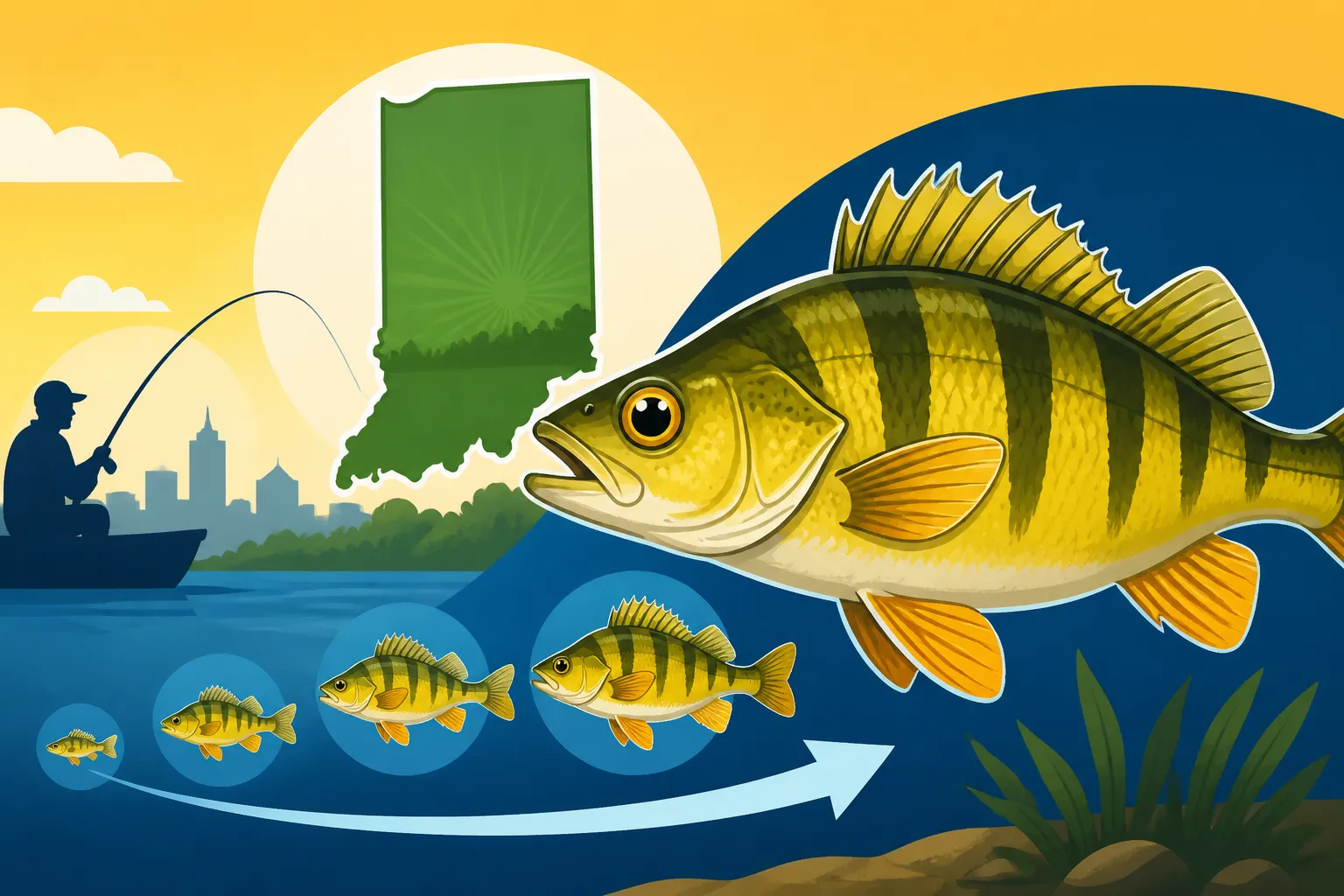
In their first year of life, yellow perch grow quite rapidly, especially if conditions are good. They hatch as tiny larvae, barely visible, and spend their initial weeks feeding on microscopic plankton. By the end of their first full growing season in Indiana, typically by the fall, a yellow perch might reach anywhere from 3 to 6 inches in length.
This initial growth spurt is crucial for their survival through the colder months. A smaller fish has less energy reserves and is more vulnerable to predators and harsh winter conditions. Lakes with a strong forage base and a healthy population balance tend to see their young perch thrive and put on those critical first few inches quickly. If you're catching very small perch, often just a few inches long, there's a good chance they're only a few months to a year old.
Reaching Keepable Size
The "keepable" size is often a personal preference, but many anglers consider yellow perch between 8 and 12 inches to be ideal for the frying pan. Reaching this size takes a bit more time. On average, in Indiana waters with decent conditions, a yellow perch will typically reach about 6-8 inches by its second or third year of life. To get to that desired 8-10 inch range, they'll usually need another year or two, meaning they are often 3 to 5 years old.
Fish growing slower than this might indicate issues with overcrowding or limited food resources in that particular body of water. For example, if you're consistently catching 6-inch perch in a lake, and very few larger ones, it could be a sign that the population is stunted. Conversely, a lake known for producing consistently larger perch usually has an excellent balance of habitat, food, and predator control. You can often find detailed information about specific lake populations through the Indiana Department of Natural Resources (DNR) fisheries surveys. Yellow Perch: Indiana's Classic Panfish is a great article if you want to learn more about identifying these beauties.
Factors Affecting "Trophy" Size
Now, for those elusive "trophy" perch – the ones pushing past 12 inches, sometimes even 14 or 15 inches – these are truly special fish. They represent a combination of excellent genetics, abundant food, ideal environmental conditions, and simply having enough time to grow. A perch of this size is likely 5 to 8 years old, or even older in some cases.
These monsters don't come around easily. They've survived multiple seasons, dodged countless predators, and found prime feeding grounds. Lakes known for producing these giants often have deeper, cooler waters, plenty of structure, and a consistent supply of larger prey items like smaller minnows. Anglers often target these larger perch with different tactics and sometimes heavier gear. Finding an experienced guide or talking to local bait shop owners can provide invaluable insight into which specific Indiana lakes might hold these bigger fish and what tactics are working best.
Here's a general idea of yellow perch growth in Indiana:
| Age (Years) | Typical Length (Inches) – Good Conditions | Typical Length (Inches) – Average Conditions | Typical Length (Inches) – Poor Conditions (Stunted) |
|---|---|---|---|
| 1 | 4-6 | 3-5 | 2-4 |
| 2 | 7-9 | 6-8 | 4-6 |
| 3 | 9-11 | 8-10 | 5-7 |
| 4 | 11-13 | 9-11 | 6-8 |
| 5+ | 13+ | 10-12+ | 7-9 |
Note: These are general estimates and actual growth rates can vary significantly by body of water.
What Anglers Can Expect When Catching Yellow Perch
Understanding how fast yellow perch grow gives you a better perspective on your catch and helps you make more informed decisions on the water. It’s not just about the numbers; it’s about appreciating the fish and playing your part in conservation.
Identifying Different Age Classes
When you're reeling in perch, you'll start to notice patterns in their size. Often, you'll hit a school of fish that are all relatively similar in size, suggesting they're from the same age class or year-group. Then you might move to another spot and find a different size range.
- Small (Under 6 inches): These are usually young-of-the-year or yearlings. They're still growing rapidly and are key for the future of the fishery.
- Medium (6-9 inches): These are often 2-4 year old fish. They're good eating size but still have potential for significant growth.
- Large (10+ inches): These are older, more mature fish, likely 4-5 years old or more. They are valuable spawners and contribute genetic material for future generations of big fish.
By paying attention to the average size of the perch you're catching in a particular spot, you can start to understand the dynamics of that fishery. If you're consistently only catching small perch, it might be worth moving to a different area or even a different lake to find larger fish.
Catch and Release vs. Harvest Decisions
This knowledge about growth rates directly impacts your catch and release decisions. While yellow perch are fantastic table fare, responsible harvesting is crucial. If you're catching a lot of small perch (say, under 6 inches), it's generally a good practice to release most, if not all, of them. They need more time to grow and reproduce.
When you do decide to harvest, consider keeping a moderate number of fish in that "good eating" size range (8-10 inches), and perhaps releasing some of the very largest perch. These larger fish are important spawners, and allowing them to reproduce can help ensure a healthy population of robust, fast-growing perch for years to come. Of course, always abide by Indiana's fishing regulations, which don't typically have minimum length limits on perch, but may have daily bag limits. Indiana Fishing Regulations and Bag Limits Guide is a great resource to check before you head out.
Finding the Right Tackle and Baits for Varying Sizes
The size of the perch you’re targeting can also influence your gear choices. For instance, when you're after those smaller, more numerous perch, lighter tackle, like ultralight spinning gear with small jigs or pieces of worm, will be incredibly effective. You'll feel every nibble, and even a 6-inch perch can put up a fun fight on such a setup. You can find a huge variety of ultralight rods and reels, as well as an array of small jigs and soft plastics, on Amazon – it’s a great place to browse and compare options.
However, if you're specifically trying to target those larger, older perch, you might consider slightly heavier tackle, or at least a rod with a bit more backbone. These bigger fish often prefer larger baits, such as minnows or larger spoons, and can put up a more substantial fight. While still considered panfish, a 12-inch perch is a formidable opponent on a light rod. You might also want to search Amazon for specific ice fishing jigs or lures that are designed to tempt larger perch, especially during the colder months when they might be found in deeper holes. Best Tackle for Crappie Fishing in Indiana also offers some good advice on panfish tackle.
Supporting Healthy Perch Populations for Future Growth
As anglers, we have a responsibility to not just enjoy the resource but also to protect it. Understanding perch growth is just one piece of that puzzle. Our actions on the water can have a direct impact on how fast these fish continue to grow and how many there are for future generations.
Following Indiana Regulations
The most basic and crucial way to support healthy fish populations is to simply follow the rules. The Indiana Department of Natural Resources (DNR) sets fishing regulations, including daily bag limits, to ensure sustainable harvesting. For yellow perch, while there isn't typically a minimum size limit in most Indiana waters (Lake Michigan being a notable exception with its own distinct rules), there is a daily bag limit that helps prevent overfishing.
Always check the current Indiana Fishing Guide before you hit the water, as regulations can sometimes change. These rules are put in place by biologists who study fish populations and understand the delicate balance required for fish to grow and reproduce effectively. Ignoring them can lead to depleted stocks and slower growth rates for the entire fishery. Indiana Fishing License Requirements Explained and Indiana Fishing License Costs for Residents and Nonresidents are essential reading before you even cast a line.
Responsible Harvesting Practices
Beyond just following the regulations, responsible harvesting means thinking about the health of the population as a whole. As mentioned earlier, selectively harvesting medium-sized fish (8-10 inches) while releasing smaller fish to grow and larger, older fish to spawn can be a highly effective strategy.
If you find yourself in a lake that seems to be overrun with stunted, small perch, carefully culling some of the smaller fish can actually be beneficial. By reducing competition for food, you can allow the remaining perch to grow larger and faster. This isn't about indiscriminately keeping everything; it's about thoughtful management. It takes a little more effort than just throwing everything in the livewell, but it's a practice that pays dividends in the long run for better fishing experiences. Panfish Daily Limit in Indiana: 25 per Species provides a helpful overview.
Understanding Habitat Needs
Healthy fish populations, including fast-growing yellow perch, rely on healthy habitats. This means clean water, aquatic vegetation for cover and food, and diverse bottom structures. As anglers, we can advocate for and participate in conservation efforts that protect and restore these vital habitats.
Avoiding littering, reporting pollution, and supporting organizations that work on waterway cleanups and habitat restoration are all ways to contribute. A lake with plenty of weed beds, submerged timber, and varying depths will naturally support more abundant food sources and provide crucial hiding spots for perch of all sizes, allowing them to grow larger and healthier. Remember, a thriving ecosystem is the foundation for fantastic fishing, so understanding the habitat is just as important as knowing your tackle. And speaking of tackle, if you're looking for environmentally friendly jig heads or lures made with alternative materials, Amazon might have some options that align with your conservation values.
Disclaimer
This article is for general informational purposes only and does not constitute professional advice. Laws, prices and regulations vary by location and change over time. Consult a qualified professional for guidance on your specific situation.