How to Set Up a Tackle Box for Bass Fishing
There’s nothing quite as frustrating as finally getting to your favorite bass fishing spot, the air buzzing with anticipation, only to open your tackle box and find it a chaotic mess. Hooks tangled, weights rolling around, and that perfect crankbait you know you bought is nowhere to be found. It wastes precious fishing time and can even dampen your enthusiasm. This guide is all about transforming that messy box into a streamlined, efficient system, ensuring you spend less time searching and more time casting for those Indiana largemouth.
Why a Well-Organized Tackle Box Matters for Bass Fishing
When you’re out on the water, whether it's the vast expanse of Monroe Lake or a quiet farm pond in central Indiana, every second counts. Bass fishing, in particular, often demands quick lure changes to match changing conditions, water clarity, or fish behavior. A well-organized tackle box isn't just about neatness; it's a strategic advantage that directly impacts your success and overall enjoyment. Imagine the frustration when a hot bite is on, and you're fumbling through a jumble of soft plastics looking for that specific worm, while your buddy is already reeling in another fish. It’s a common scenario, and it’s completely avoidable with a little planning.
Saving Time and Reducing Frustration
The most immediate benefit of an organized tackle box is the sheer amount of time you save. Instead of digging through piles of gear, you can quickly locate the exact lure, hook, or weight you need. This is crucial when the fish are active, and you need to switch presentations rapidly. Perhaps the bass are hitting topwater early in the morning, but as the sun rises, they move deeper, requiring a quick change to a jig or Texas rig. If your jigs are neatly separated by weight and color, and your soft plastics are categorized, that transition is seamless. This efficiency reduces stress and keeps your focus where it should be: on the fishing. It also means you're less likely to miss those fleeting bite windows that can define a successful day.
Protecting Your Valuable Gear
Let's be honest, bass fishing tackle isn't cheap. From high-quality crankbaits to specialized hooks and soft plastics, your gear represents a significant investment. A disorganized tackle box often leads to damaged lures, bent hooks, and prematurely worn soft plastics. Imagine a treble hook snagging and tearing a finesse worm, or a heavy jig bouncing around and chipping the paint off a meticulously crafted jerkbait. Proper organization, using dedicated compartments and storage solutions, protects your tackle from unnecessary wear and tear, extending its lifespan and keeping it in prime fishing condition. It's about preserving the tools that help you land fish, ensuring they're ready to perform when you are.
Enhancing Safety on the Water
This might sound a little dramatic, but a messy tackle box can absolutely pose a safety hazard. Exposed hooks and treble hooks in a jumbled compartment are accidents waiting to happen. Reaching blindly into a container full of sharp objects can easily lead to a puncture or a nasty cut. By keeping hooks secured in their original packaging, in dedicated small boxes, or within foam inserts, you drastically reduce the risk of injury. Moreover, having your tools like pliers, line cutters, and first aid supplies in easily accessible, designated spots means you can respond quickly and safely to minor issues, whether it's extracting a hook or treating a small cut, without adding to the chaos.
Essential Components of a Bass Fishing Tackle Box
Setting up a tackle box for bass fishing is all about strategic stocking. You don't need to bring every single lure you own, but you do need a solid selection of essentials that cover various conditions and presentations. Think about the types of water you typically fish in Indiana – whether it’s the clear waters of Lake Wawasee, the stained reservoirs like Patoka Lake, or river systems like the Tippecanoe. Your tackle box should be a reflection of your local fishing environment and your preferred techniques. For a deeper dive into the specifics of lures, you might want to check out articles like Best Bait for Largemouth Bass in Indiana Lakes or Best Lures for Summer Fishing.
Lures: The Heart of Your Attack
This is where the fun really begins! Your lure selection should be diverse enough to handle different depths, water clarity, and fish moods.
Hard Baits
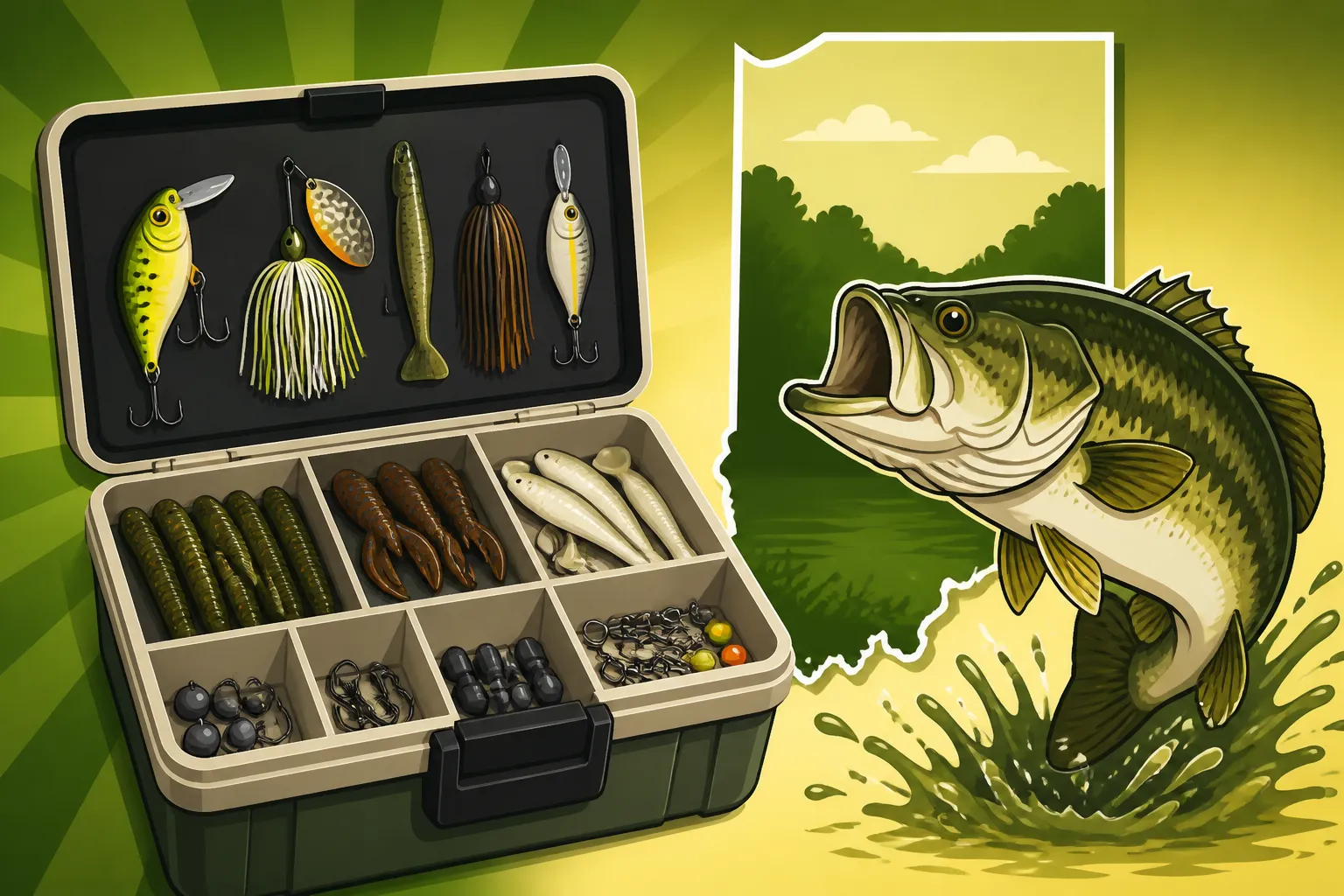
Hard baits include a range of lures designed to imitate baitfish or crawfish. Crankbaits are indispensable; have a few in different diving depths (shallow, medium, deep) and colors (natural baitfish, crawfish patterns, and bright colors for stained water). Think about specific times of year – some anglers swear by certain crankbaits during the Indiana Bass Spawn Timing and Pre-Spawn Patterns. Jerkbaits are fantastic for triggering strikes in cooler water or when bass are suspended. Topwater lures, such as poppers, walking baits, and frogs, are thrilling for early morning, late evening, or fishing over weed beds. Spinnerbaits and chatterbaits are excellent search baits that work in a variety of conditions, generating vibration and flash to attract bass. When buying, considering options available at stores like Bass Pro Shops can give you a wide variety to choose from.
Soft Plastics
Soft plastics are perhaps the most versatile category of bass lures. You'll want a good assortment of plastic worms (Texas rig, wacky rig), creature baits (imitating craws or other critters), and swimbaits. Colors are key here; greens, browns, and black/blue combinations are perennial favorites for their natural appeal, while brighter colors can be effective in muddy water. Don't forget your senkos – their subtle fall is irresistible to many bass. Having a dedicated section for soft plastics, maybe in their original bags or specialty binders, is crucial to prevent them from drying out, deforming, or losing their scent.
Terminal Tackle: The Unsung Heroes
These are the small but mighty components that connect your lure to your line and make your presentation effective. Without the right terminal tackle, even the best lures are useless.
Hooks
You'll need a variety of hooks to match your soft plastics and fishing techniques. Offset worm hooks (EWG and straight shank) are essential for Texas rigging. Wacky rig hooks, often with a weed guard, are vital for that finesse presentation. Jig heads, in various weights (1/8 oz to 1/2 oz) and hook sizes, are perfect for pairing with soft plastics for a bottom-bouncing presentation. Always keep a range of sizes to accommodate different plastic baits and fishing depths. Brands widely available on Amazon offer a great selection for building out your terminal tackle.
Weights and Sinkers
From bullet weights for Texas rigs to drop shot weights and casting sinkers, having a good selection of lead or tungsten weights is critical. Tungsten is denser and transmits bottom contact better, making it a favorite for many anglers, though it costs a bit more. Have various sizes (1/8 oz to 3/4 oz) to adjust to depth, current, and wind conditions. Keeping these organized by weight in small, clearly labeled compartments will save you a ton of guesswork and fumbling.
Swivels and Snaps
While not always necessary for every bass fishing technique, barrel swivels and snap swivels can be useful for preventing line twist, especially with spinnerbaits, or for quickly changing lures when using snap swivels. Have a few sizes on hand, ensuring they're rated for the line strength you're using.
Tools and Accessories: The Support Crew
Beyond lures and terminal tackle, a few essential tools can make your fishing experience much smoother and safer.
Pliers and Line Cutters
A good pair of fishing pliers is invaluable for removing hooks, cutting wire, and even crimping sleeves if you're making your own leaders. Many come with built-in line cutters. If not, a dedicated pair of sharp line cutters or braid scissors is a must-have, especially if you're fishing with braided line. These items should be easy to grab in their own dedicated spot.
Measuring Devices and Scales
If you're interested in knowing the size of your catch or participating in catch-and-release tournaments, a measuring tape or bump board and a small digital scale are useful additions. They help you quickly get accurate measurements without causing undue stress to the fish.
First Aid and Safety Gear
Don't overlook safety. A small, waterproof first-aid kit is essential for treating minor cuts, hook punctures, or scrapes that can happen while handling fish or tackle. Include antiseptic wipes, bandages, pain relievers, and any personal medications. A small multi-tool, a headlamp for low-light conditions, and sunscreen also fall into this category of crucial accessories that improve your overall experience.
Organizing Your Tackle Box for Maximum Efficiency
Now that we've covered what to put in your tackle box, let's talk about the how of organizing it. This is where you transform a collection of items into a streamlined system that makes every lure change and rigging adjustment effortless.
Choosing the Right Tackle Box or System
Not all tackle boxes are created equal. The best option for you depends on your fishing style, the amount of gear you have, and how you transport your tackle.
Traditional Tackle Boxes
These often feature a large main compartment with several fold-out trays. They're good for general storage and can hold a decent amount of gear. However, deeper trays can lead to items getting piled on top of each other, making retrieval difficult. They're a classic for a reason, but sometimes their limitations become apparent when you're fumbling for a specific item.
Soft-Sided Tackle Bags with Utility Boxes
This style has become incredibly popular, and for good reason. Soft-sided bags typically come with multiple clear plastic utility boxes (like the 3600 or 3700 series, commonly found at Bass Pro Shops or on Amazon) that slide into dedicated compartments. These boxes are fantastic because they allow for highly customizable internal dividers, letting you separate lures by type, size, or color. They also allow you to pull out just the box you need for a specific technique, rather than lugging around your entire tackle collection. Some bags even have external pockets for tools, soft plastics, and other accessories. For a general overview of getting started, you might find What Gear Do You Need to Start Bass Fishing? helpful.
Backpack-Style Tackle Systems
For anglers who prefer to hike to their fishing spots or wade rivers and streams, a tackle backpack is a game-changer. These combine the utility box system of soft-sided bags with the portability of a backpack. They often have dedicated tool holders, multiple pockets, and comfortable straps, freeing up your hands for carrying rods or navigating tricky terrain.
Categorizing and Compartmentalizing Your Gear
The key to efficiency is creating logical categories for your tackle and giving each category its own dedicated space.
By Lure Type
This is perhaps the most common and effective method. Dedicate one utility box or tray to crankbaits, another to topwater lures, and yet another to spinnerbaits and chatterbaits. Within these, use the adjustable dividers to separate lures by size, color, or diving depth. For example, all your shallow-diving crawfish pattern crankbaits go in one section, while your deep-diving shad patterns go in another. This makes it incredibly easy to grab the exact lure you need based on the conditions.
By Terminal Tackle Type and Size
Keep all your hooks together but separated by type (EWG, wacky, jig heads) and then by size. Do the same for weights, separating them by style (bullet, drop shot) and then by weight (e.g., 1/4 oz, 3/8 oz). Small, clear flip-top boxes are excellent for organizing these tiny but crucial components. It means you won't be sifting through a pile of mixed hooks trying to find that one 4/0 EWG you need for a big worm. Consider an article like How to Rig a Jig for Largemouth Bass to see how critical this organization can be for specific techniques.
Soft Plastics Organization
Soft plastics present a unique challenge because they often come in bags and can take up a lot of space. Many anglers prefer to keep them in their original packaging, organized in specialty binders or large utility boxes. You can group them by type (worms, creature baits, swimbaits) and then by color. Some tackle bags have specific large pockets designed to hold multiple bags of soft plastics, keeping them flat and organized.
Labeling for Quick Access
Once everything is neatly categorized and placed in its compartment, take the extra step to label! Use a permanent marker on the outside of utility boxes or even small stickers on internal dividers. Labels like "Crankbaits – Shallow," "Worms – Green Pumpkin," "Jig Heads – 1/4 oz" will save you even more time. When you're fishing on a windy day or in low light, being able to quickly read a label rather than opening every box is a huge advantage.
Maintaining Your Bass Fishing Tackle Box
Setting up your tackle box is just the first step; maintaining it is an ongoing process that ensures your gear stays in top condition and ready for your next adventure. A little bit of post-fishing care goes a long way in preserving your investment and preventing future headaches.
Post-Fishing Cleanup and Inventory
After every fishing trip, especially if you've been out in the rain or near salty environments (like the Indiana side of Lake Michigan Fishing Rules for Indiana Anglers), it’s crucial to open up your tackle box and let everything air out. Moisture is the enemy of hooks, swivels, and lures, leading to rust and corrosion.
Drying Out Wet Lures and Tackle
If any lures got wet, take them out of their compartments and let them air dry completely before putting them away. You can lay them out on a towel in a dry, shaded area. This simple step prevents rust from forming on hooks and hardware, which can weaken them and make them less effective. Imagine hooking into a big largemouth on Monroe Lake, only to have a rusty hook snap!
Replacing Worn or Damaged Components
While you're drying everything out, take the opportunity to inspect your gear. Are any hooks bent or dull? Replace them. Are any split rings or snap swivels showing signs of weakness? Swap them out. Are your soft plastics torn or stretched beyond repair? Toss them. This quick inventory ensures that the next time you head out, every piece of tackle is ready for action. It’s also a good time to restock any lures or terminal tackle you used heavily. You might also want to review your overall fishing strategy by checking out Largemouth Bass Fishing in Indiana: The Complete Guide.
Preventing Rust and Corrosion
Rust is a tackle angler's nemesis. It weakens hooks, compromises lure action, and generally diminishes the life of your gear.
Using Desiccants and Rust Preventatives
Many anglers place small desiccant packets (like silica gel) inside their utility boxes to absorb moisture. These can often be found in packaging for electronics or can be purchased specifically for tackle box use. There are also anti-corrosion tabs or moisture-absorbing products available that you can place in your compartments. These can be particularly helpful for anglers who store their tackle in areas with high humidity, like a garage or boat shed.
Proper Storage and Handling of Hooks
Whenever possible, keep spare hooks in their original packaging until you're ready to use them. For hooks already on lures, ensure they are dry before storage. Some anglers even lightly coat metal components with a silicone spray or a thin layer of oil (like reel oil) to create a protective barrier, especially on expensive hard baits that might sit unused for a while.
Organizing Your Tackle Box to Support Your Fishing Style
Ultimately, your tackle box should be a personalized extension of your fishing style. If you primarily fish farm ponds for panfish with your kids, your tackle box will look very different from someone who's constantly chasing trophy bass in major tournaments on Patoka Lake. Think about the species you target most often, the techniques you enjoy, and the bodies of water you frequent. If you’re a serious bass angler, you might even have multiple tackle boxes – a large primary box for boat fishing, and a smaller, more portable one for bank fishing or quick trips. The more intentional you are about what goes in and how it’s arranged, the more productive and enjoyable your time on the water will be. Keep your eyes peeled for articles like Best Bass Boats for Indiana Tournaments to see how advanced anglers customize their setups even further.
| Tackle Type | Essential Items | Organization Tips |
|---|---|---|
| Hard Baits | Crankbaits (shallow, medium, deep), Jerkbaits, Topwater (poppers, frogs), Spinnerbaits, Chatterbaits | Separate by type, then by diving depth/color. Use adjustable dividers. |
| Soft Plastics | Plastic worms (different sizes/colors), Creature baits, Swimbaits, Senkos | Keep in original bags in specialty binders or large, flat compartments. Group by type and color. |
| Hooks | Offset worm hooks (EWG, straight shank), Wacky rig hooks, Jig heads (various weights/sizes) | Small, clear, partitioned boxes. Separate by type, then by size. Keep new hooks in original packaging. |
| Weights | Bullet weights, Drop shot weights, Casting sinkers (various weights) | Small, clear, partitioned boxes. Separate by type, then by weight. |
| Tools | Fishing pliers, Line cutters/braid scissors, Hook remover, Scale | Dedicated easy-access pocket or compartment. Keep sharp edges covered or secure. |
| Accessories | First-aid kit, Sunscreen, Headlamp, Multi-tool, Measuring tape | Small, waterproof case for first-aid. Other items in dedicated, easy-to-find spots. |
Disclaimer
This article is for general informational purposes only and does not constitute professional advice. Laws, prices and regulations vary by location and change over time. Consult a qualified professional for guidance on your specific situation.