Best Kayak Anchors for Small Ponds
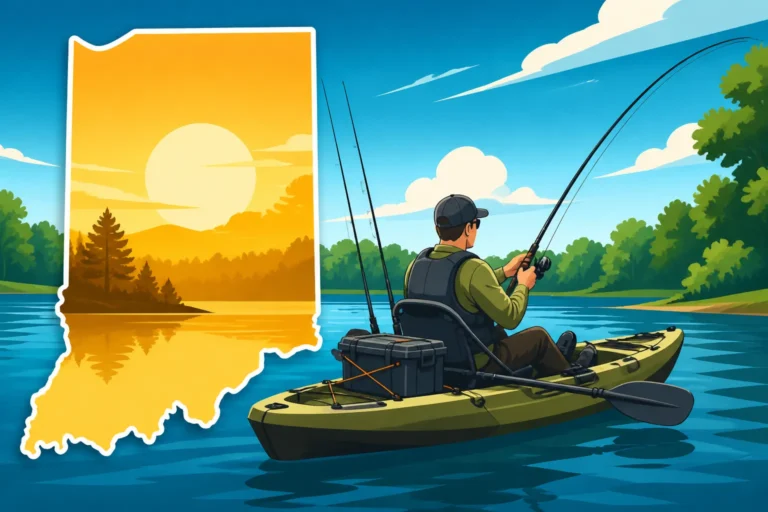
There’s nothing quite like the peace and quiet of kayak fishing on a small Indiana pond. You glide across the glassy surface, spot a promising weed line or a submerged stump, make that perfect cast, and… drift away. Sound familiar? It’s incredibly frustrating when the slightest breeze or even a subtle current pulls your kayak off that prime fishing spot, forcing you to constantly paddle back into position instead of focusing on the bite. This guide is here to help you conquer that drift by exploring the best kayak anchors specifically designed for the unique challenges of small pond fishing, ensuring you can stay put and reel in more fish.
Why You Absolutely Need an Anchor for Kayak Fishing Small Ponds
Many anglers, especially those new to Kayak Fishing Gear for Indiana Waters, might think a small pond doesn't warrant an anchor. After all, it's not the vast expanse of Lake Michigan with its powerful currents, right? But the truth is, even the most serene-looking pond can throw challenges at a kayak angler. Without a way to secure your position, you're constantly fighting against unseen forces, and that takes all the joy out of the experience.
Battling the Breeze and Current Even Small Ones
It’s astonishing how much a slight puff of wind or a barely perceptible subsurface current can impact a kayak. Kayaks, by their nature, are light and have a relatively high profile above the water, making them susceptible to being pushed around. Imagine you've found a school of crappie holding tight to a brush pile in a sheltered cove. You cast, your lure descends, and just as you feel that tell-tale tap, a gust of wind nudges your kayak a few feet, pulling your line out of the strike zone. You might think you can just use your paddle to hold your position, but try doing that for more than a few minutes while also trying to cast, retrieve, and manage a fish. It's nearly impossible to maintain the precision needed for successful fishing, especially if you're targeting specific structures or depths.
What about those hidden currents? Ponds, even small ones, can have subtle currents caused by feeder creeks, drains, or even temperature differences in the water column. These currents might not feel strong enough to notice when you're just paddling, but they're more than capable of slowly, persistently pulling your kayak away from a productive area. A good anchor ensures that once you find that sweet spot, you can commit to it, present your bait effectively, and truly work the area without constantly correcting your position.
Precision Positioning for Pond Hotspots
Success in pond fishing often hinges on precision. Largemouth bass might be holding tight to the shade of an overhanging tree limb. Crappie could be suspended just above a sunken Christmas tree brush pile. Bluegill might be fanning beds in a specific shallow flat. These aren't areas where you can afford to be off by a few feet. An anchor allows you to drop exactly where you need to be and stay there.
Consider a scenario: you've identified a promising submerged hummock using your Best Fish Finders for Indiana Lake Fishing. You want to cast your lure to fall right on top of it, letting it work its way down the sides. Without an anchor, you'd likely drift past the hummock before your lure even hits the ideal depth. With an anchor, you can position your kayak perfectly, maybe casting from the upstream side to let the lure drift naturally over the structure. This level of control dramatically increases your chances of getting bites and is a game-changer for working those tight, productive zones that often hold the biggest fish in a pond.
Safety and Convenience on the Water
Beyond the pure fishing benefits, a reliable kayak anchor adds a layer of safety and convenience to your outing. There are times when you simply need both hands free. Maybe you're re-tying a tricky knot, grabbing a snack, checking your map, or even making a quick phone call (though we always encourage being present on the water!). Trying to balance these tasks while simultaneously paddling to stay in place is precarious and can lead to dropped gear or even an accidental tip. An anchor liberates your hands, allowing you to focus completely on the task at hand without worrying about drifting into weeds, onto the bank, or too close to another angler.
Think about those unexpected Indiana pop-up showers. You might want to pull out your rain gear, cover up your electronics, or just take shelter under a low-hanging tree. An anchor lets you secure your position while you manage these things. It also means you can take a moment to simply enjoy the scenery, eat your lunch, or even land a fish without juggling your paddle. For longer trips, or if you're just getting comfortable with Best Kayaks for Fishing Indiana Lakes, the peace of mind an anchor provides is invaluable.
Types of Kayak Anchors Perfect for Small Ponds
When it comes to anchoring a kayak in a small pond, you actually have more options than you might think. Each type has its strengths and weaknesses, making some better suited for certain pond conditions than others. Understanding these differences will help you pick the perfect anchor for your specific fishing style and the waters you frequent. You'll find a great selection of all these anchor types at outdoor retailers like Bass Pro Shops or through online stores like Amazon.
The Classic Grapple Anchor: Simple and Effective
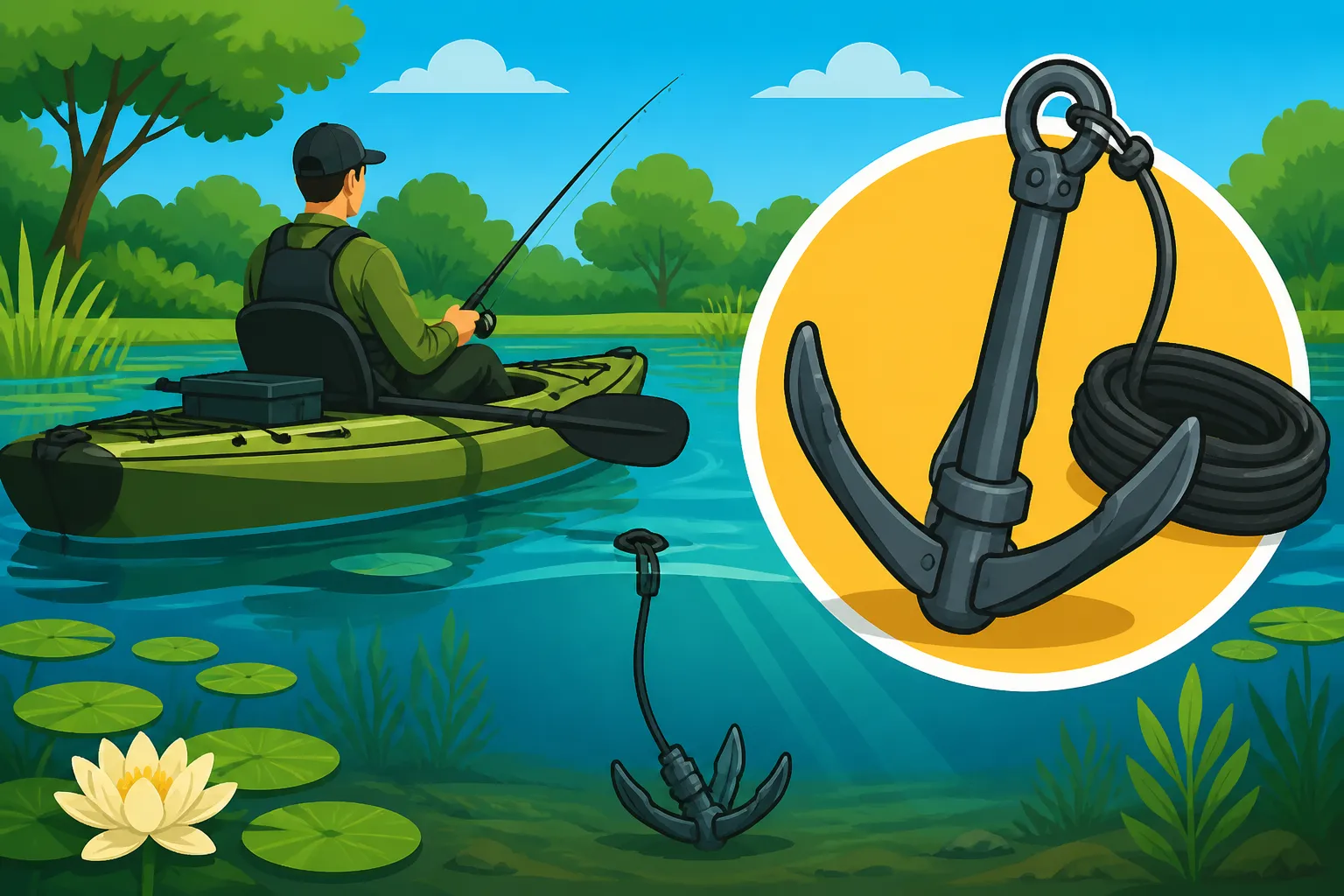
The grapple anchor, also sometimes called a folding anchor, is probably what most people picture when they think of a boat anchor, just in miniature. It typically features four prongs that fold in for compact storage and then spread out to grip the bottom. This design makes it incredibly versatile for small ponds with varied bottom compositions.
- How it works: When deployed, the prongs spread and dig into whatever they can find—mud, sand, gravel, or even snagging onto submerged branches or rocks. Its lightweight design (often 1.5 to 3 pounds for kayaks) combined with its ability to "grab" makes it highly effective. Because it can collapse, it's one of the most portable options, fitting easily into a kayak's storage hatch or secured to the deck.
- Ideal for: Ponds with mixed bottoms, where you might encounter soft mud in one spot and rocky patches in another. It's a great all-around choice for many Indiana ponds. The folding design is a huge plus for kayak anglers where storage space is at a premium.
- Considerations: While versatile, if the pond bottom is extremely soft, like thick muck, the small prongs might not always get enough purchase to hold you firmly, especially in stronger winds. Conversely, they can sometimes get too well-stuck in dense brush or rocky crevices, leading to retrieval challenges. Always make sure to use an appropriate length of How to Rig a Fishing Kayak for Indiana Waters anchor line—typically a 3:1 to 5:1 scope (length of rope to depth of water) for best holding power.
Drift Socks Sea Anchors for Controlled Movement
Now, a drift sock isn't an anchor in the traditional sense; it won't hold you rigidly in one spot. Instead, it's designed to slow your drift in windy or current-affected conditions. Think of it as a parachute that deploys underwater, creating drag. This is a fantastic tool for covering water slowly and methodically, rather than sitting still.
- How it works: A drift sock is typically a cone-shaped fabric device that opens up in the water, catching the current or wind and significantly reducing your speed. You attach it to a rope and deploy it from the bow or stern, depending on how you want to orient your kayak. It keeps your bow pointed into the wind, which helps with stability and allows for more comfortable casting as you slowly move across a productive flat.
- Ideal for: Ponds where you want to slowly work a long weed line, a large flat, or troll a lure without paddling constantly. It's excellent for presentations that benefit from a natural, slow drift, such as working a finesse worm for bass or a jig for crappie.
- Considerations: If your goal is to stay absolutely motionless over a very specific piece of structure, a drift sock isn't the right tool. It's for controlled movement, not static holding. However, combining it with a traditional anchor can sometimes offer a hybrid approach, allowing you to set a slow drift and then drop a small anchor to momentarily stop on a precise spot.
The Mighty Mushroom Anchor: Soft Bottom Specialist
Mushroom anchors are aptly named for their shape: a cup-like bottom that resembles a mushroom cap. These anchors are specifically designed to sink into soft, silty, or muddy bottoms and create suction, providing excellent holding power in those conditions. Many Indiana ponds have bottoms that are predominantly soft, making the mushroom anchor a strong contender.
- How it works: The broad, concave base of the mushroom anchor settles onto the soft bottom. As the kayak pulls on the anchor line, the anchor gets pulled deeper into the mud, creating a strong suction effect that resists movement. They don't have prongs to snag, which can be a relief when fishing in heavily vegetated or debris-strewn waters.
- Ideal for: Ponds with consistently soft, muddy, or silty bottoms. They are particularly effective when you know you'll be anchoring in deep muck where other anchor types might just drag.
- Considerations: Mushroom anchors tend to be heavier than grapple anchors for the same holding power, often needing to be 5-10 pounds for a kayak, which can be a drawback for portability. If the bottom is hard-packed clay, rock, or dense weeds, they might not dig in effectively and could just slide. Retrieval can also be a bit more strenuous due to the suction, so make sure you have a good Best Landing Nets for Bank Fishing or rope management system.
Spike Anchors/Stick Anchors: Shallow Water Saviors
Spike anchors, also known as stick anchors or shallow water anchor poles, are a fantastic innovation for kayak anglers who spend a lot of time in shallow water. These aren't like traditional anchors that hold you from below; instead, they are poles that you manually push into the soft bottom to pin your kayak in place.
- How it works: A spike anchor is essentially a sturdy pole, often made of fiberglass, aluminum, or composite material, with a pointed or barbed tip. You push the pole straight down through a scupper hole or an anchor cleat until it penetrates and holds firm in the soft bottom. Your kayak is then "stuck" to the pole. They come in various lengths, typically 6-10 feet, to accommodate different shallow water depths.
- Ideal for: Very shallow ponds, creek mouths, weed lines in bays, or any area where the water is only a few feet deep and the bottom is soft mud or sand. They offer incredibly quiet deployment, which is a huge advantage when sight fishing for spooky fish like bass in clear, shallow water.
- Considerations: Their effectiveness is entirely dependent on having a soft bottom that they can penetrate. They won't work on rock, hard clay, or thick roots. Also, they are limited by depth; you can only use them in water as shallow as the pole is long. While they don't have an anchor line to manage, the pole itself can be cumbersome to store on a small kayak, though many are designed with clips or mounting systems.
Key Features and Considerations When Choosing Your Pond Anchor
Selecting the right anchor for your kayak isn't just about picking the first one you see. There are several crucial factors to consider that will directly impact its effectiveness, your safety, and your overall enjoyment on the water. Thinking through these points will help you make an informed decision, ensuring your anchor is a helpful tool rather than a frustrating piece of gear.
Anchor Weight vs. Kayak Size and Pond Conditions
It's a common misconception that a heavier anchor is always better. While weight plays a role, especially with mushroom anchors, the design of the anchor and the type of bottom in your small pond are often more critical. For most kayaks in small pond settings, you don't need a massive anchor.
- Kayak Size: A heavier, wider fishing kayak will naturally require a bit more anchor power to hold it steady than a smaller, lighter recreational kayak. However, for the typical fishing kayak, a 1.5-3 lb grapple anchor or a 5-10 lb mushroom anchor is usually sufficient for ponds.
- Pond Conditions: This is where local knowledge comes into play. Is the pond typically very calm, or does it get windy? Are there strong currents from an inlet? A pond prone to strong gusts will demand more from your anchor than a truly sheltered, still-water pond. For soft, muddy bottoms, a mushroom anchor might require more weight (e.g., 8-10 lbs) to dig in and create enough suction. For mixed bottoms, a 3-pound grapple anchor is often enough if it can effectively grab onto something. The key is finding the sweet spot: enough weight and design efficiency to hold you, but not so much that it's a pain to deploy and retrieve or takes up too much precious kayak space. You can often find a good balance of weight and performance with various options available at Bass Pro Shops.
Anchor Line and Retrieval Systems: Don't Forget the Rope!
The anchor itself is only half the equation; the anchor line (or rope) and how you manage it are just as important. A cheap, inadequate rope can turn a great anchor into a liability.
- Rope Length (Scope): A general rule of thumb for effective anchoring is to have an anchor line that is at least 3-5 times the depth of the water you're in. This "scope" allows the anchor to pull horizontally along the bottom, giving its flukes or cup a chance to dig in and set properly. If your rope is too short (too steep a scope), the anchor will pull straight up and likely just drag. For a pond with an average depth of 10 feet, you'll want at least 30-50 feet of anchor line.
- Rope Type: Nylon rope is usually the best choice for anchor lines. It has a bit of stretch, which acts as a shock absorber against waves and wind, reducing stress on your kayak and anchor. It's also durable, relatively inexpensive, and easy to handle.
- Retrieval System (Anchor Trolley): This is arguably the most important accessory for safe kayak anchoring. An anchor trolley is a simple system of pulleys and a continuous loop of rope that runs along one side of your kayak. It allows you to deploy your anchor from the bow (front) or stern (back) of your kayak, but retrieve and secure the anchor line right next to your cockpit. This prevents you from having to lean precariously over the bow or stern to manage your anchor, greatly enhancing safety, especially in choppy water. It also allows you to easily adjust your position relative to the anchor point, crucial for working a specific piece of structure. Many kayak anglers consider an anchor trolley an essential piece of Gear & Boats for any type of water.
Material and Durability for Freshwater Use
While saltwater corrosion is a major concern for ocean anglers, freshwater ponds still require durable, well-made anchor materials. You want an anchor that will last and perform reliably for many seasons.
- Galvanized Steel: This is a common and excellent choice for grapple and mushroom anchors. The galvanization process adds a protective zinc coating that resists rust and corrosion, even with repeated exposure to fresh water and muddy bottoms. It's robust and can withstand being banged around a bit.
- Stainless Steel: Less common for the entire anchor due to cost, but sometimes seen in components or smaller spike anchors. It offers superior corrosion resistance but is often heavier and pricier.
- Plastic/Composite: Some smaller, very lightweight anchors or shallow-water spikes might use durable plastics or composites. These are typically lighter and won't rust, but ensure they are robust enough to handle the stresses of anchoring and not break under pressure.
- Overall Build Quality: Regardless of the material, look for anchors with solid construction, strong welds (if applicable), and smooth edges that won't fray your rope. Remember, your anchor will likely be dragged across rough bottoms, so it needs to be tough.
Portability and Storage on a Kayak
Kayaks are all about maximizing limited space, so the anchor you choose needs to be practical for transportation and storage. A bulky anchor, even if effective, can quickly become a nuisance.
- Compactness: Folding grapple anchors excel here. They collapse down into a small package that can easily fit into a milk crate, a storage hatch, or be strapped to the deck. Mushroom anchors, while effective, are typically fixed in shape and can be bulkier, requiring a dedicated spot or bucket. Spike anchors are long and thin, so while they don't take up much volume, their length needs to be considered for deck mounting or storage.
- Weight: Beyond its holding power, consider the overall weight you're adding to your kayak setup. If you have to carry your kayak long distances to launch, every pound counts. Lighter anchors are generally preferred for ease of transport and less fatigue when deploying and retrieving.
- Deployment and Retrieval Ease: How quickly and easily can you get the anchor in and out of the water? An anchor that constantly snags or requires a struggle to manage can deter you from using it, defeating its purpose. Consider systems that allow for quick release in an emergency, such as a float attached to the end of your anchor line (a "breakaway" system) or simply a sharp knife readily accessible to cut the line if you get dangerously stuck.
Setting Up and Using Your Kayak Anchor Safely and Effectively
Having the right anchor is one thing, but knowing how to properly set it up and use it safely is paramount. Without proper technique, even the best anchor can become a hazard or simply fail to do its job. Kayak anchoring requires a thoughtful approach to ensure you stay put without compromising stability or getting into a sticky situation.
The Anchor Trolley: Your Kayak's Best Friend
If you're serious about kayak fishing with an anchor, an anchor trolley is practically a non-negotiable accessory. It’s a simple yet ingenious system that radically improves safety and functionality when anchoring from a kayak.
- What it is: An anchor trolley consists of a continuous loop of rope that runs along one side of your kayak, typically attached by a pair of pulleys, one at the bow and one at the stern. A ring or clip on this loop is where you attach your anchor line.
- Why it's essential: Imagine you drop your anchor from the front of your kayak. The anchor line is now pulling directly on your bow. If the wind shifts or a boat wake hits you from the side, your kayak could be broadsided, increasing the risk of tipping. With an anchor trolley, you drop your anchor, attach the line to the trolley's ring, and then use the trolley rope to slide the anchor attachment point all the way to the bow or stern. This allows you to position your kayak's bow or stern directly into the wind or current, providing the most stable and comfortable orientation for fishing. When you want to retrieve the anchor, you simply slide the attachment point back to your cockpit, pull up the anchor, and then slide it back to the bow or stern for storage. It eliminates dangerous leaning and ensures you maintain control. You can find detailed instructions on how to install and use an anchor trolley when looking up guides on How to Rig a Fishing Kayak for Indiana Waters.
Best Practices for Deployment and Retrieval
Anchoring a kayak isn't as simple as just throwing the anchor overboard. There's a technique that maximizes holding power and minimizes hassle.
- Deploy Upwind/Upstream: Always paddle past your desired fishing spot, then deploy your anchor upwind or upstream of where you want to end up. Let out enough anchor line (remember that 3-5:1 scope!) as you slowly drift back toward your spot. This allows the anchor to settle and dig in properly. If you drop the anchor directly on your spot, it won't have the horizontal pull needed to set, and you'll likely drag.
- Let it Set: Once the anchor hits the bottom, give it a moment to dig in. You'll often feel a slight tug as it sets. Then, use your anchor trolley to position your kayak appropriately, usually with the bow or stern pointed into the prevailing wind or current.
- Retrieval: When it's time to move, use the anchor trolley to bring the anchor line attachment point back to your cockpit. Slowly pull the anchor line, reeling it in as you go. If the anchor is stuck, try paddling directly over the anchor and pulling straight up, or even paddling a short distance in the opposite direction from which you set it to try and dislodge it. Take your time to coil the rope neatly to prevent tangles on your next deployment. Nothing is more frustrating than a tangled anchor line when you need to drop it quickly.
Safety First: Quick Release and Avoiding Hazards
Safety should always be your top priority, especially when operating a small craft like a kayak. Anchors, while helpful, can introduce potential hazards if not used correctly.
- Quick Release: Always, always have a way to quickly release your anchor line in an emergency. This might be a sharp knife easily accessible on your PFD, or a quick-release cleat/mechanism. If your anchor gets snagged in a strong current, or you suddenly need to move quickly to avoid an obstacle or another boat, being able to jettison your anchor is crucial. Losing an anchor is better than capsizing or being pulled into danger.
- Avoid Strong Currents and High Traffic: While small ponds typically don't have raging rivers, avoid anchoring directly in the path of any noticeable current if it could become a hazard. Also, be mindful of other boaters. Anchoring in a busy channel or directly in a boat lane is asking for trouble. Always be aware of your surroundings, especially if you're exploring Best Fishing Spots in Indiana that might have some boat traffic.
- Submerged Obstacles: Be aware that your anchor line could get wrapped around submerged trees, logs, or other debris. This isn't just a retrieval headache; it can also be a safety concern if you're firmly stuck. Keep an eye on your fish finder or use polarized sunglasses to spot potential hang-ups.
Troubleshooting Common Anchoring Issues
Even with the best gear and technique, you might encounter some common anchoring problems. Knowing how to troubleshoot them can save you a lot of frustration.
- Anchor Won't Hold/Keeps Dragging:
- Not enough scope: You likely haven't let out enough anchor line. Increase the length of your rope to allow the anchor to pull more horizontally.
- Wrong anchor type for bottom: A grapple anchor on a pure muck bottom, or a mushroom anchor on a rocky bottom, might not set well. Consider if your anchor matches the prevailing bottom composition.
- Anchor is too light: While ponds don't usually require heavy anchors, if you're consistently dragging in breezy conditions, a slightly heavier anchor might be needed.
- Anchor isn't set: Paddle past your spot and allow the anchor to drag a bit before reaching your desired location. This helps it dig in.
- Anchor Is Stuck:
- Paddle directly over the anchor: Sometimes, pulling straight up will free it.
- Try pulling from different angles: Paddle a short distance in a different direction and try pulling again.
- "Breakaway" system: If your anchor has a zip-tie at the crown (the top where the chain attaches to the anchor body) and your main line goes to the shank, you can intentionally break the zip-tie, allowing you to pull the anchor out from the bottom via the crown. You'll need to re-tie it later. This is a common setup for tackle from brands like Bass Pro Shops.
- Last resort: Cut the line: As mentioned, if safety is a concern or it's simply hopelessly stuck, cut the line. It's better to lose an anchor than risk injury or equipment damage.
- Rope Tangles Constantly:
- Neat coiling: Always coil your rope neatly after retrieval. Don't just stuff it into a bag.
- Anchor bag: Consider an anchor bag that the rope feeds into and out of, helping to keep it organized.
- Check for twists: Rope can get twisted over time. Let it hang freely to untwist periodically.
- Excessive length: If your rope is excessively long for the depths you typically fish, you're just creating more rope to manage. While it's good to have some extra, don't overdo it for pond fishing.
By understanding these anchor types and mastering safe anchoring practices, you'll transform your kayak fishing experience on Indiana's small ponds. You'll be able to hold your ground, precisely target those elusive fish, and enjoy the peace of being truly stable on the water.
Disclaimer
This article is for general informational purposes only and does not constitute professional advice. Laws, prices and regulations vary by location and change over time. Consult a qualified professional for guidance on your specific situation.