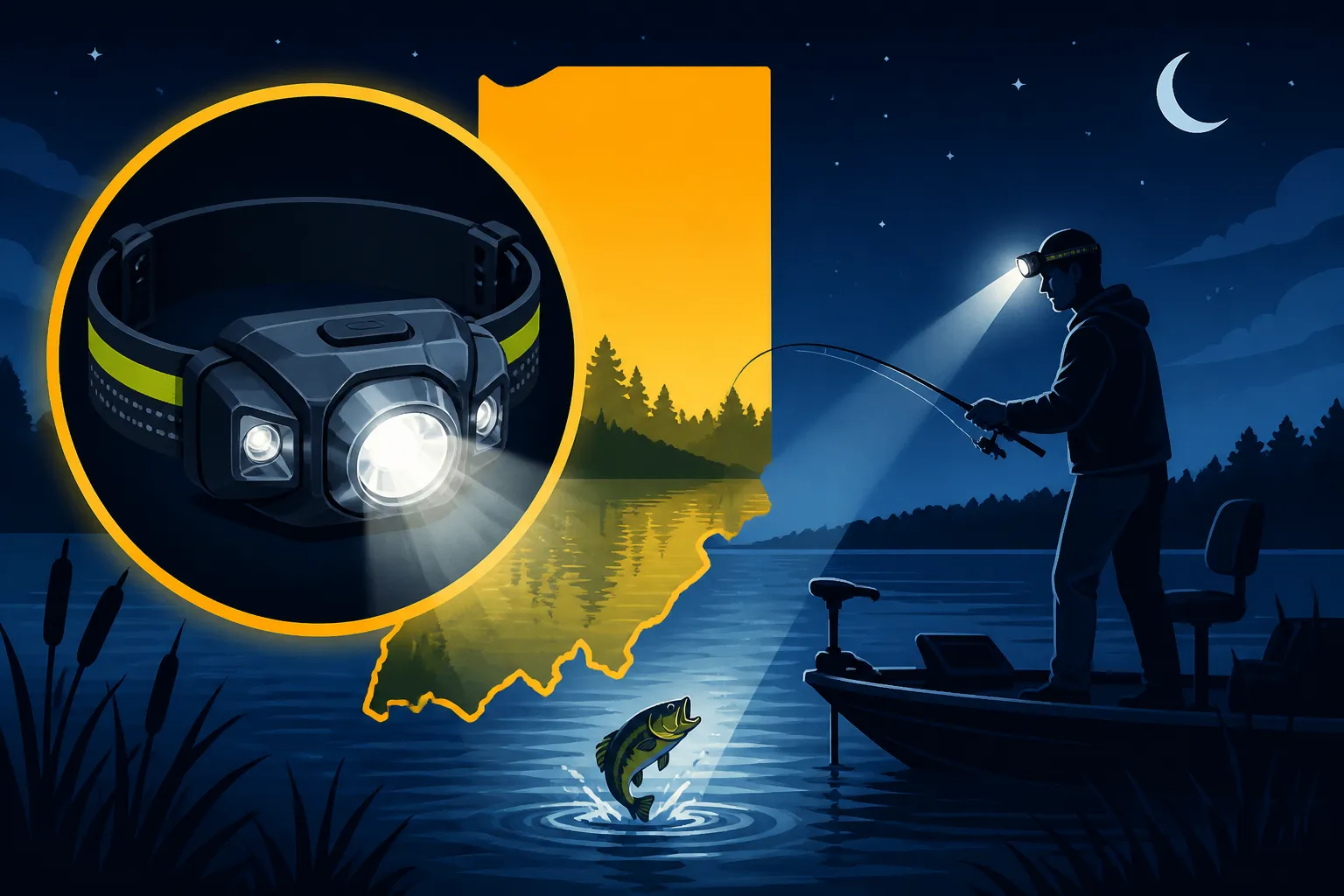
Best Headlamps for Night Fishing on Indiana Lakes
There's something truly magical about night fishing on Indiana's serene lakes. The peaceful quiet, the cool air, and the mystery of what lurks beneath the moonlit surface can be incredibly rewarding. However, the lack of daylight also brings unique challenges, from tying knots in the dark to safely navigating your way around the boat or shore. This guide will shine a light on why a reliable headlamp isn't just a convenience but an absolute necessity for any Hoosier angler venturing out after sunset, helping you choose the best one and use it effectively.
Why a Headlamp is Absolutely Essential for Night Fishing in Indiana
Picture this: you've finally found that perfect honey hole on Are There Any Good Fishing Spots Open at Night in Indiana?, the bite is hot, and you're wrestling a feisty bass under the cloak of darkness. Suddenly, you drop your pliers, or worse, you trip over an unseen obstacle. Night fishing, while incredibly rewarding, demands an extra layer of preparedness, and a quality headlamp is at the top of that list. It’s not just about seeing; it’s about safety, efficiency, and maintaining the stealth that makes night fishing so special.
Safety First: Navigating and Avoiding Hazards in the Dark
The most crucial reason to invest in a good headlamp is safety. When the sun dips below the horizon, familiar landscapes transform into obstacle courses. Even on well-known banks or boat ramps, uneven terrain, slippery mud, loose rocks, or unseen roots can lead to painful slips, trips, and falls. Imagine trying to land a trophy fish from a dark, unfamiliar bank after midnight – one misstep could send you, your gear, or even your prize into the murky water. A headlamp illuminates your path directly in front of you, allowing your eyes to constantly scan for hazards, making every step safer.
Beyond navigating the environment, think about the gear you handle. Sharp hooks, fillet knives, and other tools become significantly more dangerous when you can't see them clearly. Trying to unhook a fish in pitch black, or worse, tie on a new lure, is an invitation for a visit to the emergency room. A headlamp ensures that your hands are free to manipulate lines, hooks, and fish with precision, reducing the risk of accidental cuts or punctures. It's about preventing those frustrating and potentially serious moments that can quickly ruin a peaceful night on the water.
Even if you're comfortable on your boat, basic navigation requires light. Spotting submerged logs, low-hanging branches near the shore, or even your fishing buddy’s discarded lure can be challenging without proper illumination. A headlamp allows you to quickly scan your immediate surroundings, both on and off the water. In an emergency, whether it's dropping an item overboard, dealing with an unexpected mechanical issue, or needing to signal for help, a powerful headlamp can be a lifesaver. It provides a directed beam that can cut through the darkness, allowing you to assess situations and react quickly.
Efficiency and Hands-Free Operation: Making Every Moment Count
Night fishing often means that the prime bite windows are short and intense. You don't want to waste precious minutes fumbling in the dark. This is where the hands-free advantage of a headlamp truly shines. Think about tying a delicate knot with a flashlight clutched between your teeth or tucked under your arm – it's awkward, ineffective, and often results in poorly tied knots that could cost you a fish. With a headlamp, the light follows your gaze, illuminating exactly where your hands are working.
Organizing your tackle box in the dark is another common frustration. How many times have you reached for that specific jig or worm, only to pull out three others because you couldn't quite distinguish them? A headlamp allows you to quickly locate and select the right bait or lure, ensuring you spend less time rummaging and more time with your line in the water. This efficiency translates directly into more opportunities to catch fish, especially when the bite is hot.
Tasks like managing your rod and reel, adjusting the drag, or untangling a frustrating backlash become much simpler with two free hands and a direct light source. Instead of shining a phone flashlight and hoping for the best, your headlamp ensures you have a clear view of your line, reel, and guides. This seamless operation reduces stress and increases your overall enjoyment of the night fishing experience, allowing you to focus on the thrill of the catch rather than the challenges of the dark.
Stealth and Minimizing Disturbance to Your Fishing Spot
One of the great appeals of night fishing is the chance for a more intimate, stealthy approach to angling. Many species, especially wary ones like walleye or big bass, can be easily spooked by bright, sudden light. A broad, powerful white beam from a flashlight, constantly sweeping across the water, can alert fish to your presence and send them scattering. A headlamp, particularly one with adjustable brightness and specific beam patterns, allows for much more controlled and localized illumination.
The ability to direct your light precisely where you need it – down at your hands, on your immediate footing, or just a few feet into the water – is invaluable. This minimizes the amount of light pollution you cast over your fishing spot, helping you maintain that crucial element of stealth. You can see what you're doing without broadcasting your presence to every fish in the vicinity. This subtle approach can be the difference between a successful night and one where the fish seem to vanish whenever your light hits the water.
Moreover, many high-quality headlamps come equipped with a red light mode, which is arguably the angler's greatest secret weapon for night fishing. Red light does not disrupt your natural night vision nearly as much as white light, allowing your eyes to remain adapted to the darkness. Critically, fish are generally less sensitive to the red end of the light spectrum, making it far less likely to spook them. This feature lets you tie knots, bait hooks, and handle fish without disturbing the water or your own nocturnal adaptation, truly enhancing the stealth and magic of fishing under the stars.
Key Features to Prioritize in Your Night Fishing Headlamp
Choosing a headlamp isn't just about grabbing the brightest one on the shelf. For night fishing on Indiana's diverse waters, from the quiet glacial lakes to the sprawling reservoirs, you need specific features that cater to the unique demands of the environment. Think beyond simple illumination; consider durability, power, and angler-friendly functionalities that will make your nocturnal adventures safer and more successful.
Brightness (Lumens) and Versatile Beam Patterns
Lumens often get all the attention when discussing headlamps, and while brightness is important, it's not the only factor. For night fishing, you don't always need the maximum lumens available. In fact, an overly bright, broad beam can actually hinder your night vision and spook fish, especially in clearer waters or shallower areas. A headlamp in the 100-300 lumen range is typically sufficient for most close-up tasks like tying knots, baiting, or rummaging through your tackle box. However, having a burst mode that offers 500+ lumens for short periods can be incredibly useful for scanning distant banks, spotting buoys, or navigating larger bodies of water like Lake Wawasee: Indiana's Largest Natural Lake.
Beyond raw brightness, beam patterns are critical. A good fishing headlamp should offer versatility. A "spot" beam focuses light into a narrow, intense beam, ideal for seeing farther distances or examining specific points with precision. A "flood" beam, on the other hand, disperses light over a wider area, which is perfect for illuminating your immediate workspace, the inside of your boat, or the path directly in front of you while walking the bank. Many quality headlamps offer the ability to switch between these two modes or even combine them, giving you the flexibility to adapt to different situations without fumbling for another light source.
Adjustable brightness levels are also non-negotiable. You’ll want a low setting for subtle illumination that preserves your night vision and minimizes disturbance to the fish. A medium setting works well for general tasks, and a high setting can be reserved for those moments when you truly need maximum light. Having these graduated options ensures you always have the right amount of light for the task at hand, preventing unnecessary battery drain and maintaining stealth. Some advanced models even feature a "memory" function that turns the light on in the last used setting, which is a small but valuable convenience in the dark.
Battery Life and Reliable Power Sources
Few things are as frustrating during a night fishing trip as your headlamp dying when the bite is just starting. Long nights demand long-lasting battery life. When evaluating headlamps, pay close attention to the manufacturer's stated battery life for various brightness settings. Remember that these figures are often for ideal conditions; colder Indiana nights, common during spring or fall walleye runs, can significantly reduce battery performance. Look for headlamps that offer at least 8-12 hours on their low or medium settings, which are the ones you'll use most often.
You'll encounter two main types of power sources: rechargeable batteries (often integrated or removable 18650/AAAs) and disposable batteries (typically AA or AAA). Rechargeable headlamps, particularly those with a USB charging port, offer convenience and can save money in the long run. You can charge them in your truck on the way to the lake or even via a portable power bank while out on the water. However, if you opt for rechargeable, always carry a fully charged spare battery pack, or a power bank. If you go with disposable batteries, always pack an extra set or two. It’s a small amount of weight for immense peace of mind.
A crucial feature for any headlamp intended for extended night use is a battery level indicator. This simple addition can save you from being plunged into darkness unexpectedly. Knowing whether you have 75%, 50%, or 25% battery life remaining allows you to conserve power more effectively or switch to your backup light source before it's too late. It’s like having a fuel gauge for your most important piece of night gear, letting you focus on fishing rather than worrying if your light will last.
Water Resistance, Durability, and All-Weather Performance
Fishing is an inherently wet activity. Whether it's splashes from a landed fish, unexpected rain, heavy dew, or even an accidental drop into the water, your headlamp needs to be able to withstand moisture. This is where IPX ratings come into play. Look for a headlamp with an IPX4 rating as a minimum; this means it’s resistant to splashes from any direction. For true peace of mind, especially if you plan on fishing from a kayak or in unpredictable weather, an IPX7 rating is ideal. This rating typically means the headlamp can be submerged in up to 1 meter of water for 30 minutes without damage, making it practically waterproof for most fishing scenarios.
Durability goes hand-in-hand with water resistance. Your headlamp will likely endure bumps, drops, and general wear and tear in the outdoors. Opt for models constructed from robust materials that can take a beating. Look for solid housing, well-sealed battery compartments, and sturdy straps. A headlamp made from cheap, flimsy plastic won't last long when exposed to the rigors of fishing, especially if it gets knocked around in your tackle box or dropped on a concrete boat ramp.
Indiana's weather can be notoriously fickle. A beautiful, clear evening can quickly turn into a foggy, misty, or even rainy night. Your headlamp needs to perform reliably through all these conditions. Good water resistance combined with durable construction ensures that your light won't fail when you need it most. It’s an investment in uninterrupted fishing and, more importantly, your safety and comfort regardless of what Mother Nature throws your way.
Comfort, Fit, and Ergonomics for Long Hours
You'll be wearing your headlamp for potentially many hours, so comfort and fit are paramount. A poorly fitting headlamp can cause headaches, dig into your skin, or constantly slip, forcing you to adjust it repeatedly. Look for adjustable straps, often made of soft, breathable elastic, that can be cinched down securely but comfortably around your head or over a hat. Some headlamps even feature a top strap for added stability, which can be beneficial for heavier models or during active movement.
The weight of the headlamp also plays a significant role in comfort. Lighter models are less noticeable and reduce strain, especially during extended use. If the battery pack is located at the back of the head, this can help balance the weight, preventing the light source from feeling front-heavy and constantly sliding down. Try on different models if possible to get a feel for their weight distribution and how they sit on your head.
Finally, consider the ergonomics of the controls. Can you easily operate the buttons to switch modes or adjust brightness, even with cold fingers or while wearing gloves? Are the buttons clearly distinguishable by touch? Fumbling with tiny, stiff buttons in the dark is frustrating and distracts from your fishing. Intuitive design, where controls are easily accessible and responsive, is a small detail that makes a big difference in the user experience of a headlamp.
Red Light Mode: The Angler's Essential Tool
If there's one feature that truly distinguishes a great fishing headlamp from a mediocre one, it's a dedicated red light mode. This isn't just a fancy gimmick; it's a vital tool for any serious night angler. The primary benefit of red light is that it preserves your natural night vision. When you use bright white light, your pupils constrict, and your eyes lose their adaptation to the darkness. When you turn the white light off, it takes several minutes for your eyes to readjust, essentially leaving you temporarily blind. Red light, however, has a minimal impact on your scotopic (night) vision, allowing you to maintain your ability to see in dim conditions even after using the light.
Beyond preserving your own vision, red light is incredibly effective at minimizing disturbance to the fish. Fish perceive red light differently than humans, and many species, especially in freshwater, are significantly less sensitive to it. This means you can use your red headlamp to illuminate your bait, tie knots, and unhook fish without spooking them away from your Best Catfish Fishing Spots for Beginners or favorite walleye hole. It allows you to operate with a level of stealth that bright white light simply cannot match.
Experienced night anglers, especially those targeting wary species like walleye on Best Walleye Fishing in Indiana or bass in clear waters, swear by the red light feature. It allows for discreet rigging, checking your line for tangles, or even quickly scanning the immediate area around your boat or bank without creating a glaring beacon. Many anglers will keep their headlamp on a low red setting almost continuously during their night trips, only switching to white light for critical tasks that require maximum visibility. It's a game-changer for enhancing both your personal experience and your fishing success after dark.
Choosing the Right Headlamp for Indiana's Night Fishing Conditions
Navigating the myriad of headlamp options can feel overwhelming, but with the specific demands of Indiana night fishing in mind, you can narrow down your choices. It's about finding that sweet spot between sufficient illumination, durability, and angler-friendly features that will make your time on the water more enjoyable and productive.
General Purpose vs. Angler-Specific Headlamps
The good news is that you don't necessarily need a headlamp marketed explicitly as "angler-specific." Many high-quality headlamps designed for hiking, camping, or general outdoor use will possess all the features a night fisherman needs. The key is to look at the specifications rather than just the label. Focus on those core requirements we just discussed: adjustable brightness, multiple beam patterns (spot/flood), a reliable red light mode, good battery life, and a strong IPX water resistance rating.
However, be wary of ultra-cheap, generic headlamps that promise exorbitant lumens for a low price. Often, these units deliver inconsistent performance, terrible battery life, and fall apart after minimal use, especially when exposed to moisture. It’s better to invest a little more in a reputable brand that builds products to withstand outdoor conditions. Think of it as investing in your safety and enjoyment on the water – a cheap headlamp failing in the middle of a dark night can quickly turn a fun trip into a stressful ordeal.
When evaluating a "general purpose" headlamp for fishing, specifically check for how easy it is to access the red light mode. Some headlamps bury it deep within a sequence of button presses, which can be frustrating in the dark. Others have a dedicated button or a very quick sequence to get to red light, which is ideal. Ultimately, a headlamp that meets the functional requirements of lumens, beam versatility, battery, water resistance, comfort, and especially red light, will serve you well, regardless of its marketing niche.
Where to Find Reliable Options and Consider Top Brands
When you're ready to make a purchase, you have several excellent avenues. Specialty outdoor retailers, both brick-and-mortar and online, are fantastic resources. They often carry a wide selection of reputable brands and their staff can provide expert advice tailored to your needs. For those who prefer the convenience of online shopping and a vast array of choices, platforms like Amazon offer an incredible selection, complete with detailed product descriptions and invaluable user reviews from other anglers and outdoor enthusiasts. It’s a great way to compare features, prices, and real-world performance.
Larger sporting goods stores, like Bass Pro Shops, are also excellent places to find headlamps. These stores often have dedicated fishing departments, and while they might not have every niche brand, they typically stock well-known, reliable manufacturers that cater to anglers. The benefit of shopping at a place like Bass Pro Shops is the opportunity to physically try on different headlamps, assess their comfort, and get a feel for the controls before committing to a purchase. This can be particularly helpful for checking how well the strap adjusts and how the weight feels on your head.
When considering brands, look for companies with a long-standing reputation for quality and innovation in outdoor lighting. Brands known for ruggedness and reliability generally offer better customer support and warranty coverage should you encounter any issues. While specific models may change, a brand's commitment to quality usually remains consistent. Prioritize function and durability over flashy, unproven features.
Matching Headlamp Features to Your Fishing Style and Location
The "best" headlamp can vary depending on your specific night fishing style and where you plan to cast your line in Indiana. A shore angler trekking along a river bank will have different needs than a boat angler cruising Best Boats for Fishing Monroe Lake in Indiana.
For instance, if you primarily fish from the bank, especially in more remote areas or along trails leading to Night Fishing Spots on Indiana's Quiet Lakes, you'll likely prioritize a lightweight design, excellent long-distance spot beam for navigating uneven terrain, and a very long battery life for extended walks and fishing sessions. A robust, comfortable strap that won't slip during movement is crucial. Shore anglers also benefit from higher water resistance in case of an accidental drop or heavy dew.
Boat anglers, on the other hand, might benefit from a headlamp with a powerful flood beam for illuminating the deck, finding gear in a Best Coolers for Keeping Fish Fresh on a Boat, or reading navigation charts. While navigation lights on your boat cover distant visibility, a good spot beam on your headlamp can help locate buoys or markers more precisely, or even scan the water for activity near the boat. Strong water resistance is also key, as boat environments are often splash-prone. Think about how much you need to move around and how much light you'll need for various tasks within the confines of your vessel.
Consider the type of fish you're targeting as well. If you're going after the notoriously spooky walleye, a headlamp with an exceptionally discreet red light mode that's easy to access without fumbling is absolutely essential. For larger, less wary fish like catfish, while red light is still beneficial, the overall light discipline might be slightly less critical. Understanding your typical fishing scenarios will guide you to a headlamp that perfectly complements your nocturnal angling adventures.
Practical Tips for Using Your Headlamp Effectively While Night Fishing
Having the right headlamp is only half the battle; knowing how to use it effectively on the water is just as important. From conserving battery life to maintaining stealth and performing routine maintenance, a few simple practices can significantly enhance your night fishing experience on Indiana's beautiful lakes and rivers.
Conserving Battery Life for Extended Trips
Nothing dampens a night fishing trip faster than a dead headlamp. The cardinal rule of battery conservation is simple: always start with fresh or fully charged batteries, and always carry spares. This might sound like common sense, but it’s an easily overlooked detail in the rush to get out on the water. For rechargeable models, ensure they're fully topped off before you leave, and consider bringing a portable power bank for on-the-go charging if you plan a multi-night or extremely long session.
Beyond starting fresh, mindful usage is key. Utilize the lowest brightness setting that allows you to comfortably see what you need to. Most tasks, like tying knots or baiting hooks, don’t require the maximum lumen output. Only crank up the brightness when absolutely necessary, such as for a quick scan of the distant shoreline or to navigate a tricky path. Constant use of the highest settings will drain your battery at an alarming rate, cutting your night short.
Your headlamp's red light mode is your best friend for battery conservation. Because it preserves your night vision, you can use a very low red light setting for prolonged periods without needing to switch to a power-hungry white light. This extends the overall runtime of your headlamp significantly. Finally, remember to store your headlamp properly. An accidental activation in your tackle box or backpack can drain the battery without you even realizing it. Many headlamps have a "lockout" feature, or you can simply remove the batteries when not in use to prevent unintentional power drain.
Minimizing Light Pollution and Maximizing Stealth
One of the greatest joys of night fishing is the quiet, almost clandestine atmosphere. To preserve this, and to avoid spooking fish, it’s crucial to minimize your light pollution. Always direct your headlamp beam downwards, focusing the light on your immediate workspace – your hands, your tackle box, or the ground directly in front of you. Avoid sweeping the beam across the water unnecessarily. A sudden, bright light can send fish scattering, especially in calm, clear conditions.
Again, the red light mode becomes indispensable here. Use your red light as much as possible. It provides enough illumination for close-up tasks without creating a glaring beacon that disrupts the natural ambiance or alerts fish to your presence. When fishing with partners, be mindful of where you shine your light. Avoid shining your headlamp directly at other anglers or their fishing lines, as this can be blinding and distracting. Courtesy on the water extends to light discipline at night.
Remember, the goal is not to illuminate the entire lake, but to provide just enough light for your specific needs. Practice moving around and performing tasks with minimal light. This focused approach not only helps you blend into the night but also ensures that you become more attuned to the subtle sounds and movements of the nocturnal environment, enhancing the overall experience of How to Catch Fish at Night and making you a more effective angler.
Pre-Trip Checks and Maintenance for Longevity
A little preparation goes a long way in ensuring your headlamp is always ready for action. Before every night fishing trip, make it a habit to perform a quick check. Turn your headlamp on, cycle through all its modes (white, red, spot, flood, high, low), and confirm that everything is functioning correctly. If it’s a rechargeable model, check the battery indicator to ensure it’s fully charged. If it uses disposable batteries, consider putting in a fresh set, especially if you're unsure how old the current ones are.
Regular cleaning and inspection are also vital for longevity. Even freshwater splashes can leave behind residues that can corrode contacts or fog lenses over time. After a trip, especially if your headlamp got wet, wipe it down with a soft, dry cloth. Check the battery compartment for any moisture or corrosion. If you fish Lake Michigan, where saltwater exposure is a risk, even greater care is needed; a thorough rinse with fresh water and drying is essential.
Finally, inspect the headlamp strap for any signs of wear and tear, fraying, or loss of elasticity. A broken strap in the middle of a dark night can be a major inconvenience. Store your headlamp in a safe, dry place when not in use. Many anglers keep it in a small Best Dry Bags for Kayak Fishing or a protective case within their tackle bag to shield it from impacts, dirt, and moisture. Taking these small steps will ensure your headlamp remains a reliable companion for countless night fishing adventures to come.
Headlamp Feature Comparison for Night Fishing
To help you visualize the key characteristics to look for, here's a comparison table of essential headlamp features for night fishing on Indiana lakes.
| Feature | Why It Matters for Night Fishing | Ideal Specifications / Considerations |
|---|---|---|
| Lumens | Provides necessary illumination for tasks and navigation. | 100-300 lumens for general use; 500+ for momentary burst/long-range. |
| Beam Type | Versatility for close-up tasks and distant spotting. | Adjustable spot/flood or combo beam patterns. |
| Red Light Mode | Preserves night vision, less likely to spook fish. | Essential feature. Easy to switch on/off. |
| Battery Life | Ensures light throughout long night sessions. | 8-12+ hours on low/medium settings; rechargeable or spare batteries. |
| Water Resistance | Protection from splashes, rain, and accidental drops. | IPX4 (splashproof) minimum; IPX7 (submersible) for ultimate peace of mind. |
| Comfort/Fit | Allows for extended wear without discomfort. | Adjustable, breathable strap; lightweight design. |
| Durability | Withstands outdoor use, accidental bumps, and drops. | Rugged housing, quality materials. |
| Ease of Use | Simple operation, even with cold hands or in the dark. | Intuitive button placement, clear mode switching. |
Disclaimer
This article is for general informational purposes only and does not constitute professional advice. Laws, prices and regulations vary by location and change over time. Consult a qualified professional for guidance on your specific situation.