Best Boat Batteries for Trolling Motors
There's nothing quite as frustrating as heading out to your favorite fishing spot on an Indiana lake, ready for a peaceful day of casting, only to have your trolling motor sputter and die after just a few hours. We've all been there, feeling the sudden panic as your boat drifts, realizing your battery simply wasn't up to the task. Choosing the right battery for your trolling motor isn't just about picking any old power source; it's about ensuring you have the endurance and reliability to stay on the fish as long as you need to. This comprehensive guide will walk you through everything you need to know about selecting, setting up, and maintaining the best boat batteries for your trolling motor, so you can enjoy uninterrupted time on the water.
Understanding Trolling Motor Battery Types
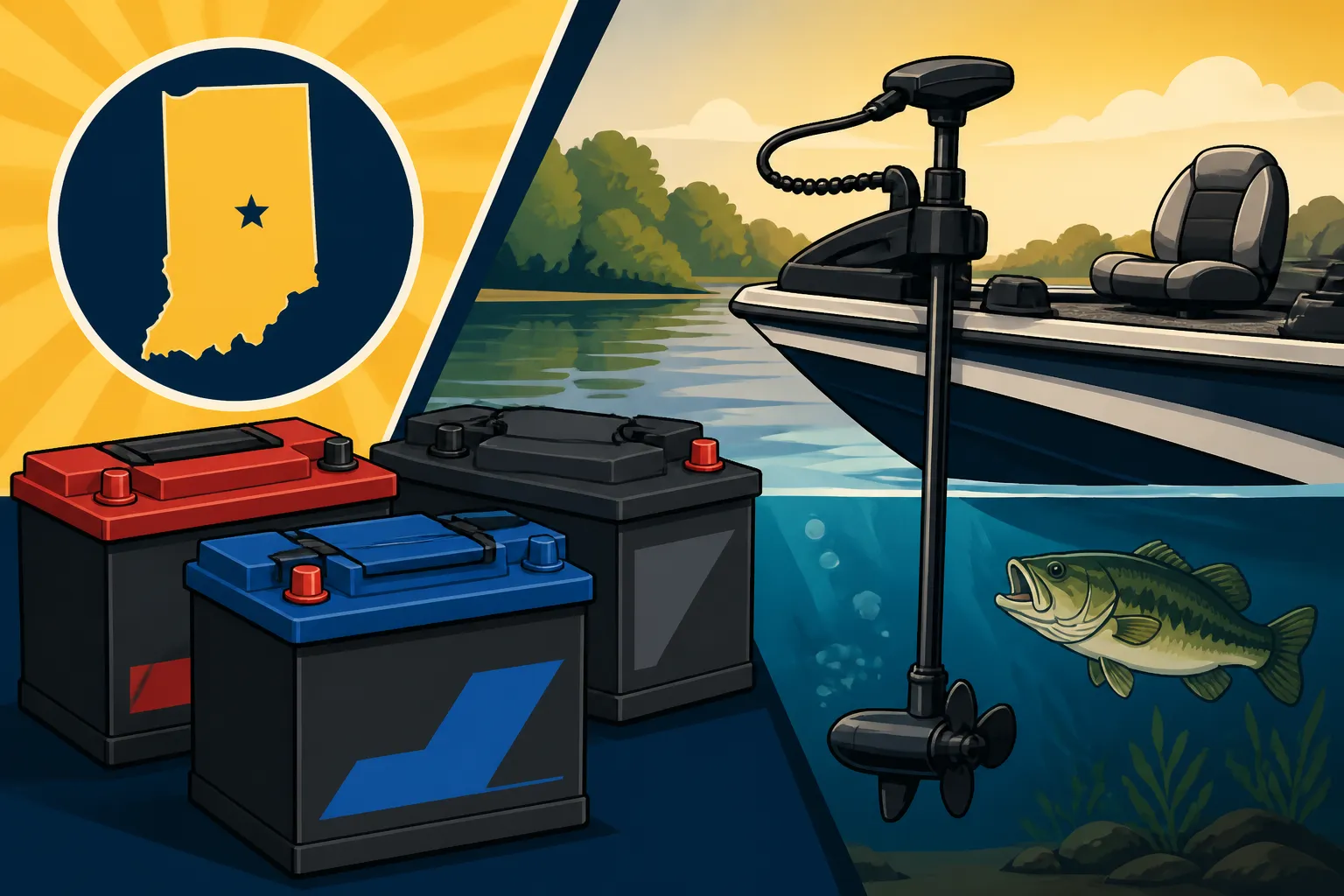
When you start looking into boat batteries for your trolling motor, you'll quickly discover a few main contenders. Each type has its own strengths and weaknesses, and understanding them is crucial to making the right choice for your specific fishing style and budget. You can't just grab a car battery and expect it to perform; trolling motors require a special kind of power delivery that's very different from starting your engine.
Deep Cycle Batteries Explained
The workhorse of trolling motor power for decades has been the deep cycle battery. Unlike starting batteries, which are designed to deliver a massive jolt of power for a few seconds to crank an engine, deep cycle batteries are built for sustained, lower-amp discharge over many hours. They're meant to be drained significantly and then recharged repeatedly without damaging the battery's internal structure. This ability to handle repeated deep discharges is absolutely essential for a trolling motor, which might run continuously for a full day of fishing.
Within the deep cycle category, you'll primarily encounter three types:
- Flooded Lead-Acid (Wet Cell): These are the most traditional and often the most affordable option. They contain liquid electrolyte that covers lead plates. They require regular maintenance, like checking and topping off water levels, and need to be stored upright to prevent spills. While they work well, they are heavy and can be sensitive to deep discharges if not recharged promptly. Many anglers find these a great entry point, and you'll certainly find a wide selection at retailers like Bass Pro Shops.
- Absorbed Glass Mat (AGM): AGM batteries are a step up in technology. The electrolyte is absorbed into fiberglass mats between the plates, making them spill-proof, maintenance-free, and more resistant to vibration. They also recharge faster and can withstand deeper discharges better than flooded batteries. The trade-off is a higher upfront cost, but their convenience and durability often make them worth it, especially if you're dealing with rough water or trailering your boat frequently.
- Gel Cell: These batteries use a gelled electrolyte, making them completely sealed and maintenance-free, much like AGMs. They are also spill-proof and vibration resistant. However, gel cells generally have lower peak current capabilities than AGMs and require specific charging profiles. Overcharging can easily damage them, so if you go this route, ensure your charger is compatible. While less common for trolling motors than AGMs or flooded batteries, they are an option for those seeking a truly sealed system.
Lithium Iron Phosphate (LiFePO4) Batteries: The Modern Contender
For those looking to invest in cutting-edge technology and optimize their boat's performance, Lithium Iron Phosphate (LiFePO4 or LFP) batteries have rapidly become the gold standard. These batteries are a game-changer for trolling motors, offering a host of advantages that traditional lead-acid batteries simply can't match.
The biggest draws of LiFePO4 batteries are their incredibly light weight, impressive power density, and extremely long lifespan. A single LiFePO4 battery can weigh a fraction of a comparable lead-acid battery, which is a huge benefit for smaller boats or for anglers trying to reduce overall boat weight for better performance and fuel efficiency. They deliver consistent power output throughout their discharge cycle, meaning your trolling motor won't slow down as the battery drains. Plus, they can be discharged almost completely without damage, unlike lead-acid batteries that prefer not to go below 50% capacity. This effectively gives you more usable amp-hours from a smaller, lighter package.
The initial cost of LiFePO4 batteries is significantly higher than lead-acid options, which can be a barrier for some. However, when you factor in their extended lifespan (often 5-10 times longer than lead-acid), virtually no maintenance, and consistent performance, they can be a surprisingly cost-effective solution over the long haul. Many anglers, finding they need to replace lead-acid batteries every few seasons, are realizing the long-term value of a lithium investment. You might find a good selection of these newer technologies on online marketplaces like Amazon, often with detailed specifications and user reviews.
Starting vs. Deep Cycle: Why It Matters
It's a common misconception, especially for newer anglers, that any car battery will do the trick for a trolling motor. This couldn't be further from the truth, and attempting to use a starting battery for a deep cycle application will lead to disappointment and a very short battery lifespan.
- Starting Batteries are built with thinner, more numerous lead plates designed to deliver a very high burst of current for a short period (Cranking Amps or Cold Cranking Amps). They don't handle repeated deep discharges well and will quickly degrade if used to power a trolling motor.
- Deep Cycle Batteries, on the other hand, have thicker lead plates and a different internal construction optimized for steady, continuous discharge and recharge cycles. This is precisely what a trolling motor needs to run for hours on end, propelling your boat slowly and steadily across the water. Using the correct type of battery is fundamental to both your fishing success and the longevity of your equipment. For instance, if you're out on Monroe Lake: Indiana's Largest Lake for Bass Fishing and relying on your trolling motor to position you perfectly, you'll quickly learn the value of a true deep cycle battery.
Key Considerations When Choosing a Battery
Now that we've covered the different types, let's dive into the practical aspects of choosing the right battery for your Indiana fishing adventures. This isn't a one-size-fits-all decision; your choice will depend on several factors, including your trolling motor's power, your boat's size, and how long you typically spend on the water.
Battery Capacity Ah and Trolling Motor Thrust
One of the most critical specifications for a trolling motor battery is its Amp-hour (Ah) rating. This number tells you how much energy the battery can store and deliver over time. A 100 Ah battery, for example, can theoretically deliver 10 amps for 10 hours, or 20 amps for 5 hours, and so on.
The amount of thrust your trolling motor generates directly correlates to its power consumption. Trolling motors typically operate on 12V, 24V, or 36V systems, with higher thrust motors requiring higher voltages and more amps.
- 12V Systems: Common for smaller boats and lower thrust motors (30-55 lbs of thrust). A single 12V deep cycle battery is usually sufficient. For a full day of fishing, many anglers find a 100-120 Ah battery provides a good balance of run time and manageability.
- 24V Systems: Used for medium to high thrust motors (60-80 lbs of thrust). These require two 12V deep cycle batteries wired in series. This doubles the voltage but keeps the amp-hour capacity the same as a single battery. So, two 100 Ah 12V batteries wired in series still provide 100 Ah, but at 24V.
- 36V Systems: Essential for high-performance trolling motors (over 100 lbs of thrust) often found on larger bass boats. These require three 12V deep cycle batteries wired in series. Again, the Ah capacity remains that of a single battery, but at 36V.
To estimate your run time, you'll need to know your trolling motor's maximum amp draw. This information is usually in your motor's manual or on the manufacturer's website. If your 12V, 55 lb thrust motor draws, say, 50 amps at its highest setting, and you have a 100 Ah battery, you'd get roughly 2 hours of continuous run time at max power (100 Ah / 50 Amps = 2 hours). However, most anglers don't run their motors at maximum continuously. A good rule of thumb is to aim for a battery capacity that gives you 4-6 hours of realistic run time, considering varying speeds and conditions. If you're planning on chasing bass all day on Patoka Lake Fishing Guide for Bass and Crappie, you'll want ample capacity.
Weight and Space Limitations
Boat batteries are heavy, especially lead-acid ones. This is a significant factor, particularly for smaller boats or kayaks, where every pound counts. Adding two or three large lead-acid batteries can drastically impact your boat's performance, trim, and even overall safety.
- Weight: A typical 100 Ah flooded lead-acid battery can weigh 60-70 pounds. If you need two or three of these for a 24V or 36V system, you're looking at a substantial amount of weight to lug around and store. LiFePO4 batteries, in contrast, can weigh less than half that for the same usable capacity, offering a huge advantage in portability and boat performance.
- Space: Trolling motor batteries often need to be stored in dedicated compartments, and older boats might not have been designed with multiple large batteries in mind. Ensure you have enough physical space in a well-ventilated area for your chosen battery setup. Battery boxes are essential for safety, protecting terminals from accidental shorts and keeping corrosive fumes contained if using flooded batteries. When considering Best Boats for Fishing Monroe Lake in Indiana, think about where these batteries will fit.
Charging and Maintenance
The type of battery you choose will also dictate its charging requirements and maintenance schedule.
- Charging: All deep cycle batteries require a smart charger specifically designed for marine or deep cycle applications. These chargers have different modes for flooded, AGM, Gel, and LiFePO4 batteries, delivering the correct voltage and current profile to prevent damage and maximize battery life. Using an automotive charger on a deep cycle battery or using the wrong setting can severely shorten its life. Investing in a good quality multi-stage charger that matches your battery chemistry is crucial.
- Maintenance: Flooded lead-acid batteries require periodic checks of their electrolyte levels, topping off with distilled water as needed. This usually means popping open the cell caps, which can be a bit messy. AGM, Gel, and LiFePO4 batteries are maintenance-free, meaning you don't need to add water or perform regular electrolyte checks. This convenience alone is a huge selling point for many anglers. Remember, improper charging and storage are the biggest killers of any boat battery.
Budget vs. Performance
Your budget is undeniably a factor, but it's important to view battery cost as an investment over time rather than just an upfront expense.
- Entry-Level (Flooded Lead-Acid): These are the most budget-friendly initially. They provide reliable power but come with more weight, maintenance, and a shorter overall lifespan (typically 2-4 years with proper care).
- Mid-Range (AGM Lead-Acid): A good balance of performance, convenience, and durability. Higher upfront cost than flooded, but longer lifespan (3-6 years), no maintenance, faster charging, and better vibration resistance.
- High-End (LiFePO4): The highest upfront cost, but offers superior performance, significantly lighter weight, extremely long lifespan (8-15 years), consistent power delivery, and virtually no maintenance. For serious anglers or those who want the best, the long-term value often outweighs the initial sticker shock. Thinking about Best Trolling Motors for Indiana Bass Boats? The battery choice will significantly impact that motor's performance.
Here's a quick comparison of the main deep cycle battery types:
| Feature | Flooded Lead-Acid (Wet Cell) | AGM Lead-Acid | LiFePO4 (Lithium) |
|---|---|---|---|
| Initial Cost | Low | Moderate | High |
| Weight | High (heaviest) | High | Low (lightest) |
| Lifespan | 2-4 years (50% depth of discharge) | 3-6 years (50% depth of discharge) | 8-15 years (80-100% depth of discharge) |
| Maintenance | High (water levels, terminal cleaning) | Low (sealed, no water needed) | Very Low (sealed, no water needed) |
| Discharge Rate | Drops voltage with discharge | Drops voltage with discharge | Consistent voltage throughout |
| Charging Speed | Moderate | Fast | Very Fast |
| Spill-Proof | No (must be upright) | Yes | Yes |
| Vibration Resist | Low | High | High |
| Usable Capacity | ~50% of rated Ah | ~50-60% of rated Ah | ~80-100% of rated Ah |
Setting Up Your Trolling Motor Battery System
Once you've selected the right battery type and capacity, proper setup is key to safety and performance. This involves understanding how to connect multiple batteries if needed, and ensuring your system is protected.
Single Battery Setup
For most 12V trolling motors, a single deep cycle battery is all you need. This is the simplest setup:
- Placement: Secure the battery in a well-ventilated, accessible location in your boat, typically a battery compartment. Use a marine battery box to protect the battery and contain any potential spills or fumes (especially for flooded batteries).
- Connections: Connect the positive (+) terminal of the battery to the positive (+) lead of your trolling motor. Connect the negative (-) terminal of the battery to the negative (-) lead of your trolling motor.
- Fuse/Breaker: Always, always, always install an in-line fuse or circuit breaker on the positive lead, as close to the battery as possible. This protects your trolling motor (and your boat's wiring) from overcurrent in case of a short circuit or motor malfunction. Refer to your trolling motor's manual for the correct fuse/breaker size, which is usually between 30 and 60 amps. Safety is paramount when dealing with electrical systems on the water.
Series vs. Parallel Connections for More Power
If your trolling motor requires more than 12V (i.e., it's a 24V or 36V system), you'll need to connect multiple 12V deep cycle batteries. Understanding series and parallel connections is crucial here.
- Series Connection (Increasing Voltage): This is how you get 24V or 36V from multiple 12V batteries.
- To create a 24V system: Connect the positive (+) terminal of battery 1 to the negative (-) terminal of battery 2. Your trolling motor then connects to the remaining open negative terminal of battery 1 and the remaining open positive terminal of battery 2. This doubles the voltage while keeping the amp-hour capacity the same as a single battery.
- To create a 36V system: Extend the series connection. Connect positive (+) of battery 1 to negative (-) of battery 2, and positive (+) of battery 2 to negative (-) of battery 3. The trolling motor connects to the remaining open negative terminal of battery 1 and the remaining open positive terminal of battery 3. This triples the voltage, maintaining the single battery's Ah.
- Crucial Tip: When wiring batteries in series, ensure all batteries are of the same type, age, and capacity. Mixing them can lead to uneven charging and premature failure.
- Parallel Connection (Increasing Amp-Hours): While less common for trolling motors (as motors typically demand higher voltage, not just more Ah at 12V), a parallel connection increases the total amp-hour capacity while keeping the voltage the same.
- To connect in parallel: Connect all positive (+) terminals together and all negative (-) terminals together. This results in a 12V system with the combined Ah of all batteries. For instance, two 100 Ah 12V batteries in parallel give you a 200 Ah 12V system.
- Caution: Always verify your trolling motor's voltage requirement before connecting batteries. Connecting a 12V motor to a 24V system will likely destroy the motor.
Battery Boxes and Safety
Battery boxes are not just a suggestion; they are a critical safety component, especially if your batteries are not fully sealed.
- Protection: A sturdy marine battery box protects the battery from physical damage, contains any acid spills from flooded batteries, and prevents accidental shorts if something metallic comes into contact with the terminals.
- Ventilation: For flooded lead-acid batteries, ventilation is important as they can off-gas hydrogen and oxygen during charging. Ensure your battery compartment is adequately vented. LiFePO4 and sealed lead-acid batteries (AGM, Gel) don't off-gas under normal conditions, making them safer in enclosed spaces, though good ventilation is always prudent.
- Straps and Brackets: Batteries should be securely fastened in their compartments to prevent movement, especially in rough water or during trailering. Unexpected shifts can damage terminals, connections, or even the battery casing itself. This is especially true if you're venturing out on Lake Michigan Fishing Rules for Indiana Anglers, where the water can get choppy!
Maintenance Tips for Longevity
Getting the right battery is only half the battle; proper care and maintenance will ensure it lasts as long as possible, protecting your investment and preventing those dreaded mid-day power failures.
Charging Habits
The way you charge your batteries has the biggest impact on their lifespan.
- Recharge Promptly: For lead-acid batteries (flooded, AGM, Gel), always recharge them as soon as possible after use. Allowing them to sit in a discharged state, even for a few days, can lead to sulfation, which hardens the lead plates and permanently reduces capacity.
- Use the Right Charger: As mentioned earlier, a multi-stage marine charger specifically designed for your battery type is non-negotiable. It delivers power in phases (bulk, absorption, float) to efficiently and safely charge the battery without overcharging. Overcharging can boil out electrolyte in flooded batteries and damage sealed batteries.
- Avoid Over-Discharging (for Lead-Acid): Lead-acid batteries generally perform best and last longest if you don't discharge them below 50% of their capacity. Pushing them deeper routinely will dramatically shorten their life. While LiFePO4 batteries can handle deeper discharges, it's still good practice to recharge them when convenient.
- Check Connections: Periodically inspect all battery terminals and connections. Ensure they are clean, tight, and free of corrosion. Loose or corroded connections can cause resistance, leading to poor performance, slow charging, and even heat buildup.
Storage Between Seasons
For those long Indiana winters, proper storage of your boat batteries is essential to prevent damage.
- Clean and Charge: Before storing, give your batteries a thorough cleaning. Remove any dirt or corrosion from the terminals. Fully charge all batteries.
- Disconnect: Disconnect all loads from your batteries. Even small parasitic drains can slowly discharge a battery over months, leading to damage.
- Temperature: Store batteries in a cool, dry place, ideally above freezing. Extreme cold can reduce a battery's performance, especially if it's not fully charged. If you have flooded lead-acid batteries, ensure they are fully charged before storing in freezing temperatures, as a discharged battery's electrolyte can freeze and crack the casing.
- Maintain Charge: For lead-acid batteries, periodic charging during storage is critical. A smart charger with a "float" mode can be left connected to maintain the charge without overcharging. Alternatively, you can charge them manually every 4-6 weeks. LiFePO4 batteries have a very low self-discharge rate and typically require less frequent attention during storage, but it's still wise to check them every few months. This is especially important if you're looking forward to Best Tackle for Ice Fishing on Indiana Lakes and want your battery ready to go for your ice auger!
Troubleshooting Common Issues
Even with the best care, sometimes things go wrong. Here are a few common issues and what to check:
- Trolling Motor Not Responding:
- Check Connections: Are all terminals tight and clean?
- Check Fuse/Breaker: Has the fuse blown or the breaker tripped? Replace the fuse or reset the breaker. This is the most common culprit for sudden power loss.
- Battery Charge: Is the battery fully charged? Use a voltmeter to check voltage.
- Reduced Run Time:
- Battery Age: Older batteries naturally lose capacity.
- Charging Habits: Have you been consistently over-discharging or not fully charging?
- Battery Type: Are you pushing a lead-acid battery too hard? Consider an upgrade or additional capacity.
- Trolling Motor Issue: Is your motor drawing more amps than it should? Propeller fouled?
- Slow Charging:
- Charger Fault: Is your charger working properly? Check its indicator lights.
- Battery Health: Is the battery itself failing to accept a charge?
- Connection Issues: Again, check for loose or corroded connections.
A well-chosen and properly maintained battery system is the silent partner in all your fishing adventures. Taking the time to understand your options and implement good practices will pay off in countless hours of reliable, peaceful fishing on Indiana's beautiful waterways.
Disclaimer
This article is for general informational purposes only and does not constitute professional advice. Laws, prices and regulations vary by location and change over time. Consult a qualified professional for guidance on your specific situation.