Best Rods and Reels for Indiana Largemouth Bass
Choosing the right rod and reel for largemouth bass fishing in Indiana can feel like navigating a maze of technical jargon and endless options. It’s easy to get overwhelmed, wondering if that expensive combo is truly necessary or if your trusty old setup is actually holding you back from bigger fish in our Hoosier lakes and rivers. This guide is here to untangle that confusion, breaking down exactly what you need to consider for an effective and enjoyable largemouth bass fishing experience across Indiana.
The Basics of Largemouth Bass Fishing in Indiana
Before we even talk about specific gear, let's ground ourselves in what makes largemouth bass fishing in Indiana unique. These fish are adaptable, residing in everything from tiny farm ponds to massive reservoirs, and even quieter stretches of our larger rivers. Understanding their habitat and your preferred fishing techniques is the first step in selecting the ideal rod and reel.
Understanding Indiana's Largemouth Habitat
Indiana's diverse aquatic environments mean that a "one size fits all" approach to bass gear simply won't cut it. A largemouth bass hiding under lily pads in a shallow pond near Valparaiso will demand different tackle than one cruising deep structure in Monroe Lake. Our state boasts numerous excellent bass fisheries, from the sprawling main lake bodies to the intricate coves and submerged timber. Lakes like Monroe, Patoka, and even smaller local reservoirs all present unique challenges and opportunities. For a deeper dive into these prime locations, check out our guide on Best Bass Fishing Lakes in Indiana. If you're tackling smaller, more open waters, a lighter, more versatile setup might be perfect. But if you're pulling big bucketmouths out of heavy cover, you'll need gear with more backbone.
It's crucial to think about where you primarily fish. Are you targeting shallow water and thick vegetation? Do you prefer deep ledges and submerged points? Or are you focused on river bends and eddies? Each scenario places different demands on your rod's power, action, and length, as well as your reel's retrieve speed and line capacity. The environment truly dictates the tools you'll need to succeed.
Common Bass Techniques and Their Gear Demands
Largemouth bass are pursued with a staggering array of techniques, each requiring a slightly different touch from your rod and reel. Imagine trying to throw a tiny finesse worm with a broomstick, or attempting to yank a big bass out of heavy weeds with a flimsy ultralight combo – it just won't work! From delicate presentations to brute force, your gear needs to be up to the task.
Consider popular techniques like pitching and flipping jigs and soft plastics into heavy cover. This demands a powerful rod to drive the hook home and pull fish out quickly. Then there's casting big spinnerbaits or crankbaits in open water, which might call for a rod with a more moderate action to allow the fish to engulf the lure properly. Topwater fishing, with its explosive strikes, often benefits from a rod that helps cast lighter lures accurately. We've got a fantastic resource on How to Rig a Jig for Largemouth Bass that dives into a specific technique, and you'll quickly see how the right rod and reel are integral to its success. Ultimately, your fishing style is a major factor in your gear choice.
Deciphering Bass Fishing Rods: Power, Action, and Length
The fishing rod is more than just a stick; it's a precision instrument. Understanding its key characteristics – power, action, and length – is fundamental to choosing the right tool for Indiana largemouth bass. These elements work together to determine how a rod performs under different conditions and with various lures.
Rod Power: From Ultralight to Heavy Action
Rod "power" refers to the rod's strength or its ability to lift weight. It dictates the range of lure weights and line sizes that the rod can effectively handle. You'll typically see ratings like Ultralight, Light, Medium Light, Medium, Medium Heavy, Heavy, and sometimes even Extra Heavy. For largemouth bass in Indiana, most anglers will find themselves reaching for Medium to Heavy power rods.
A Medium power rod is incredibly versatile, great for throwing many common bass lures like spinnerbaits, smaller crankbaits, and lighter jigs. It offers a good balance of sensitivity and backbone. When you start getting into heavier cover or larger lures, a Medium Heavy or Heavy power rod becomes essential. These rods have the muscle to set a hook through thick plastic, manage heavier lines, and more importantly, control a powerful bass in dense vegetation or submerged timber. Using a rod with insufficient power for the task can lead to missed hooksets, broken lines, and ultimately, lost fish.
Rod Action: Fast, Moderate, and Slow
Rod "action" describes where along the blank the rod bends when pressure is applied to the tip. This is a critical factor influencing casting distance, accuracy, and how the rod performs during a hookset.
- Fast Action: A fast action rod bends primarily in the top third or less of the blank. This provides excellent sensitivity, allowing you to feel even the most subtle bites. It's fantastic for powerful, precise hooksets, making it ideal for single-hook lures like jigs, Texas rigs, and Carolina rigs where you need to drive the hook quickly. Most bass anglers gravitate towards fast or extra-fast action rods for sensitivity and hook-setting power.
- Moderate Action: A moderate action rod bends in the top half of the blank. This slower bend allows for longer, smoother casts, especially with crankbaits and other reaction baits. The rod "loads up" more, helping to propel the lure further. The more forgiving bend also makes it harder for fish to throw treble hooks, as the rod absorbs head shakes more effectively.
- Slow Action: A slow action rod bends almost all the way down to the handle. These are less common for dedicated bass fishing but are excellent for delicate presentations, like live bait fishing, or for panfish where a slower, softer hookset is desired.
For largemouth bass, fast or extra-fast actions are generally preferred for most techniques, offering the best combination of sensitivity and hook-setting ability. However, for treble hook baits like crankbaits and topwaters, a moderate-fast or moderate action can significantly increase your landing ratio.
Rod Length: The Advantage of Longer Rods for Bass
Rod length plays a significant role in casting distance, accuracy, and leverage. Bass fishing rods typically range from 6 feet to 7 feet 6 inches, with some specialized rods going even longer.
- Shorter Rods (6' to 6'6"): These are great for accuracy in tight quarters, like pitching under docks or around dense shoreline brush. They also offer more leverage for fighting fish in close. However, they sacrifice casting distance.
- Medium Rods (6'8" to 7'2"): This is the sweet spot for many bass anglers, offering a great balance of casting distance, accuracy, and fish-fighting power. They are incredibly versatile for a wide range of techniques.
- Longer Rods (7'3" and up): Longer rods excel at casting lighter baits a great distance, which can be crucial when fishing open water or trying to cover vast areas. They also provide more leverage for long-distance hooksets and pulling big fish out of heavy cover. For specific techniques like flipping and pitching, a longer rod helps gather more line and makes for a smoother presentation.
For most general largemouth bass fishing in Indiana, a rod in the 6'10" to 7'4" range will serve you well. However, consider having a mix of lengths if you fish diverse areas or techniques.
Reels for Indiana Largemouth Bass: Spinning vs. Baitcasting
Just like rods, fishing reels come in various types, but for largemouth bass, you'll primarily be choosing between spinning reels and baitcasting reels. Each has its strengths and weaknesses, making the choice dependent on your fishing style, experience level, and the specific techniques you plan to employ.
Spinning Reels: Precision and Ease for Lighter Baits
Spinning reels are often the go-to for beginners, but don't let that fool you – they are incredibly effective tools in the hands of experienced anglers too. Their open-face design makes them easy to cast, and they excel at handling lighter lines and smaller lures without the dreaded "bird's nest" tangles that can plague baitcasters.
Spinning reels are ideal for finesse techniques, such as drop-shotting, throwing small senkos, or using lightweight jigs and tubes in clear, open water or around sparse cover. They offer exceptional sensitivity for feeling subtle bites and can cast small baits a surprising distance. If you're fishing smaller Indiana ponds or clear reservoirs where precise, delicate presentations are key, a good spinning setup is invaluable. Many anglers find a medium-sized spinning reel (2500-3000 series) paired with a medium-light or medium power, fast action rod to be an incredibly versatile and forgiving combo. For more in-depth information on selecting these, check out our guide on Best Spinning Reels for Bass Fishing.
Baitcasting Reels: Power and Control for Heavier Tackle
Baitcasting reels are the workhorses of bass fishing. They are designed for power, control, and accuracy, especially when using heavier lines and larger, heavier lures. While they have a steeper learning curve than spinning reels (backlashes are a rite of passage for every baitcaster user!), the advantages they offer are undeniable for serious bass anglers.
Baitcasters provide superior casting accuracy, allowing you to place a jig or a frog into tight pockets of cover with pinpoint precision. They offer significantly more torque and cranking power, making it easier to retrieve large crankbaits or fight a big bass out of heavy vegetation. Their ability to handle heavier lines (like fluorocarbon or braid) also makes them ideal for power fishing techniques where you need to deliver a lot of force to the fish and quickly extract it from cover. If you're flipping heavy jigs into thick weeds, burning spinnerbaits, or muscling big crankbaits through water, a quality baitcasting reel is your best friend. Dive deeper into these powerful tools with our resource on Best Baitcasting Reels for Indiana Anglers.
Here's a quick comparison of spinning vs. baitcasting reels for bass fishing:
| Feature | Spinning Reel (Pros) | Baitcasting Reel (Pros) | Spinning Reel (Cons) | Baitcasting Reel (Cons) |
|---|---|---|---|---|
| Ease of Use | Easy for beginners, fewer backlashes | Steeper learning curve, prone to backlashes | Less power and torque | Not ideal for very light lures or lines |
| Lure Weight | Excellent for light lures, finesse baits | Ideal for heavier lures, power fishing baits | Less accurate for pinpoint casts | Requires more skill to cast accurately |
| Line Type/Size | Best for lighter mono/fluoro, light braid | Handles heavier mono/fluoro, heavy braid | Can cause line twist with heavy use | Can be more expensive |
| Power/Control | Less cranking power, less fish control in heavy cover | High cranking power, excellent fish control | Limited by line capacity and drag system for big fish | |
| Sensitivity | Good sensitivity with lighter lines | Excellent sensitivity, direct contact with line |
Gear Ratios: Understanding Speed and Torque
A reel's gear ratio tells you how many times the spool turns with one full rotation of the handle. This directly impacts your retrieve speed and the amount of torque you can apply. Gear ratios are typically expressed as a ratio, like 6.4:1 or 8.1:1.
- Low Gear Ratios (5.x:1 or lower): These reels are slower but offer more torque. They are excellent for techniques that require a slower retrieve, like deep cranking large crankbaits, slow-rolling spinnerbaits, or dragging jigs on the bottom. The increased torque makes it easier to pull in heavy, water-resistant lures without fatiguing your arm.
- Medium Gear Ratios (6.x:1 to low 7.x:1): This is the most versatile range and the most common choice for all-around bass fishing. They offer a good balance of speed and power, suitable for a wide array of techniques including casting jigs, Texas rigs, smaller crankbaits, and topwater lures.
- High Gear Ratios (High 7.x:1 to 8.x:1 and above): These are speed demons, designed for fast retrieves. They are perfect for techniques where you need to quickly pick up slack line, like pitching and flipping into heavy cover, or fishing topwater lures where you want to retrieve quickly after a missed strike to make another cast. They also excel with bladed jigs or buzzbaits that need to be kept high in the water column.
The ideal gear ratio for you will depend entirely on the techniques you plan to use most often. Many anglers will carry multiple setups with different gear ratios to cover various presentations throughout the day.
Building Your Optimal Rod and Reel Combo
Putting together the right rod and reel isn't just about picking good individual components; it's about creating a balanced system that works harmoniously. A perfectly matched combo will feel like an extension of your arm, providing maximum efficiency, sensitivity, and control.
Matching Rod Power to Line and Lure Weight
This is perhaps the most critical aspect of building a functional combo. Every rod has a recommended line weight and lure weight range printed on its blank. Ignoring these recommendations is a recipe for disaster.
- Line Weight: Using a line that's too heavy for your rod's power rating can make casting difficult, reduce sensitivity, and potentially snap the rod. Conversely, line that's too light for a heavy rod can break easily under pressure.
- Lure Weight: A rod that's too light for your lure won't load properly, resulting in poor casting distance and accuracy. A rod that's too heavy will make it hard to feel subtle bites and can hinder the lure's action.
Always strive to keep your chosen line and lure within the rod's specified range. For example, a medium-heavy power rod designed for 12-20 lb line and 1/4 – 3/4 oz lures will pair perfectly with a baitcasting reel spooled with 15 lb fluorocarbon, throwing a 1/2 oz jig. This ensures the rod flexes correctly, the line won't overstress the blank, and you maintain optimal feel and control.
Balancing the Combo for Comfort and Performance
A well-balanced rod and reel combo will feel natural in your hand, reducing fatigue over long hours of fishing. When rigged up with a reel and line, a balanced setup should have its center of gravity just slightly forward of where your hand naturally rests on the reel seat.
To test this, hold the rod with your reel attached, as if you were fishing. If the tip feels heavy and wants to dip down, the combo is likely tip-heavy, which can cause wrist fatigue. If the reel end feels disproportionately heavy, it might not offer the best sensitivity. Achieving this balance often means pairing a lighter reel with a heavier rod, or vice-versa, to offset their weights. Manufacturers design rods to balance with certain reel sizes, so paying attention to those recommendations can save you a lot of trial and error.
Beyond balance, the ergonomics of the reel handle, the grip of the rod, and the overall weight of the combo contribute to comfort. Spend some time holding different setups in a store, like Bass Pro Shops, to get a feel for what feels best in your hand.
Practical Combos for Common Indiana Bass Scenarios
Let's look at a few common largemouth bass fishing scenarios in Indiana and the rod and reel combos that excel in them:
-
Versatile All-Around Setup (Spinning):
- Rod: 6'8" to 7' Medium Power, Fast Action spinning rod.
- Reel: 2500-3000 series spinning reel with a 6.0:1 or 6.2:1 gear ratio.
- Line: 8-10 lb fluorocarbon or braided mainline with a fluorocarbon leader.
- Use: This combo is fantastic for lighter jigs, weightless worms, small topwaters, and finesse presentations in clearer water or open areas. It's a great choice for newcomers or anyone wanting a single, versatile setup for various situations.
-
Power Fishing (Baitcasting):
- Rod: 7' to 7'4" Medium-Heavy Power, Fast Action baitcasting rod.
- Reel: Baitcasting reel with a 7.x:1 gear ratio.
- Line: 15-20 lb fluorocarbon or 30-50 lb braided line.
- Use: This is your go-to for spinnerbaits, chatterbaits, Texas-rigged plastics, and medium-sized jigs. The power allows you to drive hooks home and control fish in moderate cover.
-
Heavy Cover Flipping/Pitching (Baitcasting):
- Rod: 7'6" to 8' Heavy or Extra-Heavy Power, Fast Action baitcasting rod.
- Reel: Baitcasting reel with an 8.x:1 or higher gear ratio.
- Line: 50-65 lb braided line.
- Use: When you're punching through matted vegetation or dragging big jigs out of dense submerged wood, you need maximum power and quick line pickup. This combo delivers the brute force needed.
-
Crankbait/Reaction Bait Setup (Baitcasting):
- Rod: 6'10" to 7'4" Medium Power, Moderate or Moderate-Fast Action baitcasting rod (often fiberglass or a blend).
- Reel: Baitcasting reel with a 5.x:1 to 6.x:1 gear ratio.
- Line: 10-17 lb fluorocarbon (for sensitivity and abrasion resistance).
- Use: The softer action of the rod helps keep treble hooks pinned and allows the crankbait to achieve its designed action. The lower gear ratio makes it easier to fish these lures effectively all day. Our guide on Best Crankbaits for Indiana Largemouth Bass offers great insights into lures that pair well with this setup.
Essential Line, Lures, and Accessories for Your Setup
While the rod and reel are the stars of the show, they're only part of the equation. The right fishing line, suitable lures, and a few key accessories complete your bass fishing arsenal, ensuring that your perfectly matched combo performs at its peak.
Line Choices: Monofilament, Fluorocarbon, and Braid
Choosing the right fishing line is as crucial as selecting your rod and reel, as each type offers distinct advantages and disadvantages.
- Monofilament (Mono): This is the traditional all-around fishing line. It's inexpensive, easy to tie, and has good knot strength. Its primary characteristic is stretch, which can be a double-edged sword: it acts as a shock absorber, helping to prevent hooks from tearing out, but it also reduces sensitivity and makes powerful hooksets more challenging over long distances. Mono floats, making it a good choice for topwater lures.
- Fluorocarbon (Fluoro): Often called "the invisible line," fluorocarbon is nearly invisible underwater due to its refractive index being similar to water. It has much less stretch than mono, providing superior sensitivity and more direct hooksets. Fluoro is also highly abrasion-resistant, which is great around rocks and wood. It sinks, making it excellent for diving crankbaits and soft plastics that you want to get down quickly.
- Braided Line (Braid): Made of multiple strands woven together, braid offers virtually no stretch, resulting in incredible sensitivity and unmatched hook-setting power. It's also incredibly strong for its diameter, allowing you to use lighter test lines for more casting distance or heavier test lines for pulling bass out of dense cover. Braid floats, but its visibility means it's often used with a fluorocarbon or monofilament leader. Its lack of stretch can sometimes rip hooks out if you're not careful.
For Indiana largemouth bass, many anglers use braid as a main line for its strength and sensitivity, then add a fluorocarbon leader (typically 15-24 inches) for invisibility. For crankbaits, straight fluorocarbon is a popular choice due to its sinking properties and abrasion resistance.
Lure Selection that Complements Your Gear
Your rod and reel choice will heavily influence the types of lures you can effectively present. A lightweight spinning combo with 8lb test line is perfect for skipping a soft plastic wacky worm under docks, but it would be overwhelmed by a 1oz jig in thick pads. Conversely, a heavy-action baitcaster with 65lb braid is designed to punch through that heavy cover, but it lacks the finesse for smaller, lighter offerings.
Think about the lure's weight and profile. Small, lightweight lures (under 3/8 oz) generally perform best on spinning gear. Heavier, bulkier lures (1/2 oz and up) demand the power and line capacity of a baitcasting setup. The action of your rod also plays a role: a moderate action is forgiving for treble hook baits, while a fast action is better for single-hook presentations like jigs. Remember, the goal is to create a symbiotic relationship where your rod, reel, line, and lure all work together to maximize your chances of success.
Beyond the Rod & Reel: Other Must-Have Gear
While your rod and reel are central, a few other pieces of gear will make your Indiana largemouth bass fishing adventures more fruitful and enjoyable.
- Leaders: As mentioned, if you're using braided line, a fluorocarbon leader is often essential for stealth. Learning a strong knot, like the FG knot or a double uni, to connect your braid to your leader is a game-changer.
- Hooks: The right hook for your chosen soft plastic or bait is paramount. Ensure the hook size matches the lure and that it's sharp and strong enough to handle a bass.
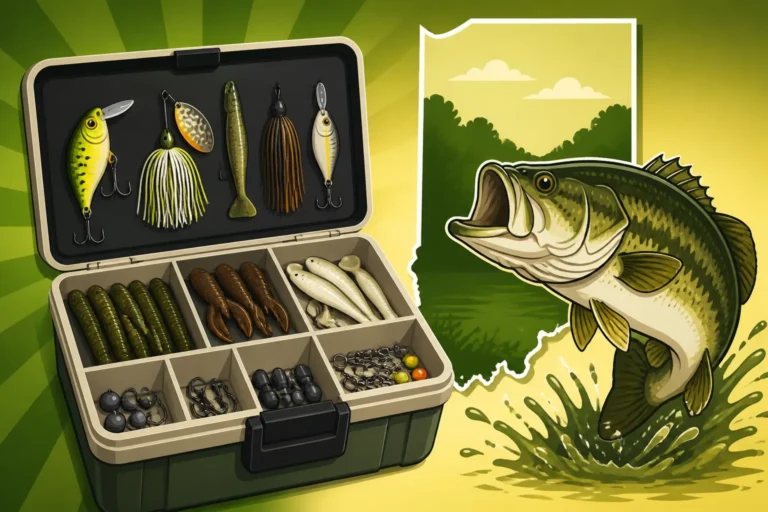
- Tackle Box: A well-organized tackle box or bag keeps your lures, hooks, weights, and other small items neat and accessible. No one wants to waste precious fishing time digging through a jumbled mess. If you're just starting out, our What Gear Do You Need to Start Bass Fishing? guide can give you a comprehensive overview of necessities.
- Pliers/Forceps: Essential for removing hooks safely from fish and for cutting line.
- Net: A good landing net can save a trophy fish at the side of the boat, especially when using lighter tackle.
Where to Find Your Perfect Bass Fishing Setup
Once you've got a clearer idea of what you're looking for, the next step is to acquire your new gear. There are numerous avenues to explore, each offering unique benefits to the Indiana angler.
Exploring Local and Online Retailers
When you're ready to pick out your next setup, exploring both local and online retailers has its perks. A major benefit of visiting a physical store, like a Bass Pro Shops, is the ability to actually feel the rods and reels. You can hold different combos, test their balance, and get a sense of the ergonomics. The staff at these stores are often passionate anglers themselves and can provide invaluable advice based on local fishing conditions and specific techniques. They can help you physically match a rod and reel to ensure it feels right in your hands, which is crucial for comfort and performance over long fishing days.
For specific models or when you want to compare a vast selection and read user reviews, checking online retailers like Amazon can be incredibly helpful. Online platforms often have a broader inventory, allowing you to find niche items or compare prices across many brands without leaving your home. Just be sure to read reviews carefully and understand return policies, as you won't get that hands-on feel before purchase.
Considering Budget and Quality
Fishing gear, especially for bass, can range from incredibly affordable to surprisingly expensive. It's easy to get caught up in the allure of high-end equipment, but remember that you don't need the absolute priciest gear to catch fish.
For beginners or those on a tighter budget, there are many excellent mid-range options that offer fantastic performance and durability. Focus on getting the best quality you can afford for the specific techniques you'll be using most. For instance, investing in a slightly better quality reel will often pay dividends in smoother operation and longevity compared to a cheaper alternative. Don't be afraid to mix and match; sometimes a high-quality reel on a slightly more budget-friendly rod can make for a great functional combo. It's about finding the sweet spot where performance meets value, ensuring your gear enhances, rather than hinders, your time on the water.
Protecting Your Investment: Care and Maintenance Tips
Once you've invested in your ideal largemouth bass setup, proper care and maintenance will ensure it lasts for many seasons of Indiana fishing. A little effort goes a long way in protecting your gear from the elements and wear and tear.
After each trip, especially if you've been in dusty or muddy conditions, give your rod and reel a quick wipe-down with a damp cloth. For reels, a light oiling of key moving parts (following the manufacturer's instructions) can keep them running smoothly. Check your rod guides for any chips or cracks that could fray your line. Store your rods properly, ideally in a rod rack or sleeve, to prevent bending or breaking the delicate tips. Don't leave your gear baking in the hot sun or freezing in your garage for extended periods. Simple habits like these will prevent premature wear, maintain performance, and keep your beloved bass fishing combo ready for action whenever you hit the water.
Disclaimer
This article is for general informational purposes only and does not constitute professional advice. Laws, prices and regulations vary by location and change over time. Consult a qualified professional for guidance on your specific situation.