How Many Life Jackets Do You Need on an Indiana Boat
It's a beautiful day on the water, you've got your fishing gear ready, the cooler packed, and the boat gassed up. But before you even think about pushing off from the dock, there's one absolutely critical piece of equipment that needs your full attention: life jackets. Navigating the rules around how many life jackets you need on an Indiana boat can feel a bit confusing, but understanding these regulations isn't just about avoiding a ticket; it's about ensuring the safety of everyone on board. This guide will cut through the jargon and explain exactly what you need to know to stay safe and compliant on Indiana's diverse waterways.
The Core Requirement: One Life Jacket Per Person
When it comes to the fundamental rule, Indiana boating regulations are crystal clear and echo federal standards: every single person on your boat, from the captain to the smallest child, must have a U.S. Coast Guard-approved life jacket readily available. This isn't a suggestion; it's the law. This rule applies across the board, whether you're cruising on Lake Monroe, fishing the tranquil waters of Patoka Lake, or simply enjoying a leisurely float on a local pond.
Think of it this way: your boat has a maximum capacity, right? Whether it's a small fishing skiff or a larger pontoon, if it's designed to hold six people, you absolutely must have six properly sized and approved life jackets on board. This isn't just for emergency situations where someone goes overboard unexpectedly. Accidents happen fast, and having a life jacket ready can be the difference between a close call and a tragedy. It’s about being prepared for the unforeseen, especially when you’re out enjoying the open water.
Many boaters make the mistake of having enough life jackets, but they might be tucked away in a storage compartment under a pile of towels or fishing nets. This leads us to the next important detail: 'readily accessible.'
What 'Readily Accessible' Really Means
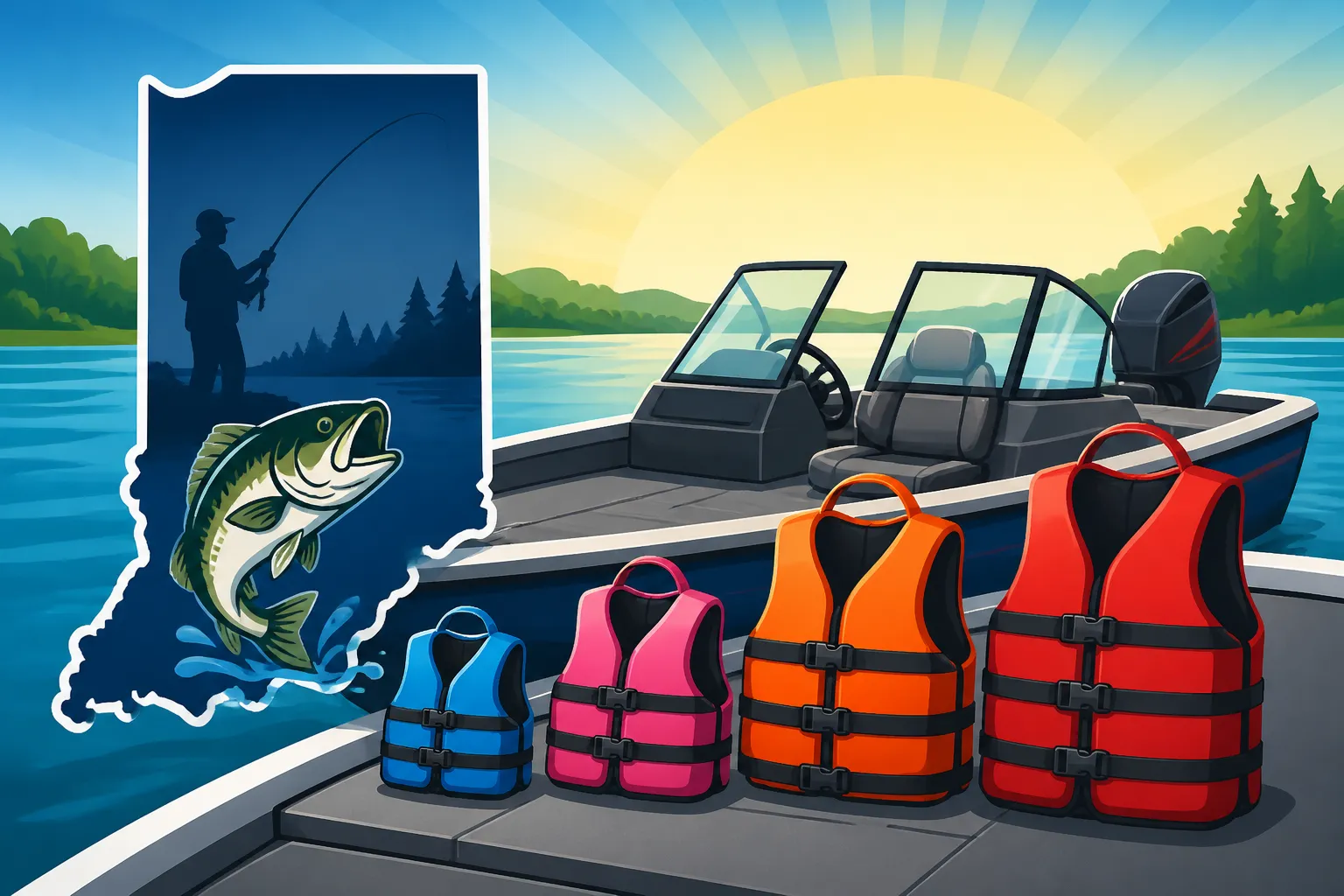
Having a life jacket on your boat is one thing; having it readily accessible is another. Indiana law requires that all life jackets be in serviceable condition and immediately available for use. What does "immediately available" mean in practice? It means that if an emergency strikes, you shouldn't have to rummage through a storage locker, dig under seats, or untangle it from a pile of ropes. A life jacket should be in plain sight, on a seat, hanging from a rail, or in an easily opened and accessible compartment.
Consider a sudden wave, a collision, or an unexpected capsize. In those terrifying moments, every second counts. If a life jacket is buried, precious time is lost, and that could be the difference for someone who suddenly finds themselves in the water, perhaps injured or disoriented. This is why keeping them out in the open, or in a very obvious and unlatched compartment, is so crucial. It’s also important that they are the right size for the person who might need them. A child's life jacket won't help an adult, and an adult's vest will swamp a child, rendering it useless. For more general guidelines, you might want to read up on Indiana Life Jacket Requirements for Every Boater.
Understanding Different Life Jacket Types
Not all life jackets are created equal, and understanding the different types approved by the U.S. Coast Guard can help you make informed choices for your crew. They are categorized by 'Type' and are designed for different uses and water conditions.
- Type I (Off-Shore Life Jackets): These are designed for extended survival in rough, open water. They are bulky but provide the most buoyancy and are designed to turn an unconscious person face-up in the water. You'll often see these on commercial vessels or offshore fishing boats.
- Type II (Near-Shore Buoyant Vests): These are common for general recreational use. They are less bulky than Type I but still provide good buoyancy and can turn some unconscious wearers face-up. They're great for fishing on calmer inland lakes or rivers.
- Type III (Flotation Aids): These are what most recreational boaters wear, including many fishing vests. They are comfortable for continuous wear, allowing for freedom of movement. They are designed for conscious wearers in calm, inland waters where rescue is likely to be swift. They generally will not turn an unconscious person face-up.
- Type IV (Throwable Devices): These are not designed to be worn but are meant to be thrown to someone in distress. Think of boat cushions or ring buoys. These have their own specific requirements, which we'll discuss shortly.
- Type V (Special Use Devices): This category includes specific purpose vests like those designed for kayaking, waterskiing, or work vests. They are approved for specific activities and usually have performance requirements similar to Type II or III. Some Type V vests are inflatable and have specific restrictions.
For a general guide to choosing, check out Best Life Jackets for Indiana Boaters. When shopping, whether you're browsing the aisles at Bass Pro Shops or looking online at Amazon, always confirm that any life jacket you purchase is U.S. Coast Guard-approved and appropriate for the intended user and activity.
Special Considerations for Children on Board
This is where the "readily accessible" rule takes on an even more critical dimension. In Indiana, children under the age of 13 are required to wear a U.S. Coast Guard-approved life jacket at all times while on a moving vessel. This isn't just about having one on board; it's about having it securely fitted on their body whenever the boat is in motion. This rule applies unless the child is in an enclosed cabin or below deck.
This regulation is in place because children, especially young ones, are particularly vulnerable in a boating accident. They may not have the swimming skills, physical strength, or presence of mind to react effectively if they suddenly find themselves in the water. A properly fitted life jacket acts as an immediate flotation device, keeping their head above water and increasing their chances of survival until help arrives. Parents and guardians must take this responsibility seriously. It's not optional; it's mandatory. You can find more details on proper sizing in articles like Best Life Jacket Sizes for Kids Boating in Indiana. Always double-check the fit to ensure it's snug but comfortable, and never use an adult vest on a child.
Beyond the Basics: Additional Safety Gear & Specific Situations
While the "one life jacket per person" rule is universal for all vessels, certain boat sizes and types of watercraft in Indiana come with additional requirements for personal flotation devices and other safety gear. These extra layers of protection are designed to address the specific risks associated with different boating activities and environments. It's important to be aware of these nuances, as they often catch even experienced boaters off guard.
Understanding these additional rules will not only keep you compliant but genuinely safer on the water. It’s easy to focus solely on the number of vests, but the type and deployment of other safety equipment play an equally vital role in an emergency situation.
Boats Over 16 Feet: The Throwable Device Rule
If your boat measures 16 feet or longer, you've got an extra safety requirement to meet in Indiana: you must also carry at least one Type IV (throwable) personal flotation device. This could be a ring buoy, a buoyant cushion, or some other U.S. Coast Guard-approved throwable device. The key here is that, like wearable life jackets, this device must be immediately available for use. This means it shouldn't be stowed away in a place that's difficult to reach quickly.
Why the extra requirement for larger boats? Imagine someone falls overboard from the bow of a 20-foot boat traveling at speed. By the time the captain can cut the engine, turn the boat around, and get back to the person, they might have drifted a significant distance. A throwable device, kept within arm's reach of the helm or other easily accessible location, can be quickly tossed to the person in the water, giving them something to hold onto while the boat maneuvers back for retrieval. It’s a bridge of safety in those crucial moments. For more specifics, check out Throwable Life Jacket Rules for Boats Over 16 Feet in Indiana.
Personal Watercraft (PWCs) and Inflatable Vests
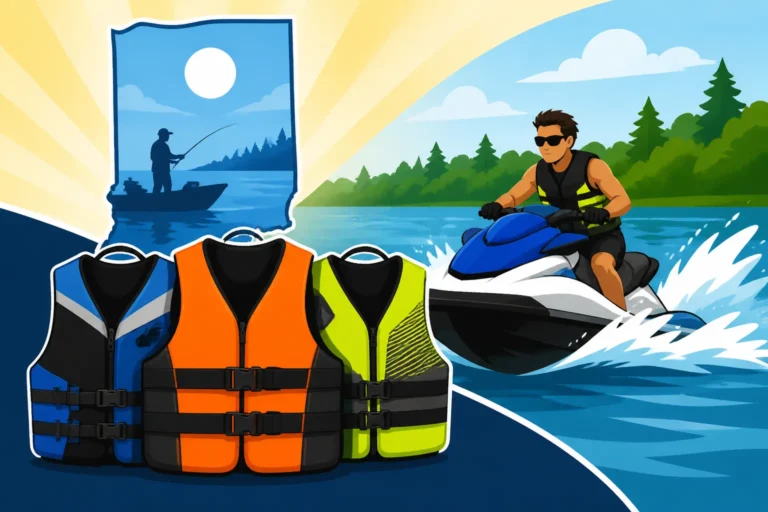
Personal Watercraft (PWCs), such as jet skis, have their own distinct rules regarding life jackets. Anyone operating or riding on a PWC in Indiana must wear a U.S. Coast Guard-approved Type I, II, III, or V personal flotation device. The emphasis here is on wearing it at all times, not just having it readily available. This makes perfect sense when you consider the dynamic and often high-speed nature of PWC operation. If you fall off a PWC, it's typically sudden and often at a speed that could cause disorientation. A worn life jacket ensures immediate flotation.
Furthermore, there's a specific caution regarding inflatable life jackets for PWCs. While some Type V inflatable vests are approved for certain boating activities, many are not permitted for use on PWCs. Inflatable life jackets often require manual or automatic inflation and may not provide immediate buoyancy if an operator is rendered unconscious or disoriented by a fall. Always double-check the label on any inflatable vest to ensure it specifically states approval for PWC use before you even think about wearing it on your jet ski. This particular detail is often overlooked and can lead to fines. You can learn more about this in Why Inflatable Life Jackets Are Not Allowed on Indiana PWCs.
Paddling Vessels: Kayaks, Canoes, and Paddleboards
Even if you're out on the water in a non-motorized vessel like a kayak, canoe, or stand-up paddleboard (SUP), the life jacket rules still apply, though with a slight nuance. Just like larger boats, there must be a U.S. Coast Guard-approved life jacket for each person on board these paddling vessels.
However, for adults on kayaks, canoes, and SUPs, the requirement is that the life jacket be readily accessible, not necessarily worn. While it's not legally mandated for adults to wear them (unless they are under 13, in which case the wearing rule still applies), it is highly, highly recommended. The vast majority of paddling accidents involve capsizing, and if your life jacket is strapped under a bungee cord on the deck, it might be difficult to access in the water. For optimal safety, especially if you're a beginner or venturing into unfamiliar waters, always wear your life jacket when paddling. You never know when a sudden gust of wind or an unexpected wake from a passing boat could send you into the water. Having it on your body is the safest approach, ensuring you stay afloat even if you're injured or get disoriented. For comprehensive advice on what gear to have, check out Indiana Boater Safety Gear Checklist.
Why These Rules Matter: The Stakes of Non-Compliance
It's easy to view boating regulations as just a list of hoops to jump through, or arbitrary rules designed to make life harder. But when it comes to life jackets, these aren't just bureaucratic hurdles. These rules are literally written in the experiences of past tragedies and are designed to prevent future ones. Understanding the profound reasons behind these mandates can shift your perspective from mere compliance to genuine commitment to safety.
Neglecting life jacket requirements carries significant risks, ranging from the devastating human cost of accidents to the very real financial and legal consequences that can follow. As a veteran lifestyle blogger focused on the water, I've seen firsthand how quickly a beautiful day on the lake can turn into a nightmare when basic safety precautions are ignored.
The Human Cost: Preventing Tragedies on Indiana Waters
Let's be blunt: life jackets save lives. Drowning is a leading cause of accidental death, and a significant percentage of recreational boating fatalities involve victims who were not wearing a life jacket. When someone goes overboard, whether it's due to an unexpected wave, a sudden turn, or a medical emergency, panic can set in almost immediately. Even strong swimmers can struggle in cold water, rough conditions, or if they hit their head.
A properly worn life jacket provides instant flotation, keeping a person's head above water and allowing them to breathe, even if they are unconscious or injured. This buys crucial time for rescuers to reach them. Consider the cold waters of Lake Michigan in the spring, or even a local reservoir in the fall. Cold water rapidly saps body heat and strength, leading to cold water shock and hypothermia, which can incapacitate even the strongest swimmer in minutes. Without a life jacket, survival chances plummet. These rules aren't just for you; they're for your friends, your family, and anyone you bring aboard your vessel. Their lives literally depend on your adherence to these simple, yet vital, safety measures.
Legal Ramifications: Penalties and Fines
Beyond the undeniable moral imperative to protect human life, there are significant legal and financial consequences for failing to comply with Indiana's life jacket requirements. Law enforcement officers, including the Indiana Department of Natural Resources (DNR) conservation officers, regularly patrol Indiana's lakes, rivers, and Lake Michigan shoreline. They have the authority to stop and board vessels to conduct safety inspections.
If you are found in violation of life jacket regulations—whether it's not having enough, having unapproved types, or having them inaccessible—you can face citations, fines, and potentially even more severe penalties depending on the nature and severity of the violation. These fines can quickly add up and put a dampener on what should have been an enjoyable day on the water. While the exact cost of a ticket can vary based on jurisdiction and the officer's discretion, it's always far less expensive to simply have the correct gear. For example, similar to What Happens if You Boat Without Registration in Indiana?, neglecting life jacket rules can also lead to legal headaches. It's a preventable expense and a preventable risk.
Ensuring Everyone's Safety: A Community Responsibility
Ultimately, the responsibility for carrying and properly utilizing life jackets extends beyond individual compliance; it's a shared commitment to fostering a safe boating community. When every boater takes these rules seriously, it creates a safer environment for everyone enjoying Indiana's waters. It sets an example, especially for younger generations who are learning how to boat and fish responsibly.
As a boater, you are responsible not just for your own safety, but for the safety of your passengers and for being a good steward of the waterways. This includes understanding all aspects of safety gear, even down to what type of life jacket is suitable for specific situations. For instance, a basic vest from Amazon might be fine for calm lake cruising, but for rigorous fishing or rougher waters, investing in higher-quality, activity-specific flotation from a dedicated outfitter like Bass Pro Shops could be a wise decision. Taking the time to ensure you have the right number and types of life jackets, properly maintained and accessible, is one of the easiest and most impactful ways you can contribute to a culture of safety on the water.
| Vessel Type | Persons On Board | Required Wearable Life Jackets | Required Throwable Devices (Type IV) | Children Under 13 |
|---|---|---|---|---|
| Motorized (under 16 ft) | All | 1 per person (accessible) | None | Must wear |
| Motorized (16 ft+) | All | 1 per person (accessible) | At least 1 (accessible) | Must wear |
| Personal Watercraft | All | 1 per person (worn) | None | Must wear |
| Non-Motorized (paddling) | All | 1 per person (accessible) | None | Must wear |
Disclaimer
This article is for general informational purposes only and does not constitute professional advice. Laws, prices and regulations vary by location and change over time. Consult a qualified professional for guidance on your specific situation.