Best Rigs for Catfish Fishing in the Wabash River
There’s something truly special about chasing catfish on the Wabash River, but let's be honest, it can be a real head-scratcher sometimes. That powerful current, the snags, figuring out what these whiskered beauties are even looking for – it’s enough to make you feel like you're fighting the river more than fishing it. This guide is all about cutting through that frustration by arming you with the knowledge of the best catfish rigs specifically designed to tackle the unique challenges of the Wabash, helping you put more fish in your boat or on the bank.
Understanding the Wabash River's Unique Challenges for Catfish
Fishing the Wabash isn't like fishing a calm lake. This mighty river, stretching for hundreds of miles across Indiana, presents a whole different ballgame for anglers targeting catfish. You're dealing with moving water, often unpredictable depths, and a bottom that loves to claim your tackle. Before we even talk about specific rigs, it's crucial to grasp what you're up against.
Current and Structure: The River's Natural Habitat
The current is probably the biggest factor on the Wabash. It dictates how your bait moves, how your line behaves, and where the fish are likely to hold. Catfish, especially big flatheads and channel cats, are experts at using current to their advantage, often tucking into seams, eddies, and behind structures to conserve energy and ambush prey. Think about those areas where the current slows down slightly, like behind a fallen tree, a large rock, or a bend in the river. These are prime spots where a savvy catfish will sit, waiting for an easy meal to drift by. Your rig needs to be able to get your bait into these zones and keep it there long enough to be noticed, without simply being swept away. This is where choosing the right weight and rig style becomes critical. The river bottom also has plenty of natural and man-made structures – logs, rocks, old tires, you name it – that can snag your line in an instant. A good rig helps minimize these frustrating hang-ups.
Bottom Composition: What Lies Beneath
The Wabash River bottom is a mix of everything from soft mud and sand to gravel, rock, and even old debris. Knowing what your bait is sitting on can make a huge difference. If you're fishing a rig that relies on your bait laying flat on a soft, muddy bottom, it might get buried and become invisible to passing catfish. Conversely, if your bait is just tumbling over sharp rocks, it might get torn up or lost in the cracks. Some rigs are designed to keep your bait slightly elevated off the bottom, preventing it from getting swallowed by silt or hidden in crevices. Others are built to withstand the abrasive nature of rocky areas. Understanding the general bottom composition of your chosen fishing spot will help you select the most effective rig and present your bait in the most enticing way possible. Exploring Fishing the Wabash River in Indiana can give you more insights into these varied environments.
Targeting Different Catfish Species in the Wabash
The Wabash River is home to several species of catfish, each with slightly different feeding habits and preferred habitats. You'll primarily find channel catfish, flathead catfish, and blue catfish, though the latter are less common in many parts of the Wabash compared to some other major river systems.
- Channel Catfish are opportunistic feeders and will eat almost anything, from cut bait and stink baits to worms and even some artificials. They're often found in a wider variety of habitats, including calmer pools and moderate currents.
- Flathead Catfish are primarily ambush predators that prefer live bait – think bluegill, shad, or even smaller suckers. They're usually found holding tight to heavy cover and structure in areas with strong current, waiting to pounce.
- Blue Catfish, while rarer, are powerful open-water feeders that often prefer cut bait in deeper, faster currents.
The rig you choose should ideally match the feeding behavior and location of the species you're targeting. For instance, a rig designed to keep a lively bluegill in place near a submerged log will be very different from one intended to present a chunk of cut bait on a sandy flat for channel cats. Understanding these nuances will drastically improve your success. If you're looking for a deeper dive into one of these species, check out Channel Catfish Fishing in Indiana: The Complete Guide.
Essential Catfish Rigs for Wabash River Success
Now that we understand the battlefield, let's talk about the weaponry. The right rig can be the difference between a triumphant day on the water and a frustrating tangle of lost tackle. Here are some of the most effective catfish rigs for navigating the Wabash River.
The Classic Carolina Rig: A Wabash Workhorse
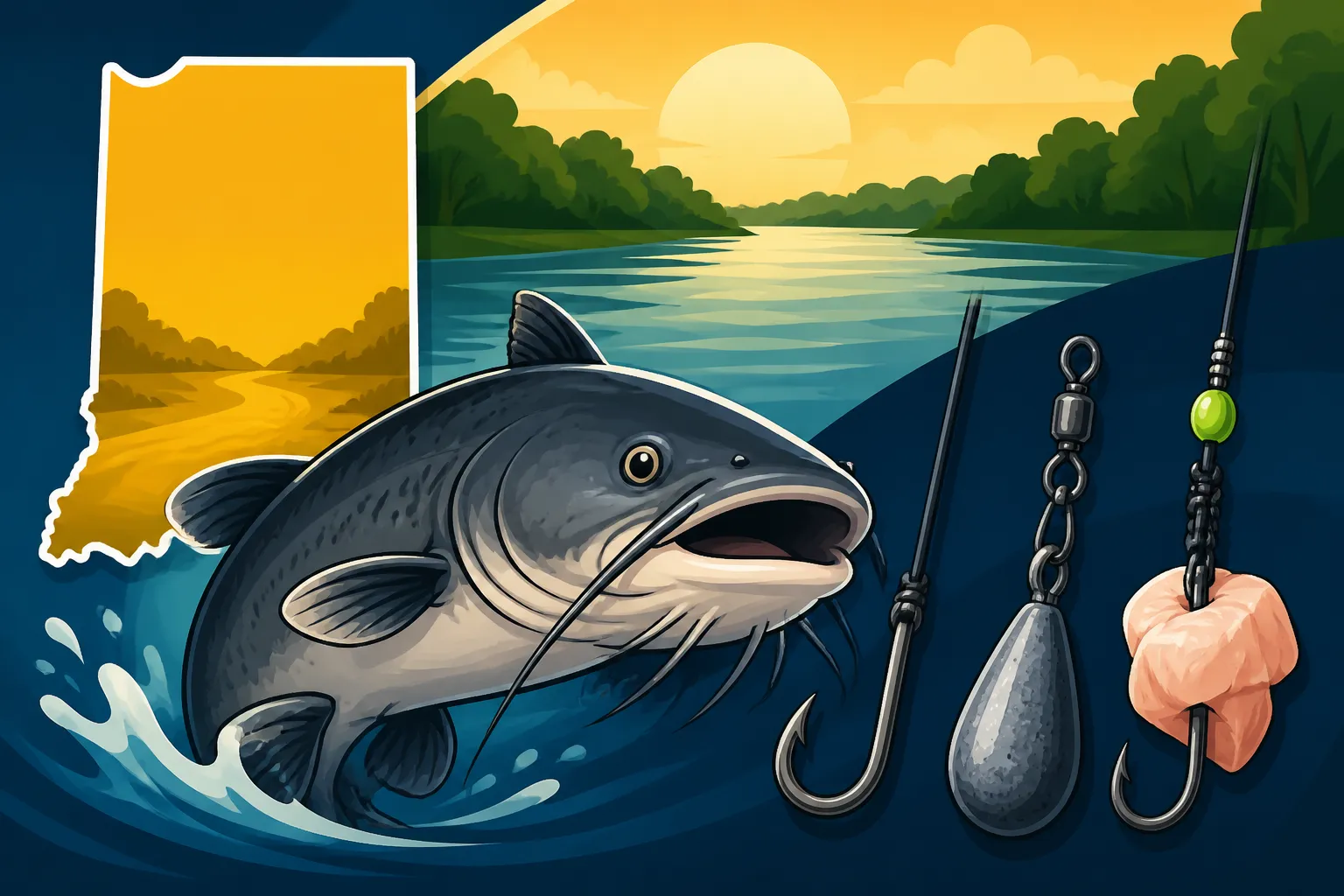
The Carolina rig is a true classic for a reason – it's simple, effective, and incredibly versatile, making it a go-to for many Wabash River catfish anglers. This rig is designed to present your bait naturally near the bottom while minimizing snags.
How to Tie It:
- Thread an egg sinker (or a no-roll sinker, which is great for current) onto your main line. The weight will depend on the current; you want enough to hold bottom without being constantly swept away.
- Tie on a barrel swivel. This stops your sinker from sliding down to your hook.
- Attach a leader line (typically 12-24 inches of strong monofilament or fluorocarbon) to the other end of the barrel swivel.
- Tie your hook (a strong circle hook or J-hook, size appropriate for your bait and target species) to the end of the leader.
Why it Works on the Wabash:
The beauty of the Carolina rig is that the sinker sits on the bottom, holding your bait in place, while the leader allows your bait to drift and flutter naturally with the current just above the sinker. This separation means your bait isn't buried in the mud, and the fish feels less resistance when it picks up the bait, as the line slips freely through the sinker. It’s fantastic for presenting various baits, from cut bait to live worms, and it's relatively snag-resistant because the weight is separated from the hook. For more on this fundamental approach, you might find How to Bottom Fish for Channel Catfish useful. When you're gathering your supplies, places like Bass Pro Shops or even online retailers like Amazon have excellent selections of egg sinkers, swivels, and hooks perfect for this setup.
The Santee Cooper Rig: When You Need to Get Off the Bottom
Sometimes, getting your bait just a little bit off the bottom can make all the difference, especially if the bottom is particularly silty, snaggy, or if the catfish are slightly suspended. That's where the Santee Cooper rig shines. It's essentially a modified Carolina rig with an added float to give your bait some lift.
How to Tie It:
- Start with the basic Carolina rig: sinker, then a barrel swivel.
- On your leader line (after the swivel and before the hook), slide a small, pencil-style or cigar-shaped float. This float should be just buoyant enough to lift your bait, not strong enough to lift your sinker.
- Use two small split shots or bobber stops on either side of the float to keep it in place on the leader, controlling how far off the bottom your bait will sit.
- Tie your hook to the end of the leader.
Why it Works on the Wabash:
This rig is brilliant for keeping your bait visible and enticing above soft mud or hidden snags. The float makes your bait "dance" a bit in the current, adding natural movement that can attract curious catfish. It's especially effective when you're using chunk baits or even live bait that you want to keep lively and off the bottom muck. If you're fishing areas where you consistently pull up muddy baits, or if you suspect fish are holding just above the bottom structure, this rig is a game-changer.
The Three-Way Swivel Rig: Versatility for Varying Conditions
The three-way swivel rig, also known as a three-way rig or Wolf River rig, offers incredible versatility for river fishing because it allows you to easily adjust your weight and leader length. It's fantastic for areas with varying depths and currents.
How to Tie It:
- Tie your main line to one eye of a three-way swivel.
- To a second eye, tie a short leader (6-12 inches) with a sinker at the end. This is often called a "breakaway" leader, as it's designed to break if your sinker gets snagged, saving the rest of your rig.
- To the third eye, tie a longer leader (12-36 inches) with your hook at the end.
Why it Works on the Wabash:
The main advantage here is that the sinker acts independently from your bait. If the sinker gets hung up, a quick tug can often break the lighter sinker leader, allowing you to retrieve your main line, swivel, and hopefully, your fish. You can also easily swap out different weights depending on the current and depth without re-tying your entire setup. This rig is great for presenting live bait that you want to swim freely, or for presenting cut bait in a specific zone just off the bottom. It allows the bait to move more naturally than a typical Carolina rig, making it a favorite for many targeting big flatheads.
The Slip Sinker Rig: Sensitivity for Fussy Biters
While similar to the Carolina rig in its basic components, the slip sinker rig (sometimes just called a "fish-finder rig") offers a crucial advantage: extreme sensitivity. This setup ensures that a biting fish feels minimal resistance before you set the hook.
How to Tie It:
- Thread a slip sinker (like an egg sinker or a flat no-roll sinker) directly onto your main line.
- Follow that with a plastic bead (this protects the knot you're about to tie from the sinker's repeated impact).
- Tie your main line directly to a barrel swivel.
- Attach your leader line (typically 18-36 inches) to the other eye of the barrel swivel.
- Tie your hook to the end of the leader.
Why it Works on the Wabash:
When a catfish takes your bait, the line can freely slip through the sinker, meaning the fish doesn't immediately feel the weight of the sinker. This often results in longer, more confident bites, giving you a better chance to set the hook. It's particularly effective when fishing for wary catfish or in situations where fish are "mouthing" the bait before committing. For the Wabash, the longer leader allows your bait to tumble and move more naturally with the current, which can be irresistible to catfish. This is an excellent option for both live bait and cut bait, making it a truly versatile choice. When stocking up, look for a good selection of barrel swivels and strong leader material at your local Best Bait Shops to Visit During Salmon Season or even on Amazon.
Here's a quick comparison of these popular Wabash River catfish rigs:
| Rig Name | Key Feature | Best For | Pros | Cons |
|---|---|---|---|---|
| Carolina Rig | Sinker separate from bait | General bottom fishing, moderate current | Simple, snag-resistant, natural bait presentation | Bait can get buried in soft mud |
| Santee Cooper Rig | Float lifts bait | Muddy or snaggy bottoms, suspended fish | Keeps bait visible, adds movement | More components, can tangle in heavy current |
| Three-Way Swivel Rig | Two leaders | Versatile, strong current, heavy structure | Adjustable weight, breakaway sinker option, free-swimming bait | More prone to tangles if not tied well |
| Slip Sinker Rig | Free-sliding sinker | Sensitive bites, wary fish, natural drift | Minimal resistance for fish, very natural | Longer leader can increase snags |
Gear Considerations Beyond the Rig
While the rig is central to your success, it's just one piece of the puzzle. The right rod, reel, line, and bait complement your rig, creating a cohesive system that's ready for battle with a Wabash River catfish.
Rods, Reels, and Line Choices for Wabash Catfish
For serious Wabash River catfishing, you're going to need gear that can handle the heavy weights, strong currents, and powerful fish.
- Rods: Look for medium-heavy to heavy action rods, typically 7 to 9 feet long. A longer rod helps with casting heavier rigs and fighting fish in current, giving you more leverage. You need a rod with a strong backbone to horse those big cats out of cover, but also a sensitive tip to detect subtle bites. Check out Best Catfish Rods for Indiana Rivers for specific recommendations.
- Reels: Baitcasting reels are often preferred for their power, line capacity, and ability to handle heavy lines and weights. Look for reels with a strong drag system and a good retrieve ratio. Spinning reels can work, especially for lighter setups or smaller channel cats, but for flatheads and blues, a beefy baitcaster is usually the way to go.
- Line: Monofilament is a popular choice for its stretch, which can act as a shock absorber. Opt for lines in the 20-50 lb test range. Braided line, with its no-stretch properties and incredible strength-to-diameter ratio, is also excellent, especially for detecting light bites in current or when fishing heavy cover. If using braid, consider a monofilament or fluorocarbon leader to reduce visibility and add some abrasion resistance. Best Catfish Rigs for Muddy Water sometimes benefit from less visible leader materials.
Selecting the Right Bait for River Catfish
The age-old question: "What bait should I use?" For Wabash River catfish, the answer often depends on what you're targeting.
- Cut Bait: For channel cats and blue cats, fresh cut bait is king. Shad, skipjack herring, carp, or even strong-smelling store-bought options like gizzard shad or shrimp can be highly effective. The oils and scent trail left by cut bait are irresistible in current. Check out Best Cut Bait for Catfish Fishing for more details.
- Live Bait: Flatheads are almost exclusively predators of live fish. Bluegill, creek chubs, small suckers, and even small carp are excellent choices. Hook them through the back or lips to keep them lively. Just be sure to check local regulations on baitfish usage and sizes.
- Prepared Baits: Stink baits, punch baits, and dough balls can be very effective for channel catfish, especially in warmer water. These baits release a strong scent that travels far in the current, drawing fish in. However, they can be messy and tend to come off the hook more easily.
- Worms: Good old nightcrawlers can catch all species of catfish, particularly smaller channel cats and bullheads, and are a reliable standby when other baits aren't available.
Ultimately, the best bait is often what the fish are feeding on naturally in that specific stretch of the Wabash. Don't be afraid to experiment!
Essential Accessories for River Catfishing
Beyond your main tackle, a few accessories will make your Wabash catfishing trip safer, more comfortable, and more successful.
- Rod Holders: When fishing with multiple rods from the bank or a boat, sturdy rod holders are invaluable for keeping your rods secure and in place, especially when a big cat hits.
- Pliers/Forceps: For unhooking fish safely and quickly. Catfish have tough mouths and sharp fins, so proper tools are a must.
- Heavy-Duty Net or Grippers: A large, sturdy landing net is essential for landing big catfish. Alternatively, fish grippers can provide a secure hold on large fish for photos and release.
- Headlamp/Lantern: If you're planning on doing any night fishing – and many of the biggest cats are caught after dark – a reliable light source is critical. Best Time of Day to Catch Catfish in Indiana often highlights the evening hours.
- Tackle Box: A well-organized tackle box filled with extra hooks, weights, swivels, and leader material is crucial. River fishing means lost tackle, so be prepared to re-tie often. Many anglers find sturdy options for tackle organization on sites like Amazon or at their local Bass Pro Shops.
- First Aid Kit: A basic first aid kit for minor cuts, scrapes, and hook punctures is always a good idea when you're out on the water.
Tips for Deploying Your Rigs Effectively
Having the right rig is only half the battle. Knowing how and where to present it on the Wabash River will significantly increase your chances of success.
Reading the Water: Where to Cast Your Rig
Understanding river dynamics is key to finding catfish. Catfish often hold in areas where they can expend minimal energy while still being close to food. Look for:
- Current Seams: These are lines where fast-moving water meets slower water. Catfish will sit in the slower water, waiting for food to be swept by in the faster current. These are often found behind points, islands, or large submerged objects.
- Eddies: Swirling pockets of water where the current creates a reverse flow. These are natural resting and feeding areas.
- Submerged Structure: Fallen trees, rock piles, ledges, and drop-offs provide cover and ambush points. Cast your rig as close to these structures as possible without getting immediately snagged. Be prepared to lose some tackle when fishing these honey holes, it's often worth it for the big fish they hold.
- Depth Changes: Catfish will often orient themselves along changes in depth, such as the edges of channels or submerged humps.
- Tributary Mouths: Where smaller creeks or streams enter the Wabash, they can bring in cooler water, oxygen, and food, attracting catfish.
- Deeper Holes: These act as sanctuaries, especially during periods of high sun or cold fronts. Knowing Best Catfish Fishing Spots in Indiana can help you pinpoint these areas.
Casting upstream and letting your rig drift naturally into these target zones can be highly effective. The goal is to make your bait look like an easy meal being carried by the current.
Anchor or Drift: How to Present Your Bait
Your approach to presenting your bait will depend on the current, the structure, and your target species.
- Anchoring: If you've found a promising spot with specific structure or a current seam, anchoring your boat (or bank fishing from a good spot) and casting multiple rigs can be very effective. This allows your bait to soak in a prime location for an extended period. Use enough weight to keep your rig stationary, even in strong current. This is often the preferred method when targeting flatheads with live bait, as you want the bait to stay in a specific ambush spot.
- Drifting: In some situations, especially when searching for active fish or covering a lot of water, drifting your rigs can be productive. This involves letting your boat (or your rig from the bank) slowly move downstream with the current, dragging your bait across different bottom features. You'll typically use slightly lighter weights for drifting, just enough to maintain bottom contact. This method can be excellent for covering broad flats for channel cats or locating schooling blue cats. Always be mindful of snags when drifting, as you're covering unknown territory.
Dealing with Snags: A Reality of River Fishing
Snags are an inevitable part of Wabash River catfishing. The best anglers aren't those who never get snagged, but those who know how to minimize them and deal with them when they happen.
- Use Breakaway Leaders for Sinkers: As discussed with the three-way swivel rig, tying your sinker on a lighter leader than your main line or hook leader allows the sinker to break off, saving the rest of your rig.
- Choose Appropriate Weights: Use just enough weight to hold bottom. Too much weight can wedge into cracks; too little will just get swept away. No-roll sinkers are also excellent for reducing snags as they lie flat against the bottom.
- Feel the Bottom: Pay attention to what your line is telling you. If you feel your sinker grinding excessively or constantly bumping into things, you might be in a very snaggy area. Try to move your bait slightly, or if necessary, relocate.
- Don't Force It: If you get snagged, don't just yank with all your might. Try to pull from a different angle, or give some slack and then a quick, sharp snap. Sometimes this can free the rig. If not, it's better to break off cleanly than to damage your rod or reel. This is where having plenty of extra components in your tackle box, readily available from Bass Pro Shops or Amazon, comes in handy. You'll be re-tying, so make it quick and efficient!
By understanding the river, selecting the right rig, using appropriate gear, and employing smart fishing techniques, you'll be well on your way to consistent success catching catfish on the mighty Wabash.
Disclaimer
This article is for general informational purposes only and does not constitute professional advice. Laws, prices and regulations vary by location and change over time. Consult a qualified professional for guidance on your specific situation.