Largemouth Bass Fishing in Indiana: The Complete Guide
There's a special thrill that comes with the thump of a largemouth bass hitting your line, a sudden jolt that electrifies your whole body. For many anglers in Indiana, the pursuit of this powerful, elusive, and endlessly entertaining fish isn't just a hobby; it's a passion, a way of life, and sometimes, a true challenge. This comprehensive guide will help you understand the largemouth bass, where to find them in the Hoosier State, what gear you'll need, and the techniques that will put more fish in your boat or on your bank.
Understanding the Largemouth Bass: Indiana's Favorite Game Fish
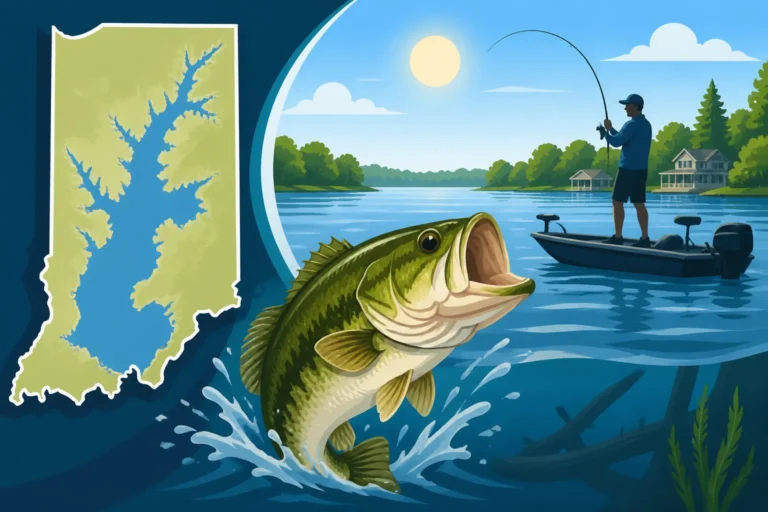
The largemouth bass (scientific name Micropterus salmoides) is arguably the most popular freshwater game fish in North America, and it certainly holds a special place in the hearts of Indiana anglers. Known for its aggressive strikes, impressive acrobatics, and willingness to chase a wide variety of lures, it's no wonder so many of us spend countless hours trying to outsmart these incredible creatures. But to catch them consistently, you first need to understand them.
Largemouth Bass Identification in Indiana
Knowing what you're targeting is the first step. Largemouth bass are easily recognizable once you know what to look for. Their most distinguishing feature is that large mouth, with the upper jaw extending beyond the rear edge of the eye when the mouth is closed. This is a key difference if you're trying to tell the difference between a largemouth and a Largemouth Bass vs Smallmouth Bass: Key Differences.
Their body color can vary quite a bit depending on the water clarity and habitat, but generally, they're dark green on the back, fading to lighter green or yellowish-white on the belly. They almost always have a prominent, irregular dark lateral line running horizontally along their sides, which can sometimes appear as a series of blotches rather than a solid stripe. The dorsal fin is deeply notched, giving the appearance of two separate fins. These fish are true predators, and their streamlined bodies and powerful tails are built for explosive bursts of speed.
Typical Habitat and Behavior
Largemouth bass are ambush predators, meaning they love to hide and wait for unsuspecting prey to swim by. This dictates where you'll often find them. They thrive in warmer, slower-moving waters, preferring lakes, ponds, reservoirs, and the slower sections of rivers. Unlike their smallmouth cousins, which often prefer rocky, clear, and faster-moving water, largemouth bass are drawn to cover.
Think about dense vegetation like lily pads, submerged grass beds, weed lines, and fallen timber. They'll also hold tight to artificial structures like docks, bridge pilings, and brush piles. These areas provide both camouflage for ambushing prey and protection from larger predators, as well as a comfortable place to hang out. Understanding this preference for cover is crucial, as it will guide your lure selection and presentation when you're out on the water. They are homebodies, often sticking to a particular piece of structure for extended periods if food and cover are plentiful.
What Largemouth Bass Eat
These fish are opportunistic eaters with a diverse diet, which contributes to their reputation as aggressive feeders. Young largemouth bass start out feeding on small crustaceans and insect larvae, but as they grow, their diet expands significantly. Their menu includes smaller fish like minnows, shad, sunfish, and even smaller bass. They'll also readily consume crayfish, frogs, worms, snakes, and even small birds or rodents that happen to fall into the water.
This varied diet is why such a wide array of lures can be effective for bass fishing. By mimicking the natural prey items, you can trigger their predatory instincts. Knowing what's naturally present in the water you're fishing can give you a significant advantage in choosing the right bait or lure. If the lake is full of bluegill, a bluegill-colored crankbait might be deadly. If there are a lot of frogs around, a topwater frog lure is probably a good idea.
Where to Find Largemouth Bass in Indiana
Indiana is blessed with an abundance of fantastic largemouth bass fishing opportunities, from vast reservoirs to countless small ponds. Knowing the types of water they inhabit and which specific spots within those waters are most productive can make all the difference in your fishing success. Whether you're a boat angler or prefer to fish from shore, there's likely a hot spot not far from you.
Indiana's Top Largemouth Bass Lakes and Reservoirs
When it comes to big bass and plenty of action, Indiana's larger lakes and reservoirs are usually at the top of the list. These impoundments offer extensive habitat, diverse forage, and the potential for true trophy fish. Many of these waters are managed specifically for their bass populations, meaning healthy numbers and good growth rates.
- Monroe Lake: As Indiana's largest inland lake, Monroe Lake near Bloomington is legendary for its largemouth bass. Its sprawling network of coves, submerged timber, and varying depths provide endless opportunities. Anglers here often find success pitching jigs and soft plastics to the many downed trees and brush piles, especially during the warmer months. You can find more specific tips for this lake by checking out Best Time to Fish Monroe Lake for Bass in Indiana.
- Patoka Lake: Located in Southern Indiana, Patoka Lake is another powerhouse for largemouth bass. Its numerous feeder creeks, standing timber, and abundant shallow cover make it a fantastic fishery. Patoka is known for producing consistent numbers of quality bass, and anglers often do well with spinnerbaits, crankbaits, and various soft plastic presentations around its diverse structure.
- Brookville Lake: Nestled in southeastern Indiana, Brookville Lake offers clear water and excellent bass fishing. It's often a bit different from the murkier, more vegetated lakes, requiring a slightly different approach. Look for bass relating to rocky points, steep bluffs, and channel swings. Finesse techniques and clear-water lures can be particularly effective here.
- Mississinewa Lake and Salamonie Lake: These central Indiana reservoirs, often fished in conjunction, also offer robust largemouth populations. Similar to Patoka, they feature plenty of standing timber, coves, and varying bottom structures that hold bass.
Fishing Smaller Ponds and Private Lakes
Don't underestimate the power of smaller waters! Indiana is dotted with thousands of farm ponds, subdivision lakes, and private impoundments that can hold surprisingly large largemouth bass. Often, these smaller bodies of water receive less fishing pressure than the larger reservoirs, allowing bass to grow to impressive sizes relatively undisturbed. In many cases, these are fantastic places for kids or beginners to experience consistent action.
When fishing ponds, focus on any available cover: docks, fallen trees, weed beds, and even subtle changes in bottom contour. Because ponds are smaller, bass often don't have to roam as far to find food, making them easier to locate. Bank access is common on many public ponds, but for private waters, always make sure you have permission from the landowner. If you're looking for where specifically to find bass in these areas, you'll find great pointers in Where to Catch Largemouth Bass in Indiana Ponds.
Largemouth Bass in Indiana Rivers and Streams
While largemouth bass prefer stiller waters, they can absolutely be found in Indiana's rivers and larger streams, particularly in slower-moving sections, oxbows, backwaters, and slack-water pools. Rivers like the Wabash, White, and Tippecanoe, while more famous for smallmouth and catfish, do hold healthy populations of largemouth in the right conditions.
Look for areas with minimal current, such as behind wing dams, in side channels, or where tributary creeks enter the main river. Wood cover, like log jams and fallen trees, becomes even more critical in river environments as it breaks the current and provides ambush points. While you might not find the sheer numbers you would in a reservoir, the river bass you do encounter are often incredibly strong and feisty, making for a memorable fight.
Best Times to Fish for Largemouth Bass in Indiana
Timing is everything in fishing, and largemouth bass are no exception. Understanding their seasonal patterns, daily habits, and how weather affects them can dramatically increase your chances of success. It's not just about where to fish, but when to cast your line.
Seasonal Patterns: Spring, Summer, Fall, and Winter
Largemouth bass behavior changes drastically throughout the year, driven primarily by water temperature and their spawning cycle.
- Spring (Pre-Spawn and Spawn): This is arguably the most exciting time for many bass anglers. As water temperatures rise into the 50s and 60s (Fahrenheit), bass move from their deeper winter haunts to shallower waters to feed aggressively in preparation for spawning. This "pre-spawn" period sees them gorging on baitfish, making them susceptible to a wide range of lures. Once the water hits the mid-60s, the spawn begins. Bass will be found on beds in shallow, protected areas. While exciting, it's often best to practice catch and release during this sensitive time to ensure the future health of the fishery. After the spawn, bass are often lethargic but quickly transition into post-spawn patterns. You can learn more about these transitions in Best Bass Fishing Techniques for Pre-Spawn and Post-Spawn.
- Summer: During the heat of summer, largemouth bass seek cooler, more oxygenated water. This often means they'll move deeper during the day, relating to thermoclines, submerged structure, or dense overhead cover like thick lily pads that provide shade. Early mornings, late evenings, and even night fishing can be incredibly productive as bass move shallower to feed under the cover of darkness. Topwater lures shine in low-light conditions.
- Fall: As water temperatures begin to drop, bass enter another aggressive feeding period, often called the "fall turnover" or "fall bite." They know winter is coming and will actively chase baitfish to pack on calories. Look for them schooling up and feeding heavily on baitfish schools, often in shallower areas again as the entire water column cools. This can be a fantastic time for crankbaits, spinnerbaits, and swimbaits.
- Winter: Winter bass fishing in Indiana can be challenging but rewarding. When water temperatures drop into the 30s and 40s, bass become sluggish. They move to deeper, more stable water, often relating to steep drop-offs, deep points, or channels. Slow presentations with jigs, spoons, or finesse baits are usually the most effective. Patience is key, as bites will be subtle.
Daily Timing: Dawn, Dusk, and Midday
Just like the seasons, the time of day profoundly influences bass activity, especially during the warmer months.
- Dawn and Dusk: These low-light periods are often the most productive times to fish for largemouth bass, especially in spring, summer, and fall. Bass are visual predators, and the reduced light allows them to ambush prey more effectively without being as easily seen themselves. It's also when baitfish are most active. Topwater lures, spinnerbaits, and shallow crankbaits are excellent choices during these times when bass often move closer to shore or shallower cover.
- Midday: In the bright sun of midday, particularly in summer, bass tend to retreat to deeper water or dense cover to escape the light and heat. Fishing can be tougher, but not impossible. This is when you'll want to focus on pitching and flipping jigs or soft plastics into heavy cover, or fishing deep-diving crankbaits and jigs along ledges and humps. The bites might be fewer, but often the fish are bigger.
Weather Conditions and Water Temperature
Weather fronts and water temperature are critical factors influencing bass behavior. A stable, warm front can turn bass on, while a sudden cold front can shut them down.
- Fronts: Before a cold front moves in, bass often go on a feeding frenzy as atmospheric pressure drops. This is a prime time to be on the water. After a cold front passes, high pressure moves in, and bass typically become much less active, often retreating to cover and biting subtly. Slow, deliberate presentations are usually required.
- Cloud Cover: Overcast days can extend the productive low-light feeding windows into midday, making for excellent fishing throughout the day.
- Rain: Light rain can sometimes improve fishing by washing insects and nutrients into the water, and breaking up the surface to make bass less wary. Heavy rains, however, can muddy the water, disrupt feeding patterns, and make fishing difficult until the water clears.
- Water Temperature: This is perhaps the most critical factor. Best Water Temperature for Bass Fishing in Indiana highlights how bass are cold-blooded, and their metabolism, activity levels, and location are directly tied to the water temperature. Learning to read a thermometer and understanding temperature ranges for different bass activities (feeding, spawning, holding) will make you a much more effective angler.
Essential Gear for Largemouth Bass Fishing
To successfully target largemouth bass, you'll need the right tools for the job. The good news is that you don't need to break the bank to get started, but investing in quality gear tailored for bass can make a significant difference in your enjoyment and success. You can find a lot of great beginner gear and even high-end specialty items on platforms like Amazon.
Rods and Reels
Choosing the right rod and reel setup is fundamental for bass fishing. Most experienced bass anglers will have several different setups, each designed for specific techniques.
- Rods: Generally, you'll want a medium-heavy to heavy power rod with a fast action. The "power" refers to the rod's strength and ability to handle heavier lures and bigger fish, while "action" describes where the rod bends. A fast action means the rod bends mostly in the tip, providing excellent sensitivity for detecting bites and strong hook-setting power.
- Length: Rods typically range from 6'6" to 7'6" or even longer. Shorter rods (6'6" – 7'0") are great for accurate casting in tight quarters (like around docks or overhanging trees) or for topwater lures. Longer rods (7'0" – 7'6"+) provide better casting distance, leverage for fighting big fish, and are often preferred for flipping, pitching, or using heavier lures.
- Material: Graphite rods are the most common due to their sensitivity and lightweight nature. They transmit vibrations incredibly well, allowing you to feel even the most subtle bites.
- If you're looking for recommendations, Best Rods and Reels for Indiana Largemouth Bass is a great resource.
- Reels: You'll generally choose between spinning reels and baitcasting reels for bass.
- Spinning Reels: These are excellent for lighter lures, finesse techniques, and for beginners. They're easier to cast and manage, particularly with lighter lines. Pair them with a medium-light to medium power rod.
- Baitcasting Reels: Baitcasters offer superior casting accuracy, power, and line capacity, making them ideal for heavier lures, thicker lines, and for tackling big bass in heavy cover. They require a bit more practice to master but are a staple for serious bass anglers. Pair them with a medium-heavy to heavy power rod.
Fishing Line
The type of fishing line you choose can be as important as your rod and reel, impacting casting distance, sensitivity, and strength.
- Monofilament (Mono): This is a good all-around choice for beginners. It's affordable, has good knot strength, and its stretchiness can be forgiving when fighting fish. However, it has more memory and less sensitivity than other lines.
- Fluorocarbon: Fluorocarbon is virtually invisible underwater, making it great for clear water and wary fish. It has less stretch than mono, providing better sensitivity and hook sets, but it can be more expensive and has a bit more memory. It's often favored for Texas rigs and crankbaits.
- Braided Line: Braided line offers incredible strength-to-diameter ratio, zero stretch (maximum sensitivity), and excellent casting distance. Its high visibility can be a drawback in clear water, so many anglers use a fluorocarbon leader with braided mainline. Braid is fantastic for fishing heavy cover with jigs and frogs because of its cutting ability through vegetation.
Lures and Baits
This is where bass fishing gets really fun and diverse! The array of lures available for largemouth bass is staggering, each designed to mimic different prey or elicit a specific reaction.
- Soft Plastics: Worms, creature baits, senkos, flukes – the variations are endless. Rigged in various ways (Texas rig, Carolina rig, wacky rig), soft plastics are incredibly versatile and effective, especially for fishing around cover or when bass are finicky. They mimic worms, crawfish, and small baitfish. Best Bait for Largemouth Bass in Indiana Lakes offers specific guidance.
- Jigs: Often tipped with a soft plastic trailer, jigs are excellent for pitching and flipping into heavy cover, or slowly working along the bottom. They imitate crawfish or baitfish and are known for catching big bass.
- Crankbaits: These hard-bodied lures dive to specific depths when retrieved, imitating baitfish. Shallow-diving crankbaits are great for covering water, while deep-divers target fish in deeper zones.
- Spinnerbaits: Featuring one or more blades that spin to create flash and vibration, spinnerbaits are excellent for covering water, especially in stained or choppy conditions. They are also highly weedless.
- Topwater Lures: Poppers, walk-the-dogs, frogs – these lures work on the surface, creating irresistible commotion that triggers explosive strikes. They are most effective during low-light conditions or over shallow, vegetated areas.
- Live Bait: While most bass anglers prefer artificial lures, live bait such as minnows, shad, or even large nightcrawlers can be incredibly effective, especially for beginners or when fish are lethargic.
Top Techniques for Catching Largemouth Bass
With the right gear in hand, it's time to learn how to present your lures effectively. Largemouth bass fishing involves a variety of techniques, each suited to different conditions, cover types, and bass behaviors. Mastering a few of these will significantly improve your catch rates.
Casting and Retrieving
This is the bread and butter of bass fishing and involves repeatedly casting your lure out and retrieving it in a way that mimics natural prey.
- Targeting Structure: The key to effective casting is targeting visible and invisible structures where bass might be hiding. This includes casting parallel to weed lines, directly into gaps in lily pads, under overhanging trees, or past submerged logs. Precision casting is a skill that improves with practice, but it's crucial for getting your lure into the strike zone.
- Varying Retrieval Speed: Bass often react differently to various retrieval speeds. Sometimes a fast, erratic retrieve triggers a reaction strike, while other times a slow, deliberate retrieve is necessary to entice a wary fish. Experimentation is vital. For crankbaits, try a "stop-and-go" retrieve, pausing the lure to allow it to float up slightly before resuming. For spinnerbaits, vary the speed to make the blades flash and pulsate differently.
- Watching Your Line: Many bass bites are subtle, especially with soft plastics or jigs. Instead of feeling a distinct "thump," you might just see your line twitch or start moving sideways. Learning to watch your line for these subtle indicators is a mark of an experienced angler. Set the hook quickly and firmly at the first sign of a bite!
Flipping and Pitching
These are close-quarters casting techniques designed for stealth and precision when fishing heavy cover. They allow you to drop a lure into small openings in dense vegetation or tight to structure without making a big splash that might spook nearby bass.
- Flipping: This technique involves extending a short amount of line (usually 10-15 feet) from your rod tip, swinging the lure like a pendulum, and gently guiding it into the target. You hold the line in your off-hand and feed it out as needed. It's often used with heavy jigs or creature baits and braided line, allowing you to penetrate thick cover like lily pads or matted grass.
- Pitching: Similar to flipping, pitching uses a slightly longer line and a gentle underhand swing to propel the lure forward. It's more of a short, pendulum cast rather than a true cast, allowing for accurate, quiet presentations to targets that are a bit further away than what you'd typically flip to. Both techniques require practice to master, but they are indispensable for fishing dense bass habitat.
Working Soft Plastics: Texas Rigs and Wacky Rigs
Soft plastics are incredibly effective and versatile, making them a staple in any bass angler's tackle box.
- Texas Rig: The Texas rig is probably the most popular way to fish a soft plastic worm or creature bait. The hook is threaded through the nose of the bait and then embedded back into the body, making the lure weedless. This allows you to fish in heavy cover without snagging. Once cast, you typically work a Texas rig by lifting your rod tip, letting the bait fall, and then reeling in the slack before repeating. The key is to feel for the subtle "tick" or "thump" of a bass picking it up. Learn more in How to Fish a Texas Rig for Bass.
- Wacky Rig: A wacky rig involves hooking a stick-bait (like a Senko) directly through its middle. As it falls, both ends of the bait wiggle enticingly, creating a unique action that bass find irresistible. It's best used in open water or around lighter cover, as the exposed hook can snag easily. The slow, tantalizing fall is often when the bass strike.
Topwater Fishing: Frogs, Poppers, and Walk-the-Dogs
Nothing beats the excitement of a topwater strike. These lures are designed to be fished on the surface, creating commotion that draws bass up from below.
- Frogs: Soft plastic frog lures are incredibly effective when fished over thick lily pads, matted grass, or heavy slop. They mimic a frog swimming across the surface. Use a heavy rod and braided line to yank bass out of the thick stuff.
- Poppers: Poppers have a cupped face that "pops" or sprays water when retrieved, creating a loud disturbance. They're great for enticing bass in calmer water, especially around docks or rock piles.
- Walk-the-Dog Baits: Lures like a Heddon Zara Spook are designed to be retrieved with a specific cadence that makes them "walk" side-to-side across the surface. This erratic, darting action is often irresistible to aggressive bass.
Indiana Regulations for Largemouth Bass
Before you even make your first cast, it's absolutely crucial to understand Indiana's fishing regulations. These rules are in place to protect our fish populations and ensure healthy fisheries for generations to come. Violating these regulations can result in fines and other penalties, so always stay informed.
Statewide and Lake-Specific Rules
Indiana generally has statewide regulations for largemouth and smallmouth bass, but it's important to remember that some specific lakes or bodies of water may have special regulations that supersede the general rules. This is often done to manage particular fisheries for trophy potential or to address unique biological concerns.
- Daily Bag Limits: The statewide daily bag limit for largemouth and smallmouth bass combined is typically five fish. This means you can keep a total of five bass of either species in a single day. However, always check the current Indiana Fishing Guide, as these numbers can change. A good starting point for understanding these limits is Indiana's Largemouth and Smallmouth Bass Daily Limit: 5 Fish Combined.
- Minimum Length Limits: For largemouth bass, there's often a minimum length limit, usually 14 inches. This means any bass you catch that is shorter than 14 inches must be immediately released back into the water unharmed. Again, some lakes may have different limits, such as a 12-15 inch slot limit (where you can't keep fish within that size range) or higher minimums to promote trophy growth. Always confirm the rules for the specific water body you are fishing.
- Catch and Release: Many dedicated bass anglers in Indiana practice catch and release, especially for larger fish. Releasing healthy bass, particularly trophy-sized ones, helps maintain strong breeding populations and ensures that other anglers can also experience the thrill of catching a big one. If you intend to release a fish, handle it minimally and carefully, using wet hands to protect its slime coat, and release it as quickly as possible.
Fishing License Requirements
Unless you are fishing on one of Indiana's designated free fishing days, everyone 18 years of age or older needs a valid Indiana fishing license to fish in public waters. This applies to both residents and nonresidents.
- Where to Buy: You can purchase an Indiana fishing license online through the Indiana Department of Natural Resources (DNR) website, at authorized license vendors (like sporting goods stores or bait shops), or sometimes even by phone.
- Types of Licenses: Options include annual licenses, multi-year licenses, and short-term licenses (e.g., 1-day or 7-day for nonresidents). Make sure to choose the license that best fits your needs.
- Special Stamps: While not typically required for largemouth bass, some species like trout and salmon require an additional stamp. Always check if your target species or chosen fishing location requires any special endorsements.
Penalties for Violations
Fishing without a valid license or violating bag and size limits can lead to serious consequences. These penalties can include:
- Fines: Monetary fines are common and can range from modest to significant, depending on the severity and number of violations.
- Confiscation of Gear: In some cases, your fishing gear, including rods, reels, and even your boat, could be confiscated.
- Suspension of Privileges: Your fishing and hunting privileges in Indiana (and potentially other states through reciprocity agreements) could be suspended for a period of time.
- Criminal Charges: For serious or repeated offenses, you could face criminal charges.
It's truly not worth the risk. Always carry your license, know the rules for the water you're fishing, and err on the side of caution. Ignorance of the law is not an excuse.
Advanced Tips for Trophy Largemouth Bass
While catching any largemouth bass is fun, landing a true trophy-sized fish (often considered 5 pounds or more in Indiana) requires a bit more intentionality and understanding of their habits. Big bass are old bass, and old bass are smart bass.
Understanding Big Bass Behavior
Trophy largemouth bass didn't get big by being easy to catch. They are often more solitary, more wary, and more selective in their feeding habits.
- Efficiency in Feeding: Big bass are efficient predators. They won't expend excessive energy chasing small, fast-moving prey if they can ambush a larger meal with less effort. This means they often relate to prime ambush points, like the deepest part of a brush pile, a solitary stump, or the shady side of a dock in summer.
- Relating to Structure: While all bass relate to structure, big bass often claim the best structure. They're masters of concealment. Think about that one perfectly submerged tree in a cove, or the densest part of a weed bed that gets just the right amount of sunlight. That's where they'll be. They prefer cover that offers both concealment and a strategic advantage for ambushing prey.
- Less Frequent Feeding: Unlike smaller bass that might feed several times a day, giant bass often have fewer, more substantial feeding windows. You might have to make many casts over prime territory before one decides to bite, and when it does, it's usually with conviction. This means patience is absolutely paramount when hunting for giants.
Targeting Specific Structures
To consistently catch trophy bass, you need to systematically break down a body of water and focus on key structural elements.
- Deep Water Ledges and Drop-Offs: Especially in larger reservoirs, big bass will often hold on ledges where deep water meets shallow water. These transition zones are highways for baitfish. Use deep-diving crankbaits, jigs, or even spoons to target these areas. Learning to read your fish finder for these subtle contour changes is invaluable.
- Heavy Cover: Think thick vegetation, dense brush piles, and standing timber. These are sanctuaries for big bass. Flipping and pitching heavy jigs or creature baits on stout braided line is the way to go here. Don't be afraid to put your lure right into the heart of the cover – that's where the biggest fish are.
- Isolated Cover: Sometimes, a single isolated stump, rock, or brush pile in an otherwise barren area can hold a giant bass. These act as ambush points in open water. Pay special attention to these anomalies on your fish finder or while visually scanning.
Finesse vs. Power Fishing for Giants
Both finesse and power fishing techniques can catch trophy bass, depending on the conditions and the mood of the fish.
- Power Fishing: This involves covering a lot of water quickly with aggressive lures like spinnerbaits, crankbaits, or topwaters to trigger reaction strikes. When bass are actively feeding, power fishing is highly effective for finding aggressive fish. It's often best in stained water or during periods of high activity.
- Finesse Fishing: When bass are wary, in clear water, or under heavy fishing pressure, finesse tactics shine. This includes using lighter lines, smaller baits, and slower, more subtle presentations. Drop shots, shaky heads, Neko rigs, and small jigs are all examples of finesse techniques that can entice a bite from a hesitant giant. Don't be afraid to slow down and meticulously work an area. Sometimes it's that extra pause, that subtle twitch, that makes all the difference. Remember, even big bass can be picky, and a subtle presentation with a natural-looking bait can often seal the deal when nothing else will.
Seasonal Bait and Lure Selection for Largemouth Bass
Choosing the right bait or lure for largemouth bass isn't just about what you like to throw; it's about matching the hatch and adapting to the conditions. The most effective lures change with the seasons, water temperature, and the specific behavior of the fish. Here’s a breakdown of some go-to options for each part of the year.
Springtime Tactics
Spring is a season of transition, with bass moving from deep wintering holes to shallow spawning grounds. Your lure choices should reflect this movement and their increasing aggression.
- Pre-Spawn (Water Temps 45-55°F): Bass are hungry and looking for big meals.
- Lipless Crankbaits: These are fantastic for covering water and mimicking baitfish in emergent grass or over rocky flats.
- Spinnerbaits: Excellent for covering water, especially in slightly stained conditions, mimicking shad or other baitfish.
- Jigs with Trailers: Pitching or flipping jigs around submerged wood or rock piles can tempt bigger pre-spawn bass.
- Shallow Crankbaits: Great for bouncing off stumps and cover in shallower migration routes.
- Spawn (Water Temps 55-68°F): Bass are focused on reproduction.
- Soft Plastics (Creature Baits, Lizards): Present these slowly on Texas rigs or Carolina rigs near visible beds to aggravate spawning bass.
- Wacky Rigs/Senkos: The slow, tantalizing fall is irresistible to bass on beds or those guarding fry.
- Jigs: Slowly dragged or hopped near beds.
- Note: Practice catch and release during the spawn to protect the fishery.
- Post-Spawn (Water Temps 68°F+): Bass are recovering but will start feeding again.
- Topwater Lures (Poppers, Walking Baits): Especially effective in early mornings and late evenings as bass move to recover in shallower areas.
- Flukes/Soft Jerkbaits: Erratic action mimics dying baitfish, which bass key in on.
- Shallow Running Crankbaits: Great for covering flats near spawning areas.
Summertime Strategies
As water temperatures soar, bass often seek refuge in deeper, cooler water or dense, shady cover. Your lures need to get to them or entice them when they venture out in low light.
- Early Morning/Late Evening:
- Topwater Lures (Frogs, Buzzbaits, Poppers): Explosive strikes over matted grass, lily pads, or open water when bass are active.
- Spinnerbaits: Still effective in low light, especially around docks and weed lines.
- Midday/Deep Water:
- Deep Diving Crankbaits: For targeting bass on ledges, humps, and deep points.
- Jigs (Football, Skirted): Worked slowly along the bottom in deeper structure or pitched into heavy cover.
- Soft Plastics (Texas Rigs, Carolina Rigs, Drop Shots): Versatile for working deep brush, trees, or subtle changes in bottom contour.
- Heavy Flipping Baits (Creature Baits, Punch Rigs): For punching through dense vegetation mats to reach bass hiding underneath. A good selection of these can always be found on Amazon.
Fall Feeding Frenzy
Fall is all about baitfish migration and bass bulking up for winter. Think lures that mimic schools of baitfish.
- Water Temps Cooling (60-45°F):
- Crankbaits (Medium to Deep Divers): Excellent for covering flats and points where baitfish congregate. Match the size and color to the prevalent baitfish.
- Spinnerbaits: Continue to be strong producers, especially on windy days or in stained water.
- Jerkbaits: The suspending action of a jerkbait can be deadly when retrieved erratically, then paused, mimicking a wounded baitfish.
- Swimbaits: Realistic soft or hard swimbaits are fantastic for imitating larger baitfish that big bass are targeting.
- Jigs: Work jigs slowly on colder days as bass start to move deeper.
Winter Patience
Winter fishing demands patience and precise, slow presentations. Bass are lethargic and won't chase much.
- Cold Water (Below 45°F):
- Jigs (Football, Finesse): Worked painstakingly slow along deep structure like channel swings, bluff walls, or deep brush piles.
- Blade Baits/Spoons: Vertically jigged over deep schools of bait or suspended bass.
- Finesse Baits (Drop Shot, Ned Rig): Small, subtle presentations are key for enticing a bite from inactive bass. These are often worked incredibly slowly, with long pauses.
Here's a quick summary table for common bass lures and their best uses:
| Lure Type | Best Season | Primary Location | Retrieval Style | Best Conditions | Key Prey Mimicked |
|---|---|---|---|---|---|
| Soft Plastics | All | Heavy Cover, Deep Structure, Open Water | Lift & Drop, Drag, Wiggle | Versatile, Clear to Stained | Worms, Crayfish, Baitfish |
| Jigs | All | Heavy Cover, Deep Structure, Bottom | Pitch, Flip, Drag, Hop | Clear to Stained | Crayfish, Bluegill |
| Crankbaits | Spring, Summer, Fall | Ledges, Points, Flats, Shallow Cover | Steady Retrieve, Stop-and-Go | Open Water, Stained | Baitfish |
| Spinnerbaits | Spring, Fall | Weed Lines, Open Water, Stumps | Steady Retrieve, Slow Roll | Stained, Windy | Shad, Minnows |
| Topwater Lures | Spring, Summer, Fall | Shallow Cover, Open Flats | Pop, Walk, Buzz, Twitch | Low Light, Calm Water | Frogs, Insects, Baitfish |
| Jerkbaits | Spring, Fall, Winter | Open Water, Points, Baitfish Schools | Twitch, Twitch, Pause | Clear Water, Cool Temp | Wounded Baitfish |
Experimentation is truly the angler's best friend. Don't be afraid to try different lures, colors, and retrieval speeds until you find what the bass are keying into on any given day. Good luck out there, fellow Hoosier anglers!
Disclaimer
This article is for general informational purposes only and does not constitute professional advice. Laws, prices and regulations vary by location and change over time. Consult a qualified professional for guidance on your specific situation.