Best Water Temperature for Crappie Fishing
It can be incredibly frustrating to hit your favorite Indiana crappie spot, only to find the bite completely off, or worse, to spend hours casting without a single nibble. Often, the missing piece of the puzzle isn't your bait or your technique, but the water temperature. Understanding how crappie react to different temperatures is the secret weapon that can turn a slow day into a productive one, and this guide will show you exactly what to look for to consistently find and catch these popular panfish.
Understanding Crappie Behavior and Water Temperature
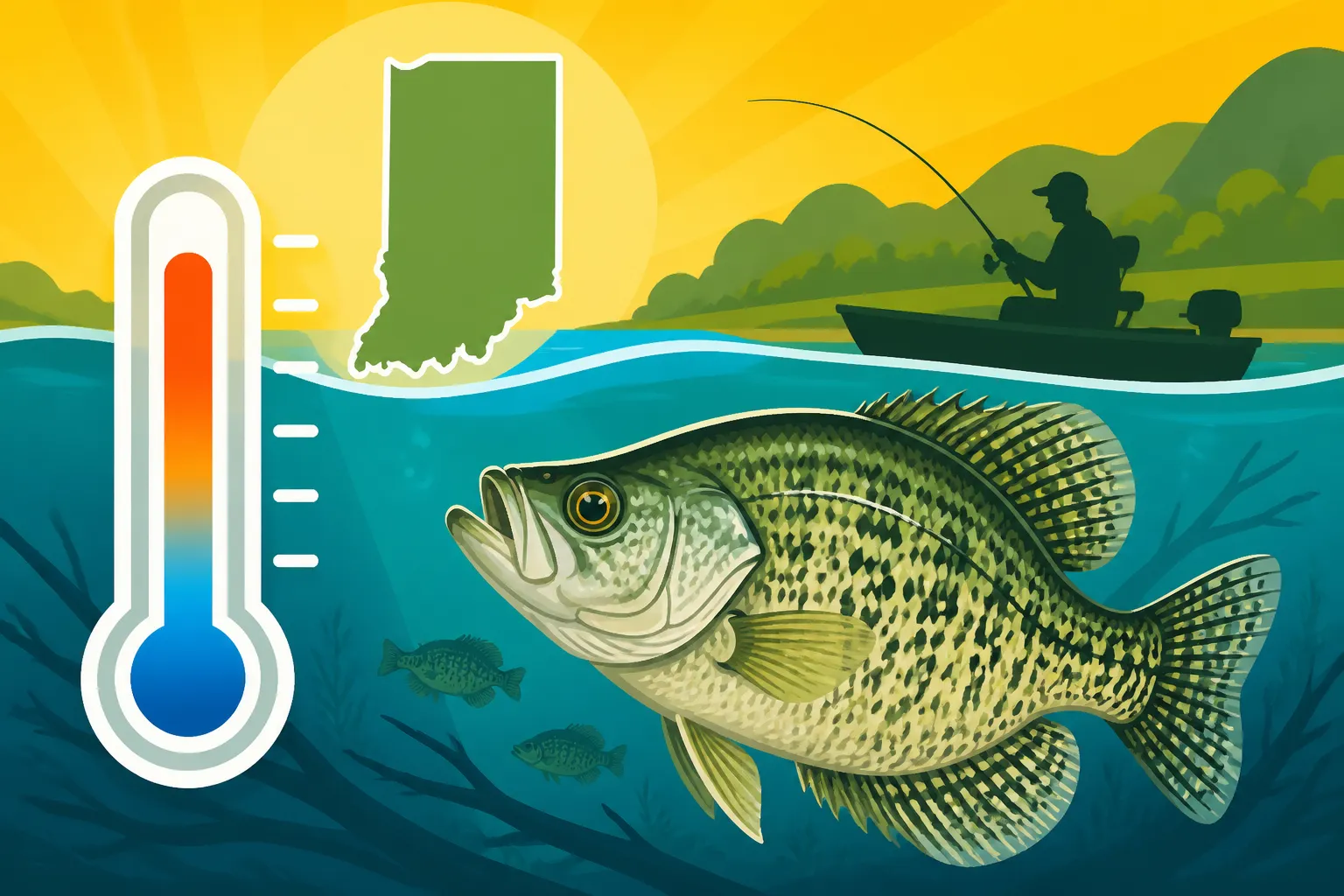
Crappie are ectothermic, meaning their body temperature is regulated by the surrounding water. This makes water temperature the single most critical factor influencing their metabolism, activity levels, and ultimately, where you’ll find them and how willing they are to bite. Ignoring it is like trying to guess the weather without looking at the forecast!
Cold Water Sluggishness
When the water temperatures dip, especially below the 40-degree Fahrenheit mark, crappie become much less active. Their metabolism slows down considerably, and they don't need to feed as often or as aggressively. Think of it like us trying to get motivated on a cold, dreary winter morning – it's tough to get moving! They’ll often suspend in deeper, more stable water, sometimes in tight schools around submerged structures like brush piles or old creek channels. They might still eat, but it will be a slow, subtle bite, and they won't chase bait far. You'll need to present your lure or bait right in front of their faces, almost bumping them with it. This is why tactics like vertical jigging or slow-trolling can be effective in winter.
Warming Up for the Feed
As water temperatures gradually begin to rise in late winter and early spring, crappie start to "wake up." The 40-50 degree Fahrenheit range is often a transitional period. Their metabolism picks up, and they begin to move more, actively seeking out warmer water pockets. These warmer areas, often shallower flats or coves that absorb more sunlight, will attract baitfish, and in turn, crappie. This is when you'll start to see them moving from deep wintering holes towards shallower staging areas. It's a prime time to scout out sunny banks and areas with dark bottoms, as these spots will warm up fastest and hold active fish. Best Time of Year to Fish in Indiana touches on how critical this spring warm-up is for all species.
Post-Spawn Recovery
After the rigors of spawning, which we'll dive into shortly, crappie need a period of recovery. Their energy reserves are depleted, and they're often a bit beat up from protecting nests and engaging in courtship rituals. During this phase, which typically sees water temperatures rising further into the upper 60s and low 70s, crappie will often retreat slightly from the very shallow spawning beds. They might move to nearby deeper water with access to cooler temperatures and abundant food sources. Think of it as them taking a well-deserved nap after a big family reunion! They'll still feed, but perhaps not with the frantic urgency of the pre-spawn. Understanding Crappie Spawn Timing on Indiana Lakes can help you predict this recovery period.
The Ideal Crappie Spawning Temperature in Indiana
The spawn is perhaps the most anticipated time for crappie anglers in Indiana. It’s when these fish move shallow, become highly concentrated, and often bite aggressively. But it’s all dictated by temperature.
Pre-Spawn Staging
Before the main event, crappie will "stage" in slightly deeper water adjacent to their intended spawning grounds. As water temperatures climb into the mid-50s (around 55-60 degrees Fahrenheit), these fish will start to congregate, often around brush piles, submerged timber, or weed lines in 5 to 15 feet of water. They're waiting for the perfect temperature window to push all the way into the shallows. This pre-spawn period is fantastic for fishing because the crappie are actively feeding to build energy for the spawn. They're hungry and more willing to chase. This is a great time for techniques like spider rigging or slow trolling jigs and minnows near structure.
The Peak Spawn Window
The magic number for crappie spawning in Indiana is typically between 60 and 68 degrees Fahrenheit. Once the water temperature consistently hits this range, especially in the shallower coves and bays, the crappie move into incredibly shallow water, often just 1-5 feet deep, to build their nests and lay eggs. They prefer hard bottom, like gravel or sand, and often seek out protected areas around submerged wood, stumps, lily pads, or cattails. This is when you can often sight-fish for them or use light tackle to present small jigs or minnows. Crappie Jigging Techniques for Beginners are especially effective during this period. Remember, males will stay on the nests protecting the eggs, and they can be very territorial and aggressive.
Post-Spawn Dispersal
Once the eggs are laid and hatched, and the water temperature rises above the peak spawning range (into the upper 60s and 70s), crappie will begin to disperse. The males leave the nests, and all the fish spread out from the shallow spawning grounds. They’ll start moving towards deeper, cooler water, often suspending over ledges, creek channels, or brush piles, especially during the heat of summer. This doesn't mean they stop biting, but they become harder to find in large numbers in one specific spot. It’s a transition that forces anglers to adjust their strategies from targeting concentrated shallow fish to seeking out more scattered, deeper-dwelling crappie.
Seasonal Temperature Zones: Where Crappie Hang Out
Understanding the general temperature ranges throughout the year can help you predict crappie movements across Indiana's diverse lakes and reservoirs.
Spring Warm-Up and Shallow Feeding
As we discussed, spring is all about that rising temperature. Once ice-out occurs and water temperatures creep from the high 30s into the 40s, crappie start their migration. They'll use the warmer, shallow sun-drenched coves and banks as feeding grounds. Look for north-facing banks that get maximum sun exposure or areas with dark, mucky bottoms that absorb heat faster. As the water pushes into the 50s, the pre-spawn staging begins, and then the peak spawn in the 60s. This is undoubtedly one of the best times to target crappie, as they are actively feeding and concentrated. Best Crappie Lakes in Indiana will often highlight places with good shallow cover for this period.
Summer Deep Water Retreat
When Indiana's summer heat really kicks in, pushing surface temperatures into the 70s, 80s, and sometimes even 90s, crappie often seek refuge in deeper, cooler water. They'll follow the thermocline – the layer of water where the temperature changes rapidly – or seek out deep brush piles, submerged timber, bridge pilings, or even main lake points where they can suspend in more comfortable conditions. They'll still feed, often more actively during low light periods like dawn, dusk, or even at night, when they might push up slightly shallower to ambush baitfish. Fishing vertically with jigs or live minnows becomes key when crappie are deep. Knowing How to Find Crappie in Summer often means understanding depth and thermocline.
Fall Turnover and Re-Staging
Fall is another fantastic, albeit sometimes challenging, time for crappie. As air temperatures drop, the surface water of lakes begins to cool. Eventually, this cooler surface water becomes denser than the warmer water below, causing the lake to "turn over." This process mixes the water column, equalizing temperatures and oxygen levels from top to bottom. During the actual turnover, which typically occurs when surface temps drop into the 50s, fishing can be tough as fish disperse. However, once turnover is complete, and water temperatures stabilize in the upper 50s and low 60s, crappie will often re-stage. They'll aggressively feed again to put on weight for the coming winter, often found around deeper brush piles, channel edges, or main lake points. They can be very active in the fall, similar to pre-spawn.
Winter Ice Fishing Considerations
For the intrepid Indiana angler who braves the cold, ice fishing for crappie is a rewarding experience. Once ice forms and water temperatures drop into the 30s and low 40s, crappie will congregate in deeper, stable water. They often suspend in large schools over the deepest parts of the lake or around prominent structure like creek channels, humps, or deep brush piles. Their metabolism is slow, so subtle presentations are crucial. Tiny jigs tipped with a wax worm or minnow, fished vertically, are the way to go. Focus on finding schools with your electronics, and be patient. Best Depth to Fish for Crappie in Winter emphasizes the importance of understanding their deep-water habits during this season.
Here’s a quick overview of crappie behavior based on water temperature:
| Water Temperature Range (Fahrenheit) | Crappie Behavior | Typical Location | Fishing Strategy |
|---|---|---|---|
| Below 40° | Very sluggish, low metabolism, tight schools | Deepest, most stable water; suspended over structure | Vertical jigging, slow dropshots; tiny baits, subtle presentations |
| 40-50° | Becoming active, seeking warmer water, starting to feed | Transitioning from deep to shallower staging areas | Slow trolling, long-lining jigs; targeting sunny banks |
| 55-60° | Pre-spawn staging, actively feeding, concentrating | Deeper brush piles, channels adjacent to spawning flats | Spider rigging, slow trolling, vertical jigging; minnows and jigs |
| 60-68° | Peak spawning, highly concentrated, territorial | Very shallow (1-5 ft) around cover (wood, weeds, gravel) | Sight fishing, small jigs, minnows under bobbers; casting to cover |
| 68-75° | Post-spawn dispersal, recovering, spreading out | Moving from shallow back to deeper cover, seeking cooler water | Fan casting, slow trolling, targeting mid-depth structure; minnows and jigs |
| 75°+ | Summer deep retreat, less active in daylight, nocturnal feeding | Deeper water, thermocline, shade, main lake structure | Vertical jigging, dropshotting; night fishing; targeting deep brush |
| Fall (50s-60s) | Fall turnover (tough fishing), then re-staging and feeding aggressively | Dispersed during turnover, then congregating on structure, channel edges | Trolling, vertical jigging, casting; minnows and jigs |
Reading the Water: Tools and Tips for Temperature Tracking
You can't effectively chase crappie based on temperature if you don't know what the water temperature actually is! Luckily, there are several tools and techniques to help you stay informed.
Basic Thermometers
The simplest and often most overlooked tool is a basic water thermometer. These can be remarkably accurate and are inexpensive. You can find excellent, reliable fishing thermometers on platforms like Amazon. Many anglers will simply drop a weighted thermometer into the water at various depths, or take surface readings in different parts of a lake. This low-tech approach gives you direct, real-time data crucial for making informed decisions. Don't underestimate the value of a few degrees difference; it can be the difference between finding fish and finding nothing.
Fish Finders with Temperature Sensors
Most modern fish finders, even entry-level models, come equipped with a temperature sensor built into the transducer. This is incredibly helpful because it provides a continuous surface temperature reading as you move across the water. More advanced units might even show you a temperature graph over time or allow you to see distinct thermoclines, which are vital for finding fish in summer. Learning to use your fish finder effectively for not just identifying fish and structure, but also for its temperature readouts, will significantly improve your crappie success. Manufacturers like Humminbird and Lowrance offer a range of units with these capabilities.
Mapping Apps and Resources
While not always giving you real-time, hyper-local temperature, many online mapping apps and resources can provide general water temperature trends for larger bodies of water. Some larger lakes or reservoirs in Indiana might have buoys or monitoring stations that report temperature data. While this won't tell you the exact temperature in that sunny cove you're fishing, it can give you a good starting point and help you understand regional trends. Before you even leave the house, a quick check of these resources can help you plan your day and narrow down your target areas. Remember, though, that shallow, protected bays will warm faster than the main lake body, so always verify with your on-water tools.
Understanding Water Temperature and Fish Feeding Patterns across all species emphasizes just how crucial this factor is. For crappie, it’s not just a factor; it’s the primary driver of their daily lives and movements. Pay attention to it, use your tools, and you’ll spend less time searching and more time reeling in those tasty Indiana crappie. When you're ready to stock up on new jigs or minnow buckets for the next seasonal shift, remember that Amazon is a convenient place to browse and compare different options.
Disclaimer
This article is for general informational purposes only and does not constitute professional advice. Laws, prices and regulations vary by location and change over time. Consult a qualified professional for guidance on your specific situation.