Best Lures for Trolling Brown Trout
Trying to figure out which lures will actually tempt a wily brown trout while you're trolling Lake Michigan can feel like a guessing game. It's frustrating to spend hours on the water, meticulously setting up your lines, only to come back empty-handed because you didn't have the right presentation. This guide is here to help you cut through the confusion and equip you with the knowledge to pick the best lures for trolling brown trout in Indiana, increasing your chances of a successful and rewarding day.
Understanding Brown Trout Behavior for Better Lure Selection
Before we even talk about specific lures, it’s crucial to understand the fish we’re after. Brown trout are notoriously finicky, but knowing their habits, preferred hangouts, and what they like to eat will give you a massive advantage when selecting your trolling arsenal.
Where Brown Trout Hide in Indiana's Lake Michigan
Brown trout in Lake Michigan tend to stick to cooler waters, often found near shorelines, especially early and late in the season. They love structure – think rocky points, drop-offs, underwater humps, and even old submerged cribs or debris. These areas provide both ambush points for feeding and protection from predators. Unlike some other salmonids that head straight for deeper, open water, brown trout often hug the coast, making them accessible to smaller boats and even some shore anglers on occasion. When you’re out there, pay close attention to your electronics for changes in bottom contour and baitfish schools, as these are prime locations where brown trout will be lurking. Sometimes, they're only in a few feet of water, especially during low light conditions or when searching for warmer shallow water in colder months.
Another key area brown trout frequent is the thermalcline – that distinct layer where warm surface water meets colder, deeper water. This zone often concentrates baitfish, creating a buffet for predatory browns. If you're struggling to find fish, varying your trolling depth to hit different parts of the thermalcline can be a game-changer. Remember, brown trout can be found anywhere from the surface down to significant depths, depending on water temperature, light conditions, and the availability of their favorite snacks. Always keep an eye on water temperature, as even a small change can push them into different zones.
Seasonal Movements and Feeding Habits
Brown trout feeding habits and where they hang out can shift dramatically with the seasons. In early spring, as ice recedes, browns will often be found shallow, near river mouths and harbor areas, gorging on baitfish that are also moving into these warmer, nutrient-rich waters. This is a fantastic time for aggressive trolling with smaller spoons and stickbaits. As summer progresses and surface temperatures rise, brown trout will push into deeper, cooler waters, often congregating around the thermalcline or deeper structures. This is when larger diving crankbaits and downriggers really shine.
Come fall, things get exciting again. The cooler water temperatures trigger a pre-spawn feeding frenzy, and brown trout will move back into shallower waters, sometimes even cruising very close to shore. This is prime time for catching trophy-sized browns. They become incredibly aggressive, chasing larger baitfish patterns. Understanding these seasonal shifts means you won't be fishing blindly; instead, you'll be able to anticipate where the fish are and what they're likely to strike. This knowledge also helps you decide what kind of gear, like the specialized rods needed for salmon and steelhead, you might need. If you're planning a trip during the vibrant fall run, make sure to check out our guide on What to Bring for Indiana's Fall Salmon Run.
Top Lure Categories for Trolling Brown Trout
When it comes to lures for brown trout, variety is your friend. Having a selection of different types, sizes, and colors will allow you to adapt to changing conditions and find what the fish are keying in on.
Spoons: The Wobble That Works
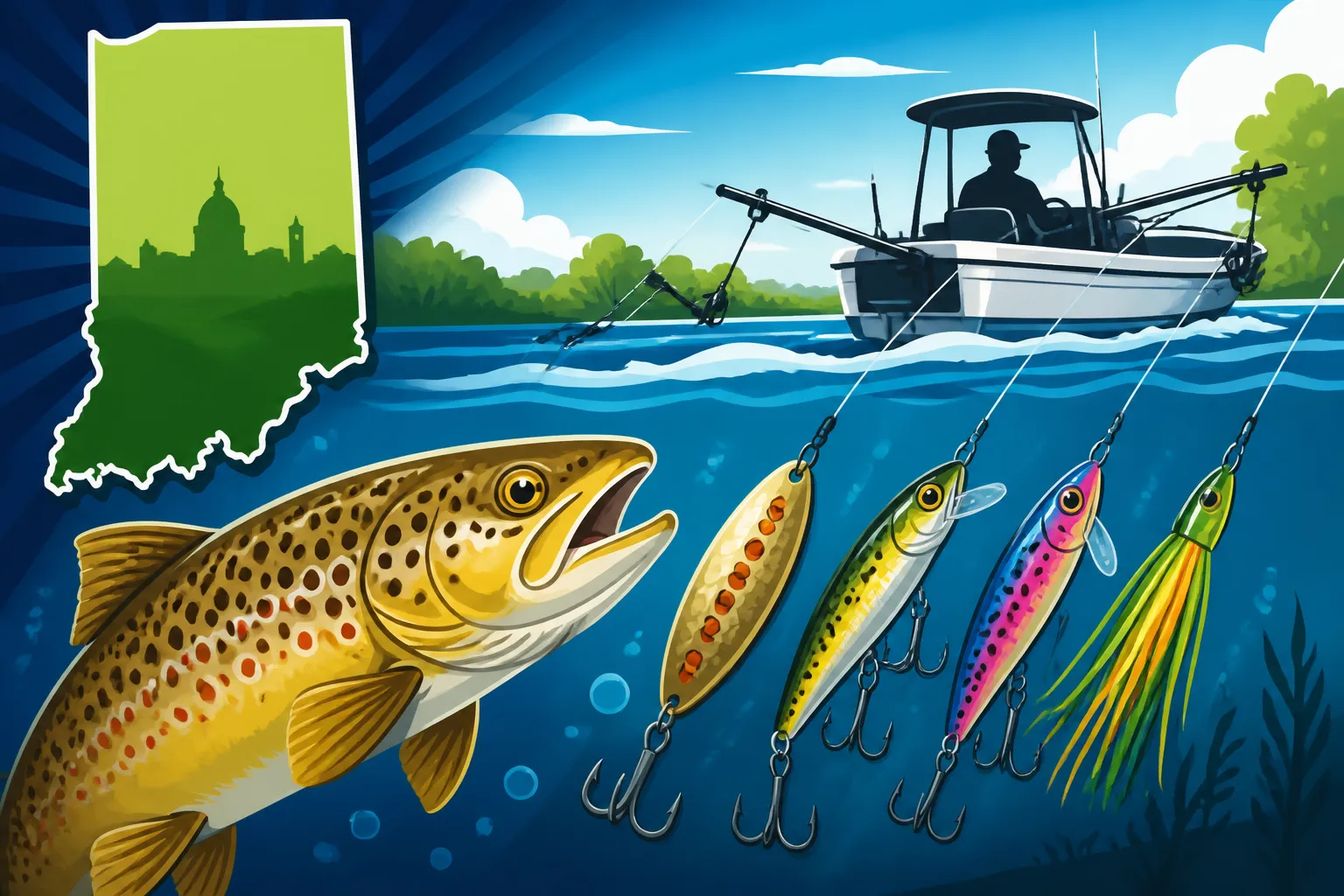
Spoons are arguably one of the most versatile and effective lures for trolling brown trout. Their erratic, wobbling action perfectly imitates wounded baitfish, which brown trout find irresistible. Brands like Michigan Stinger, Dreamweaver, and Silver Streak are incredibly popular among Great Lakes anglers. When choosing spoons, think about size and color. Smaller spoons, in the 2- to 3.5-inch range, are often best, mimicking juvenile alewives or smelt, which are primary food sources. For colors, start with natural patterns like silver/blue, silver/green, or silver/black on sunny days, and move to brighter, more fluorescent colors like orange, chartreuse, or even glow-in-the-dark patterns for low light conditions or murky water.
The beauty of spoons is their adaptability. You can troll them behind planer boards to cover wide swaths of water, off downriggers to target precise depths, or even simply off an inline weight or a Dipsy Diver. The speed at which you troll also affects their action; experiment to find the retrieve that triggers the most strikes. Remember, sometimes a subtle wiggle is all it takes, while other times a more aggressive flash and dart will be what they're after. Many anglers keep a wide array of spoons, and you can find a great selection on platforms like Amazon, making it easy to replenish your tackle box. For deeper dives into trolling, our article on Trolling Techniques for Salmon and Steelhead offers some great insights that are applicable to brown trout too.
Crankbaits: Diving to the Depths
Crankbaits are another powerhouse lure for brown trout, especially those designed to dive to specific depths. These lures often mimic larger baitfish and can be fantastic for targeting browns that are holding deeper, or when you want to present a more substantial meal. Brands like Rapala (particularly their Deep Husky Jerks or Shad Raps), Storm, and Bomber offer a variety of diving crankbaits that are well-suited for trolling. The diving lip on these lures forces them down into the water column without additional weight, though they can still be run off downriggers for even greater depth control.
When selecting crankbaits, consider their dive curve – how deep they run on a given line and speed – and their swimming action. Some have a tight wobble, while others have a wider, more aggressive swagger. Color choices generally follow the same rules as spoons: natural patterns for clear water and bright, flashy options for low light or stained conditions. Holographic finishes or those with rattles can add an extra layer of attraction. Crankbaits are particularly effective when brown trout are aggressively feeding on larger baitfish or when targeting them in areas with distinct drop-offs where they might be staging. When you're talking about Lake Michigan Trolling Gear Guide for Indiana Anglers, crankbaits are almost always on the list.
Stickbaits: Imitating Forage Fish
Stickbaits are long, slender lures that excel at imitating the profile and swimming action of slender forage fish like smelt or alewives, which are key components of a brown trout's diet in Lake Michigan. They often have a tight, subtle wobble and can be incredibly effective, especially in shallow water or when browns are being particularly finicky. Brands like Rapala (Original Floaters, Husky Jerks), Smithwick (Perfect 10 Rogue), and Yo-Zuri are renowned for their quality stickbaits. These lures come in both floating and suspending models, with some designed to dive to modest depths.
Floating stickbaits are excellent for running shallower, often with a little added weight or off a light planer board. Suspending models, which stay at a specific depth when you pause your retrieve, can be deadly when brown trout are hesitant to commit to a moving lure. Colors range from very natural, silver-sided patterns to bright, flashy designs. They can be trolled at various speeds, and like spoons, their action changes with speed, allowing you to fine-tune your presentation. Many anglers will experiment with different colors and sizes until they find what the brown trout are looking for on a given day. You can find a vast array of stickbaits suitable for Brown Trout Fishing on Indiana's Lake Michigan Shoreline on online retailers like Amazon.
Essential Trolling Setups and Techniques
Having the right lures is only half the battle; knowing how to present them effectively is just as important. Trolling for brown trout involves understanding the nuances of lure selection, depth control, and retrieval speed.
Matching Lure Size and Color to Conditions
The art of lure selection isn't just about having the "best" lure; it's about having the right lure for the current conditions. Water clarity is a huge factor. In clear water, natural baitfish patterns like silvers, blues, and greens are usually top performers because they look more realistic. However, if the water is murky or stained, brighter, more contrasting colors such as chartreuse, orange, pink, or firetiger patterns can be more visible and grab a trout's attention. Think about how a fish sees in limited visibility – contrast and vibration become more important than subtle realism.
Light conditions also play a significant role. On bright, sunny days, reflective silver or gold finishes can create a brilliant flash that triggers strikes. On overcast days or during low-light periods like dawn and dusk, matte finishes, glow-in-the-dark lures, or those with subtle UV properties can be more effective. Size matters, too. If the brown trout are feeding on small baitfish, a large spoon might be ignored. Conversely, if they're targeting larger forage, a tiny lure might not provide enough "meat" to entice them. Always have a range of sizes and colors to experiment with. You never know what pattern will be the hot ticket until you try it!
Speed, Depth, and Presentation
Trolling speed is incredibly critical. For most brown trout trolling with spoons, crankbaits, or stickbaits, a speed between 1.8 to 2.8 miles per hour is a good starting point. However, fish can be particular, and even slight adjustments can make a huge difference. A slower speed might give a lure a more subtle, injured action, while a faster speed could make it dart and flash more aggressively. Watch your rod tips – they'll tell you if your lures are running true and with good action. Sometimes, a zig-zag trolling pattern or making wide turns can cause your lures on the outside of the turn to speed up and those on the inside to slow down, mimicking erratic baitfish and triggering strikes.
Depth control is equally vital. Brown trout are often structure-oriented, so you need to put your lures right in their strike zone. For shallow presentations, inline weights, snap weights, or simply the diving action of your crankbait might be enough. For deeper water, downriggers are indispensable, allowing you to precisely position your lures at specific depths, often near the thermalcline or over deep structure. Dipsy Divers or Jet Divers can also help get your lures down without the need for a full downrigger setup. Always keep an eye on your fish finder to identify baitfish schools and any marks that might indicate brown trout, then adjust your depths accordingly. Our guide on Downrigger Basics for Indiana Lake Michigan Anglers delves deeper into this essential gear.
The Importance of a Quality Leader
When targeting brown trout, especially larger ones, a quality leader is not an option—it's a necessity. Brown trout have sharp teeth, and while not as aggressive as muskie or pike, they can easily fray or cut through lighter main lines. Fluorocarbon leaders are an excellent choice because they are nearly invisible underwater, offer good abrasion resistance, and have less stretch than monofilament. A 10 to 20-pound test fluorocarbon leader, about 6 to 8 feet long, is a good starting point.
The connection between your main line and leader, and your leader to your lure, must be strong. Use reliable knots like a double uni knot or an Albright knot for line-to-leader connections, and a loop knot for attaching your lure. A loop knot allows the lure to have maximum action, which is critical for spoons and crankbaits. Regular inspection of your leader for nicks or abrasions after catching a fish or after a few hours of trolling is paramount. Replacing a damaged leader is much cheaper than losing a trophy brown trout and your favorite lure! Don't skimp on this crucial detail; it's often the weakest link in your entire setup.
Brands and Where to Find Your Lures
Building a diverse and effective tackle box takes time, but knowing which brands are trusted by experienced anglers can save you a lot of trial and error.
Trusted Lure Manufacturers
When it comes to brown trout, several lure manufacturers have earned a reputation for producing consistent, fish-catching products. For spoons, look for names like Michigan Stinger, known for their Stingray and Scorpion spoons, which offer a great flutter. Dreamweaver is another popular choice, particularly their Super Slim and Dreamweaver spoons, which come in a huge array of proven Great Lakes patterns. Silver Streak spoons are also a staple, offering reliable action and durability. These brands are often found in local bait and tackle shops around Lake Michigan, but if you're looking for convenience and a wider selection, online retailers like Amazon are excellent resources.
For crankbaits and stickbaits, Rapala is almost synonymous with quality. Their Husky Jerks, Shad Raps, and Original Floaters have been catching fish for decades. Storm Lures produces effective crankbaits like the Deep Thunderstick. Bomber Lures also offers excellent diving crankbaits that mimic a variety of baitfish. These brands have perfected the art of creating lures with specific actions and dive depths, giving you the tools to adapt to various conditions. Investing in a few proven patterns from these manufacturers will give you a solid foundation for your brown trout trolling adventures.
Stocking Up for Your Next Trip
Once you've identified the types of lures you want, it's time to build your collection. Local bait and tackle shops are fantastic for getting local advice and supporting small businesses, and they often carry the specific "hot" colors for that season. However, for sheer variety and competitive pricing, online marketplaces like Amazon are incredibly convenient. You can browse thousands of lures, read reviews from other anglers, and have them delivered right to your door, which is perfect for filling gaps in your tackle box or trying out new patterns.
When stocking up, don't just buy one of each. It's wise to have multiples of your most effective patterns, especially in different sizes, as losing a lure to a snag or a toothy fish is inevitable. Consider having a few "wild card" colors or patterns that are outside your usual go-tos, just in case the fish are keying in on something unexpected. A well-stocked tackle box means you're prepared for whatever the brown trout throw at you. Remember, the goal is not to have every lure ever made, but to have a versatile selection of proven performers that you have confidence in.
| Lure Type | Primary Use | Key Features | Common Brands | Best Conditions |
|---|---|---|---|---|
| Spoons | Mimics wounded baitfish, versatile depth | Erratic wobble, flash, various sizes/colors | Michigan Stinger, Dreamweaver, Silver Streak | All-around, adaptable to light & water clarity |
| Crankbaits | Targets specific depths, larger profile | Diving lip, aggressive or tight wobble, rattles | Rapala, Storm, Bomber | Deeper water, aggressive fish, larger baitfish |
| Stickbaits | Imitates slender forage fish (smelt/alewives) | Subtle wobble, floating/suspending models | Rapala, Smithwick, Yo-Zuri | Shallow water, finicky fish, clear water |
This table provides a quick reference to help you decide which lures to grab next time you're gearing up for a brown trout expedition on Lake Michigan. Don't forget that brown trout fishing on Lake Michigan is subject to specific rules. Make sure you're up to date on Lake Michigan Fishing Rules for Indiana Anglers before you head out.
Disclaimer
This article is for general informational purposes only and does not constitute professional advice. Laws, prices and regulations vary by location and change over time. Consult a qualified professional for guidance on your specific situation.