How to Fish for Steelhead from the Bank
There's nothing quite like the thrill of feeling that unmistakable tug from a powerful steelhead, but for many anglers, the thought of chasing these incredible fish immediately brings to mind expensive boats and specialized gear. If you've been putting off your steelhead dreams because you don't own a fancy charter boat, I'm here to tell you that you're missing out! Bank fishing for steelhead in Indiana's tributary streams is not only possible but can be incredibly rewarding. This guide will walk you through everything you need to know to successfully target these magnificent fish right from the riverbank.
Understanding Indiana's Steelhead Runs and Where to Find Them from Shore
Steelhead are truly unique fish, offering an incredible challenge and a fantastic fight. But before you can catch them from the bank, you need to understand when and where they're going to be accessible. It’s all about timing and location, just like real estate, right?
The Annual Steelhead Migration in Indiana
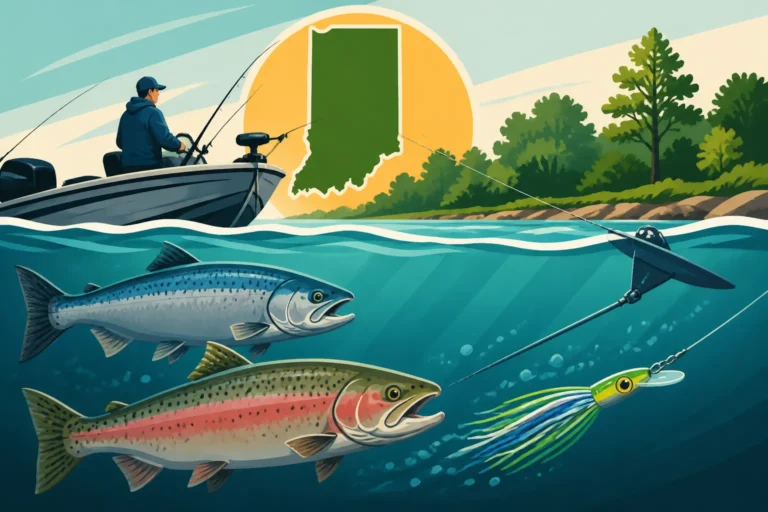
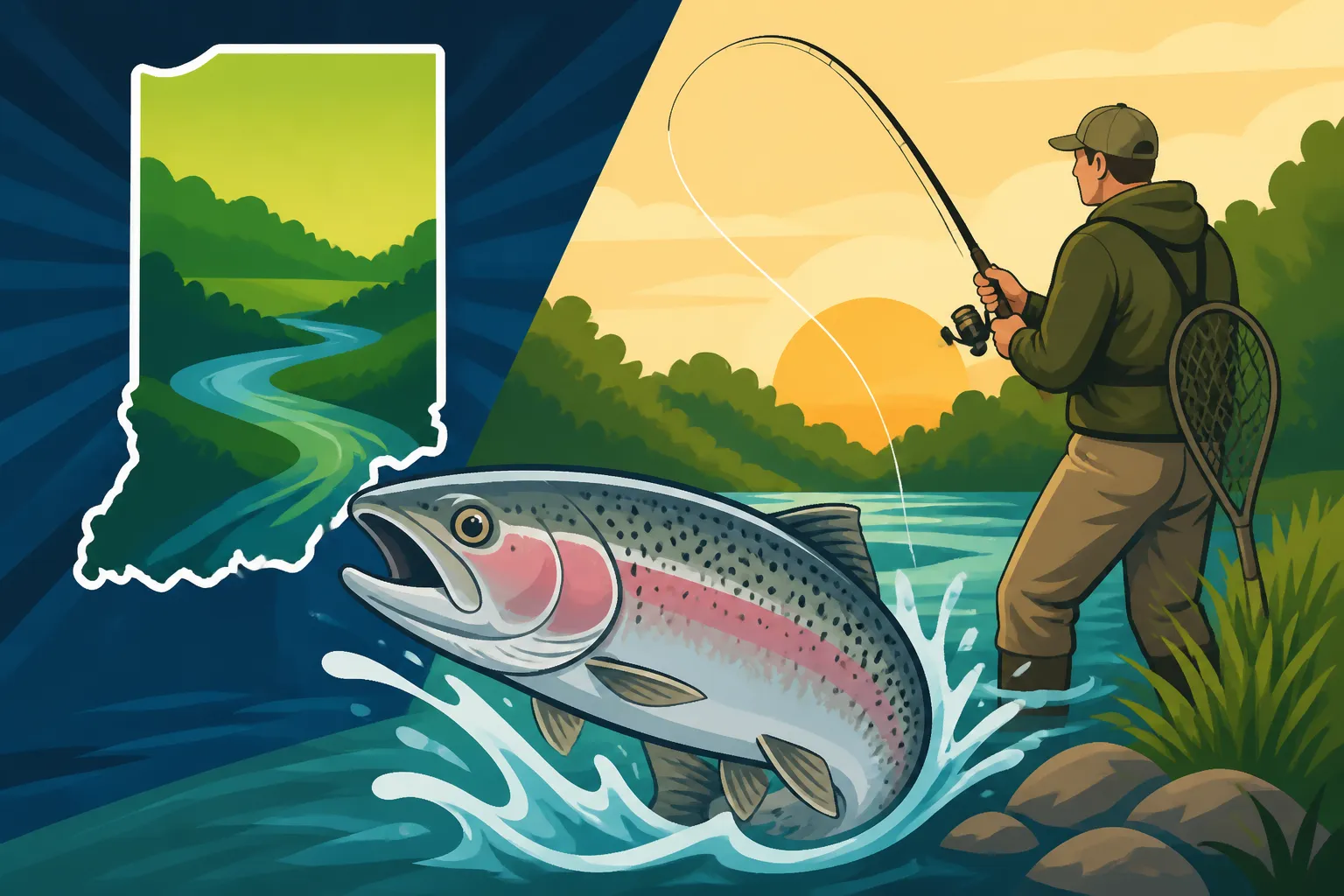
Steelhead are basically rainbow trout that exhibit an anadromous life cycle – meaning they live most of their lives in Lake Michigan, growing large and strong, and then migrate into tributary rivers and streams to spawn. This means they're accessible to bank anglers during specific times of the year when they leave the vastness of the lake and enter the relatively smaller waterways.
You'll typically find two main pushes of steelhead into Indiana's rivers:
- Fall Run: Starting in late September and extending through November, fish move into the rivers following the cooler water temperatures and the salmon spawning activity. They're often feeding on salmon eggs and getting ready for their own spawn. This is a fantastic time to hit the banks, as the fish are aggressive and plentiful. You might even find yourself landing a "chromer" – a bright, silver fish fresh from the lake. For more on this exciting time of year, check out our guide on the Steelhead Fishing in Indiana: A Fall Run Guide.
- Spring Run: From March through early May, the primary spawning run occurs. These fish are focused on reproduction, but they can still be caught, especially if you present a natural-looking bait. They'll drop back to the lake after spawning, offering another opportunity for anglers as they recuperate and feed.
- Winter Steelhead: Don't count out the cold months! While tougher to fish, steelhead can be found in the rivers throughout winter, often holding in deeper, slower pools, waiting for warmer water to trigger their spawning instincts. You'll need to brave the elements, but the rewards can be great.
In Indiana, the main rivers and streams known for reliable steelhead runs include the St. Joseph River near South Bend, Trail Creek in Michigan City, Salt Creek, and the Little Calumet River. These waterways are directly connected to Lake Michigan and provide the necessary habitat for steelhead to migrate and spawn. Specifically, the St. Joseph River Steelhead Fishing Spots Near South Bend offers some fantastic bank access.
Identifying Prime Bank Fishing Locations
Okay, so you know when they're in the river. Now, how do you find them from the bank? It's not like the whole river is teeming with them at every bend. Steelhead are creatures of habit and prefer certain types of water.
When you're walking the banks, look for these key features:
- Deeper Pools: Steelhead often hold in the deepest parts of the river, especially during colder temperatures or when they're resting. These pools provide refuge from strong currents and a sense of security.
- Current Seams and Eddies: These are the sweet spots where faster water meets slower water. Steelhead will often sit just outside the main current, letting food wash to them without expending too much energy. Look for areas behind large rocks, fallen trees, or bridge pilings.
- Log Jams and Undercut Banks: Any kind of cover provides a sense of security for steelhead. Log jams create natural current breaks and hide fish from predators (and anglers!). Undercut banks offer overhead cover and deeper water close to shore. Just be careful when approaching these areas, as they can be slippery.
- Confluences: Where a smaller tributary meets a larger river, or where two currents merge, can create ideal feeding lanes. These spots can concentrate baitfish and other food sources, attracting steelhead.
- Public Access Points: Many of Indiana's steelhead rivers have designated public access points, often with parking areas or trails. These are great starting points, but don't be afraid to walk a bit further to find less-pressured water. The Indiana Department of Natural Resources (DNR) often maintains these areas.
Spend some time observing the water. Look for any signs of fish activity, like jumping or splashing. Pay attention to water clarity – sometimes, a slight stain can actually make fish less wary and more willing to bite. Learning to read the water is a crucial skill for any angler, and it's especially important when you're limited to bank access. You're looking for those subtle clues that tell you where the fish are hiding.
Essential Gear for Bank Steelhead Anglers
You don't need to break the bank to catch steelhead from the bank, but having the right gear makes a huge difference. Think durability, sensitivity, and efficiency. You want to maximize your chances and minimize frustration.
Rods, Reels, and Line Choices
Let's talk about the backbone of your setup.
- Rods: For bank fishing, a longer rod is your best friend. I'm talking 8 to 10 feet, sometimes even longer for specialized float fishing. Why? Because a longer rod helps you:
- Cast Further: Crucial for reaching those distant seams and pools from shore.
- Mend Line: This means adjusting your line on the water to keep your bait drifting naturally with the current, avoiding drag.
- Control Fish: A longer rod provides more leverage and shock absorption, which is vital when fighting a powerful, acrobatic steelhead in current. Look for a medium-heavy power with a fast action. This combination gives you the backbone to fight fish and the sensitive tip to detect subtle bites.
- Reels: A high-quality spinning reel in the 2500-4000 size range is perfect. You want one with a smooth drag system, as steelhead are known for their powerful runs. Make sure it balances well with your chosen rod.
- Line: This is where things get a little nuanced:
- Main Line: Many anglers prefer a braided mainline (15-20 lb test) for its incredible sensitivity and strength-to-diameter ratio. It casts beautifully and has almost no stretch, so you feel every bump. Others stick with a good quality monofilament (8-12 lb test) for its stretch, which can act as a shock absorber.
- Leader: This is non-negotiable for steelhead. You'll want a fluorocarbon leader (6-10 lb test). Fluorocarbon is nearly invisible underwater, extremely abrasion-resistant (which you'll appreciate around rocks and logs), and has less stretch than mono, transmitting bites better. Attach your leader to your main line with a strong knot like a double uni-knot or an FG knot. The length of your leader will vary depending on water clarity and depth, but typically 3-6 feet is a good starting point.
Remember, you're often fishing in snaggy environments, so having line that can withstand some abuse is a big plus.
Terminal Tackle and Baits That Get Bites
Now for the business end! This is where you connect with the fish.
- Floats: Hands down, the most popular and effective way to fish for steelhead from the bank is with a float (or bobber). You'll typically use:
- Drift Floats: These are slender, sensitive floats designed for river fishing. They're weighted to sit vertically in the water, making subtle bites obvious.
- Slip Floats: These allow you to fish at any depth by having the line slide through the float, stopping at a bobber stop. This is crucial for deeper pools.
- Weights: You'll need an assortment of split shot or small, non-toxic weights to get your bait down to the strike zone and keep your float drifting naturally. The amount of weight will depend on the current speed and depth.
- Swivels: Small barrel swivels or three-way swivels help prevent line twist and connect your main line/leader.
- Hooks: Size 8 to 14 single, barbless hooks are common. Barbless hooks are easier to remove, causing less stress on the fish for catch-and-release, and are sometimes even required in certain waters. Always check local regulations, especially for trout and salmon streams. Our guide on Indiana Fishing Regulations and Bag Limits Guide can help you stay compliant.
- Baits: Steelhead can be picky, so variety is key.
- Roe/Egg Patterns: Natural salmon or trout eggs (often cured) are irresistible to steelhead, especially during or after a salmon run. Artificial egg patterns and soft beads are also incredibly effective. You can find many options on sites like Amazon.
- Jigs: Small marabou jigs (1/32 to 1/8 oz) in bright colors (chartreuse, pink, orange, white) or natural hues are deadly. Tip them with a wax worm or a piece of scented plastic for added appeal.
- Worms: Nightcrawlers or smaller garden worms can tempt steelhead, especially after rain when natural food sources wash into the river.
- Lures: Small spinners (e.g., Rooster Tails, Mepps) and spoons can also be effective when fish are aggressive.
Here’s a quick checklist for your tackle box:
| Item | Description | Why it's Important |
|---|---|---|
| Drift/Slip Floats | Various sizes for different currents/depths | Natural bait presentation, bite detection |
| Split Shot/Weights | Assorted sizes (lead-free preferred) | Proper bait depth and drift speed |
| Barrel Swivels | Size 10-14 | Prevents line twist, connects main line to leader |
| Single Hooks | Size 8-14, barbless | Minimizes fish harm for C&R, legal requirement in some areas |
| Fluorocarbon Leader | 6-10 lb test, 100% fluorocarbon | Stealth, abrasion resistance, strength |
| Roe/Egg Patterns | Natural cured eggs, artificial beads, soft plastics | Top steelhead bait, especially during runs |
| Marabou Jigs | 1/32 – 1/8 oz, various colors | Versatile, effective in various conditions, can be tipped with bait |
| Worms | Nightcrawlers or smaller garden worms | Natural offering, good for muddy water |
| Small Spinners/Spoons | 1/8 – 1/4 oz | For aggressive fish, covering water |
Waders, Vests, and Other Bankside Comforts
Fishing from the bank doesn't mean you'll stay dry!
- Waders: Chest waders are almost a necessity. They allow you to safely wade into the shallower edges of the river, giving you better casting angles and access to prime water you couldn't reach from the very bank. They also keep you warm in cold weather. Investing in a good pair of Best Waders for River Fishing is highly recommended. Make sure to layer clothing underneath for warmth, especially in winter.
- Layered Clothing: Steelhead season often means cold, damp weather. Dress in layers, including a waterproof and windproof outer shell, to stay comfortable throughout the day.
- Fishing Vest or Backpack: You need a way to carry all that terminal tackle, bait, and extra gear. A fishing vest keeps everything accessible, or a small backpack can hold larger items, extra layers, and snacks. You can find a wide array of options on Amazon, tailored for anglers.
- Landing Net: A long-handled landing net with a rubberized mesh is invaluable. Steelhead are strong, and trying to hoist them up a steep bank or beach them on rough terrain can lead to lost fish and damaged gear. The rubberized mesh is also gentler on the fish's slime coat, promoting healthy release.
- Pliers/Forceps: For hook removal, especially with barbless hooks.
- Line Clippers: For neat, close cuts.
- Polarized Sunglasses: These are not just for looking cool; they cut glare off the water, allowing you to see submerged structure, observe drifts, and sometimes even spot fish.
- Warm Hat and Gloves: Seriously, don't underestimate the cold!
Having the right gear isn't just about catching fish; it's about comfort and safety, which makes for a much more enjoyable day on the water.
Proven Techniques for Catching Steelhead from Shore
Alright, you've got your gear, you know where to go. Now, how do you actually make that connection? Bank fishing for steelhead primarily revolves around natural presentations, mimicking what the fish naturally feed on.
Float Fishing: The Bread and Butter Method
Float fishing is, without a doubt, the most popular and often most effective method for bank anglers targeting steelhead in rivers. It allows you to present your bait in a completely natural, drift-free manner right into the fish's strike zone.
Here's how to master it:
- Setting Up Your Rig:
- Tie your slip float onto your main line, followed by a small bead (to protect the knot).
- Tie on a bobber stop above the float. This allows you to adjust the depth of your bait. Set it so your bait drifts just above the bottom, usually a foot or two shallower than the deepest part of the hole.
- Attach your fluorocarbon leader (3-6 feet) to your main line using a strong knot and a swivel if preferred.
- Attach your hook to the end of your leader.
- Strategically place your split shot or weights on the leader, above the hook. You want just enough weight to get your float to stand upright and sink properly, but not so much that it causes an unnatural drag. The goal is for your bait to tumble downstream at the same speed as the current.
- Reading the Drift: Cast slightly upstream from where you suspect the fish are holding. As your float drifts downstream, pay close attention to its movement.
- Natural Drift: The float should move smoothly, without any unnatural speed or hesitation. If it speeds up, you might have too much line out (belly in the line) or your weights are too light. If it slows down, you might be dragging bottom or have too much weight.
- Mending Your Line: This is crucial. As your line drifts, the current will push on your main line, creating a "belly" that pulls your float faster than your bait. To counteract this, use your long rod to lift the line off the water and "mend" it – tossing a loop of line upstream. This allows your float and bait to drift naturally.
- Detecting Bites: A steelhead bite on a float is usually unmistakable: the float will simply disappear, often darting sideways or plunging straight down. When it goes down, set the hook with a swift, upward sweep of your rod. Don't hesitate!
- Targeting Specific Water: Systematically work promising water. Make repeated drifts through a seam or pool, covering different depths if you're using a slip float. Sometimes a steelhead won't bite on the first drift, but might on the fifth.
Float fishing really shines because it mimics natural food drifting down the river. Those little trout eggs, dislodged worms, or insects tumbling with the current – that's what a perfectly drifted bait looks like.
Bottom Bouncing and Drifting
While float fishing is king, there are times when bottom bouncing or drifting can be more effective, especially in deeper, faster runs, or when steelhead are hugging the riverbed tightly and unwilling to rise for a float.
- Setup: Instead of a float, you'll use a slinky weight or a piece of pencil lead tied to a dropper loop that's shorter than your leader. Your hook and bait are tied to the longer leader, allowing them to tumble along the bottom just behind the weight.
- Technique: Cast upstream and slightly across the current. Allow your weight to tick and bounce along the bottom as it drifts downstream. You're trying to cover the same lanes you would with a float, but with your bait staying closer to the riverbed.
- Feeling the Bite: This method requires more feel. You'll often feel a subtle "tick" or "thump" as the fish picks up your bait. It can be hard to distinguish from the weight bouncing off rocks, but with practice, you'll learn the difference. A solid "thump" or a sudden stoppage of the drift usually means a fish. Set the hook!
- When to Use It: This is a great technique for when fish are less active, water temperatures are cold, or the water is slightly stained and visibility is low. It's also good for fishing under swift current in shallower runs where a float might not sit right.
Casting Lures and Spoons
Sometimes, steelhead get aggressive, especially early in the fall or when water temperatures are on the warmer side. This is when casting lures can really pay off.
- Lure Selection: Small inline spinners (size 2 or 3) with bright blades, casting spoons (1/4 to 3/8 oz) in silver, gold, or flashy colors, and even small crankbaits can entice a strike.
- Casting Strategy:
- Upstream Cast: Cast your lure upstream and slightly across the current. This allows the lure to sink and then swing through the strike zone as you retrieve it.
- Retrieve: Use a slow to moderate retrieve, letting the current work the lure. You want the spinner blade to just barely be turning, or the spoon to wobble tantalizingly.
- Fan Casting: Work an area thoroughly by fan casting – casting to different angles across the river to cover as much water as possible.
- Targeting Aggressive Fish: This technique is fantastic for covering a lot of water quickly and provoking reaction strikes from actively feeding or territorial steelhead. If you see fish jumping or rolling, or if the water is a bit higher and stained, casting lures can be very effective. It's also a great way to locate fish if you're not sure where they're holding.
Remember, the goal with any of these techniques is a natural presentation. Steelhead are often wary, and anything that looks or moves unnaturally will likely be ignored.
Reading the Water and Adjusting Your Approach
Being a successful bank angler isn't just about casting a line; it's about being a detective, constantly observing and adapting. The river is a living, breathing thing, and its moods change with the weather, the season, and even the time of day.
Understanding Current and Structure
You've heard me talk about "reading the water" before, and it bears repeating. When you're standing on the bank, looking at a river, it's easy to just see a flowing body of water. But beneath that surface, there's a complex world of currents, eddies, and structure that dictates where fish will hold.
- Seams: Look for lines where two different current speeds meet. Often, these are visible as a slight ripple or color change on the surface. Steelhead will sit on the slower side of the seam, waiting for food to be swept past them in the faster water.
- Eddies: These are pockets of slack water or even reverse current, usually found behind large obstructions like boulders, logs, or bridge abutments. Eddies are prime holding spots where steelhead can rest out of the main current.
- Log Jams and Fallen Trees: These provide excellent cover and current breaks. Fish will often hold directly in front of, behind, or even within these woody structures. Be careful when fishing these spots, as snags are common, but the rewards can be great.
- Rock Piles and Boulders: Similar to log jams, rocks create disruptions in the current, forming feeding lanes and resting areas.
- Undercut Banks: Where the current has eroded the soil beneath the bank, creating an overhang, is a classic steelhead hiding spot. It offers overhead cover and protection from strong currents.
Learning to identify these structures and understanding how the current interacts with them will dramatically improve your ability to find fish from the bank. Often, the fish are in predictable spots, you just need to train your eye to see them.
Weather and Water Conditions
Steelhead, like all fish, are highly influenced by their environment. What works on a sunny, clear day might not work after a heavy rain.
- Water Temperature: This is a huge factor. Colder water generally means less active fish that are hugging the bottom and less willing to chase. Warmer water (within their comfortable range) can mean more aggressive, active fish. Knowing the Best Water Temperature for Bass Fishing in Indiana can give you an idea of how water temp affects fish, and many of those principles apply to steelhead too.
- Water Clarity:
- Clear Water: In clear water, steelhead can be very spooky. You'll need to use lighter leaders (e.g., 6lb fluorocarbon), smaller baits, and make longer casts to avoid spooking them. Your approach needs to be stealthy.
- Stained/Turbid Water: After a rain, rivers can get muddy. This reduces visibility, but it can actually make steelhead less wary. They might move into shallower areas to feed. In these conditions, use brighter baits (chartreuse, orange) and slightly larger profiles to make your offering more visible. Our guide on Reading Water Clarity to Find Chinook Salmon in Fall offers more insights on how water color influences fish behavior.
- Water Level and Flow:
- High Water/Fast Flow: After heavy rains, the river can rise and flow quickly. Fish will seek out slack water, eddies, and areas with slower current to avoid expending too much energy. Focus your efforts in these refuge areas. Heavier weights might be needed to get your bait down.
- Low Water/Slow Flow: In prolonged dry spells, rivers can get very low and clear. This makes fish extremely wary. You might need to focus on deeper pools and fish very early or late in the day. Stealth is paramount.
- Weather Changes: Cold fronts can shut fish down, making them lethargic. Warm fronts can activate them. Overcast days are often excellent for steelhead, as the reduced light makes them feel more comfortable and less prone to spooking.
Always check a local river gauge or conditions report if possible before heading out. Being prepared for the conditions will help you choose the right techniques, baits, and presentation.
Catching steelhead from the bank in Indiana's rivers is a truly special experience. It's a testament to patience, skill, and understanding the wild places these amazing fish call home. With the right gear, a bit of knowledge, and a willingness to adapt, you'll be well on your way to hooking into one of Lake Michigan's magnificent silver bullets. Don't forget that you'll also need to comply with the Indiana Trout and Salmon Stamp Requirements if you plan to keep any of your catch. Good luck out there, and tight lines!
Disclaimer
This article is for general informational purposes only and does not constitute professional advice. Laws, prices and regulations vary by location and change over time. Consult a qualified professional for guidance on your specific situation.