How to Jig for Crappie in Spring
Spring in Indiana can be one of the most exciting, yet frustrating, times to chase crappie. The weather is unpredictable, the fish are on the move, and knowing how to present your bait just right can feel like a mystery. If you've ever felt like you're just casting blind or struggling to find those schools of papermouths, you're not alone. This guide is dedicated to demystifying the art of jigging for crappie specifically during the spring season in Indiana, helping you turn those frustrating days into successful ones.
Understanding Spring Crappie Behavior in Indiana
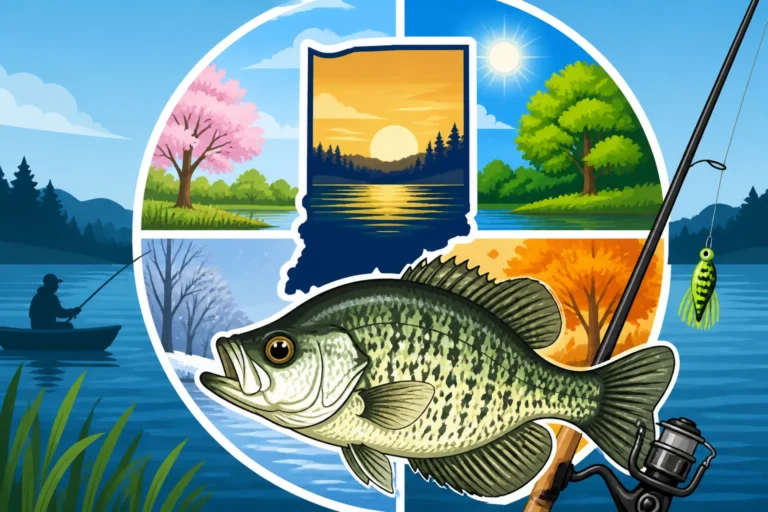
Spring is a season of profound transition, and crappie are incredibly sensitive to these shifting conditions. Their movements, feeding habits, and overall activity levels are largely dictated by fluctuating water temperatures and their powerful biological urge to spawn. Truly understanding these underlying factors is the fundamental key to knowing where crappie are likely to be, and consequently, where to accurately present your jig for the best results.
Where Crappie Go in Early Spring
As the last remnants of winter ice finally relinquish their grip and Indiana's waters begin to slowly warm from their frigid lows, crappie start to emerge from their deep winter haunts. In the earliest days of spring, when water temperatures might still be hovering in the low 40s to low 50s Fahrenheit, these fish are not yet ready for the shallows. Instead, they’ll typically congregate in deeper staging areas that are strategically located near their eventual spawning grounds. Imagine main lake points, sharp channel bends, and the distinctive edges of creek channels that meander their way into shallower coves or protected bays. These are classic early spring holding spots.
Crappie at this stage are in a transitional phase; they're not quite committed to moving shallow, but they're positioned for a quick shift as soon as conditions become more favorable. You’ll often locate them suspended over brush piles, nestled within submerged timber, or lingering along steep drop-offs where they have the flexibility to quickly retreat to deeper, more stable temperatures if a sudden cold front rolls through. The operative word here is "staging" – they are waiting, conserving precious energy, and feeding opportunistically on whatever forage becomes available. Many anglers make the common mistake of heading directly for the shallow spawning flats too early in the season, only to find them devoid of activity. Patience, coupled with a deep understanding of this crucial transitional period, is absolutely vital. At this time, they tend to be in tighter, more concentrated schools, so if you manage to pinpoint one crappie, chances are you've stumbled upon a whole school.
Crappie Spawning Patterns and Locations
The true explosion of crappie activity, the one most anglers eagerly anticipate, typically commences when Indiana's water temperatures consistently reach the desirable range of mid-50s to low 60s Fahrenheit. This is the signal for crappie to make their move into their prime spawning areas. These locations are almost always found in relatively shallow water, usually ranging from a comfortable one to five feet deep. They actively seek out protective structure within these shallow zones—submerged logs, dense brush, the sturdy stems of lily pads, cattails, or even areas with gravelly or rocky bottoms—places where they can safely deposit their eggs.
These ideal spawning habitats are characteristically shielded from strong winds and disruptive currents, often found tucked away in the serene back of coves, tranquil bays, or along shorelines that boast an abundance of suitable cover. For those keen to track the precise timing, our detailed guide on Crappie Spawn Timing on Indiana Lakes can offer invaluable insights. During this intense period, male crappie become remarkably aggressive as they diligently guard their nests. They will instinctively strike at nearly anything that encroaches upon their territory, making them exceptionally vulnerable to a well-presented jig. Don't be surprised to encounter fish sporting darker, more pronounced "spawn colors" during this time; these are typically the males, whose coloration deepens to both attract females and fiercely deter any perceived threats. The sheer density of fish concentrated in these accessible and predictable shallow locations is what undeniably cements spring crappie fishing as a legendary experience. If you're wondering what species you're chasing, our Black Crappie Identification: Spots and Body Shape article can help you learn the key features.
Impact of Water Temperature
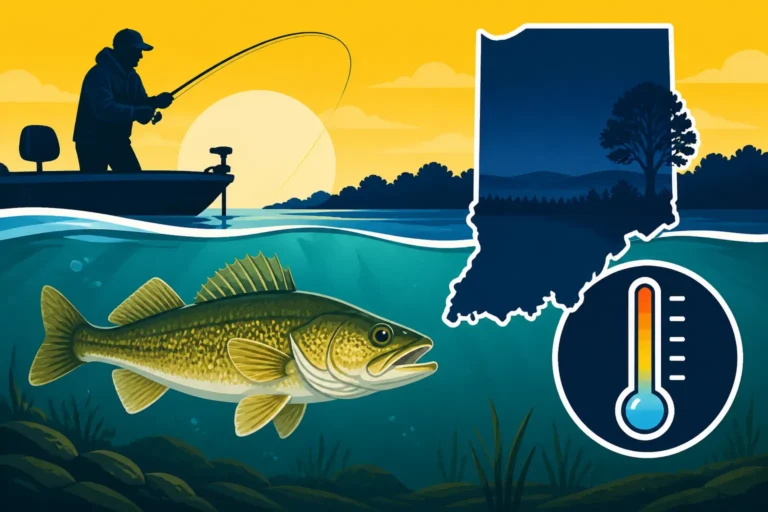
Water temperature stands as the undisputed master switch dictating spring crappie behavior. A sudden, unexpected cold snap can send them scurrying back to the perceived safety of deeper water, rendering them both harder to locate and significantly less active. Conversely, a prolonged stretch of warm, sunny days can prompt an almost overnight migration into the eagerly awaited shallow waters. This inherent fluctuation is precisely why spring crappie fishing in Indiana can often feel like such an emotional rollercoaster for anglers. It's imperative to always check the prevailing water temperature if you have a reliable thermometer on your boat, or even a basic handheld one for bank fishing.
Our companion piece, Best Water Temperature for Crappie Fishing, delves much deeper into the precise temperature ranges that typically trigger optimal crappie activity. As a general guideline, the 55-65°F range is universally considered prime for active spawning. However, even temperatures a few degrees below that can effectively trigger the pre-spawn staging behavior. A sound rule of thumb to adopt is this: if the water temperature experiences a significant drop (say, 5 degrees or more) following a period of warmth, anticipate crappie retreating to the nearest available deep cover. You'll likely need to adjust your fishing depth and presentation accordingly, shifting your focus from very shallow pitches back to methodical vertical jigging along those critical creek channel edges.
Essential Jigging Gear for Spring Crappie
Having the correct tools for the specific job at hand can translate into a dramatic difference in your success, especially when you're trying to coax notoriously finicky crappie into biting. While it’s certainly not necessary to invest in the most exorbitantly priced equipment available, a thoughtfully matched rod, reel, and line, when expertly combined with the right selection of jigs, will undoubtedly and significantly enhance your overall catch rates.
Rods, Reels, and Line Choices
For the delicate art of jigging for crappie, a lightweight, highly sensitive setup is absolutely paramount. Your primary goal is to be able to discern those incredibly subtle "thumps," or even just the sudden sensation of weightlessness as a crappie gently inhales your jig. This sensitivity is often the difference between catching a fish and missing a bite entirely.
-
Rods: An excellent crappie rod typically measures between 5 and 7 feet in length, featuring a light to ultralight power rating and a fast or extra-fast action. The crucial sensitivity inherent in the rod tip is precisely what allows you to detect those famously light bites. Graphite composite rods are particularly well-suited for this task due to their inherent lightness and responsiveness. Many seasoned anglers actually lean towards slightly longer rods, often in the 7-8 foot range, for specialized techniques such as "spider rigging" (using multiple rods spread out from the boat) or for single-pole vertical jigging, which allows for greater reach and coverage of more water. When you're in the market for a new crappie rod, you can often discover a fantastic array of choices, encompassing a wide spectrum of brands and price points, on online platforms like Amazon. For more tailored recommendations specific to your needs, our guide on Best Panfish Rods for Indiana Ponds provides further insight.
-
Reels: A compact spinning reel, generally a 500-1000 series size, is the perfect companion for a crappie rod. It should operate smoothly and possess a reliable drag system, but there’s no need for anything overly complex or feature-laden. Remember, you're not battling monstrous game fish; precision and finesse are more important than brute strength.
-
Line: Using light line is an absolute non-negotiable for successful crappie fishing. Monofilament line, in the 2 to 6 lb test range, remains a consistently popular choice. Its inherent stretch and forgiving nature can be a distinct advantage, often preventing hooks from tearing out of a crappie's notoriously delicate, papery mouth during a spirited fight. Alternatively, braided line (with a 4 to 8 lb test equivalent diameter) can also be employed, particularly if your priority is maximum sensitivity to detect the slightest tap. However, if using braid, it’s often advisable to tie on a fluorocarbon leader. This leader not only significantly reduces line visibility underwater, which can be a huge benefit in clear spring conditions, but also introduces a slight amount of shock absorption, further minimizing hook pull-outs.
The Best Jigs and Lure Colors
The universe of crappie jigs is, without exaggeration, vast and sometimes overwhelming. However, by concentrating your efforts on a few key types and strategically chosen colors, you'll be well-equipped to tackle the majority of spring crappie scenarios in Indiana.
-
Jig Heads: The weight of your jig head is a critical factor. For shallow water fishing (typically 1-5 feet deep), jig heads ranging from 1/32 to 1/16 ounce are often deemed ideal. Their slower sink rate provides crappie with ample time to react and often results in a more natural, appealing presentation. If you find yourself fishing in deeper water or contending with noticeable current, you might need to step up to a slightly heavier 1/8 ounce jig head to maintain proper depth control. A comprehensive assortment of these essential jig heads can be conveniently acquired from major online retailers such as Amazon, ensuring you have the right weight for any situation.
-
Jig Bodies:
- Tube Jigs: These are bona fide classics, and for very good reason. The soft plastic tubes, with their signature dangling tentacles, impart an incredible amount of subtle, lifelike action in the water. Typical sizes generally fall between 1 and 2.5 inches.
- Grub Tails (Curly Tail or Paddle Tail): These are exceptionally versatile soft plastic offerings. The curly tail design creates an enticing wiggling action both on the fall and during the retrieve, while paddle tails generate a distinct thumping vibration that can attract curious crappie. Again, standard sizes for these are usually 1.5 to 2.5 inches.
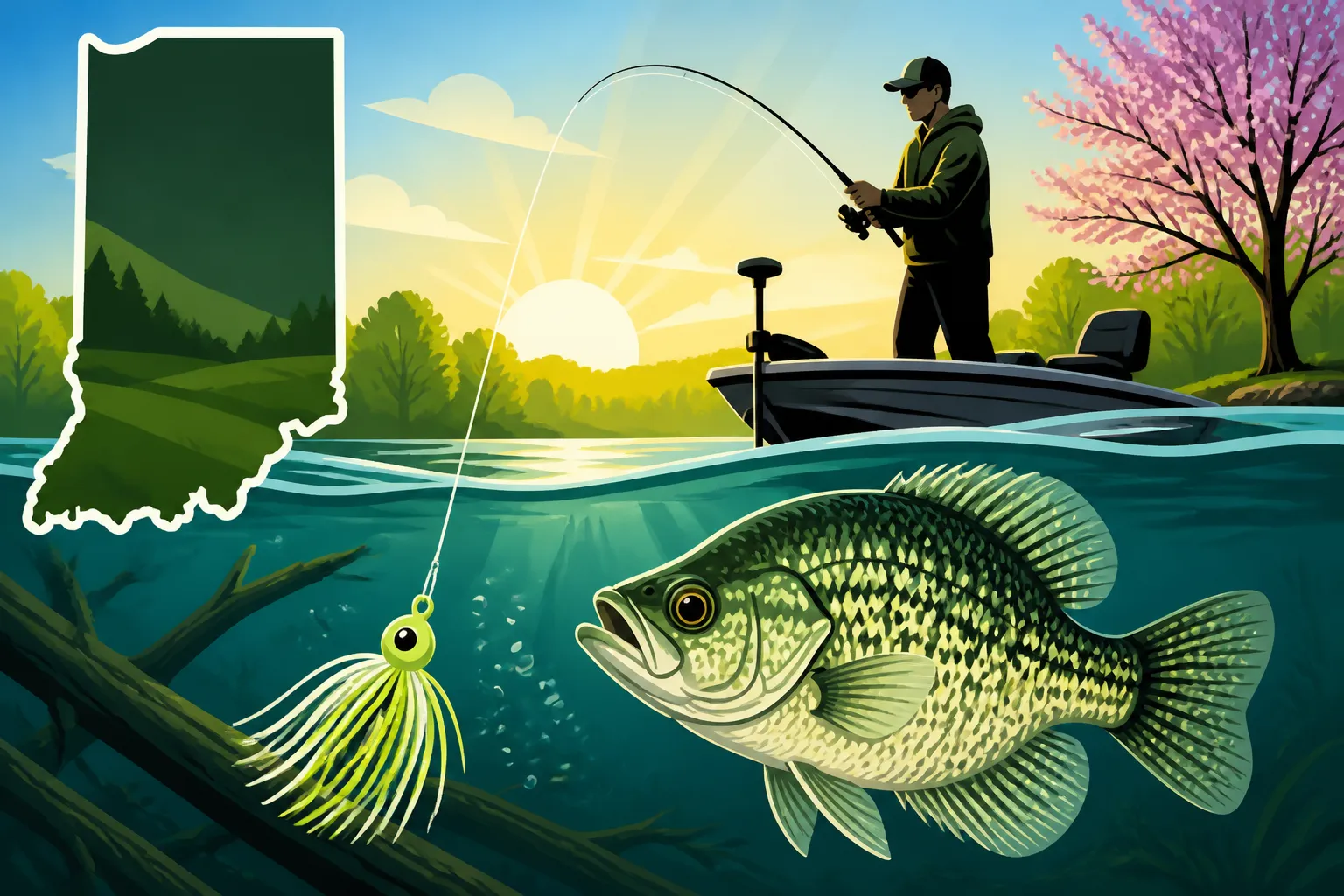
- Hair Jigs/Feather Jigs: These traditional, old-school jigs are remarkably effective, especially when crappie are acting particularly finicky. Their natural fibers "breathe" and pulsate with the slightest movement in the water, offering an incredibly subtle and lifelike presentation that often proves irresistible.
-
Colors: The debate over the "best" crappie jig color is one that could likely rage on indefinitely among anglers. However, certain color patterns consistently prove their worth in spring conditions:
- Bright Colors: Vibrant hues such as chartreuse, lime green, hot pink, and orange are outstanding choices for dingy or muddy water conditions, or on days when the sky is heavily overcast. These bold colors offer excellent contrast and stand out, making them significantly easier for crappie to detect.
- Natural Colors: For clear water and bright, sunny days, natural tones like white, black, various shades of gray, brown, or clear with subtle flakes are highly effective. These colors do an excellent job of mimicking the appearance of natural baitfish or aquatic insects that crappie forage on.
- Two-Tone Combinations: Many ardent crappie anglers are firm believers in the power of contrasting color combinations, such as black and chartreuse, or pink and white. They theorize that the distinct contrast serves as an additional trigger for strikes.
Ultimately, the most effective approach to determining the optimal color is to start with a diverse selection and be prepared to swap them out diligently until you discover what the crappie are actively "keying in on" on any given day. Never hesitate to experiment; crappie preferences can, and often do, change daily.
Live Bait Additions for Jigs
There are those days when crappie simply demand that extra something to tempt them. While artificial jigs are undeniably effective on their own, tipping them with a touch of live bait can frequently be the definitive factor that seals the deal. This tactic proves particularly beneficial when fish are less aggressive, perhaps due to the shock of a cold front, or in the often-challenging period of post-spawn fatigue.
-
Minnows: A small, lively minnow, gently hooked through the lips or just beneath the dorsal fin, is an almost irresistible crappie magnet. The combination of the struggling minnow's natural movements paired with the inherent action of your jig can be an absolutely deadly presentation. Many seasoned anglers specifically favor shiners or fathead minnows for this exact purpose, finding them to be exceptionally effective.
-
Crappie Nibblers/Scented Baits: These compact, soft, and distinctly scented baits are designed to be easily added directly to your jig hook. They serve a dual purpose, providing both a potent scent trail and an additional visual attractant. Popular brands such as Berkley PowerBait Crappie Nibblers are widely utilized and are available in a diverse array of colors and specific scents. They represent an excellent, hassle-free method to gain an edge without the constant management typically associated with live bait.
-
Wax Worms/Mealworms: While these particular baits are more traditionally linked with tempting bluegill, a single, small wax worm can occasionally entice even the most hesitant crappie. This is especially true if the fish are actively feeding on smaller insect larvae, making this a subtle but effective option in certain circumstances.
Always remember, your overarching objective is to render your presentation as appealing and enticing as humanly possible. The subtle addition of natural scent or the delicate, lifelike movement provided by live bait can often be the pivotal element that separates a day of meager catches from one filled with gratifying success. For a comprehensive overview of all the tackle you might need, check out our guide on Best Tackle for Crappie Fishing in Indiana.
Proven Jigging Techniques for Spring Success
Once you've developed a solid grasp of where crappie are likely to position themselves and you've meticulously fine-tuned your gear, the next crucial step is to delve into the "how" – specifically, how to effectively present that jig. It's important to understand that spring crappie jigging is far from a one-size-fits-all endeavor; different situational factors will inevitably call for distinct and adaptable techniques. For those just dipping their toes into the world of crappie fishing, our detailed article on Crappie Jigging Techniques for Beginners offers a fantastic foundational overview to get you started.
Vertical Jigging in Structure
Vertical jigging often emerges as the single most effective technique when crappie are tightly congregated in dense schools around specific pieces of structure, or when they are suspended at precise depths in deeper water. This method is particularly potent during the pre-spawn phase, when fish are actively staging along the defined edges of creek channels, nestled within brush piles, or hovering above submerged timber.
The core principle involves meticulously positioning your boat directly over the targeted fish (a task where a high-quality fish finder proves absolutely indispensable) or right alongside the particular piece of structure you intend to work. From this vantage point, you carefully drop your jig straight down, ensuring it reaches the exact depth where you are observing the fish. The absolute key to success here is to maintain your bait precisely at their eye level.
Once your jig is at the desired depth, execute a series of very subtle jigging motions. Often, this amounts to nothing more than a gentle, upward lift of your rod tip by just a few inches, immediately followed by a controlled, natural fall. There are even instances when merely holding the jig perfectly still is what ultimately triggers the bite, especially if the crappie are feeling lethargic due to an unexpected cold front. It is paramount to vigilantly watch your fishing line for any minuscule twitch, sudden slack, or other subtle, uncharacteristic movement – these are frequently the only indicators of a bite. A common error many anglers make is to jig too aggressively. Remember, crappie are not always in an energetic pursuit mode during the spring; more often than not, they will simply inhale the bait with a delicate, almost imperceptible suck.
Casting and Retrieving Near Cover
When crappie transition into the shallower waters for their spawning rituals, or when they are scattered along expansive shorelines offering abundant protective cover, the technique of casting and retrieving becomes extraordinarily effective. This approach grants you the ability to systematically cover a far greater expanse of water and meticulously target individual fish holding within diverse types of cover, such as fallen trees, permanent or temporary docks, dense clusters of lily pad stems, emergent cattails, or even submerged weed lines.
-
Targeting Specific Cover: When you identify a promising piece of cover, cast your jig with precision, aiming to land it as close as possible to the structure without risking an immediate snag. Allow your jig to sink for a calculated few seconds, then initiate a slow, consistent retrieve, punctuated by occasional, deliberate pauses or very light twitches of your rod tip. Crappie will frequently ambush the jig either during its initial fall or as it begins to move away from the protective embrace of the cover.
-
Fan Casting: If you find yourself in a situation where the exact location of the fish is uncertain, employ the technique of fan casting. This involves systematically casting your jig to different spots in a wide, fan-like pattern around your boat or your bank position. This methodical approach allows you to comprehensively cover the entire area, significantly increasing your chances of locating actively feeding fish.
-
Jig-and-Pause: Among the myriad of retrieve techniques, the "jig-and-pause" stands out as particularly potent. To execute this, cast your jig out, let it descend to the desired depth, then impart a gentle upward lift with your rod tip. Immediately after the lift, allow the jig to fall back naturally on a semi-slack line, mimicking a stunned or injured baitfish. Repeat this sequence as you slowly reel in your line. A significant proportion of strikes will occur precisely during that enticing fall. When fishing in extremely shallow water, you might also consider employing a slip bobber rig paired with your jig. This ingenious setup allows you to present your jig at a perfectly consistent depth just above the submerged cover, thereby preventing frustrating snags while simultaneously keeping your bait squarely within the crappie's strike zone for an extended period.
Trolling with Jigs
While often more readily associated with the pursuit of larger, more aggressive game fish, the strategic use of slow trolling with jigs can, in fact, be an exceptionally productive method for crappie. This is particularly true when crappie are found suspended over vast expanses of open water, or when they are more sparsely scattered across large, relatively featureless flats. This technique offers a distinct advantage by allowing you to systematically cover a substantial amount of water, presenting your jigs to a multitude of potential fish as your boat slowly glides along.
You can effectively "long line" troll simply by letting out a considerable amount of fishing line behind your boat. If regulations permit, you can even utilize multiple rods, meticulously spaced to cover a broader path. Always consult the Indiana Fishing Regulations and Bag Limits Guide before deploying multiple lines. Maintain a very slow boat speed – just enough to impart a subtle, lifelike action to your jig. The precise speed will, of course, be dictated by the specific type of jig you're using and the desired depth you aim to achieve. Some dedicated crappie anglers even employ specialized "spider rigs," which consist of multiple extra-long poles extending outwards from the boat, enabling them to present jigs at varying depths and distances simultaneously.
The inherent advantage of trolling is its capability to literally drag your bait directly through potential schools of crappie that you might otherwise inadvertently miss with stationary casting. It serves as an excellent search pattern, proving particularly invaluable on larger Indiana lakes like Monroe Lake or Patoka Lake, both of which are renowned for their robust and abundant crappie populations. As you troll, remember to pay meticulous attention to distinct features such as bends in creek channels, remnants of old roadbeds, or subtle submerged humps, as these are universally recognized as prime crappie holding areas during the spring transition. For a deeper understanding of crappie fishing in the Hoosier state, consider reading our Crappie Fishing in Indiana: Black Crappie Basics guide.
Maximizing Your Crappie Haul: Tips and Tricks
Beyond simply grasping the fundamental behaviors of crappie and diligently mastering various jigging techniques, there exist numerous subtle nuances and invaluable tricks that can dramatically amplify your overall fishing success. The true artistry lies in your ability to pay meticulous attention to minute details and to adapt your approach seamlessly to the ever-shifting environmental conditions you encounter on the water.
Reading the Water and Conditions
Crappie, like many fish species, are creatures of habit. However, those habits are profoundly shaped and influenced by their immediate environment. Developing the keen ability to "read the water" and deeply understand how prevailing conditions impact fish behavior is absolutely paramount to consistent success.
-
Water Clarity: In exceptionally clear water, fish become considerably more wary and cautious. In such scenarios, opt for more natural-looking jig colors (whites, grays, black) and employ lighter fishing lines. Make longer, more stealthy casts to avoid inadvertently spooking the fish. Conversely, in stained or muddy water conditions, brighter, more vibrant colors (chartreuse, orange, pink) are often significantly more effective, as they offer superior visibility, making them easier for crappie to spot.
-
Wind: A gentle ripple dancing across the water's surface can often be your best friend. This subtle disturbance helps to break up the harsh penetration of sunlight, making crappie feel considerably more secure and willing to move and feed. However, strong, gusty winds can present significant challenges to maintaining precise boat control and executing accurate jig presentations. On blustery days, actively seek out the calmer, more sheltered, leeward side of points or islands.
-
Sunlight: Overcast days are frequently heralded as fantastic for crappie fishing, as the diffused light encourages them to roam more freely and feed throughout the day. On intensely bright, sunny days, crappie typically retreat to seek solace in shade or deeper water. Direct your efforts towards fishing under docks, beneath the canopy of overhanging trees, or within dense submerged cover. Don't forget that the Best Time of Day to Catch Crappie in Indiana can fluctuate significantly based on these exact environmental factors.
-
Barometric Pressure: A stable or steadily rising barometer often signals active, feeding fish. Conversely, a rapidly falling barometer, frequently associated with the approach of storm systems, can sometimes trigger a frantic feeding frenzy right before the adverse weather hits. However, a consistently low and stable barometric pressure can render fish lethargic and less willing to bite.
Cultivating a sharp sense of observation and demonstrating a willingness to adapt your fishing strategy based on these dynamic factors is a defining characteristic that distinguishes a proficient angler from a truly exceptional one. You might discover that crappie are exclusively biting on chartreuse jigs under heavy cloud cover, only to demand a switch to white jigs as soon as the sun breaks through.
Common Mistakes to Avoid
Even seasoned anglers can, at times, inadvertently fall into predictable traps when pursuing crappie. Being acutely aware of these frequently encountered pitfalls can significantly help you avoid a potentially frustrating and unproductive day on the water.
-
Fishing Too Fast or Too Deep/Shallow: This is arguably the most pervasive mistake: failing to present the jig at the precise, correct depth or retrieving it with excessive speed. Crappie are frequently suspended at very specific depths, and if your bait is even a mere foot above or below them, they might simply not bother to investigate. The key is to slow down considerably and systematically experiment with minute depth adjustments until you pinpoint that elusive strike zone. If you're not getting bites, make a conscious effort to move your jig shallower or deeper, incrementally, by just a foot at a time.
-
Ignoring Subtle Bites: Crappie bites can be astonishingly subtle and easy to miss. It's often not a dramatic, jarring tug on your line; rather, it might manifest as nothing more than a faint twitch in your line, a curious sensation of "mushiness," or the sudden, unnerving slackening of your line. Develop the discipline to set the hook on absolutely anything that feels even slightly "different" from the usual movement of your jig.
-
Staying in One Spot Too Long: If you're diligently working a seemingly promising spot for 15-20 minutes without a single bite, it's generally a clear signal to move on. Spring crappie are mobile creatures, and sometimes the most effective strategy is to simply relocate the school. Our helpful guide to the Best Crappie Lakes in Indiana can provide inspiration for new, productive waters to explore.
-
Using Overly Heavy Tackle: While there's a natural inclination to use heavier line to prevent losing a larger fish, crappie possess incredibly soft mouths. Utilizing overly heavy line combined with a stiff rod can easily result in the hook tearing out, especially if you set the hook with too much force. A carefully balanced ultralight setup is unequivocally your best ally in this situation.
Safety and Regulations
Before embarking on any fishing excursion, it is absolutely imperative to prioritize safety and ensure you are thoroughly familiar with all pertinent local and state fishing regulations. Neglecting these aspects can not only jeopardize your safety but also lead to unwelcome legal consequences.
-
Life Jackets: Always ensure that you and everyone aboard your vessel have properly fitting life jackets readily accessible. More importantly, make it a steadfast habit to wear them, particularly if you're navigating larger bodies of water or fishing in the characteristically cold temperatures of early spring. Accidents can, and often do, occur with startling swiftness.
-
Boat Safety: Conduct a pre-departure check to confirm your boat is equipped with all legally mandated safety gear. This includes functional navigation lights, an audible whistle or horn, and appropriate throwable flotation devices. Always review the current weather forecast before heading out and be prepared for the sudden, often unpredictable changes that are so common during Indiana's spring season.
-
Fishing License: Critically, ensure that your Indiana Fishing License Requirements Explained are fully up-to-date and valid. A fantastic day of fishing can be instantly marred by an unnecessary citation for non-compliance.
-
Bag Limits: Be acutely aware of the daily bag limits specifically enforced for crappie in Indiana. Generally, the statewide limit for panfish is 25 fish per species, but it's crucial to remember that specific lakes can, and often do, have unique exceptions or additional regulations. Our article on Panfish Daily Limit in Indiana: 25 per Species will provide comprehensive clarity on this matter. Embracing and practicing catch-and-release, especially for the larger, breeding-size fish during the spawning period, is an excellent practice that contributes significantly to ensuring robust and healthy crappie populations for future generations of eager anglers.
Here's a quick comparison of common spring crappie jigs and their best uses to help you pick the right one:
| Jig Type | Ideal Weight (oz) | Ideal Water Depth | Action/Retrieve | Best Conditions |
|---|---|---|---|---|
| Tube Jig | 1/32 – 1/8 | 1-15 feet | Slow fall, subtle tentacles, gentle twitch | Versatile, great for clear to stained water, any depth |
| Curly Tail Grub | 1/32 – 1/8 | 1-20 feet | Consistent tail wiggle on slow retrieve | Good all-around, especially when fish are active |
| Hair/Feather Jig | 1/32 – 1/16 | 1-10 feet | Very subtle pulsation, natural fall | Finicky fish, clear water, cold fronts |
| Paddle Tail Grub | 1/16 – 1/8 | 5-20 feet | Thumping vibration, mimics baitfish | Active fish, slightly stained water, deeper areas |
| Marabou Jig | 1/32 – 1/16 | 1-10 feet | Feather-like slow fall, very natural | Ultra-fussy fish, clear water, slow presentations |
Remember, the "best" jig is almost always the one you possess genuine confidence in and, more importantly, the one you are willing to patiently experiment with. Sometimes, even the slightest alteration in jig color or a minuscule change in size can surprisingly be the decisive factor that makes all the difference between an empty cooler and a successful outing. Many anglers find it immensely beneficial to maintain a diverse inventory of these various jigs on hand, perhaps conveniently ordered in bulk from platforms like Amazon, ensuring they are thoroughly prepared for virtually any conceivable condition that the unpredictable spring might throw their way.
Spring crappie jigging in Indiana offers some of the most genuinely rewarding fishing experiences you can have, but it undeniably demands a blend of patience, acute observation, and a flexible willingness to adapt. By diligently understanding their intricate seasonal movements, thoughtfully equipping yourself with the appropriate gear, and assiduously mastering a variety of jigging presentations, you will be exceptionally well on your way to consistently filling your cooler with those highly sought-after, delicious papermouths. So, grab your favorite rod, embrace the unpredictable beauty of the Hoosier outdoors, and thoroughly enjoy the fantastic spring fishing that Indiana so generously has to offer!
Disclaimer
Please note that fishing regulations and conditions can change. Always check the latest Indiana Department of Natural Resources (DNR) regulations before heading out, and prioritize safety on the water. This guide is for informational purposes only.