Trotline Fishing Techniques for Catfish
If you're an angler in Indiana looking to put some serious catfish on the dinner table, you know the frustration of waiting for a single bite on your rod and reel. Sometimes, you need a different approach, one that works while you're doing other things. This comprehensive guide will walk you through the ins and outs of trotline fishing for catfish in Indiana, covering everything from understanding the regulations to setting up your lines and bringing in a haul.
Understanding Trotlines in Indiana Regulations
Before you even think about buying your first trotline, it’s absolutely crucial to understand the legal landscape in Indiana. The Indiana Department of Natural Resources (DNR) has specific rules to ensure fair and sustainable fishing for everyone. Ignoring these rules isn't just a minor oversight; it can lead to fines and the confiscation of your gear, which is a headache no one wants to deal with.
Legalities and Restrictions for Trotlines
Indiana’s regulations around trotlines are designed to balance angler opportunity with conservation efforts. First off, you're limited to a maximum of 50 hooks per trotline. This isn't 50 hooks per angler, but 50 hooks per line, so if you plan to run multiple lines, make sure each one individually adheres to this limit. Each trotline also needs to be clearly tagged with your name and address. This isn't just a suggestion; it's a mandatory identifier that allows conservation officers to know who's responsible for the line. Think of it as your trotline's fishing license plate. The most important rule to remember, and one that often trips up new trotline users, is that trotlines must be checked and tended at least once every 24 hours. You can't just set it and forget it for days on end; responsible tending ensures minimal waste and reduces the chances of catching non-target species or having your catch spoil.
Another critical point is where you can actually use a trotline. Generally, trotlines are permitted in Indiana's rivers, streams, and large reservoirs. However, they are prohibited in natural lakes. This distinction is really important, especially if you're used to fishing our beautiful glacial lakes up north. Always double-check the specific body of water you intend to fish. For instance, while you can set a trotline in a massive reservoir like Monroe Lake or Patoka Lake, you wouldn't be able to use one in a natural lake like Lake Wawasee. Understanding these nuances before you head out can save you a lot of trouble. If you're unsure about specific water bodies, a quick call to the local DNR office or checking their online guide can clarify things immediately. These rules are in place not to make things difficult, but to manage our fisheries responsibly.
Identifying Prime Catfish Locations for Trotlines
Once you’ve got the rules down, the next step is finding the right spots. Catfish aren't just everywhere; they have preferences, and knowing these can dramatically increase your success rate. When you're using a trotline, you're essentially setting up a passive fishing system, so letting the fish come to your bait is key.
Look for areas with slower currents in rivers, like deep bends, outside edges of channels, or areas where the river widens and the flow dissipates. Catfish love structure, so sunken logs, brush piles, rock formations, and even old bridge pilings are absolute magnets for them. These structures provide cover, ambush points for feeding, and a break from stronger currents. In reservoirs, focus on main lake channels, creek beds that run through the reservoir, or submerged timber. Often, the transition areas where a flat drops off into deeper water can be incredibly productive. These drop-offs act as natural highways for catfish as they move between shallow feeding grounds and deeper holding areas.
Understanding Water Temperature and Fish Feeding Patterns can also give you an edge. Catfish activity often picks up in warmer water, and they become more aggressive feeders. During the summer months, they might be more active at night or in deeper, cooler water during the day. As such, setting your trotlines in areas that offer both shallow feeding access and deeper retreats can be highly effective. If you’re targeting a specific body of water, local knowledge is invaluable. Talk to other anglers at bait shops, visit public access points to observe, or consult online forums. Many of these areas are highlighted in guides like our comprehensive overview of Best Catfish Fishing Spots in Indiana. The Wabash River, for example, is renowned for its catfish, and understanding its unique characteristics can lead to excellent results.
Essential Gear for Trotline Fishing
Trotline fishing isn't like grabbing a rod and heading to the pond. It requires a specific set of robust gear designed to handle powerful fish, withstand the elements, and most importantly, be safe to deploy and retrieve. Skimping on quality here can lead to lost lines, lost fish, and a lot of frustration.
Choosing the Right Line and Hooks
The backbone of your trotline setup is, naturally, the line itself. You need something incredibly strong, durable, and resistant to abrasion. Monofilament fishing line, while great for rod and reel, usually won't cut it for a trotline. You're looking for heavy-duty braided nylon or tarred nylon line, often in the 200-pound test range or higher. This kind of line can handle the strain of multiple large catfish, snags on underwater structure, and the tension from anchors. You can find excellent quality braided nylon lines on platforms like Amazon, often sold in large spools specifically for trotlining or commercial fishing applications. The dark tarred lines are particularly popular as they blend in better with the water, making them less visible to fish and less likely to deter a bite.
For hooks, size and strength are paramount. You’ll generally want to use stout, sharp, extra-strong hooks, typically in sizes from 5/0 up to 10/0, depending on the size of catfish you're targeting. Circle hooks are a fantastic choice for trotlines because they are designed to hook fish in the corner of the mouth, leading to fewer gut-hooked fish and making release easier if you catch something you don't want to keep. They also tend to hold fish more securely once hooked, reducing the chance of them wiggling off the line. Look for stainless steel or corrosion-resistant hooks, as they'll be spending a lot of time submerged. Just as with the main line, a quick search on Amazon will show you a variety of reputable brands offering heavy-duty circle hooks ideal for catfish trotlining.
Anchors and Floats for Stability
Proper anchoring is crucial to keeping your trotline in place and effective. Without adequate anchors, your line could drift, tangle, or simply not present your baits correctly. The type and weight of your anchors will depend on the current and depth of the water you're fishing. In strong currents, like those found in larger rivers such as the Wabash, you'll need heavier anchors – think concrete blocks, large rocks, or purpose-built river anchors weighing 10-20 pounds each. In calmer waters or shallower reservoirs, slightly lighter options might suffice. The goal is to keep the main line taut and positioned where you want it. Always use two anchors, one at each end of the trotline, to stretch it out across your desired fishing zone.
Floats serve several important purposes. First, they mark the location of your trotline, which is critical for tending and retrieval. Second, they can help suspend your main line and baited hooks at a specific depth, keeping your bait off the bottom and in the strike zone. You’ll want durable, high-visibility floats made of hard foam or plastic, brightly colored so they’re easy to spot from a distance. Again, Amazon is a good place to find bulk packs of these. Make sure your floats are securely attached to your main line with sturdy rope or carabiners. The rope leading from the float to the anchor should be strong enough to withstand currents and potential encounters with passing boats. Some anglers use a single large buoy at each end, while others use smaller floats spaced along the line to keep the bait suspended. The key is visibility and strength.
Other Necessary Tools for Trotline Success
Beyond the basic line, hooks, anchors, and floats, a few other tools will make your trotlining experience safer and more efficient. A heavy-duty pair of gloves is absolutely essential. Handling strong line, sharp hooks, and potentially feisty catfish can take a toll on your hands, and gloves will protect you from cuts, scrapes, and fin pokes. Long-nosed pliers or a hook remover are also invaluable for safely unhooking fish, especially when dealing with large catfish with deep-set hooks.
You’ll also need a way to store and transport your trotline. A large bucket, tub, or specifically designed trotline spool will keep your line from tangling and make deployment much smoother. Bringing a sharp knife or heavy-duty clippers can be useful for cutting bait or in case you need to cut a tangled line. Don’t forget a cooler with ice to keep your catch fresh, and if you’re fishing at night, a good headlamp is non-negotiable for visibility. Finally, a small first-aid kit, particularly one with antiseptic wipes and bandages, is always a smart addition to your gear bag for any unexpected nicks or scrapes while out on the water. These are all part of a comprehensive Best Catfish Gear for Rivers and Lakes setup.
Setting Up Your Trotline for Success
Setting up a trotline isn't just about tossing some hooks in the water; it's a strategic process that involves careful planning and execution. Proper setup ensures your line is effective, compliant with regulations, and safe to manage.
Pre-Trip Preparation and Bait Selection
The success of your trotline trip largely hinges on what you do before you even leave the dock. First, inspect your entire trotline setup. Check the main line for any frays or weak spots. Ensure all your hooks are sharp, securely crimped or tied to their leaders, and free from rust. Examine your anchors and floats for damage and make sure their attachment ropes are strong. Pre-tying your drop lines (snoods) with hooks to your main line at home can save a lot of time and frustration out on the water, especially if conditions are windy or rainy. You want approximately 18-36 inches between the main line and the hook, allowing the bait to drift naturally without tangling on the main line or bottom.
Bait is king in trotlining for catfish. While some anglers use lures, natural bait is almost always the most effective. Catfish are primarily scavengers and opportunistic predators, so smelly, oily baits often outperform others. Common choices include cut bait (chunks of shad, carp, or potent oily fish), chicken livers, nightcrawlers, and prepared stink baits. Some anglers swear by unusual options like hot dogs soaked in garlic, soap, or even spoiled shrimp. Consider what kind of catfish you're targeting; channel catfish are known for loving smelly baits, while larger flatheads prefer live bait like sunfish or small bluegill. For specific recommendations, check out our guide on the Best Bait for Channel Catfish in Indiana Rivers. Have plenty of bait on hand, as you’ll be baiting multiple hooks and may need to re-bait during subsequent checks.
Deploying the Main Line
Deploying the main trotline requires a systematic approach to prevent tangles and ensure proper placement. Start by choosing your two anchor points. Ideally, you want to stretch the line across a productive area, like a channel edge, submerged creek bed, or along a brush pile. Position your boat (or yourself, if bank fishing and wading) at the spot where your first anchor will be dropped. Securely attach one end of your main line to this anchor, then carefully drop the anchor into the water.
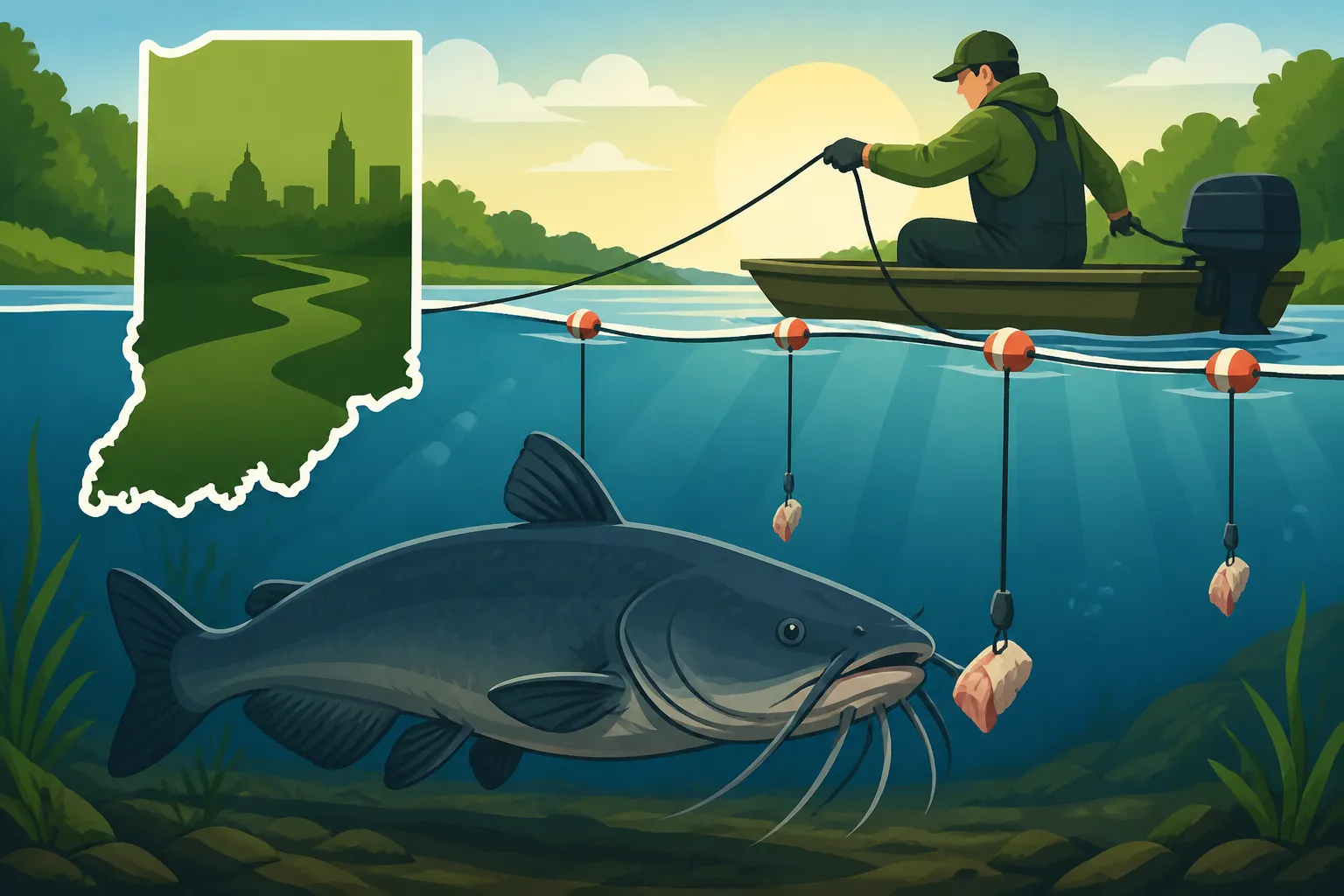
Now, slowly move your boat (or walk) along your intended trotline path, paying out the main line as you go. It's crucial to keep tension on the line and let it unspool steadily to avoid knots. As you move, you'll be attaching your pre-baited drop lines at regular intervals. Spacing is important – typically 3 to 6 feet apart, but you can adjust this based on the density of fish you expect and to prevent hooks from tangling with each other. Once you reach the second anchor point, attach the main line to your second anchor and carefully drop it. The goal is to have the main line stretched tight, either near the bottom or suspended slightly above it, depending on your target depth. If using floats to suspend the line, ensure they are attached to the anchor ropes at the appropriate length to keep the main line at your desired depth.
Attaching Drop Lines and Setting Depth
The drop lines, or snoods, are the individual leaders that connect your baited hooks to the main trotline. These should be made of a slightly lighter, but still strong, line than your main line – perhaps 80-100 pound test monofilament or braided line. This allows them to break away in a snag without losing your entire main line, which can be a real frustration. Attach each drop line to the main line using strong swivels. The swivel is key: it prevents your leader from twisting and allows the bait to move more naturally in the current, making it more attractive to catfish.
The length of your drop lines and their spacing along the main line will determine how your baits are presented. Typically, drop lines are 12 to 18 inches long. This length allows the bait to drift somewhat but keeps it close enough to the main line to prevent excessive tangling. When deploying, think about the depth you want your baits to be. If you're targeting bottom-feeding channel cats in a river, you might set your main line just off the bottom. If you're fishing a reservoir where catfish might be suspended, you could use floats on your anchor lines to keep the main line higher in the water column. Always check for snags or debris in the water where you're setting your lines. While catfish love structure, you want your hooks to be accessible to fish, not permanently embedded in a log!
| Bait Type | Pros | Cons | Target Catfish | Best Seasons |
|---|---|---|---|---|
| Cut Bait (Shad/Carp) | Strong scent, oily, widely available | Can attract smaller fish, messy to handle | All Species | Spring, Summer, Fall |
| Chicken Livers | Very potent scent, inexpensive | Very soft, easily pulled off hook, messy | Channel, Blue | Spring, Summer, Fall |
| Nightcrawlers | Easy to find, natural presentation, versatile | Smaller fish can steal them, less scent | Channel, Bull | All Seasons |
| Stink Baits | Extremely strong scent, designed for catfish | Can be messy, not always effective on larger fish | Channel | Summer, Fall |
| Live Bait (Bluegill) | Attracts larger flatheads, irresistible | Harder to keep alive, illegal in some areas | Flathead | Summer |
Baiting and Maintaining Your Trotline
Once your trotline is deployed, the work isn't over. Proper baiting and diligent maintenance are what turn a piece of line with hooks into a productive catfish catching machine. This stage is where your patience and persistence truly pay off.
Best Catfish Baits for Indiana Waters
Choosing the right bait can make or break your trotline success. As mentioned earlier, catfish are primarily scent-driven, so anything with a strong aroma is usually a winner. For Channel Catfish Fishing in Indiana: The Complete Guide, cut bait is a universal favorite. Freshly cut pieces of oily fish like shad, skipjack herring, or even common carp release a potent scent trail that catfish can't resist. You want pieces that are big enough to stay on the hook but small enough for a catfish to swallow. Many anglers find these bait fish locally or purchase them from bait shops.
Chicken livers are another legendary catfish bait. They are incredibly soft and messy, but their strong, bloody scent is irresistible to channel catfish. The trick with chicken livers is to secure them to the hook. Some anglers use a small piece of nylon stocking or cheesecloth to keep the liver on the hook longer. Prepared "stink baits" or "punch baits" are also popular, designed specifically to mimic the strong, decomposing scent that catfish love. Brands like Sonny's Super Sticky Baits or CJ's Catfish Punch Bait are often carried in Indiana bait shops and can be quite effective, especially for channel and blue catfish. For targeting larger flathead catfish, live bait is often preferred. Small bluegill, green sunfish, or creek chubs (check local regulations on using game fish as bait) are excellent choices. Hook them through the back or lips to keep them lively and appealing.
Checking and Re-baiting Your Trotline
The Indiana DNR requires that trotlines be tended at least once every 24 hours. This isn't just a rule; it's a best practice for successful and ethical trotlining. You want to check your lines regularly to remove any caught fish, re-bait hooks that have been cleaned off or stolen, and address any potential tangles or snags. Ideally, checking your trotline every 8-12 hours will maximize your catch rate and minimize the chance of fish spoiling or being excessively stressed.
When checking, approach your trotline slowly and carefully. Begin at one anchor point and work your way along the line. As you lift each drop line, gently feel for the weight of a fish. If you have a fish, carefully bring it aboard, unhook it, and place it in your cooler. Then, inspect the hook. If the bait is gone, re-bait it with a fresh piece. If the hook is dull or damaged, consider replacing the drop line. This is also your chance to check the main line for any wear or fraying. Tending your line frequently ensures that fresh bait is always available, increasing the chances of continuous bites, especially during active feeding periods like dawn, dusk, or even during Night Fishing Techniques for Catfish. If you notice a particular spot isn't producing, consider relocating that section of your trotline on your next deployment.
Running and Retrieving Your Trotline
The moment of truth arrives when it's time to run your trotline and collect your catch. This process requires a bit of technique, a lot of caution, and an understanding of how to handle a boat and feisty fish simultaneously.
Approaching the Line and Safely Removing Fish
When you approach your trotline, do so slowly and against the current if possible. This gives you more control over your boat and prevents the line from getting tangled in your propeller or becoming too difficult to manage. Identify your first float and ease up to it. Grab the anchor line securely, but be ready for some resistance, especially if you have several fish on the line. Once you have the anchor line, you can begin to pull the main trotline into your boat.
As you retrieve the main line, you'll encounter the drop lines and, hopefully, fish. Handle each fish carefully and safely. Catfish, especially larger ones, can be quite strong and have sharp spines on their dorsal and pectoral fins that can inflict painful wounds. This is where those heavy-duty gloves become absolutely essential. For smaller fish, you might be able to simply hold them firmly and use your long-nosed pliers or hook remover to extract the hook. For larger, more aggressive fish, a net can be invaluable for bringing them into the boat safely. If you plan to release a fish, do so quickly and gently, ensuring it has enough energy to swim away. Remember, the goal is a productive and safe experience for both you and the fish.
Cleaning Your Catch and Proper Storage
Once you’ve removed the fish from the line, the next step is to either release them or prepare them for the cooler. If you're keeping your catch, immediately place them on ice in a cooler. This is critical for maintaining meat quality and preventing spoilage, especially on a hot Indiana day. Don't just toss them in a bucket of water; ice slurry cools them down rapidly, which is what you want.
When you're ready to clean your fish, do so responsibly. Fillet knives are specifically designed for this task, making quick work of even large catfish. Many anglers prefer to skin catfish rather than scale them, which is a fairly straightforward process with the right technique. Dispose of your fish guts and carcasses properly – never just toss them back into the water at the boat ramp or shoreline, as this can attract pests and pollute the water. Some public access sites have designated fish cleaning stations or disposal bins. Alternatively, you can bag them and dispose of them with your household trash. Proper cleaning and storage ensure that your hard-earned catch turns into delicious meals, validating all your effort.
Safety and Ethical Considerations
Trotline fishing, like any outdoor activity, comes with its own set of safety and ethical considerations. Being a responsible angler means not only following the rules but also respecting the environment and other users of Indiana's waterways.
Personal Safety While Trotlining
Safety should always be your top priority. When you're out on the water, especially when dealing with heavy lines, sharp hooks, and strong fish, accidents can happen quickly. Always wear a U.S. Coast Guard-approved life jacket, even if you're an experienced boater. This is especially important when you're leaning over the side of a boat to tend a trotline or if you happen to be fishing alone. Make sure someone knows where you are and when you expect to return, a practice often referred to as a "float plan."
Gloves, as mentioned before, are non-negotiable. Those catfish spines are no joke! A good pair of heavy-duty, puncture-resistant gloves will protect your hands from hooks, spines, and cuts from the line. Keep a first-aid kit readily accessible for minor injuries. If you're fishing from a boat, be mindful of changing weather conditions and strong currents, particularly on large rivers like the White River or larger reservoirs. Never overload your boat, and always be aware of other boaters. Trotlines can be hard to spot, especially at night, so ensure your marker floats are highly visible.
Minimizing Environmental Impact
As responsible stewards of Indiana's natural resources, minimizing your environmental impact is paramount. One key aspect of this is avoiding leaving any trash or discarded gear behind. Lost or abandoned fishing gear, especially trotlines, can become "ghost fishing" hazards, continuing to catch and kill fish and other wildlife indiscriminately. Always retrieve all your gear, including lost hooks, weights, and especially the main line and anchors, if at all possible. This includes any plastic bait containers or food wrappers.
Consider the impact on non-target species. While trotlines are very effective for catfish, you might occasionally catch other fish or even turtles. If you catch something you don't intend to keep or that is protected, handle it gently and release it as quickly as possible to maximize its chances of survival. Using circle hooks can significantly reduce gut-hooking, improving the survival rate of released fish. Practice catch-and-release when appropriate, especially for larger breeding-size fish. By being mindful of your actions, you help ensure healthy fisheries for future generations of anglers, echoing the ethos of organizations like the Indiana DNR.
Proper Disposal and Respect for Other Anglers
Proper disposal extends beyond fish carcasses. Any old or damaged fishing line, hooks, or other gear should be packed out and disposed of in appropriate trash receptacles. Never discard fishing line into the water or onto the shoreline. It can harm wildlife and become an eyesore. Many tackle shops and public access sites have recycling bins specifically for fishing line. Take advantage of them!
Finally, always be respectful of other anglers and water users. Trotlines can be a highly effective fishing method, but they can also take up a significant amount of water space. Avoid setting your trotline in high-traffic areas where it might interfere with boaters, swimmers, or other anglers using different methods. Ensure your marker floats are clearly visible, but don't overdo it to the point of becoming a nuisance. If you're using public access points, be considerate of others who are launching boats or bank fishing. A little courtesy goes a long way in ensuring everyone can enjoy Indiana's incredible fishing opportunities. Remember that this is a common water body and a shared resource for all.
Disclaimer
The information provided in this guide is for general informational purposes only and does not constitute legal advice. Fishing regulations in Indiana are subject to change, and specific rules may vary by body of water. Always consult the most current Indiana Department of Natural Resources (DNR) regulations before engaging in any fishing activities. Compliance with all applicable laws and regulations is the sole responsibility of the angler.