Best Catfish Gear for Rivers and Lakes
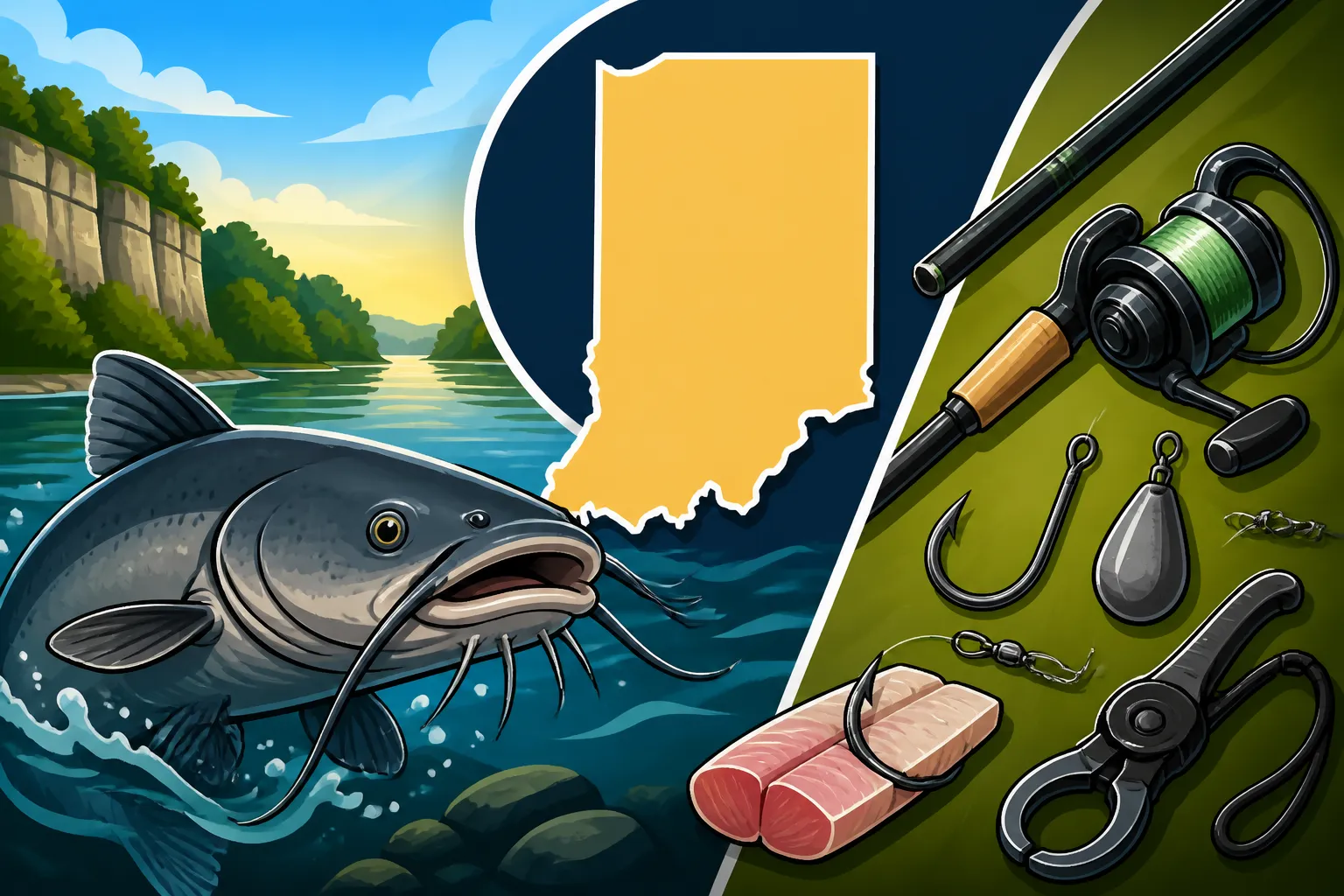
There's nothing quite like the thump of a big catfish hitting your line, whether you're battling a monster flathead in the depths of the Wabash or pulling a channel cat out of a quiet lake. But let's be real, you can't just grab any old rod and expect success. Catfishing, especially for those bigger whiskered giants, demands specific gear that can withstand the fight and get your bait to where the fish are hiding. This guide is all about equipping you with the best catfish gear for rivers and lakes across Indiana, helping you tackle those hard-fighting fish with confidence.
The Right Rod and Reel Setup for Indiana Catfish
Choosing the right rod and reel is foundational to successful catfishing. You wouldn't use a fly rod to haul in a fifty-pound flathead, right? The key is matching your tackle to the size of the fish you're pursuing and the type of water you'll be fishing, whether it's a calm lake or a powerful river current. It's about having the backbone to set the hook and the power to reel in a stubborn fighter without your gear giving out mid-battle.
Heavy-Duty Rods for River Monsters
When you're targeting big catfish in rivers like the Wabash or the White, you need a rod that can take a serious beating. Think heavy or extra-heavy power rods, typically between 7 and 10 feet long. These longer rods offer better leverage for casting heavier baits and sinkers, and they help absorb the shock of a powerful run from a big fish. They're designed with a stiff backbone that allows for strong hooksets, crucial when a massive channel cat or flathead decides to inhale your bait. Many anglers prefer rods with a fast action tip, which means the top third of the rod bends easily, giving you excellent bite detection while still having plenty of power in the lower sections to really lean into a fish. For more detailed recommendations, check out Best Catfish Rods for Indiana Rivers.
Imagine you're anchored in a strong current on the Ohio River, heavy lead on your line, and suddenly your rod tip doubles over. A medium-heavy or heavy power rod is what stands between you and a broken line or a snapped rod. These rods are built with robust blanks, often fiberglass or a composite, to withstand the immense pressure of battling a fish that might weigh as much as a small child. The extra length also helps keep your line out of snags when fishing around structure, a common challenge in river environments. It's an investment in not just catching, but landing those Indiana river monsters.
Choosing a Reel with Guts
For catfish, a strong, reliable reel is just as important as the rod. Most serious catfishermen opt for baitcasting reels, often referred to as "conventional" reels, especially for heavier applications. These reels are designed for brute strength, with robust gears and powerful drag systems that can be cranked down to prevent a big cat from stripping all your line. Look for models with a high line capacity, capable of holding 200 yards or more of heavy monofilament or braided line, because a big blue cat can make some impressive runs.
A good baitcasting reel for catfishing should also have a smooth, consistent drag system. This is absolutely critical; a jerky drag can snap your line in an instant when a fish surges. Many anglers prefer models with a bait clicker or "free spool" feature, which allows the line to run freely while making a clicking sound when a fish bites, giving you an audible alert without the fish feeling resistance. Brands like Penn, Abu Garcia, and Daiwa offer excellent options that are often available at stores like Bass Pro Shops or online through Amazon.
Rod and Reel Combos for Specific Catfish Species
While heavy gear works for all large catfish, you might fine-tune your setup based on the specific species you're targeting. For instance, if you're primarily going after channel catfish in smaller lakes or slower rivers, a medium-heavy rod with a slightly smaller baitcasting reel or even a stout spinning reel might suffice. Channel cats, while strong, don't typically reach the gargantuan sizes of blue cats or flatheads, so you can often get away with a slightly lighter, more versatile setup.
However, if trophy flatheads are your goal, especially in snaggy areas, you'll want the beefiest setup possible. Flatheads are notorious for heading straight for cover the moment they're hooked, so immense stopping power is necessary. This often means braided line, extra-heavy rods, and reels with exceptional drag capabilities. Consider what you'll be fishing for most often, but always err on the side of slightly heavier gear when it comes to catfish. For a comprehensive overview of the different types of catfish you might encounter, check out Channel Catfish Fishing in Indiana: The Complete Guide.
Line Selection: Your Lifeline to a Lunker
The line connecting you to your bait, and hopefully to a monster catfish, is arguably the most critical component of your setup. It's the weakest link if chosen poorly, and the unsung hero if chosen correctly. The type, strength, and even color of your line can significantly impact your success, especially when you're dealing with the abrasive environments where catfish often reside.
Monofilament for Forgiveness and Stretch
Monofilament line has been a catfishing staple for decades, and for good reason. Its primary advantage is its stretch, which acts like a shock absorber when a big fish makes a sudden run. This elasticity can prevent hooks from tearing out of a fish's mouth and can be more forgiving if your drag isn't perfectly set. Monofilament is also generally more abrasion-resistant than braided line, which is a big plus when fishing around rocky bottom, submerged timber, or other snags that are common in catfish habitats.
For general catfishing, anglers often opt for monofilament in the 20 to 40-pound test range. It's also typically more affordable than braided line, making it a budget-friendly option for spooling up multiple reels. The trade-off is its larger diameter for a given strength, which means less line capacity on your reel compared to braid. However, for many traditional catfishing techniques, particularly bottom fishing with a single rod, mono remains an excellent choice.
Braided Line for Power and Sensitivity
Braided line has become increasingly popular among serious catfishermen, especially when targeting larger fish or fishing in heavy current. Its main advantages are its incredible strength-to-diameter ratio and its near-zero stretch. This means you can spool much heavier line onto your reel, giving you significantly more pulling power and line capacity. The lack of stretch also translates to superior sensitivity, allowing you to feel even the most subtle bites, which can be crucial for detecting timid flathead strikes.
The immense strength of braided line (often 50-80 pound test or even higher for trophy catfish) makes it ideal for pulling big fish out of thick cover or for muscling them against strong river currents. However, braided line is less abrasion-resistant than monofilament in certain situations; it can fray more easily on sharp edges. For this reason, many anglers will tie on a monofilament or fluorocarbon leader to the end of their braid, especially in clearer water or snaggy conditions. This offers the best of both worlds: the power of braid and the abrasion resistance of mono.
Leader Lines: An Often Overlooked Detail
Regardless of whether you use monofilament or braided mainline, a leader line is a critical component of a good catfishing rig. A leader serves multiple purposes: it provides abrasion resistance, can be less visible to the fish in clearer water, and acts as a sacrificial line if your rig gets snagged, saving your main line. For catfish, heavy monofilament or fluorocarbon leaders in the 40 to 100-pound test range are common.
When fishing with braided mainline, a heavy mono or fluorocarbon leader is almost essential. Not only does it protect the braid from sharp objects, but it also gives the fish a less visible connection to your hook. For many river fishing scenarios, particularly when using specialized setups, leaders are explicitly part of the plan. You can learn more about specific setups in Best Rigs for Catfish Fishing in the Wabash River. The length of your leader can vary, but typically anywhere from 12 inches to several feet is common, depending on the fishing conditions and the specific rig you're deploying.
Essential Terminal Tackle: Rigs That Hold Strong
Terminal tackle refers to all the bits and pieces at the end of your fishing line, from the hooks to the sinkers and swivels. For catfishing, these components need to be robust and reliable. A weak link in your terminal tackle is just asking for a lost fish, especially when a big blue cat decides to show off its strength.
Hooks: Sizing Up for Big Catfish
Forget tiny panfish hooks; catfishing calls for serious hardware. The two most popular types of hooks for catfish are circle hooks and J-hooks. Circle hooks are overwhelmingly preferred by many experienced catfishermen because they are designed to hook the fish in the corner of the mouth, leading to fewer gut-hooked fish and higher survival rates for catch-and-release. When a fish bites, you simply let the rod load up, and the hook sets itself as the fish swims away. No need for a dramatic hookset.
Sizes for circle hooks typically range from 5/0 to 10/0 or even larger for monster fish. For J-hooks, anglers often use sizes from 7/0 to 10/0, especially when fishing with cut bait or live bait. Regardless of the type, ensure your hooks are stout and incredibly sharp. Brands like Gamakatsu and Owner are popular for their strength and sharpness, and you can easily find a good selection at any Bass Pro Shops or online through Amazon.
Sinkers: Keeping Your Bait Where It Needs to Be
Catfishing often involves getting your bait to the bottom and keeping it there, especially in rivers with current. This means sinkers are non-negotiable. The weight of your sinker will depend on the strength of the current, the depth of the water, and the size of your bait. In heavy current, you might need several ounces, sometimes even up to 10-12 ounces or more, just to hold your bait in place.
Common types of sinkers include pyramid sinkers, no-roll sinkers, and flat-bellied bank sinkers. Pyramid sinkers are great for digging into soft bottoms and holding in current. No-roll sinkers, as the name suggests, resist rolling and are good in moderate current. Flat-bellied bank sinkers are a versatile choice for both rivers and lakes. For specific techniques, like Catfish Bottom Fishing Techniques, the right sinker is essential for presentation. Make sure to have a variety of weights on hand, as conditions can change quickly on the water.
Swivels and Snaps for Tangle-Free Fishing
Swivels and snaps, while small, play a crucial role in preventing line twist and allowing for quick rig changes. Barrel swivels and three-way swivels are commonly used in catfishing rigs. A barrel swivel helps prevent line twist, especially when using spinning gear or if your bait tends to rotate in the current. Three-way swivels are fundamental to certain rigs, such as the three-way rig or the Santee Cooper rig, allowing you to tie your mainline, a dropper leader for your sinker, and a leader for your hook all to a single point.
Heavy-duty snaps, often attached to swivels, allow for quick changes of sinkers or leaders without having to re-tie your entire rig. This is a huge time-saver, especially if you're frequently adjusting to different current speeds or depths. Always choose strong, high-quality swivels and snaps appropriate for the breaking strength of your line and the size of the fish you expect to catch. Weak swivels are a common point of failure when battling a truly large catfish.
Irresistible Baits and Attractants for Hungry Catfish
Catfish are primarily scavengers and opportunistic feeders, with an incredible sense of smell. This means that when it comes to bait, the stinkier and more natural, the better! The world of catfish baits is vast and often involves some rather unappetizing ingredients from a human perspective, but they are absolutely adored by our whiskered friends.
Natural Baits: The Tried and True Favorites
Nothing beats natural bait for consistent catfishing success. Live bait, especially for flatheads, is incredibly effective. Smaller live fish like bluegill, shad, or even suckers are flathead favorites. Presenting a lively baitfish near structure can be deadly. Cut bait, on the other hand, is a go-to for channel cats and blue cats. Chunks of shad, skipjack herring, carp, or even chicken liver are all classic choices. The oilier the fish, the better, as the scent trail it leaves in the water is a powerful attractant.
Even non-fish natural baits have their place. Chicken livers, though messy, are a perennial favorite for channel catfish. Nightcrawlers or large earthworms can also tempt smaller channel cats and even blue cats. The key with natural baits is often freshness and presenting them in a way that maximizes their scent dispersal. For specific recommendations on what works best, take a look at Best Bait for Channel Catfish in Indiana Rivers.
Prepared Baits and Dips: A Stinky Advantage
For anglers who prefer convenience or want to capitalize on a catfish's powerful sense of smell, prepared baits and dips are excellent options. "Stink baits" come in various forms, from dough balls to pastes and even chunks that are impregnated with powerful attractants. These are often made from cheese, blood, fish guts, or other ingredients designed to emit a potent odor. These are generally very effective for channel catfish.
Dip baits are another popular category, designed to be used with a special dip worm or a small sponge attached to your hook. You "dip" the lure into the pungent bait, and it slowly releases its scent trail in the water. These can be incredibly effective, especially when fishing for channel cats in lakes or slower rivers. While they might not always tempt the largest flatheads, they can provide consistent action for good-sized channel cats.
Homemade Baits: Experimentation Can Pay Off
For the adventurous angler, making your own catfish baits can be a rewarding experience. There are countless recipes out there, often involving combinations of cheese, blood, garlic, chicken parts, and other "secret" ingredients. The beauty of homemade baits is that you can tailor them to your local waters and specific preferences, and sometimes you stumble upon a true honey hole bait.
The process of fermenting or "ripening" certain ingredients is often part of homemade bait recipes, as the increased pungency is what draws catfish in. Just be warned: these concoctions can be incredibly stinky, so prepare them and store them outdoors or in a well-ventilated area! While it might sound like a lot of work, discovering a homemade bait that outperforms store-bought options can give you a real edge and a sense of accomplishment.
Beyond the Rod: Must-Have Catfishing Accessories
While rods, reels, line, and bait are the core components, several accessories can significantly enhance your catfishing experience, making it more comfortable, safer, and ultimately more successful. These aren't just "nice-to-haves" but often become indispensable tools on the water.
Landing Nets and Grippers: Securing Your Catch
Once you've fought a big catfish to the boat or bank, the last thing you want is to lose it at the last minute. A large, sturdy landing net with a rubberized mesh is essential for landing bigger catfish. Rubberized mesh helps protect the fish's slime coat if you plan on releasing it, and it also prevents treble hooks from getting hopelessly tangled. For truly massive fish, some anglers prefer a specialized catfish net with a deeper, stronger bag.
For handling catfish, especially those with sharp fins and pectoral spines, a good pair of fish grippers can save your hands from painful pokes. These allow you to get a secure hold on the fish's jaw or lip without putting your fingers at risk. This is particularly important with flatheads, which can be quite feisty even out of the water. For more general advice on handling fish, though not catfish specifically, you might find some useful information in Best Nets for Landing Muskie in Indiana.
Tackle Storage and Organization
Catfishing often involves a variety of hooks, sinkers, swivels, and different baits. Keeping all this gear organized is key to an efficient and enjoyable outing. A sturdy tackle box or bag with multiple compartments and removable trays is ideal. Many catfish anglers use smaller utility boxes within a larger bag to keep different hook sizes, sinker weights, and leader materials neatly separated.
Consider waterproof tackle boxes, especially if you fish from a boat or in inclement weather. Keeping spare line, tools, and other essentials dry is critical. Bass Pro Shops and Amazon offer a huge selection of tackle storage solutions from brands like Plano and Flambeau, so you can find something that fits your specific needs and the amount of gear you typically carry. A well-organized tackle setup means less time fumbling and more time fishing.
Lighting and Comfort for Night Fishing
Catfish are often most active after dark, which means many dedicated anglers spend a lot of time fishing at night. This necessitates specific gear for comfort and safety. A good headlamp with both white and red light settings is indispensable. White light helps you see what you're doing, while red light preserves your night vision and is less likely to spook fish. Have spare batteries!
Comfort items like a sturdy camping chair, insect repellent, and warm clothing (even on summer nights, it can get chilly) will make those long hours after sunset much more bearable. A portable cooler filled with drinks and snacks is also a good idea. Knowing how to prepare for and execute night fishing can significantly increase your success. To help you plan your nocturnal adventures, consider reading How to Catch Catfish at Night.
Adapting Your Gear: Bank vs. Boat Catfishing
While many core pieces of catfish gear remain the same whether you're fishing from shore or a boat, there are definitely some considerations that can optimize your setup for each scenario. Thinking about how you access your fishing spots and the dynamics of casting and fighting fish will help you tailor your gear for maximum effectiveness.
Gear for Shore-Bound Anglers
Bank fishing for catfish is incredibly popular in Indiana, from the tranquil edges of local ponds to the bustling banks of larger rivers. For bank anglers, portability is often a key concern. You'll want rods that are easy to transport, or perhaps multi-piece rods that break down for easier carrying. Rod holders, such as sturdy bank sticks or tripod holders, are essential for keeping multiple rods in place while you wait for a bite.
When fishing from shore, casting distance can be more critical, so matching your rod length and action to your casting style and the weight of your baits is important. You might also want a long-handled net to reach fish that you've reeled in close but can't quite pull onto the bank. A comfortable chair, a small cooler, and a well-stocked tackle bag that's easy to carry are all part of a successful bank catfishing setup.
Essentials for Boat-Based Catfishing
Boat fishing opens up a whole new world of catfishing opportunities, allowing you to access deeper water, submerged structure, and river channels that are unreachable from shore. For boat anglers, rod holders are still crucial, but these will be heavy-duty rod holders mounted directly to the boat. Depending on your boat type, you might use clamp-on, flush mount, or rail-mount holders, often designed to take the strain of a huge fish.
A reliable anchor system is non-negotiable for boat catfishing, especially in rivers with strong currents. You'll need an anchor heavy enough to hold your boat in place, along with plenty of rope or chain. A good fish finder/depth sounder can also be invaluable for locating submerged structure, channel edges, and even schools of baitfish that attract catfish. If you're serious about targeting trophy catfish, you might even consider a dedicated boat setup with multiple rods and specialized electronics. Many great places to fish from a boat exist in Indiana; finding the right location can make all the difference, so consider checking out Best Catfish Fishing Spots in Indiana.
Transporting Your Catfishing Arsenal
Whether you're hitting the riverbanks or launching a boat, safely and conveniently transporting your gear is something to consider. Rod socks or cases can protect your rods from damage during transport, especially if you have custom or more expensive rods. For boat anglers, dedicated rod racks on your vehicle can make the trip to the launch ramp much easier.
If you're bank fishing and have a bit of a hike, a fishing cart or wagon can be a lifesaver for hauling multiple rods, a tackle box, a cooler, and a chair. Don't underestimate the value of a comfortable way to get your gear from the car to your fishing spot. After all, you want to save your energy for fighting fish, not lugging heavy equipment!
| Gear Category | Bank Fishing Considerations | Boat Fishing Considerations |
|---|---|---|
| Rods | Portability (2-piece, compact), longer rods for casting distance, multiple rod holders (bank sticks) | Heavy-duty rod holders (mounted to boat), specialized trolling rods (if applicable), fewer rods needed |
| Reels | High line capacity for potential long runs, strong drag system | Same as bank, but potentially larger reels for heavier lines when targeting monster fish |
| Line | Durable, good knot strength (monofilament or braided with leader) | Same as bank, maybe heavier braided line for power in current or pulling from snags |
| Terminal Tackle | Assortment of hooks and sinkers for various bottom types, durable swivels | Heavier sinkers for deep water/strong current, specialized rigs for boat tactics |
| Baits | Easy to store/transport, natural baits, prepared baits, homemade options | More space for larger bait containers, livewells for live baitfish |
| Accessories | Headlamp, comfortable chair, insect repellent, portable cooler, fishing cart, long-handled net | Navigation electronics (fish finder, GPS), strong anchor system, larger landing net, boat safety gear |
Disclaimer: This article is for general informational purposes only and does not constitute professional advice. Laws, prices and regulations vary by location and change over time. Consult a qualified professional for guidance on your specific situation.