Best Ice Fishing Shelters for Cold Weather
The biting cold of an Indiana winter can be absolutely brutal, often putting a quick end to what could have been a perfect day of ice fishing. There's nothing quite like having numb fingers and toes forcing you off the ice just when the bite starts to pick up, or having the wind cut right through your layers. This guide is here to help you conquer those frosty conditions by exploring the best ice fishing shelters designed to keep you warm, comfortable, and out on the hard water longer, no matter how harsh the Hoosier weather gets.
Why a Good Ice Fishing Shelter is Non-Negotiable in Indiana
Let's be real, Indiana winters aren't always gentle. From the open expanses of Lake Monroe to the smaller, more protected ponds, the elements can hit hard. A proper ice fishing shelter isn't just a luxury; it's a fundamental piece of gear that transforms a potentially miserable day into an enjoyable and productive one. Think of it as your portable fortress against Mother Nature.
Battling the Hoosier Winter Elements: Wind, Snow, and Bitter Cold
Anyone who's spent time ice fishing in Indiana knows that the biggest battle isn't always with the fish; it's often with the weather. We get those days where the temperature barely registers, but a relentless wind whips across the ice, driving the wind chill deep into your bones. A sudden snowfall can obscure your holes and gear, making visibility a nightmare. Without protection, these conditions can make even the most dedicated angler call it quits early.
An effective shelter creates a crucial barrier against these elements. It shields you from the direct assault of the wind, dramatically reducing the wind chill factor. The walls and roof keep falling snow from burying your lines and tackle, and more importantly, they trap the precious heat you generate, whether from your own body or a portable heater. This protective bubble is essential for staying safe and comfortable, allowing you to focus on the fishing, not on shivering uncontrollably. It's the difference between enduring the cold and actually enjoying the unique experience of ice fishing.
Extending Your Time on the Ice and Enhancing Your Experience
Imagine setting up your lines, getting a few bites, and then having to pack up because you just can't feel your fingers anymore. It’s a frustrating scenario many Indiana anglers have faced. A good ice fishing shelter directly addresses this problem by significantly extending the amount of time you can comfortably spend on the ice. When you're warm, you're more patient, more focused, and ultimately, more successful.
Beyond just warmth, a shelter enhances the overall experience. It provides a dry, relatively calm space where you can organize your gear, enjoy a hot beverage, or even share a meal with fishing buddies or family members. For those bringing along kids, a shelter is almost mandatory to ensure they stay warm and engaged, fostering a love for the sport without the misery of extreme cold. It transforms a solitary, bone-chilling activity into a social and genuinely pleasant outing, making those Winter Fishing Patterns on Indiana Lakes much more approachable.
Types of Ice Fishing Shelters: Finding Your Perfect Fit
Just like there are different ways to fish, there are different types of ice fishing shelters, each designed with specific needs and preferences in mind. Understanding these varieties is key to choosing the right one for your Indiana ice fishing adventures.
Hub-Style Shelters: Roomy Comfort for Groups
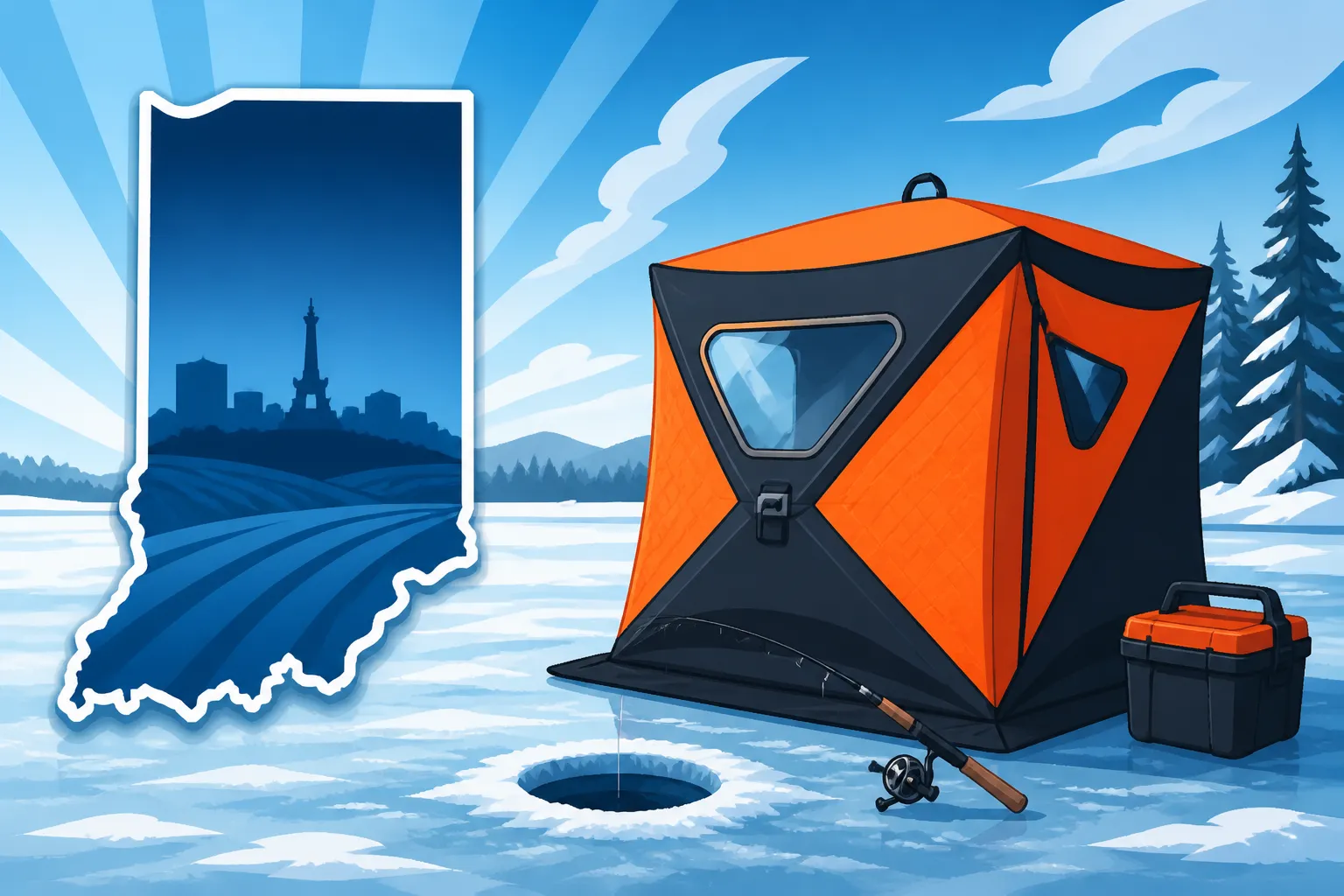
Hub-style shelters are like pop-up tents for the ice, offering generous interior space and relatively quick setup times. They typically feature a cube or hexagon shape, with flexible poles that extend from central "hubs" to create rigid walls. These shelters are often chosen by anglers who want ample room for multiple people, chairs, heaters, and plenty of gear. If you’re planning on bringing the whole family or a group of friends for a day on Lake Wawasee, a hub-style shelter gives everyone enough elbow room.
The main advantages of hub shelters are their spaciousness and ease of standing upright inside, which is a huge comfort on a long day. Many models come insulated, providing excellent thermal retention. While generally portable, they do require some effort to set up and take down, and they're not designed for frequent, rapid relocation across the ice. You'll typically set up a hub shelter in one spot and stay there for the duration of your trip, perhaps running a small portable heater to keep things toasty.
Flip-Over Shelters: The Mobile Angler's Dream
For the angler who loves to stay on the move, chasing active fish across the ice, a flip-over shelter is often the top choice. These ingenious shelters are built directly onto a sled base, which also serves as your gear storage and transportation device. When you get to your spot, you simply "flip" the tent portion over, and in seconds, you're fishing in a heated, protected environment. Most flip-overs come with integrated seating, often comfortable padded swivel chairs.
Flip-over shelters excel in portability and speed. You can easily drag them behind a snowmobile, ATV, or even by hand across the ice. When the fish aren't biting in one spot, you can quickly move to another without a lengthy setup and takedown process. While generally smaller than hub shelters, usually accommodating one or two anglers, they are perfect for solo missions or a pair of dedicated ice fanatics. Their compact nature makes them ideal for exploring various spots on a lake without feeling weighed down.
Permanent and Cabin-Style Shelters: The Ultimate Ice Base Camp
At the other end of the spectrum are the permanent or cabin-style ice fishing shelters. These are essentially small shacks, often built from wood or aluminum, that are towed onto the ice and left for extended periods, sometimes even for the entire ice fishing season on larger, well-established ice communities. These are not about mobility; they are about maximum comfort, amenities, and creating a true home-away-from-home on the ice.
These shelters can feature insulation, windows, wood-burning stoves, bunk beds, and even small kitchens. They're perfect for extended trips, overnight stays, or for those who want to host a sizable group in ultimate comfort. You'll often see these on bigger, more reliable ice bodies where conditions allow for long-term placement. While they offer unparalleled luxury and protection from even the harshest Indiana blizzards, their sheer size and weight mean they're definitely not for the angler who likes to drill a hundred holes in a day. You'll need substantial equipment to move them, and they come with their own set of rules and considerations for placement and removal.
| Shelter Type | Key Advantage | Portability | Setup Time | Ideal for |
|---|---|---|---|---|
| Hub-Style | Spacious interior, standing room | Moderate | Quick | Groups, families, stationary fishing |
| Flip-Over | Extreme mobility, quick deployment | High (integrated sled) | Very Fast | Mobile anglers, solo or two-person trips |
| Permanent/Cabin | Maximum comfort, amenities | Very Low (heavy) | N/A (set once) | Long stays, large groups, extreme comfort |
Key Features to Consider When Choosing Your Shelter
Deciding on the right ice fishing shelter involves more than just picking a style. You need to think about the specifics that will make your time on the ice genuinely enjoyable and safe, especially when faced with Indiana's unpredictable winter weather.
Insulation and Fabric: Staying Warm When It's Freezing
This is, arguably, the most critical factor for an Indiana ice fishing shelter. A cheap, single-layer fabric tent might keep the wind off you, but it won't do much to trap heat when the mercury plunges. Look for shelters made with insulated fabrics, often referred to as "thermal" material. These typically consist of multiple layers, sometimes with an air pocket or a dense synthetic insulation in between, much like a good winter jacket.
Thermal insulation drastically reduces heat loss, making it much easier (and cheaper, in terms of fuel) to keep the interior warm with a portable heater. Without insulation, any heat you generate quickly escapes through the walls, forcing your heater to work overtime and constantly battling the outside cold. If you're planning on fishing in temperatures below freezing, which is common during prime Best Season for Walleye Fishing or Best Season for Muskie Fishing times, insulation is a non-negotiable feature for comfort and fuel efficiency.
Size and Capacity: Solo Adventures vs. Family Outings
How many people do you plan to fish with? How much gear do you typically bring? These questions are vital when considering the size and capacity of your shelter. A solo angler with a single rod and a bucket can get by with a very compact one-person flip-over. However, if you're like me and prefer to bring a couple of rods, a tackle box, a cooler, a heater, a comfortable chair, and maybe a buddy, then a larger two-person flip-over or a three to five-person hub shelter will be far more practical.
Think about standing room too. Some shelters are tall enough to stand up and stretch, which can be a game-changer on a long day. Others are designed for sitting, offering a more compact footprint. If you're taking children, especially younger ones, extra space is always a good idea to keep them entertained and prevent cabin fever. Consider not just the listed capacity, but the realistic usable space once all your gear is inside.
Portability and Setup Speed: Getting on the Ice Faster
The ease of getting your shelter from your vehicle to your chosen fishing spot, and then setting it up, can make or break your trip. If you're hauling your gear by hand across a half-mile of slushy ice, a heavy, cumbersome shelter will quickly lose its appeal. Flip-over shelters, with their integrated sleds, truly shine here. You load your gear into the sled, pull it to your spot, and flip it open in seconds.
Hub-style shelters, while offering more space, usually require a bit more effort. They often pack down into a carrying bag that you can strap onto a sled. Setup involves unfolding, extending the hubs, and anchoring it to the ice, which can take anywhere from a couple of minutes to ten, depending on the model and wind conditions. If you frequently move between different Best Fishing Spots in Indiana, prioritizing portability and rapid deployment is crucial. You want to spend your time fishing, not wrestling with your gear.
Venting and Heating Options: Safety and Comfort Combined
Staying warm is great, but staying safe is paramount. If you plan to use a portable propane or catalytic heater inside your shelter, proper ventilation is absolutely essential to prevent carbon monoxide buildup. Most modern ice fishing shelters, especially insulated ones, come equipped with vents that can be opened or closed. Never operate a heater in a completely sealed shelter. Always ensure there's adequate airflow.
Beyond safety, consider the heating capacity you'll need. Small heaters are fine for compact one-person shelters, but larger hub shelters will require more powerful units to maintain a comfortable temperature. Many anglers prefer propane heaters from reliable brands, while others opt for catalytic heaters which produce radiant heat without an open flame. Whichever you choose, always have fresh air circulating, and it’s a wise idea to carry a portable carbon monoxide detector, especially when enjoying a long day of fishing or planning an overnight stay.
Where to Find Your Ideal Ice Fishing Shelter in Indiana (and Online)
Once you've got a good idea of the type of ice fishing shelter that's right for you, the next step is finding one. Luckily, you have several excellent options, whether you prefer to see the gear in person or browse from the comfort of your home.
Local Gear Shops and Sporting Goods Stores
For many anglers, there's no substitute for seeing and touching a piece of gear before buying it, and that's especially true for something as significant as an ice fishing shelter. Local sporting goods stores and dedicated fishing shops across Indiana are fantastic resources. Places like Bass Pro Shops often have various models set up in their aisles, allowing you to actually step inside a hub shelter or sit in a flip-over model. This hands-on experience is invaluable for judging true size, build quality, and ease of setup.
Beyond the physical inspection, these stores offer the benefit of expert advice. The staff are often avid anglers themselves and can provide recommendations based on local conditions, popular lakes, and common Indiana Fishing Techniques & Seasons. They can also guide you through different features, suggest compatible accessories like heaters or augers, and help you compare various brands side-by-side. It’s also a great way to support local businesses while getting personalized service. Don't forget to check out their selection of Best Bait for Winter Fishing while you're there!
Online Retailers for Convenience and Selection
Of course, in today's world, online shopping offers an unparalleled selection and convenience. Major online retailers provide a vast array of ice fishing shelters from numerous manufacturers, often with detailed specifications, customer reviews, and comparative pricing. Websites like Amazon are popular choices for their wide selection, user-friendly interface, and often competitive prices, especially if you know exactly what you're looking for.
Shopping online allows you to research different models thoroughly, read through countless reviews from other anglers, and compare features without feeling rushed. You can also find specialty ice fishing brands that might not be carried by every brick-and-mortar store. While you miss out on the hands-on experience, the sheer volume of choices and the ability to have a shelter delivered right to your door make online retailers a very attractive option for many Indiana anglers. Just be sure to double-check shipping times, especially if you're trying to get a shelter before a big cold snap!
Disclaimer
This article is for general informational purposes only and does not constitute professional advice. Laws, prices and regulations vary by location and change over time. Consult a qualified professional for guidance on your specific situation.