Channel Catfish Growth Rates in Large Rivers
It’s a common frustration for anglers: you've heard tales of monster channel catfish lurking in Indiana’s big rivers, but you keep pulling in smaller ones. Or maybe you're just curious about how those impressive river cats get so big in the first place, wondering if your local stretch of water has the potential for true giants. This comprehensive guide will dive deep into the fascinating world of channel catfish growth rates in large river systems, specifically focusing on what makes Indiana's waterways prime real estate for these whiskered beauties and what factors dictate their journey from tiny fry to formidable trophy fish.
Factors Influencing Channel Catfish Growth in Rivers
Understanding how channel catfish grow in large river systems like the Wabash or White River isn't just about curiosity; it's a critical piece of information that can help you become a more successful and knowledgeable angler. These fish are incredibly adaptable, but their environment plays a huge role in their development, often more so than in static lake or pond settings.
Food Availability and Quality
One of the most significant drivers of growth for any fish, including channel catfish, is the abundance and quality of their food source. Large rivers are dynamic ecosystems, constantly replenishing nutrients and moving food downstream, which can be a huge advantage for hungry catfish. Think about a river after a good rain: runoff brings all sorts of organic matter and terrestrial insects into the water, providing a buffet. In a healthy river, catfish have a diverse diet, ranging from smaller fish and crustaceans to insects, worms, and even plant matter or decaying organic material. The more readily available and protein-rich this food is, the faster a catfish can pack on pounds.
However, it's not just about how much food is there; it's also about how easily they can get it. Rivers with a lot of natural structure – fallen trees, rock piles, deep scour holes, and varied bottom composition – create ambush points and havens for baitfish, which in turn means more consistent feeding opportunities for catfish. Conversely, stretches of river with uniform, barren bottoms and scarce cover might force catfish to expend more energy searching for food, slowing their growth. A river's productivity can vary greatly from one section to another, meaning the growth rates of fish upstream might be different from those downstream, even in the same river system. When you're fishing, observing the habitat and understanding what kind of food might be present can give you a clue about the potential size of the fish you're targeting. For insight into what these fish eat, check out our guide on Best Bait for Channel Catfish in Indiana Rivers.
Water Temperature and Seasonality
Like all cold-blooded creatures, a channel catfish’s metabolism is directly linked to water temperature. In Indiana's rivers, this means a distinct seasonal pattern in growth. During the warm summer months, when water temperatures are at their peak, catfish metabolism soars. They digest food faster, move more, and, crucially, grow at an accelerated rate. This is their prime feeding and growth period. As temperatures drop in the fall, their metabolism slows down, and so does their growth. During the coldest winter months, growth can almost cease as they become much less active, often seeking out deeper, more stable thermal refuges.
This seasonal fluctuation is a major reason why trophy catfish often take several years to reach impressive sizes. They essentially have a several-month "growing season" each year. Stable water temperatures without extreme fluctuations are also beneficial, as sudden, drastic changes can stress fish and put their growth on hold. Rivers, with their constant flow, can sometimes offer more stable temperatures than shallow lakes, particularly in deeper channels, which can be advantageous for continuous feeding and growth throughout the warmer parts of the year. Understanding these temperature patterns is key to understanding Best Season for Catfish Fishing in Indiana.
Population Density and Competition
Imagine a buffet line: if there are only a few people, everyone gets plenty. If there's a huge crowd, portions become smaller, and everyone leaves less satisfied. The same principle applies to channel catfish in a river. If a particular stretch of river has a very high density of catfish, especially of similar size, there will be intense competition for food resources. This can lead to slower growth rates for all fish in that area, as they simply can’t get enough to eat to fuel rapid growth. This phenomenon is often referred to as "stunting."
On the other hand, if a river system has a balanced population with adequate food, individual fish will have less competition and can grow larger, faster. Predator populations (like larger flathead catfish or even other channel cats) can also play a role by keeping channel catfish numbers in check, reducing competition, and potentially leading to a higher proportion of larger, healthier fish. This balance is crucial for a river to produce truly impressive, trophy-sized channel catfish. When you hit a spot where the fish are all roughly the same, smaller size, it might indicate an overpopulation or lack of sufficient food. Conversely, if you're consistently catching a mix of sizes, including some larger ones, that's often a sign of a healthier, more balanced ecosystem.
Typical Growth Patterns and Size Expectations
Anglers often wonder how long it truly takes for a channel catfish to reach a respectable or even a trophy size. It's not an overnight process, and the journey from a tiny fingerling to a hefty river monster involves distinct stages of growth, influenced by all the factors we just discussed.
First Few Years: Rapid Growth
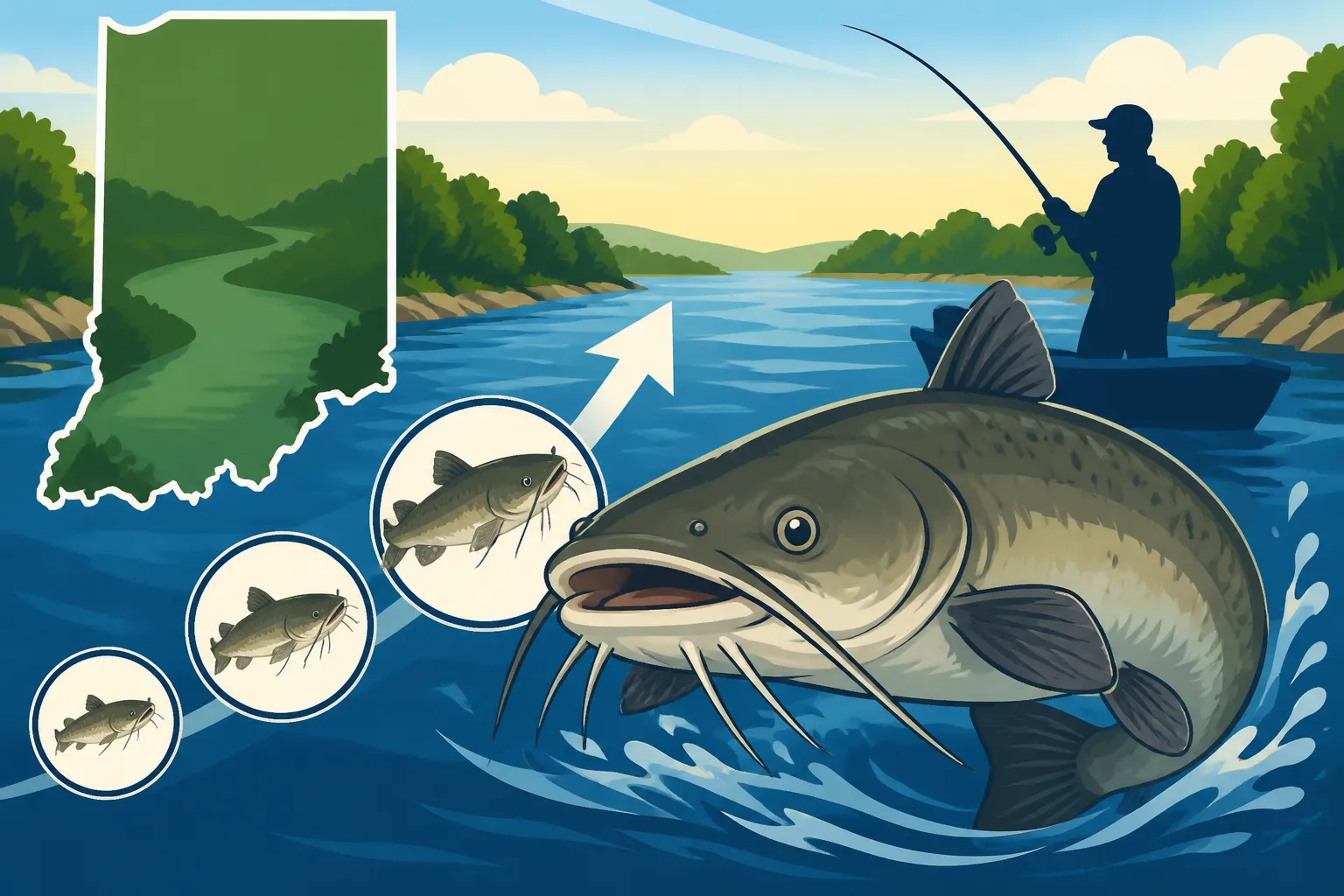
In their early life stages, channel catfish exhibit incredibly rapid growth, especially in a nutrient-rich river environment. A newly hatched channel cat is tiny, but within its first year, given good conditions, it can reach lengths of 6-10 inches. By the second year, it's not uncommon for them to be 12-16 inches long. This initial burst of growth is crucial for their survival, helping them to quickly outgrow many potential predators. During this time, they are often feeding voraciously on smaller invertebrates, insect larvae, and detritus that are abundant in river systems.
This rapid growth is particularly pronounced in rivers with a stable forage base and plenty of warmer water during the growing season. Think about the rich, fertile waters of the Wabash River in Indiana: with its extensive floodplain and diverse invertebrate life, it provides an excellent nursery for young catfish. The energy intake for these young fish is almost entirely dedicated to adding length and weight, as they are not yet reproductively mature. The better the conditions, the faster they will progress through this initial phase, setting them up for their journey to larger sizes.
Maturation and Slower Growth
As channel catfish mature, typically around 3-5 years of age and reaching lengths of 16-20 inches, their growth rate begins to slow down. At this point, a significant portion of their energy intake is redirected towards reproduction. Instead of solely focusing on adding mass, their bodies now prioritize developing eggs or milt. While they continue to grow, the explosive rate of their juvenile years diminishes. A mature female, especially after spawning, might even temporarily lose weight, requiring time to recover before resuming significant growth.
It's also at this stage that the impacts of population density and food competition become more pronounced. If a river segment is overcrowded, mature fish will struggle even more to find enough food to grow substantially, leading to a higher number of medium-sized fish and fewer large ones. However, in healthy, less crowded sections of rivers like the lower White River in Indiana, where food is plentiful and competition is managed, these mature fish can still add several pounds each year, slowly but steadily working their way toward trophy status. Their diet also diversifies further as they get larger, allowing them to capitalize on a wider range of available food sources.
Understanding "Trophy" Catfish Sizes
What exactly constitutes a "trophy" channel catfish can vary depending on where you're fishing and who you ask, but generally, fish weighing 15 pounds or more are considered excellent catches, with those over 20 pounds truly being exceptional. To reach these sizes, a channel catfish typically needs to be 8-15 years old, sometimes even older, depending on the river system and environmental conditions. Some of the largest channel cats, nearing 30-40 pounds, might be upwards of 20 years old. How Big Do Channel Catfish Get in Indiana? provides more detail on potential sizes.
These older, larger fish are often solitary or found in small groups, inhabiting deep holes, log jams, and other significant structures in the river that offer both cover and access to abundant food. They are the survivors, having successfully navigated years of predation, angling pressure, and environmental challenges. Catching one of these giants is a testament not only to your skill as an angler but also to the health and productivity of the river itself. Many anglers dedicated to landing these big ones invest in specialized gear; a quick search on Amazon reveals a wide range of heavy-duty catfish rods and reels designed to handle these powerful fish.
Here's a general table illustrating approximate channel catfish growth benchmarks in a healthy Indiana river system:
| Age (Years) | Typical Length (Inches) | Typical Weight (Pounds) | Growth Rate Observation |
|---|---|---|---|
| 1 | 6-10 | <0.5 | Very rapid growth |
| 2 | 12-16 | 0.5-1.5 | Still rapid, approaching maturity |
| 3-4 | 16-20 | 1.5-3 | Maturing, growth rate starts to slow |
| 5-7 | 20-25 | 3-7 | Steady growth, reproduction a factor |
| 8-12 | 25-30 | 7-15 | Consistent growth, larger fish becoming common |
| 13+ | 30+ | 15-30+ | Trophy size, growth much slower but continuous |
Note: These are approximations and actual growth rates can vary significantly based on river conditions, food availability, and genetics.
Comparing River Growth to Lake or Pond Environments
It's natural to wonder if channel catfish grow differently in rivers compared to the more contained environments of lakes and ponds. While the fundamental biological processes are the same, the unique characteristics of a river system often lead to distinct advantages and disadvantages when it comes to growth potential.
River vs. Reservoir Catfish
Rivers typically offer a few advantages over many reservoirs and ponds for channel catfish growth. First, the constant flow of water in a river often means a more consistent supply of fresh food and dissolved oxygen. This moving buffet brings nutrients and prey to the fish without them having to expend as much energy searching for it. Rivers also tend to be less prone to oxygen depletion problems that can occur in stagnant ponds or deep reservoirs during hot summer months. This consistent oxygen supply helps maintain high metabolic rates and, consequently, better growth.
However, reservoirs, especially large ones like Monroe Lake or Patoka Lake, can sometimes produce exceptionally large catfish, too. These impoundments often have vast areas of open water, extensive baitfish populations, and deep, stable thermal layers. The key difference usually lies in the type of food base and the consistency of the environment. Rivers might offer a more diverse, organic-rich diet, while reservoirs might have a higher density of certain forage fish. Both can produce trophy fish, but the journey to that size often looks a little different.
The Impact of Current and Habitat Diversity
The presence of current in a river is a double-edged sword for catfish growth. On one hand, as mentioned, it delivers food. On the other hand, fish must expend energy to hold their position against the flow. However, channel catfish are masters of finding current breaks – areas behind submerged logs, boulders, or deep scour holes where the water slows down. These spots allow them to rest and ambush food without fighting the main current constantly. Rivers with a high degree of habitat diversity, offering a mix of fast currents, slack water, deep holes, shallow riffles, and plenty of cover, tend to be the most productive for growing large catfish.
A river's varying depths and structural features also mean more niches for different forage species, which in turn supports a broader diet for catfish. The constant erosion and deposition in a river system continually reshapes the habitat, often creating new hiding spots and feeding grounds. This dynamic nature, when healthy, provides an ever-changing but often highly productive environment for channel catfish to thrive and grow. Many anglers seek out these current breaks and structural features when targeting Best Catfish Fishing Spots in Indiana.
How Anglers Can Apply This Knowledge
Understanding the growth patterns and factors influencing channel catfish in rivers isn't just academic; it's genuinely useful for improving your fishing strategy and increasing your chances of success, whether you're after a quick meal or a true wall-hanger.
Targeting Different Size Classes
If you're primarily interested in catching a good number of eating-sized channel catfish (say, 1-5 pounds), you'll often find them in areas with moderate current, shallower depths, and a mixed bottom. These are typically younger, more abundant fish that are still actively growing and forming schools. They might be found near river bends, sand flats, or along the edges of current seams. Light to medium-heavy tackle, with common baits like cut bait, worms, or chicken liver, will often suffice for these abundant fish.
However, if your goal is to land a true trophy channel catfish – those 15+ pound monsters – you need to shift your approach. These older, larger fish are often found in deeper, more secluded parts of the river. Look for significant structure: massive log jams, deep scour holes created by strong currents, or submerged rock piles that offer substantial cover and ambush points. They are often more solitary and require heavier tackle, bigger baits, and a great deal of patience. Think large cut bait, whole shad, or substantial chunks of skipjack herring. Many experienced anglers buy specialized gear like robust rod holders and heavy-duty line online through retailers like Amazon to handle the powerful runs of these larger fish. You'll also want to brush up on Night Fishing Techniques for Catfish, as the biggest fish often feed under the cover of darkness.
Seasonal Considerations for Catfish
Your understanding of how water temperature affects growth also dictates when and where you might find catfish of different sizes. In the spring, as water temperatures rise, catfish become more active and start feeding aggressively after their winter sluggishness. This is a great time to target them as they move into shallower areas to spawn and feed. As summer progresses and water temperatures peak, channel catfish will continue to feed heavily, often retreating to deeper, cooler water during the hottest parts of the day, particularly the larger fish. This is the peak growth period, so finding those thermal refuges is key.
In the fall, as water temperatures begin to drop, catfish will undergo a period of intense feeding to pack on reserves for the winter. They might be found in transition areas between shallow and deep water, aggressively chasing baitfish. Winter fishing can be productive, but it requires targeting the deepest holes and slack water areas where catfish congregate in large numbers, often in a more lethargic state, not feeding as actively. Adapting your location and bait presentation to these seasonal changes, guided by the fish's metabolic and growth cycles, is paramount to consistent success. Knowing your local Indiana Fishing Seasons: A Month-by-Month Guide can really help.
Disclaimer
This article is for general informational purposes only and does not constitute professional advice. Laws, prices and regulations vary by location and change over time. Consult a qualified professional for guidance on your specific situation.