Black Crappie Identification: Spots and Body Shape
One common frustration for new and even experienced anglers in Indiana is confidently identifying exactly what kind of fish they've just pulled from the water. With similar-looking species, it's easy to get confused, especially with crappie. This guide is here to help you clearly identify the black crappie, focusing on its distinct spots and body shape, so you can confidently tell it apart from its close relatives and understand why it matters for your fishing adventures.
What Makes a Black Crappie Unique?
When you pull a crappie out of an Indiana lake or river, you might initially just think "crappie!" But there are key differences between black crappie and white crappie that are important for every angler to recognize. Black crappie, in particular, has a few signature traits that, once you know them, make identification a breeze. It's not just about looking at the spots, though they're a big part of it; it's also about its overall build and fin structure.
The Distinctive Speckled Pattern
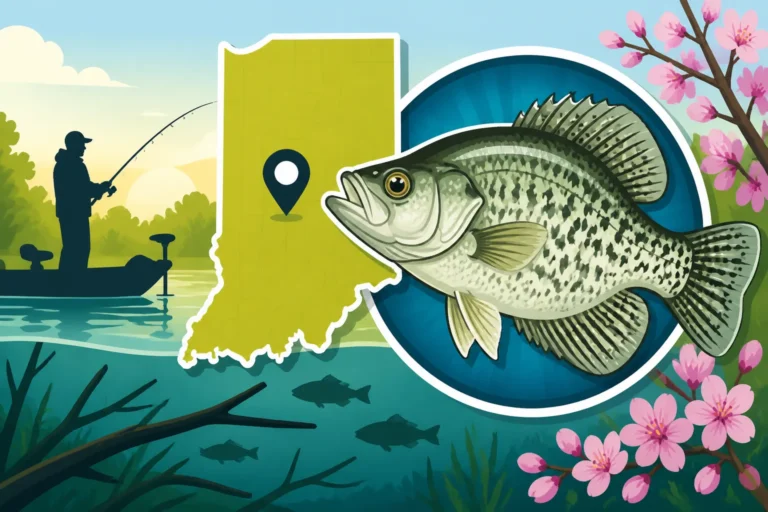
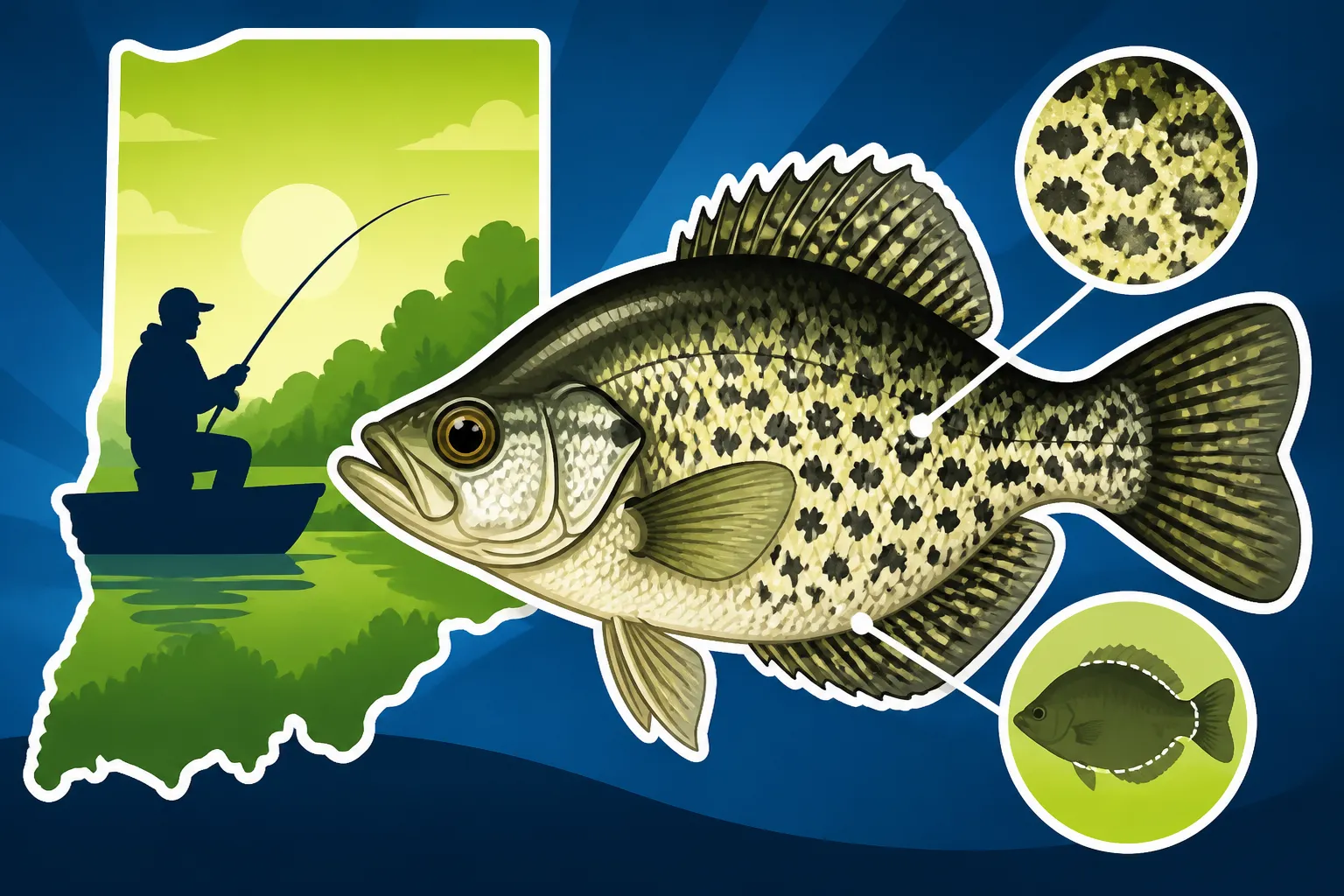
The most obvious characteristic of a black crappie, and the one that often gives it away, is its dark, mottled, or speckled appearance. Unlike its white crappie cousin which tends to have more organized vertical bars, the black crappie sports an irregular pattern of dark spots scattered across its silvery or greenish-gold body. Imagine flicking dark paint onto a canvas—that's often what the black crappie's side looks like.
These spots aren't uniform; they can vary in size, intensity, and distribution. Some black crappie might appear almost black with very little silver showing, especially during spawning season when males darken considerably. Others might have a lighter base color with prominent, well-defined spots. This speckled camouflage helps them blend into murky water or weedy cover, making them masters of ambush predation. Pay close attention to these spots, as they are your first big clue when trying to identify your catch.
Their Compact, Disc-Like Body
Beyond the spots, the black crappie's body shape is another strong indicator. They tend to be more "squat" or "deep-bodied" than white crappie. Think of a dinner plate—they're quite round and compressed from side to side. This makes them look taller for their length compared to other fish. This compact, almost disc-like shape is quite distinctive and gives them a different profile in the water.
When you hold a black crappie, you'll notice how deep its body is from its dorsal (top) fin to its ventral (bottom) fins. This deeper body profile, combined with their darker, speckled pattern, gives them a robust appearance. This body shape is well-suited for maneuvering through dense cover, like submerged timber or thick weed beds, where they often ambush their prey. If you're comparing two crappie side-by-side, the black crappie will almost always look stockier and more rounded.
Key Identification Features of Black Crappie
To really nail down that crappie identification, you need to dive into some specifics. It's not just about a quick glance; it's about looking at a few key anatomical features that reliably differentiate a black crappie from other species, especially the white crappie. These details are super helpful when you're trying to figure out if you've caught a keeper or if you're holding a fish that's better released due to regulations.
Analyzing the Spot Pattern
As we mentioned, the spot pattern is a huge giveaway for black crappie. Instead of the distinct vertical bars that often characterize white crappie, black crappie have a more scattered, almost peppered look. These dark spots are randomly distributed all over their body, including their dorsal, caudal (tail), and anal fins. There's no clear pattern or alignment to them.
Imagine a painter splattering ink onto a canvas—that's the kind of irregular, mottled pattern you're looking for. The intensity and number of spots can vary; some fish might be heavily mottled, while others might have fewer but larger spots. This uneven distribution is what truly sets them apart. If you see clear, well-defined vertical stripes, you're likely looking at a white crappie. But if it's all about the random speckles, you've got a black crappie in your hands. This kind of detail is often highlighted in field guides you might find on Amazon to help you identify your catch.
Understanding Body Proportions
The body shape of a black crappie is another critical identifier. They are generally more round and deep-bodied compared to the elongated shape of a white crappie. If you look at a black crappie from the side, the distance from its back (dorsal fin) to its belly (pelvic fins) will be noticeably greater than on a white crappie of similar length. They appear more compressed and "discus-like."
This deep-bodied nature contributes to their agile movements in tight cover. When you hold one, you'll feel how broad and compact it is. This is particularly noticeable when you compare the length-to-depth ratio. A black crappie will often seem "taller" than it is long, giving it a chunkier appearance. This isn't just an aesthetic difference; it's a fundamental part of their biology that helps distinguish them.
Counting Dorsal Fin Spines
This is arguably the most definitive and reliable way to tell a black crappie from a white crappie. The dorsal fin, which is the fin on its back, holds a secret: the number of spines. Black crappie consistently have 7 or 8 dorsal fin spines. White crappie, on the other hand, almost always have 5 or 6 dorsal fin spines.
To count them, carefully hold the fish and gently spread the dorsal fin. Run your finger (carefully, as they are sharp!) along the leading edges of the stiff, bony rays at the front of the fin. Those are the spines. The softer, branched rays behind them are not counted for this purpose. If you count 7 or 8 stiff spines, you have a black crappie. It's a quick and foolproof method once you get the hang of it. Many anglers carry a small field guide or even a laminated card to remind them of this key difference, which can be easily tucked into a tackle box.
Examining Mouth and Jaw Structure
While perhaps a more subtle difference, the mouth and jaw structure can also offer clues. Black crappie tend to have a larger mouth compared to white crappie, extending further back on the head. More importantly, when you look at the lower jaw relative to the eye, the upper jaw of a black crappie will usually extend past the middle of the eye. This creates a slightly more "up-turned" or "protracted" appearance to their mouth.
The mouth is still highly protrusible, allowing them to suck in small baitfish and invertebrates, but the overall presentation is different. This feature might be harder for a beginner to spot immediately, but seasoned anglers often use it as a secondary confirmation. Coupled with the distinct spot pattern and dorsal fin spine count, it helps complete the identification picture.
Black Crappie vs. White Crappie: Spotting the Differences
Okay, so you've heard a lot about both species, but let's get down to the brass tacks of direct comparison. When you're standing by the water's edge in Indiana, holding a crappie, you need quick, clear ways to tell them apart. It's not always easy, especially if you're new to fishing or if the fish is a bit faded, but these distinctions will make you a crappie identification pro in no time. Crappie Fishing in Indiana: Black Crappie Basics covers more specific behaviors of the black crappie once you've identified it.
Comparing Spotting Patterns
This is often the first thing people notice, and it's a good starting point.
- Black Crappie: Think "peppered" or "splattered." They have irregular, dark spots scattered seemingly randomly across their entire body and fins. There are no distinct lines or bars. The overall impression is mottled or speckled.
- White Crappie: These fish usually display distinct, often faint, vertical bars along their sides. These bars tend to be more organized and can number anywhere from 5 to 9. While they still have spots, these spots are typically arranged within or alongside these vertical bands, giving a much more striped appearance than the random speckles of a black crappie.
If you have two fish side-by-side, the difference in pattern can be quite striking. One will look like it's been finger-painted with spots, the other like it had stripes painted on it.
Dorsal Fin Spine Count: The Easiest Tell
This is the golden rule of crappie identification and the most reliable method. It requires a quick, careful count, but it eliminates all guesswork.
- Black Crappie: Almost always has 7 or 8 stiff, bony spines in its dorsal fin (the main fin on its back).
- White Crappie: Will invariably have 5 or 6 stiff, bony spines in its dorsal fin.
This anatomical difference is consistent and doesn't change with age, water clarity, or spawning colors. If you're ever in doubt about the spot pattern or body shape, count those spines! It's an infallible characteristic. Many anglers keep a small diagram in their tackle box, maybe even a waterproof one purchased from Amazon, for quick reference on these spine counts.
Body Shape Comparison
While less definitive than the fin spine count, body shape is a strong visual clue.
- Black Crappie: Generally has a deeper, more compressed, "discus-like" or "pan-shaped" body. It appears rounder and taller for its length.
- White Crappie: Tends to be more elongated and slender. It looks proportionally longer and thinner compared to its depth.
Imagine a circle versus an oval. The black crappie leans towards the circle, while the white crappie is more of an oval. This difference in body shape impacts how they move and where they prefer to forage, with black crappie often preferring denser cover.
Snout and Mouth Differences
Look closely at the snout and how the mouth extends.
- Black Crappie: Often has a slightly more "upturned" snout. The mouth is also usually larger, extending past the middle of the eye.
- White Crappie: The snout tends to be more pointed, and the mouth is typically smaller, not extending much beyond the front edge of the eye.
This table summarizes the key differences at a glance:
| Feature | Black Crappie | White Crappie |
|---|---|---|
| Spot Pattern | Irregular, scattered, mottled spots | Faint vertical bars (5-9), spots within/along bars |
| Dorsal Fin Spines | 7 or 8 (most reliable) | 5 or 6 (most reliable) |
| Body Shape | Deep-bodied, rounder, "discus-like" | More elongated, slender, "oval-shaped" |
| Snout/Mouth | Upturned snout, mouth extends past middle of eye | Pointed snout, mouth ends near front of eye |
By using these clear distinctions, you can become adept at identifying your crappie catch. Indiana Panfish Guide: Crappie, Bluegill, and Sunfish can help you differentiate them from other panfish you might encounter.
Why Proper Crappie Identification Matters for Anglers
You might think, "A crappie is a crappie, right?" Well, not exactly! For serious anglers in Indiana, knowing the difference between a black crappie and a white crappie isn't just about showing off your fish ID skills. It genuinely impacts how you approach fishing, ensures you stay within the law, and ultimately, helps you become a more successful and responsible angler. This knowledge is part of the foundation of being a great sportsperson on the water.
Navigating Indiana's Fishing Regulations
This is probably the most critical reason for accurate identification. While Indiana often has general panfish regulations, there can be specific rules that sometimes differentiate between species or even apply to specific bodies of water. For example, if there were a lake with a slot limit or a reduced daily bag limit on one crappie species but not the other, misidentification could lead to serious trouble. How Many Crappie Can You Keep in a Day? and Crappie Size Limits and Regulations in Indiana are crucial reads for any crappie angler.
Imagine you're out on a new lake, and you know there's a specific size limit for black crappie but not white crappie. If you can't tell them apart, you might accidentally keep an undersized black crappie, or worse, release a legal white crappie thinking it was too small. This can result in fines or penalties. Knowing the exact species means you can confidently adhere to local rules and avoid an unpleasant encounter with a conservation officer. It's your responsibility as an angler to know the law, and that starts with knowing your fish.
Tailoring Your Fishing Techniques
Black crappie and white crappie, despite their similarities, often have slightly different preferences when it comes to habitat and feeding behavior. Knowing which species you're targeting, or more importantly, which species is biting, can help you fine-tune your approach. Crappie Jigging Techniques for Beginners and How to Jig for Crappie in Spring delve into methods effective for both, but species-specific knowledge gives you an edge.
Black crappie, with their deeper bodies, are typically found in clearer water and prefer more cover, like submerged brush, fallen trees, or dense weed beds. They might respond better to finesse presentations or slower retrieves right in the thick stuff. White crappie, being more streamlined, are often found in slightly murkier water, more open areas, or associated with vertical structures like bridge pilings or docks, and might respond well to faster trolling or aggressive jigging. If you're catching a lot of one species, understanding its preferences can help you adjust your lures, depth, or location to maximize your success, whether you're using live bait or artificial lures you picked up from a tackle shop or online.
Understanding Habitat Preferences
Beyond fishing techniques, knowing the species helps you understand where to even start looking. Their distinct body shapes and environmental tolerances lead them to different parts of the same lake or river. Best Crappie Lakes in Indiana might highlight particular lakes known for trophy black crappie versus white crappie.
If you know black crappie prefer cleaner, clearer waters with abundant submerged structure, you'll focus your efforts on those types of areas. If the lake you're on is known for holding mostly white crappie, you might look for areas with more open water, river channels, or less dense cover. This understanding is key to pre-planning your fishing trip and increasing your chances of finding fish. For instance, How to Find Crappie in Summer often involves finding them deeper, but the type of structure they relate to can differ by species. This ecological insight makes you a much more effective angler.
Disclaimer
This article is for general informational purposes only and does not constitute professional advice. Laws, prices and regulations vary by location and change over time. Consult a qualified professional for guidance on your specific situation.