Best Bait for Channel Catfish in Indiana Rivers
There's nothing quite like the tug of a channel catfish on your line in one of Indiana's beautiful rivers. But let's be honest, sometimes they can feel like phantom fish – you know they're there, but getting them to bite can be a real head-scratcher. It's frustrating when you're out there, gear all set, and the fish just aren't cooperating. This guide is all about taking the guesswork out of what bait to use, focusing specifically on the best options to entice those whiskered warriors in Indiana's flowing waters, giving you the best shot at a successful day on the river.
Understanding Channel Catfish Behavior in Indiana Rivers
Before we even talk about specific baits, it's really helpful to understand how channel catfish operate, especially in a river environment. They're not like bass that might chase down a flashy lure; catfish have a whole different set of senses and preferences that dictate their feeding. Knowing this can seriously up your game and make your bait choices much more effective. If you're looking for a comprehensive overview of these incredible fish, you might want to check out Channel Catfish Fishing in Indiana: The Complete Guide.
Where Channel Catfish Prefer to Hang Out
Think about a river. It's constantly moving, changing, and offering a variety of hiding spots and feeding grounds. Channel catfish are masters of using the river's structure and current to their advantage. They love deeper holes, particularly those downstream from bends, logjams, or rock piles where the current slows down a bit. These spots act like natural feeding lanes, funneling food directly to them without them having to expend too much energy. Undercut banks, bridge pilings, and areas with submerged timber are also prime real estate. They provide cover from predators, a break from strong currents, and often harbor tasty morsels that drift by. When you're fishing, look for these features. Casting your bait into or near these zones is far more effective than just tossing it into open water.
How Their Sense of Smell Dictates Their Diet
This is perhaps the most crucial difference when fishing for catfish. While other fish rely heavily on sight, channel catfish are primarily guided by their incredibly keen sense of smell and taste. Their entire body is covered in taste buds, and those long, sensitive whiskers (barbels) are essentially underwater sniffers, helping them detect even minute traces of food in the water. This is why "stinky" baits are so popular and effective for catfish. They can locate a strong scent trail from a considerable distance, even in murky river water where visibility is low. The smellier, the better, often, especially when the river is a bit colored up after some rain. This means your bait needs to be putting out a strong, persistent scent plume.
Seasonal Changes in Feeding Habits
Just like us, catfish don't eat the same way all year round. Their metabolism and activity levels fluctuate with water temperature. In the spring, after the ice recedes and water temperatures begin to climb, catfish become much more active and aggressive feeders. This is a fantastic time for heavy-scented baits. As summer progresses and water temperatures hit their peak, they might become a bit more lethargic during the heat of the day, often preferring to feed more actively at dawn, dusk, or even throughout the night. Night Fishing Techniques for Catfish can be particularly productive during the warmer months. In the fall, as waters cool, they'll often go on another feeding binge to pack on weight for winter, making them very susceptible to a variety of baits. During winter, their activity slows dramatically, and they tend to congregate in deeper, slower pools, requiring a more patient approach and baits presented directly to them.
Top Natural Baits for Indiana River Channel Catfish
When it comes to tempting channel catfish in Indiana's rivers, nothing quite beats the appeal of natural baits. These are the tried-and-true classics, often smelling just right to a hungry cat.
The Unbeatable Appeal of Cut Bait
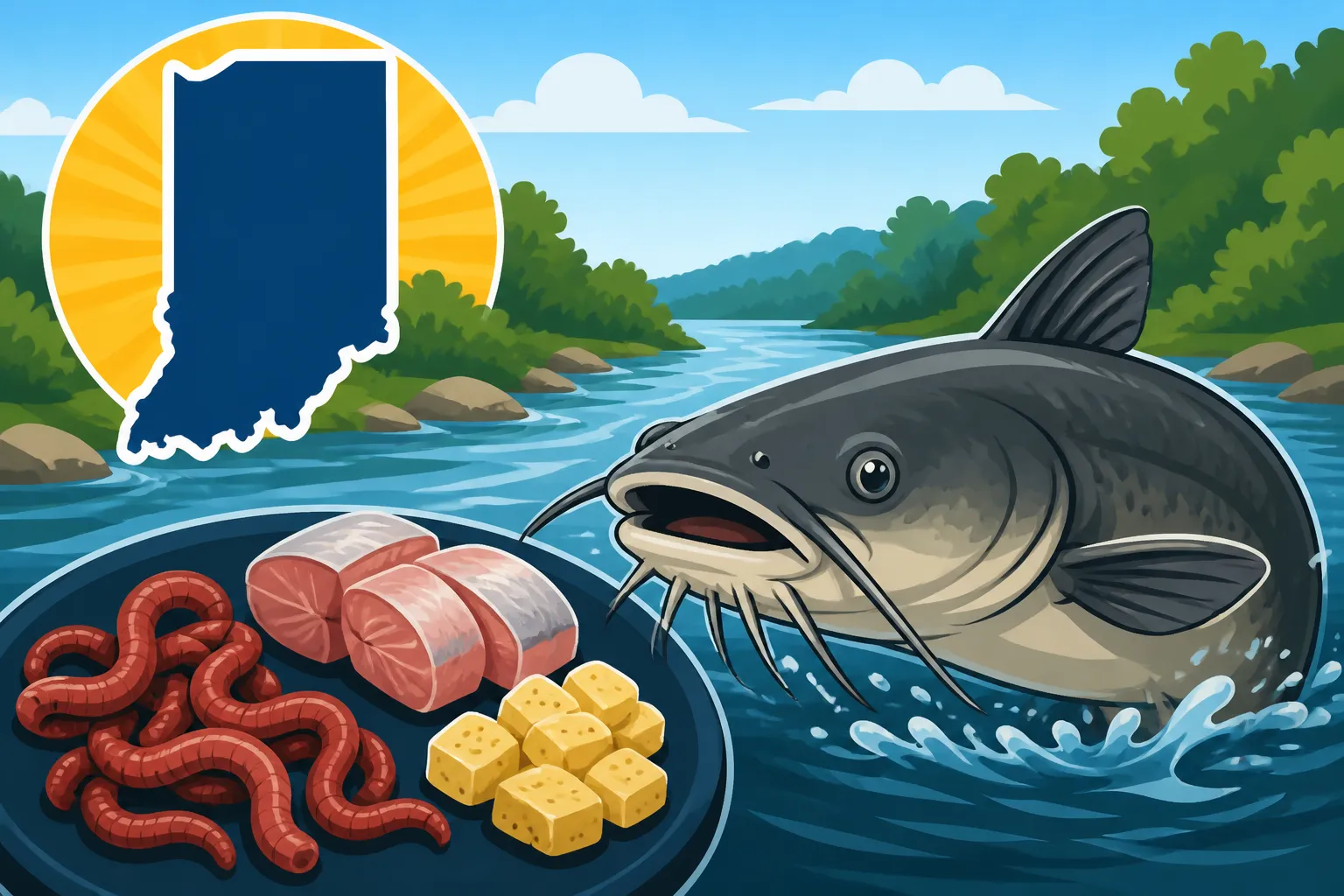
Cut bait is, hands down, one of the most effective baits for channel catfish in rivers. Why? Because it’s packed with natural oils and blood that create a powerful scent trail, exactly what a catfish is looking for. Any oily fish can be good, but common choices include shad, skipjack herring, or even bluegill cut into chunks. You want pieces large enough to stay on the hook and withstand the current, but small enough for a catfish to comfortably engulf. A good chunk roughly 1-2 inches square, or a strip from the side of a fish, works wonders. The key is to make sure the cut bait is fresh. The fresher the better, as it releases those potent juices that attract catfish from a distance. If you're on the Wabash River in Indiana, for instance, you'll find plenty of local anglers swearing by fresh cut bait.
When preparing cut bait, don't be shy about exposing some of the flesh and bone. The more surface area releasing scent, the better. Consider using a sharp knife to make additional slits in the bait to help it "bleed" more scent into the water. You can buy these baits at local tackle shops or even catch your own baitfish if local regulations allow. Just ensure you're using legally caught bait.
Live Baits: Worms, Minnows, and Crayfish
While cut bait relies on scent, live baits offer movement and a natural appearance that can trigger a strike, especially from more aggressive or opportunistic feeders.
- Nightcrawlers and Earthworms: These are universal fish catchers, and channel catfish are certainly not immune to their wriggling appeal. A big ball of nightcrawlers on a hook, creating plenty of movement and a subtle earthy scent, can be irresistible. They're especially effective in clearer water or when catfish are actively foraging on the bottom. You can find nightcrawlers easily at bait shops, convenience stores, or even on Amazon.
- Live Minnows: While often associated with bass or crappie fishing, a lively minnow can also be a fantastic catfish bait, especially for larger channels. The struggling movement of a live minnow sends out distress signals that can attract predatory catfish. Hook them lightly through the lips or dorsal fin to keep them alive and swimming naturally.
- Crayfish: If your river has a good population of crayfish, then these can be absolute gold for catfish. Catfish love to munch on crayfish. You can fish them whole or, for even more scent, remove their claws or tail to expose more flesh. They're hardy baits and can withstand a fair bit of current, making them ideal for river fishing. You might even be able to catch your own local crayfish, which are often the freshest option.
Stink Baits and Prepared Baits: The Classic Choice
For many, stink baits are synonymous with catfish fishing, and for good reason! Their pungent odors are designed to exploit a catfish's incredible sense of smell.
- Dip Baits and Punch Baits: These are some of the most popular prepared baits. Dip baits are usually thick, gooey concoctions that you dip a sponge or tube jig into. Punch baits are similar but typically have a fibrous consistency that allows you to "punch" your hook into them, picking up a clump that adheres well. Brands like Berkley PowerBait often have specific catfish formulas that work well. These baits offer a sustained release of powerful scent, making them excellent for setting up and waiting. They are particularly effective when Catfish Bottom Fishing Techniques are employed.
- Pre-made Dough Baits and Pellets: These come in various forms, often shaped into small balls or compressed pellets. They are easy to use, stay on the hook fairly well, and are imbued with strong attractants. While perhaps not as potent as some dip or punch baits, they are a convenient and often very effective option, especially for casual anglers or when fishing with kids. You can often find a good selection of these at sporting goods stores or on Amazon.
- Cheese Baits: Yes, believe it or not, some types of cheese, especially soft, pungent varieties like cheddar or limburger, can be very effective. The strong dairy smell is appealing to catfish. You can mold small chunks around your hook. It's a bit messier to handle, but the results can be surprising.
Artificial Baits and Other Effective Options
While natural and prepared baits dominate the catfish world, there are times and situations where artificial lures, or even some household items, can produce impressive results.
The Role of Soft Plastics and Jigs
Artificial baits aren't typically the first choice for channel catfish, but they can be surprisingly effective, especially when paired with a strong scent. The key is to present them slowly and on the bottom, mimicking natural forage.
- Scented Soft Plastics: Many anglers have found success by tipping a jig with a worm-imitating soft plastic, particularly those infused with a strong garlic or fish scent. The soft plastic provides a durable base, while the scent acts as the primary attractant. A slow retrieve or letting it drift with the current can trigger strikes.
- Jigs with Bait: You can also take a simple jig head and tip it with a piece of cut bait or a large nightcrawler. This combines the weight and profile of a jig with the irresistible scent of natural bait. It's a great option for feeling the bottom and working through snags. Use a heavier jig to get down to where the catfish are, especially in stronger currents.
- Spinnerbaits (with a twist): While not a traditional catfish lure, a spinnerbait fished very slowly along the bottom, especially with a scented trailer or a piece of nightcrawler, can sometimes provoke a reaction strike. The vibration and flash can attract attention, and the scent seals the deal. This is more of an experimental approach but can pay off when catfish are unusually aggressive.
Tried-and-True Household Baits
You don't always need fancy, expensive baits to catch catfish. Sometimes, a quick trip to your kitchen or local grocery store can yield excellent results.
- Hot Dogs: Seriously, hot dogs are a classic, easy-to-use, and surprisingly effective catfish bait. Cut them into 1-inch chunks, and for an extra kick, you can marinate them in garlic powder or cherry Kool-Aid overnight. The scent and texture are appealing to catfish, and they stay on the hook well. They're a favorite for Family-Friendly Fishing Spots in Indiana or when introducing kids to fishing because they're easy to handle.
- Chicken Livers: These are notoriously messy but incredibly potent. Chicken livers bleed profusely, creating an intense scent trail that catfish find irresistible. They're soft, so they can be challenging to keep on the hook, but many anglers swear by them. Using a treble hook or wrapping them with a bit of thread can help them stay put.
- Shrimp: Store-bought raw shrimp, especially those that are starting to get a little pungent, can be a fantastic catfish bait. The natural oils and smell are very attractive. You can cut them into chunks or use smaller shrimp whole. They're readily available and often overlooked.
- Corn and Marshmallows: While not as universally effective as other baits, corn and marshmallows (sometimes soaked in a flavored oil) can work in certain situations, particularly for smaller catfish or in ponds where they've been conditioned to eat them. They float, which can be useful if you want to keep your bait just off the bottom.
How to Present Your Bait Effectively
Choosing the right bait is only half the battle; presenting it correctly is just as important. In a river environment, the current plays a huge role.
- Bottom Rigging: The vast majority of river catfishing success comes from presenting your bait on or very near the bottom. A simple Carolina rig or a three-way swivel rig works well. These rigs allow your bait to sit on the bottom while the weight holds it in place against the current. You need enough weight to hold bottom but not so much that it causes constant snags. Best Rigs for Catfish Fishing in the Wabash River covers some excellent options.
- Drifting Baits: In some slower sections of the river, letting your bait drift naturally with the current can be very effective. This mimics a wounded baitfish or a piece of food floating downstream. A simple slip sinker rig, allowing the bait to move somewhat freely, can be excellent here.
- Scent Trail Maximization: Whatever bait you use, think about how it's dispersing scent. For cut bait, fresh is best. For prepared baits, ensure you're using enough to create a strong plume. For live baits, their movement helps disperse their natural odors.
- Hook Size: Don't use too small a hook. Catfish have big mouths, and a larger hook (like a 4/0 to 8/0 circle hook) is necessary to properly hook them, especially with larger baits. Circle hooks are fantastic for catfish as they typically hook the fish in the corner of the mouth, reducing gut hooks and making release easier if you're practicing catch and release. You can find robust circle hooks suitable for river catfishing on Amazon.
| Bait Type | Scent Strength | Ease of Use | Durability (on hook) | Ideal Conditions |
|---|---|---|---|---|
| Cut Bait | Very High | Medium | Medium | Murky water, strong currents, active feeding |
| Chicken Livers | Extremely High | Low | Low | Still or slow water, strong scent needed |
| Hot Dogs | Medium | High | High | General fishing, family-friendly, all conditions |
| Nightcrawlers | Medium | High | Medium | Clearer water, light current, general fishing |
| Stink/Dip Baits | Very High | Medium | Medium (with holder) | Murky water, patient waiting, target specific spots |
| Crayfish | Medium-High | Medium | High | Rocky bottoms, natural forage present |
Tips for Maximizing Your Catfish Catch
You've got your bait, you understand the fish, now let's talk about putting it all together for the best possible outcome. Catching catfish in a river is often about patience, persistence, and putting in the time. Remember, identifying your target is key, and if you're not sure, check out Channel Catfish Identification: Spots and Forked Tail.
Essential Gear for River Catfishing
Having the right equipment can make a huge difference in your success and enjoyment.
- Rods and Reels: For river channel catfish, you'll want a medium-heavy to heavy action rod, typically 6-8 feet long. This gives you the backbone needed to cast heavier weights and pull in strong fish, especially those fighting in current. Pair it with a sturdy spinning or baitcasting reel spooled with 15-30 lb monofilament or braided line. Braided line offers superior strength and sensitivity, which can be a real asset in detecting subtle bites. Looking for options? Many reliable setups can be found on Amazon. If you need specific recommendations, our guide on Best Catfish Rods for Indiana Rivers has you covered.
- Terminal Tackle: Beyond hooks (remember those circle hooks!), you'll need a variety of sinkers. Pyramid or no-roll sinkers are excellent for river currents as they tend to hold bottom better than round weights. Swivels are crucial to prevent line twist, especially when using cut bait that might spin in the current.
- Other Essentials: Don't forget a sturdy pair of pliers for hook removal, a good headlamp if you're fishing at night, and a substantial net for landing bigger fish. A cooler to keep your bait fresh and your catch (if you plan to keep some) on ice is also a must.
Reading the River: Current and Structure
Catfish are structure-oriented fish, and they use the river's current to their advantage. Learning to "read" the river is a skill that develops with time, but here are some pointers:
- Current Seams: Look for areas where fast water meets slow water. These "seams" are perfect ambush points where catfish can sit in the slack water and wait for food to be swept by in the faster current. Cast your bait into the faster water upstream and let it wash into the seam.
- Logjams and Brush Piles: Any large structure that breaks the current and offers cover is a potential catfish hotspot. These areas also tend to collect natural forage. Fish these spots carefully, as snags are common, but the rewards can be significant.
- Deeper Holes: Use a depth finder if you have one, or simply look for slower, darker sections of the river that indicate deeper water. Catfish often retreat to these cooler, calmer depths during brighter parts of the day or in colder seasons.
- Confluence Points: Where two rivers or a river and a large creek meet, you'll often find excellent catfishing. The mixing currents and varied bottom structure create prime feeding grounds.
Understanding the river's characteristics can also help you predict how big a catfish you might encounter. How Big Do Channel Catfish Get in Indiana? provides some insights into the impressive sizes these river dwellers can reach.
Timing Your Trip for Success
Beyond bait and location, timing can be everything.
- Time of Day: While catfish can be caught throughout the day, they are often most active during low light conditions. Dawn, dusk, and especially night are prime times for river catfishing. The cooler temperatures and reduced boat traffic often make them more willing to venture out from cover to feed. This is where Best Time of Day to Catch Catfish in Indiana really comes into play.
- Weather Conditions: Overcast days can be great, as they simulate low light conditions. Catfish often become more active before a storm front rolls in, sensing changes in barometric pressure. After heavy rains, when rivers are muddy and rising, can also be fantastic for catfishing, as the increased flow dislodges a lot of food, and the murky water provides excellent cover for feeding catfish.
- Seasonal Considerations: As discussed earlier, spring and fall generally offer the most consistent action. However, with the right techniques, you can catch catfish year-round. In spring, try Best Bait Choices for Spring Fishing. In fall, switch to Best Bait and Lures for Fall Fishing for optimal results. Just remember that their habits will change with the seasons, so adjust your approach accordingly.
Remember, every river is a little different, and what works one day might not work the next. Don't be afraid to experiment with different baits and techniques. The joy of fishing lies in the pursuit and the constant learning. Tight lines!
Disclaimer
This article is for general informational purposes only and does not constitute professional advice. Laws, prices and regulations vary by location and change over time. Consult a qualified professional for guidance on your specific situation.