What’s the Difference Between Steelhead and Rainbow Trout?
There's often a lot of head-scratching among anglers, especially those new to the game or visiting Indiana for the first time, when it comes to identifying certain fish. One of the most common questions I hear is about the difference between Steelhead and Rainbow Trout. While they look incredibly similar, and are, in fact, the same species, their lifestyles couldn't be more different, leading to distinct appearances, habitats, and fishing experiences. This guide will cut through the confusion and help you confidently tell them apart, understanding where and how to target each one in the Hoosier State.
Understanding the Identity Crisis: Steelhead vs. Rainbow Trout
It’s easy to get Steelhead and Rainbow Trout confused because, genetically speaking, they're the same fish: Oncorhynchus mykiss. The real distinction lies in their life history, specifically whether they migrate to the ocean (or a large freshwater lake acting like an ocean) or remain in freshwater throughout their lives. This fundamental difference shapes everything from their size and coloration to where you'll find them and how you'll go about catching them.
The Core Difference: Anadromy
The term "anadromous" is key here. Anadromous fish are those born in freshwater, migrate to saltwater (or a huge freshwater body like Lake Michigan) to grow and mature, and then return to freshwater to spawn. This is precisely what Steelhead do. In Indiana, our Steelhead are born in the tributaries of Lake Michigan, then head out into the vastness of the big lake to feed and grow. This incredible journey is a significant part of what makes them such a prized sport fish.
Imagine tiny Steelhead fry hatching in a clear, gravel-bottomed stream, fighting currents and dodging predators. After a year or two, driven by instinct, they make their way downriver to Lake Michigan. There, they spend several years gorging on abundant forage fish, growing large and strong, their bodies transforming into sleek, chrome-plated powerhouses. When the time is right, usually in the fall or spring, they feel the call to return to those same natal streams to spawn, completing a life cycle that mirrors that of true ocean-going salmon. This migration often brings them within reach of shore anglers and those fishing the river mouths, creating thrilling fishing opportunities, as detailed in our Steelhead Fishing in Indiana: A Fall Run Guide.
Rainbow Trout: The Freshwater Resident
On the other hand, Rainbow Trout are the landlocked members of the Oncorhynchus mykiss family. These are the fish that spend their entire lives in freshwater environments, whether it's a cold, clear stream, a stocked pond, or an inland reservoir. They don't make the epic migratory journey to a large lake or ocean. In Indiana, most Rainbow Trout populations are maintained through stocking programs. The DNR regularly releases Rainbow Trout into various creeks, rivers, and small lakes across the state, particularly in regions where water temperatures remain cool enough for them to thrive, especially in the spring and fall.
These resident Rainbow Trout adapt to their localized environment. They might move up and down a stream section, or congregate around cold water inlets in a lake, but their world is much smaller than their Steelhead cousins. Their entire existence is spent finding food, avoiding predators, and eventually spawning within the same freshwater system where they were born or stocked. This means they're often more accessible to anglers who prefer stream fishing or don't have access to larger boats for big lake excursions. If you're looking for Rainbow Trout Fishing in Indiana: Where to Go, you'll typically be focusing on these inland, resident populations.
Physical Distinctions and Appearance
While both are beautiful fish, the different lifestyles of Steelhead and Rainbow Trout lead to noticeable differences in their appearance, especially when you compare a fresh-from-the-lake Steelhead to a long-term resident Rainbow. Knowing what to look for can help you identify your catch and understand its journey.
Size, Shape, and Coloration
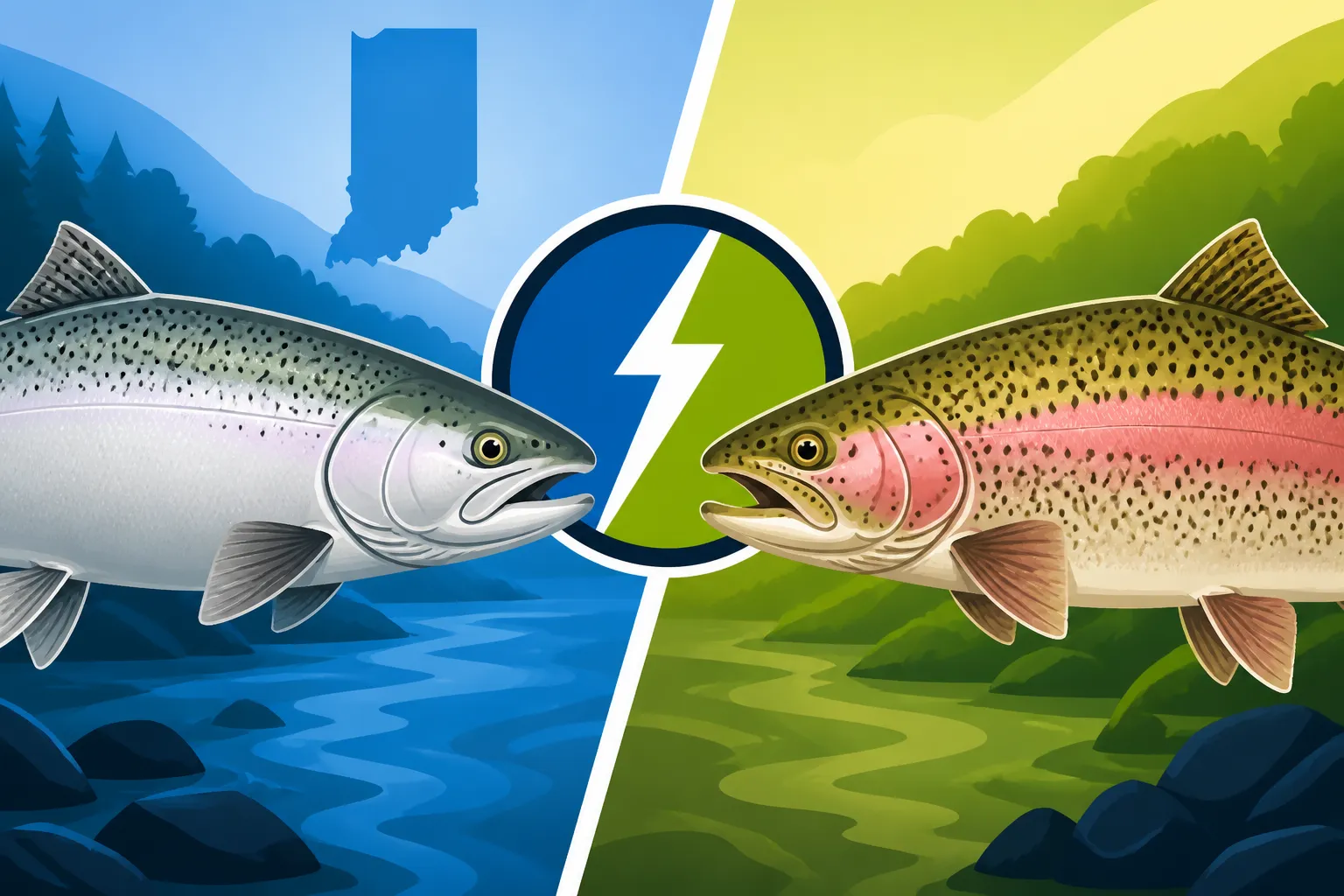
Perhaps the most striking difference is size. Steelhead, having spent years feeding in the nutrient-rich waters of Lake Michigan, generally grow much larger than their resident Rainbow counterparts. It's not uncommon to catch Steelhead weighing 8 to 15 pounds, with some true monsters pushing 20 pounds or more. Their bodies are typically more streamlined and torpedo-shaped, built for speed and power in the open water. Their coloration tends to be a gleaming, metallic silver or steel-blue on their sides and back, fading to a pure white belly. This "chrome" appearance is excellent camouflage in the open waters of Lake Michigan. During their spawning runs up the rivers, they might develop a faint pink or reddish stripe along their lateral line, but it's usually less pronounced than a resident Rainbow.
Resident Rainbow Trout, by comparison, are typically much smaller, often ranging from 1 to 5 pounds, though older, larger stocked fish can certainly exceed that. Their bodies tend to be a bit more robust or chunky, reflecting their life in smaller, sometimes slower, freshwater environments. Their coloration is usually much brighter and more vibrant. They often display a distinct, iridescent pink or red stripe running horizontally along their sides, which gives them the "rainbow" in their name. Their backs are usually a darker olive-green or brown, fading to lighter sides, all adorned with numerous small, dark spots. These spots are also present on Steelhead, but they tend to be less prominent against their chrome background.
Fin Characteristics and Other Clues
Beyond overall size and color, there are other subtle clues that can help differentiate these fish. Both Steelhead and Rainbow Trout share the characteristic adipose fin—a small, fleshy fin between the dorsal and caudal (tail) fins, common to all salmonids. However, some stocked Rainbow Trout might have a clipped adipose fin, a common practice used by hatcheries to mark fish for identification or to indicate they are of hatchery origin. Wild-spawned Steelhead will generally have an intact adipose fin.
The mouth and jaw structure can also offer hints, though this takes a keen eye. Steelhead often have a more pronounced, slightly elongated snout, indicative of their predatory life in the big lake. Their teeth might also be more developed. Resident Rainbows, while still predators, might have a slightly blunter snout. Ultimately, the biggest tell-tale sign remains the overall coloration and the environment in which you caught the fish. If you're pulling a shimmering, silver bullet from a Lake Michigan tributary, it's almost certainly a Steelhead. If it's a brightly colored, vividly spotted fish from a small inland stream, it's a Rainbow Trout.
Habitat, Behavior, and Fishing Strategies in Indiana
Understanding the distinction between Steelhead and Rainbow Trout isn't just academic; it directly impacts where you fish and how you approach catching them. Their differing environments and life cycles demand different tactics, gear, and even licenses in some cases.
Where You'll Find Each Species in Indiana
For Steelhead, your focus in Indiana will almost exclusively be on Lake Michigan and its tributary streams. These fish spend the vast majority of their lives in the big lake, growing fat and strong. When the urge to spawn hits, typically in the fall (September-November) and spring (March-May), they migrate into rivers like the Little Calumet, Trail Creek, Salt Creek, and the St. Joseph River in northern Indiana. This is when river fishing for Steelhead becomes extremely popular. Anglers will often target them at river mouths, in deeper pools, or around structure in the rivers themselves. To fish for these magnificent creatures, you'll need to be familiar with Lake Michigan Fishing Rules for Indiana Anglers and ensure you have the appropriate licenses, including the vital Indiana Trout and Salmon Stamp Requirements.
Resident Rainbow Trout, by contrast, are found in a much wider array of inland freshwater systems across Indiana. The Indiana Department of Natural Resources (DNR) actively manages "put-and-take" trout fisheries, stocking various streams, ponds, and small lakes, especially in the spring and fall. Popular locations include designated trout streams in counties like LaGrange, Steuben, and Noble, as well as tailwaters below certain reservoirs where cold water is released. These fish are stocked for recreational angling, providing opportunities for anglers who might not be able to access the Lake Michigan tributaries. Their movements are typically limited to the specific water body where they reside.
How Their Lifestyles Affect Your Fishing Approach
Fishing for Steelhead in Indiana is a challenging and rewarding pursuit. When they're in Lake Michigan, anglers often employ specialized techniques like trolling with downriggers and planer boards using large spoons, plugs, or even live bait at various depths. This requires a well-equipped boat and knowledge of the lake's vastness. Many excellent lures for Trolling Techniques for Salmon and Steelhead can be found online. As they enter the rivers, the strategy shifts dramatically. River Steelhead are often targeted with drift fishing techniques using spawn bags, beads, or small jigs under floats. Fly fishing with nymphs, egg patterns, or streamers can also be incredibly effective. Heavy-duty spinning rods or longer, sensitive centerpin rods are preferred for battling these powerful fish in current. You'll want to review How to Fish for Steelhead in Rivers for detailed tactics. Don't forget essentials like a good pair of polarized sunglasses or a quality landing net, which are readily available on Amazon and can make a huge difference in spotting fish and landing them successfully.
For resident Rainbow Trout, especially in the smaller streams or stocked ponds, lighter tackle is usually the order of the day. A simple ultralight spinning rod and reel combo, spooled with 4-6 pound test line, is often perfect. Baits like corn, worms, PowerBait, or small inline spinners and spoons are perennial favorites. Fly anglers will find success with dry flies, nymphs, and small streamers, mimicking the insects and aquatic life found in these environments. Shore fishing is often highly productive for these fish, making them an excellent target for beginners or families. For those looking to get started, checking out Best Fishing Rods and Reels for Freshwater Fishing can help you choose the right gear, and many beginner-friendly combos are available on Amazon. The key is to be stealthy, as smaller streams and clear water make resident Rainbows more skittish.
Culinary Value and Conservation
Both Steelhead and Rainbow Trout are excellent table fare, but their different diets and environments can subtly affect their taste and texture. Furthermore, the management and conservation efforts for each type reflect their distinct life histories.
Table Fare: Is There a Taste Difference?
When it comes to putting fish on the dinner plate, both Steelhead and Rainbow Trout are highly regarded. However, many anglers will tell you there’s a subtle difference in their culinary qualities. Steelhead, having spent years feeding on protein-rich forage fish like alewives and smelt in the cold, deep waters of Lake Michigan, tend to have a richer, more robust flavor. Their flesh is often a beautiful deep orange-red, similar to salmon, and it's quite firm and flaky. This vibrant color and rich taste make them a favorite for grilling, baking, or smoking.
Resident Rainbow Trout, on the other hand, typically have a milder, more delicate flavor. Their flesh is usually lighter in color, ranging from a pale pink to an off-white, depending on their diet. While still incredibly delicious, they might lack the intense richness of their anadromous cousins. They are fantastic pan-fried, broiled, or baked with herbs and lemon. Ultimately, the "better" tasting fish comes down to personal preference, but both offer a lean, healthy, and delightful meal. For those looking for new cooking inspiration, a quick search on Amazon for "trout recipes" can yield a treasure trove of ideas!
Managing Indiana's Trout Fisheries
The Indiana Department of Natural Resources (DNR) plays a crucial role in managing both Steelhead and Rainbow Trout populations. Steelhead populations in Lake Michigan tributaries are sustained primarily through stocking efforts, as natural reproduction is limited in many Indiana streams. The DNR regularly stocks young Steelhead to ensure healthy populations for anglers to pursue during the fall and spring runs. These efforts, combined with strict regulations on bag and size limits, help maintain a sustainable fishery. Anglers targeting Steelhead (and certain other trout species) are required to purchase an Indiana Trout and Salmon Stamp Requirements in addition to their regular Indiana Fishing License Requirements Explained. It’s important to understand that stamp, and question like Do You Need a Trout and Salmon Stamp to Fish for Trout? are critical for legal fishing. The revenue from these stamps directly supports the state's trout and salmon programs, which is a fantastic way for anglers to contribute directly to the health of the fisheries they love.
For resident Rainbow Trout, the DNR also conducts extensive stocking programs, particularly in designated trout streams and urban fishing ponds. These are often "put-and-take" fisheries, meaning the primary goal is to provide immediate angling opportunities. While some natural reproduction of Rainbow Trout might occur in exceptionally cold, clean streams, it's the consistent stocking that keeps these populations thriving across the state. These management strategies ensure that both migratory Steelhead and resident Rainbow Trout continue to provide diverse and exciting fishing experiences for all anglers in Indiana, regardless of whether they prefer the challenge of big water or the tranquility of a small stream.
| Feature | Steelhead | Rainbow Trout |
|---|---|---|
| Life Cycle | Anadromous: born in freshwater, matures in Lake Michigan, returns to spawn | Freshwater resident: spends entire life in streams, rivers, or lakes |
| Primary Habitat | Lake Michigan and its tributaries (during spawning runs) | Inland streams, rivers, stocked ponds, and coldwater reservoirs |
| Typical Size | Larger, often 8-15+ pounds | Smaller, often 1-5 pounds |
| Coloration | "Chrome" silver/steel-blue, pure white belly, faint pink stripe (during spawn) | Brighter, olive-green/brown back, distinct pink/red lateral stripe, numerous dark spots |
| Body Shape | Streamlined, torpedo-like | More robust, sometimes chunkier |
| Flesh Color | Deep orange-red | Pale pink to off-white |
| Fishing Season | Primarily fall and spring (spawning runs), year-round in Lake Michigan | Primarily spring and fall (stocking seasons), year-round in suitable waters |
| Special Stamp | Requires an Indiana Trout and Salmon Stamp | Requires an Indiana Trout and Salmon Stamp (if targeting) |
In the end, whether you're chasing the chrome rockets of Lake Michigan or enjoying a peaceful afternoon reeling in colorful residents from an inland stream, both Steelhead and Rainbow Trout offer unique and thrilling angling experiences here in Indiana. Knowing the difference helps you appreciate the incredible diversity within a single species and tailor your approach for maximum enjoyment and success.
Disclaimer
This article is for general informational purposes only and does not constitute professional advice. Laws, prices and regulations vary by location and change over time. Consult a qualified professional for guidance on your specific situation.