Yellow Perch: Indiana’s Classic Panfish
There's nothing quite like the excitement of feeling that familiar tug on your line, especially when you know it's one of Indiana's most beloved panfish. Yellow perch hold a special place in the hearts of many Hoosier anglers, offering both a fun fight and delicious table fare. If you've ever found yourself wondering where to find these striped beauties, what bait works best, or how to distinguish them from other fish, you've come to the right place. This guide is dedicated to helping you unlock the secrets to successful yellow perch fishing in Indiana.
The Unmistakable Look of Indiana's Yellow Perch
When you pull a fish out of the water, sometimes it can be tricky to tell exactly what you've got. Is it a bluegill? A crappie? Or maybe a small bass? With yellow perch, once you know what to look for, they truly stand out from the crowd. They have a distinctive appearance that makes them a joy to identify, and a real prize for any angler.
Distinctive Markings and Coloration
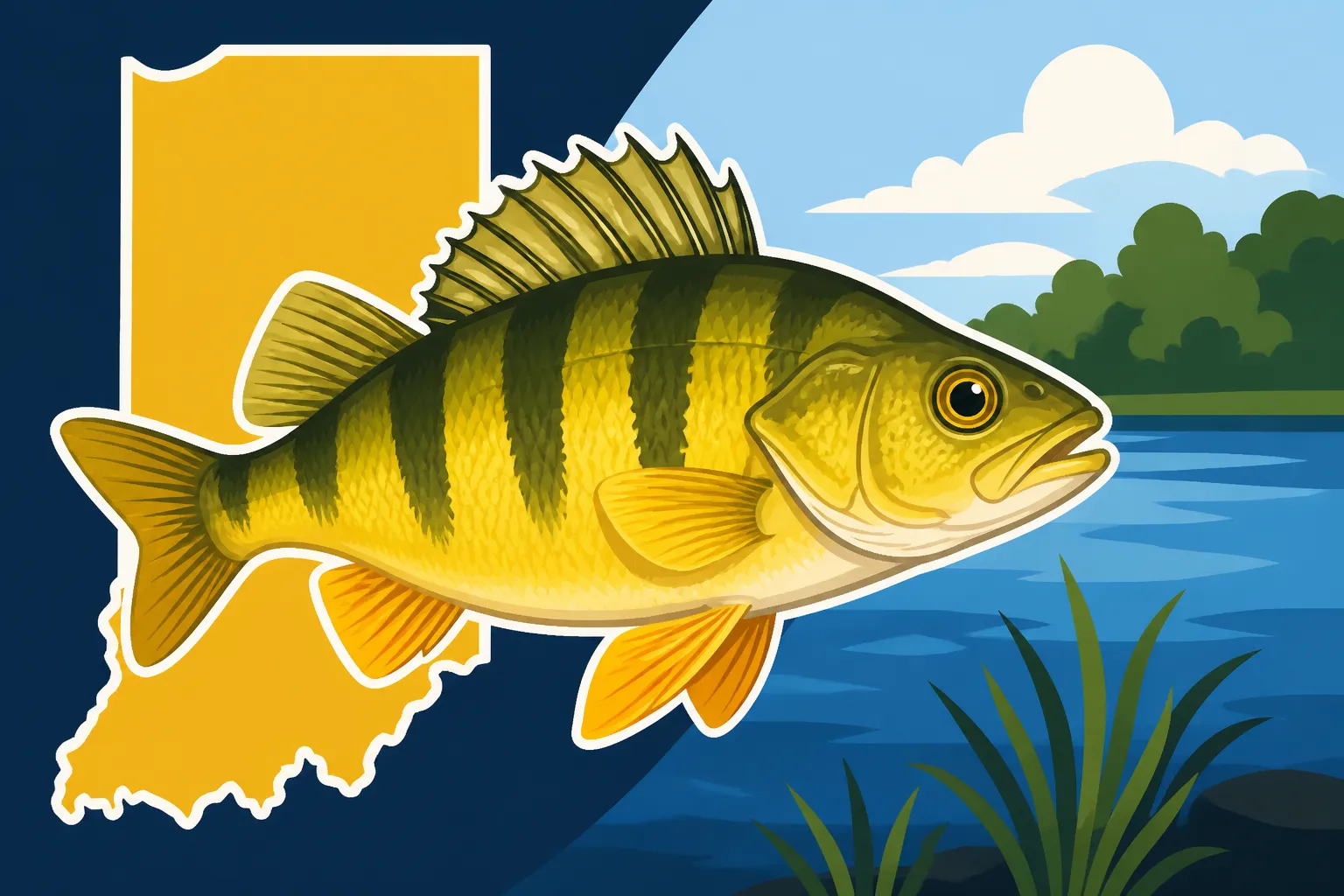
Yellow perch are aptly named, typically sporting a beautiful golden-yellow to brassy-green body, often with a lighter, sometimes white, belly. But what truly makes them unmistakable are the prominent dark, vertical bars along their sides. These bars can range from 6 to 8 in number and create a striking pattern that's hard to miss. Their fins often have an orangish or reddish hue, especially the lower fins, which adds to their vibrant appearance. They possess two dorsal fins, with the first being spiny and the second soft-rayed. Their scales are somewhat rough to the touch, and they have a moderately compressed body shape, giving them a sleek yet sturdy profile. It's this combination of golden color, distinct vertical stripes, and reddish fins that makes a yellow perch truly pop in your hand. Knowing these features will instantly help you answer the question, Yellow Perch Identification: Vertical Bars and Golden Sides.
When you're out on the water, especially if the light isn't perfect, it's easy to confuse fish that share similar body shapes. However, once you've seen a yellow perch up close, those dark, tiger-like stripes become an instant identifier. This visual cue is far more reliable than, say, trying to count fin rays on a squirming fish. The intensity of their yellow coloration can vary a bit depending on the water clarity and diet in different lakes or ponds, but those vertical bars are almost always present and distinct. This makes them one of the easier panfish species to correctly identify, even for novice anglers.
Size Expectations for Yellow Perch in Indiana
Now, let's talk size. While yellow perch aren't known for reaching massive proportions like a walleye or a muskie, they certainly offer a respectable catch, especially for their fight and flavor. In Indiana, a typical yellow perch you'll catch might range from 6 to 10 inches in length. These are the common "eating size" fish that make for fantastic fillets. However, don't be surprised if you occasionally reel in some larger specimens. It's not uncommon to find perch reaching 12 to 14 inches, particularly in healthier, more productive fisheries. Anything over 10 inches is usually considered a "slab" or a "jumbo" perch, and these are often the targets of dedicated perch anglers.
The growth rate of yellow perch can vary quite a bit depending on factors like food availability, water temperature, and population density in a particular body of water. In lakes with abundant forage and less competition, perch tend to grow larger and faster. Conversely, in overcrowded lakes, you might find a higher number of smaller, stunted fish. Understanding How Fast Do Yellow Perch Grow? in a specific lake can help you set your expectations for the day and even influence your choice of fishing location. While they may not be record-breakers in terms of sheer length, catching a cooler full of 8-to-10-inch perch is a deeply satisfying experience and guarantees a delicious meal.
Where to Find Yellow Perch in the Hoosier State
Yellow perch are quite adaptable and can be found in a variety of aquatic environments across Indiana. However, they do have preferences, and knowing these can significantly boost your chances of finding them. From large natural lakes to smaller reservoirs, perch have made their home in many Hoosier waters.
Preferred Habitats and Structure
Yellow perch are cool-water fish, meaning they generally prefer water temperatures cooler than species like largemouth bass, but warmer than deep-dwelling lake trout. They thrive in clear, vegetated lakes and slow-moving rivers. Look for them around aquatic vegetation, such as weed beds, lily pads, and submerged grasses, especially during warmer months. These areas provide cover from predators and ambush points for their prey, which largely consists of insects, small crustaceans, and even other small fish. During the colder months or in deeper lakes, perch will often school up and move to deeper water, congregating near drop-offs, humps, and other bottom structure where food might be concentrated.
In many Indiana lakes, you'll find perch relating to specific types of structure. Think about areas where a hard bottom transitions to a soft bottom, or where channels narrow. Sunken timber, rock piles, and old bridge abutments also serve as prime real estate for schooling perch. They are often found in relatively shallow water early and late in the day, moving to deeper, cooler water as the sun climbs higher. Knowing their preferred depth and cover for the season you're fishing is key to consistently locating these popular panfish.
Top Indiana Lakes for Yellow Perch Fishing
While yellow perch are widespread, certain Indiana lakes are renowned for their excellent perch fishing. These are often larger, deeper lakes with diverse habitats that support healthy perch populations. For instance, the northern glacial lakes, particularly in Kosciusko and Steuben Counties, are often touted for their quality perch fishing. Lakes like Lake Wawasee, James Lake, and even some of the smaller, connected bodies of water in that region offer fantastic opportunities. These lakes provide the clear, cool water and varied structure that perch love.
Of course, we can't talk about perch in Indiana without mentioning Lake Michigan. The Indiana portion of Lake Michigan offers some truly outstanding yellow perch fishing, often yielding larger "jumbo" perch than inland lakes. Anglers frequently target perch from piers, harbors, and boats along the Lake Michigan shoreline. Beyond these, many other inland lakes and larger reservoirs across the state, such as Monroe Lake and Patoka Lake, also hold good populations of yellow perch, though they might not always be the primary target species. Researching Indiana's Best Lakes for Yellow Perch Fishing can help you narrow down your destination choices for a productive outing.
Here's a quick look at some general characteristics of top perch lakes:
| Lake Type/Characteristic | Common Perch Locations | Best Seasons | Notes |
|---|---|---|---|
| Clear, Vegetated Natural Lakes (e.g., Lake Wawasee) | Weed lines, drop-offs, submerged timber | Spring, Summer, Fall | Excellent for larger perch, can be pressured. |
| Deep, Large Reservoirs (e.g., Monroe, Patoka) | Deep humps, main lake points, channel edges | Summer, Winter | Perch often school in deeper, cooler water. |
| Lake Michigan Shoreline (Piers, Harbors) | Near structure, current breaks, drop-offs | Spring, Summer, Fall | Known for "jumbo" perch, can be highly variable. |
| Smaller, Connected Lakes (Glacial Lakes region) | Bays, shallow flats near channels, weed beds | Year-round (including ice fishing) | Consistent action, good numbers. |
Essential Gear and Techniques for Perch Anglers
One of the great things about yellow perch is that you don't need a boatload of specialized, expensive gear to catch them. Simple, effective setups often work best, making them a fantastic target for beginners and seasoned anglers alike.
Rods, Reels, and Line Choices
When it comes to tackle, ultralight or light-action spinning gear is often the best choice for yellow perch. A rod in the 5-foot to 6-foot range with a fast or moderate-fast action will give you the sensitivity to detect those subtle perch bites and enough backbone to handle a feisty 10-incher. Pairing this with a small spinning reel, sized 500 to 1000, provides a balanced setup that's comfortable to cast all day. You don't need heavy-duty equipment because perch don't typically make long, powerful runs. For a good starter setup, you can often find decent ultralight combos on platforms like Amazon that are perfect for panfish.
As for line, light monofilament or fluorocarbon in the 2-pound to 6-pound test range is ideal. Lighter line is less visible to the fish and allows your small baits and lures to present more naturally. If you're fishing in clear water, fluorocarbon might give you a slight edge due to its nearly invisible properties. Braided line can also be used, especially in slightly heavier tests, but you'll almost always want to tie on a fluorocarbon leader of a few feet to maintain stealth. This setup is quite similar to what you might use for other panfish, so you can often use your Best Panfish Rods for Indiana Ponds for perch, too.
Best Baits and Lures for Yellow Perch
Yellow perch aren't terribly picky, which is good news for anglers! Live bait is almost always a winner. Small minnows, especially fatheads or rosy reds, are perch magnets. Hooking them lightly through the lip or back allows them to swim naturally. Worms, particularly pieces of nightcrawlers or red worms, are another classic choice and often readily available. Wax worms, mealworms, and even small crickets can also be very effective, especially through the ice or in colder water.
When it comes to artificial lures, think small. Tiny jigs, often in the 1/32 to 1/16 ounce range, tipped with a small plastic grub, tube, or a piece of live bait, are deadly. Colors like chartreuse, white, pink, and natural minnow patterns are consistently productive. Small spoons, inline spinners, and blade baits are also excellent choices, especially when perch are actively feeding. You can find a huge variety of these small jigs and plastics on Amazon, making it easy to experiment with different colors and shapes to see what the fish prefer on a given day. For more ideas, check out Best Bait for Yellow Perch in Indiana Lakes.
Simple and Effective Fishing Techniques
Yellow perch are often found in schools, so when you find one, there are usually more. A popular and effective technique is a simple slip bobber rig. This allows you to set your bait at a precise depth, which is crucial when perch are holding near the bottom or a specific weed line. Cast out your bobber, let your bait sink, and watch for that bobber to dip! Another great technique is tightlining with a small jig. Cast it out, let it sink to the desired depth, and retrieve it with a slow, subtle jigging motion. You're trying to imitate a small minnow or insect scurrying along.
If you're fishing from a boat, vertical jigging directly over structure or schools of fish (which you can often spot with a good fish finder) is incredibly effective. Just drop your small jig or spoon straight down and gently twitch it. Sometimes, simply letting a live minnow dangle under a bobber or on a bottom rig near a drop-off is all it takes. Remember that perch often feed in cycles, so if the bite slows, try moving to a slightly different depth or piece of structure. Being patient and observing the conditions are key elements of success when trying Crappie and Panfish Fishing Techniques for Beginners, which often apply to perch as well.
Seasonal Perch Patterns: When and Where They Bite Best
Understanding the seasonal movements and feeding habits of yellow perch is critical for consistent success. Their behavior changes significantly with water temperature, affecting where they congregate and what they're willing to bite.
Spring and Spawning Season Tactics
As the ice melts and water temperatures begin to rise in early spring, yellow perch become very active. This is a fantastic time to target them, especially before, during, and just after their spawn. Perch typically spawn when water temperatures reach the 45-55 degree Fahrenheit range, often in April or early May in Indiana. During this time, they move into shallower waters, usually less than 10 feet deep, seeking out submerged vegetation, brush, or hard bottom areas to lay their distinctive ribbon-like egg masses.
During the pre-spawn and spawn, perch are often concentrated and aggressively feeding to fuel their reproductive efforts. This makes them relatively easy to locate and catch. Focus your efforts in shallow bays, along protected shorelines, and near the edges of emerging weed beds. Small jigs tipped with minnows or wax worms are highly effective, as are small inline spinners. It's a prime time for shore anglers and boaters alike to capitalize on these shallow-water movements.
Summer Deep Water Strategies
Once the water warms up considerably in late spring and summer, yellow perch tend to retreat from the shallows in many Indiana lakes. They'll seek out cooler, deeper water, often suspending over deeper humps, along main lake points, or in the thermocline (a layer of water where the temperature changes rapidly) if present. This is when understanding the lake's contours and using a fish finder becomes incredibly valuable. They might still visit shallower areas during low-light conditions, like dawn and dusk, but their primary residence will be in deeper zones.
During summer, vertical jigging with spoons or blade baits over schools of perch detected on electronics is a killer technique. Drop shot rigs with small plastic minnows or live bait can also be very effective for targeting suspended fish. Trolling with small crankbaits or spinner rigs at the right depth can also cover water and help you locate scattered schools. Don't forget to check out Best Lure Choices for Summer Fishing as you adapt your approach for these deeper-water summer patterns.
Fall Feeding Frenzies and Winter Ice Fishing
As autumn arrives and water temperatures begin to drop, yellow perch often go on a serious feeding binge. They sense the coming winter and need to pack on fat reserves. This can lead to some of the most consistent and exciting perch fishing of the year. They often move back into shallower to mid-depth ranges, especially near large weed beds or transition areas where deep water meets flats. They'll actively chase down baitfish, making small crankbaits, aggressive jigging spoons, and larger minnows excellent choices. This fall pattern can be particularly strong on many of Indiana's natural lakes.
And then there's ice fishing! For many Hoosier anglers, winter is prime yellow perch time. Once safe ice forms, perch gather in large schools, often relating to deep water structure like humps, points, and channel edges. Small jigs, often called "teardrop jigs" or "horizontal jigs," tipped with a wax worm, minnow head, or a tiny plastic grub, are the go-to baits. Anglers drill multiple holes and use electronics to locate schools, then drop their baits directly to them. The key to successful ice fishing for perch is being mobile and staying on the active schools. For more specific cold-weather ideas, read up on Best Tackle for Ice Fishing on Indiana Lakes.
Yellow Perch on the Plate: A Classic Indiana Delicacy
Beyond the joy of the catch, one of the biggest reasons yellow perch are so popular in Indiana is their outstanding flavor. They are widely considered one of the finest-eating freshwater fish, offering sweet, flaky white meat.
Cleaning and Preparing Your Catch
The thought of cleaning fish can sometimes deter new anglers, but yellow perch are relatively easy to clean, especially once you get the hang of it. Many anglers prefer to fillet perch, which means carefully removing the meat from the bones. A sharp fillet knife is essential. Start by making a cut behind the gill plate, down to the backbone, then turn the knife and run it along the backbone towards the tail. Flip the fillet over and remove the skin. While some perch might have a few "pin bones" to contend with, their small size and firm flesh make them straightforward to process.
If filleting isn't your speed, smaller perch can sometimes be "pan-dressed" or "scaled and gutted," then cooked whole. Regardless of the method, make sure to rinse your fillets or whole fish thoroughly in cold water to remove any scales or blood. Pat them dry before cooking for the best results. Proper cleaning ensures that the delicious flavor of the perch really shines through when it's time to cook.
Why Perch is Prized for Table Fare
Yellow perch have earned their reputation as a top-tier table fish for good reason. Their flesh is firm, white, flaky, and has a mild, sweet flavor that isn't "fishy" like some other species can be. This makes them incredibly versatile in the kitchen. They hold up well to various cooking methods, whether you're frying, baking, broiling, or even grilling them. Fried perch, often coated in a light breading or cornmeal mix, is a quintessential Midwest dish, beloved by generations of anglers.
Many people consider yellow perch superior to even crappie or bluegill in terms of taste and texture, though all panfish are generally excellent table fare. The clean flavor of perch makes them appealing even to those who aren't usually big fish eaters. Whether you're making a classic fish fry, whipping up some perch tacos, or simply baking them with lemon and herbs, you're in for a treat. It's truly a delight to bring home a mess of perch for dinner, making the effort of fishing all the more rewarding. It's easy to see Is Yellow Perch Good to Eat? is met with a resounding "yes!" by most who've tried it.
Regulations and Responsible Perch Fishing
To ensure that future generations of anglers can continue to enjoy yellow perch fishing, it's crucial for all of us to understand and follow Indiana's fishing regulations. Responsible angling practices are key to maintaining healthy fish populations.
Indiana's Yellow Perch Bag and Size Limits
Like many popular species, yellow perch in Indiana are subject to specific regulations designed to manage their populations. While rules can vary, generally, the statewide daily bag limit for panfish, which includes yellow perch, crappie, bluegill, and various sunfish, is quite generous. For most inland waters in Indiana, you can keep up to 25 panfish of each species per day. This means you could theoretically keep 25 yellow perch, 25 bluegill, and 25 crappie, for example, assuming they meet any size requirements.
However, specific lakes or bodies of water might have special regulations or exceptions, so always consult the most current Indiana fishing guide before heading out. Pay particular attention to Lake Michigan, which often has its own set of rules regarding yellow perch, including different bag limits and sometimes length limits, due to its unique fishery. There isn't typically a statewide minimum length limit for yellow perch, but again, always double-check for specific water bodies. Understanding the Panfish Daily Limit in Indiana: 25 per Species is a good starting point, but local exceptions are vital to heed.
Practices for Sustainable Perch Populations
Beyond just adhering to the regulations, responsible anglers practice catch and release for larger fish, especially if they're not needed for the table. While perch are delicious, releasing some of the bigger, breeding-size fish can help ensure strong future populations. Use proper fish handling techniques if you plan to release fish: wet your hands before touching them, handle them gently, and minimize their time out of the water.
Also, avoid carelessly discarding fishing line, hooks, or other litter. These can harm fish, wildlife, and the environment. Consider using barbless hooks, which can reduce damage to fish if you intend to release them. By being mindful of our impact, we can all contribute to maintaining vibrant yellow perch fisheries throughout Indiana. Fishing is a privilege, and preserving our natural resources is a shared responsibility that allows for countless future memories on the water.
Disclaimer
This article is for general informational purposes only and does not constitute professional advice. Laws, prices and regulations vary by location and change over time. Consult a qualified professional for guidance on your specific situation.