Why Boat Anglers Reach Deeper Structure Bank Anglers Can’t Touch
It's a scene many of us have experienced: you're casting diligently from the shore, watching other anglers out on the water in their boats, seemingly pulling in fish after fish from spots you can only dream of reaching. That feeling of being limited by your casting arm and the bank beneath your feet can be incredibly frustrating. This guide is here to break down exactly why boat anglers have a distinct advantage in accessing deeper, more productive fishing structures in Indiana waters, and what that means for your fishing strategy.
The Inherent Limitations of Bank Angling
When you're planted firmly on the bank, whether it's the muddy edge of the Wabash River or a rocky shoreline on a glacial lake, your fishing world is naturally confined. You're working with a fixed position, and that creates some significant challenges when it comes to reaching prime fish habitat.
Restricted Casting Range and Reach
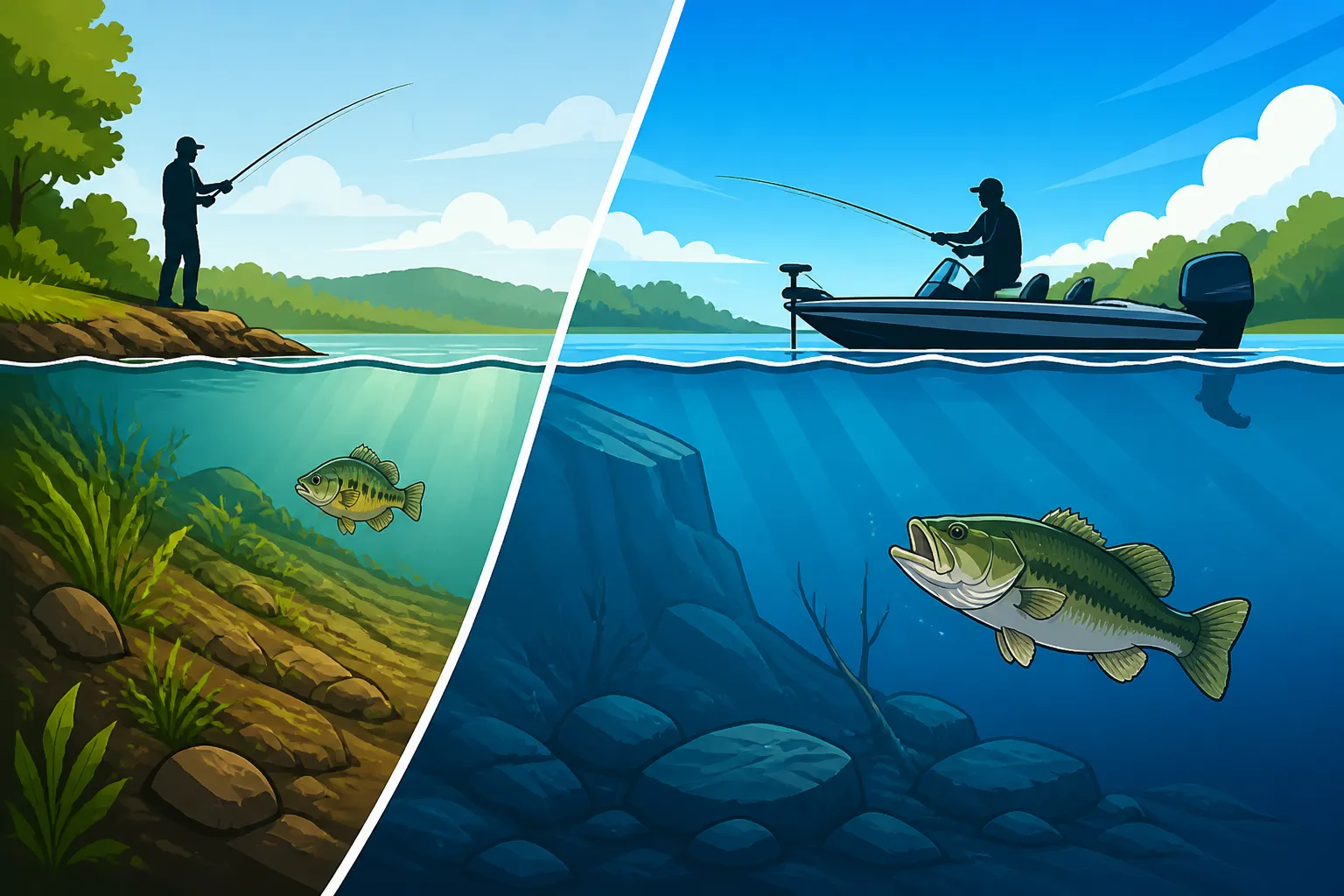
The most obvious limitation for bank anglers is simply how far you can cast. Even with top-tier rods and reels, there's a finite distance your lure can travel. This means that any promising structure or depth change that's just beyond your casting range might as well be on another planet.
For example, on a large reservoir like Monroe Lake or Patoka Lake, the shoreline might gently slope into shallow water for a considerable distance before dropping off into deeper channels or submerged creek beds. Fish often relate to these deeper contours, especially during warmer months or when seeking refuge from heavy fishing pressure. As a bank angler, you're primarily restricted to the shallower water immediately in front of you. You might catch some active fish cruising the shallows, but you're missing out on the majority of the fish that hold tight to those offshore features. It's a fundamental disadvantage that no amount of casting practice can fully overcome.
Inability to Cover Water Effectively
Think about how much water you can effectively fish from one spot on the bank. You might cast in a fan pattern, trying different angles, but ultimately, you're covering a relatively small arc. If the fish aren't in that specific, limited zone, you're out of luck.
Boat anglers, on the other hand, possess incredible mobility. They can move along miles of shoreline, crisscross open water, and quickly relocate to follow fish patterns. If one spot isn't producing, they simply crank the motor or use their trolling motor to explore new territory. This ability to cover vast amounts of water, scanning for active fish or promising structure, dramatically increases their chances of encountering biting fish. For a bank angler, moving to a new spot often means packing up gear, walking a considerable distance, and hoping the next point or bend offers something different – a much more time-consuming and labor-intensive process.
Limited Access to Offshore Structure
This is the core of the issue. Most productive fishing structures, especially for species like walleye, crappie, and even larger bass, are not right next to the bank. They're often found offshore, in deeper water, where boat anglers can easily position themselves directly over or adjacent to them.
These structures can include submerged humps, rock piles, old roadbeds, timber stands from flooded forests, or sharp drop-offs along old river channels. Imagine trying to cast to a submerged hump that rises from 30 feet of water to 15 feet in the middle of a lake. As a bank angler, that's just an invisible, unreachable paradise for fish. These features hold fish because they offer cover, ambush points, and access to different water depths and temperatures. Without a boat, these prime spots remain tantalizingly out of reach, leaving bank anglers to target fish that venture into the shallows, which are often smaller or less active.
Understanding Deeper Structure and Fish Behavior
To truly grasp why boats are so crucial for accessing certain fish, it helps to understand what deeper structure means to fish and how they use it throughout the seasons.
Types of Deeper Structure that Hold Fish
Deeper structure isn't just a randomly deep spot; it's a specific feature on the lakebed that provides an advantage to fish. These can be natural or man-made, and they are magnets for different species.
For bass, especially during the hotter summer months or colder winter periods, deep submerged timber and rock piles offer thermal refuge and ambush points. On a lake like Lake Wawasee or Patoka Lake, finding these intricate underwater forests or rocky ledges is critical. Walleye, known for their light-sensitive eyes, often relate to deep humps, main lake points, and the edges of old river channels during the day, moving shallower to feed at dawn and dusk. Understanding the bottom contours, often revealed by electronic devices, allows boaters to identify these fish-holding areas. Without the ability to literally float above and explore these depths, bank anglers are left guessing where these critical structures lie.
How Fish Utilize Deeper Water and Structure
Fish use deeper water and its associated structures for a variety of survival reasons, making these areas incredibly important to target.
Firstly, deeper water provides thermal refuge. During scorching Indiana summers, surface waters can become uncomfortably warm and low in oxygen for many species. Fish will retreat to cooler, deeper layers where they can find more stable temperatures and higher oxygen levels. Conversely, in winter, deeper water often remains warmer than the super-chilled shallows, offering a sanctuary. Secondly, deep structure provides safety and ambush points. Larger fish use submerged logs, rocks, and ledges to hide from predators or to ambush unsuspecting prey. Thirdly, deep features often mark migratory routes or feeding lanes, especially in reservoirs where old creek channels funnel baitfish. A boat angler equipped with a fish finder can pinpoint these critical depth changes and target fish directly, something a bank angler can only hope to intercept if fish decide to move into their limited shallow zone.
Seasonal Shifts and Deep Water Reliance
Fish don't stay in the same places year-round. Their patterns are heavily influenced by seasonal changes, and these often involve movements to and from deeper water.
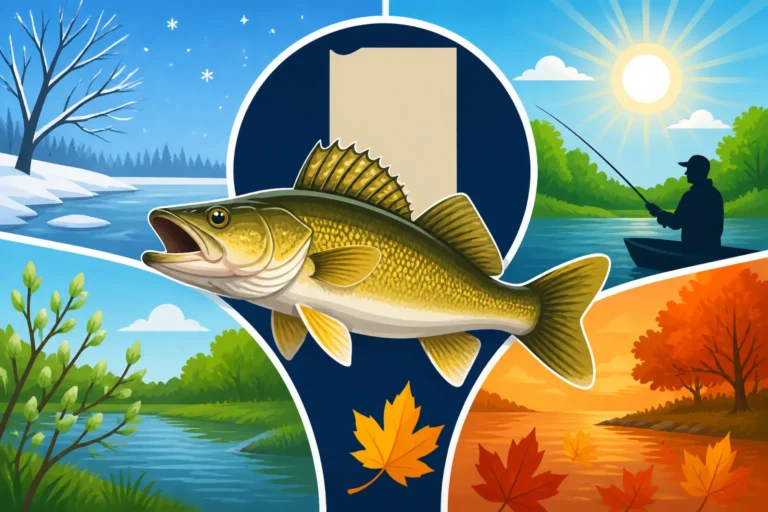
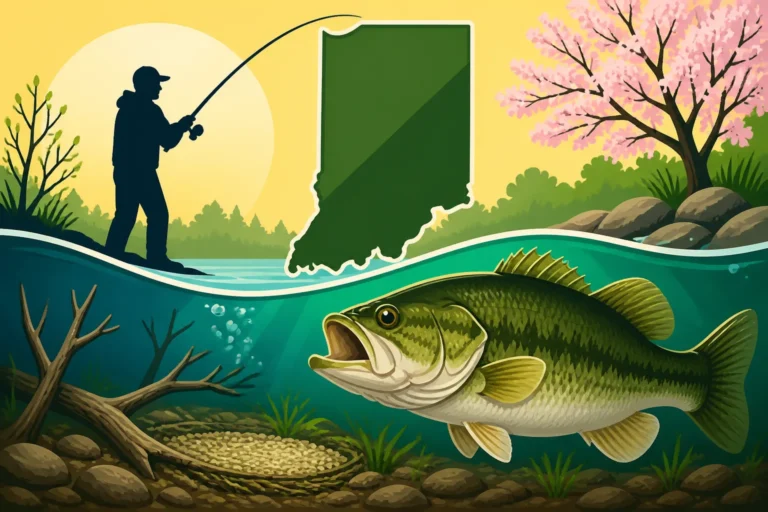
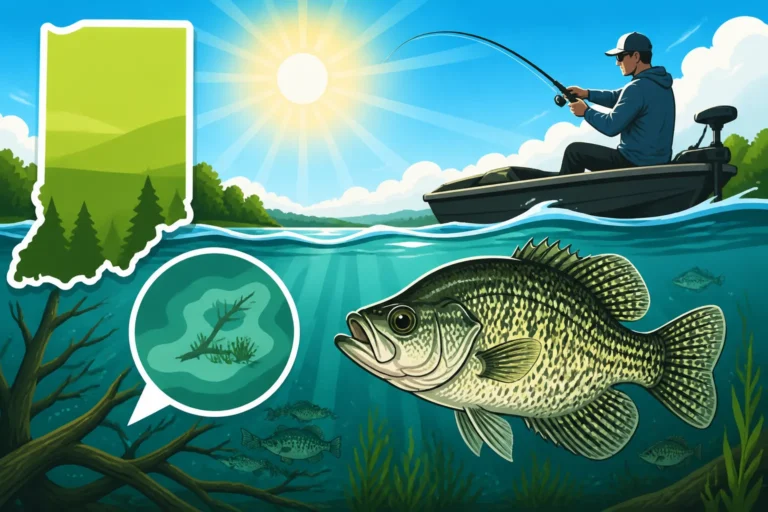
During the spring, many fish species, like largemouth bass and crappie, move into shallower areas to spawn. This is often the best time for bank anglers to find success, as the fish are naturally closer to shore. However, once the spawn is over and summer heat sets in, these same fish frequently retreat to deeper, cooler waters and the structures found there. For example, after the spring spawn, crappie on lakes like Monroe Lake will suspend over deep brush piles or along channel edges, becoming almost impossible for a bank angler to reach. The same goes for walleye in the glacial lakes of northern Indiana, which will spend their days holding tight to deep rocky reefs or humps. Boat anglers can adapt to these seasonal shifts by following fish into deeper water, maintaining consistent success throughout the year.
Equipment and Techniques That Bridge the Gap
While a boat itself is the primary tool, it's the specialized gear and techniques used from a boat that truly unlock the deeper fishing potential.
Boats: From Small Jon Boats to Fully Equipped Bass Rigs
The type of boat isn't as important as simply having one. Even a small jon boat or a kayak can significantly expand your reach compared to bank fishing.
A simple, inexpensive jon boat with a small outboard or electric trolling motor can get you to those offshore weed lines, deeper points, or submerged rock piles that are just out of casting range from shore. For serious anglers, fully equipped bass boats offer speed, shallow water access, and advanced electronics, allowing them to precisely target structure across large lakes. Imagine a bass angler on Lake Monroe using their boat to quickly move between different offshore brush piles or deep-diving crankbaits along a remote channel edge. This mobility and access to deeper water simply cannot be replicated by a bank angler. You can find excellent boat fishing information and tips in our guide, "Indiana Fishing Boats: A Complete Buying Guide."
| Feature | Bank Angling | Boat Angling |
|---|---|---|
| Reach | Limited to casting distance from shore | Virtually unlimited on the water |
| Mobility | Foot traffic only, time-consuming to relocate | Fast, efficient movement to new spots |
| Depth Access | Primarily shallow shoreline waters | Full access to entire water column, including deep |
| Structure Access | Limited to shoreline features, visible structure | Access to all submerged structures (humps, channels) |
| Target Species | Often active, cruising fish in shallows | Ability to target all species, deep or shallow |
| Electronics | Handheld sonar (limited utility) | Advanced fish finders, GPS, side imaging |
Fish Finders and Sonar Technology
This is perhaps the biggest game-changer. Modern fish finders are essentially underwater eyes, allowing boat anglers to "see" what's beneath their hull.
These devices display bottom contours, water depth, temperature, and even individual fish or schools of baitfish. Side imaging and down imaging technologies provide incredibly detailed views of submerged trees, rock piles, and ledges. A boat angler can motor slowly over a suspected area, marking waypoints on their GPS for future reference. They can identify a deep brush pile holding crappie, or a thermocline where walleye are actively feeding. This information is invaluable for pinpointing fish and making precise casts. While portable fish finders, readily available on Amazon, exist for bank anglers, their utility is often limited to a very small area immediately in front of the cast transducer, offering nowhere near the comprehensive view a boat-mounted unit provides. If you're looking to upgrade your fishing game, understanding "Best Fish Finders for Indiana Lake Fishing" can be a huge step.
Trolling Motors and Advanced Propulsion
Beyond the main engine for transportation, trolling motors offer stealth and precise boat control, essential for fishing deeper structure.
Electric trolling motors allow boaters to move silently along a deep weed line, hold position over a specific rock pile, or slowly troll a lure through a school of fish detected on sonar. Spot-Lock technology, common on brands like Minn Kota or MotorGuide, uses GPS to automatically hold the boat in a precise location, even in wind or current. This frees the angler to focus entirely on fishing, rather than constantly battling the elements to stay on target. Imagine trying to precisely present a jig to a deep, submerged crib on Lake Freeman from the bank – it's practically impossible. With a trolling motor, a boater can hover over it and drop their lure right into the strike zone.
Specialized Rods, Reels, and Lures
Fishing deeper water often requires different gear than what's typically used for shallow, shoreline casting. Boat anglers can carry and utilize a wider array of specialized equipment.
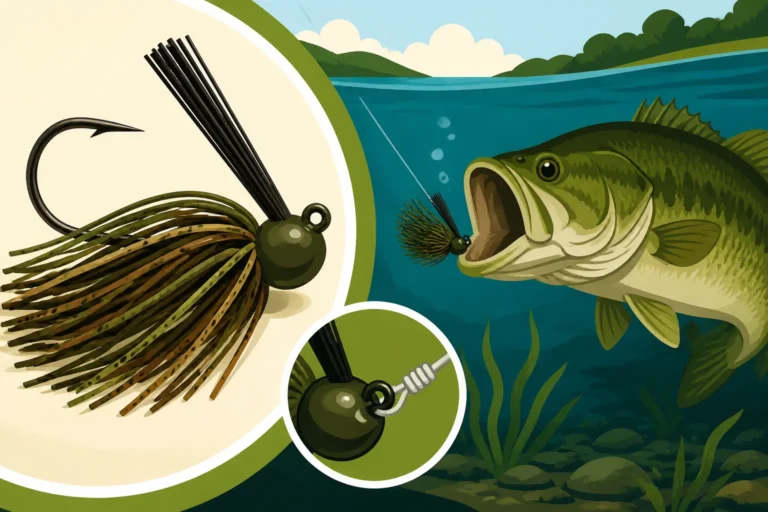
Longer, heavier rods are often used for trolling deep-diving crankbaits or handling larger fish encountered in open water. Downriggers and planer boards, vital for Lake Michigan salmon and trout fishing, allow boaters to present lures at precise depths and away from the boat, covering a broader swath of water. Large capacity reels spooled with strong, low-stretch line are essential for fighting fish in deep water and detecting subtle bites. While bank anglers can certainly use a variety of lures, the specialized deep-diving crankbaits, heavy jigs, and drop-shot rigs designed to target fish in 15-40 feet of water are simply more effective when you can position your boat directly over the fish. Our guide on "Best Fishing Rods and Reels for Freshwater Fishing" delves into many of these options.
Strategic Approaches for Bank Anglers
While the advantages of boat fishing for deeper structure are undeniable, bank anglers are not entirely without hope. With smart strategy, you can still find plenty of success.
Identifying Accessible Deep Water from Shore
Not all banks are created equal. Some shorelines offer unique access to deeper water, even for the land-bound angler.
Look for areas where natural features bring deep water closer to shore. These often include steep bluffs, old bridge pilings, jetties, dams, or deep cuts along river bends. On the St. Joseph River, for instance, certain public access points might have deeper channels running close to shore, making them productive for species like smallmouth bass or even migratory salmon and steelhead. Pay attention to topographical maps or online satellite imagery that might reveal sudden depth changes near the bank. These "honey holes" are rare but incredibly valuable for bank anglers. Additionally, many state park lakes are stocked and managed with bank anglers in mind, often featuring fishing piers that extend into deeper water, providing a crucial advantage.
Adapting Techniques for Bank Fishing Deep
Even without a boat, you can adapt your techniques to try and reach deeper water or target fish that temporarily move into your accessible zone.
Heavy lures like spoons, spinnerbaits, or large jigging baits can be cast further and sink faster, allowing you to work deeper contours within your casting range. During low light conditions – dawn, dusk, or at night – fish often move shallower to feed, bringing them within reach of bank anglers. This is particularly true for walleye, which become more active in low light. For catfish, bottom fishing techniques with heavy sinkers can be effective in deeper holes along riverbanks, such as those found on the Wabash River or White River. Utilizing methods like the Carolina rig or a heavy drop shot can also help you present baits effectively on the bottom in slightly deeper water. If you want to learn more about how to make the most of your bank fishing, check out "How to Catch Bass from the Bank."
Taking Advantage of Seasonal Movements
As mentioned earlier, seasonal fish movements can occasionally level the playing field for bank anglers.
Spring spawning periods are prime times when species like bass, crappie, and bluegill move into accessible shallow water. Bank anglers can have incredible success during these windows, targeting fish that are actively building nests or guarding fry. During the fall, cooler water temperatures can also bring certain species closer to shore as they chase baitfish. For example, some trout and salmon runs on Lake Michigan tributaries will see fish moving upriver, becoming accessible to shore-bound anglers at various public access points. Understanding these seasonal patterns is key to maximizing your success when you're limited to the bank.
Considering Hybrid Approaches
Sometimes, a partial solution can make a huge difference, offering a blend of mobility and bank access.
Kayak fishing, for instance, offers a fantastic compromise. A fishing kayak can be launched from many shorelines where a full-sized boat cannot, giving you access to near-shore structures and allowing you to paddle to deeper points or coves. These are relatively affordable and many quality models can be found on Amazon. Even a float tube or a small inflatable boat can extend your reach significantly on smaller ponds or calm lakes, allowing you to get past those immediate shallow water zones. While not a full replacement for a motorboat, these options give bank anglers a taste of the deeper water without the full commitment and cost of a larger vessel. Furthermore, looking up "Best Fishing Spots Near Indianapolis, Indiana" might reveal places with excellent bank access or rental opportunities for hybrid approaches.
Conclusion: Understanding the Advantage, Improving Your Approach
It’s clear that boat anglers have a significant edge when it comes to reaching deeper structure and the fish that inhabit it. Their mobility, coupled with advanced electronics and specialized gear, allows them to explore vast amounts of water, pinpoint hidden fish-holding features, and present lures with precision in depths inaccessible from shore. This isn't to say bank fishing can't be incredibly rewarding – it absolutely can, especially when targeting active fish during certain seasons or in specific locations with good shore access.
By understanding the distinct advantages boaters possess, bank anglers can become more strategic. Focus on identifying unique shorelines that offer deeper access, adapt your techniques to maximize your casting range and lure depth, and most importantly, pay close attention to seasonal fish movements that bring species closer to you. Whether you eventually decide to invest in a boat or stick to the shores, knowing why fish relate to certain depths will make you a more informed and ultimately more successful angler in Indiana's diverse waters. Always keep learning, and keep casting! And for those particularly interested in species that often hold deep, don't miss our comprehensive "Indiana Walleye Fishing: A Complete Guide."
Disclaimer
This article is for general informational purposes only and does not constitute professional advice. Laws, prices and regulations vary by location and change over time. Consult a qualified professional for guidance on your specific situation.