Walleye Color and Markings: An Identification Guide
Have you ever been out on an Indiana lake or river, reeled in a beautiful fish, and then paused, scratching your head, wondering if it's truly the walleye you were hoping for, or perhaps one of its close relatives? It's a common dilemma, and one that can lead to confusion, especially with species that share similar habitats and general appearances. This guide is dedicated to helping you become a pro at identifying walleye, focusing on those unmistakable colors and markings that set them apart, so you can confidently know your catch every time.
The Iconic Golden Hue: Understanding Walleye Body Coloration
When you think of a walleye, often the first thing that comes to mind is that striking golden sheen. It's more than just a pretty color; it's a key identifier that speaks volumes about the fish's life and habitat. But it's not always a simple, uniform gold. There's a fascinating range of shades and patterns that can help you confirm your catch.
Golden-Olive to Brownish-Gold: Regional Variations
The primary body color of a walleye is typically a beautiful golden-olive or brownish-gold. This isn't just a random paint job; it's often a brilliant camouflage that helps them blend into their surroundings. Think about the murky, tannin-stained waters of some of Indiana's larger reservoirs or the clear, gravelly bottoms of our northern glacial lakes. A walleye from a lake with a sandy, light-colored bottom might appear lighter, almost a pale golden, while one from a darker, muddier river could have a richer, deeper brownish-gold tone. It's truly incredible how these fish adapt their coloration to their environment. This variation means you shouldn't expect every walleye to look exactly the same in terms of its base color, but the underlying golden hue is almost always present. It's a subtle but important detail that experienced anglers learn to recognize, knowing that a fish's specific 'dress' depends on where it lives.
Anglers often discuss how the environment influences fish coloration. For example, a walleye living in the deep, clear waters of Lake Wawasee might exhibit a slightly different golden tint compared to one from a shallow, stained river like parts of the Tippecanoe. This natural adaptation helps them ambush prey more effectively. If you're struggling to get a clear look at a fish's specific markings underwater, a good pair of polarized sunglasses, perhaps one of the many options you can find on Amazon, can make a huge difference in cutting through glare and revealing those subtle golden flashes.
Belly Color: White to Creamy Yellow
Flip a walleye over, and you'll typically find a much lighter underside, ranging from a stark white to a creamy, almost yellowish, hue. This countershading is a classic defense mechanism, making the fish harder to spot from both above (blending with the dark bottom) and below (blending with the bright sky). It's a common feature among many predatory fish, but with walleye, it's particularly pronounced.
The transition from the darker back and sides to the lighter belly is usually quite distinct. You won't see a mottled or spotted belly like you might on some other species. Instead, it's a smooth, clean gradient. This white or creamy yellow belly can be a useful secondary indicator, especially when trying to distinguish a walleye from a species that might have a more uniformly colored underside or a belly with different patterns. It’s another piece of the puzzle that helps complete the overall identification picture. Observing this consistent belly coloration can save you from misidentifying a fish, particularly when you're quickly trying to release a catch and don't have time for an exhaustive examination.
Distinctive Markings: The Key to Walleye Identification
Beyond the general body color, walleye possess several specific markings that are incredibly reliable for identification. These aren't just decorative; they are consistent features that almost all walleye share, making them excellent points of reference. Learning these can truly elevate your identification skills.
The Tell-Tale White Fin Tip: A Walleye's Signature
Perhaps the single most reliable and iconic marking of a walleye is the distinct white tip on the lower lobe of its tail fin. This little splash of white is like a neon sign shouting "Walleye!" It's present on almost every walleye you'll encounter, regardless of size, age, or environmental factors. It's so consistent that many experienced anglers don't even need to see anything else to know what they've caught.
This white tip is usually quite prominent and well-defined, not just a faint wash of color. It stands out against the darker, often spotted or barred pattern of the rest of the caudal fin. If you catch a fish with a similar body shape and coloration but no white tip on its tail, it's highly likely not a walleye. This one marking alone is often enough to confidently identify your catch, making it arguably the most important detail to remember for Walleye Identification: Olive-Gold Color and White-Tipped Tail.
Dorsal Fin Spines and Mottling Patterns
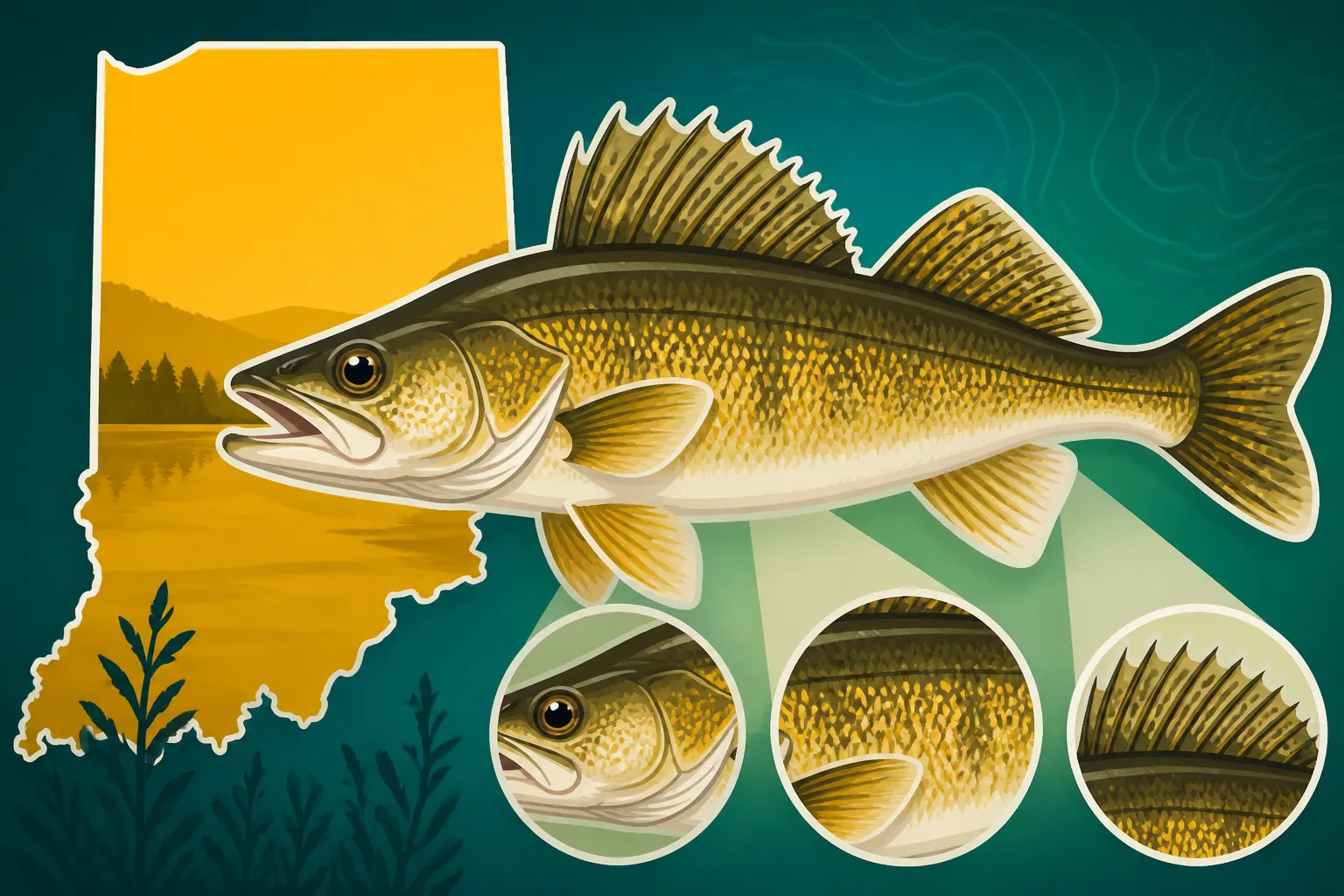
Walleye have two dorsal fins. The first dorsal fin is spiny and usually features a series of dark blotches or mottling, which can sometimes form faint bars. This mottled pattern can vary in intensity from fish to fish and based on water clarity, but it's generally present. The second dorsal fin, located just behind the spiny one, is soft-rayed and typically clearer, though it might have some subtle spotting.
Pay close attention to the spiny dorsal fin. The presence of these dark blotches or distinct dark bars can be a critical differentiating factor, especially when you're trying to tell a walleye from a saugeye, which has very distinct, uniform spots on its dorsal fin membranes. The overall shape and size of these fins, coupled with the pattern, give you more clues. Running your hand along the spiny dorsal fin (carefully!) will confirm its rigidity, another characteristic that helps set it apart from other species with softer fins.
Lateral Line and Dark Blotches
The lateral line, that faint horizontal stripe running along the side of the fish, is always present on a walleye, though it might not always be the most obvious feature. What's more distinctive are the occasional darker blotches or faint vertical bars that can appear along the sides of the fish, particularly in younger walleye or those from darker waters. These blotches are not as pronounced or well-defined as the vertical bars on a yellow perch, but they add to the overall camouflage.
These blotches tend to be irregular and can sometimes be quite subtle, blending into the golden-olive background. They don't always form complete bands, but rather splotchy, dark areas. It’s worth noting that the intensity of these markings can be influenced by the fish's stress levels when caught, sometimes appearing darker or more pronounced as a defense mechanism. These darker areas, combined with the golden body, create a dynamic visual that helps the walleye disappear into shadowed depths. Observing how these patterns integrate with the fish's environment can also tell you a lot about where it prefers to hide and hunt.
Head and Mouth Features: Up Close and Personal
While body color and fin markings are crucial, taking a closer look at the walleye's head and mouth can provide additional confirmation. These features are perfectly adapted to its predatory lifestyle and low-light hunting habits, and they offer yet another layer of unique identification points.
Large, Glassy Eyes: Adapting to Low Light
The walleye gets its name from its distinctive, large, and often glassy-looking eyes. These aren't just for show; they are incredibly efficient at gathering light, allowing walleye to see exceptionally well in dim conditions, such as at dawn, dusk, cloudy days, or in deeper, murkier water. This is why they are often most active during these low-light periods. The eyes typically have a somewhat opaque, almost milky appearance, sometimes reflecting a yellowish or greenish glow.
Compared to many other freshwater fish, the walleye's eyes appear disproportionately large for its head size. This adaptation is a key reason why they are so successful as predators in diverse environments, from the clear glacial lakes in northern Indiana to the more turbid river systems further south. When you're inspecting a potential walleye, the size and appearance of its eyes should definitely catch your attention. This visual trait helps explain why Do Walleye Bite at Night in Indiana Reservoirs? is often a resounding yes for many anglers.
Canine Teeth: A Predator's Arsenal
Open a walleye's mouth (carefully!) and you'll immediately notice rows of sharp, needle-like teeth, including prominent canine teeth. These teeth are perfect for grasping and holding onto slippery prey, making them formidable predators of baitfish. While other fish might have teeth, the walleye's dentition is quite distinct and effective.
These teeth are a clear indicator of their diet and hunting strategy. When handling a walleye, it's always wise to use a lip gripper or handle them with extra care to avoid cuts from these sharp teeth. The presence of these well-developed canine teeth helps distinguish them from species like yellow perch, which have much smaller, brush-like teeth. A quick glance at the mouth, noting the size and sharpness of the teeth, can be a rapid and definitive confirmation. Always have a pair of pliers, easily found on Amazon, handy for hook removal to keep both you and the fish safe.
Gill Cover Markings and Cheek Scales
While not as obvious as the tail fin tip, the gill covers (operculum) of a walleye can also offer subtle clues. They are typically smooth with a slight iridescent quality, matching the overall body coloration. Some walleye might have a faint, darker blotch or streak on the operculum, but it's not a consistent, hard-and-fast rule like the white tail tip. The scales on the cheeks and gill covers are generally fine and smooth, integrating seamlessly with the scales on the rest of the head.
What you won't typically see are rough, spiny gill covers or unique patterns that stand out dramatically. The smooth, somewhat streamlined appearance of the head and gill covers, combined with the other features, adds to the overall identification profile. It's these subtle, less-talked-about details that, when combined with the more prominent markings, paint a complete and accurate picture of a walleye.
Differentiating Walleye from Look-Alikes (Especially in Indiana)
In Indiana waters, anglers sometimes encounter fish that bear a superficial resemblance to walleye, leading to identification challenges. Two of the most common "imposters" are the saugeye (a walleye-sauger hybrid) and the yellow perch. Knowing the subtle differences in their coloration and markings is crucial for accurate identification, especially considering different length limits and regulations for each species.
Walleye vs Saugeye: The Spotted Dorsal Fin
The saugeye is a hybrid cross between a female walleye and a male sauger, and it’s stocked in several Indiana reservoirs, making confusion quite common. They share many characteristics with walleye, including the general body shape and often the golden hue. However, the most definitive way to distinguish a saugeye from a walleye lies in the markings of their dorsal fins and the presence of the white tail tip.
| Feature | Walleye | Saugeye |
|---|---|---|
| Dorsal Fin | Spiny dorsal fin often mottled/barred. No distinct spots on membranes. | Spiny dorsal fin has distinct, dark spots on membranes, often forming rows. |
| Tail Fin | Distinct white tip on lower caudal fin lobe. | No white tip, or a very faint/irregular one. |
| Body Color | Golden-olive to brownish-gold. | Similar, but often more pronounced dark blotches/bars on sides. |
| Cheek Scales | Scales generally present on cheeks. | Cheeks typically scaleless or only sparsely scaled. |
| Pyloric Caeca | Long, often 3-6 distinct finger-like appendages near stomach. | Short, often 6-9 distinct finger-like appendages near stomach. (Requires dissection) |
As you can see from the table, the dorsal fin is your primary visual clue. A saugeye will almost always have very pronounced, distinct spots on the membranes of its spiny dorsal fin. These spots often look like neat rows of dots. A walleye, on the other hand, will typically have more of a mottled or barred pattern on its spiny dorsal fin, but without those clear, isolated spots. Additionally, while the walleye has that signature white tail tip, a saugeye usually lacks it entirely, or it might be very faint and irregular. Understanding these key differences is vital for adhering to regulations, as seen in topics like Walleye Minimum Length North of State Road 26 and Walleye Minimum Length South of State Road 26 in Indiana.
Walleye vs Yellow Perch: Size, Shape, and Pattern Differences
Yellow perch are a popular panfish in Indiana and share a similar family (Percidae) with walleye, leading to some superficial resemblances, particularly in coloration. Both have golden-yellowish tones, but that's where the strong similarities often end. Differentiating them is usually quite straightforward once you know what to look for.
The most obvious difference is size and body shape. Yellow perch are generally much smaller, stockier, and deeper-bodied than the more elongated, torpedo-shaped walleye. Perch have very distinct, dark vertical bars (typically 6-8) that run down their sides, which are usually quite prominent and well-defined. Walleye, while sometimes having faint blotches or bars, never exhibit these strong, consistent vertical bands. Furthermore, yellow perch have reddish or orange fins, especially the pectoral, pelvic, and anal fins, a coloration rarely seen on a walleye. The spiny dorsal fin of a yellow perch is also more uniform in color, lacking the mottling or spotting of a walleye or saugeye. This detailed comparison can also be found in Walleye vs Yellow Perch: How to Tell Them Apart.
Walleye vs Zander (Less Common but Worth Knowing)
While zander are not native to Indiana and are exceedingly rare, if not entirely absent, in our waters, they are a European relative of the walleye that look remarkably similar. If you ever happen to encounter one in a different region or a unique aquaculture setting, knowing the distinctions can be helpful. Zander are typically more silver-green than golden, and their eyes, while large, often have a more amber or reddish tint compared to the walleye's glassy look. They also lack the distinct white tip on the caudal fin. For Indiana anglers, focusing on saugeye and yellow perch is far more practical, but it's always good to be aware of the broader family resemblance among these cool species.
Environmental Factors Affecting Walleye Appearance
It's easy to think a fish's color is set in stone, but the truth is, a walleye's appearance can be quite dynamic, subtly shifting based on its environment and even its diet. Understanding these influences can help you appreciate the variations you might see and confirm your identification even when a fish looks a little different than expected.
Water Clarity and Substrate Color
One of the biggest factors influencing a walleye's exact shade of gold or brown is the water it lives in and the color of the bottom (substrate). Walleye are masters of camouflage, and their skin pigmentation will often adapt to blend in. For instance, a walleye caught from a shallow, clear lake with a light, sandy or gravelly bottom might appear much lighter, almost a pale golden yellow. Its markings might also seem less pronounced, helping it disappear against the bright backdrop.
Conversely, a walleye from a deep, turbid river or a lake with a dark, mucky bottom, like those found in some central Indiana waterways, will typically exhibit a deeper, richer brownish-gold coloration. Their dark blotches or bars might be more intense, providing better camouflage in the darker environment. It's a fascinating natural phenomenon that demonstrates their survival instincts. This adaptability can sometimes make precise identification tricky if you're only familiar with walleye from one type of habitat, but remembering this allows for natural variation within the species.
Diet and Overall Health
Believe it or not, a walleye's diet can also play a role in its overall hue and vibrancy. Fish that feed heavily on certain types of baitfish or invertebrates rich in carotenoids (the pigments that give carrots and salmon their color) might exhibit slightly more vibrant golden or even orange tones. It’s not a dramatic change, but it can contribute to the overall richness of their color.
Beyond diet, the general health of the fish can impact its appearance. A stressed or unhealthy walleye might appear duller in color, or its markings might be less distinct. Conversely, a healthy, robust fish, especially during its prime feeding season, will often display its most brilliant and characteristic coloration. Observing these nuances can give you insights not only into identification but also into the ecological conditions of the waterway you're fishing. For more on how their environment affects them, checking out a comprehensive guide like Indiana Walleye Fishing: A Complete Guide can provide deeper context.
Age and Spawning Season Color Changes
Just like many fish species, walleye can exhibit subtle color changes as they age and certainly during their spawning season. Younger walleye might have more pronounced dark blotches or bars on their sides, which can become more faded or subtle as they mature. This is part of the natural growth process, and older, larger walleye tend to have a more uniform, deep golden or brownish-gold coloration.
During the spawning season, typically in early spring when water temperatures are still quite cold, both male and female walleye can undergo temporary color changes. Males, in particular, might develop darker, more intense colors, sometimes appearing almost blackish on their backs and sides. This darker pigmentation is thought to play a role in courtship and territorial displays. Females might also show some color intensification, but it's often less dramatic than in males. These seasonal shifts are temporary, and the fish will typically return to their standard coloration once spawning is complete. It’s another reason why knowing the consistent features like the white tail tip and dorsal fin patterns are so critical, as they remain reliable even when other aspects of their appearance fluctuate. If you're planning a trip, understanding Why Walleye Bite Windows Shrink Once the Glacial Lakes Warm can also help you predict when you might encounter these seasonal changes.
Disclaimer
This article is for general informational purposes only and does not constitute professional advice. Laws, prices and regulations vary by location and change over time. Consult a qualified professional for guidance on your specific situation.