Best Pedal Kayaks for Lake Fishing
The struggle is real when you're out on your favorite Indiana lake, trying to cast for that elusive bass, only to realize you've drifted too far or need to quickly reposition to stay on a hot bite. Traditional paddling kayaks often leave you with a frustrating choice: hold your paddle or hold your rod. This guide will walk you through everything you need to know about pedal kayaks, revealing why they've become a game-changer for anglers and helping you choose the best one for your Indiana lake fishing adventures.
Why Pedal Kayaks Are a Game Changer for Lake Fishing in Indiana
Fishing from a kayak offers an unparalleled connection to the water, allowing you to access shallow coves and quiet backwaters that larger boats can't reach. However, the constant need to paddle can be a real hindrance. This is where pedal kayaks step in, transforming the way many Hoosier anglers approach their sport. They offer a unique blend of efficiency, stability, and hands-free operation that makes a significant difference on the water, whether you're chasing crappie on Patoka Lake or trolling for walleye on Lake Wawasee.
Hands-Free Propulsion: The Biggest Advantage
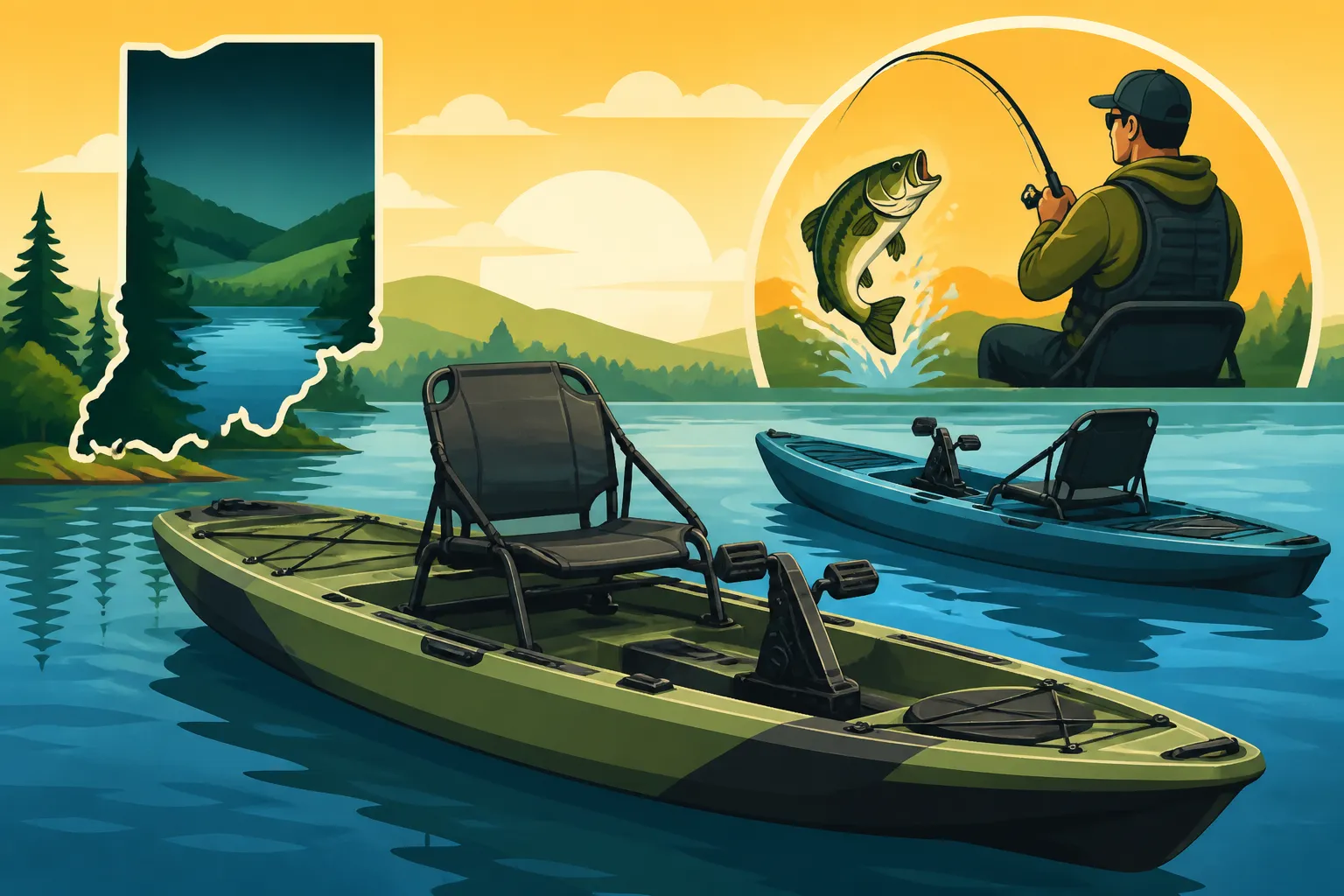
Imagine being able to maneuver your kayak with your feet, leaving both of your hands completely free. This isn't just a convenience; it's a revolutionary advantage for fishing. When you're actively casting, working a retrieve, or fighting a fish, your hands are dedicated to your rod and reel. With a pedal kayak, if you need to adjust your position slightly to follow a fish or stay in the perfect casting lane, a quick pedal stroke is all it takes. There's no fumbling for a paddle, no interrupting your workflow, and no putting down your rod at a critical moment. This translates to more efficient fishing, more time with your lure in the water, and ultimately, a better chance of landing that trophy fish. It’s particularly valuable when you're trying to hold position against a light breeze or current, allowing you to focus purely on the angling challenge.
Think about a common scenario: you're working a weed line on Monroe Lake: Indiana's Largest Lake for Bass Fishing, meticulously pitching a jig into pockets. With a traditional kayak, every few casts, you'd likely need to grab your paddle, adjust, put the paddle down, and then pick up your rod again. This breaks your rhythm and can alert wary fish. With a pedal kayak, you simply keep your feet moving, subtly guiding your craft along the structure, maintaining constant contact with your lure and instantly reacting to any bites without missing a beat. This hands-free control is what truly sets pedal kayaks apart for serious anglers.
Speed, Efficiency, and Covering Water
Pedal drive systems are inherently more efficient than traditional paddling for covering longer distances, especially on larger bodies of water like Lake Wawasee or Mississinewa Lake. Your legs are much stronger than your arms, and pedal systems convert that power into propulsion with impressive efficiency. This means you can get to your fishing spots faster, move between different areas with less fatigue, and even maintain a consistent trolling speed more easily than with a paddle. On a windy day, a pedal kayak can hold its course and make headway against the gusts with far less effort, saving your energy for the fight with a fish rather than the fight with the elements.
This efficiency is a huge plus when you're exploring vast waters or need to quickly chase down a schooling fish. Instead of being exhausted after an hour of paddling, you can spend more time actually fishing. If you're planning a trip to one of Indiana's Best Lakes for Fishing and want to explore multiple coves or cover a significant amount of shoreline, a pedal kayak allows you to do so without feeling completely wiped out. The ability to cover more water efficiently means you have access to a wider range of fishing opportunities throughout your day.
Stability for Standing and Casting
One of the most appealing features of many pedal fishing kayaks is their exceptional stability. These kayaks are often designed with wider hulls, sometimes resembling a pontoon or tunnel hull, specifically to provide a stable platform for anglers. This stability allows you to do something that's difficult or impossible in many traditional kayaks: stand up and cast. Standing gives you a much better vantage point to spot fish, identify structure, and make longer, more accurate casts. For sight fishing in clear water or getting a better angle over submerged vegetation, standing is invaluable.
The added stability also provides a greater sense of security when you're landing a large fish. There's less worry about capsizing when a big bass or muskie makes a powerful run alongside your kayak. This enhanced stability isn't just for standing; it also makes the kayak feel more secure when you're reaching for gear, rigging baits, or simply relaxing on the water. This peace of mind allows you to focus more on your fishing and less on maintaining your balance, making for a much more enjoyable and productive outing on any Indiana lake.
Key Features to Look for in a Pedal Fishing Kayak for Indiana Lakes
Choosing the right pedal kayak means understanding the different features available and how they cater to your specific fishing style and the types of waters you frequent in Indiana. From the propulsion system itself to the way the hull is shaped, every detail contributes to the overall performance and your enjoyment on the water. Taking the time to consider these elements will help ensure you make an investment that truly enhances your fishing experience.
Pedal Drive System Types: Fin vs. Propeller
The heart of any pedal kayak is its drive system, and generally, you'll encounter two main types: fin-driven and propeller-driven. Each has its own set of advantages and considerations for Indiana anglers.
Fin-Driven Systems (e.g., Hobie MirageDrive): These systems use two fins that flap back and forth, mimicking the motion of a penguin's flippers.
- Pros: They are incredibly efficient, often allowing for fast, smooth propulsion with minimal effort. Many fin drives can be "feathered" or folded up flush with the hull, making them excellent for navigating very shallow water, crossing submerged logs, or launching from shore without damaging the fins. This is a huge benefit if you often fish shallower rivers or access remote areas of lakes where debris might be an issue. They are generally very quiet, which is critical for sneaking up on wary fish in clear water.
- Cons: Fin drives can be prone to getting tangled in thick weeds, which is a common challenge in some of Indiana's nutrient-rich lakes during summer. While many designs have weed guards, dense aquatic vegetation can still be problematic. Maneuverability in reverse can sometimes be less intuitive than with a propeller, though newer models have improved this.
Propeller-Driven Systems: These operate more like a small outboard motor, using a spinning propeller beneath the kayak.
- Pros: Propeller drives typically offer more powerful and direct propulsion, often excelling in reverse for precise boat positioning. They are generally robust and can handle slightly more abuse from shallow bumps compared to fins. Many systems can be easily retracted or lifted out of the water for shallow areas or portaging, providing flexibility. Some anglers find them more intuitive to operate, especially those familiar with traditional motorboats.
- Cons: They can be more susceptible to snagging weeds or lines, and removing fouled weeds can sometimes be more difficult than with a fin system, requiring you to lift the entire unit. Depending on the design, they might be slightly noisier than fin drives, which could potentially spook fish in very calm, clear conditions. For example, if you're fishing a weedy cove for bass on Patoka Lake Fishing Guide for Bass and Crappie, a fin drive that can be retracted might offer a slight edge. However, if you're working deeper structure in open water, a robust propeller drive might provide better overall control and speed.
Stability and Hull Design
When it comes to pedal kayaks, stability is paramount for fishing. You're not just paddling; you're casting, retrieving, standing, and potentially fighting a powerful fish. The hull design plays a huge role in how stable a kayak feels on the water.
- Width and Flared Hulls: Generally, wider kayaks offer more initial stability. Many fishing pedal kayaks have incredibly wide beams, sometimes up to 36-40 inches, providing a very solid platform. Some also feature "flared" hulls, where the sides flare out above the waterline, offering secondary stability when the kayak is tilted. This is crucial if you plan to stand and cast, allowing you to move around without feeling tippy.
- Tunnel Hulls and Pontoon Styles: Some pedal kayaks employ tunnel hull designs, which feature two distinct sponsons or pontoons running the length of the kayak, with a channel in between. This design creates an extremely stable platform, almost like a small catamaran, making standing and even walking around much safer and easier. This extra stability is a game-changer if you frequently fish standing up or need to access gear behind you without worry.
- Seating Position: Beyond hull design, a lower center of gravity contributes to stability. Most pedal kayaks feature elevated, adjustable seats that are designed to be comfortable for long days on the water. While an elevated seat might seem like it would reduce stability, these kayaks are designed to accommodate it, often with reinforced hulls and wider stances. When comparing options, consider sitting in the kayak (on land, if possible) to get a feel for its stability and how comfortable the seat is for prolonged use, especially for those long summer days on Monroe Lake Shore Fishing Access Points.
Storage and Fishing-Specific Features
A fishing kayak isn't just a boat; it's a mobile fishing platform. The integrated features and storage options are what truly make it functional for angling.
- Rod Holders: Look for flush-mounted rod holders behind the seat and potentially adjustable rod holders up front for quick access or trolling. Having multiple rod holders means you can carry different setups for various techniques or species, such as a heavy rod for muskie and a lighter one for panfish.
- Tackle Storage: Dedicated storage for tackle boxes is essential. Many pedal kayaks feature large front hatches, center consoles, or under-seat storage areas designed to hold multiple tackle boxes. The ability to keep your gear organized and easily accessible prevents fumbling when the bite is hot.
- Accessory Tracks (Gear Tracks): These are becoming standard on quality fishing kayaks. Gear tracks, like those offered by brands such as Hobie or Wilderness Systems, allow you to easily mount fish finders, GPS units, camera mounts, additional rod holders, and other accessories without drilling permanent holes in your hull. This modularity means you can customize your setup precisely to your needs. When selecting a Best Fish Finders for Indiana Lake Fishing, ensure it's compatible with your kayak's mounting options.
- Tankwell and Bungees: A large, open storage area in the stern, often called a "tankwell," is perfect for coolers, dry bags, or extra gear. Bungee cords are typically included to secure items. This space is crucial for bringing along a cooler to keep your catch fresh or pack lunch and drinks for a full day out on the water.
- Comfortable Seating: You'll be spending hours in this seat, so comfort is not a luxury, it's a necessity. Look for adjustable, framed seats that offer good back support and ventilation. Some seats are designed to be easily removed for use as a camp chair, adding to their versatility.
Top Considerations Before Buying a Pedal Kayak for Indiana Fishing
Investing in a pedal fishing kayak is a significant decision, and there are several practical factors beyond just the features that you need to weigh carefully. These considerations often come down to logistics, budget, and how you plan to use your kayak on Indiana's diverse waterways. Taking an honest look at these points before you buy can prevent buyer's remorse and ensure your new vessel is a joy, not a headache.
Weight and Transport
Pedal kayaks are generally heavier and bulkier than traditional sit-on-top or sit-inside kayaks. While this weight contributes to their stability and robust construction, it also presents challenges when it comes to transporting and launching. Many pedal kayaks can weigh upwards of 70 to 100+ pounds without the drive system or accessories. Add the gear, and you're looking at a substantial load.
- Loading and Unloading: Will you be able to lift it onto your car's roof rack by yourself, or will you need a second person? Some anglers opt for specialized loading assists or even dedicated Boat Trailers for Fishing Boats to make transport easier. If you plan to fish solo frequently, consider lighter models or invest in a reliable kayak cart (a simple wheeled dolly) to move it from your vehicle to the launch site. This is particularly important if you're accessing public launch points that aren't right next to your parking spot.
- Storage: Where will you store your kayak when it's not in use? A large pedal kayak needs ample garage space or a secure outdoor area. Factor in the length and width, as they are typically longer and wider than recreational kayaks.
- Launch Sites: While pedal kayaks excel at reaching remote areas, the initial launch can be tricky in some spots. Soft sand or steep banks can make getting a heavy kayak into the water challenging. Evaluate the types of launch points you typically use around Indiana, from easy boat ramps on Best Public Boat Ramps for Lake Fishing to more primitive access points.
Price vs. Value
Let's be real: pedal kayaks are an investment. They are significantly more expensive than paddle kayaks, with prices ranging widely depending on the brand, features, and drive system. It's easy to get sticker shock when you first start looking. However, it's important to consider the value proposition.
- Initial Cost: Expect to pay a premium for the technology and engineering that goes into a reliable pedal drive system and a stable, feature-rich fishing platform. Brands like Hobie, Old Town, and Wilderness Systems are leaders in this space, offering high-quality, durable kayaks. You might find a good selection at specialized outdoor retailers like Bass Pro Shops, where you can often get hands-on with the kayaks, or explore options on online marketplaces like Amazon for potentially competitive pricing.
- Long-Term Benefits: For many dedicated anglers, the added cost is well worth it. The hands-free operation, efficiency, and comfort can dramatically increase your enjoyment and success on the water. If you spend many hours fishing throughout the season, the investment quickly pays for itself in terms of comfort, efficiency, and the sheer pleasure of being on the water. Think about how much more time you'll spend fishing, and how much less fatigued you'll be at the end of the day.
- Maintenance: While generally robust, pedal drives do require some basic maintenance, like rinsing after saltwater use (not a huge concern on Indiana's freshwater lakes, but good practice), and occasional lubrication. Factor in the potential cost of replacement parts down the line, though many reputable brands offer excellent warranties and readily available components.
Water Depth and Obstacles
While pedal kayaks offer incredible advantages, their drive systems sit below the hull, which can create some limitations in certain environments.
- Shallow Water: Very shallow water can be a challenge. If you frequently fish extremely shallow flats or navigate tight, skinny water, a pedal drive might occasionally bottom out. Fin drives, which can often be "feathered" or folded up, tend to have an advantage here, allowing you to lift the fins and paddle with a short paddle through the shallows. Propeller drives often have mechanisms to lift or retract the prop, but this still requires stopping the pedaling motion. Be mindful of the typical depths of the areas you fish in Indiana.
- Weeds and Submerged Structure: Dense aquatic vegetation is a common feature in many Indiana lakes, especially during the summer. Pedal drives, particularly propeller-based ones, can get fouled with weeds. While most come with weed guards, extremely thick mats can still wrap around the prop or fins, requiring you to stop and clear them. This can be frustrating when you're trying to fish. Similarly, areas with lots of submerged stumps, rocks, or fallen trees can pose a risk to the drive unit if you're not careful.
- Navigating Obstacles: If your fishing style involves frequently pulling your kayak over beaver dams, sandbars, or other land obstacles (portaging), the added weight and the protruding drive unit of a pedal kayak can be cumbersome. Consider how often you encounter such situations and whether a pedal kayak will simplify or complicate your access to those prime fishing spots.
Getting Started with Your Pedal Kayak on Indiana Lakes
So, you've decided to embrace the pedal revolution! That's fantastic. Now that you've got your new pedal kayak or are seriously considering one, there are a few final steps and important safety considerations to keep in mind before you hit the water. These tips will help you make the most of your new fishing platform and ensure every outing on Indiana's lakes is safe and enjoyable.
Essential Accessories for Your New Pedal Kayak
Your pedal kayak is the main event, but a few key accessories are vital for safety, convenience, and maximizing your fishing potential. Think of these as the supporting cast that makes your fishing trip a blockbuster.
- Personal Flotation Device (PFD): This is non-negotiable. Always wear a properly fitted PFD (life jacket) when on the water. Even though pedal kayaks are stable, accidents happen. Make sure it's comfortable for extended wear, especially since you'll be actively fishing. There are excellent fishing-specific PFDs with extra pockets for gear. For more details, check out Best Kayak Life Jackets for Paddlers.
- Paddle: Yes, even with a pedal drive, a paddle is an absolute must-have. It's your backup propulsion in case of mechanical failure, heavy weed fouling, or if you need to quickly navigate extremely shallow spots where the pedal drive can't operate. A shorter, adjustable paddle is usually sufficient.
- Anchor System: Having a small anchor, usually a grapple style, with a cleat and anchor trolley system, is crucial for holding your position against wind or current. This is invaluable when you find a hot spot and want to stay put without constantly pedaling. You'll thank yourself when you're able to precisely hold your position on a submerged point or brush pile.
- Fish Finder: A good fish finder can significantly enhance your success by showing you structure, depth changes, and, of course, fish! With the accessory tracks common on pedal kayaks, mounting a fish finder is usually straightforward. Best Fish Finders for Indiana Lake Fishing can provide more in-depth information.
- Safety Flag/Light: If you're on larger, busier lakes like Lake Monroe or Lake Michigan, or plan to be out at dawn/dusk, a tall safety flag makes you more visible to other boaters. A 360-degree white light is required for night fishing. Reviewing the Indiana Boater Safety Gear Checklist is always a good idea to ensure you're compliant and safe.
- Dry Bag: Protect your phone, keys, wallet, and any other electronics from water with a quality dry bag.
- Rod Leashes: Secure your expensive rods to your kayak with rod leashes. It's a small investment that can prevent a heartbreaking loss if a rod goes overboard.
Practice and Safety on the Water
Getting comfortable with your new pedal kayak takes a little practice. Before heading out on a serious fishing expedition, dedicate some time to simply learning how your kayak handles.
- First Outing: Choose a calm, wind-free day on a familiar, accessible lake or pond. Focus on getting a feel for the steering, the pedaling effort, and how to operate the drive system (deploying, retracting, reversing if applicable). Practice turning, stopping, and backing up. Get used to reaching for your gear and, if you plan to, standing up in a controlled environment.
- Understand Your Limits: Every kayak has its limits. Understand how much weight you can safely carry (yourself, gear, and fish) without compromising stability. Be aware of how your kayak handles in different weather conditions, especially wind and waves. Larger Indiana lakes can get surprisingly choppy, and knowing your kayak's capabilities before you're caught in a storm is crucial.
- Know the Rules: Familiarize yourself with Indiana's fishing regulations and boating rules. This includes Indiana Fishing Regulations and Bag Limits Guide for species, sizes, and daily limits, as well as general boating safety rules.
- Buddy System: Whenever possible, especially for your first few trips or if you're exploring new waters, go with a buddy. There's safety in numbers, and it's always more fun to share the experience.
- Tell Someone Your Plan: Always let someone know where you're going, when you expect to return, and what your kayak looks like. This simple step can be a lifesaver if you ever run into trouble.
Pedal kayaks truly open up new possibilities for kayak fishing in Indiana, offering a level of convenience and efficiency that can redefine your time on the water. With the right gear and a focus on safety, you'll be enjoying countless memorable days pursuing your favorite fish.
| Feature Type | Fin-Driven Pedal Kayak | Propeller-Driven Pedal Kayak |
|---|---|---|
| Primary Mechanism | Two fins that flap back and forth | Rotating propeller |
| Shallow Water Access | Excellent; fins can be feathered/folded flush | Good; prop typically retracts/lifts |
| Weed Resistance | Generally good, fins can shed weeds more easily | Can get tangled in thick weeds more readily |
| Maneuverability | Very good; often silent. Reverse can be less direct. | Excellent, often stronger reverse for precise positioning |
| Speed/Efficiency | High efficiency, smooth, quiet propulsion | Strong, direct propulsion, can be very fast |
| Complexity | Typically robust, some moving parts for fins | Motor-like mechanism, often simpler in design |
| Best Use Case | Versatile, great for mixed water, subtle movements | Open water, trolling, strong current, precise boat control |
Disclaimer
This article is for general informational purposes only and does not constitute professional advice. Laws, prices and regulations vary by location and change over time. Consult a qualified professional for guidance on your specific situation.