How to Back a Boat Trailer Down a Boat Ramp
There’s a common scenario that plays out at boat ramps across Indiana every weekend: an excited angler, ready for a day on the water, suddenly feels a wave of dread as they approach the ramp. The boat trailer, which seems perfectly manageable going forward, transforms into a wild beast in reverse, defying all logic and threatening to embarrass you in front of a growing line of impatient fellow boaters. If you’ve ever felt your heart pound, your palms sweat, or your pride take a hit trying to back your boat trailer down a ramp, you are absolutely not alone. This guide is here to unravel the mystery of trailer backing, giving you the confidence and step-by-step techniques to conquer any boat ramp in the Hoosier State.
Understanding the Basics: Your Boat, Trailer, and Tow Vehicle
Before you even think about hitting the actual boat ramp, it's crucial to understand the fundamental mechanics of your towing setup. Think of your truck or SUV, trailer, and boat as one long, articulated unit. The better you understand how each part influences the others, especially when moving in reverse, the smoother your ramp experience will be.
The Anatomy of Your Rig: How it Moves
When you're backing up with a trailer, everything feels counterintuitive at first. The key to unlocking this puzzle lies in understanding the pivot point and how your steering input on the tow vehicle translates to the trailer's movement. Your trailer doesn't just follow your truck in reverse; it has its own pivot point, usually around the trailer's axle(s). When you turn your steering wheel, the rear of your truck pushes the front of the trailer in the opposite direction. So, if you turn your steering wheel to the left, the rear of your truck moves left, pushing the front of your trailer to the right, which makes the back of your trailer swing to the left. Yes, it’s a bit of a head-scratcher until you get the feel for it!
The length of your trailer also plays a huge role. A shorter trailer, while seemingly easier to manage, will react much more quickly and aggressively to your steering input. A longer trailer, on the other hand, responds more slowly, giving you a bit more time to correct. This is why a small utility trailer can sometimes feel harder to back than a long boat trailer – those quick movements can get away from you in an instant. Getting a feel for your specific rig's responsiveness is vital, and that only comes with practice.
Practice Makes Perfect Away from the Ramp
Let’s be honest: no one wants to learn how to back a trailer with a line of impatient anglers watching their every move. The best advice anyone can give you is to practice, practice, practice in a low-pressure environment. Find an empty church parking lot, a large grocery store lot after hours, or even a quiet industrial park on a weekend. Any wide-open space will do.
Set up some cones, empty boxes, or even just use painted lines on the pavement to simulate a boat ramp and a dock. The goal here is to get comfortable with the steering dynamics without the added stress of an audience or a steep incline leading into water. Focus on making small, deliberate steering inputs and watching your mirrors constantly. It’s also a good idea to practice both backing to the left and backing to the right, as most boat ramps will present different angles. Don’t rush it; spend as much time as you need until you start to feel the rhythm of the trailer behind you. Mastering this skill in a relaxed setting will significantly reduce your stress when you finally get to the water. Remember, mastering these foundational skills off the ramp is mentioned in guides like Boat Trailer and Ramp Tips for Indiana Lakes, which always emphasize practice.
Step-by-Step Guide to Backing Down the Ramp
Alright, you've practiced, you've breathed, you understand the basics. Now let's talk about the actual process of getting your boat into the water without any drama. This isn't just about steering; it's about a systematic approach that reduces stress and minimizes mistakes.
Pre-Ramp Preparation: Getting Ready to Launch
Before you even get close to the ramp itself, you need to prepare your boat for launch. This is often where new boaters make the mistake of doing things at the ramp, holding up the line and adding to their own stress. Pull over into a staging area or a nearby parking lot before you enter the ramp queue. Here’s your checklist:
- Remove Tie-Downs: Take off all transom straps and any other tie-downs securing your boat to the trailer. The bow safety chain or strap should remain attached until you’re ready to float the boat.
- Remove the Transom Saver: If you use one to support your outboard motor during trailering, take it off now.
- Prepare Lines and Fenders: Get your bow and stern lines ready, coiling them neatly so they’re easy to grab. If you use fenders to protect your boat when docking, hang them over the side now.
- Raise the Motor: Lift your outboard or outdrive to the "trailering" or "shallow water drive" position to avoid hitting the bottom of the ramp or any submerged obstacles.
- Drain Plug: Don't forget this one! Make absolutely sure your boat's drain plug is securely in place. You'd be surprised how often this gets overlooked, leading to a very unwelcome surprise on the water.
Completing these tasks beforehand ensures that once you're on the ramp, all you have to focus on is backing the trailer. It's all about efficiency and courtesy, which is a common theme in guides like What to Check Before Launching a Boat.
Approaching the Ramp: Alignment is Key
Once your boat is prepped, it's time to approach the ramp. This might seem simple, but proper alignment from the start makes the whole backing process exponentially easier. As you get in line for the ramp, observe the ramp itself. Look for any markers, lines, or even tire tracks that indicate the best path.
Your goal is to get your tow vehicle and trailer as straight as possible with the ramp's center line. Take your time. Don't rush into it. If you're coming in at an angle, it's much harder to correct once you start backing. A slight angle initially will quickly become a severe angle when backing. Use your side mirrors to ensure the trailer is tracking straight behind your vehicle. If you need to, pull forward and reposition yourself until you're confident in your alignment. A good start prevents a bad finish.
The "Steer Opposite" Rule and Small Adjustments
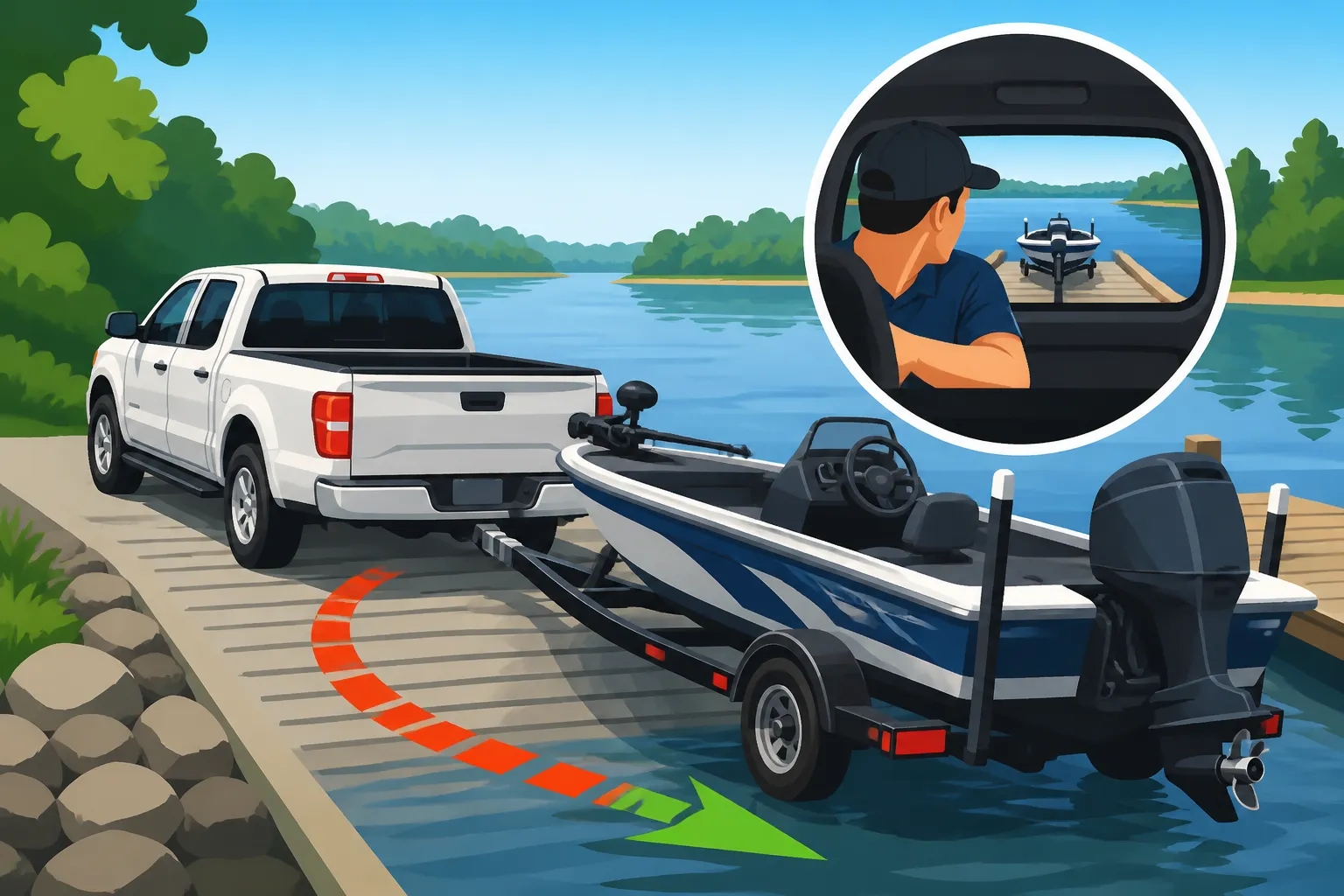
This is the golden rule of trailer backing and probably the most confusing part initially. To make the rear of your trailer go to the left, you turn your steering wheel to the left. To make the rear of your trailer go to the right, you turn your steering wheel to the right. It's the opposite of what you'd do if you were driving your car forward.
A trick many experienced boaters use is to place their dominant hand at the bottom of the steering wheel. Whichever way you move that hand, that's the direction the back of your trailer will go. Want the trailer to go left? Move your hand left. Want it to go right? Move your hand right. This simplifies the steering process immensely.
The most critical aspect here is to make small, slow adjustments. Over-steering is the number one cause of jackknifing (which we’ll cover in a moment). Think of it like a dance: a little turn, check your mirrors, wait for the trailer to respond, then a little correction if needed. Go slow, be patient, and let the trailer tell you what it needs. A few extra seconds of slow, controlled backing is always better than getting yourself into a bind.
Navigating the Incline and Water Line
As you begin to back down the ramp, the incline adds another layer of complexity. The key here is speed control. You want to maintain a slow, consistent pace. If your vehicle has a low-range gear or a specific "tow/haul" mode, engage it now. This gives you more control and prevents your vehicle from rolling too fast.
Keep a close eye on your side mirrors, watching the boat and trailer. You'll want to back down until the stern of your boat begins to float, or until the fenders on your trailer are mostly submerged. The exact depth depends on your boat and trailer setup. For smaller boats, you might need less depth; for larger vessels, more. Don't back too far into the water if it's not necessary; you risk submerging your tow vehicle's exhaust or, worse, sucking water into the engine. If you're unsure, it's always better to back a little less and then use a bow line to gently pull the boat the rest of the way off the trailer.
Launching Your Boat Successfully
Once you've backed far enough and the boat is floating freely, it's time for the final steps. If you have a partner, this part is much easier. Your partner can hold the bow and stern lines and guide the boat off the trailer while you keep the tow vehicle steady. If you’re solo, you’ll need to put your tow vehicle in park, set the emergency brake, and quickly unclip the bow safety chain or strap. Gently push the boat off the trailer, keeping a hand on the bow line if possible, and then either walk it to a nearby courtesy dock or secure it before returning to park your vehicle.
Remember, the goal is a smooth transition from trailer to water. Don't be afraid to take your time, even if there are others waiting. A safe and successful launch is always paramount. This methodical approach will help you master various ramps, from busy areas like those highlighted in Best Public Boat Ramps for Lake Fishing to more remote locations.
Common Challenges and Troubleshooting
Even with practice, things can go wrong. That's okay! Understanding common challenges and how to address them can turn a potentially frustrating moment into a quick learning opportunity.
Jackknifing: What It Is and How to Avoid It
The dreaded jackknife. This happens when the angle between your tow vehicle and your trailer becomes too sharp, essentially folding the trailer in on itself like a pocketknife. Not only can this damage your trailer, but it can also be incredibly difficult to recover from, especially on a sloped ramp.
The primary cause of jackknifing is over-steering. When you turn the wheel too sharply and too quickly, the trailer pivots aggressively. If you don't correct quickly, it will continue to turn until it's at an impossible angle. The key to avoiding a jackknife is to make small, slow steering adjustments. As soon as you see the trailer start to angle too much in your mirror, briefly straighten your steering wheel or even turn it slightly in the opposite direction of the trailer's swing. This will start to pull the trailer back in line. If it gets too far, don't force it. Pull forward a few feet to straighten everything out, then try again. Sometimes, a quick pull forward is the best reset button.
Dealing with Crowds and Pressure
Boat ramps, especially popular ones like those you might find on Lake Monroe or Patoka Lake, can get incredibly busy, particularly on prime fishing weekends. There's nothing quite like the feeling of a dozen pairs of eyes on you as you try to perfectly back your trailer. This pressure can make even experienced boaters nervous.
First, remember that most people at the ramp have been in your shoes. They understand the challenge. If someone is being impatient or rude, ignore them. You are there to launch your boat safely, not to win a race. Take a deep breath. Focus on your mirrors, not the people around you. If you get flustered, take a moment. If you mess up, simply pull forward to reset. Don't be afraid to ask for help, either! Many fellow anglers are more than happy to offer guidance or even spot for you. Being prepared with all your pre-launch tasks done will also significantly reduce the time you spend on the ramp, alleviating some of that perceived pressure.
Wind and Current: External Factors
While less of an issue for backing the trailer itself, wind and current can certainly complicate the final launch. Strong crosswinds can push your boat sideways as it comes off the trailer, making it difficult to control with just a bow line. Similarly, a strong river current on a waterway like the Wabash or White River can quickly pull your boat downstream if you're not prepared.
If you know you'll be dealing with wind or current, try to angle your approach slightly into the wind or current if possible. This gives you a buffer. Have your boat lines ready and secured to both the bow and stern cleats. When the boat floats off, use the stern line to help guide the boat and prevent it from swinging uncontrollably. Your partner can be invaluable here, using the lines to steer the boat as it leaves the trailer. This is also where investing in a good anchor for your boat, like those discussed in How to Choose an Anchor for a Small Boat, can come in handy if you need to quickly secure your boat after launch.
Equipment Issues: Trailer Lights, Brakes, and Tires
Nothing ruins a fishing trip faster than equipment failure, and sometimes, those issues manifest at the worst possible time – like backing down the ramp. Before you even leave home, perform a quick check of your trailer. Ensure all your trailer lights are working. Backing up without functioning brake lights or turn signals is not only dangerous but illegal. Check your trailer tires for proper inflation and any signs of wear.
Your trailer brakes are also crucial, especially on steep ramps. Make sure they are functioning correctly and aren't seizing up. If you notice any issues with your lights, brakes, or tires, address them immediately. You can find replacement trailer lights, wiring harnesses, or even new tires at stores like Bass Pro Shops, or readily available components online through Amazon. Don't skip these pre-trip checks; they ensure a smooth journey and a safe launch.
Advanced Tips for Confident Backing
Once you've mastered the basics and can handle common challenges, there are a few extra tricks and tools that can elevate your trailer backing game, making you truly confident at any ramp.
Mirror and Camera Systems
While traditional mirrors are essential, modern technology offers some fantastic aids. Many newer trucks come with integrated trailer assist features or enhanced mirror systems that provide a wider field of view. For older vehicles, aftermarket mirror extensions can dramatically improve your visibility down the sides of your trailer. These clip-on or permanent extensions give you a much better perspective on where the back of your trailer is heading, especially for wider boats that obscure standard mirrors.
Another popular option is a wireless backup camera. These can be mounted on the back of your trailer, providing a direct view of the ramp and the water behind you. Some even integrate with your tow vehicle's display. While they take some getting used to and shouldn't replace your mirrors entirely, a good camera system can offer an invaluable perspective, especially if you're frequently launching solo. You can find various options for these types of accessories, from simple clip-on mirrors to more advanced camera systems, through retailers like Bass Pro Shops or online platforms like Amazon.
The Buddy System: A Helping Hand
There's no shame in having a spotter. In fact, it's often the smartest way to launch, especially with larger boats or in challenging conditions. A good spotter can watch the blind spots, confirm your alignment, and tell you when to stop or adjust.
Clear communication is paramount when using a spotter. Establish hand signals beforehand so you don't have to shout over engine noise or wind. Common signals include:
- Stop: Palms out, arms crossed.
- Back Straight: Thumbs up, or hands flat, pointing straight back.
- Trailer Left: Hand pointing to their left (your driver's side).
- Trailer Right: Hand pointing to their right (your passenger's side).
- Slow Down: Hands moving up and down slowly.
- Hold: One hand held up, flat.
Make sure your spotter understands the "steer opposite" rule so they can give you accurate directions. Their eyes can be a crucial extension of yours, turning a difficult launch into a seamless operation. Plus, it's a great way to bond with your fishing buddies! They can also help ensure you have all necessary safety items like those described in How Many Life Jackets Do You Need on an Indiana Boat or Do You Need a Whistle or Horn on an Indiana Boat?.
Mastering Different Trailer Types
Not all boat trailers are created equal, and understanding the nuances of different types can help you become a more adaptable backer.
- Single Axle vs. Double Axle: Single-axle trailers are generally more nimble and respond quicker to steering input, which can make them harder to control for beginners due to their fast reactions. Double-axle trailers track straighter and are often more forgiving because they pivot less sharply. However, they also require a larger turning radius when maneuvering.
- Bunk vs. Roller Trailers: The type of trailer also impacts how the boat launches. Bunk trailers require more submersion to float the boat off, as the boat rests on carpeted bunks. Roller trailers, with their series of rollers, allow the boat to slide off more easily and may require less submersion. Adjust your backing depth accordingly.
- Weight Distribution: Ensure your boat is properly loaded on the trailer with adequate tongue weight. Too much or too little tongue weight can make the trailer unstable and unpredictable when backing, leading to sway or difficulty controlling its direction.
With practice and an understanding of your specific rig, you'll soon be backing down ramps with the confidence of a seasoned pro, ready to enjoy the beautiful waters Indiana has to offer, from the calm waters of Lake Wawasee to the vastness of Lake Michigan. Don't forget your other essentials, like a Best First Aid Kits for Indiana Boaters for any unexpected mishaps or even Best Rain Gear for Fishing on Indiana Lakes to be prepared for Indiana's unpredictable weather.
Disclaimer
This article is for general informational purposes only and does not constitute professional advice. Laws, prices and regulations vary by location and change over time. Consult a qualified professional for guidance on your specific situation.