Best Catfish Fishing Techniques for Beginners
Feeling a bit overwhelmed trying to figure out how to catch those elusive, whiskered warriors known as catfish in Indiana? You're definitely not alone. Many new anglers get stumped on where to start with catfish, whether it's understanding what gear they need, what bait actually works, or even just finding where these fish hang out. This guide is designed specifically for beginner anglers, breaking down the best techniques, gear, and spots to help you successfully land your first Indiana catfish.
Understanding Indiana Catfish Species and Where They Live
Before you even think about casting a line, it's incredibly helpful to know a little about the catfish species you're likely to encounter in Indiana. Knowing what you're targeting can inform your gear choices, bait selection, and even the type of water you decide to fish. Indiana is home to three primary species: the Channel Catfish, Flathead Catfish, and, in some larger river systems, the mighty Blue Catfish. Each has its own personality, preferred habitat, and diet.
Channel Catfish: The Widespread Favorite
The Channel Catfish is arguably the most common and widely distributed catfish species in Indiana. These guys are recognizable by their forked tail and scattered spots (though older fish might lose these spots). They tend to have a sleeker, more streamlined body compared to their flathead cousins. What makes them a favorite for beginners is their willingness to bite a variety of baits and their presence in almost every type of water body, from small ponds and creeks to large rivers and reservoirs.
Channel cats are omnivores, meaning they'll eat just about anything, but they have a particular fondness for smelly baits. Think rotten cheese, chicken livers, cut bait, and even hot dogs. You can find a deep dive into targeting these fish in our Channel Catfish Fishing in Indiana: The Complete Guide. They're often found in areas with moderate current in rivers, or around submerged cover and drop-offs in lakes. These fish are fantastic fighters on light to medium tackle and make for excellent table fare, making them a perfect target for those new to the sport.
Flathead Catfish: The Big Bottom Dwellers
Now, if you're looking for a serious tug-of-war, the Flathead Catfish is your adversary. These are the true giants of Indiana's catfish world, known for their broad, flattened heads (hence the name) and their slightly rounded, unforked tails. Unlike channel cats, flatheads are almost exclusively piscivores, meaning they prefer live bait. Shad, bluegill, or other small panfish are their go-to meals. They are ambush predators, preferring to hide in heavy cover like logjams, undercut banks, and deep holes in rivers and large reservoirs.
Catching a flathead is often a more deliberate affair, requiring stronger gear and a lot of patience. They don't typically go for the stinky baits that attract channel cats. If you're fishing a deep hole in the Wabash or White River and keep getting bit off by something huge, there's a good chance it's a flathead. While they can be found throughout the state in our major river systems, they are truly beasts of the current and structure, providing a memorable fight for any angler.
Blue Catfish: Less Common but Trophy-Sized
Blue Catfish are the third species you might encounter, though they are less common in Indiana than channel or flathead cats. They resemble channel catfish with a forked tail, but their bodies are typically more robust, and they lack the distinct spots. Blue cats are known for their massive size potential, often growing larger than both channel and flathead catfish in other parts of the country. In Indiana, they are primarily found in the Ohio River and its larger tributaries, as well as some reservoirs where they've been stocked.
Like flatheads, blue catfish are primarily predatory, but they are a bit more opportunistic than flatheads, sometimes taking cut bait in addition to live offerings. They prefer large bodies of water with strong currents and deep channels. For beginners, targeting blue catfish might be a bit ambitious right out of the gate, but it's good to be aware of them, especially if you're fishing the southern parts of the state. Knowing these species helps you fine-tune your approach, making your time on the water more productive and enjoyable.
Essential Gear for Beginner Catfish Anglers
One of the biggest hurdles for new anglers is figuring out what gear to buy without breaking the bank. The good news is, catfish fishing doesn't require a fortune in specialized equipment. You can get started with some basic, reliable items that will serve you well for years. Focusing on durability and versatility will be key as you learn the ropes.
Rods, Reels, and Line: Your Basic Setup
For beginner catfish fishing, you'll want a setup that can handle a decent fight but isn't so heavy it’s cumbersome. A medium-heavy action rod, around 7 to 9 feet long, is a great starting point. This length gives you good casting distance from shore or a boat, and the medium-heavy action provides enough backbone to fight larger fish while still being sensitive enough to detect bites from smaller ones. Look for rods made from fiberglass or a composite material, as they tend to be more durable and forgiving for beginners. Many reputable brands offer excellent options that are affordable and readily available, often found on platforms like Amazon or at your local tackle shop.
Pair your rod with a sturdy spinning reel in the 4000 to 6000 size range, or a baitcasting reel if you're comfortable with them. Spinning reels are generally easier for beginners to master, so that's often the recommended choice. Spool your reel with 15-25 pound test monofilament line. Mono is a great choice for beginners because it's affordable, easy to tie, and has some stretch, which can act as a shock absorber when a big cat hits your bait. Alternatively, you could use a braided line of similar strength (20-30 lb test) for increased sensitivity and strength, but it requires a bit more care in knot tying and can be more expensive.
Terminal Tackle: Hooks, Sinkers, and Swivels
This is where the rubber meets the road, or rather, where your bait meets the fish. Getting your terminal tackle right is crucial for catfish success.
- Hooks: For channel catfish, circle hooks in sizes from 1/0 to 5/0 are highly recommended. Circle hooks are designed to hook fish in the corner of their mouth, which is much better for the fish's health if you plan on releasing it, and they dramatically reduce gut-hooking. For larger flatheads or blues, you might go up to an 8/0 or even 10/0 circle hook.
- Sinkers: You'll need various weights of sinkers to keep your bait on the bottom, especially in current. Egg sinkers or flat 'no-roll' sinkers in sizes from 1/2 ounce up to 2 ounces are generally sufficient. The exact weight will depend on the strength of the current and how far you need to cast.
- Swivels: Barrel swivels or three-way swivels are indispensable. They prevent your line from twisting, especially when fishing in current or with spinning baits, and they're essential for creating effective rigs. A good quality barrel swivel between your main line and leader also acts as a stop for your sliding sinker.
- Leaders: Use a leader that is a bit lighter than your main line, typically 10-20 lb test monofilament or fluorocarbon. This protects your main line from abrasive structures and toothy fish, and if you get snagged, you'll only lose your leader and hook, not your entire rig.
The Right Bait: Fresh and Stinky Options
Choosing the right bait can make or break your catfish trip. As mentioned, different catfish species prefer different meals, but there are some universally effective options for beginners targeting channel cats.
| Bait Type | Target Species | Notes |
|---|---|---|
| Chicken Livers | Channel Catfish | Classic, readily available, and incredibly smelly. Can be messy and soft, so use a bait holder hook or wrap them in a small piece of nylon stocking to keep them on. Easily purchased at grocery stores. |
| Cut Bait | Channel, Blue, Flathead | Pieces of oily fish like shad, bluegill, or carp. Fresh is always best. Catfish are highly attracted to the scent trail. Use larger chunks for bigger fish. Learn more in our guide on Best Cut Bait for Catfish Fishing. |
| Nightcrawlers | Channel Catfish | Simple, effective, and easy for beginners. Often picked up by other species too, but channel cats love them. |
| Dough Balls/Prepared Baits | Channel Catfish | Many commercially available 'stink baits' or 'cheese baits' work well. They're designed specifically for catfish and are easy to use. Great if you don't want to handle messy natural baits. |
| Live Bait (Bluegill, Shad) | Flathead, Blue Catfish | Essential for flatheads, often preferred by blue cats. Use small, lively baitfish hooked through the back or lips. This is a more active fishing method. |
For channel catfish, don't overthink it. Chicken livers are cheap and effective. If you can get your hands on some fresh shad or bluegill (check local regulations on using live baitfish), cut bait is a winner for almost all species. You can explore Best Bait for Channel Catfish in Indiana Rivers for more specialized recommendations. Remember, the fresher and smellier (for channel cats) the bait, the better your chances.
Fundamental Catfish Fishing Techniques
Once you've got your gear and bait sorted, it's time to learn how to actually present it to the fish. Catfish aren't usually found suspended in the water column; they're almost always near the bottom, often near structure or current breaks. Understanding how to get your bait down to them and keep it there is fundamental.
Bottom Fishing: The Go-To Method
Bottom fishing is, without a doubt, the most popular and effective technique for catching catfish, especially for beginners. It's straightforward and puts your bait right where the fish are looking for food.
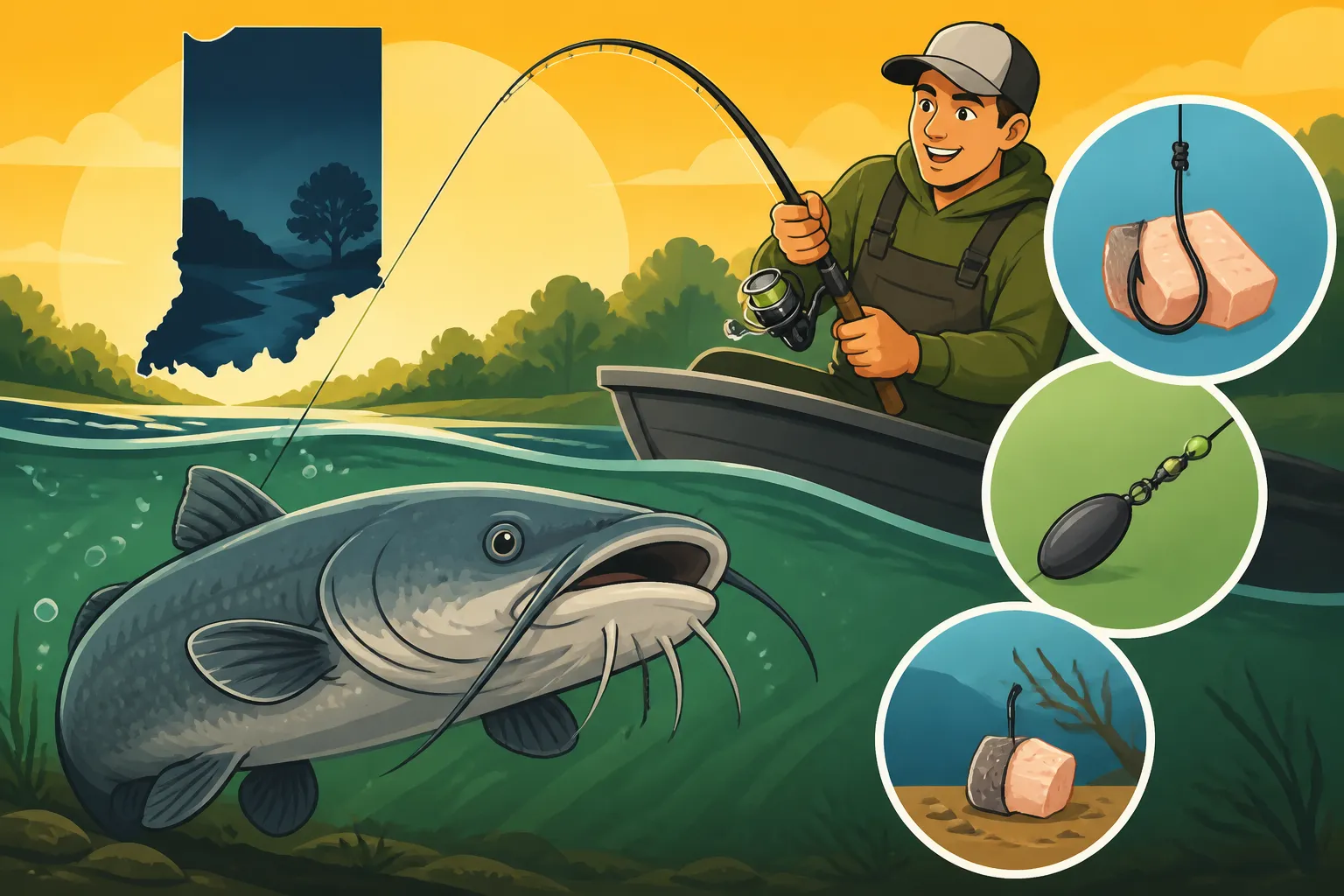
- The Santee Cooper Rig or Carolina Rig: This is your bread and butter rig for bottom fishing. You'll thread an egg sinker onto your main line, followed by a bead (to protect your knot), and then tie on a barrel swivel. To the other end of the swivel, tie a leader (1-2 feet long) with your circle hook at the end. The sinker slides freely on your main line, allowing the fish to pick up the bait without feeling immediate resistance, which can spook them.
- Casting and Waiting: Cast your rig out into a promising area – often near drop-offs, submerged timber, or deeper channels. Let the sinker hit the bottom, then reel in any slack until your line is taut. Place your rod in a sturdy rod holder (essential for hands-free fishing and preventing your rod from being pulled in by a strong fish!).
- Detecting Bites: This is where patience comes in. Catfish bites can range from subtle taps to aggressive, rod-bending pulls. With a circle hook, you generally don't need to "set the hook." When you see your rod tip bend steadily or your line starts peeling, just pick up the rod, reel down, and apply steady pressure. The circle hook will do the work of finding the corner of the fish's mouth. Don't be too quick to grab the rod on small taps; give the fish a moment to really take the bait. For more detailed instructions, check out How to Bottom Fish for Channel Catfish.
Float Fishing: When Catfish Are Active
While bottom fishing is king, float fishing (using a bobber) can be surprisingly effective for catfish, especially when they are more active or feeding shallower. This technique is particularly good for channel catfish in smaller ponds or slow-moving rivers, or when fish are suspended just off the bottom.
- Setting Up a Bobber Rig: Attach a bobber (a large slip bobber works best for casting distance and depth control) to your main line. Below the bobber, tie on a small weight (split shot or a small egg sinker) to get your bait down, followed by your hook. The key is to set your bobber stop so your bait is suspended just above the bottom or at a depth where you've seen activity.
- Drifting or Still Fishing: You can cast this rig and let it drift naturally with the current in a river, covering more water, or cast it to a specific spot in a pond and let it sit. The bobber acts as your visual bite indicator. When it dips, dances, or goes completely under, it's time to reel! This method is often more active and engaging than bottom fishing, as you're constantly watching the bobber.
- Ideal Conditions: Float fishing shines in situations where catfish are actively foraging in shallower water, perhaps during warmer months or after a good rain when food washes into the water. It’s also a fantastic way to introduce kids to catfish fishing, as watching a bobber is exciting.
Trotlines and Juglines: Advanced, But Worth Knowing
For anglers looking to catch multiple catfish and willing to put in a bit more effort, trotlines and juglines are traditional, highly effective techniques. These are not "active" fishing methods in the same way as rod-and-reel, but they can yield impressive results. However, both have specific regulations in Indiana regarding the number of hooks, tagging, and placement, so always check the current Indiana Department of Natural Resources (DNR) regulations before deploying them.
- Trotlines: A trotline consists of a main line stretched across a river or lake, anchored at both ends, with multiple baited hooks attached at intervals. This allows you to fish many baits simultaneously over a large area. They are typically set out in the evening and checked in the morning.
- Juglines (or Noodle Fishing): Juglines involve individual baited lines attached to floating jugs or noodles. These are left to drift freely or anchored in specific spots. When a fish bites, the jug will start moving or bobbing, signaling a catch. This is a very exciting way to fish for big catfish, but again, be mindful of Indiana's specific rules regarding these.
These methods are more advanced and usually reserved for anglers with some experience and the right equipment. They require careful planning, knowledge of local regulations, and often a boat for deployment and retrieval. While not strictly "beginner techniques," understanding their existence and purpose can expand your overall catfish angling knowledge.
Finding the Best Catfish Spots in Indiana
Knowing where to find catfish is just as important as knowing how to catch them. Catfish are opportunistic feeders and often relate to specific types of structure or water conditions. Indiana offers a diverse range of fishing environments, each with its own catfish potential. For a comprehensive overview, check out our guide on Best Catfish Fishing Spots in Indiana.
Rivers and Creeks: Natural Catfish Highways
Indiana's rivers and larger creeks are prime catfish territory, especially for flatheads and channel cats. These waterways provide abundant food, current, and structure—everything a catfish loves.
- Major Rivers: Rivers like the Wabash River, White River, and Tippecanoe River are legendary for their catfish populations. Look for deeper holes, especially those downstream from riffles or rapids where food collects. Logjams, undercut banks, and fallen trees provide excellent ambush points and cover for flatheads. The outside bends of rivers often scour out deeper holes, perfect for holding large fish. Our guide to Fishing the Wabash River in Indiana offers specific insights into that particular waterway.
- Smaller Creeks and Tributaries: Don't overlook smaller creeks that feed into larger rivers. During spring rains or after a major weather event, catfish will often move into these tributaries to spawn or feed on worms and insects washed into the water. These can be fantastic spots for channel catfish, especially if you're looking for less pressured fish and easier bank access. Always be mindful of private property when exploring smaller creeks.
Lakes and Reservoirs: Deep Water Havens
Indiana's numerous lakes and reservoirs also hold thriving catfish populations, particularly channel catfish, and some blue catfish in specific locations.
- Large Reservoirs: Lakes like Monroe Lake, Patoka Lake, and Brookville Lake are massive bodies of water where channel catfish thrive. Focus your efforts on main lake points, submerged creek channels, deep coves, and areas around dam structures. Catfish in reservoirs often relate to the thermocline in summer, but in spring and fall, they can be found shallower.
- Farm Ponds and Smaller Lakes: Many smaller public and private ponds across the state are stocked with channel catfish. These are often excellent spots for beginners and families, offering easy access and less daunting conditions than a large river. Look for areas with deeper water, brush piles, or weed edges. These ponds are typically less affected by strong currents, making them easier to fish with simple bottom rigs.
- Structure is Key: In lakes, catfish will often gravitate towards structure. This could be rock piles, old roadbeds, standing timber, brush piles, or even artificial fish attractors. If you have a fish finder, use it to locate these features and target the areas around them.
Timing Your Trip: When to Go for Catfish
While you can catch catfish year-round in Indiana, certain times of the day and year are more productive.
- Seasonal Peaks: The best season for catfish fishing in Indiana is generally from late spring through early fall. As water temperatures rise, catfish become more active and feed aggressively. The summer months are particularly good, often peaking in July and August. You can dive deeper into this topic with Best Season for Catfish Fishing in Indiana.
- Time of Day: Catfish are often most active during low-light conditions. Dawn, dusk, and especially night fishing can be incredibly productive. Many big flatheads and blue catfish are primarily nocturnal feeders. If you're willing to brave the dark, fishing at night can offer some of the most exciting action. Our guide on How to Catch Catfish at Night provides valuable tips for after-hours angling. During the day, look for them in deeper, cooler water or tucked away in heavy cover.
Remember that patience and persistence are your best friends in catfish fishing. Don't be discouraged if you don't catch fish immediately. Experiment with different baits, locations, and depths, and most importantly, enjoy the process!
Disclaimer
Fishing regulations, license requirements, and local conditions can change. Always consult the latest Indiana Department of Natural Resources (DNR) regulations before heading out on the water. This guide provides general information for educational purposes and should not be considered legal advice.