Best Bass Fishing Techniques for Pre-Spawn
It’s a feeling many Indiana anglers know all too well: the eager anticipation of spring bass fishing, only to be met with frustratingly elusive fish. The pre-spawn period is a magical window when bass are at their heaviest and most aggressive, but their movements can be a real puzzle. This comprehensive guide is dedicated to unraveling that mystery, diving deep into the best strategies, baits, and tackle to help you consistently land those monster bass as they prepare for the spawn across the Hoosier State’s diverse waterways.
Understanding Pre-Spawn Bass Behavior in Indiana
The pre-spawn phase is arguably one of the most exciting, yet challenging, times to target bass in Indiana. It’s a period of significant transition for these fish, marked by a gradual shift from their deep winter haunts to shallower, warmer waters as they prepare for the arduous spawning ritual. Understanding this critical movement and how it's influenced by environmental factors is your first step toward consistent success.
The Transition Period and Key Indicators
As the harsh Indiana winter begins to recede, typically from late February through April, the ice melts (if present), and water temperatures slowly start to climb. This is the signal for bass to begin their migration. They won't move all at once, mind you, but rather in waves, responding directly to those crucial temperature shifts. Initially, you might find them in depths of 20-30 feet or more, holding tight to deep structure, but as the water reaches the low 40s (Fahrenheit), they'll start nudging their way toward shallower areas.
Look for sustained periods of warming weather, especially after a cold front has passed and stable conditions return. These warming trends push the shallow water temperatures up, often drawing bass into 10-20 feet of water. This is when they start to really feed up, packing on weight for the energy-intensive spawn ahead. Keeping a close eye on Indiana Bass Spawn Timing and Pre-Spawn Patterns can give you an excellent indication of when to expect this transition in your local waters. Remember, the exact timing will vary across Indiana, with southern lakes often warming up weeks before their northern counterparts.
Identifying Staging Areas
Pre-spawn bass don't just swim directly to their beds; they use "staging areas" as temporary homes, essentially rest stops where they can feed and acclimate to changing conditions before committing to the very shallow spawning flats. These staging areas are key to consistent pre-spawn success. Think of them as transition zones – spots that offer easy access to both deeper water (for safety and temperature regulation) and shallower water (for future spawning).
Common staging areas include points, especially secondary points within bays, humps, ledges, and creek channels that run into shallow flats. Submerged timber, rock piles, or old roadbeds also offer excellent cover and ambush points. On a lake like Patoka Lake, for instance, main lake points leading into large coves can be prime staging areas. These locations offer bass a quick escape to deeper water if a cold front pushes temperatures down, but also quick access to the warmth of the shallower coves on sunny days. Focusing on these high-percentage zones will allow you to intersect bass as they move back and forth, following the most comfortable water temperatures and feeding opportunities.
Top Lure and Bait Choices for Pre-Spawn Bass
During the pre-spawn, bass are usually less active than in the summer, but they are incredibly focused on feeding. They're trying to bulk up, so they're looking for substantial meals. This means big, slow-moving baits that mimic large forage are often the ticket. The key is to present these lures effectively and patiently.
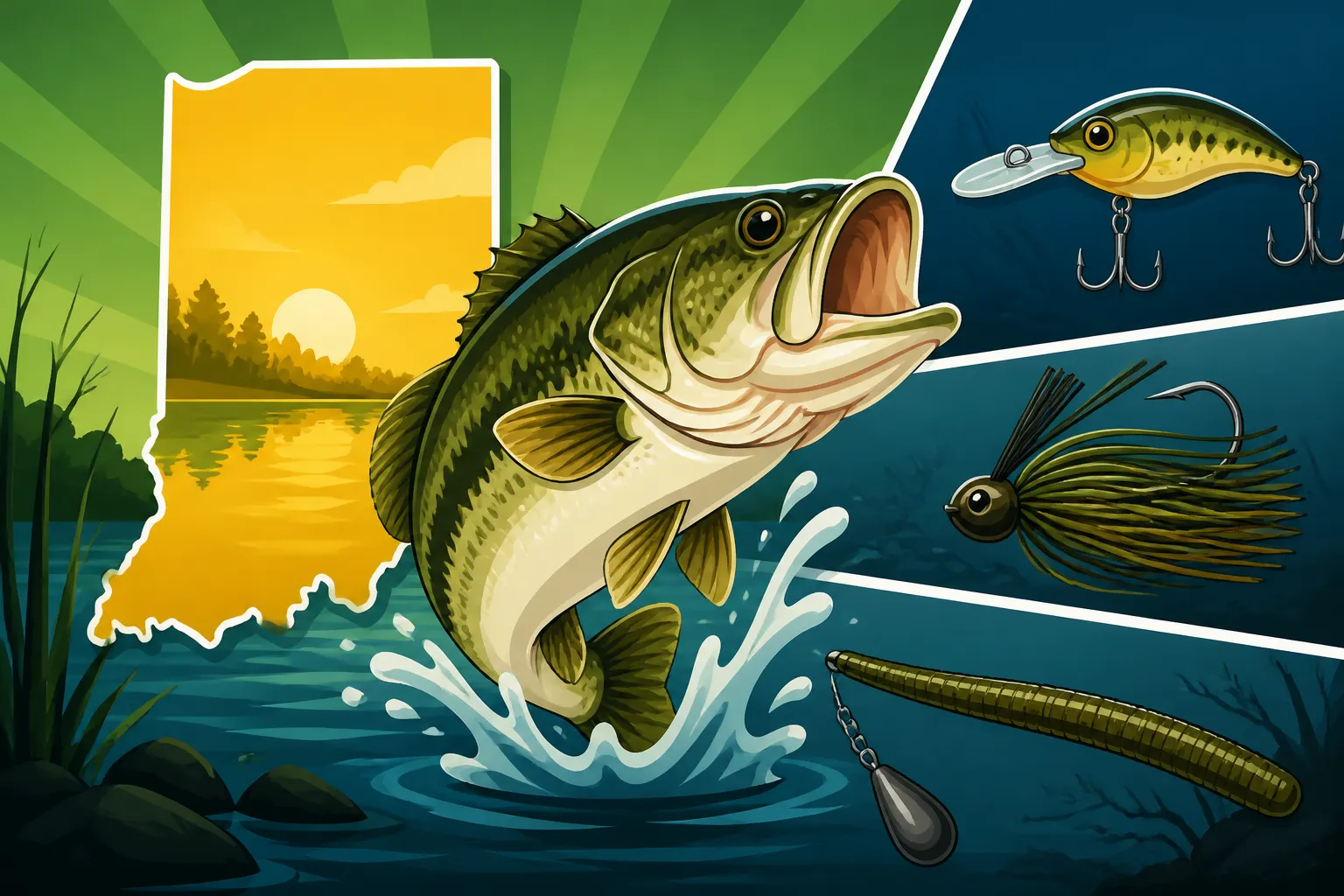
Crankbaits and Jerkbaits
When water temperatures are hovering in the mid-40s to low-50s, crankbaits and jerkbaits can be absolutely deadly. Deeper diving crankbaits, especially those with a wide wobble, are fantastic for bumping off submerged timber, rock piles, and ledges in those staging areas. Colors like crawfish patterns, shad, or firetiger tend to be highly effective in Indiana's often stained waters. A slow, grinding retrieve that makes the lure deflect off cover can trigger violent reaction strikes from lethargic bass. You can find a fantastic selection of these on Amazon, often with reviews from other anglers detailing their success with certain colors or sizes.
Jerkbaits, on the other hand, are designed for a "pause-and-go" retrieve, mimicking a stunned or dying baitfish. This retrieve is absolutely crucial in cold water. Bass are not always willing to chase, but a jerkbait that hangs tantalizingly in the water column for several seconds can be irresistible. Long pauses, sometimes up to 10-15 seconds, are not uncommon. Brands like Megabass Vision Oneten or Lucky Craft Pointer are popular choices, but there are many effective options available. Focus on shad or perch patterns, and experiment with how long you pause the bait to find what the bass prefer on a given day.
Jigs and Soft Plastics
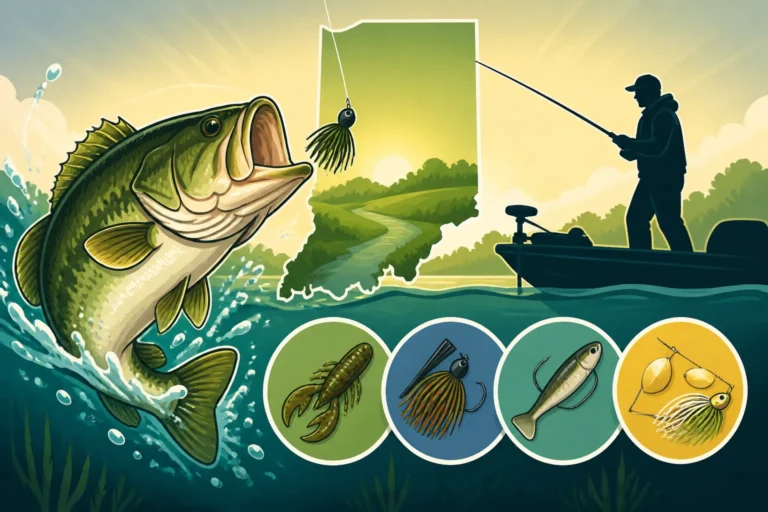
Jigs, particularly football jigs or swim jigs paired with bulky creature baits or craw trailers, are a classic pre-spawn weapon. They excel at imitating crawfish, a primary food source for bass in early spring. The football head design helps the jig stand up on the bottom, mimicking a defensive crawfish, and allows it to crawl over rocks and ledges with fewer snags. For How to Rig a Jig for Largemouth Bass, you'll want to ensure your trailer is oriented to give a lifelike action. Colors like black and blue, green pumpkin, or brown variations are consistent producers.
Soft plastics, especially creature baits, tubes, and substantial worms, are also outstanding. Rigged on a How to Fish a Texas Rig for Bass, they can be worked slowly through brush piles, dense cover, or along channel edges where bass are holding tight. The beauty of soft plastics is their versatility: you can present them slowly, letting them sink and flutter enticingly, or impart subtle movements with your rod tip. These slow, deliberate presentations are often exactly what finicky pre-spawn bass are looking for. Don't be afraid to use larger profile baits, as pre-spawn bass are looking for a calorie-rich meal.
Spinnerbaits and Chatterbaits
Spinnerbaits and chatterbaits offer a different presentation, relying on flash, vibration, and a larger profile to attract bass. In slightly warmer pre-spawn conditions (mid-50s and climbing), or when bass are more aggressive, these lures can be incredibly effective, especially around visible cover like standing timber or docks. A slow-rolled spinnerbait with tandem willow leaf blades (for maximum flash) in white or chartreuse can entice bites. The vibration of the blades makes it easy for bass to locate the bait in stained water.
Chatterbaits, with their distinct vibrating bladed head, offer a unique thump and wobble that bass can feel from a distance. Pairing them with a swim-bait or craw trailer enhances their profile and action. They're excellent for covering water quickly and drawing reaction strikes. Work them with a steady retrieve, occasionally giving a slight rip or pause to change their action. When choosing a spinnerbait or chatterbait, consider the water clarity: brighter colors for stained water, more natural shades for clearer conditions. Many anglers swear by Z-Man ChatterBaits and readily available on Amazon for their quality and effectiveness.
Effective Techniques for Locating and Catching Pre-Spawn Bass
Finding pre-spawn bass isn't always about casting blindly. It requires a thoughtful approach to understanding their movements and preferences as they stage for the spawn. Once you've identified potential staging areas, the way you present your lure becomes paramount.
Slow and Deliberate Presentations
Remember, bass in the pre-spawn, especially in cooler water, are generally more lethargic than their summer counterparts. Their metabolism is slower, and they're often not willing to chase a fast-moving bait. This means patience is your greatest virtue. When fishing jigs or soft plastics, allow ample time for the bait to sink to the bottom. Work it with short hops, drags, and long pauses. The majority of strikes often occur during these pauses, as the bass takes a moment to inspect and then engulf the "easy meal."
Even with crankbaits and jerkbaits, a slower, more methodical retrieve is usually best. For jerkbaits, extended pauses are critical. For crankbaits, slow-rolling them and letting them make contact with structure repeatedly can trigger strikes. Think of it as nudging a sleepy bear – you want to annoy it just enough to react, not spook it. This is a time to really feel for the bite, as it can be a subtle "thump" or just a slight added weight on your line, rather than a violent strike.
Targeting Structure and Cover
Pre-spawn bass are almost always associated with some form of structure or cover. These provide ambush points, protection from predators, and a buffer against sudden temperature drops. Focus your efforts on ledges, channel swings, rocky points, and submerged brush piles or standing timber. On a lake like Monroe Lake, targeting the submerged trees and creek channels leading into spawning coves can be incredibly productive. These areas funnel bass traffic and provide ample cover.
Don't be afraid to fish tight to the cover. If you’re throwing a jig, literally try to get it into the densest part of a brush pile. If you’re working a crankbait, ensure it’s bumping off rocks or timber. Bass will often hold extremely tight to these features, waiting for an opportune moment to ambush prey. Understanding Best Bass Fishing Lakes in Indiana will help you identify which types of structure are most prevalent in different regions and how to approach them effectively. Using your electronics to pinpoint these underwater features is crucial, allowing you to make precise casts to where the fish are hiding.
Water Temperature and Depth Correlation
Water temperature is the ultimate director of pre-spawn bass movement. As the sun warms the water, bass will push shallower. On cold, cloudy days, or after a cold front, they'll often retreat to deeper staging areas. Keep a thermometer handy and pay close attention to the water temperature at different depths and locations within the lake. For more insights into how temperature impacts fish, check out Water Temperature and Fish Feeding Patterns.
Generally, bass will start moving shallower once water temperatures hit the low 40s, aggressively feeding in the upper 40s to low 50s. The magic window for the peak pre-spawn bite is typically when temperatures are consistently in the 50-58 degree range. Below 50, they'll likely be deeper and respond best to slow-moving bottom baits. As temperatures climb above 50, you might find them higher in the water column and willing to chase jerkbaits or spinnerbaits more readily. A table detailing this correlation can be incredibly helpful:
| Water Temperature (F) | Bass Behavior | Recommended Depth Zone | Primary Lure Types | Retrieval Speed |
|---|---|---|---|---|
| 40-45 | Deep, lethargic, slow movements | 20-30 feet | Jigs, Large Soft Plastics, Deep Diving Crankbaits | Very Slow |
| 45-50 | Moving shallower, starting to feed | 10-20 feet | Jigs, Jerkbaits (long pauses), Lipless Crankbaits | Slow |
| 50-58 | Actively feeding, staging, peak pre-spawn | 5-15 feet | Jigs, Jerkbaits, Spinnerbaits, Chatterbaits, Medium Crankbaits | Medium-Slow |
| 58+ | Approaching spawning flats, more aggressive | 2-10 feet | Swim Jigs, Squarebill Crankbaits, Topwater (briefly) | Medium |
Understanding this thermal stratification and how bass react to it is a game-changer. For example, on a reservoir like Patoka Lake, if the main lake points are still in the mid-40s, you might need to target the very back of sunny, protected coves where the water can be several degrees warmer, potentially holding more active fish. Best Time to Fish Patoka Lake for Bass in Indiana details further seasonal insights for that popular fishery.
Essential Gear for Pre-Spawn Bass Fishing Success
Having the right tools for the job can make a huge difference in your pre-spawn bass fishing success. This isn't just about having any rod and reel, but matching your equipment to the specific techniques and baits you'll be using.
Rods, Reels, and Line
For pre-spawn bass fishing, versatility and sensitivity are key. You'll likely be throwing a mix of heavier jigs, reaction baits, and soft plastics.
- Jig and Heavy Soft Plastics: A medium-heavy to heavy action casting rod, typically 7 to 7'6" in length, is ideal. This gives you the backbone to drive a hook through a bass's jaw and pull it out of heavy cover. Pair this with a baitcasting reel with a gear ratio around 6.3:1 to 7.1:1. Spool it with 15-20 lb fluorocarbon line, which offers excellent sensitivity and abrasion resistance. Many anglers consider Best Rods and Reels for Indiana Largemouth Bass to be a critical choice for this technique. You can find many excellent options for this setup on Amazon.
- Crankbaits and Spinnerbaits: A medium to medium-heavy action casting rod, around 7 feet, with a more moderate tip, is often preferred. This softer tip allows the bass to engulf the moving bait without pulling the hooks, and it helps with casting accuracy. A baitcasting reel with a slightly slower gear ratio (around 5.3:1 to 6.3:1) can help you slow-roll crankbaits more effectively. 12-17 lb fluorocarbon or monofilament line works well here.
- Jerkbaits: A medium action spinning or casting rod, typically 6'6" to 7 feet, with a fast tip is excellent for imparting the subtle twitching action. Best Spinning Reels for Bass Fishing are often favored for lighter jerkbaits and finesse presentations, while a casting setup with a 6.3:1 ratio reel is great for heavier models. Use 8-12 lb fluorocarbon line for its low stretch and invisibility. You can find quality Best Baitcasting Reels for Indiana Anglers suitable for various pre-spawn techniques.
Electronics and Mapping
Modern fish finders and mapping technologies are indispensable for locating pre-spawn bass. Side imaging and down imaging allow you to "see" underwater structure like ledges, creek channels, and brush piles that are invisible from the surface. This is particularly useful in the staging areas where bass congregate. High-definition mapping chips (like those from Lowrance or Humminbird) provide detailed contours, depths, and navigation aids, helping you identify prime staging points and potential travel routes for bass.
For example, when exploring a new section of a lake, you can use your electronics to scan large areas for humps, submerged roadbeds, or timber lines that might not be marked on older maps. Once you locate promising structure, you can then switch to traditional sonar to mark individual fish or schools. This combination of mapping and advanced sonar capabilities significantly reduces time spent fishing unproductive water, letting you focus on where the bass truly are.
Tackle Box Essentials
Beyond your rods and reels, a well-stocked tackle box is crucial for adapting to changing conditions. Here are a few must-haves for your pre-spawn outings in Indiana:
- Extra Hooks: Offset worm hooks (3/0 to 5/0), EWG (Extra Wide Gap) hooks, and jig heads (1/4 to 1/2 oz) in various sizes.
- Weights: Bullet weights (1/4 to 1/2 oz) for Texas rigs, drop shot weights, and jig weights. Tungsten weights are preferred for their sensitivity.
- Line: Spools of extra fluorocarbon and monofilament line in different test strengths.
- Tools: Pliers, line cutters, and a hook sharpener.
- Lure Diversity: A selection of deep-diving crankbaits, suspendings jerkbaits, football jigs, swim jigs, creature baits, tubes, and spinnerbaits. Don't forget a variety of colors to match water clarity and forage.
- Soft Plastic Variety: Have bags of crawfish imitators, swimbaits, and stick worms in natural and dark colors.
Having these essentials means you’re prepared for whatever the bass throw at you, whether they want a slow-moving craw or a flashing reaction bait. Always check your gear before heading out to ensure everything is in top working order.
Disclaimer
Fishing conditions and regulations in Indiana can change. Always consult the latest Indiana Department of Natural Resources (IDNR) fishing guide before heading out on the water to ensure you are in compliance with all state laws and local regulations.