Walleye vs Saugeye: How to Tell Them Apart
It's a familiar scenario: you reel in a beautiful fish from an Indiana lake, and for a moment, you're not entirely sure what you've caught. Is it a walleye or a saugeye? This can be a real head-scratcher, especially since these two species share many similarities and often inhabit the same waters. Knowing the distinct features that set them apart isn't just about satisfying your curiosity; it's crucial for adhering to specific regulations and truly understanding the amazing fish that call our Indiana waters home. This guide will walk you through the subtle yet significant differences, helping you confidently identify your catch every time.
The Walleye: Indiana's Prized Native Sport Fish
The walleye holds a special place in the hearts of many Indiana anglers, revered for its delicious fillets and challenging fight. These fish are primarily native to northern Indiana's natural lakes and the larger river systems, though stocking efforts have introduced them to some of our reservoirs further south. They are known for their keen eyesight, especially in low light, which often makes dawn, dusk, and even night fishing particularly productive for them. Indiana Walleye Fishing: A Complete Guide offers a comprehensive look into targeting these elusive predators.
Walleye are members of the perch family, and their scientific name, Sander vitreus, means "glassy" due to their large, reflective eyes. This adaptation allows them to hunt effectively in murky water or during periods of low light, giving them an advantage over many prey species. An angler catching a walleye in one of Indiana's clear, deep glacial lakes or a stained river knows they've landed a true gem.
Their body shape is typically long and slender, with a torpedo-like profile built for speed and efficient swimming. They boast two distinct dorsal fins; the first is spiny, and the second is soft-rayed. While they have sharp teeth, their overall appearance is sleek and streamlined. Understanding the natural behavior and preferred habitats of walleye is often the first step in differentiating them from their saugeye cousins.
The Saugeye: Indiana's Hybrid Success Story
Saugeye are a fascinating testament to fisheries management, being a hybrid cross between a female walleye and a male sauger (Sander canadensis). This intentional cross was developed to create a fish that combines the best characteristics of both parents: the growth rate and fighting spirit of a walleye, with the hardiness and adaptability of a sauger. Here in Indiana, saugeye are primarily stocked in our larger reservoirs, where they thrive in conditions that might be less ideal for pure walleye.
The introduction of saugeye has provided fantastic fishing opportunities in many of our central and southern Indiana reservoirs, places where walleye historically struggled to establish self-sustaining populations. These hybrids are known for their aggressive feeding habits and rapid growth, often reaching impressive sizes relatively quickly. Anglers frequently target them in places like Brookville Lake or Lake Monroe, where they provide an excellent sport fishery. Where Does Indiana Stock Saugeye? can give you more details on specific locations.
Because they are a hybrid, saugeye can exhibit a mix of characteristics from both parent species, which is precisely why telling them apart from a pure walleye can be tricky. They tend to tolerate warmer, more turbid waters than walleye, making them a robust choice for many of Indiana's larger impoundments. Their presence has undoubtedly enriched the angling experience across the state, adding another exciting challenge for those who love to fish.
Key Physical Distinctions: Spotting the Differences
When you've got a fish on the line, the excitement can sometimes make identifying subtle features difficult. However, there are several key physical traits that, once you know what to look for, will help you confidently distinguish a walleye from a saugeye. Grab a magnifying glass if you need to, or simply take a moment to closely examine your catch.
Dorsal Fin Markings
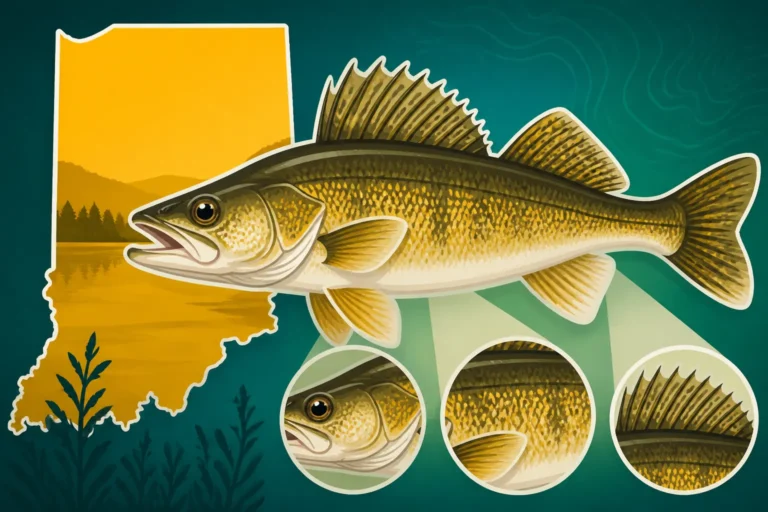
This is often the most reliable "tell" when trying to differentiate between the two. Look at the spiny dorsal fin, the one closest to the head. A true walleye will typically have a distinct, dark blotch at the very bottom-rear of this fin. It’s like a thumbs-up emoji on their back fin! You’ll often hear anglers refer to it as the "walleye spot."
In contrast, a saugeye will almost always have distinct, dark bars or spots that extend from the spiny dorsal fin down onto its body, creating a more mottled or tiger-striped pattern. They generally lack that single, prominent dark spot found on the walleye’s dorsal fin. Imagine drawing irregular vertical lines down from the fin onto the fish's back; that's more indicative of a saugeye. This difference is usually quite clear once you've seen both types of markings.
Body Coloration and Markings
While coloration can vary greatly depending on water clarity, diet, and light conditions, there are some general trends. Walleye typically have a more uniform body color, often appearing olive-brown to golden-yellow, with subtle, blotchy patterns. Their sides might have a few indistinct vertical bars, but they generally fade into the background. Walleye Identification: Olive-Gold Color and White-Tipped Tail goes deeper into these visual cues.
Saugeye, due to their sauger parentage, often display more pronounced, irregular blotches or saddles along their sides, which are usually darker and more defined than a walleye's. This patterning can sometimes give them a more "rough" or "scaly" appearance compared to the walleye's smoother look. It's like comparing a plain shirt to one with a distinct camouflage pattern. These markings are a key characteristic of the sauger side of their family tree.
Tail Fin (Caudal Fin) Appearance
Another often overlooked, but important, identification marker is the tail fin. Walleye usually have a prominent white tip on the lower lobe of their caudal fin. This white tip is one of the classic distinguishing features and is often quite bright, making it relatively easy to spot. It almost looks like the fish dipped its tail in white paint.
Saugeye, on the other hand, typically lack this distinct white tip on the lower tail fin. Instead, their tail fin might be more mottled or speckled, or simply lack the bright white coloration. While there might be some lighter areas, it generally won't be as clean and pronounced as the walleye's white tip. This subtle difference in the tail can be a dead giveaway once you train your eye to look for it.
Cheek and Operculum Scales
This is a detail that requires a closer look, sometimes even a gentle touch. On a walleye, the cheeks (the area below and behind the eyes) and the operculum (the bony flap covering the gills) are typically smooth, with very few, if any, scales. They feel slick to the touch.
For a saugeye, you'll often find scales covering at least the upper half of the operculum and sometimes a portion of the cheek. This is a characteristic inherited from the sauger, which has fully scaled cheeks and opercula. If you gently run your finger over these areas, you'll be able to feel the difference in texture – smooth for a walleye, slightly rougher with scales for a saugeye. This is a very reliable, albeit subtle, differentiator.
Here's a quick comparison table to help you keep these distinctions straight:
| Feature | Walleye | Saugeye |
|---|---|---|
| Dorsal Fin | Single dark blotch at the base of the last few spines on the spiny dorsal fin | Distinct dark spots or bars on the spiny dorsal fin, often extending onto the body |
| Body Markings | More uniform olive-brown to golden, subtle blotches, if any | More pronounced, irregular dark blotches or saddles along the sides |
| Tail Fin | Distinct white tip on the lower lobe | Lacks a distinct white tip on the lower lobe, often mottled or speckled |
| Cheeks/Operculum | Smooth, largely scaleless cheeks and operculum | Scales present on at least the upper half of the operculum and sometimes the cheek |
| Eye Color | Often a "glassy" or "pearlescent" look | Can have a similar look, but sometimes less intense |
Habitat and Behavior: Where and How They Live
Beyond the visual characteristics, understanding where and how these fish typically behave in Indiana waters can provide additional clues for identification. While there's overlap, their preferred environments and typical behaviors can lean one way or the other, helping you narrow down your guess.
Preferred Water Conditions
Walleye generally prefer cooler, clearer waters, though they can adapt to some turbidity. You'll find them thriving in the deeper, colder sections of our natural glacial lakes in northern Indiana, like Lake Wawasee or Lake Maxinkuckee. They are also present in some of the larger, cleaner river systems. They are particularly sensitive to light and will often seek out deeper water or shaded areas during bright daylight hours, becoming more active feeders during low-light periods.
Saugeye, on the other hand, inherit their sauger parent's tolerance for warmer, more turbid, or stained waters. This makes them perfectly suited for many of Indiana's larger man-made reservoirs, such as Monroe Lake, Patoka Lake, or Brookville Lake, where water temperatures can rise in the summer and clarity might be lower. They often hold shallower than walleye during the day in these environments, sometimes relating more closely to subtle changes in bottom contour or submerged structure.
Typical Foraging Habits
Walleye are primarily piscivores, meaning they feed mostly on other fish. Their diet often includes shad, perch, and various minnow species. They are ambush predators, using their excellent low-light vision to stalk and surprise their prey. They'll often cruise along drop-offs, humps, and submerged points, especially where structure provides cover. Best Time of Year to Catch Walleye in Indiana discusses their seasonal feeding patterns.
Saugeye also have a diet rich in small fish, but their sauger genetics often give them a broader range of prey and a willingness to feed more aggressively in varied conditions. They might be found actively chasing baitfish in open water, or hugging bottom structure, similar to a sauger. Because they are often stocked in reservoirs with abundant forage, they tend to grow quickly by taking advantage of readily available food sources. This aggressive feeding can make them a thrilling catch.
Spawning Habits and Natural Reproduction
Walleye in Indiana typically spawn in early spring, often as soon as ice-out occurs and water temperatures climb into the 40s to low 50s Fahrenheit. They prefer to spawn over rocky reefs, gravel beds, or submerged rubble in moving water, such as river sections or wind-swept shallow lake shoals. While some natural reproduction occurs in our larger natural lakes and rivers, extensive stocking programs support many of Indiana's walleye fisheries.
Saugeye, being a hybrid, are largely infertile and do not reproduce successfully in the wild. This is a key reason why they are consistently stocked in specific reservoirs across Indiana. Fisheries biologists manage these populations through regular stocking to maintain a robust fishery. This lack of natural reproduction means that every saugeye you catch is essentially a product of dedicated stocking efforts, making them a unique component of our state's fishing opportunities.
Why Proper Identification Matters for Indiana Anglers
Beyond simply knowing what you've caught, accurately distinguishing between walleye and saugeye carries real implications for every responsible angler in Indiana. It’s not just about bragging rights; it's about respecting the law and contributing to sustainable fisheries management.
Adhering to Size and Bag Limits
The most critical reason for proper identification is that walleye and saugeye often have different size and bag limits in Indiana. While some regulations might group them together, it's common for specific lakes or regions to have distinct rules for each species. For example, a lake might have a 14-inch minimum for walleye but a 16-inch minimum for saugeye, or vice-versa. Exceeding these limits, or keeping an undersized fish, even accidentally, can lead to fines and penalties.
Imagine you're fishing Patoka Lake, a well-known saugeye hotspot. If you misidentify a saugeye as a walleye and keep it based on the wrong regulation, you could be in violation. It's your responsibility as an angler to know the specific rules for the waters you're fishing, and that starts with knowing your fish. Always consult the current Indiana Fishing Regulations and Bag Limits Guide before heading out.
Contributing to Fisheries Management
When you properly identify your catch, whether you release it or keep it within legal limits, you're indirectly helping Indiana's Department of Natural Resources (DNR). Fisheries biologists rely on accurate angler reports and surveys to understand population dynamics. If everyone consistently misidentifies saugeye as walleye, it skews the data, making it harder to assess the health of each distinct population and plan effective stocking or conservation strategies.
Consider the effort and resources that go into stocking saugeye in reservoirs where they don't naturally reproduce. Knowing that these efforts are yielding distinct catches helps the DNR justify and refine their programs. Every correctly identified fish helps paint a clearer picture of our aquatic ecosystems and ensures that future generations can enjoy the same fantastic fishing experiences we do.
Respecting Native vs. Stocked Populations
Walleye are native to many parts of Indiana, and preserving their natural populations is a conservation priority. Saugeye, while a fantastic sport fish, are a stocked hybrid. Understanding this distinction allows anglers to appreciate the unique ecological role of each species. While both are excellent table fare and provide thrilling fights, the management goals for each are different.
For instance, if you're fishing a northern Indiana lake known for its natural walleye populations, there's a certain satisfaction in catching a fish that has thrived there on its own. When you catch a saugeye in a central Indiana reservoir, you're appreciating the success of a carefully designed stocking program. Proper identification deepens your connection to the water and the fish, fostering a greater respect for the diverse world beneath the surface.
Pro Tips for Confident Identification
Sometimes, even with all the knowledge in the world, identifying a fish on the boat can be tough. The fish might be squirming, the light could be bad, or perhaps it's a particularly ambiguous specimen. Here are some pro tips to help you make a confident identification every time.
Use a Fish ID Guide
Never leave home without a reliable fish identification guide. Many state DNRs publish small, waterproof guides that are perfect for keeping in your tackle box or boat. These guides often feature clear illustrations or photos highlighting the key distinguishing characteristics. You can often find these guides online for free or purchase physical copies on sites like Amazon. Having a visual aid right there with you is invaluable, especially when you encounter a fish that doesn't fit the mold perfectly.
If you don't have a specific guide, a quick search on your phone (if you have service) for "Indiana walleye saugeye identification" can often pull up images that help. The more you compare your catch to clear, labelled pictures, the better your eye will become at spotting those subtle differences.
Observe All Characteristics
Don't just look at one feature. While the dorsal fin blotch is a great starting point, always cross-reference with other characteristics like body markings, tail fin, and even the scales on the cheek/operculum. A fish might have a faint dorsal blotch but perfectly clear saugeye body markings, or vice versa. By looking at the totality of the features, you'll arrive at a more accurate identification.
It's a bit like being a detective: one piece of evidence is good, but multiple corroborating clues make a stronger case. Take a moment, get a good look, and run through your mental checklist of features. This holistic approach significantly reduces the chance of misidentification, especially if you're trying to meet a specific length limit or avoid a penalty for fishing without a license.
Take a Photo (and Release Safely)
If you're still unsure, especially if it's a borderline legal fish, snap a clear photo before deciding what to do. Get good angles showing the dorsal fin, body, and tail. You can then review the photo at your leisure, or even consult with more experienced anglers or online forums later.
Remember to prioritize the fish's well-being. If you're going to take a photo, do it quickly and minimize the time the fish is out of the water. Handle the fish gently, supporting its body. If you intend to release, make sure it's done safely and quickly, giving the fish the best chance of survival. Even if you're going to keep it, a photo is a great memory and a way to learn for future trips.
Learn Local Lake-Specifics
While the general identification rules apply statewide, it's also smart to know the stocking patterns and primary species for the specific body of water you're fishing. For instance, if you're fishing a northern Indiana natural lake like Lake Maxinkuckee, it's highly likely you're catching a walleye. However, if you're fishing a central Indiana reservoir like Brookville Lake, a saugeye is far more probable. Walleye Length Exceptions at Bass Lake, Wolf Lake, and Lake George shows how rules can change by location.
Knowing the predominant species for a particular lake doesn't replace the need for accurate identification, but it gives you a good starting point and can help inform your expectations. This local knowledge, combined with your ability to spot physical differences, will make you a much more confident and compliant angler.
Disclaimer
This article is for general informational purposes only and does not constitute professional advice. Laws, prices and regulations vary by location and change over time. Consult a qualified professional for guidance on your specific situation.