Walleye Trolling Techniques
There's nothing quite like the thrill of a walleye hitting your line in Indiana's waters, but boy, can these fish be elusive! Many anglers spend hours casting, only to come up empty-handed, feeling like they're missing some secret trick. If you've been dreaming of that distinct "thump" of a walleye bite and want to consistently put these delicious fish in your cooler, then this guide on effective walleye trolling techniques is exactly what you need.
Understanding Walleye Behavior for Trolling Success
To truly master the art of trolling for walleye, you first need to get inside their heads a little. These fish aren't just swimming around aimlessly; they're constantly reacting to water temperature, light conditions, and bait availability. Knowing their typical patterns throughout the year is your biggest advantage.
Seasonal Movements and Preferred Habitats
Walleye are creatures of habit, and their habits shift dramatically with the seasons.
- Spring Fling (Post-Spawn): After the spawn, which often happens when water temperatures are in the 40s to low 50s, walleye are hungry and moving. You'll often find them recovering in shallower rocky areas, points, and near tributary mouths where food is abundant. Trolling shallow-diving crankbaits or slow-trolling spinner rigs along these shallower contours can be incredibly effective. The key here is to cover water slowly as they're not yet in their aggressive summer feeding patterns but are looking for an easy meal.
- Summer Heat (Deep Water Dwellers): When Indiana's lakes warm up, walleye will generally head for deeper, cooler water. They'll often orient themselves along the thermocline (that distinct layer where warm surface water meets cooler deep water), or seek out deep structure like humps, ledges, and submerged creek channels. This is prime time for open-water trolling with deeper diving crankbaits, or using planer boards and downriggers to target specific depths over offshore structure. They're often more active feeders in summer, so a slightly faster troll speed can entice them.
- Autumn Aggression (Feeding Frenzy): As fall approaches and water temperatures begin to drop, walleye sense the coming winter and start to feed aggressively. They'll move back shallower, often hitting the same points and flats they did in spring, but with a renewed vigor. This is a fantastic time for trolling, as fish are often concentrated and willing to chase down a bait. Medium-diving crankbaits and spinner rigs are excellent choices, and don't be afraid to experiment with brighter colors as water clarity might decrease with fall rains.
- Winter Chill (Slow and Deep): While many anglers pack it in, dedicated ice anglers know that walleye are still out there. For those with boats on larger lakes that don't freeze solid, walleye will be deep and lethargic. Trolling isn't as common during the coldest months, but if you do, think slow presentations with vertical jigs or blade baits right on the bottom. Mostly, winter walleye fishing shifts to ice fishing, where jigging techniques become paramount.
Why Trolling Works for Walleye
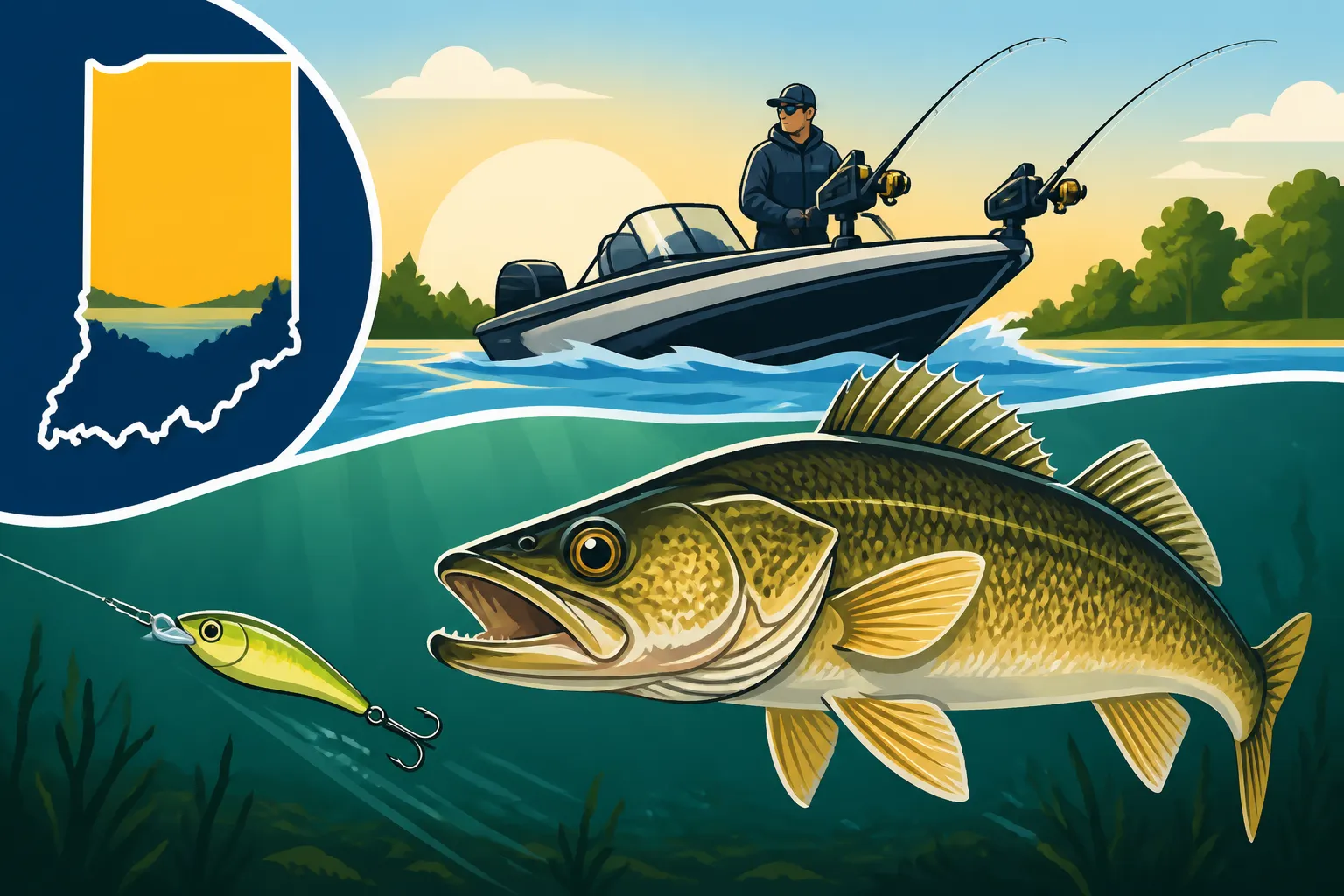
Trolling isn't just a way to relax on the water; it's a highly strategic and incredibly effective method for catching walleye, especially on larger bodies of water like Lake Wawasee or Patoka Lake. It addresses several key challenges that walleye present to anglers.
Firstly, walleye are notorious for roaming. They might be concentrated in one area today and spread out across a wide flat tomorrow. Trolling allows you to cover vast expanses of water efficiently, dramatically increasing your chances of putting your lure in front of an active fish. Instead of waiting for a fish to come to you, you're actively seeking them out.
Secondly, trolling offers unparalleled control over your lure's depth and presentation. With modern equipment like line counter reels and fish finders, you can precisely control how deep your bait is running, ensuring it's in the strike zone where walleye are holding. This is critical because walleye often hug specific depths, whether it's a thermocline, a specific weed line, or right on the bottom. Being able to consistently present your lure at that exact depth makes all the difference.
Finally, the consistent, natural movement of a trolled lure often triggers strikes from otherwise hesitant walleye. Whether it's a crankbait wobbling seductively or a spinner rig fluttering, the continuous motion mimics natural baitfish, making it an irresistible target. The repetitive action can draw strikes even when fish aren't aggressively feeding, turning a slow day into a productive one.
Essential Gear for Walleye Trolling
Just like any specialized fishing technique, successful walleye trolling hinges on having the right tools for the job. You wouldn't use a fly rod for muskie, and you shouldn't skimp on the gear for walleye trolling.
Rods, Reels, and Line Choices
When you're constantly moving your bait through the water, precision and durability in your equipment become paramount.
- Rods: For trolling, you'll generally want a medium to medium-heavy action rod, typically 7 to 9 feet long. The longer length helps spread lines when you have multiple rods out and provides a softer tip to absorb the shock of a strike without tearing the hooks out. Look for rods with a good backbone to handle the pull of a fighting walleye and the resistance of a deep-diving lure. Fiberglass rods are often preferred for their parabolic bend and durability, though some anglers opt for graphite composites for increased sensitivity. Brands like Shimano and Daiwa offer excellent trolling rods that can withstand the constant strain.
- Reels: A good line counter reel is practically a non-negotiable for serious walleye trolling. These reels, often found on platforms like Amazon, allow you to precisely measure how much line you've let out, which directly correlates to your lure's depth. This consistency is crucial for replicating successful presentations. Look for reels with smooth drags and robust internal components that can handle repetitive use. Conventional baitcasting reels also work well, especially for those who prefer their feel and power.
- Line: Your main line choice depends on the type of trolling you're doing. Monofilament (like Berkley Trilene XT) is a popular choice for its stretch, which acts as a shock absorber, and its buoyancy, which helps in certain presentations. However, its stretch makes it less sensitive. Braided line (PowerPro, Sufix 832) offers incredible strength, sensitivity, and a very thin diameter for its breaking strength, allowing lures to dive deeper. If using braid, a fluorocarbon leader (6-12 feet) is almost always recommended. Fluorocarbon is nearly invisible underwater and has excellent abrasion resistance, making it perfect for protecting against sharp walleye teeth or rough bottom structure. The minimal stretch of fluorocarbon also provides better feel than mono, even when trolling.
The Right Lures and Baits for Trolling
Choosing the right lure is often a game of trial and error, but having a solid understanding of the most effective types will get you started on the right fin.
- Crankbaits: These are arguably the most popular walleye trolling lures. Their diving lips allow them to reach various depths, and their wobbling action perfectly mimics fleeing baitfish. Shallow runners (Rapala Shad Rap, Berkley Flicker Shad) are great for early season or shallow flats, while deep divers (Rapala Deep Husky Jerk, Reef Runner) are essential for summer walleye holding in 15-30+ feet of water. Color selection can be critical; natural patterns like perch, shad, and silver are always good, but don't shy away from bright firetiger or hot pink, especially in stained water or on overcast days. Having a variety of sizes is also important, as walleye can be picky about the size of their meal. You can find a vast selection of these on Amazon, often with great deals.
- Spinner Rigs (Crawler Harnesses): When walleye are a bit less aggressive or prefer a natural presentation, spinner rigs, often paired with live nightcrawlers, are incredibly effective. These rigs typically consist of a clevis-mounted blade (Colorado, Indiana, Willow Leaf) that spins around a wire shaft, followed by beads and two or three hooks. The blade provides flash and vibration, while the nightcrawler offers scent and natural movement. They are usually trolled at slower speeds than crankbaits, often with a bottom bouncer or an inline weight to keep them near the bottom. The size and color of the blade, as well as the bead colors, can be adjusted based on water clarity and sunlight.
- Spoons: While less common for dedicated walleye trolling in Indiana's inland lakes compared to crankbaits or spinner rigs, spoons (like a Michigan Stinger or a Daredevle) can be very effective, particularly in deeper, colder water or when targeting larger walleye in systems where they're feeding on bigger baitfish. They are often trolled at faster speeds and are excellent for imitating injured baitfish with their erratic fluttering action. Spoons are particularly useful on Lake Michigan for salmon and steelhead, but can cross over for deeper water walleye if you experiment. If you're looking for other Best Lures for Indiana Walleye Fishing, check out our detailed guide.
Mastering Trolling Techniques
Having the right gear is only half the battle; knowing how to use it effectively is where the real skill comes in. Trolling is a dynamic process that requires constant adjustment and attention to detail.
Speed, Depth, and Direction Control
These three factors are the pillars of successful walleye trolling. Neglect any one, and your catch rates will suffer.
- Speed: Walleye are often particular about trolling speed. A good starting point for crankbaits is usually 1.5 to 2.5 mph, but this can vary wildly based on water temperature, fish activity, and lure type. Spinner rigs typically require slower speeds, often 0.8 to 1.5 mph, to allow the blade to spin correctly and the crawler to undulate naturally. Pay close attention to your boat's speed over ground, not just through water, especially in current. Experiment by increasing or decreasing speed in small increments (0.1 mph) until you find what triggers bites.
- Depth: This is where your electronics truly shine. Your Best Fish Finders for Indiana Lake Fishing will be invaluable. Monitor your fish finder for baitfish schools and walleye arches, noting the depths where fish are holding. Use dive curves for your crankbaits (charts that show how deep a particular lure runs at a given speed with a certain amount of line out) or inline weights and bottom bouncers for spinner rigs to ensure your baits are consistently in that strike zone. Remember, walleye are often belly-to-the-bottom or suspended just above structure.
- Direction Control (S-Turns): Trolling in a straight line can be effective, but often, the magic happens when you introduce subtle changes in direction. Performing gradual "S-turns" with your boat will cause your outside lines to speed up and rise in the water column, while your inside lines will slow down and sink. This variation in speed and depth can often be the trigger for a hesitant walleye. Many anglers notice that strikes frequently occur just as the boat is turning. Use your GPS to stay on course, mark waypoints where you get bites, and track your successful paths.
Utilizing Planer Boards and Downriggers
For covering more water and targeting precise depths, specialized equipment like planer boards and downriggers are game-changers for walleye trolling.
- Planer Boards: These ingenious devices allow you to spread multiple lines out to the sides of your boat, effectively widening your trolling path. This is incredibly useful for covering expansive flats, preventing lines from tangling, and presenting baits in shallower, spookier water away from the boat's prop wash. There are inline planer boards that attach to each individual line, and mast systems that deploy multiple lines from a central board. When you get a bite, the board detaches or slides down the line, indicating a fish. For more on this, check out our guide on Planer Boards for Indiana Salmon and Steelhead Trolling, as the principles often apply to walleye. Remember to always set your outside lines first and retrieve your inside lines first to minimize tangles.
- Downriggers: For targeting walleye holding at very specific, deeper depths, downriggers are king. A downrigger uses a heavy lead weight (cannonball) on a cable to pull your fishing line down to a precise depth. Your fishing line is then clipped into a release clip on the downrigger cable. When a fish strikes, the line pops free from the clip, allowing you to fight the fish directly without the weight of the cannonball. This is invaluable for presenting baits exactly at the thermocline or just above deep structure. While often associated with species like salmon and steelhead in Lake Michigan, downriggers can be highly effective for deep summer walleye in our larger reservoirs, offering unmatched depth control.
Locating Walleye Hotspots for Trolling in Indiana
Knowing how to troll is one thing, but knowing where to troll is another. Indiana has some fantastic walleye fisheries, and understanding their unique characteristics can boost your success.
Understanding Key Structures and Depths
Walleye are structure-oriented fish, meaning they'll relate to changes in the lake or river bottom. Learning to "read" the water and your electronics for these features is crucial.
- Offshore Humps and Points: These are classic walleye magnets. A hump rising from a deep flat, or a point extending into deep water, provides ambush opportunities for walleye. Troll over the top, along the edges, and especially around the transition zones where the structure meets the deeper water.
- Ledges and Breaks: A sudden drop-off or a distinct depth change (a ledge) is a prime travel lane and feeding area for walleye. Focus your trolling efforts parallel to these breaks, varying your depth slightly to cover the entire face of the ledge. Walleye will often sit on the deep side of the break and move up to feed.
- Submerged Creek Channels: In reservoirs like Patoka Lake or Monroe Lake, old creek channels that were flooded are excellent highways for walleye. These often have distinct edges and can be traced for miles. Trolling along these channel edges can lead to consistent success, particularly in summer.
- Weed Lines: Healthy weed beds, especially those with distinct edges bordering deeper water, provide cover and ambush points for walleye. Troll just outside the deeper edge of these weed lines, or even over the top of sparse weeds if fish are holding higher. Keep an eye on your sonar for areas where weeds transition to hard bottom, as these often hold fish. If you're looking for the Best Walleye Fishing in Indiana, understanding these structures is paramount.
Best Indiana Lakes for Trolling Walleye
Indiana might not have the reputation of states like Minnesota for walleye, but we have some fantastic opportunities for those willing to put in the effort.
- Lake Wawasee (Kosciusko County): As Indiana's largest natural lake, Lake Wawasee offers excellent walleye trolling opportunities. Its diverse bottom structure, including deep basins, humps, and abundant weed lines, provides plenty of habitat. Early season trolling in the shallower bays and points can be productive, moving to deeper contours in summer. Don't forget to check out our detailed guide on Lake Wawasee Walleye Fishing Access Points.
- Monroe Lake (Monroe/Brown Counties): Indiana's largest inland lake, Monroe offers significant acreage for trolling. Walleye here often relate to the flooded timber, creek channels, and expansive flats. Trolling deep-diving crankbaits or spinner rigs with bottom bouncers along these features can yield great results, especially in the main lake basin.
- Patoka Lake (Dubois/Orange/Crawford Counties): Another major reservoir in Southern Indiana, Patoka is known for its excellent walleye fishery. The fish here often use the numerous submerged humps, points, and old creek beds. Trolling over these structures, particularly during low light conditions, is a highly effective method.
- Glacial Lakes of Kosciusko and Steuben Counties: This region is a walleye angler's dream. Lakes like James Lake, Lake George, and the various interconnected waters in Steuben County (e.g., Crooked Lake, Lake James) offer fantastic trolling. The clear, deep waters often require a bit more stealth, but the rewards can be substantial. These lakes are excellent for both deep-water crankbait trolling and open-water planer board techniques. For more specific insights into these waters, consult our article on Steuben County Lakes for Walleye Fishing.
It's crucial to always be mindful of Indiana Fishing Regulations and Bag Limits Guide for walleye in these specific lakes, as limits and length restrictions can vary. For instance, you should be aware of rules like the Walleye Minimum Length North of State Road 26 or special regulations for particular bodies of water.
Troubleshooting Common Trolling Challenges
Even with the best gear and knowledge, trolling can present its fair share of head-scratchers. Being prepared to adapt and troubleshoot is a hallmark of a successful angler.
Dealing with Finicky Walleye
Sometimes, walleye just don't seem interested, no matter what you throw at them. This is when you need to become a detective on the water.
- Adjust Your Speed: Even a 0.1 mph change can make a huge difference. If you're not getting bites, try speeding up or slowing down. Sometimes fish want a fast, fleeing bait; other times, a slow, methodical presentation is what triggers them. Pay attention to changes in wind or current that might affect your boat speed or lure action.
- Change Lure Color and Size: If you're trolling with a school of crankbaits and only getting follows or no bites, start swapping out colors. Go from natural to bright, or vice versa. Change the size of your lure – sometimes a smaller profile is key, especially if baitfish are tiny. Consider adding scent to your lures (like a gel or spray) to give them an extra edge.
- Vary Depth: Even if your fish finder shows fish at a certain depth, sometimes walleye will be slightly above or below that primary school. Try running one lure a few feet deeper and another a few feet shallower. The "zone" can be incredibly narrow.
- Switch Lure Types: If crankbaits aren't working, switch to spinner rigs. If spinners are slow, try a jigging spoon on a short line for vertical jigging while trolling. Don't be afraid to break from your planned strategy. Sometimes, trying Walleye Jigging Techniques in areas you've trolled can elicit strikes from fish that ignored a horizontal presentation.
Avoiding Snags and Fouled Lines
One of the most frustrating aspects of trolling can be constantly fouling lines or snagging expensive lures on the bottom.
- Know Your Bottom Composition: Your fish finder is essential here. Understand what a "hard bottom" looks like versus "soft mud" or "heavy weeds." If you're constantly snagging, you might be in an area with too much cover or simply running too deep for the given structure. Back off the depth or move to a different area.
- Use the Right Gear for the Job: If you're consistently bumping bottom with spinner rigs, consider using lighter bottom bouncers or adjusting your line length. For crankbaits, if you're ticking the bottom too much, either raise your line counter number slightly or switch to a crankbait with a shallower dive curve.
- Regular Line Checks: Periodically pull your lines in and check them. Weeds, small pieces of debris, or even a tiny fish caught on a hook can completely kill a lure's action and prevent bites. A fouled lure is a wasted lure.
- Quality Swivels and Knots: Ensure all your connections are strong and your swivels are functioning properly to prevent line twist, especially with spinner rigs. Always use fresh line and reliable knots that won't fail under pressure. A smooth running line reduces drag and keeps your lure performing optimally.
Safety and Etiquette on Indiana Waters
While the pursuit of walleye is exciting, it's vital to prioritize safety and show respect for fellow anglers and the environment. Trolling often involves larger boats and multiple lines, so awareness is key.
Boater Safety Reminders
Even on calm days, conditions can change quickly on Indiana's larger lakes and reservoirs. Safety first, always!
- Life Jackets for All: Ensure every person on board has a properly fitting, readily accessible life jacket. For children under 13, it's mandatory to wear one at all times while the boat is underway. Don't just have them on board; make sure everyone knows where they are and how to use them. Our Indiana Boater Safety Gear Checklist provides a comprehensive overview of what you should always have with you.
- Navigation Lights: If you're trolling at dawn, dusk, or night (prime walleye times!), make sure your navigation lights are fully functional and turned on. Other boats need to see you, and you need to see them. This is especially true when running multiple lines, as your boat might appear wider than it actually is.
- Weather Watch: Always check the forecast before heading out, and keep an eye on changing conditions while on the water. Indiana weather can be unpredictable, with pop-up storms and sudden high winds. If conditions deteriorate, head to shore.
- Inform Others: Let someone know your float plan – where you're going, when you expect to return, and who is with you. This simple step can be a lifesaver if you encounter an emergency.
Respecting Other Anglers and Regulations
The waters of Indiana are a shared resource, and a positive experience relies on mutual respect.
- Give Space: Trolling boats cover a lot of water. Be mindful of other anglers, especially those casting from shore or anchored boats. Give them a wide berth to avoid tangling lines or disturbing their fishing. If you see someone catching fish in a spot, don't crowd them.
- Know the Rules: Familiarize yourself with all Indiana Fishing Regulations and Bag Limits Guide. This includes specific walleye length and bag limits, which can vary by lake. For example, some lakes might have a 14-inch minimum, while others, like Bass Lake or Wolf Lake, have exceptions to the statewide rule. Always know the Indiana Walleye Length Limits by Lake for your chosen fishing spot.
- Proper Fish Handling: If you're practicing catch and release, handle walleye gently with wet hands. If you plan to keep fish, dispatch them quickly and humanely, and get them on ice immediately to preserve their quality.
| Lure Type | Typical Depth Range (feet) | Optimal Trolling Speed (mph) | Best Conditions | Notes |
|---|---|---|---|---|
| Crankbaits | 5-30+ (depending on model) | 1.5 – 2.5 | Versatile, open water, over structure, varying depths | Excellent for covering water; dive curves are crucial. |
| Spinner Rigs | 5-25 (with weights) | 0.8 – 1.5 | Slower speeds, stained water, finicky fish, near bottom | Often paired with live bait (nightcrawlers); requires inline weights. |
| Spoons | 15-40+ (with weights/downriggers) | 2.0 – 3.5 | Deeper water, faster presentations, imitating injured baitfish | Good for larger walleye; less common in inland lakes. |
This table provides a general guideline, but remember that experimentation is key to finding what works best on any given day in Indiana's diverse waters.
Disclaimer
Fishing inherently carries risks, and regulations can change. Always consult the most current Indiana Department of Natural Resources (IDNR) fishing guide for the latest rules, license requirements, and safety information before heading out on the water. This guide is for informational purposes only.