How to Set a Trotline for Catfish
There’s something uniquely satisfying about the idea of setting a trotline for catfish. You bait a series of hooks, deploy your line, and let the river or lake do the work for you, imagining those big whisker fish finding your offerings while you're off doing other things. But if you’ve ever tried to figure out the ins and outs of setting one up properly, navigating the rules, and getting all the right gear, it can feel like a bit of a maze. This guide is here to untangle that, walking you through everything you need to know to set a trotline for catfish effectively and responsibly in Indiana.
Understanding Trotlines and Why They Work for Catfish
First off, let's talk about what a trotline actually is and why it's such a popular method, especially for those who love to target catfish. It’s not just a random string of hooks; it’s a strategically deployed fishing device that can dramatically increase your chances of a catch compared to a single rod and reel.
What Exactly is a Trotline?
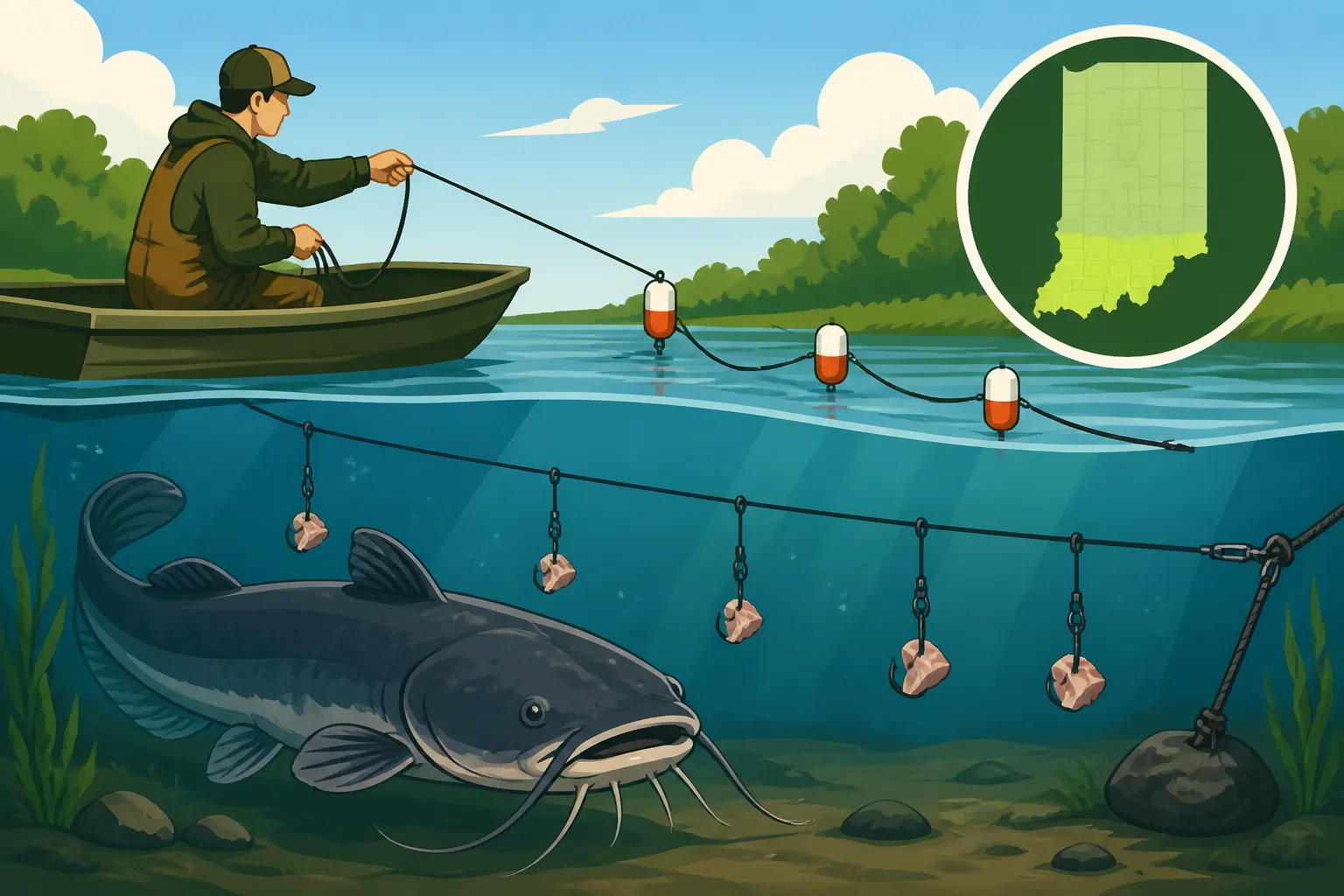
Imagine a main line, often heavy-duty cord or rope, stretched across a body of water or anchored to the bottom. Along this main line, you attach multiple shorter lines, called gangions or snoods, each with its own baited hook. These hooks are spaced out, allowing you to cover a wider area and present multiple bait options simultaneously. It’s a passive fishing technique, meaning you set it and come back later to check your harvest, unlike active fishing where you're constantly holding a rod. The beauty of it is that it allows you to literally fish in multiple spots at once, significantly upping your odds of encountering a hungry catfish.
One thing to remember is that while trotlines are fantastic for efficiency, they also require a certain level of responsibility and adherence to local rules, which we'll dive into later. It’s not about just throwing a bunch of hooks out there; it's about smart, ethical angling.
Why Catfish Are Ideal for Trotlining
Catfish are practically tailor-made for trotlining. They are bottom-feeders with an incredible sense of smell, and they aren't usually picky eaters. This makes them perfect candidates for stationary baits left for extended periods. When a trotline is set in an active feeding lane or near known catfish haunts, the multiple baits create a potent scent trail that attracts fish from a wider area.
Think about it: a big channel cat, known for its powerful bite and relentless fight, comes across one of your well-placed baits. With multiple hooks available, you're not just waiting for one lucky strike. You're increasing the chances of multiple fish finding your line, which can lead to a truly memorable haul. This method is especially popular for targeting larger catfish, like blue catfish or flatheads, which often prefer to cruise for food rather than actively chase down lures. If you're looking to consistently pull in some good-sized fish, understanding how to set a trotline for catfish is a game-changer.
Essential Gear for Setting Up a Trotline in Indiana
You can't just grab any old string and a few hooks and call it a day. A well-constructed trotline is safe, effective, and durable. Investing in the right gear from the start will save you a lot of headaches (and lost fish!) down the line. Many of these items are readily available online through retailers like Amazon, or at your local sporting goods store.
Main Line and Gangions
The backbone of your trotline setup is, naturally, the main line itself. You'll want something incredibly strong and abrasion-resistant.
- Main Line: For catfish, I recommend a heavy-duty braided nylon or tarred trotline rope. A good main line will have a breaking strength of at least 200-300 pounds, sometimes even more if you're targeting truly enormous flatheads or blue cats. This isn't just about holding the fish; it's about withstanding currents, snags, and the sheer power of an angry catfish pulling on the line. I've seen too many stories of anglers losing their entire setup because they skimped on the main line. You can find excellent quality trotline rope kits, often including the line, hooks, and weights, on sites like Amazon, making it easy to get started.
- Gangions (Snoods): These are the shorter lines that connect your hook to the main line. They should be strong, but slightly weaker than your main line. This way, if a hook gets badly snagged, the gangion breaks before the main line does, saving your entire setup. Monofilament line in the 80-100 pound test range works well for gangions. I usually make my gangions about 12-18 inches long, giving the bait some natural movement in the water without allowing the hooks to tangle too easily. The length can vary based on the depth you're fishing and the amount of current. You want enough slack for the fish to take the bait without feeling immediate resistance, but not so much that it wraps around other parts of the line.
Hooks, Swivels, and Weights
These components are where the fish meet the line, and they need to be robust enough to handle the fight.
- Hooks: For trotlining catfish, you'll want sturdy, sharp hooks. Circle hooks are often preferred because they are designed to hook fish in the corner of the mouth, which is much safer for the fish if you plan to release them, and they rarely get swallowed deep. This also makes them easier to remove. Sizes usually range from 5/0 to 10/0, depending on the size of catfish you're hoping to catch. For typical Indiana channel cats, 7/0 or 8/0 are excellent choices.
- Swivels: Swivels are incredibly important. They prevent your gangions from twisting and tangling, especially when a fish is thrashing or if there's a strong current. Heavy-duty barrel swivels or three-way swivels are commonly used. Attach one end of the swivel to your main line and the other to your gangion. This small detail makes a huge difference in the overall manageability and effectiveness of your trotline.
- Weights: You need weights to keep your trotline on the bottom, where catfish typically feed. Bank sinkers, pyramid sinkers, or even heavy chunks of concrete or brick can work, as long as they have a way to attach to the line. The amount of weight depends on the current and the type of bottom. In a strong river like the Wabash River, you’ll need more weight to keep the line from drifting. I like to use a combination of smaller weights crimped along the main line to help keep it submerged, and heavier weights at each end to act as anchors.
Anchors and Floats
Securing your trotline and marking its location are critical for both successful fishing and legal compliance.
- Anchors: You'll need substantial anchors for each end of your trotline. Again, bricks, concrete blocks, or specialized trotline anchors can work. The goal is to keep the line firmly in place, even with multiple large fish fighting against it. I often use at least 10-20 pounds of weight per anchor, sometimes more in strong currents or deeper water. Make sure your anchor ropes are strong and long enough to reach the bottom and still allow your trotline to be deployed correctly without coming loose.
- Floats: Indiana regulations require trotlines to be clearly marked. You’ll need durable floats, often brightly colored, attached to a line that runs from your anchor to the surface. These floats should be large enough to be easily seen from a distance and sturdy enough not to be pulled under by current or struggling fish. Many anglers mark their floats with their name and address or ID number, which is also a common legal requirement. You can find bright, durable floats on Amazon or at any fishing supply store.
Here's a quick reference table for your basic trotline setup:
| Component | Description | Recommended Specifications |
|---|---|---|
| Main Line | Heavy-duty, abrasion-resistant rope | Braided Nylon or Tarred, 200-300 lb test, 50-100 ft length |
| Gangions | Shorter lines connecting hooks to main line | Monofilament, 80-100 lb test, 12-18 inches long |
| Hooks | Sturdy, sharp hooks for catfish | Circle Hooks, 5/0 – 10/0 |
| Swivels | Prevent line twisting and tangling | Heavy-duty Barrel or 3-Way Swivels |
| Weights | Keep main line on the bottom | Bank/Pyramid Sinkers, or concrete, 1-3 lbs each |
| Anchors | Secure ends of trotline to the bottom | Bricks, concrete blocks, specialty anchors, 10-20 lbs |
| Floats | Mark trotline location, often required by law | Brightly colored, durable, clearly visible |
Step-by-Step Guide to Deploying a Trotline Safely and Effectively
Now that you've got all your gear, it's time to put it to use. Setting a trotline isn't just about dropping it in the water; it's a careful process that maximizes your chances of success and ensures you're fishing safely and legally.
Preparing Your Trotline Before Deployment
Preparation is key to a smooth and successful trotline deployment. Don't rush this step!
- Rigging the Main Line: Before you even get to the water, lay out your main line on a clean surface. Start attaching your gangions at regular intervals, typically every 3-5 feet. This spacing helps prevent tangles and allows each bait enough room to attract fish. Secure each gangion to the main line using strong knots, like a snell knot for the hook and a surgeon's loop or double uni knot to attach the swivel to the main line. Make sure your knots are tight and secure – a loose knot is a lost fish!
- Attaching Weights and Floats: Distribute smaller weights along the main line to help it sink uniformly to the bottom. Then, attach your anchor lines to each end of the main line. Remember to tie your float lines to your anchors, ensuring they are long enough to reach the surface with plenty of slack. It’s also a good idea to pre-bait your hooks at home if you're using durable baits like cut bait or stink bait, just to make deployment quicker on the water. However, some baits are better applied fresh.
- Choosing Your Bait: Catfish are not generally picky, but some baits are definitely more effective.
- Cut Bait: Shad, skipjack herring, or even bluegill cut into chunks are excellent. The oils and scent trail they release are irresistible to catfish. These are fantastic options for enticing those larger catfish species.
- Stink Baits: Commercial stink baits, often dough-like or in a punch bait form, are designed specifically to attract catfish with their potent odors. Brands like Whisker Seeker Tackle and Catfish Charlie offer popular options that anglers often use.
- Live Bait: Smaller bluegill, sunfish, or even large minnows can be very effective, especially for flathead catfish, which prefer live prey. Just be sure to check regulations for using live bait, as some species might be prohibited.
- Chicken Livers: A classic for a reason! Chicken livers are incredibly messy but highly effective due to their strong scent and tender texture. Keep them chilled until you're ready to use them.
Deploying Your Trotline in the Water
This is where the action happens! A systematic approach will prevent snags and ensure your line is set correctly.
- Location, Location, Location: Before deploying, scout your spot. Look for areas where catfish congregate: deep holes, submerged logs, rock piles, sudden drop-offs, or current breaks along rivers like the White River. Often, the best spots are near structure that offers cover and food. If you're fishing a river, consider setting your line parallel to the bank in a deeper channel, or across a narrow section where current funnels fish. In lakes, target deep humps, creek channels, or the mouths of coves.
- Setting the First Anchor: From your boat or the bank (depending on the length and location), carefully drop your first anchor. Make sure the float line is attached and deployed so the float marks the anchor's position on the surface. Allow the line to settle firmly on the bottom.
- Unspooling and Baiting: As you slowly move away from the first anchor, unspool your main line. As each gangion comes up, attach your chosen bait if you haven't already. This is where patience is key; ensure each bait is properly secured to the hook. Keep the line taut but don't pull so hard you drag your first anchor.
- Setting the Second Anchor: Once you've reached the desired length for your trotline, drop your second anchor and deploy its float line. Ensure the line is stretched properly, with enough slack to lay on the bottom naturally, but not so much that it creates excessive sag or can be easily moved by current. In deeper waters or strong currents, it might take a moment for your anchors to fully settle.
- Marking and Recording: Double-check that both floats are visible and clearly marked with your personal identification, as required by Indiana fishing regulations. I always make a note of the exact location (GPS coordinates if possible), the time I set it, and what bait I used on which sections. This helps you remember where to retrieve it and track what baits are most effective.
Checking and Retrieving Your Trotline
Leaving your trotline for too long can lead to dead fish, so regular checks are essential.
- Timely Checks: How often you check your trotline depends on factors like water temperature and local regulations. In warmer water, fish spoil faster, so checking every 6-12 hours is advisable. In cooler water, you might extend that to 24 hours, but never longer than allowed by law. Neglecting your trotline can result in wasted fish and potential fines.
- Retrieval: Approach your trotline carefully. Start from one end, pulling up the main line slowly. Use gloves to protect your hands from hooks and line burns. As you retrieve, remove any fish, re-bait hooks if needed, and check the line for damage. If you're done fishing, carefully coil the line, ensuring hooks are secured to avoid accidents. This is also a good time to check your entire setup for wear and tear, making repairs or replacements as needed before your next outing.
Legality and Responsible Trotlining Practices in Indiana
Trotlining is a time-honored tradition, but it comes with strict rules and ethical considerations, especially here in Indiana. Being a responsible angler means understanding and following these guidelines to ensure the sustainability of our fisheries and safe access for everyone.
Indiana's Trotline Regulations
The Indiana Department of Natural Resources (IDNR) sets specific rules for trotlines to manage fish populations and ensure public safety. Failing to adhere to these rules can result in penalties and fines for fishing without a license.
- Licensing: First and foremost, you need a valid Indiana fishing license to set a trotline. There are different options available, from annual resident licenses to Indiana nonresident fishing license options for visitors. It's always best to ensure your license is up to date before heading out.
- Number of Trotlines and Hooks: Indiana generally allows a limited number of trotlines and hooks per angler. Currently, an individual can possess or use no more than three trotlines at a time. Each trotline is typically limited to a maximum of 50 hooks. This is a significant number of hooks, offering plenty of fishing potential without over-harvesting.
- Identification: Every trotline must be clearly marked with the owner's name and address or a DNR-issued ID number. This allows conservation officers to identify ownership and ensures accountability. This marking needs to be on your floats, clearly visible from the surface.
- Location Restrictions: Trotlines are often prohibited in certain areas, such as within 300 feet of a dam, public access sites, or in designated swimming areas. Always check the current Indiana Fishing Regulations and Bag Limits Guide, which you can find on the IDNR website, before deploying your line. Rivers and larger lakes are typically fair game, but smaller, highly trafficked waters might have specific exclusions.
- Check Times: While there isn't always a hard and fast rule on how often you must check your trotline, the IDNR expects responsible harvest. As mentioned before, frequently checking your lines, especially in warm weather, prevents spoilage and ensures ethical take.
Ethical Considerations and Conservation
Beyond the letter of the law, ethical angling practices are crucial for preserving Indiana's fantastic fishing opportunities for generations to come.
- Selective Harvest: Trotlines can be very effective, sometimes too effective. Be mindful of how many fish you're keeping. Only take what you need and what is legal according to Indiana's statewide bass daily bag limit (if you happen to catch bass incidentally) or Indiana Panfish Daily Limits by Species. Practice catch and release for fish you don't intend to eat or that are undersized. Learning to properly handle and release fish that aren't destined for the frying pan is an important skill.
- Minimizing Bycatch: While trotlines are primarily for catfish, you might occasionally catch other species. If you catch non-target species, release them quickly and carefully. Using circle hooks, as discussed earlier, greatly aids in this, as they tend to minimize deep hooking.
- Respecting Other Anglers and Boaters: Trotlines, by their nature, can occupy a fair amount of water. Be considerate of other users of the waterway. Don't set lines in high-traffic boating lanes, near swimming beaches, or in popular casting spots for other anglers. Your clearly marked floats are important here, too, helping others avoid your lines.
- Environmental Responsibility: Always retrieve all your gear. Lost trotlines can become "ghost fishing" devices, continuing to catch and kill fish and other wildlife unnecessarily. Never leave hooks, line, or bait containers behind. Pack out everything you pack in. Ensuring we keep our rivers and lakes clean is paramount to the health of the ecosystem and our continued enjoyment of the sport.
By understanding the regulations and adopting a mindset of stewardship, you can enjoy the rewarding experience of trotlining for catfish while contributing to the health and vitality of Indiana's waterways. It's about getting out there, catching some delicious fish, and doing it in a way that makes us all proud.
Disclaimer
The information provided in this guide is for general informational purposes only and is not intended as legal advice. Fishing regulations, licensing requirements, and specific rules for gear use can change. Always consult the most current Indiana Department of Natural Resources (IDNR) regulations handbook or website before engaging in any fishing activities. Adherence to all local, state, and federal laws is the responsibility of the individual angler.