Steuben County Lakes for Walleye Fishing
It can be incredibly frustrating to hear whispers of fantastic walleye fishing in a region, only to struggle to find concrete, detailed information about where to go and what to expect. Many anglers know Steuben County is famous for its beautiful glacial lakes, but pinning down the best spots for those elusive walleye can feel like a secret handshake you're not in on. This guide is here to unravel those mysteries, offering a comprehensive look into the top walleye lakes in Steuben County, Indiana, along with essential tips, techniques, and regulatory insights to help you reel in that golden-sided prize.
The Allure of Walleye Fishing in Steuben County's Glacial Lakes
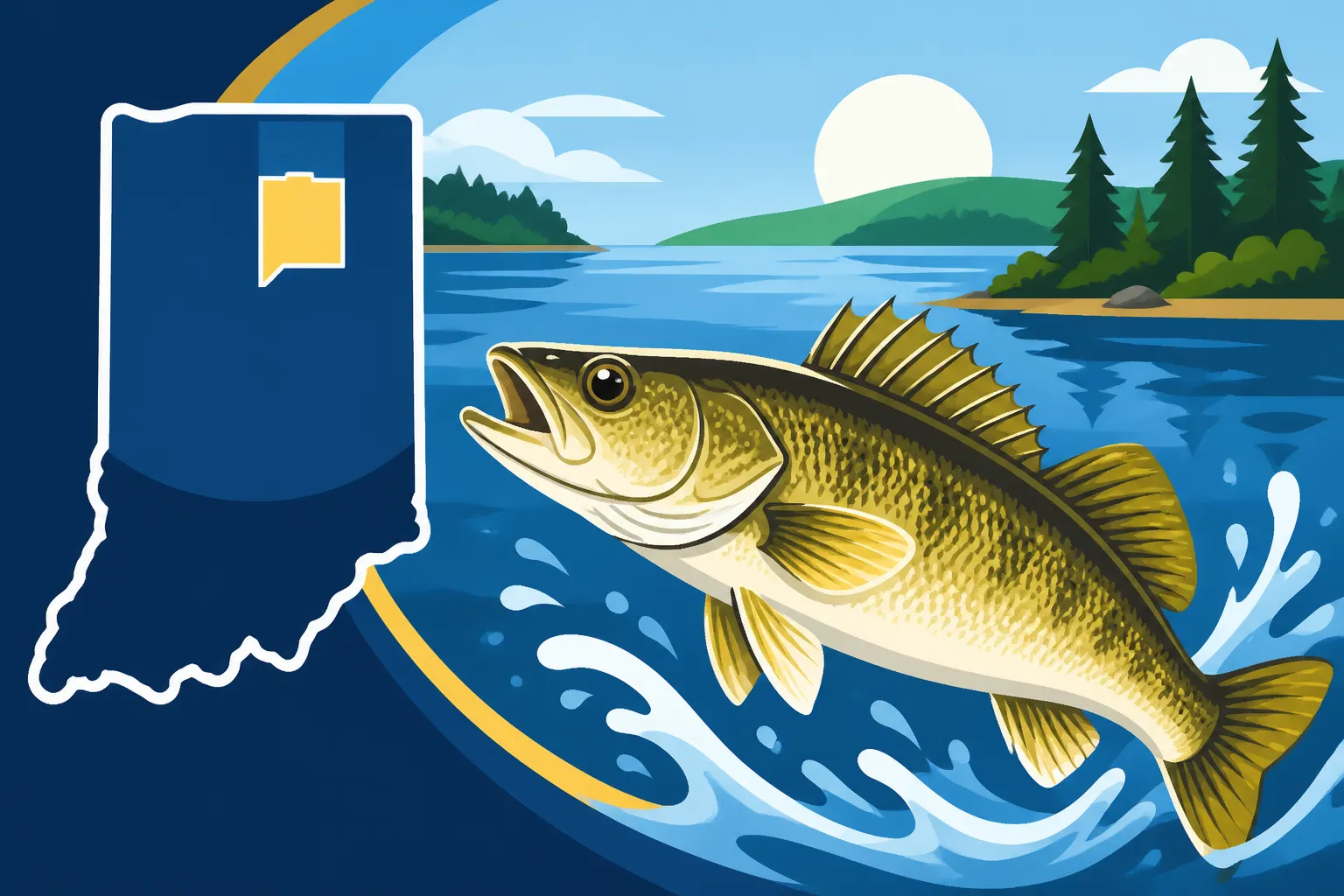
Steuben County, nestled in the northeastern corner of Indiana, boasts a unique landscape shaped by ancient glaciers. This geological history has blessed the region with a collection of deep, clear, and cold-water lakes that stand in stark contrast to many of the shallower, warmer reservoirs found elsewhere in the state. For walleye enthusiasts, this is fantastic news, as these conditions create prime habitat for these highly sought-after game fish. It's a true gem for anglers looking for a different kind of freshwater fishing experience.
Why Steuben County Stands Out for Walleye
The glacial lakes of Steuben County offer a distinct advantage for walleye compared to other Indiana waters. These lakes are characterized by their significant depths, often plunging over 60-80 feet, which provides the cooler, oxygen-rich water that walleye thrive in, especially during the warmer summer months. Beyond depth, the lakes feature diverse bottom structures—from steep drop-offs and humps to rocky points and submerged weed beds—all of which serve as ideal ambush points or holding areas for walleye. The clarity of the water also plays a crucial role, allowing walleye to utilize their superior low-light vision to hunt baitfish effectively, making dawn, dusk, and even night fishing particularly productive. When you're fishing these waters, you're not just casting a line; you're engaging with a complex ecosystem perfectly suited for these prized predators. It’s no wonder this area is considered part of the larger region known as "Kosciusko and Steuben Counties: Indiana's Best Pike and Walleye Water".
Furthermore, the abundance of natural forage in these lakes, including various baitfish species like cisco, shiners, and perch, ensures a healthy and thriving walleye population. The Indiana Department of Natural Resources (DNR) also actively manages these fisheries, often stocking walleye to supplement natural reproduction and maintain a robust population for anglers. This combination of natural habitat, plentiful food sources, and thoughtful management makes Steuben County a premier destination for walleye fishing, offering both quantity and quality catches for those who know how to approach these unique waters.
Key Walleye Species in These Waters
While "walleye" is the common name, it's important to understand what you're primarily targeting in Steuben County. The main species you'll encounter is the true walleye (Sander vitreus). These fish are easily identifiable by their olive-gold coloring, a prominent dorsal fin with sharp spines, and a distinctive white tip on the lower lobe of their tail fin. Their large, glassy eyes, which give them their name, are perfectly adapted for hunting in low light, making them a challenge and a thrill to pursue. Identifying your catch correctly is part of the fun, and knowing the characteristics is key. If you're unsure, you can always refer to a guide on "Walleye Identification: Olive-Gold Color and White-Tipped Tail".
It's less common, but some anglers might occasionally confuse walleye with their close relative, the saugeye, which is a hybrid of a walleye and a sauger. While saugeye are stocked in some Indiana reservoirs, they are not typically found in the glacial lakes of Steuben County. Focus your efforts on walleye, and you'll be on the right track. Understanding these species differences helps you confirm your catch and appreciate the unique qualities of the fish you're targeting.
Top Steuben County Lakes for Walleye Anglers
Steuben County is home to several excellent walleye lakes, each offering its own unique challenges and rewards. Knowing which lakes hold the best populations and what specific features to look for can significantly improve your success rate. From the sprawling depths of Lake James to the distinct regulations of Lake George, these waters are rich with opportunity.
Lake James: A Walleye Powerhouse
Lake James is arguably the crown jewel of Steuben County's fishing scene and a perennial favorite for walleye anglers. As one of the largest and deepest natural lakes in Indiana, it provides an expansive and complex environment for walleye to thrive. The lake is divided into three main basins—First Basin, Second Basin, and Third Basin—each with its own character, but all interconnected. The sheer size of Lake James means there's ample structure, from extensive weed lines and rocky points to deep humps and sudden drop-offs, especially around the channels connecting the basins. Walleye here can grow to impressive sizes, with many anglers reporting catches in the 20-inch range, and trophy fish over 25 inches are not uncommon.
Finding walleye on Lake James often involves targeting these structural elements. During the day, particularly in summer, walleye will often retreat to deeper, cooler waters, congregating around thermoclines or deep offshore structures. Early morning, late evening, and night fishing are prime times when walleye move shallower to feed. Local knowledge is key on a lake this size, and some anglers find success hiring a local guide through platforms like FishingBooker to quickly learn the hotspots and effective techniques for this particular lake. They can save you a lot of time on the water.
Lake George: Understanding the Unique Regulations
Lake George is another excellent walleye destination in Steuben County, known for its healthy walleye population and clear, deep water. However, what truly sets Lake George apart is its specific walleye length limit exception. While most of northern Indiana adheres to a 16-inch minimum length limit for walleye, Lake George has a protective slot limit to help manage its unique fishery. This means anglers need to pay close attention to the rules here.
Currently, on Lake George, there is a protected slot limit for walleye. This regulation means that walleye between 14 and 18 inches must be immediately released back into the water. Anglers are typically allowed to keep two walleye per day, but only one of those can be over 18 inches, and one can be under 14 inches. This specific rule is designed to protect the breeding-size fish, ensuring a sustainable fishery for years to come. It’s critical to remember this before you head out, and you can find more specific details on "Walleye Length Exceptions at Bass Lake, Wolf Lake, and Lake George". The lake offers fantastic opportunities for both quantity and quality, provided you're diligent about measuring your catch.
Clear Lake and Crooked Lake: Hidden Gems
Beyond Lake James and Lake George, Steuben County offers other fantastic, though perhaps less-talked-about, walleye opportunities in lakes like Clear Lake and Crooked Lake. These lakes share many of the same glacial characteristics—deep, clear, and cold—that make them ideal walleye habitat, often with slightly less fishing pressure than the larger, more popular bodies of water.
Clear Lake, living up to its name, is renowned for its exceptional water clarity. This can make for challenging daytime fishing, as walleye can easily spot anglers, but it also means spectacular low-light and night fishing. Anglers targeting Clear Lake often focus on deep weed edges, rock piles, and submerged timber. Crooked Lake, as its name implies, features a complex, winding shoreline with numerous bays, points, and humps that provide excellent cover and structure for walleye. Both lakes offer a chance to catch quality walleye, often requiring a more subtle approach due to their clear waters. For those willing to explore beyond the mainstays, these lakes can provide incredibly rewarding walleye action.
Essential Walleye Techniques for Steuben County Waters
Catching walleye consistently in Steuben County's glacial lakes requires a thoughtful approach, combining proven techniques with an understanding of fish behavior in these specific environments. Walleye are often particular, but with the right methods, you can crack the code.
Mastering Trolling and Jigging Strategies
When it comes to covering water and locating scattered walleye in large lakes like James or George, trolling is often a go-to method. This technique involves dragging artificial lures, like crankbaits or spinner rigs with live bait, behind a moving boat. The key is to match your lure's depth to where the walleye are holding, which often means running lures along drop-offs, over humps, or through the thermocline. Using a good fish finder is invaluable for identifying these areas and observing baitfish schools. Different crankbaits, like those from Rapala or Berkley, excel at specific depths. For deeper presentations, downriggers or lead-core line can be incredibly effective, especially in the summer months when walleye retreat to the coolest waters. Understanding the nuances of "Walleye Trolling Techniques" can drastically increase your success.
When walleye are concentrated in specific areas, such as around a submerged rock pile, a steep breakline, or even beneath boat docks at night, jigging becomes the preferred tactic. This involves vertically presenting a jig (either tipped with live bait like a minnow or nightcrawler, or a soft plastic lure) directly to the fish. The rhythmic up-and-down motion of the jig often entices a strike from otherwise lethargic walleye. Different jigging styles exist, from subtle lifts and drops to more aggressive snaps. The weight and color of your jig should be adapted to the depth, current, and water clarity. In the clear waters of Steuben County, natural colors often perform well, but don't shy away from brighter colors on cloudy days or in deeper water where light penetration is limited. For more specific guidance, check out "Walleye Jigging Techniques".
Seasonal Approaches and Prime Times
Walleye behavior in Steuben County lakes changes significantly with the seasons, and tailoring your approach can lead to better results. Spring is a prime time, especially during the post-spawn period when walleye are actively feeding and can be found in shallower areas near spawning grounds. As water temperatures rise into the 40s and 50s Fahrenheit, focus on rocky points, shallow reefs, and channel edges. This is a time when vertical jigging with minnows or slow-trolling shallow-running crankbaits can be highly effective.
Summer fishing shifts to deeper water as surface temperatures climb. Walleye will seek out the cooler, oxygenated water of the thermocline, often found at depths of 20-40 feet, depending on the lake. Trolling deep-diving crankbaits or using bottom-bouncing rigs with nightcrawlers over offshore humps, deep points, and main lake basins are productive strategies. Early morning, late evening, and night fishing are particularly fruitful as walleye move up shallower to feed under the cover of darkness. Don't underestimate the power of fishing after sunset; many anglers swear by it, especially in clear lakes. You might be surprised to learn that "Do Walleye Bite at Night in Indiana Reservoirs?" often gets a resounding yes!
Fall brings another peak for walleye fishing as water temperatures begin to cool. Walleye become incredibly active, feeding aggressively to build up fat reserves for winter. They will often move back to shallower depths, especially during overcast days, but can still be found deeper around structure. Trolling crankbaits, casting jerkbaits, or jigging with larger minnows can be very effective during this period. As winter approaches, and if ice fishing is an option, vertical jigging through the ice with spoons or live bait can produce excellent results, as walleye often hold to distinct structures beneath the hard water.
Navigating Walleye Regulations in Indiana's Northeast
Fishing regulations are not just guidelines; they are crucial for maintaining healthy fish populations and ensuring sustainable fishing opportunities for everyone. In Indiana, particularly for a highly sought-after species like walleye, understanding and adhering to these rules is paramount. Always check the current Indiana Fishing Guide before heading out, as regulations can change.
Statewide Walleye Length and Bag Limits
For most of Indiana, especially in the northern regions like Steuben County, there's a general framework for walleye regulations. The minimum length limit for walleye is typically 16 inches. This means any walleye caught that measures less than 16 inches from the tip of its snout to the end of its tail must be immediately released back into the water. This regulation is in place to protect juvenile fish and allow them to grow to a mature size, contributing to the spawning population.
The daily bag limit for walleye across much of the state is generally 6 fish per angler. This limit applies to the combined total of walleye and saugeye. It's designed to prevent overharvesting while still allowing anglers to take home a reasonable catch for the dinner table. These statewide rules are the baseline, but as we’ve discussed, some specific lakes have their own unique twists that you absolutely need to be aware of. The general rule of "Walleye Minimum Length North of State Road 26" applies to most waters here.
Special Rules for Lake George and Other Exceptions
As highlighted earlier, Lake George in Steuben County is a significant exception to the general statewide walleye regulations. Instead of a simple 16-inch minimum, Lake George operates under a protective slot limit. Currently, anglers on Lake George are generally prohibited from keeping walleye between 14 and 18 inches. This means any walleye you catch within that slot must be immediately returned to the water. The daily bag limit for Lake George is usually two walleye, with very specific conditions: only one can be under 14 inches, and only one can be over 18 inches.
This kind of slot limit is a management tool used by the Indiana DNR to promote the growth of trophy-sized fish and to ensure that a healthy population of sexually mature walleye remains in the lake to spawn. It allows for the harvest of smaller, younger fish and larger, older fish that may have passed their prime reproductive years, while protecting the critical middle-aged breeders. Failure to comply with these specific regulations can result in citations and fines, so it’s crucial to measure every walleye caught on Lake George carefully and understand the specific local rules that are in place. These localized rules are a prime example of "Where Walleye Length Rules Change From Lake to Lake". Always consult the latest Indiana Fishing Guide or a service like FishingBooker, which often provides up-to-date local regulations alongside booking fishing charters, to ensure you're fishing legally and responsibly.
| Lake Name | Primary Walleye Management | Min. Length Limit (inches) | Slot Limit (inches) | Daily Bag Limit (Walleye/Saugeye) | Key Features for Walleye |
|---|---|---|---|---|---|
| Lake James | Statewide | 16 | None | 6 | Deep basins, varied structure, large size |
| Lake George | Special Slot Limit | N/A | 14-18 (protected) | 2 (1 under 14, 1 over 18) | Clear water, specific length rules |
| Clear Lake | Statewide | 16 | None | 6 | Exceptional clarity, deep edges |
| Crooked Lake | Statewide | 16 | None | 6 | Winding shoreline, diverse bays |
Disclaimer
Please be aware that fishing regulations, conditions, and fish populations can change. Always consult the most current Indiana Department of Natural Resources (DNR) fishing guide or website before planning your trip to ensure you have the most up-to-date information on licenses, bag limits, and any special lake-specific rules.