Crappie Jigging Techniques for Beginners
If you've ever spent an afternoon on an Indiana lake, staring at a bobber that just won't budge, or felt the frustration of fish ignoring your carefully chosen bait, you're not alone. Crappie can be one of the most rewarding fish to catch, offering both a fun fight and delicious table fare, but they can also be incredibly elusive. This guide is all about simplifying crappie jigging, breaking down the techniques that will help even the most novice angler start putting more slabs in the boat or on the bank.
Understanding Crappie and Their Habits
Before we even talk about how to jig for crappie, it’s crucial to understand these fantastic fish a little better. Crappie, whether you’re targeting black crappie or white crappie (and Indiana has both!), are schooling fish known for their papermouths and their tendency to relate heavily to structure. They're also highly influenced by water temperature and light conditions, which dictate where they’ll be and how actively they’ll feed throughout the year. Knowing these basics is like having a secret roadmap to their hideouts, making your jigging efforts much more productive.
Crappie Behavior Throughout the Year
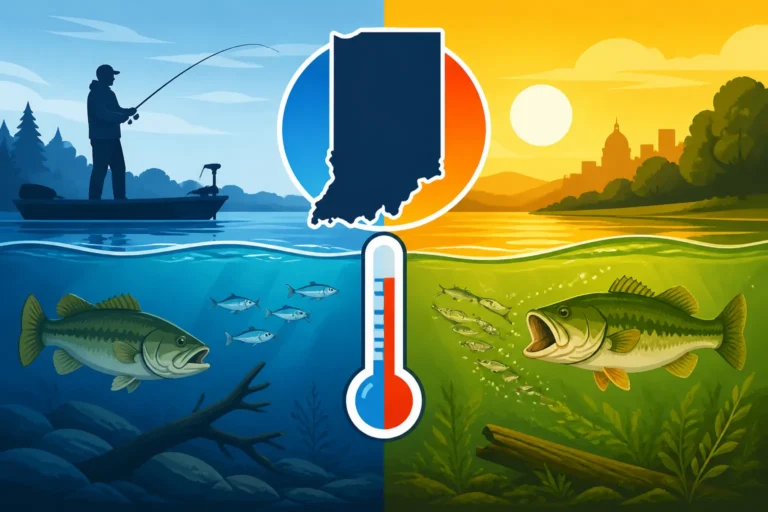
Crappie undergo significant behavioral shifts as the seasons change, and understanding these patterns is key to successful jigging. In the pre-spawn phase, usually in early spring when water temperatures climb into the 40s and low 50s, crappie start moving from deeper wintering holes towards shallower, protected coves and creek channels. They're still somewhat lethargic but actively seeking food to build energy for spawning. This is a fantastic time for anglers to intercept them as they transition.
Once the water temperature hits the mid-50s to low 60s, it's prime time for the crappie spawn. They move into very shallow water, often just a few feet deep, building nests around submerged brush, roots, and even old tires. Males guard the nests, and both sexes become aggressive towards anything that comes too close. This aggression makes them vulnerable to various presentations, including well-placed jigs. After the spawn, they'll gradually retreat to slightly deeper water, often holding on the first available cover adjacent to their spawning grounds. If you're looking for more details on this, our guide on Crappie Spawn Timing on Indiana Lakes offers a deep dive.
Where Crappie Hide: Understanding Structure and Cover
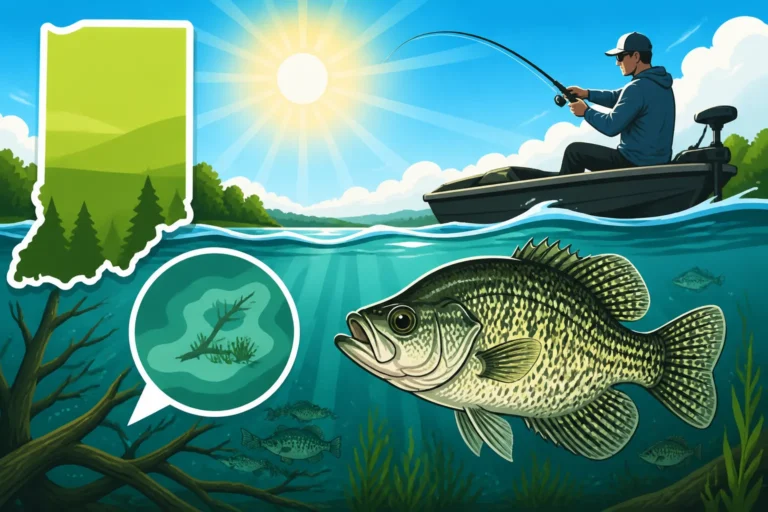
Crappie are true homebodies; they love to be near some form of cover or structure. Think of it from their perspective: they're relatively small fish and need protection from predators like bass and walleye, as well as ambush points for their own meals of baitfish and insects. This means you’ll almost always find them relating to something solid in the water.
"Structure" refers to changes in the lake or river bottom itself – drop-offs, humps, creek channels, points, and old roadbeds. These natural contours provide pathways and holding areas. "Cover," on the other hand, is anything placed on the bottom or suspended in the water column – brush piles, submerged trees (often called "laydowns"), dock pilings, bridge abutments, weed beds, and even man-made fish attractors. For a crappie angler, a good brush pile is like finding a treasure chest. Learning to identify these spots, either visually or with electronics, is a critical skill for any successful crappie jigging technique.
Essential Gear for Successful Crappie Jigging
You don't need a boatload of expensive equipment to get started with crappie jigging, but having the right tools for the job certainly makes a difference. Focus on light tackle that allows you to feel those subtle crappie bites and present your small jigs effectively. A lot of great gear for beginners can be found on online retailers like Amazon, often at very reasonable prices.
Rods, Reels, and Line Choices for Crappie
When it comes to crappie fishing, the name of the game is sensitivity. Those papermouths mean crappie often bite very softly, sometimes feeling like nothing more than extra weight on your line or a slight twitch.
- Rods: Look for ultra-light or light action spinning rods, typically between 5 to 7 feet long. A fast or extra-fast tip is ideal, as it will flex easily to detect light bites while still providing enough backbone to set the hook. A longer rod can also help with casting lighter jigs and absorbing sudden surges from a hooked fish. For beginners, a 6-foot, 2-piece rod is a great all-around choice. If you're exploring options, many quality brands like Ugly Stik or St. Croix offer excellent crappie-specific rods that balance sensitivity with durability. Our guide on Best Panfish Rods for Indiana Ponds can give you more specific recommendations.
- Reels: Pair your sensitive rod with a small spinning reel, size 1000 or 2000. These reels are lightweight and have smooth drags, which is crucial when fighting crappie with their delicate mouths. The drag system prevents you from tearing the hook out of their lip. Brands like Shimano, Daiwa, or even Pflueger offer reliable spinning reels that won't break the bank.
- Line: This is where opinions can vary, but generally, 4 to 6-pound test monofilament or fluorocarbon line is the standard. Monofilament is more forgiving due to its stretch, making it a good choice for beginners and reducing hook pull-outs. Fluorocarbon is less visible underwater and has less stretch, offering increased sensitivity, but it can be a bit pricier. Braided line in lighter tests (say, 6-10 lb) can also be used, especially if you add a fluorocarbon leader, as it offers extreme sensitivity and strength for pulling fish out of thick cover. However, its lack of stretch can make it more prone to pulling hooks if you're not careful.
Demystifying Crappie Jigs: Types and Sizes
Jigs are the quintessential crappie lure, and the variety available can be overwhelming. But let's simplify it.
- Jig Heads: The "head" of the jig is weighted and typically made of lead, with a hook molded in. Crappie jig heads usually range from 1/32 ounce to 1/8 ounce, though sometimes heavier (up to 1/4 ounce) or lighter (1/64 ounce) are used depending on depth and current. The weight helps you get your bait down to the fish. Common colors for jig heads include unpainted, chartreuse, pink, and black.
- Soft Plastic Bodies: This is where the magic happens! These small plastic "baits" are threaded onto the jig head. Popular styles include:
- Grubs/Curl-tail Grubs: These have a thin, curly tail that creates enticing action in the water, even with a slight twitch.
- Tubes: Small, hollow cylindrical baits with tentacles that quiver.
- Minnow-shaped plastics: Designed to imitate small baitfish, often with a paddle tail for added action.
- Spider Grubs: A round body with multiple thin legs for a more subtle, buggy presentation.
- Colors: Crappie are notoriously picky about color. It can vary day to day, water clarity, and even light conditions. A good rule of thumb is to start with natural colors (whites, silvers, light greens) in clear water and brighter, more vibrant colors (chartreuse, pink, orange, electric chicken) in stained or muddy water, or on overcast days. Having a variety is key. Our article on Best Crappie Jig Colors for Cloudy Water delves into this topic further.
Essential Accessories for Crappie Anglers
Beyond your rod and reel, a few key accessories will enhance your crappie jigging experience and keep you organized.
- Pliers/Forceps: Crappie have small mouths, and jigs can sometimes be swallowed deeply. A good pair of needle-nose pliers or fishing forceps (many can be found on Amazon) are invaluable for hook removal, protecting both your fingers and the fish.
- Line Clippers: Small, sharp clippers or even nail clippers are essential for trimming tag ends after tying knots.
- Tackle Box/Bag: A compact tackle box or a small fishing bag will keep your jigs, extra line, and tools organized. You don't need a huge, bulky box for crappie jigging; a small tray with multiple compartments for different jig sizes and colors will suffice.
- Measuring Device: Crappie often have minimum length limits, especially if you're fishing in specific Indiana lakes. A small measuring board or tape measure will help you quickly determine if your catch is legal to keep. Remember to check local regulations, as Crappie Size Limits and Regulations in Indiana can vary.
- Stringer or Livewell: If you plan on keeping your catch for a delicious meal, a stringer to keep them alive in the water or a small livewell bucket with an aerator will ensure they stay fresh until you're ready to clean them.
- Polarized Sunglasses: These aren't just for looking cool! Polarized lenses cut glare off the water, allowing you to see submerged structure, changes in bottom contour, and sometimes even the fish themselves. This is a game-changer for sight-fishing in shallow water.
Mastering the Art of Crappie Jigging
Now that you've got your gear ready, let's talk about the actual techniques for jigging. The beauty of crappie jigging is its simplicity, but don't let that fool you—mastery comes with practice and understanding the nuances of presentation.
Vertical Jigging: The Go-To Method
Vertical jigging is arguably the most common and effective technique for crappie, especially when you've located a school of fish directly beneath you, often using a fish finder. This method is incredibly precise and allows you to keep your bait in the strike zone for extended periods.
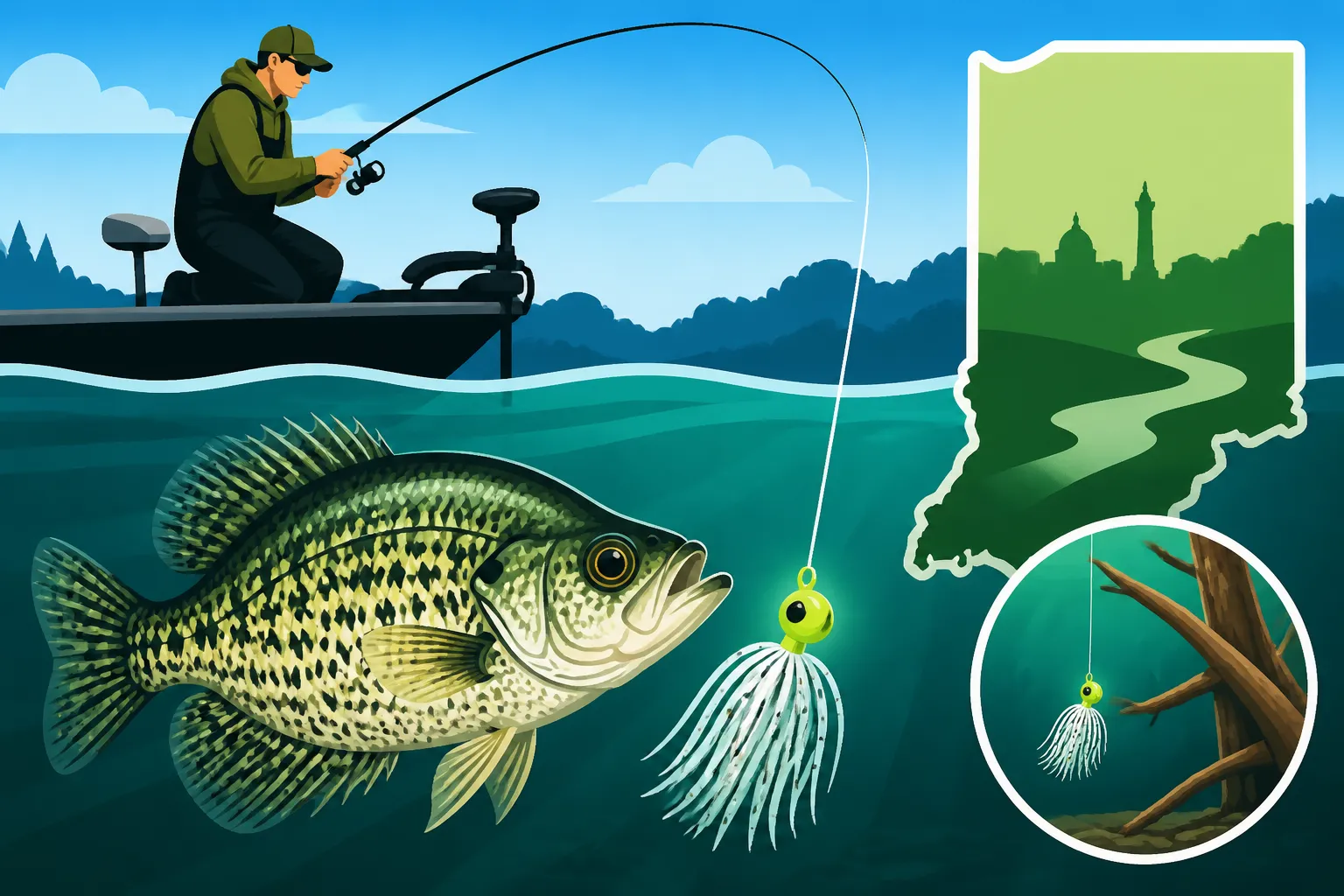
To execute a basic vertical jig, position your boat or kayak directly over the crappie or the structure they're holding on. Drop your jig straight down, letting out line until it reaches the desired depth. Often, crappie will suspend at a certain depth, so pay close attention to your fish finder or simply count the line as it goes out. Once at depth, the movement is subtle: use your wrist to gently lift the rod tip a few inches, then let it fall back down on a semi-slack line. The "fall" is often when the crappie strikes, as the jig mimics an injured baitfish. Pause for a second or two between lifts. Some days, they'll want aggressive movements; other days, an almost imperceptible quiver is all it takes. The goal is to make the jig appear alive and vulnerable.
This technique is particularly effective around brush piles and dock pilings. You can "feel" the jig bump against branches, allowing you to work it precisely through the cover without getting snagged too often. Remember, crappie often hold just above or within the densest part of the cover.
Casting and Retrieving Jigs for Crappie
While vertical jigging is great for precise presentations, casting jigs can cover more water and is excellent for targeting crappie that are spread out or holding on structure that's not directly beneath you, such as along a shoreline or over a submerged weed line.
Cast your jig past the target area and allow it to sink to the desired depth. Then, begin a slow, steady retrieve. The key word here is slow. Crappie are not typically fast-pursuit predators; they prefer an easy meal. As you reel, incorporate subtle twitches and pauses with your rod tip. Think of it as a "stop-and-go" motion, allowing the jig to flutter and sink briefly before you move it again. Vary the retrieve speed and depth until you find what the crappie are responding to. Sometimes, a simple straight retrieve with a curly-tail grub is all it takes. Other times, a twitch-twitch-pause retrieve will be the ticket. Experimentation is crucial.
This method is especially useful when fishing from the bank or a pier, allowing you to reach structure further out. It’s also very effective when crappie are in shallower water, moving along breaklines or around submerged grass flats.
The Importance of a Slow, Finessed Approach
Whether you're vertical jigging or casting, the overarching principle for crappie is a slow, finessed presentation. Crappie have a relatively small strike zone, and they are not likely to chase down a fast-moving bait. Your jig needs to be presented right in front of their face, moving slowly enough for them to commit to a bite.
Think about the conditions: if the water is cold, fish are generally less active, and an even slower, more deliberate jigging motion is necessary. As water temperatures warm up, you might be able to speed up your retrieve slightly, but rarely to a "fast" pace. The finesse aspect also extends to your hookset. Because crappie have such delicate mouths, a violent hookset can easily tear the hook out. Instead, a firm, steady sweep of the rod tip is usually sufficient to embed the small jig hook. It's often more about constant pressure than a powerful jerk. This delicate balance of presentation and hookset is what separates consistent crappie anglers from those who struggle.
Locating Crappie Hotspots for Jigging Success
Knowing how to jig is only half the battle; the other, equally important half, is knowing where to jig. Crappie are creatures of habit, and they relate to specific types of underwater features that offer food and protection.
Targeting Brush Piles, Submerged Timber, and Docks
These are the classic crappie hideouts, and for good reason. They provide ample cover, shade, and act as magnets for baitfish, which in turn attract crappie.
- Brush Piles: These can be natural (fallen trees, log jams) or man-made (Christmas trees, cedar trees sunk by anglers or DNR). Crappie will suspend within and around these piles. If you're vertical jigging, drop your jig right into the heart of the brush pile. If you're casting, try to work your jig along the edges and over the top. The challenge here is avoiding snags, which is why a light line and a good hook-setting technique are important. Many Indiana lakes, like Patoka Lake, are known for their excellent brush pile fishing.
- Submerged Timber (Laydowns): Similar to brush piles, fallen trees along shorelines or in flooded creek beds are prime crappie real estate. They provide shade and ambush points. Focus on the submerged branches, particularly the ones that extend furthest into the water column.
- Docks and Piers: Don't overlook man-made structures! Dock pilings, especially those with attached brush, pontoon boat lifts, and even the underside of large piers offer excellent cover. Crappie will often hold in the shaded areas beneath docks, particularly on sunny days. Try dropping your jig right next to the pilings or casting under the dock into the deeper, shaded pockets. This is a common method for How to Catch Crappie from a Dock.
Finding Crappie in Open Water and Channel Edges
Crappie aren't always tucked away in dense cover. Sometimes, particularly during certain seasons or in larger lakes, they'll school up in open water, often relating to subtle changes in depth or old creek channels.
- Channel Edges and Humps: In larger reservoirs, crappie often use old creek channels as migration routes and holding areas. They'll suspend just off the edge of these channels, or on humps and points adjacent to them. These are great areas for drift-fishing with multiple jigs or slow trolling, but vertical jigging is also effective once you pinpoint a school. Look for these features on your electronic maps.
- Suspended Fish: Sometimes, especially in deeper lakes, crappie will suspend in the middle of the water column, often over deep water with no apparent structure directly beneath them. They might be following schools of baitfish. This is where a good fish finder becomes indispensable. Once you mark these suspended schools, vertical jigging at their depth is the most efficient way to present your jig.
Using Electronics to Pinpoint Schools
In today's fishing world, electronics are a huge advantage, especially for crappie anglers. You don't need the most expensive unit, but a reliable fish finder with down-imaging or side-imaging capabilities can drastically improve your success rate.
- Depth Finders/Sonar: A basic depth finder will show you depth and often mark fish arches. Look for "stacked" arches, indicating a school of crappie. Pay attention to the depth at which these arches appear, as crappie will often hold at a specific water column level.
- Down Imaging/Side Imaging: These technologies provide much clearer, photographic-like views of what's beneath and to the sides of your boat. You can literally see brush piles, submerged trees, and often individual fish or schools of fish around them. This allows you to position your boat precisely and drop your jig directly onto the fish. Brands like Humminbird and Lowrance offer excellent units for crappie anglers that can greatly reduce the guesswork in locating fish. Many of these units are also available for purchase on Amazon.
- GPS Mapping: Many fish finders include GPS with detailed lake maps. These maps can show you old creek channels, humps, and even outline submerged structure. Mark waypoints when you find productive areas, allowing you to return to them easily in the future.
Here's a quick table to help you identify common crappie hiding spots and the best jigging approach:
| Type of Structure/Cover | Typical Depth | Best Jigging Approach | Key Considerations |
|---|---|---|---|
| Brush Piles | 5-25 feet | Vertical Jigging | High snag risk, fish inside/above |
| Submerged Timber | 3-20 feet | Vertical / Casting | Fish along edges, shade on sunny days |
| Docks/Piers | 2-15 feet | Vertical Jigging | Target shaded areas, pilings, boat lifts |
| Channel Edges/Humps | 10-35 feet | Vertical / Drift | Look for suspended fish on slopes |
| Suspended Open Water | Varies (10-40ft) | Vertical Jigging | Fish finder crucial, follow baitfish |
| Weed Lines | 3-12 feet | Casting | Fish along edges, pockets in weeds |
Seasonal Strategies for Crappie Jigging in Indiana
Crappie jigging isn't a one-size-fits-all approach throughout the year. As the water temperature changes, so do crappie habits and preferred locations. Adapting your technique to the season is paramount for consistent success.
Spring Crappie: Spawning Frenzy and Shallow Water
Ah, spring! This is often the most anticipated season for crappie anglers in Indiana. As the days lengthen and the sun warms the shallow waters, crappie begin their annual migration from deeper wintering holes to shallower spawning grounds. This pre-spawn movement and the actual spawn are prime times for jigging.
In early spring, when water temperatures are in the 40s and low 50s, focus on sun-warmed north-facing banks, protected coves, and creek channels adjacent to deeper water. Crappie will stage here, often a bit deeper (8-15 feet) as they prepare to move shallow. A slow, subtle vertical jigging presentation is usually best, as they are still a bit sluggish. As the water creeps into the mid-50s and low 60s, crappie will move into very shallow water, sometimes only 1-4 feet deep, to spawn. Look for visible cover like fallen trees, lily pad stems, or even just patches of emergent weeds. They become aggressive in defending their nests, making them easier to catch. Casting small jigs to these visible targets, or even just a few feet from shore, can be incredibly productive. Our guide on How to Jig for Crappie in Spring offers more specific techniques for this exciting period.
Summer Crappie: Deep Water and Thermoclines
Once the spawn is over and water temperatures rise into the 70s and 80s, crappie typically retreat to deeper, cooler water. This is when they become more difficult for many anglers to find, but effective jigging strategies can still yield impressive catches.
During summer, crappie will often relate to the thermocline—a layer in the water column where the temperature changes rapidly. This layer often holds the most oxygen and comfortable temperatures for fish, as well as an abundance of baitfish. Use your fish finder to locate the thermocline and target that depth. Look for crappie suspended over deep brush piles, submerged timber, or along deep creek channel edges. Vertical jigging is the primary technique here, ensuring your jig stays at the precise depth where the fish are holding. They might be as deep as 15-30 feet or more, depending on the lake and conditions. A slower presentation is still key, as hot water can make them a bit lethargic. Knowing How to Find Crappie in Summer involves a bit more detective work but is very rewarding.
Fall Crappie: Feeding Aggressively Before Winter
As summer transitions to fall and water temperatures begin to drop, crappie enter a "feeding frenzy" phase, actively bulking up for the lean winter months. This can be one of the best times to catch large numbers of crappie.
In early fall, crappie might still be found relatively deep, but as the water cools, they'll start to spread out and move towards baitfish schools that are also moving shallower. Look for them around deeper brush piles, submerged points, and channel swings. As fall progresses and water cools further, crappie often school tightly together. They'll actively chase bait, so a slightly more aggressive jigging retrieve might be effective. Casting jigs along drop-offs or over humps can be productive, as can vertical jigging when you mark tight schools on your electronics. They are often found a bit shallower than in summer, but still relating to significant structure. This period is often overlooked but can offer some fantastic action.
Winter Crappie: Ice Fishing and Deep Structure
Winter fishing for crappie in Indiana means ice fishing in many areas, though some southern Indiana lakes might remain open for traditional boat fishing. Regardless, the approach becomes very specific: pinpointing deep, lethargic fish.
When the ice is thick enough (always check ice safety first!), crappie will typically hold in deep water, often near the main lake basin, deep creek channels, or the deepest parts of brush piles and submerged timber. They will be very tightly schooled and extremely inactive, requiring a highly finessed and slow presentation. Small, 1/32 or even 1/64-ounce jigs, often tipped with a live minnow or a waxworm, are deadly. The movement should be barely perceptible—a slight quiver of the rod tip or just letting the bait sit still. Using a flasher or a portable fish finder is crucial for ice fishing, allowing you to see your jig and the fish, and detect those incredibly light bites. For open water winter fishing, the principles are similar: target deep, slow-moving schools with tiny jigs and minimal action. If you're interested in cold-weather strategies, our guide on Best Depth to Fish for Crappie in Winter is a great resource.
Troubleshooting and Advanced Crappie Jigging Tips
Even with the right gear and knowledge, crappie can be fickle. Sometimes, they just won't bite. This is where troubleshooting and a few advanced tips come into play, helping you adapt to challenging conditions.
When the Bite is Slow: Adjusting Your Approach
We've all been there: you've found the fish, you're presenting your jig, but they just aren't interested. Don't pack up and go home just yet! Here are some adjustments to try:
- Change Jig Size and Color: This is often the first and easiest adjustment. If you're using a 1/8 oz jig, try a 1/32 oz. If you're using chartreuse, switch to a natural white or a black/blue. Sometimes, a tiny change makes all the difference. Remember, fish perception of color changes with water clarity and depth.
- Vary Your Retrieve: If a slow retrieve isn't working, try slowing it down even more, to the point of almost holding the jig still with just a subtle quiver. Or, try a slightly more aggressive twitch if the fish are perhaps more active than you think. Experiment with longer pauses between movements.
- Add Scent: Crappie, like many fish, rely on scent as well as sight. Applying a commercial fish attractant scent (like those from Berkley Gulp! or Pro-Cure) to your jig can entice reluctant biters. Many anglers swear by garlic or shad-flavored scents.
- Adjust Depth: Even if your fish finder shows crappie at 15 feet, they might be willing to strike only when the bait is at 14 feet or 16 feet. Work the entire water column around the marked fish, slowly raising and lowering your jig until you find their preferred feeding zone. Often, they feed "up," so keeping your jig slightly above them can trigger a strike.
- Switch to a Finer Line: If you're using 6-pound test, dropping down to 4-pound can sometimes make your jig look more natural and less detectable, especially in clear water or when fish are pressured.
Adding Live Bait to Your Jigging Setup
While this guide focuses on artificial jigs, sometimes the irresistible appeal of live bait is what it takes to trigger a bite, especially on tough days. You can easily combine live bait with your jigging setup.
- Minnows: A small crappie minnow is the most common live bait. Simply thread a small minnow onto your jig hook. The jig provides the weight to get it down, and the minnow's natural movements add an extra layer of enticement. This is a classic combination, particularly effective for vertical jigging over brush piles or during colder months when crappie are less active.
- Waxworms or Mealworms: For an even smaller, more subtle presentation, especially when ice fishing or targeting extremely lethargic crappie, tipping your tiny jig with a waxworm or mealworm can be incredibly effective. The added scent and wiggling action can be just enough to tempt a bite.
Reading the Water and Adapting to Conditions
The best crappie anglers aren't just good at casting; they're keen observers of their environment. Learning to "read the water" and adapt to changing conditions is a skill that comes with experience.
- Water Clarity: In clear water, fish tend to be spookier, so longer casts, natural jig colors, and lighter lines are usually best. In stained or muddy water, fish rely more on scent and vibration, so brighter colors, jigs with more action (like curl-tails), and louder presentations might be more effective.
- Wind and Current: Wind creates current, which can position baitfish and crappie. On windy days, crappie might move to the lee side of structures to escape the turbulence. Current in rivers or tailraces can concentrate fish in eddies or behind obstacles. Adjust your jig weight to ensure it reaches the desired depth and stays in the strike zone despite the flow.
- Light Conditions: Overcast days or low-light conditions (dawn/dusk) often bring crappie shallower and make them more active. On bright, sunny days, they'll typically seek deeper, shaded cover. This dictates whether you should be casting shallow or vertical jigging deep. Consider how Dawn and Dusk Fishing Techniques can give you an edge.
- Barometric Pressure: While hard to quantify, many anglers believe rapidly changing barometric pressure (like before a storm) can shut down fish activity, while stable pressure often means better fishing. Be aware of weather patterns and adjust your expectations and effort accordingly.
By paying attention to these factors and being willing to experiment, you'll not only catch more crappie but also develop a deeper understanding and appreciation for this rewarding sport.
Disclaimer
Fishing regulations, including license requirements, bag limits, and length limits, can change. Always consult the latest Indiana Department of Natural Resources (IDNR) fishing guide or website before heading out on the water. This article is for informational purposes only and does not constitute legal advice regarding fishing regulations.