Best Dry Bags for Kayak Fishing
There's nothing quite like the tranquility of paddling out onto an Indiana lake or river, the rising sun painting the water, and the anticipation of a good catch. But that peaceful feeling can quickly vanish the moment an unexpected splash drenches your phone, or your lunch ends up soggy from accumulated bilge water. Kayak fishing is an incredible way to experience the outdoors, but it comes with a unique challenge: keeping your essential gear, especially electronics and valuables, completely dry. This guide is here to help you navigate the world of dry bags, ensuring your next kayak fishing adventure isn't ruined by a little (or a lot of) water.
Why a Dry Bag Isn't Just a "Nice-to-Have" for Kayak Anglers
Many new kayak anglers, and even some seasoned ones, might view a dry bag as an optional accessory, something you might grab if you "expect" bad weather. But the reality of kayak fishing in Indiana is that water isn't just an occasional nuisance; it's a constant companion. From paddle drips and spray from passing boats to the inevitable slosh of water in your scupper holes or a sudden capsize, your gear is almost guaranteed to get wet. A reliable dry bag isn't a luxury; it's a critical piece of safety and convenience gear that protects your investment and peace of mind.
Think about it this way: you've invested in your kayak, your rod, your reel, and all your tackle. Why wouldn't you protect the other crucial items you bring along? The cost of replacing a water-damaged smartphone or a ruined camera far outweighs the cost of a quality dry bag. Beyond the financial aspect, there's the sheer frustration of having essential items rendered useless when you're miles from shore. Imagine needing to check a weather update or call for assistance, only to find your phone waterlogged. A good dry bag acts as an insurance policy for your most vulnerable possessions, letting you focus on the fish, not the drips.
Protecting Your Essentials From Unexpected Swims
Even on the calmest days, a kayak can be a surprisingly wet environment. You might think you're safe tucked into a quiet cove on Monroe Lake, but a rogue wave from a passing pleasure boat or simply an awkward reach for a net can send a cascade of water over your deck and into your cockpit. Your spare reel, a change of clothes, your fishing license, or even your car keys can all be susceptible. Without a dry bag, these items are at the mercy of the elements, and trust me, there's nothing worse than discovering your car key fob no longer works after a day on the water.
This protection extends beyond just accidental splashes. If you ever have the misfortune of capsizing your kayak – and it happens to the best of us, especially when battling a big fish or navigating tricky currents on the Tippecanoe River – a securely fastened dry bag can be the difference between losing everything and salvaging your most important items. A properly sealed dry bag will float, keeping your valuables accessible and dry even if your kayak is upside down. This kind of peace of mind is invaluable, allowing you to take on new waters and techniques without constantly worrying about your gear. Many anglers look into Kayak Fishing Gear for Indiana Waters after a close call with a wet cell phone!
Keeping Electronics and Valuables Safe in Wet Conditions
Modern kayak fishing often involves a range of electronics, from smartphones for navigation and communication to portable fish finders and cameras for capturing those trophy moments. These devices are fantastic tools, but they are incredibly vulnerable to water damage. While some phones claim to be "water resistant," a dunking in a lake or prolonged exposure to spray is a different story entirely, often leading to costly repairs or replacements. You might have a great Portable Fish Finders for Kayak Anglers, but it still needs to be protected when not in active use, or during transport.
Valuables aren't just electronics. Think about your wallet, identification, car keys, prescription medications, or even important documents like your Indiana Fishing License Requirements Explained. These items need absolute protection from moisture. A dry bag specifically designed for water sports provides a sealed, impenetrable barrier against water, mud, and sand. When you're fishing a remote section of the White River or exploring the shoreline of Patoka Lake, knowing your crucial items are safe in a dry bag frees you up to fully immerse yourself in the fishing experience. It allows you to carry what you need without fear, turning your kayak into a truly self-sufficient vessel.
Key Features to Look for in a Kayak Fishing Dry Bag
When you start looking at dry bags, you'll quickly realize there's a huge variety out there. It's not just about grabbing the first waterproof-looking bag you see. Kayak fishing demands specific features that cater to the unique challenges of being on the water. Understanding these key characteristics will help you choose a bag that truly meets your needs, offering reliable protection and convenient access to your gear. Don't settle for something flimsy; your gear deserves robust protection.
One common mistake anglers make is confusing "water-resistant" with "waterproof." A water-resistant bag might handle a light drizzle, but it won't survive a submersion or constant spray. For kayak fishing, you absolutely need a fully waterproof solution. This means looking closely at the materials, how the bag seals, and its overall construction. Whether you're planning a full day on Lake Wawasee or a quick evening trip to a local pond, the right dry bag makes all the difference.
Material Durability and Waterproofing Ratings
The backbone of any good dry bag is its material. Most high-quality dry bags are made from durable PVC or TPU (thermoplastic polyurethane). PVC is generally heavier and more rigid, offering excellent abrasion resistance and waterproofness, often at a more accessible price point. TPU is lighter, more flexible, and more environmentally friendly, often found in higher-end bags. Both are excellent choices, but consider how much abuse your bag might take – will it be dragged across rough surfaces or primarily kept inside the kayak?
Beyond the material type, pay attention to the thickness, often measured in denier (D). A higher denier count, like 500D or 1000D, indicates a tougher, more puncture-resistant fabric. For the rigors of fishing, where hooks, knives, and rocky shorelines are a constant threat, durability is paramount. Additionally, some manufacturers provide an IP (Ingress Protection) rating, which indicates how well the bag resists dust and water. An IPX7 rating means the bag can withstand submersion in water up to 1 meter for 30 minutes, which is a good baseline for kayak fishing. An IPX8 rating offers protection for continuous submersion. Always aim for these higher ratings for maximum confidence.
Closure Systems: Roll-Top vs. Zippers
The closure system is arguably the most critical component for keeping water out. The two main types you'll encounter are roll-top closures and waterproof zippers.
-
Roll-Top Closures: These are the most common and often the most reliable for full waterproofness. They involve rolling the top edge of the bag down three or more times and then securing the rolled section with a buckle. This creates a tight, impenetrable seal. Roll-top bags are typically very durable and less prone to failure. They are ideal for items you don't need to access constantly throughout the day, like extra clothes, a first aid kit, or a spare tackle box. Look for sturdy buckles and D-rings that can withstand constant use and exposure to the elements. You can find many excellent roll-top options available online through retailers like Amazon.
-
Waterproof Zippers: These are less common, primarily due to their higher cost and the fact that "waterproof" zippers often require specific maintenance and can still fail if not properly cared for. True waterproof zippers, like T-Zip or YKK AquaSeal, are designed to create a hermetic seal. They offer quick and easy access to your gear, which can be a huge advantage for items you need frequently, such as a camera or specific lures. However, they need to be kept clean, lubricated, and carefully closed to maintain their seal. If you opt for a zippered bag, ensure it's a high-quality, marine-grade zipper, not just a water-resistant one, and be prepared for a higher price tag.
Size and Capacity Considerations for Your Gear
Choosing the right size dry bag is crucial for both convenience and effectiveness. You don't want a massive bag flopping around your kayak, nor do you want one so small you have to cram everything in, compromising the seal. Consider what you typically bring on your fishing trips.
| Common Items | Small Dry Bag (5-10L) | Medium Dry Bag (15-25L) | Large Dry Bag (30-40L+) |
|---|---|---|---|
| Electronics | Phone, small camera, keys | Phone, GPS, small tackle box | All of the above |
| Clothing | Extra hat, gloves | Light jacket, rain gear | Full change of clothes |
| Food/Drink | Snacks, water bottle | Lunch, multiple drinks | Multi-day provisions |
| Safety Gear | First aid kit, headlamp | Small emergency kit, flares | Extensive survival kit |
| Other | Wallet, fishing license, map | Small tackle organizer, book | Sleeping bag, camping gear |
For most day trips, a 10-20 liter dry bag is a good starting point for personal items. If you're carrying a lot of camera gear, a dedicated tackle system, or camping equipment for an overnight trip on a river like the Wabash, you'll need larger capacities, perhaps even multiple dry bags of different sizes. Remember that the roll-top closure takes up some of the stated capacity, so always err on the side of slightly larger if you're unsure.
Attachment Points and Portability
How you attach your dry bag to your kayak is just as important as keeping its contents dry. A loose dry bag is a lost dry bag in the event of a capsize. Look for multiple, reinforced D-rings or attachment points on the bag. These allow you to secure it to your kayak's deck rigging, seat, or internal tie-down points using carabiners or bungee cords. This ensures the bag stays with your vessel, even if things get a little bumpy.
Portability features also enhance the dry bag's usefulness. Shoulder straps, backpack straps, or grab handles make it much easier to transport your gear from your car to the launch point and back. For longer hauls or more involved setups, a waterproof backpack can be incredibly convenient, especially if you have to hike to a secluded fishing spot. If you're comparing options at a place like Bass Pro Shops, try on bags with straps to see how they feel. Consider how you access Best Public Fishing Access Points in Indiana – sometimes there's a bit of a walk!
Types of Dry Bags and When to Use Them
Just like there are different types of kayaks for different waters, there are various styles of dry bags designed for specific purposes. Understanding these distinctions will help you create a comprehensive waterproof storage solution for all your kayak fishing needs. From securing your precious electronics to keeping a spare set of clothes ready, having the right dry bag for the job makes your time on the water more organized and enjoyable.
No single dry bag can do it all perfectly. A small, transparent bag is great for your phone, but terrible for your tent. A large duffel might hold all your camping gear, but it's unwieldy for frequently accessed items. By diversifying your dry bag arsenal, you can protect everything effectively.
Roll-Top Dry Sacks for Maximum Protection
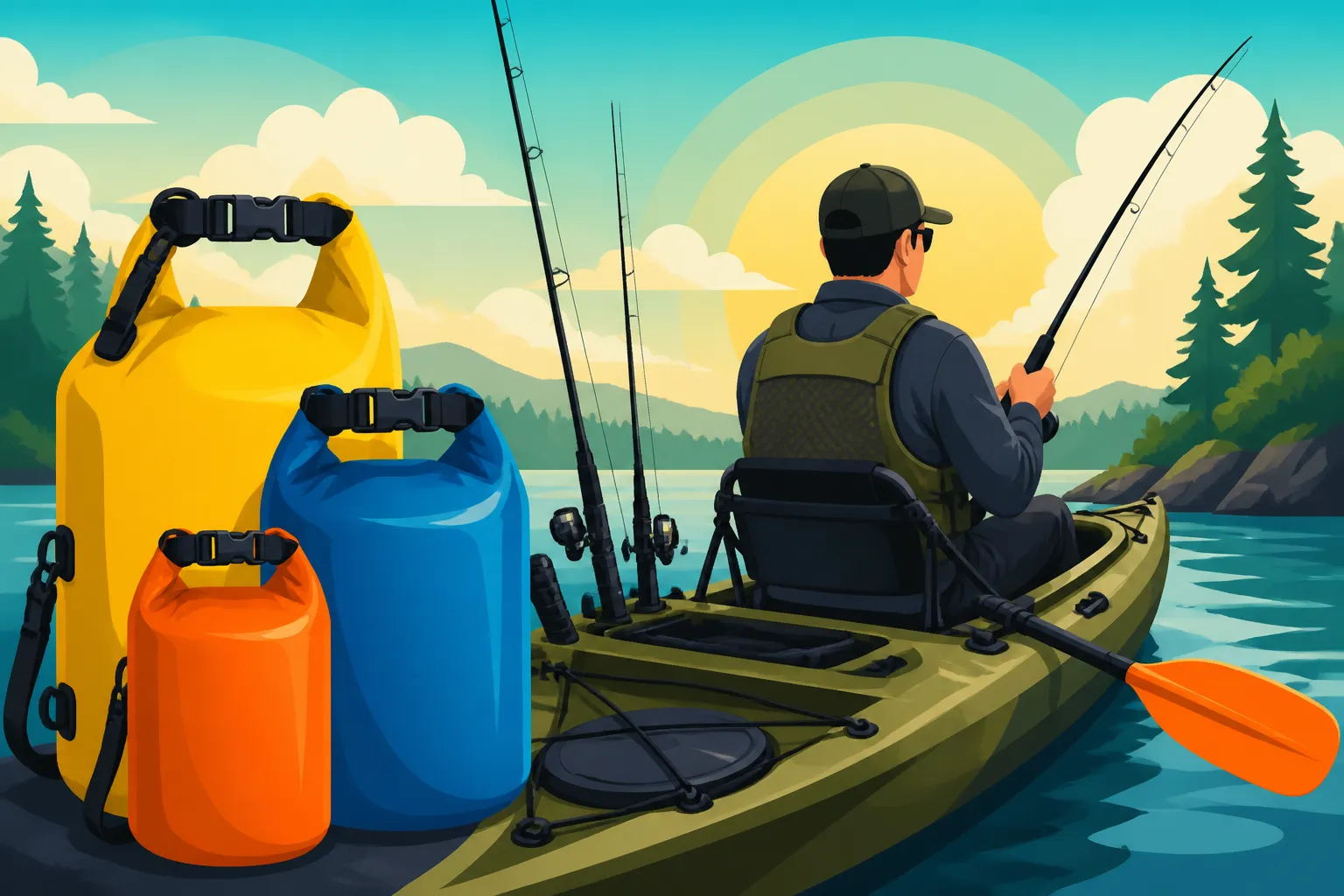
The classic roll-top dry sack is the workhorse of waterproof storage for good reason: it offers exceptional protection. These simple, cylindrical bags, typically made of PVC or TPU, utilize the proven roll-top closure to create a watertight seal. They come in a vast range of sizes, from tiny 2-liter bags perfect for a phone and wallet to massive 50-liter bags for camping gear.
When to use them:
- Essential items you don't need constant access to: Your car keys, wallet, fishing license, first aid kit, spare clothes, toilet paper, extra tackle that isn't actively being used, and a Best Beginner Fishing Kits for Kids if you're bringing a young angler along.
- Submersible protection: If you're venturing into rougher waters, doing extended trips, or just want ultimate peace of mind against capsizing, a roll-top is your best bet. Many come with strong D-rings, allowing you to secure them firmly to your kayak, perhaps even within a Kayak Fishing Setup Tips for Indiana Anglers.
- Organization within larger compartments: Use smaller roll-top bags to organize different categories of gear within a larger dry storage area or a waterproof kayak hatch. This keeps things tidy and provides an extra layer of protection.
Waterproof Backpacks for Shore Excursions
Sometimes, your fishing adventure isn't confined to the kayak itself. You might need to portage your gear, walk along the shore to reach a better casting spot, or even take a short hike to a remote stream. This is where a waterproof backpack truly shines. These bags combine the waterproof integrity of a dry sack with the ergonomic design of a backpack, often featuring comfortable shoulder straps, back padding, and external pockets (though external pockets are rarely fully waterproof unless they have specific dry zippers).
When to use them:
- Portaging and multi-modal trips: If you're paddling down the St. Joseph River and need to get out and walk around rapids, or if you're accessing a hidden pond that requires a hike through a nature preserve.
- Shore lunches and picnics: Keep your food and drink dry and secure while you enjoy a break on the bank.
- Photography or birdwatching: If you're bringing sensitive camera equipment and need quick access while moving around, a waterproof backpack can be a game-changer.
- Day trips where you need more than just essentials: A waterproof backpack can hold your rain gear, a full lunch, extra layers, and potentially even a Best Rods for Shore Fishing on Lakes if it has external straps. Brands like Bass Pro Shops and Amazon offer a wide selection with different features.
Gear Bags and Boxes for Specialized Tackle
For anglers, protecting tackle is just as important as protecting personal items. While a roll-top dry sack can hold smaller tackle boxes, sometimes you need something more robust, purpose-built, and easier to access. This is where specialized waterproof gear bags and hard cases come into play. These often feature rigid construction, O-ring seals, and strong latches, offering superior crush and impact protection in addition to being waterproof.
When to use them:
- Sensitive tackle: Protecting expensive lures, delicate electronics like a GPS or a mounted Fish Finder Buying Guide for Freshwater Lakes, or specific baits that need to stay cool and dry.
- Quick access: Many waterproof tackle boxes are designed for easy, one-handed opening, which is ideal when you're actively fishing and need to switch lures quickly. This is much faster than unrolling and re-rolling a dry sack.
- Heavy-duty protection: If your kayak sometimes gets tossed around in the back of your truck or you frequently encounter rough conditions, a hard case provides unmatched protection against crushing and impact.
- Organized storage: These boxes often come with customizable dividers, allowing you to meticulously organize your Best Tackle Box Organizers for Anglers and keep everything in its place, even when things get bouncy.
How to Maximize the Life and Effectiveness of Your Dry Bag
A dry bag is an investment, and like any good piece of fishing gear, it performs best and lasts longest when properly cared for. Simply tossing it in the back of your garage after each trip without a second thought will dramatically shorten its lifespan and compromise its ability to keep your valuable gear dry. Taking a few extra minutes for proper packing, sealing, cleaning, and storage can ensure your dry bag remains a reliable partner on countless Indiana fishing adventures.
Remember, the goal is always to keep water out, and that relies as much on user technique as it does on the bag's design. A perfectly good dry bag can fail if not sealed correctly, turning a pleasant day on the water into a soggy disaster.
Proper Packing and Sealing Techniques
The effectiveness of even the best dry bag hinges on proper packing and, especially, correct sealing. It's not rocket science, but there are a few nuances that can make a big difference.
- Don't Overstuff: This is perhaps the most common mistake. Overstuffing a dry bag makes it impossible to achieve a proper seal and puts undue stress on the seams and material. Leave plenty of room at the top (at least 2-3 inches, sometimes more depending on the bag's size) for rolling.
- Expel Air (for roll-tops): Before rolling, gently push out as much air as possible from the bag. This helps create a more compact package and prevents the bag from bulging, making it easier to roll tightly. For critical items, a secondary small dry bag inside a larger one can offer an extra layer of protection, particularly when fishing large bodies of water like Lake Michigan, where conditions can change rapidly.
- Roll Tightly and Consistently: For roll-top bags, roll the top down a minimum of three times, but ideally four or five. Each roll should be tight and even, creating a crease that prevents water ingress. Many seasoned anglers will tell you that the more rolls, the better the seal.
- Secure the Buckle: After rolling, securely fasten the buckle. This locks the rolls in place and often creates a handle for carrying or an attachment point.
- Check for Leaks (Periodically): Before a critical trip, especially if the bag is older, put a piece of paper towel inside and submerge the sealed bag in a bathtub or sink for a few minutes. If the paper towel is dry, you're good to go. This simple test can save you a lot of grief.
Cleaning and Storing Your Dry Bag After Each Trip
Just like you wouldn't put away a muddy fishing rod, your dry bag needs a little TLC after each outing.
- Rinse Thoroughly: After use, especially in murky or saltwater (though most Indiana fishing is freshwater, Lake Michigan is an exception), rinse your dry bag thoroughly with fresh water. Pay special attention to the closure system, buckles, and any zippers to remove dirt, sand, and salt residue.
- Mild Soap if Needed: If the bag is particularly dirty or has developed an odor from fish or bait, a mild soap solution can be used. Gently scrub with a soft cloth or sponge, then rinse exceptionally well. Avoid harsh chemicals or abrasive cleaners, as these can degrade the material and coatings.
- Air Dry Completely: This is critical! Mildew and mold can quickly develop if a dry bag is stored wet, which not only smells terrible but can also damage the material over time. Hang the bag upside down, or open it up to allow air circulation until it is bone dry, both inside and out.
- Store Loosely: Once dry, store your dry bag unrolled or loosely folded in a cool, dry place away from direct sunlight. Sunlight's UV rays can break down PVC and TPU over time. Avoid creasing the bag sharply for long periods, as this can weaken the material at the folds. Storing it with the top open allows for continued air circulation. Proper storage, like for your Best Coolers for Keeping Fish Fresh on a Boat, ensures longevity.
- Lubricate Zippers (if applicable): For bags with waterproof zippers, regularly clean and lubricate the zipper with a silicone-based lubricant designed for marine zippers. This keeps the zipper running smoothly and maintains its watertight seal.
By following these simple guidelines, your dry bag will serve you well for many seasons, keeping your gear safe and sound, and letting you truly enjoy all that Indiana Fishing Spots for Every Angler has to offer.
Disclaimer
This article is for general informational purposes only and does not constitute professional advice. Laws, prices and regulations vary by location and change over time. Consult a qualified professional for guidance on your specific situation.