Best Downriggers for Indiana Lake Michigan Salmon
Trying to hook into those elusive Lake Michigan salmon and steelhead can feel like an impossible task when they're holding deep, especially when your lures just aren't getting down to where the fish are hiding in the colder thermoclines. It's incredibly frustrating to know the fish are there but be unable to present your bait effectively. This guide is going to dive deep into downriggers, explaining exactly how these indispensable pieces of gear can dramatically improve your success rate on Indiana's big lake, helping you conquer the depths and put more fish in the boat.
Understanding Downriggers: Why They're Essential for Lake Michigan Salmon
Fishing Lake Michigan, especially for species like Chinook salmon, Coho salmon, and steelhead, presents a unique set of challenges. These are pelagic fish, meaning they often suspend in the water column, frequently chasing baitfish deep below the surface, particularly during the warmer months when the lake stratifies into distinct temperature layers. Without the right gear, getting your lures consistently into that strike zone can be nearly impossible.
The Challenge of Deepwater Salmon and Steelhead
Imagine you're out on Lake Michigan, sun shining, calm waters. You know the salmon are down there, maybe 50, 80, even 100 feet deep, where the water is cooler and the baitfish congregate. Your standard trolling setup with lead core or diving planers might get you down somewhat, but it's often a struggle to hit a precise depth and keep your lure there consistently, especially with varying boat speeds or currents. The deeper you try to go with traditional methods, the more line you have out, increasing drag and making it harder to detect subtle bites. It's a real head-scratcher when you mark fish on your sonar but can't get them to bite because your offering isn't in their face. This is where the magic of downriggers comes into play, completely changing the game for serious Lake Michigan anglers.
How Downriggers Work Their Magic
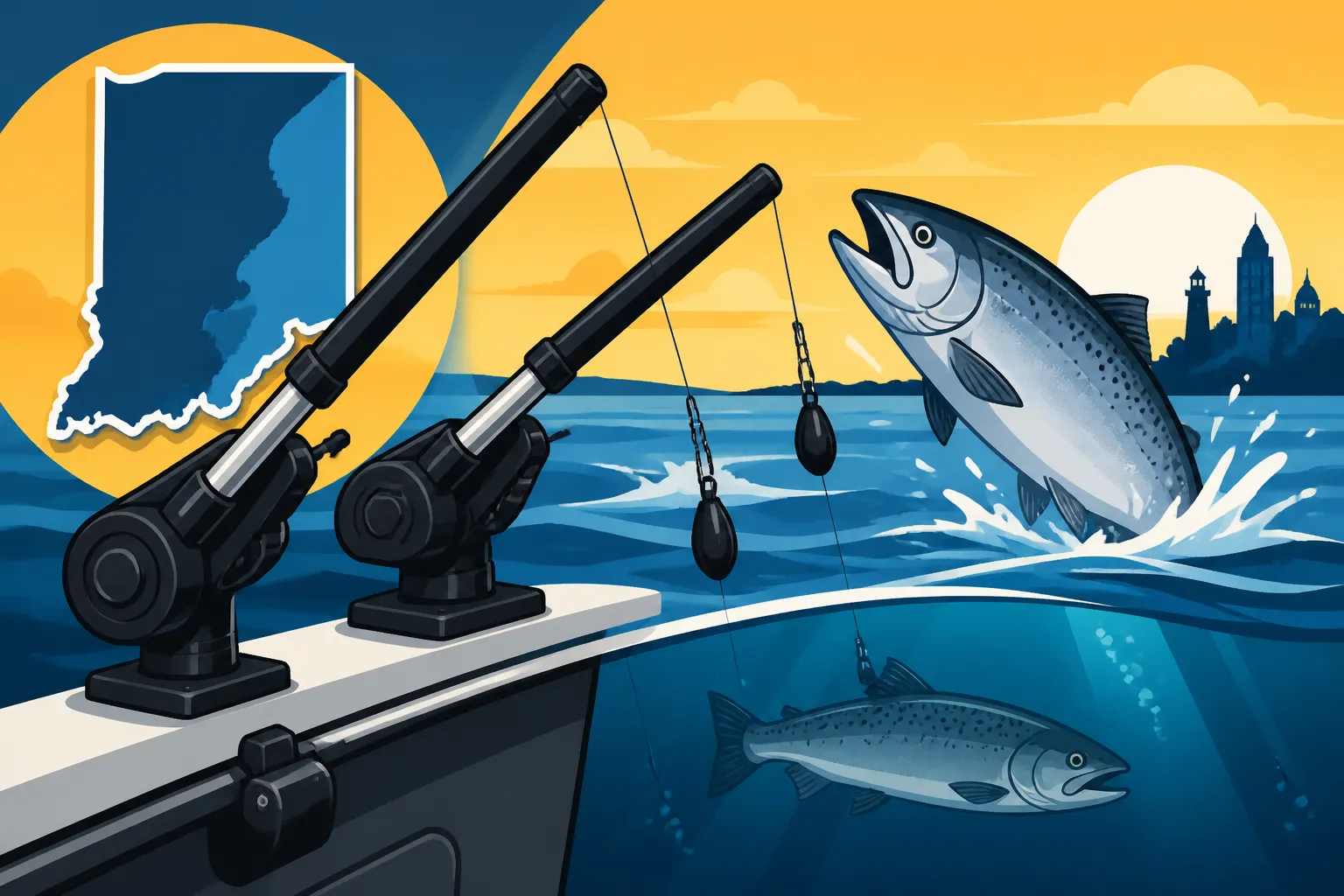
At its core, a downrigger is a simple yet incredibly effective device. It consists of a heavy lead ball (the "weight" or "cannonball") attached to a cable, which is spooled onto a winch or reel. This cable runs through a boom that extends out from the side or back of your boat. Your fishing line, with its lure attached, is then clipped into a special "release clip" that is affixed to the downrigger cable, just above the weight. As you deploy the downrigger, the heavy weight sinks, pulling the cable and your fishing line down to a precise, measured depth. Your fishing rod will be bent over under the tension of the downrigger, but when a fish strikes your lure, the release clip lets go, and you're fighting the fish directly on your rod and reel, without the heavy downrigger weight hindering the fight. It's an ingenious system that ensures your lure is swimming right where you want it to be.
Benefits Beyond Depth Control
While getting your lure to a specific depth is the primary benefit, downriggers offer so much more. They allow you to troll with relatively light fishing line and leaders, which can be crucial for enticing finicky salmon and steelhead that might shy away from heavy lines. Because your line is released from the downrigger weight upon a strike, you get to experience the full fight of the fish on your rod and reel, making for a much more exciting and sporting experience. Furthermore, downriggers enable you to run multiple lines at different, precise depths, covering more of the water column and increasing your chances of finding where the fish are actively feeding. This precision is especially important when you're trying to dial into the exact thermocline or bait ball that the fish are actively targeting. Understanding Lake Michigan Trolling Gear Guide for Indiana Anglers and how downriggers fit into the overall setup is key to maximizing your success.
Key Features to Look for in a Lake Michigan Downrigger
When you're investing in downriggers for Lake Michigan, you're looking for reliability, precision, and durability. The conditions out on the big lake can be challenging, and you need equipment that can stand up to heavy weights, strong currents, and consistent use. Choosing the right downrigger depends on your budget, your boat, and how serious you are about targeting those deepwater giants.
Manual vs. Electric Downriggers
This is often the first decision anglers face. Manual downriggers are typically more affordable and simpler in design. You crank a handle to lower and retrieve the weight. They are perfectly functional for many anglers, especially if you're only running one or two downriggers or if you don't mind the workout. However, retrieving a heavy 10-12 pound weight from 100 feet down multiple times a day can be exhausting, particularly if you're constantly checking your bait or dealing with snags.
Electric downriggers, on the other hand, offer push-button convenience. With a flip of a switch, the weight goes up or down. Many advanced electric models include features like auto-stop, which prevents the weight from crashing into the boom, and precise depth control with digital displays. Some even offer "positive ion control" which is thought by some to attract fish. While a larger upfront investment, electric downriggers drastically reduce fatigue, allowing you to focus more on fishing and less on cranking. For the sheer size and depth of Lake Michigan, most dedicated salmon anglers gravitate towards electric models for their ease of use and efficiency, especially when running multiple units.
| Feature | Manual Downrigger | Electric Downrigger |
|---|---|---|
| Cost | Generally lower upfront investment | Higher upfront investment |
| Effort | Requires manual cranking for deployment/retrieve | Push-button control, minimal physical effort |
| Retrieve Speed | Dependent on angler's cranking speed | Consistent, often faster motorized retrieve |
| Depth Control | Visual markings on cable, less precise | Digital depth readout, highly precise |
| Features | Basic, mechanical | Auto-stop, positive ion control, cycling, networkable |
| Best For | Casual anglers, smaller boats, budget-conscious | Dedicated anglers, larger boats, frequent use, convenience |
Boom Length and Swivel Bases
The boom is the arm that extends from the downrigger unit. A longer boom (typically 24 to 60 inches) helps to spread your lines out from the boat, reducing tangles and allowing you to run more rods. This is especially important when you're running a "spread" of lines at various depths and distances behind the boat, combining downriggers with Planer Boards for Indiana Salmon and Steelhead Trolling. Shorter booms might be fine for smaller boats or if you're only using one downrigger, but for Lake Michigan salmon, where you're often running multiple lines, longer booms are almost always preferred.
Swivel bases are another critical feature. These allow your downrigger to rotate 360 degrees, making it much easier to deploy and retrieve your weight, especially when you're fighting a fish and need to clear the line quickly. Trying to swing a heavy downrigger weight into the boat without a swivel base can be awkward and even dangerous in choppy conditions. A good, sturdy swivel base ensures smooth operation and adds a layer of convenience and safety.
Retrieve Speed and Weight Capacity
For electric downriggers, retrieve speed is a significant factor. When you're fishing deep, a slow retrieve means more time waiting for the weight to come up, especially when you're checking baits. Faster retrieve speeds get your gear back to the boat quicker, maximizing your fishing time. Look for models with powerful motors designed to handle heavy weights (typically 10-15 pounds are common for Lake Michigan, though sometimes heavier in strong currents) and bring them up efficiently. The cable itself is usually stainless steel, but some anglers prefer braided line for its thinner diameter and reduced blowback, which helps weights run truer at deep depths. Ensuring your setup has the right Best Line Weight for Lake Michigan Trolling for your downriggers and rods is crucial.
Release Clips and Rod Holders
The release clip is the link between your fishing line and the downrigger cable, and it's a small but vital component. It needs to hold your line securely enough to keep your lure at the desired depth, but release cleanly when a fish strikes. There are various types, from simple pinch clips to adjustable tension clips and even "stacker" clips that allow you to run multiple lines off a single downrigger weight. Experimenting with different clips and tensions is often necessary to find what works best for your lures and target species.
Many downriggers come with integrated rod holders, which are incredibly convenient. These holders are specifically designed to keep your rod bent and under tension while the downrigger is deployed, and to securely hold it during the strike and when you're ready to grab the rod. Look for sturdy, adjustable rod holders that can accommodate various rod angles and sizes. A good downrigger setup will often also integrate with your overall Trolling Gear Setup for Indiana's Lake Michigan Salmon.
Top Downrigger Options for Indiana Anglers
The market offers a wide range of downriggers, from basic manual models to advanced electric units. The "best" downrigger isn't always the most expensive one; it's the one that best fits your fishing style, budget, and the specific demands of Lake Michigan salmon fishing.
Entry-Level and Budget-Friendly Choices
If you're just getting into downrigger fishing or primarily fish smaller waters before venturing onto Lake Michigan, manual downriggers or more basic electric models are excellent starting points. Brands like Cannon and Scotty offer reliable manual options that are robust and easy to operate. These are typically sufficient for running one or two lines and getting a feel for the technique. You can often find great deals on these models, and they'll still get your lures down to the fish. When looking for these more affordable options, checking online retailers like Amazon can often yield good results, especially for models that are popular and have many user reviews. Similarly, your local Bass Pro Shops can offer advice and sometimes have seasonal sales on entry-level models. They are a fantastic way to experience the benefits of a downrigger without a massive investment.
Mid-Range Workhorses for Serious Anglers
For those who are serious about Lake Michigan salmon and steelhead and spend a good amount of time on the water, mid-range electric downriggers are often the sweet spot. These models offer the convenience of electric retrieve, often with features like auto-stop and basic digital depth counters, without the premium price tag of the most advanced units. They typically have stronger motors, more robust booms, and better build quality than entry-level models, designed to handle the consistent use and heavier weights required for Lake Michigan.
Look for models that balance features with cost-effectiveness. Many anglers find that models from Cannon and Scotty in this price bracket offer excellent value, providing reliable performance for years of productive fishing. These workhorse downriggers are perfect for those who want to upgrade from manual units or are outgrowing their basic electric models. They make long days of trolling much more manageable and significantly increase your fishing efficiency.
High-End Models for the Dedicated Pro
For the ultimate in downrigger technology and performance, high-end electric models are designed for the most dedicated anglers. These units often boast advanced features like precise digital control, integration with your boat's other marine electronics (like fish finders and GPS), auto-jigging capabilities, and even self-deploying and retrieving functions. Some high-end downriggers can connect to your boat's network, allowing you to control them from your multifunction display at the helm, which is incredibly convenient when you're solo or have limited crew.
These models are built with the toughest components, designed for relentless use in demanding conditions. They offer unparalleled precision, speed, and reliability, allowing you to fine-tune your presentation with incredible accuracy. While a significant investment, the increased efficiency, ease of use, and advanced features can be a game-changer for tournament anglers or those who simply demand the best. When considering these advanced systems, it's worth visiting specialty marine electronics stores or checking the high-end offerings from reputable brands like Cannon and Scotty, sometimes available through Bass Pro Shops for hands-on viewing or detailed specifications. Remember, for Lake Michigan, having reliable gear, especially for Lake Michigan's Salmon Run: Indiana's Fall Fishing Season and Steelhead Fishing in Indiana: A Fall Run Guide, is paramount.
Setting Up and Using Your Downrigger for Lake Michigan Salmon
Getting your downriggers installed correctly and learning how to effectively use them is just as important as choosing the right model. A poorly mounted downrigger can be a safety hazard, and improper technique can lead to lost fish or tangled lines. Taking the time to set up your system right will pay dividends on the water.
Mounting and Installation Considerations
The first crucial step is proper mounting. Downriggers exert significant force, especially when deploying heavy weights or retrieving them quickly, not to mention the torque from a fish strike. They need to be securely fastened to your boat. Most downriggers come with mounting plates that bolt directly to the transom or gunwale. For boats with thinner gunwales or those that lack sufficient reinforcement, it's often wise to install backing plates or reinforce the mounting area to distribute the load and prevent damage. Considerations like your boat's size and how many downriggers you plan to run will influence your mounting choices. For example, smaller boats might opt for swivel bases that allow the downrigger to be swung inward for storage or outward for fishing, maximizing space. Understanding How Big of a Boat Do You Need for Lake Michigan Salmon Fishing can help you determine the best mounting strategy for your vessel.
Always make sure the mounting location allows for clear operation without obstructing other boat functions or creating trip hazards. You want easy access to the downrigger controls and a clear path for the cable and weight.
Mastering the Release Clip and Weight Selection
The release clip is where your fishing line connects to the downrigger cable, and mastering its use is key. The clip's tension should be set just right: tight enough to prevent premature release from waves or trolling vibrations, but loose enough to release when a fish bites. Different clips offer different adjustability, and you'll likely experiment to find what works best with various lures and target fish. For delicate presentations or smaller fish, a lighter tension is ideal. For heavy-hitting salmon and larger lures, you might need more tension.
Weight selection also plays a significant role. Common sizes for Lake Michigan are 8-12 pounds, though 15-pound weights are sometimes used in very deep water or strong currents to reduce "blowback" (the angle at which the weight trails behind the boat). The heavier the weight, the more effectively it will hold your desired depth, especially when you increase trolling speed. Always ensure your downrigger system is rated for the weight you intend to use.
Trolling Patterns and Depth Management
Using a downrigger effectively involves more than just dropping a weight. It's about combining precise depth control with smart trolling techniques. Your Best Fish Finders for Deep Water on Lake Michigan will be your best friend here, helping you locate thermoclines (the temperature breaks where baitfish and salmon often congregate) and schools of bait. Once you've identified a promising depth, you can precisely set your downriggers to run your lures right in that zone.
Varying your trolling speed and running different lures at different depths and distances behind the boat is crucial. Don't be afraid to experiment. You might run one downrigger with a spoon at 60 feet and another with a flasher and fly at 70 feet. The goal is to cover the water column and identify what the fish are responding to. Pay attention to fishfinder readings, water temperature, and changes in the environment. Sometimes, simply raising or lowering your downrigger by a few feet can make all the difference. Remember to consult Lake Michigan Fishing Rules for Indiana Anglers for any specific regulations regarding the number of lines or other gear restrictions. Many anglers find success by using techniques described in Downrigger Basics for Indiana Lake Michigan Anglers.
Disclaimer
This article is for general informational purposes only and does not constitute professional advice. Laws, prices and regulations vary by location and change over time. Consult a qualified professional for guidance on your specific situation.