How Big of a Boat Do You Need for Lake Michigan Salmon Fishing
Anglers dreaming of reeling in a trophy salmon from Lake Michigan often hit a wall of uncertainty when it comes to choosing the right vessel. The sheer scale and unpredictable nature of this Great Lake demand a capable boat, and many struggle to figure out if their current craft is up to the task or what size they should even consider buying. Trying to navigate boat specs, safety requirements, and fishing needs can feel overwhelming, leading to worries about safety, comfort, and whether you’ll even reach those elusive salmon. This guide will walk you through the crucial factors in determining the ideal boat size for a safe, enjoyable, and successful salmon fishing adventure on Lake Michigan, especially for those casting off from Indiana's shores.
Understanding Lake Michigan's Unique Challenges for Anglers
Lake Michigan isn't just a "big lake"; it's an inland sea, a dynamic and often formidable body of water that demands respect and specific equipment. When you're planning a salmon fishing trip out of an Indiana port like Michigan City, Portage, or Hammond, you're not just heading to a local pond. You're venturing onto waters that can change from glass-smooth to violently choppy in a matter of minutes, regardless of what the morning forecast might have predicted. This volatility is perhaps the single most important factor influencing your boat size decision.
Imagine a beautiful summer morning: the sun is rising, the water is calm, and you're making good time heading out to your favorite fishing grounds, perhaps 10 or 15 miles offshore where the salmon are schooled up. You’re trolling along, enjoying the peace, when suddenly the wind shifts. Within an hour, small ripples turn into whitecaps, and those whitecaps quickly become 3- to 5-foot waves crashing over your bow. If your boat isn't designed to handle these conditions, that peaceful morning can transform into a harrowing dash back to shore, endangering everyone aboard and potentially damaging your vessel. A boat that might be perfectly suitable for shallower, more protected inland lakes or rivers simply won't cut it on Lake Michigan when she decides to get feisty.
The sheer distance to prime salmon fishing grounds also plays a significant role. Unlike bass fishing in a smaller reservoir where you might only travel a few miles from the ramp, salmon on Lake Michigan often prefer cooler, deeper water, which can be a considerable trek from the launch point. You might find yourself running 10, 20, or even 30 miles offshore to reach the temperature breaks or bait concentrations where Chinook and Coho salmon are actively feeding. This means your boat needs to be capable of covering significant distances efficiently and comfortably. Fuel capacity becomes a major concern – you don't want to run out of gas miles from shore with a tired crew and a cooler full of fish. Moreover, the longer travel times mean more exposure to changing weather conditions, reinforcing the need for a boat that can handle whatever Lake Michigan throws your way.
Finally, safety is paramount. The immense size of Lake Michigan means that if something goes wrong – an engine failure, a medical emergency, or unexpected severe weather – help can be a long way off. Coast Guard response times, while excellent, still involve travel. Therefore, a larger, more robust vessel contributes significantly to your self-reliance and the overall safety of your crew. It allows for better communication equipment, more emergency gear, and a more stable platform from which to address any unforeseen circumstances. Understanding these inherent challenges is the first step in making an informed decision about how much boat you truly need. You can always check the specific Lake Michigan Fishing Rules for Indiana Anglers before you head out.
Minimum Boat Size and Features for Lake Michigan Salmon Fishing
When considering the bare minimum boat size for Lake Michigan salmon fishing, it’s a careful balance between being economically feasible and genuinely safe. Realistically, you’re looking at a vessel no smaller than 18 to 20 feet in length. While you might see smaller boats on the lake on perfectly calm days, venturing out in anything less is taking an unnecessary risk, and even then, these smaller vessels come with significant trade-offs and strict limitations.
A boat in the 18- to 20-foot range can be made to work, but it absolutely requires diligent monitoring of weather conditions and an ironclad commitment to staying close to shore or returning to port at the first sign of trouble. This means often cutting your fishing day short or cancelling trips altogether if the forecast looks even remotely dicey. For instance, a small "walkaround" or "center console" style boat in this length, perhaps a Lund, Tracker, or similar, might have enough space for two anglers and their gear for a short trip. However, even with these boats, you'll feel every chop, and a moderate 2-foot wave can be incredibly uncomfortable, drenching your crew and making it difficult to maintain balance. The constant pounding can quickly fatigue both the boat and its occupants.
Key features become even more critical when operating a smaller boat on Lake Michigan. You absolutely need a high freeboard – that's the distance from the waterline to the top of the boat's side – to help keep waves out of the cockpit. A deep-V hull design is also crucial; it allows the boat to cut through waves rather than slap over them, providing a much smoother and safer ride in choppy conditions. Furthermore, the engine must be impeccably reliable. A single outboard engine on an 18-foot boat is your lifeline, so regular maintenance is non-negotiable. Many smaller boat owners fishing Lake Michigan will even invest in a small kicker motor as a crucial backup, an absolute must for peace of mind when venturing even a few miles offshore. You'll also want to make sure you have all the items on your Indiana Boater Safety Gear Checklist and know How Many Life Jackets Do You Need on an Indiana Boat.
However, these smaller boats inherently come with limitations. Comfort is often sacrificed, as space for moving around, comfortable seating, or even a small enclosed area for shelter is minimal. Your range will be significantly limited by fuel capacity and the boat’s ability to handle conditions far from shore. Hauling a full spread of salmon fishing gear – multiple rods, downriggers, planer boards, a large cooler for your catch, and safety equipment – can quickly overwhelm a smaller deck, making it feel cramped and potentially unsafe with more than two people. For the occasional, fair-weather angler looking for a quick outing, a well-equipped 18-20 foot boat might suffice, but for anyone serious about consistent Lake Michigan salmon fishing, it’s often perceived as a starting point that you'll quickly outgrow.
The Ideal Boat Characteristics for Serious Salmon Anglers
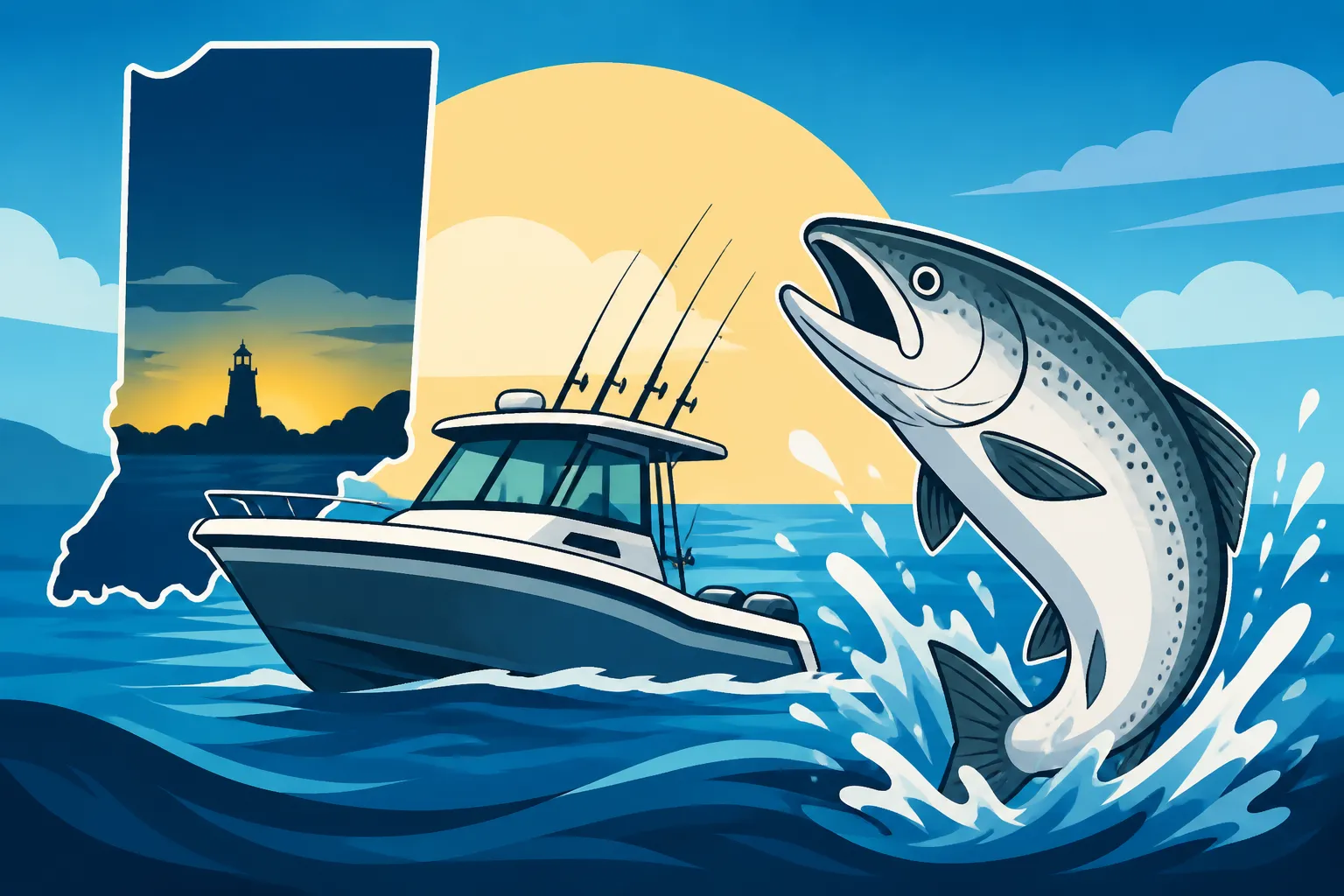
For those serious about consistently and comfortably targeting salmon on Lake Michigan, the "ideal" boat often falls into a specific size range and boasts certain characteristics designed for the unique demands of this great fishery. We're generally talking about boats in the 22- to 28-foot range, with many dedicated Lake Michigan anglers opting for vessels pushing into the mid-20s. This size provides a critical balance of safety, stability, comfort, and the ability to carry all the necessary gear without feeling overcrowded.
Boats in this range, such as larger sport fishing models from manufacturers like Grady-White, Pursuit, Boston Whaler, or even some of the bigger aluminum fishing boats like those from Crestliner or Alumacraft, offer significantly improved seaworthiness. A deep-V hull, typically found on these boats, is designed to absorb the impact of waves, reducing the jarring and pounding that can make a long day on the water miserable. They "cut" through the chop rather than bouncing over it, providing a much smoother and more stable ride, which is vital when you're 20 miles offshore and the weather decides to kick up. The increased beam (width) of these boats also contributes to greater stability, both while running and especially when trolling at slower speeds, minimizing roll and making it easier for anglers to move about the deck and manage their lines. You can really see the difference a robust hull makes when you're battling some serious waves. Understanding what makes the Best Boats for Rough Water on Lake Michigan can give you an edge in your search.
Engine power and redundancy are paramount. While a single large outboard engine (say, 200-300+ horsepower) can certainly propel a 24-foot boat efficiently, many seasoned Lake Michigan anglers prefer the security of twin outboards. Having two engines provides an invaluable layer of redundancy; if one engine fails far from shore, you can still limp back to port on the other. This isn't just a luxury; it's a critical safety feature when you're potentially hours from the nearest harbor. Beyond the main power, a smaller "kicker" motor, typically 9.9 to 15 horsepower, is practically standard equipment. This auxiliary motor is used for slow, precise trolling, saving wear and tear on your main engine, conserving fuel, and offering a third backup propulsion system in an emergency. You can find excellent options for kicker motors at places like Bass Pro Shops or through online retailers like Amazon.
Modern electronics are also non-negotiable for serious salmon fishing. A high-quality GPS chartplotter is essential for navigation, marking fishing hotspots, and safely returning to port, especially in fog or low light conditions. Integrated with this is a powerful fish finder (or sonar) with capabilities like Chirp, SideScan, or DownScan, allowing you to effectively locate baitfish schools and salmon arches in the deep waters of Lake Michigan. Products from brands like Garmin, Lowrance, or Humminbird are popular choices. You'll want to dive into specifics like Best Fish Finders for Deep Water on Lake Michigan and understand if Do You Need GPS on a Fish Finder for Indiana Lakes?. Beyond navigation and fish finding, a reliable VHF marine radio is a must for communication with other boats and emergency services.
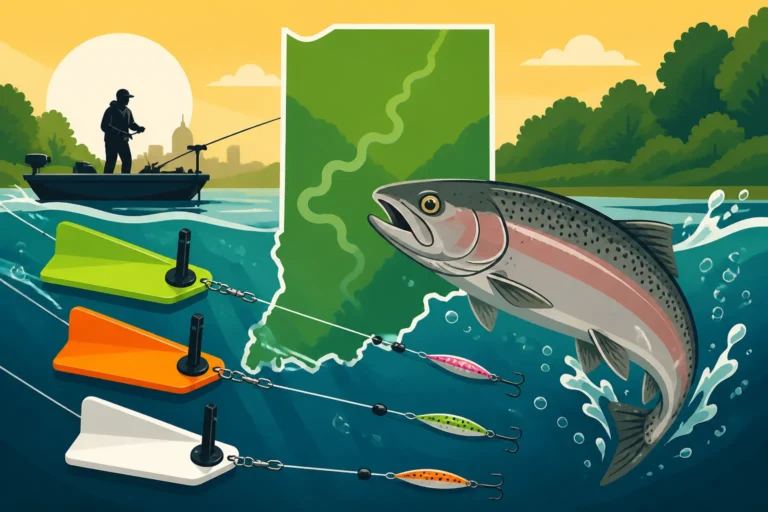
Lastly, the boat needs to be set up for fishing. This includes abundant rod holders, both flush-mounted in the gunwales and on rocket launchers or arch-mounted racks. Ample storage for tackle, safety gear, and provisions is key. And, of course, the specialized gear for salmon trolling: heavy-duty downriggers to get your lures down to precise depths, and large planer boards to spread out your lines and cover more water. When you're running a full spread of eight or even ten lines, having a boat designed to handle this complexity makes all the difference. Trolling Gear Setup for Indiana's Lake Michigan Salmon and Best Rods for Trolling Lake Michigan Salmon are great resources to consider when outfitting your boat. For those looking for deeper dives, articles like Downrigger Basics for Indiana Lake Michigan Anglers and Planer Boards for Indiana Salmon and Steelhead Trolling provide essential information.
Balancing Crew Size, Gear, and Comfort on the Water
Deciding on the right boat size for Lake Michigan salmon fishing isn't just about the length of the hull; it's intricately tied to how many people you plan to bring, the sheer volume of specialized gear you'll need, and your overall expectation for comfort during a long day on the water. Many anglers underestimate these factors, leading to cramped conditions, frustration, and a less enjoyable experience for everyone aboard.
First, let's talk about angler capacity. A good rule of thumb for effective salmon trolling is that each active angler needs adequate space to work their rods, manage lines, and move around without constantly bumping into others. While a 20-foot boat might technically be rated for 4-6 people, trying to fish with four active anglers, each running multiple lines, would be an exercise in tangled chaos. For a comfortable and productive salmon fishing trip, consider the following:
| Boat Length (Feet) | Comfortable Angler Capacity | Key Considerations |
|---|---|---|
| 18-20 | 1-2 (Max 3, if very friendly) | Fair weather only, minimal gear, short trips, tight quarters. |
| 20-24 | 2-3 (Max 4, for experienced crew) | Good for most conditions, moderate gear, better comfort. |
| 24-28+ | 3-5 (Max 6, with ample space) | Best for all conditions, full gear spread, maximum comfort. |
Trying to squeeze too many people onto a smaller boat dramatically increases the chances of fouled lines, accidental snags, and general discomfort, turning a fun outing into a stressful one.
Then there's the gear. Salmon fishing on Lake Michigan involves a lot of specialized equipment, and it all needs a place. Think about:
- Multiple Rods and Reels: You'll likely have 6-10 rods rigged for different presentations. These need to be stored securely when not in use and easily accessible when a fish hits.
- Tackle Boxes and Bags: Lures, spoons, dodgers, flies, leaders, tools – it all adds up. Your Tackle Box Setup by Species might be extensive.
- Downriggers and Planer Boards: These take up deck space and need sturdy mounting points.
- Coolers: You’ll need a large one for your catch, plus another for drinks and snacks. Best Coolers for Keeping Fish Fresh on a Boat is essential.
- Safety Gear: Life jackets for everyone, flares, first aid kit, extra lines, anchor, fire extinguisher – all mandated and critical.
- Miscellaneous: Rain gear, extra clothing, towels, sunscreen, cameras.
A smaller boat quickly runs out of practical storage, leaving gear scattered on the deck, creating trip hazards, and making it difficult to keep things organized. This is where a larger boat shines, offering dedicated storage compartments, rod lockers, and more open deck space to move around and rig baits.
Finally, comfort plays a huge role in the enjoyment of your trip. Lake Michigan salmon fishing often means early mornings, long hours of trolling, and sometimes battling less-than-ideal weather. A larger boat generally provides:
- More Stable Ride: Reduces fatigue from constant wave pounding.
- Greater Protection: Many larger boats offer enclosed cabins or canvas enclosures that provide shelter from wind, spray, rain, or even the blazing sun. This can be a game-changer on a cold spring morning or a rainy fall day.
- Basic Amenities: Some larger boats might even have a small marine head (toilet), which is a significant comfort for long trips, especially with mixed company.
- Space to Stretch: Being able to stand up, walk around, and take a break from sitting is invaluable on a multi-hour trip.
While a smaller boat might be lighter on the wallet initially, you have to weigh the constant compromises in safety, gear capacity, and comfort against the potential for a truly enjoyable and productive experience. For many, investing in a boat in the 22-28 foot range (or even larger) from a reputable dealer, or finding great deals on used boats, often proves to be the better long-term decision for consistent Lake Michigan salmon fishing. When budgeting, consider not just the purchase price, but also the costs of specialized gear. You can often find great deals on electronics and accessories on Amazon, while larger items and boat sales are often best handled by marine dealers or a Bass Pro Shops marine center. For a comprehensive overview of what you'll need, be sure to check out What to Bring for Indiana's Fall Salmon Run.
Disclaimer
This article is for general informational purposes only and does not constitute professional advice. Laws, prices and regulations vary by location and change over time. Consult a qualified professional for guidance on your specific situation.