Nonresident 7-Day Fishing License Cost in Indiana
Planning a fishing trip to the Hoosier State can be incredibly exciting, but navigating the various license requirements and costs from out of state can sometimes feel like trying to untangle a stubborn knot in your fishing line. Many nonresident anglers find themselves wondering if a shorter-term license makes sense for their quick getaway, and specifically, what they can expect to pay for a convenient 7-day option. This comprehensive guide will walk you through everything you need to know about the nonresident 7-day fishing license cost in Indiana, helping you make an informed decision so you can spend less time worrying about paperwork and more time casting a line.
Understanding Indiana's Nonresident Fishing Licenses
Before we dive into the specifics of the 7-day license, it’s important to understand the broader landscape of fishing licenses for visitors to Indiana. The state is committed to managing its natural resources responsibly, and that includes requiring all eligible anglers to possess a valid license. This ensures that the state has the funds necessary for conservation efforts, fish stocking programs, and maintaining public access to our beautiful lakes and rivers.
Who Needs a Nonresident License?
Simply put, if you are not an official resident of Indiana, you'll need a nonresident fishing license to legally fish in our waters. This applies whether you're visiting for a day, a week, or even just passing through and decide to make a quick stop at a local pond. There are some exceptions, of course, like specific Indiana Free Fishing Days Guide when everyone can fish without a license, or for very young children. Generally, if you're 18 years or older and don't reside in Indiana, a nonresident license is a must. If you're unsure about your residency status or the general requirements, our full guide on Indiana Fishing License Requirements Explained can provide clarity. Without the proper license, you could face penalties and fines for fishing without a license, which is definitely a headache no one wants on their fishing vacation!
Why a 7-Day License is a Smart Choice for Short Trips
For many visiting anglers, committing to a full annual license for a week-long vacation just doesn't make financial sense. That's where the nonresident 7-day fishing license truly shines. It's designed specifically for those who plan to spend a limited amount of time fishing within the state, offering a cost-effective solution without the long-term commitment. Imagine you're coming for a family reunion at a lake near Bloomington, or you've decided to explore the Best Fishing Spots in Indiana for a long weekend. The 7-day license covers you for seven consecutive days from the date of purchase, giving you plenty of flexibility to enjoy multiple fishing excursions without overpaying. It's a fantastic option for those weekend getaways or even a slightly longer vacation where fishing is just one part of the fun, ensuring you're compliant without breaking the bank on a full year's worth of access you won't use.
Breaking Down the Cost: The Nonresident 7-Day Fishing License
Alright, let's get down to brass tacks: what's this convenient 7-day license going to set you back? The Indiana Department of Natural Resources (DNR) sets these prices, and while they can fluctuate slightly over time, they are generally quite stable. Knowing the exact cost upfront helps you budget for your trip and ensures no unpleasant surprises at the point of purchase.
The Base Price of the 7-Day License
As of my last check, the nonresident 7-day fishing license in Indiana costs $20. This is the base price that covers your ability to fish for most freshwater species across the state for seven consecutive days. It's a pretty reasonable price when you consider the access it grants you to Indiana's diverse fisheries, from the tranquil farm ponds of the south to the larger reservoirs in the central part of the state. This $20 allows you to pursue species like largemouth bass, various panfish, catfish, and many other popular game fish found in Indiana's inland waters. It's a straightforward fee, making it easy to plan your short-term fishing adventure without complicated calculations.
Additional Stamps and Endorsements: When You Need Them
Now, here's where it can get a little tricky, but don't worry, it's easy to understand once you know the rules. The $20 base price covers general fishing. However, if your sights are set on specific species, particularly trout and salmon, you'll need an additional stamp.
The Trout and Salmon Stamp is a separate endorsement required if you plan to fish for, or possess, salmon or trout in Indiana waters. This is especially relevant if you're heading to the colder northern lakes or the tributaries that feed into Lake Michigan during the exciting Lake Michigan Salmon and Steelhead Run Guide in Indiana. The cost for the Indiana Trout and Salmon Stamp Cost: $11. So, if you're coming to Indiana specifically for that thrill of catching a coho salmon or a beautiful rainbow trout, you'll need both your $20 nonresident 7-day license AND the $11 stamp, bringing your total to $31.
It's crucial to purchase this stamp before you start fishing for these species. Imagine landing a gorgeous steelhead on the St. Joseph River, only to realize you don't have the proper stamp. That could turn a triumphant moment into a costly one. So, always consider your target species when buying your license. Our detailed article, Do You Need a Trout and Salmon Stamp to Fish for Trout?, provides even more insight into this requirement.
Comparing Your Options: 7-Day vs. Other Nonresident Licenses
The 7-day license is great for many, but it's not the only option on the table for nonresidents. Depending on the length of your stay and how often you plan to visit Indiana throughout the year, other licenses might be more economical or convenient. It's worth taking a moment to compare these options to ensure you're getting the best value for your unique fishing plans.
7-Day vs. 1-Day Nonresident License
For the truly fleeting visit, Indiana also offers a 1-day nonresident fishing license. This is perfect for those spontaneous stops or a single day event. The Nonresident 1-Day Fishing License Cost in Indiana is typically $9.
Let's look at a quick comparison to help you decide:
| License Type | Cost | Duration | Ideal For |
|---|---|---|---|
| Nonresident 1-Day | $9 | 1 Day | A single, quick fishing outing; a spontaneous stop during travel. |
| Nonresident 7-Day | $20 | 7 Days | Week-long vacations, multiple fishing trips over a few days; exploring various spots. |
| Nonresident Annual | $60 | ~1 Year | Frequent visitors; multiple trips throughout the year; staying for longer than a week. |
Note: Add $11 for a Trout and Salmon Stamp if targeting those species.
As you can see, if you plan to fish for more than two days, the 7-day license at $20 quickly becomes more cost-effective than buying multiple 1-day licenses. For example, three 1-day licenses would cost you $27, already more than the 7-day option. It's all about matching the license to your trip length. If you're only dipping your toes in for a morning, the 1-day is your friend. But if you have even a few days of potential fishing, the 7-day license offers superior value.
7-Day vs. Annual Nonresident License
What if you're a regular visitor to Indiana, perhaps you have family here, or you live just across the border and frequently come over for fishing expeditions? In that case, the annual nonresident license might be your best bet. The Indiana Nonresident Annual Fishing License Cost is typically $60.
Let's do some quick math. If you buy three 7-day licenses in a year, you've already spent $60. If you plan to visit Indiana to fish four or more times a year, or for a single trip longer than 21 days (three 7-day licenses), then purchasing the annual license at $60 becomes the most economical choice. Keep in mind that the Indiana fishing license year runs from April 1st to March 31st of the following year, regardless of when you purchase it. So, if you buy an annual license in January, it still expires on March 31st. This is an important detail when planning a year's worth of fishing. For those who enjoy frequent visits, checking out the full Indiana Nonresident Fishing License Guide can help you map out your best long-term strategy. Many serious anglers who frequent the Indiana side of Lake Michigan for the Fall Salmon Run Fishing on Lake Michigan in Indiana find the annual license invaluable.
How and Where to Purchase Your 7-Day License
Once you've decided the nonresident 7-day license is the right fit for your Indiana fishing adventure, the next step is actually getting your hands on it. Luckily, the Indiana Department of Natural Resources (DNR) has made the purchasing process quite convenient, offering both online and in-person options. This flexibility means you can secure your license before you even pack your tackle box, or grab it on the fly when you arrive.
Buying Online Through the Indiana DNR
The easiest and often most recommended way to purchase your 7-day nonresident fishing license is online, directly through the Indiana DNR's licensing system. This method offers several advantages:
- Convenience: You can buy your license 24/7 from the comfort of your home, office, or even your hotel room using your smartphone. No need to hunt for a physical vendor, especially if you arrive late at night or early in the morning before shops open.
- Instant Access: Once purchased, you'll usually receive an email confirmation with a temporary license you can print out or display on your mobile device. This means you can be fishing within minutes of completing your transaction.
- Accuracy: The online system guides you through the process, helping ensure you select the correct license type and any necessary stamps, like the Trout and Salmon Stamp.
To purchase online, simply visit the Indiana DNR's official licensing website. You'll need some basic personal information, including your full name, address, date of birth, and a valid form of identification (like a driver's license number). Payment is typically made via credit or debit card. For a detailed walkthrough of the process, check out our guide on Buying a Fishing License Online in Indiana. This online option can save you valuable fishing time, allowing you to hit the water without delay upon arrival. It's often easier than trying to find a local retailer, especially if you're unfamiliar with the area. You can even find essential gear like fishing line or hooks on sites like Amazon after you've secured your license online, getting everything ready for your trip.
In-Person Retailers and Local Bait Shops
If you prefer a more traditional approach, or if you find yourself without internet access, you can also purchase your nonresident 7-day fishing license from a variety of authorized retailers across the state. These typically include:
- DNR Properties: State parks, reservoirs, and other DNR-managed facilities often have offices where you can purchase licenses.
- Sporting Goods Stores: Larger retailers like Bass Pro Shops or Cabela's, as well as many independent sporting goods stores, are usually licensed vendors.
- Local Bait and Tackle Shops: These are often the best places to buy a license in person. Not only can you get your license, but you'll also benefit from local knowledge, hot tips on what's biting, and advice on the best bait for the area. You can usually pick up live bait, lures, or even a new hat at these spots. Many small towns surrounding popular fishing lakes like Monroe Lake or Patoka Lake will have at least one dedicated bait shop ready to serve visiting anglers.
When purchasing in person, remember to bring your identification and payment method. The staff will be able to assist you in selecting the correct license and any required stamps. This is also a great opportunity to ask about specific local regulations or recent fishing reports, which can be invaluable during your 7-day trip. Just be aware that business hours will apply, so plan accordingly to avoid any last-minute rushes.
Making the Most of Your 7-Day Fishing Trip
Having your nonresident 7-day fishing license in hand is just the first step; the real fun begins when you plan how to maximize your time on Indiana's waters. A week can fly by, so a little bit of foresight can go a long way in ensuring your trip is not only compliant but also incredibly memorable and productive.
Planning Your Itinerary: Best Fishing Spots and Species
With seven days at your disposal, you have the flexibility to explore a variety of fishing experiences. Indiana boasts a diverse range of aquatic environments, from the vast expanse of Lake Michigan to the smaller, serene inland lakes and winding rivers.
Consider what kind of fishing excites you most:
- For Bass Enthusiasts: Central and southern Indiana reservoirs like Monroe Lake: Indiana's Largest Lake for Bass Fishing or Patoka Lake Fishing Guide for Bass and Crappie offer incredible largemouth bass action. During your 7-day window, you could spend a couple of days targeting different structures and cover, experimenting with various lures you might have ordered from Amazon before your trip.
- For Panfish Fun: If you're bringing the family or simply enjoy a relaxing day catching plenty of fish, smaller lakes and ponds across the state are teeming with bluegill, crappie, and redear sunfish. The Indiana Panfish Daily Limits by Species are generous, making for some excellent fresh fish dinners. You might consider a quiet evening session on one of the numerous county lakes.
- For Trout and Salmon Chasers: If you invested in the Trout and Salmon Stamp, your focus will likely be on the northern reaches of the state, especially the Lake Michigan shoreline and its tributaries. The fall and spring runs for salmon and steelhead are legendary. Lake Michigan Fishing Rules for Indiana Anglers are unique, so be sure to review them carefully. Places like Trail Creek in Michigan City or the St. Joseph River in South Bend become prime destinations. You could easily dedicate your entire 7-day trip to chasing these powerful, migratory fish.
- For Walleye and Pike Adventures: Indiana's Glacial Lake region, particularly in Kosciusko and Steuben Counties, is known for its walleye and northern pike. Lakes like Lake Wawasee or James Lake offer exciting opportunities for these prized sport fish. Remember, Walleye Length Exceptions at Bass Lake, Wolf Lake, and Lake George apply in specific locations, so always check local regulations.
Don't try to fish every body of water in seven days! Pick one or two regions or species to focus on, and really immerse yourself. This will reduce travel time and increase your chances of success.
Gear Essentials for a Successful Week of Fishing
A successful fishing trip isn't just about knowing where to go; it's also about being properly equipped. For a 7-day trip, you'll want to ensure you have the right gear to cover your bases.
Here’s a basic checklist:
- Rods and Reels: Bring a versatile medium-action spinning combo suitable for most freshwater species. If you're targeting muskie or Lake Michigan salmon, you'll need heavier gear. Consider bringing a backup rod, just in case of a mishap!
- Tackle Box: Stock it with a variety of lures, hooks, weights, and bobbers appropriate for your target species. Think about the season and water conditions you'll encounter. For instance, shallow crankbaits and soft plastics for bass in spring, or jigs and minnows for crappie year-round. You can find some great starter kits or specialized lures on Amazon before your trip.
- Line: Fresh line is key. Bring extra spools of monofilament, fluorocarbon, or braid, depending on your preference and target fish.
- Pliers and Line Cutters: Essential for hook removal and re-tying.
- Net or Lip Grippers: Safely landing fish, especially larger ones, is crucial for both you and the fish.
- Cooler and Ice: To keep your catch fresh if you plan to keep any for dinner.
- Sun Protection: Sunscreen, a wide-brimmed hat, and polarized sunglasses are non-negotiable for comfort and eye protection on the water.
- Rain Gear: Indiana weather can be unpredictable. A good quality waterproof jacket and pants will save your day if a shower rolls in.
- First Aid Kit: Always a good idea to have on hand for minor scrapes or hook mishaps.
- Map/GPS: Even with a 7-day trip, knowing your way around a new lake or river system is important. A good old-fashioned paper map, especially for Remote Coves on Monroe Lake Away From the Crowds, can be invaluable, or a reliable GPS unit.
Don't forget to pack comfortable clothing suitable for being outdoors all day. Layering is often a smart strategy. By having your gear organized and ready, you'll spend less time fiddling with equipment and more time enjoying the beautiful Indiana scenery and the thrill of the catch during your limited 7-day adventure.
Important Regulations Beyond the License
Obtaining your nonresident 7-day fishing license is paramount, but your legal obligations don't end there. Indiana, like all states, has a comprehensive set of fishing regulations designed to protect fish populations and ensure fair chase for all anglers. Ignoring these rules, even unknowingly, can lead to serious consequences, negating the joy of your trip. Familiarizing yourself with these additional regulations is just as important as having your license.
Understanding Bag Limits and Length Restrictions
Every species of fish you might target in Indiana waters typically comes with specific rules regarding how many you can keep (the daily bag limit) and how large they must be (length restrictions or minimum size limits). These regulations vary not only by species but sometimes by specific bodies of water.
For example:
- Bass: Indiana generally has a statewide daily bag limit for largemouth and smallmouth bass. Our guide on Indiana's Statewide Bass Daily Bag Limit clarifies these rules. You might catch a beautiful bass, but if it's under the minimum length, it must be carefully released.
- Walleye: Walleye regulations can be particularly nuanced. In some northern Indiana lakes, there's a specific minimum length, while other lakes might have different rules, and certain lakes like Bass Lake, Wolf Lake, and Lake George even have unique Walleye Length Exceptions at Bass Lake, Wolf Lake, and Lake George. It’s vital to know these local differences if you're specifically targeting walleye. Our post on Indiana Walleye Length Limits by Lake covers this in detail.
- Panfish: Species like bluegill and crappie typically have more generous limits, but they still exist. The Indiana Panfish Daily Limits by Species ensures these popular fish populations remain healthy for future generations of anglers.
Before you head out, grab a copy of the current Indiana Fishing Guide (available online through the DNR or at most license vendors). This guide is your bible for all things regulation-related. It's often helpful to keep a printed or digital copy handy on your phone, so you can quickly reference it if you catch something unfamiliar or need to double-check a limit. Always err on the side of caution; if you're unsure about a rule, release the fish. Violations of bag limits or length restrictions can result in fines and even confiscation of your catch and gear.
Reciprocity Agreements with Neighboring States
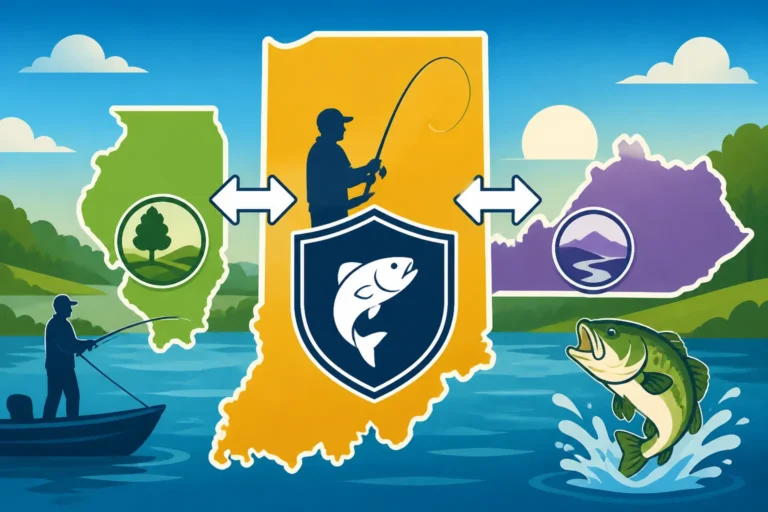
Given Indiana's location, many nonresident anglers travel from neighboring states like Ohio, Michigan, Illinois, and Kentucky. A common question is whether a fishing license from your home state is valid in Indiana. The short answer is: generally, no, not for inland waters. You will almost always need an Indiana nonresident license, like the 7-day option we've discussed, to fish here.
However, there are specific reciprocity agreements that exist for certain shared boundary waters. These agreements typically apply to rivers or lakes that form a border between Indiana and an adjacent state.
- Ohio and Indiana: The details of Indiana Fishing License Reciprocity With Ohio typically focus on shared waters like the Ohio River. While some agreements exist for shared stretches, it's safer to assume you need an Indiana license unless you are absolutely certain of a specific reciprocal arrangement for a particular stretch of water.
- Michigan and Indiana: Similarly, for Indiana Fishing License Reciprocity With Michigan, the primary area of shared interest is Lake Michigan. While there can be some nuances, if you are fishing in Indiana's portion of Lake Michigan, or its tributaries, you need an Indiana fishing license and a valid Trout and Salmon Stamp if applicable.
- Illinois and Kentucky: For Indiana Fishing License Reciprocity With Illinois and Kentucky, again, the Ohio River often comes into play with Kentucky, and parts of the Wabash River or specific stretches might have agreements with Illinois.
The key takeaway here is never assume. Always check the most current regulations for the specific body of water you intend to fish, especially if it's a border water. The Indiana DNR website or a quick call to their customer service can provide the most up-to-date information. If in doubt, the $20 nonresident 7-day license is your safest and most convenient bet for ensuring a worry-free fishing experience in Indiana, no matter where you come from.
Disclaimer
Please note that fishing regulations, license costs, and reciprocity agreements can change. While every effort has been made to provide accurate and up-to-date information in this guide, it is ultimately the angler's responsibility to verify current rules and regulations directly with the Indiana Department of Natural Resources (DNR) before fishing. Always consult the official Indiana Fishing Guide and DNR website for the most current information.