Indiana Fishing License Reciprocity With Michigan
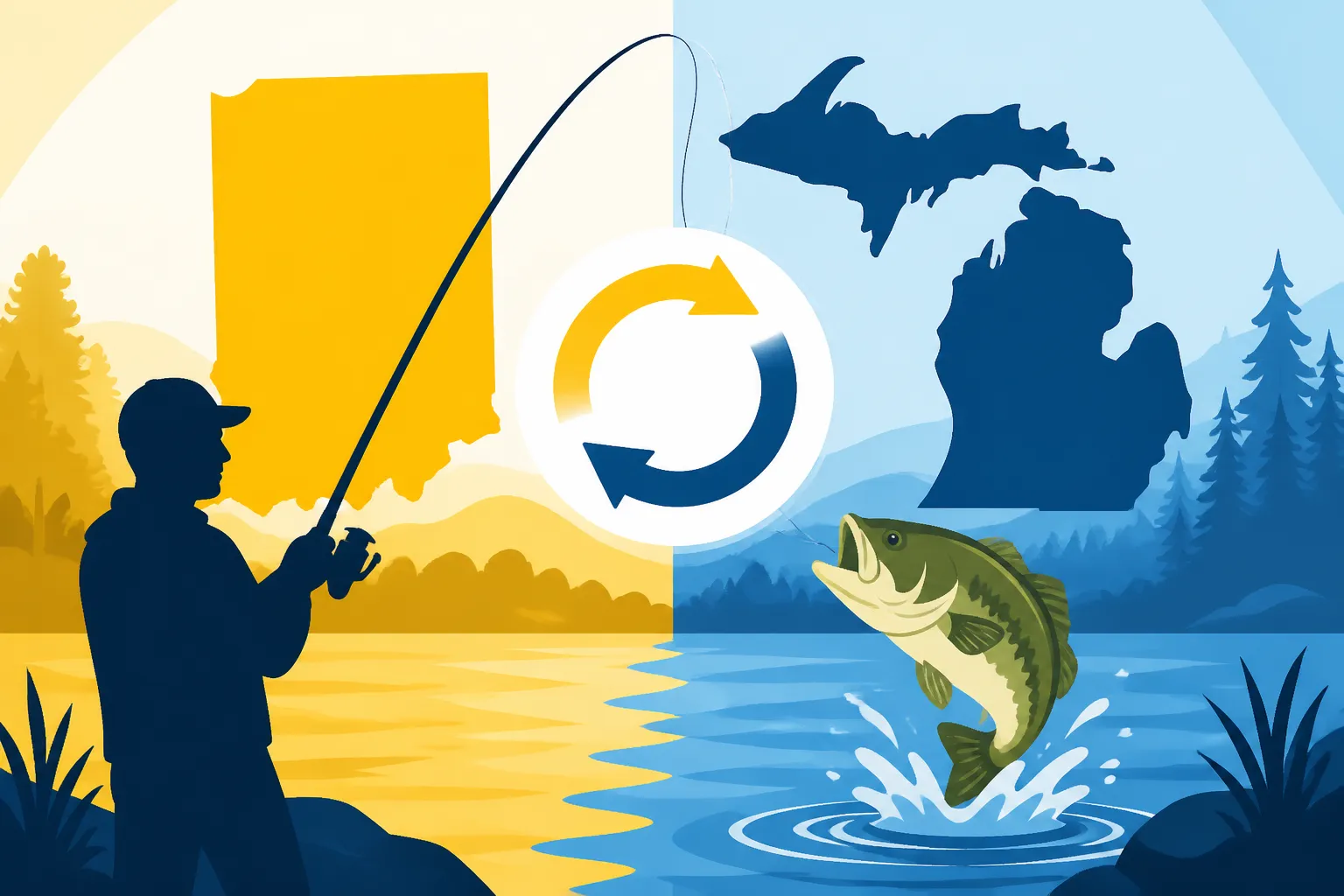
It’s a tale as old as time, or at least as old as state borders: you’re an avid angler, standing on the edge of a seemingly endless body of water, and you wonder if that fishing license you painstakingly acquired for your home state is actually going to cover you if you cast your line just a little bit further. This confusion only intensifies when you're talking about border states like Indiana and Michigan, especially with the vast expanse of Lake Michigan stretching between them. This guide aims to clear up all that head-scratching about Indiana fishing license reciprocity with Michigan, so you can focus on the catch, not the consequences.
Understanding Fishing License Reciprocity Between States
When you start dreaming of fishing across state lines, the first thing that often pops into an angler's mind is, "Will my license work there?" It's a valid question, born from the simple desire to enjoy the sport without getting tangled in red tape. The truth, however, is often more complex than a simple yes or no, particularly when dealing with states that share significant waterways.
What Reciprocity Means for Anglers
In the world of fishing regulations, "reciprocity" essentially means that one state recognizes and accepts a fishing license issued by another state within certain defined areas or under specific conditions. Think of it like a diplomatic agreement for fish. It’s designed to make life easier for anglers who live near a state border or frequently travel between states for their favorite fishing spots. Without reciprocity, you’d theoretically need a license for every state whose water you touch, which can become incredibly costly and inconvenient.
For example, some states have specific agreements for rivers that form their natural boundaries, like the Ohio River which borders Indiana and Kentucky. Here, depending on which side you’re fishing from and which state you call home, a single license might cover you in specified sections. These agreements are usually forged to simplify regulations for local communities and promote shared conservation efforts. However, such agreements are usually highly specific, so assuming general reciprocity is a risky move that can lead to unexpected fines.
The General Rule: One State, One License
Here’s the golden rule that will keep you out of hot water: unless there is an explicit, written reciprocal agreement between two states for a specific body of water, you must possess a valid fishing license for the state in which you are actively fishing. It doesn't matter where you launched your boat, where your tackle box came from (even if it's packed with gear you ordered from Amazon), or which state you call home. What matters is the geographical jurisdiction of the water you’re casting into.
This might seem overly strict, but it makes sense from a wildlife management perspective. Each state's Department of Natural Resources (DNR) uses license fees to fund its conservation programs, fish stocking efforts, habitat restoration, and enforcement. If your Indiana license was universally valid in Michigan, Michigan wouldn't be collecting fees from Indiana anglers who are benefiting from Michigan's resources and management. This fundamental principle underscores why general reciprocity is rare and specific agreements are carefully delineated. Always check with the relevant state's DNR, because the burden of knowing the law always falls on the angler.
Indiana and Michigan: A Tale of Two Waters
The relationship between Indiana and Michigan fishing licenses is a common source of confusion, especially given their shared border and, of course, the monumental presence of Lake Michigan. It's not a simple blanket rule; instead, it depends heavily on where you plan to drop your line.
Inland Waters: Separate Jurisdictions
Let's get this out of the way upfront: for inland waters, there is generally no reciprocity between Indiana and Michigan. This means if you're an Indiana resident wanting to fish in one of Michigan's beautiful inland lakes like Lake Cadillac, or a Michigan resident looking to explore an Indiana gem like Lake Wawasee, you will need a valid fishing license from that specific state. Your home state license simply won't cut it.
Imagine you're from South Bend, Indiana, and you decide to take a weekend trip up to Cassopolis, Michigan, to fish one of their many small, clear lakes. Even though it's just a short drive, the moment your boat touches the water in Michigan, you are subject to Michigan's fishing laws and regulations. You'll need a Michigan fishing license. The same goes for a Michigan angler heading south to fish the Tippecanoe River or any of the fantastic ponds scattered across Indiana. You’d need an Indiana fishing license. It's a clear-cut boundary when it comes to rivers, streams, and lakes that are wholly contained within each state's land borders. Trying to fish Michigan's inland lakes with an Indiana license could lead to fines.
The Lake Michigan Exception and Its Nuances
Ah, Lake Michigan – the vast, shimmering common ground that often leads to the most confusion. While it connects Indiana and Michigan, it's not a free-for-all when it comes to licenses. Each state maintains jurisdiction over its portion of Lake Michigan. This means that an Indiana fishing license generally covers you only in the Indiana waters of Lake Michigan, and a Michigan license covers you only in the Michigan waters.
The critical distinction here is the state line that runs through the lake. It's an invisible boundary, of course, but it's very real in the eyes of the law. If you launch your boat from Michigan City, Indiana, with an Indiana license, you're perfectly legal to fish anywhere within Indiana's designated Lake Michigan waters. However, if you motor north and cross into Michigan's waters, even inadvertently, you would technically need a Michigan fishing license to be compliant. This is a common pitfall for anglers who might chase a school of salmon or steelhead across state lines without thinking twice. While enforcement on the vastness of Lake Michigan can be challenging, game wardens from both states do patrol their respective waters, and ignorance of the boundary is rarely an excuse for a violation. This is why having a good GPS or chart plotter on your boat that shows state boundaries can be an invaluable tool, much like other essential fishing gear you might find on Amazon.
Specific Scenarios for Indiana and Michigan Anglers
Understanding the general rules is one thing, but applying them to real-life fishing trips often requires a deeper dive into specific scenarios. Let's break down what different anglers need to know when considering casting lines between Indiana and Michigan.
Michigan Residents Fishing Indiana Waters
If you're a proud resident of the Wolverine State and you're planning a fishing excursion into Indiana, whether it's for the legendary bass fishing on Monroe Lake or to try your hand at crappie on Patoka Lake, you absolutely need an Indiana non-resident fishing license. Your Michigan resident license, no matter how comprehensive it is for your home state, holds no sway in Indiana's inland or Lake Michigan waters.
This is a pretty straightforward requirement. Indiana, like all states, has specific Indiana Nonresident Fishing License Guide options designed for visitors. You can choose from an annual non-resident license, or if you're only planning a short trip, a 1-day or 7-day non-resident license might be a more economical choice. For instance, a quick search shows the Nonresident 1-Day Fishing License Price: $9 is a popular option for a spontaneous trip. Remember, these licenses contribute directly to Indiana's fish and wildlife management, so it's a small price to pay to enjoy our Hoosier waters responsibly. Don't forget, if you're targeting trout or salmon in specific waters, you might also need an Indiana Trout and Salmon Stamp Requirements on top of your base license, just like Indiana residents do.
Indiana Residents Fishing Michigan Waters
Conversely, if you're an Indiana resident with an eye on Michigan's fantastic fishing opportunities, you'll need to purchase a Michigan fishing license. This applies whether you're heading north for some walleye fishing on Saginaw Bay, chasing salmon in Lake Huron, or simply exploring the countless inland lakes and rivers Michigan boasts. Your Indiana annual license, or even a specialized Indiana Senior Fish-for-Life License Cost: $23 One-Time, will not grant you permission to fish in Michigan state waters.
Michigan offers various license options for non-residents, including annual and short-term licenses. It’s important to research their specific requirements, as they can differ slightly from Indiana’s. For example, if you're an Indiana resident going to Michigan for a weekend, check their short-term options. Just like with Indiana, purchasing the correct Michigan license is easy through their DNR website or authorized retailers. It’s always best to be prepared before you leave home, ensuring you have the right documentation, as Michigan conservation officers are just as diligent in protecting their state's natural resources.
Border Waters and Shared Jurisdictions
While we've established a clear separation for inland waters, the real head-scratcher often comes with waters that truly straddle the line, and here, Lake Michigan is the primary example between Indiana and Michigan. Unlike some rivers like the Ohio River, where certain reciprocal agreements exist between Indiana, Kentucky, and Illinois, Indiana and Michigan generally do not have a full reciprocal agreement for their shared Lake Michigan waters.
This means that if you're fishing in what are legally defined as Indiana's waters of Lake Michigan, you need an Indiana license. If you drift or motor into Michigan's waters, you need a Michigan license. There isn't a "shared zone" where either state's license is universally valid. This makes it crucial for anglers, especially those venturing out in boats, to be aware of their precise location. Relying on landmarks alone can be misleading on such a vast body of water. Having up-to-date nautical charts or a GPS system that shows state boundaries is not just a convenience; it's a legal necessity to ensure you stay compliant. While the vastness of the lake makes pinpoint enforcement tricky, it's still a risk to assume you won't be checked.
Navigating Lake Michigan's Unique Rules
Lake Michigan is a true gem, offering world-class fishing for salmon, trout, and more. But its sheer size and the way it divides states can make understanding fishing regulations a bit of a maze. It’s not just a matter of having a license, but having the right license for the right waters.
The Great Lakes Compact and Border Waters
The Great Lakes region operates under various agreements and compacts, primarily designed for water usage, resource management, and environmental protection. While these compacts foster cooperation, they generally uphold each state's sovereign right to manage its own fisheries within its defined territorial waters. This means that despite common efforts to manage fish stocks across the entire lake, the licensing requirements remain largely state-specific.
For Lake Michigan, the imaginary state boundary lines extend from the shore into the lake, delineating Indiana's water from Michigan's, and from Illinois's, and Wisconsin's. There isn't a single "Great Lakes fishing license" that covers all states. So, while fish like Chinook salmon and lake trout certainly don't recognize state lines, the anglers pursuing them must. The idea that you can launch from one state and fish anywhere on Lake Michigan with that single license is a myth that could lead to trouble. This is a crucial distinction that many out-of-state anglers, or even locals new to Great Lakes fishing, often misunderstand. To understand how some rules differ, it's good to know that Lake Michigan Fishing Rules for Indiana Anglers are indeed different from inland rules.
Where an Indiana License Might Be Valid in Michigan Waters and Vice Versa
This is where common misconceptions often arise. The simple truth is: an Indiana fishing license is not valid in Michigan's Lake Michigan waters, and a Michigan fishing license is not valid in Indiana's Lake Michigan waters. There are no blanket reciprocal agreements between these two states for Lake Michigan that would allow this.
The confusion sometimes stems from reciprocity agreements between other Great Lakes states, such as certain arrangements between Wisconsin and Illinois on their shared Lake Michigan borders. However, these specific agreements do not extend to Indiana and Michigan. If you're an Indiana angler venturing into the waters off New Buffalo, Michigan, you need a Michigan license. If you're a Michigan angler heading south to fish the waters off Hammond, Indiana, you need an Indiana license. It's that simple, even if it feels inconvenient. This might seem like an overemphasis, but it's one of the most frequently asked questions and most commonly misunderstood regulations for Lake Michigan. Always carry valid photo identification with your license, regardless of which state you're fishing in, and keep it safe in a waterproof wallet, easily found on Amazon.
The Practicalities of Fishing Lake Michigan from a Boat
Fishing Lake Michigan from a boat adds a layer of complexity because it’s so easy to accidentally cross state lines without realizing it. Many anglers embark on multi-state fishing trips, launching from one state but intending to fish in others.
Here's how it practically works:
- Launch State Doesn't Equal Fishing State: If you launch your boat from a Michigan marina, you do not automatically get to fish in Michigan waters with an Indiana license, even if you just motored a few feet out. Your launch point is irrelevant to your licensing needs once you're on the water.
- Navigation and GPS are Key: For any serious Lake Michigan angler, especially those targeting specific depths or structures that might straddle state lines, a reliable GPS unit with detailed mapping is absolutely essential. Many modern fish finders and chartplotters display state boundaries, helping you stay compliant. If you don't have one, consider investing in one, as they’re available across a wide price range online.
- Dual Licenses for Boundary Fishing: If your fishing strategy involves targeting areas near the state line, or if you simply want the freedom to chase fish wherever they go without worrying about invisible borders, the most prudent approach is to purchase licenses for both Indiana and Michigan. This ensures you're covered no matter which side of the line you find yourself on. This might seem like an added expense, but it’s far less than the Penalties and Fines for Fishing Without a License in either state.
- Know Your Species Regulations: Beyond licenses, remember that bag limits, size limits, and season dates can also vary between Indiana and Michigan waters, even for the same species. For example, while both states have strong salmon fisheries, specific regulations might differ slightly. Always check the current regulations for the state you are in.
To help visualize, here's a quick comparison of general license needs:
| Scenario | Launch State | Fishing State | Required License(s) |
|---|---|---|---|
| MI Resident fishing inland IN lake | Michigan | Indiana | Indiana Non-Resident Annual or Short-Term |
| IN Resident fishing inland MI lake | Indiana | Michigan | Michigan Non-Resident Annual or Short-Term |
| MI Resident fishing MI Lake Michigan waters | Michigan | Michigan | Michigan Resident Annual |
| IN Resident fishing IN Lake Michigan waters | Indiana | Indiana | Indiana Resident Annual |
| MI Resident fishing IN Lake Michigan waters | Michigan | Indiana | Indiana Non-Resident Annual or Short-Term |
| IN Resident fishing MI Lake Michigan waters | Indiana | Michigan | Michigan Non-Resident Annual or Short-Term |
| Angler wants to fish both IN & MI on Lake Michigan | Either | Both | Indiana Annual + Michigan Non-Resident Annual/Short-Term |
This table clearly illustrates that for most cross-state fishing on Lake Michigan, you will need separate licenses.
Consequences of Not Having the Right License
It's easy to get caught up in the excitement of a fishing trip, but ignoring licensing requirements can quickly turn a fun day into a costly headache. Understanding the repercussions is crucial for any responsible angler.
Fines and Penalties for Violations
Fishing without the proper license, whether it's for the wrong state or simply no license at all, is a serious offense in both Indiana and Michigan. It's not just a polite request; it's a legal requirement. In Indiana, fishing without a license is generally a Class C misdemeanor. While the exact fine can vary by county and the discretion of the enforcing officer, you can expect a significant monetary penalty. This is often accompanied by court costs and, in some cases, the confiscation of your gear and catch.
A first offense might set you back several hundred dollars, easily dwarfing the cost of any annual or short-term non-resident license. Repeat offenses can lead to even higher fines, suspension of fishing privileges, or even jail time in severe cases. Michigan has similar penalties, so thinking you can chance it on either side of the border is a gamble that rarely pays off. These penalties serve as a strong deterrent and fund further conservation efforts, so DNR officers take these violations seriously. Moreover, a violation can go on your record, potentially affecting future recreational licenses you might apply for in any state.
Avoiding Common Mistakes
Many license violations aren't malicious; they're simply due to a lack of understanding or an accidental oversight. Here are some common mistakes and how to avoid them:
- Assuming Reciprocity: As discussed, this is the biggest culprit. Never assume your home state license works in another state unless you've confirmed it with both states' official DNR sources. This is especially true for Lake Michigan between Indiana and Michigan.
- Forgetting to Check for Stamps: Beyond the basic fishing license, both states require additional stamps for specific species like trout and salmon in certain waters. An Indiana Trout and Salmon Stamp Cost: $11 is required if you plan to target those species in designated waters. Forgetting these can also lead to fines, even if you have your base license.
- Not Carrying Your License: Even if you bought your license online, you need proof of it on your person while fishing. A physical copy, a screenshot on your phone, or using an official state app are usually acceptable. Just ensure your phone is charged!
- Ignoring State Line Markers on Lake Michigan: For boat anglers, it's easy to drift or motor across the invisible state line on Lake Michigan. Use your GPS with updated charts to be constantly aware of your position relative to state boundaries.
- Expired Licenses: Always double-check the validity dates of your license. Indiana's fishing license year runs from April 1 to March 31 of the following year, which is important to remember. An Indiana Anglers Need a New License Every April 1 to stay current. This isn't a calendar year, which sometimes trips people up.
By being diligent and informed, you can easily avoid these common pitfalls and ensure your fishing trips are enjoyable and worry-free.
Essential Tips for Cross-State Angling
Venturing beyond your home state's fishing grounds opens up a world of new opportunities and experiences. But to make sure those experiences are positive and compliant, a little preparation goes a long way.
Always Check Current Regulations
Regulations are not static; they change! What was true last year might be different this year. State DNRs regularly update their rules for a variety of reasons, including conservation needs, fish population changes, and public safety. Before any cross-state fishing trip to Michigan, or for Michigan anglers coming to Indiana, always perform these checks:
- Visit Official DNR Websites: This is your primary source of truth. For Indiana, it's the Indiana Department of Natural Resources (IN DNR) website. For Michigan, it's the Michigan Department of Natural Resources (MDNR). These sites will have the most up-to-date information on license requirements, fees, season dates, bag limits, and any specific reciprocal agreements. Don't rely solely on forums, social media, or hearsay.
- Look for Specific Reciprocity Agreements: While general reciprocity is rare, there might be very specific, limited agreements on certain shared bodies of water or for particular species. Check these details meticulously. For the Indiana-Michigan border, especially on Lake Michigan, assume no reciprocity unless explicitly stated by both states' DNRs.
- Download Regulations Guides: Many DNRs offer downloadable PDF guides or even mobile apps that contain all the current regulations. Having these on your phone (or a printed copy) can be invaluable if you have questions while out on the water.
- Confirm Season Dates and Limits: Beyond licenses, bag limits and season dates can vary significantly between states for the same species. For example, the Indiana's Statewide Bass Daily Bag Limit might be different from Michigan's. Ensure you're compliant with the rules of the state you're fishing in at that moment.
Staying informed is your best defense against accidental violations and helps support the long-term health of our fisheries.
Where to Buy the Right License
Once you've determined which license you need, the next step is acquiring it. Fortunately, both Indiana and Michigan have made the process relatively easy and accessible.
- Online Purchase: This is hands-down the most convenient method for most anglers. Both the Indiana DNR and Michigan DNR offer robust online licensing portals. You can purchase annual or short-term non-resident licenses from the comfort of your home, print them out immediately, or save them digitally on your smartphone. This allows you to plan your trip and ensure you're legal before you even hit the road. Purchasing your Indiana Fishing License Sign-Up Takes Just a Few Minutes Online.
- Authorized Retailers: If you prefer an in-person transaction or need a license last minute, both states partner with numerous authorized retailers. These typically include bait and tackle shops, sporting goods stores, and even some big-box retailers. Just look for signs indicating "Fishing Licenses Sold Here." This can be a great option if you're already near your fishing destination and want to grab a local tip or two while you're there.
- DNR Offices: You can also purchase licenses directly from DNR offices in either state. While perhaps less convenient for most, it's an option if you happen to be near one.
- Mobile Apps: Some states, including Indiana, offer official mobile apps where you can purchase and display your license digitally. This is often the most convenient way to carry your license on the water, but always ensure your phone is charged!
When purchasing, you'll need to provide some basic personal information, such as your name, address, date of birth, and possibly a driver's license or state ID number. The process is usually quick and hassle-free, leaving you more time to browse for new fishing gear on Amazon or plan your next cast.
Disclaimer
Please note that fishing regulations, including those related to licenses and reciprocity, can change. The information provided in this article is intended for general guidance only and is based on current understanding. It is the angler's responsibility to verify all rules and regulations with the official Indiana Department of Natural Resources (DNR) and Michigan Department of Natural Resources (MDNR) websites or authorized agents before fishing in either state. Always consult the most current official publications for accurate and up-to-date information.