Nonresident Annual Fishing License Cost: $60
It can be incredibly frustrating to plan a fishing trip to a new state, only to feel lost in a maze of license requirements and varying costs. You want to enjoy the beautiful waters Indiana has to offer, but first, you need to understand how much that nonresident fishing license is going to set you back. This comprehensive guide is here to clear up all that confusion, detailing the cost of an annual nonresident fishing license in Indiana, what it covers, and everything else you need to know to fish legally and confidently.
Understanding the Indiana Nonresident Annual Fishing License
Venturing out to fish in a state you don't call home always comes with a few extra hoops to jump through, and Indiana is no exception. It's not just about getting a license; it's about understanding why the costs differ and what exactly you're paying for.
Why Nonresidents Pay More
Let's be real, it can feel a bit unfair when you see the price difference between a resident and nonresident fishing license. You might be thinking, "Hey, I'm just trying to enjoy some fishing, why the surcharge?" The truth is, this isn't unique to Indiana; nearly every state has a tiered pricing structure. The reasoning behind it is primarily tied to conservation efforts and the fact that residents contribute to the state's natural resources through their taxes year-round.
Indiana's fisheries and wildlife habitats are maintained through various funding sources, a significant portion of which comes from license sales. When you purchase a nonresident license, you're directly contributing to the stocking programs, habitat restoration projects, research, and enforcement efforts by the Indiana Department of Natural Resources (DNR) that benefit all anglers. Residents, through their property taxes, sales taxes, and other state-specific fees, are already contributing to these funds. So, the nonresident fee helps balance that out, ensuring everyone who enjoys Indiana's waters is contributing to their upkeep. It’s an investment in the future of fishing in the Hoosier State.
Think about it this way: the money goes directly back into making your fishing experience better. It funds the work of DNR biologists who monitor fish populations, ensuring healthy numbers of bass, walleye, and panfish. It also supports conservation officers who protect these resources from poaching and enforce regulations, which ultimately benefits law-abiding anglers like yourself. This ensures that the lakes and rivers you travel to fish remain vibrant and productive for years to come.
The $60 Price Tag Explained
So, let's cut to the chase: an annual nonresident fishing license in Indiana costs $60. This might seem like a lump sum, but it's important to understand what this single purchase provides you. This annual license grants you the privilege to fish for most species in Indiana's public waters, including its vast network of lakes, rivers, and streams, for an entire license year.
Specifically, this $60 license covers your ability to target popular species like largemouth bass, smallmouth bass, crappie, bluegill, catfish, walleye, and northern pike across the state. Whether you're planning a bass tournament on Monroe Lake or hoping to catch some panfish for a family dinner on Lake Wawasee, this license is your entry ticket. It’s designed for the angler who plans multiple visits throughout the year or one extended trip that lasts longer than a week.
However, there's a crucial caveat: this $60 license does not inherently include the Indiana Trout and Salmon Stamp. If your angling plans involve pursuing trout or salmon, or if you plan to fish in waters specifically designated as "trout and salmon streams" – even if you're targeting other species in those waters – you will need to purchase this additional stamp. We’ll delve deeper into that in a moment, but it's a common oversight that can lead to unexpected fines.
Consider a real-life scenario: you're an angler from Ohio who loves to visit family near Lake Shafer every summer. You typically spend two weeks exploring various fishing spots, from bass fishing on the lake to catfishing in nearby rivers. For you, the $60 annual nonresident license is a fantastic value. It covers your entire two-week adventure and any other impromptu weekend trips you might decide to make back to Indiana throughout the license year. It saves you the hassle and potentially higher cost of buying multiple short-term licenses.
Who Needs This License?
The Indiana DNR is pretty clear about who needs a fishing license, and it mostly comes down to age and residency. As a nonresident, if you are 18 years of age or older and plan to fish any public waters in Indiana, you absolutely need a fishing license. This rule applies whether you're casting from the bank, wading in a stream, or fishing from a boat.
There are, however, a few specific exceptions to be aware of. The primary one is age: anyone under the age of 18, regardless of their residency status, can fish for free in Indiana. This is a wonderful initiative to get young people hooked on fishing without the financial barrier. So, if you're bringing your kids or grandkids along from out of state, they won't need their own license. For more details on this, check out our guide on Kids Fish Free Until Age 18 in Indiana.
Another important exception is during Indiana's designated Free Fishing Days. On these special dates, typically spread across May, June, and September, both residents and nonresidents can fish without a license. These are fantastic opportunities to try out new spots or introduce friends and family to the sport. You can find more information about these days in our Indiana Free Fishing Days Guide. Beyond these, if you're fishing strictly in a private pond that you own or have permission from the owner to fish, and that pond has no public access or connection to public waters, a license is generally not required. However, for any other scenario – state parks, public lakes, rivers, reservoirs – you'll need that $60 nonresident annual pass.
Imagine you're an Illinois resident planning a long weekend trip to fish for walleye in one of Indiana's northern glacial lakes. You're over 18, and it's not a free fishing day. You absolutely need to purchase this $60 annual nonresident license (plus any necessary stamps) before you cast your line. Failing to do so could result in penalties, which we'll discuss later. Even if you're just dipping a line into the Wabash River for an hour, the requirement still stands.
Essential Add-Ons and Other Nonresident Options
While the $60 annual nonresident license covers a lot of ground, Indiana's diverse fisheries mean there are specific situations where you'll need more than just the basic permit. Understanding these additional requirements and alternative license options can save you money and ensure you're always fishing legally.
The Crucial Trout and Salmon Stamp
If you're an angler with dreams of hooking into a powerful steelhead or a beautiful Chinook salmon, or even just a feisty rainbow trout, your $60 annual nonresident fishing license isn't quite enough. Indiana requires an additional Trout and Salmon Stamp for anyone targeting these species or fishing in waters designated as "trout and salmon streams" or "Lake Michigan tributaries" during specific periods. This stamp ensures that funds are specifically directed to the programs that support these unique and often challenging fisheries.
The Trout and Salmon Stamp costs an additional $11. So, if your fishing plans include pursuing these cold-water species, your total outlay for an annual nonresident license package would be $71 ($60 for the base license + $11 for the stamp). It’s a small extra cost that makes a big difference in maintaining these specific populations and habitats. This stamp is vital whether you're trolling for lake trout on Lake Michigan or fly-fishing for rainbow trout in a stocked stream in southern Indiana. If you're unsure if a specific body of water requires it, always err on the side of caution or consult the latest Indiana DNR fishing guide. For more comprehensive details, refer to the Indiana Trout and Salmon Stamp Requirements guide.
Consider an angler from Michigan who frequently crosses the border to fish the Indiana shoreline of Lake Michigan during the fall salmon run. Without the Trout and Salmon Stamp, even with a valid base fishing license, they'd be in violation. Their target species—Chinook and Coho salmon, and steelhead—all fall under the stamp requirement. Adding that $11 to their $60 nonresident annual license makes them fully compliant for their Lake Michigan adventures, letting them focus on landing that trophy fish. This also applies to anglers visiting tributary streams like Trail Creek or the Little Calumet River, where steelhead and salmon make their spawning runs. Familiarizing yourself with Lake Michigan Fishing Rules for Indiana Anglers is crucial for these trips.
Short-Term Nonresident Licenses
Not everyone plans multiple trips to Indiana or an extended stay each year. If you're just looking for a quick day trip or a long weekend of fishing, the $60 annual nonresident license might be more than you need. Luckily, Indiana offers more flexible, short-term options that can be much more cost-effective for occasional visitors.
Nonresidents have the choice of purchasing a 1-day fishing license for $9 or a 7-day fishing license for $20. These licenses provide the same fishing privileges as the annual license (meaning you'd still need a Trout and Salmon Stamp if applicable for trout/salmon), but they are valid for a much shorter duration. This is perfect for the angler who might only visit Indiana once or twice a year for a brief fishing excursion.
Let's look at a quick comparison to help you decide:
| License Type | Cost | Validity Period | Ideal For |
|---|---|---|---|
| Nonresident Annual License | $60 | April 1 – March 31 | Multiple trips, extended stays (over 8 days total) |
| Nonresident 7-Day License | $20 | 7 consecutive days | Week-long trips, two long weekend trips |
| Nonresident 1-Day License | $9 | 1 specific day | Single day trips, trying out Indiana fishing |
| Trout & Salmon Stamp (add-on) | $11 | Same as base license | Required for trout/salmon species or waters |
As you can see, if you're planning a single day of fishing, the Nonresident 1-Day Fishing License Price: $9 is a no-brainer. If you're staying for a week, the Nonresident 7-Day Fishing License Price: $20 makes perfect sense. However, if you find yourself coming back for more than seven days spread across the year, or for one trip that's eight days or longer, the annual license quickly becomes the better deal. Always calculate your potential fishing days to ensure you choose the most economical option for your needs.
Planning for Specific Species and Waters
Beyond the general license and the Trout and Salmon Stamp, it's always wise to do a little research into the specific species you're targeting and the particular body of water you'll be fishing. While your $60 nonresident annual license covers most everything, regulations can sometimes vary by location or for certain fish.
For instance, while there are statewide bag and length limits for species like bass and panfish, some lakes or river stretches might have special regulations. A great example of this is the walleye minimum length limits, which can vary significantly between different lakes in Indiana. Bass Lake, Wolf Lake, and Lake George, for instance, have specific rules that differ from the statewide standard. Checking guides like Indiana Walleye Length Limits by Lake before your trip is always a smart move. These localized rules are put in place by the DNR to manage fish populations effectively and ensure sustainable fishing in those unique environments.
This due diligence is part of being a responsible angler. Imagine you're visiting from Kentucky and planning to fish for largemouth bass on a particular private lake. While you have your Indiana nonresident license, you still need to be aware of any specific rules the lake management might have in place, in addition to state regulations. Knowing your target species' habits, preferred baits, and any specific local regulations will not only keep you legal but also greatly increase your chances of a successful and enjoyable fishing trip.
Purchasing Your Nonresident Annual License
Once you've decided the Indiana nonresident annual fishing license is the right choice for you, the next step is actually getting your hands on one. Thankfully, Indiana offers several convenient ways to purchase your license, whether you prefer the ease of online transactions or the personal touch of a local bait shop.
Online Purchase Process
For most modern anglers, buying a fishing license online is by far the easiest and quickest method. The Indiana DNR's online licensing system is user-friendly and accessible 24/7, meaning you can purchase your license from the comfort of your home, even late at night, before an early morning trip.
The process is straightforward: you'll navigate to the Indiana DNR's licensing portal on their official website. You'll need to provide some basic personal information, including your full name, date of birth, address, and often a form of identification like your driver's license number. After filling out the necessary details and selecting your desired licenses (the $60 annual nonresident fishing license and the $11 Trout and Salmon Stamp if needed), you’ll proceed to a secure payment gateway. Most major credit and debit cards are accepted. For a step-by-step walkthrough, check out our detailed guide on Buying a Fishing License Online in Indiana.
Once your purchase is complete, you'll typically receive an email confirmation with a link to print your license immediately. It's always a good idea to print a physical copy and keep it with your fishing gear. Alternatively, you can save a digital copy on your smartphone. Many anglers choose to keep a digital copy of their license on their phone, often stored in a waterproof case that you can easily find and purchase on Amazon. This way, you always have proof of your valid license, even if your physical copy gets misplaced or damaged. Having a backup is just smart planning, especially when you're out on the water.
In-Person and Phone Options
While online purchasing is popular, some anglers prefer the traditional route or need to buy a license on the fly. Indiana offers both in-person and phone options to cater to these preferences.
You can purchase your nonresident annual fishing license at various authorized license vendors throughout the state. These typically include bait and tackle shops, sporting goods stores, and many Walmart locations. These places are often invaluable resources, not just for licenses, but also for local fishing tips, bait recommendations, and camaraderie. Just ask any angler; some of the best advice comes from the folks working at the local bait shop. When visiting one of these locations, simply ask for the nonresident annual fishing license, and be prepared to provide the same personal information you would online. They'll process your transaction and print your license on the spot. This can be a great option if you arrive in Indiana and realize you forgot to buy your license beforehand, or if you prefer to support local businesses.
If you prefer to speak to someone directly, you can also purchase your license over the phone by calling the Indiana DNR customer service line. This method offers a bit more personal assistance, which can be helpful if you have specific questions about license types or regulations. However, be aware that phone lines may have operating hours, unlike the 24/7 online portal. Regardless of how you purchase, always double-check that all the information on your printed or digital license is correct before heading out to fish.
Understanding the Indiana License Year
One critical piece of information that every angler, especially nonresidents, needs to grasp is how Indiana's fishing license year operates. It doesn't run on a standard calendar year, which can sometimes catch people off guard.
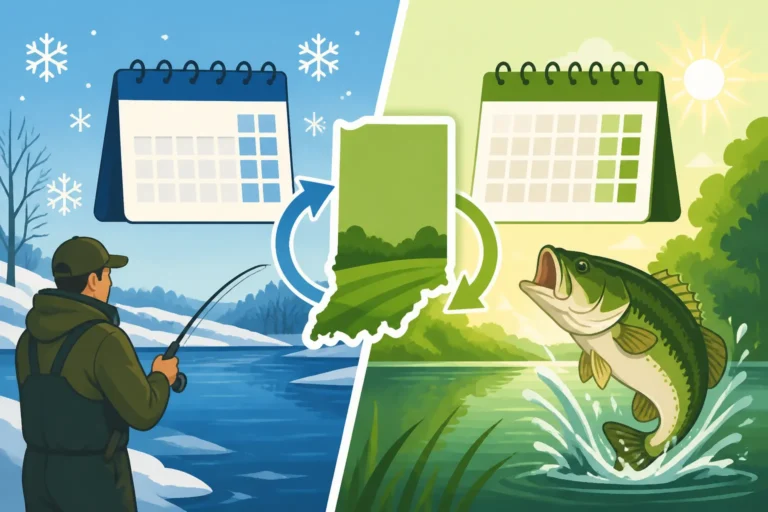
The Indiana fishing license year runs from April 1st through March 31st of the following year. This means that a license purchased on, say, May 15th, 2024, will be valid until March 31st, 2025. Conversely, a license purchased on March 1st, 2025, will only be valid for a little over a month, expiring on March 31st, 2025. This is important to factor into your purchasing decision, especially if you're planning trips around the transition period. For a deeper dive into these dates, check out Indiana Fishing License Year Explained.
Consider an angler from Illinois who loves to visit Indiana in late March for early spring walleye fishing. If they purchase their $60 nonresident annual license on March 20th, that license will only be good for about 11 days. To continue fishing into April and beyond, they would need to purchase a new license for the next license year, starting April 1st. In this scenario, it might be more cost-effective to buy a 1-day or 7-day license for the March trip, and then purchase the full annual license once the new license year begins on April 1st. Planning ahead around these dates can definitely save you some money and prevent you from accidentally fishing without a valid license.
Common Questions and Avoiding Penalties
Fishing in a new state can bring up a lot of questions, especially regarding rules that might be different from your home state. Getting these answers right is crucial not just for legal compliance, but for enjoying a stress-free fishing experience.
Reciprocity with Bordering States
A common question among nonresident anglers, particularly those living close to Indiana's borders, is whether their home state's fishing license will be honored in Indiana. It’s a completely fair question, as some states do have reciprocal agreements for certain shared waters. However, when it comes to Indiana and its bordering states, the general rule of thumb is that Indiana does not have full reciprocity for annual fishing licenses with neighboring states.
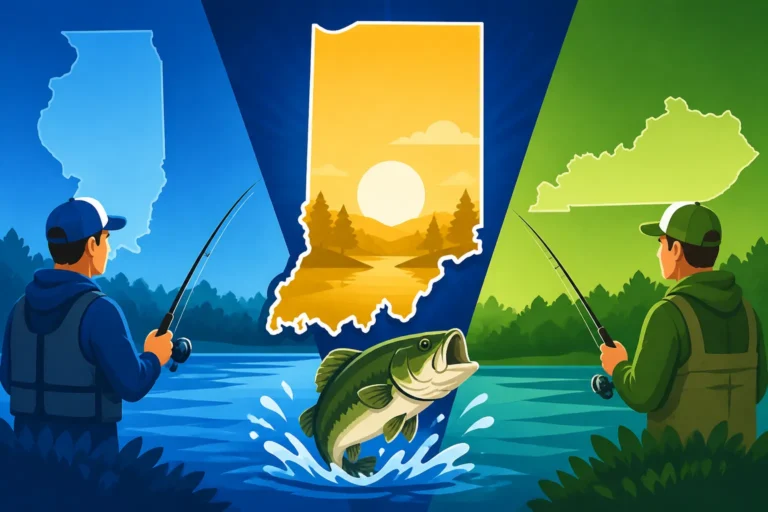
This means that if you're an Ohio resident fishing in Indiana, you will need an Indiana fishing license, even if you have a valid Ohio license. The same applies to residents of Michigan, Illinois, and Kentucky. While there might be very specific, limited agreements for shared boundary waters for certain species or conditions, for the vast majority of Indiana's lakes and rivers, a separate Indiana license is required. It’s always safer to assume you need an Indiana license unless you've specifically confirmed a rare reciprocal agreement for your exact fishing location. You can find more detailed information regarding this for specific states in our guides like Indiana Fishing License Reciprocity With Ohio, Indiana Fishing License Reciprocity With Michigan, and Indiana Fishing License Reciprocity With Illinois and Kentucky.
So, if you're an Illinois angler planning to fish the Kankakee River as it flows through Indiana, your Illinois license won't cut it. You'll need that $60 nonresident annual Indiana license. This can be a bit of a surprise for those accustomed to different rules in other regions, but it’s a non-negotiable aspect of fishing in the Hoosier State. Always check the current regulations before crossing state lines to cast your line.
Rules for Kids and Free Fishing Days
While the main focus has been on the $60 nonresident annual fishing license for adults, it’s worth reiterating the fantastic rules Indiana has in place for younger anglers and special occasions. These policies make fishing accessible and encourage new generations to enjoy the outdoors.
As mentioned earlier, children under the age of 18 do not need a fishing license to fish in Indiana, regardless of where they live. This means if you're a nonresident coming to Indiana with your kids, they can fish alongside you without any additional cost or paperwork. This is an excellent way to introduce them to the sport without the added expense. Many parents have found this rule to be a huge benefit when planning family vacations that include fishing. The freedom for kids to simply pick up a rod and fish makes the experience far more enjoyable and spontaneous. You can learn more about this by reading Do Indiana Residents Under 18 Need a Fishing License?.
Additionally, Indiana hosts several Free Fishing Days throughout the year. On these specific dates, anyone – resident or nonresident, adult or child – can fish in Indiana's public waters without needing a fishing license or a Trout and Salmon Stamp. These days are promotional events designed to allow everyone to experience fishing, whether they're seasoned anglers who forgot their license or newcomers trying it for the first time. They're a fantastic opportunity to test the waters, try out new spots, or bring friends who are hesitant to commit to a license purchase. It's important to know the exact dates for these events, which change annually, so checking the Indiana Free Fishing Days Guide is a must before planning a trip around them.
Consequences of Fishing Without a License
This might sound like a stern warning, but it's important to be realistic: fishing without a valid Indiana license (or the necessary stamps) as a nonresident is a serious offense, and there are consequences. Indiana conservation officers are diligent in protecting the state's natural resources, and they regularly patrol lakes, rivers, and access points.
If you are caught fishing without the required license, you will face penalties. These typically include a citation, significant fines, and potentially even court costs. The exact amount of the fine can vary based on the specific violation, the county, and whether it's a first offense or a repeat violation. These fines are often considerably more expensive than the cost of the annual license itself, making the choice to skip the license a financially risky one. The discomfort and inconvenience of dealing with a legal citation are also major downsides that no one wants to experience on a relaxing fishing trip. For a detailed look at potential repercussions, consult Penalties and Fines for Fishing Without a License.
Remember that the fees collected from fishing licenses directly support the fish and wildlife management programs that make Indiana a great place to fish. Buying your license is not just about avoiding a fine; it’s about being a responsible angler and contributing to the conservation of the very resources you enjoy. So, before you head out, always make sure your $60 nonresident annual fishing license (and any necessary stamps) is valid, current, and readily accessible, whether on your person or easily retrievable on your phone. Better safe than sorry, and certainly better to spend $60 on a license than hundreds on a fine! You can even buy a durable, waterproof wallet or case from Amazon to protect your physical license from the elements while you’re out on the water.
Disclaimer
Please note that fishing regulations and license costs can change. While this guide provides the most current information available, it is always your responsibility to verify all rules and fees with the official Indiana Department of Natural Resources (DNR) website or their authorized agents before engaging in any fishing activities.