Reservoirs Known for Trophy Saugeye
For many anglers in Indiana, the dream isn't just to catch fish, but to land that truly impressive specimen—the kind that makes for a great photo and an even better story. When it comes to saugeye, finding these larger, "trophy" caliber fish can feel like a mystery, especially since they aren't found in every lake. This guide is dedicated to helping you unlock the secrets of where Indiana's most productive saugeye waters are, specifically focusing on the reservoirs known for consistently producing those big, hard-fighting hybrids.
What Makes a Saugeye a "Trophy" in Indiana?
Before we dive into locations, let's talk about what makes a saugeye a trophy and why they've become such a sought-after species among Indiana anglers. It's not just about size, though that's certainly a big part of it. It's also about their unique characteristics and the challenge they present.
Identifying the Walleye-Sauger Hybrid
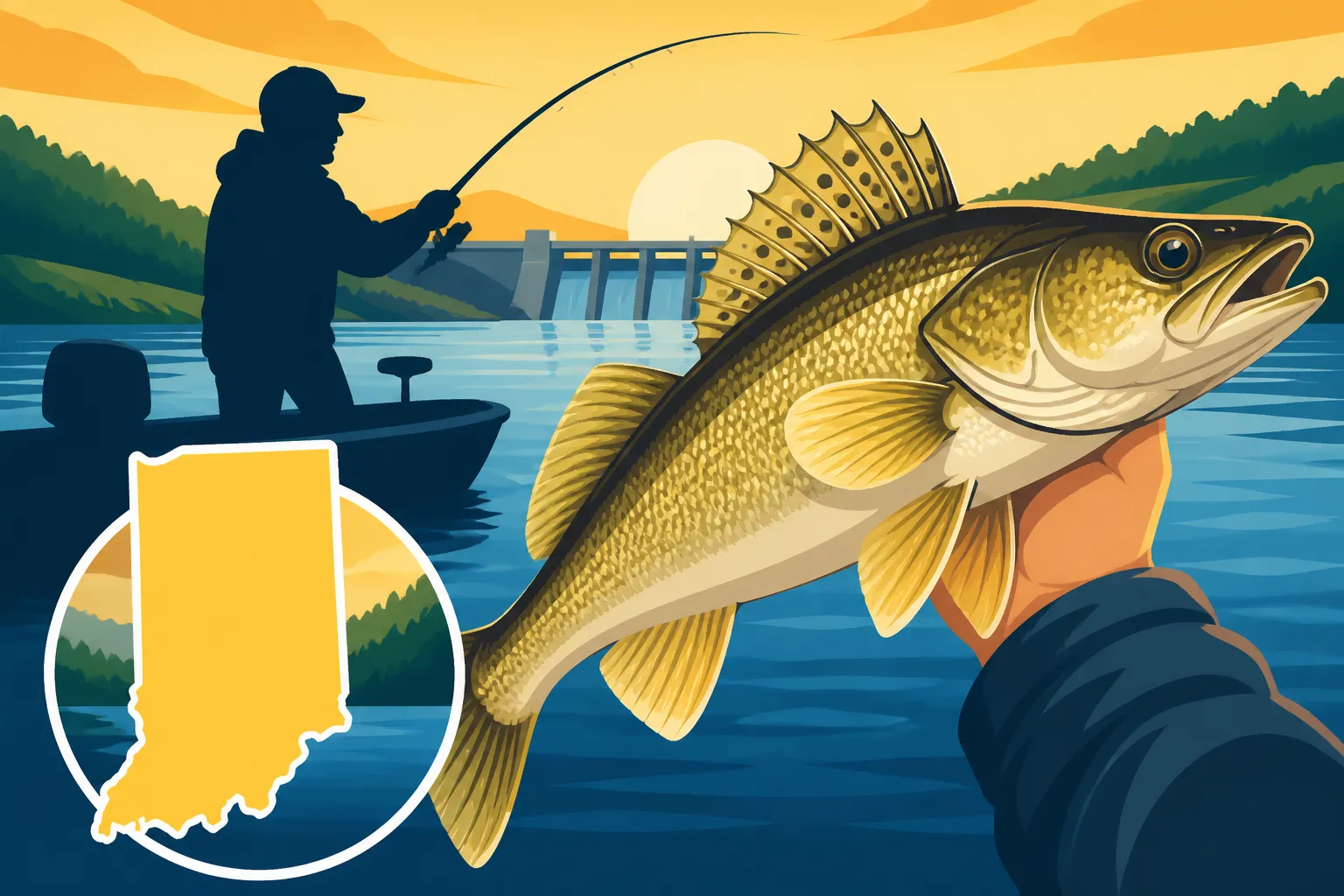
A saugeye is a fascinating fish, a hybrid cross between a female walleye and a male sauger. Because of this genetic mix, they often exhibit the best traits of both parents. They tend to grow faster than sauger and are more tolerant of turbid (cloudy) waters than pure walleye, making them perfectly suited for many of Indiana's reservoirs. Visually, they share characteristics with both, often having the darker blotchy markings of a sauger, but with the distinct white tip on the lower caudal fin (tail) that is a hallmark of the walleye. You might also notice irregular dark spots on their dorsal fin, which is another tell-tale sign of a saugeye.
It's easy for anglers, especially those new to saugeye fishing, to confuse them with walleye or even pure sauger. But knowing how to tell them apart is key, not only for identification but also because some regulations might differ slightly. If you're keen on the distinctions, you might find our guide on Saugeye Identification: Spotting a Walleye-Sauger Hybrid particularly helpful. Their hybrid vigor often means they're robust fighters, making every hook-up an exciting battle.
Understanding Growth Potential and Why They Get Big
Saugeye are known for their impressive growth rates. In Indiana's nutrient-rich reservoirs, where ample forage fish like shad are available, saugeye can pack on weight quickly. They also exhibit a higher survival rate when stocked compared to pure walleye, which contributes to more mature, larger fish in the population. While a "trophy" can be subjective, many anglers consider a saugeye over 20 inches a respectable catch, with anything pushing past 25 inches entering true trophy territory. The state record saugeye is a testament to their potential, showing that these fish can reach significant sizes in our waters.
The reason they get so big boils down to a combination of their hybrid genetics, aggressive feeding habits, and the excellent habitat and forage found in Indiana's reservoir systems. They are opportunistic predators, constantly on the hunt, which means they're more likely to encounter your bait or lure if you're fishing the right spots at the right time. Plus, because they thrive in conditions that might not be ideal for pure walleye, they can dominate certain niches, further contributing to their robust populations and impressive sizes. Want to know more about their lineage? Check out What's the Difference Between Walleye and Saugeye? for a deeper dive.
Indiana's Prime Reservoirs Known for Trophy Saugeye
Indiana boasts several fantastic reservoirs that are consistently stocked with saugeye and offer excellent opportunities for landing truly memorable fish. These aren't just any old fishing holes; these are places where the Indiana Department of Natural Resources (IDNR) has put in a lot of work to cultivate thriving saugeye populations.
Lake Monroe: Southern Indiana's Productive Waters
When you talk about saugeye fishing in Indiana, Lake Monroe in Bloomington often comes up first, and for good reason. As Indiana's largest inland lake, it offers an expansive fishery with a diverse underwater landscape perfect for saugeye. The IDNR regularly stocks saugeye here, and the results speak for themselves, with anglers frequently reporting catches of 20-inch-plus saugeye. This is one of those places where persistence truly pays off.
Monroe's vastness means you need to be strategic. Trophy saugeye often relate to specific structures, like main lake points, submerged humps, old creek channels, and areas where there's a good mix of rock and gravel. During warmer months, you'll often find them congregating around deeper breaks and points, ambushing schools of shad. As the water cools in the fall and into winter, they might move shallower, especially around twilight, to feed on baitfish pushed into the coves. Understanding the lake's contours and using your electronics effectively can be the difference between a decent day and a trophy-saugeye day. For a more general overview of great fishing spots, you can also look at Best Fishing Spots in Indiana.
Mississinewa Lake: A Northern Indiana Powerhouse
Up in the northern part of the state, Mississinewa Lake near Peru is another jewel for saugeye enthusiasts. This reservoir consistently produces both numbers of saugeye and a good percentage of larger, trophy-sized fish. Like Monroe, Mississinewa is regularly stocked by the IDNR, ensuring a healthy population for anglers to pursue. The lake's varied structure, including standing timber, old roadbeds, and extensive creek channels, provides ample ambush points for saugeye.
Anglers targeting trophy saugeye on Mississinewa often focus on the main lake basin, especially around prominent points and submerged islands. The outflow areas and current seams can also be extremely productive, as saugeye will stage there to pick off disoriented baitfish. Vertical jigging spoons or blade baits directly over deep structure, or trolling crankbaits along channel edges, are popular and effective methods here. The key is to cover water until you locate active fish. Remember to always consult the Indiana Fishing Regulations and Bag Limits Guide before heading out, as specific rules for saugeye might apply.
Other Promising Saugeye Destinations
While Monroe and Mississinewa are often highlighted, Indiana has other reservoirs that offer excellent saugeye fishing, and can certainly hold trophy potential. These lakes also benefit from regular stocking efforts and provide diverse habitats for saugeye to thrive.
- Salamonie Lake: Located near Mississinewa, Salamonie also receives consistent saugeye stockings and shares many similar characteristics, including excellent structure and a healthy forage base. Anglers here often find success in deeper areas and around the reservoir's extensive standing timber.
- Brookville Lake: Down in southeastern Indiana, Brookville Lake near Liberty is well-known for its excellent walleye fishery, but it also receives saugeye stockings. While perhaps not as famed for saugeye as Monroe or Mississinewa, it certainly holds the potential for trophy-sized fish, especially for anglers who understand how to target walleye-like species in its clearer, deep waters.
- Hardy Lake: This smaller reservoir in southern Indiana also gets saugeye stockings and can be a fantastic option, especially for those looking for a less crowded experience than the bigger lakes. Its more intimate size can sometimes make it easier to pinpoint saugeye concentrations.
Each of these lakes presents unique challenges and rewards, but all of them are serious contenders for your next trophy saugeye adventure. For a comprehensive look at where these fish are introduced, check out Where Does Indiana Stock Saugeye?.
Effective Strategies for Landing Indiana's Biggest Saugeye
Catching trophy saugeye isn't usually a matter of luck; it's a blend of understanding their behavior, using the right gear, and employing proven techniques. These fish are smart, so you need to be smarter.
Prime Baits, Lures, and Rigging Techniques
Saugeye are predatory fish, and they respond well to a variety of baits and lures, much like their walleye cousins. Live bait, especially minnows or shiners, fished on a simple Lindy Rig or a slip-bobber, can be incredibly effective, particularly when fish are finicky. For artificials, crankbaits that mimic shad or other baitfish are go-tos for trolling, especially over deeper flats or along channel edges. Popular brands like Rapala or Berkley offer excellent options that you can often find readily on Amazon. Jigging spoons, like those from Johnson or Kastmaster, dropped vertically over structure, also entice aggressive strikes from larger fish.
When it comes to rigging, keep it simple but strong. A fluorocarbon leader (8-12 lb test) is often recommended due to its low visibility and abrasion resistance. A sensitive medium-light to medium-action rod paired with a good spinning reel will give you the feel you need for subtle bites and the backbone for fighting larger fish. Don't be afraid to experiment with colors and sizes until you find what the fish are keying in on. Sometimes, a slight change in lure color, from perch patterns to firetiger, can make all the difference. For more specific recommendations, our guide on Best Lures for Saugeye Fishing is a fantastic resource.
Locating Trophy Saugeye in Reservoir Structure
Finding trophy saugeye means understanding their habitat preferences. In reservoirs, they often relate closely to structure and depth changes. Look for points that extend into the main lake, humps, ledges, and the edges of old creek channels. These are natural ambush points where saugeye can wait for baitfish to swim by. During the day, especially in brighter conditions, they'll often hold deeper, seeking refuge from the light and waiting for an easy meal.
Your fish finder is your best friend here. Don't just look for fish; look for baitfish schools and the structure holding them. Saugeye will be nearby. Side-imaging and down-imaging technologies, available on many modern fish finders, can help you cover water more efficiently and pinpoint those subtle transitions in the bottom contour where saugeye often stage. If you mark a school of bait or what appears to be larger fish near the bottom, slow down, make precise casts, or try vertical jigging. Remember, fishing isn't just about casting; it's about interpreting what your electronics tell you about the underwater world.
Saugeye Behavior and Seasonal Patterns for Bigger Catches
Understanding how saugeye behave throughout the year and even throughout the day can significantly increase your chances of landing a trophy. They are creatures of habit, but those habits shift with the seasons and environmental conditions.
Seasonal Movements and Feeding Habits
Saugeye, like many predatory fish, have distinct seasonal patterns. In spring, as water temperatures rise, they'll often move shallower, sometimes into tributary arms or along warmer banks, to feed actively after the leaner winter months. This can be an excellent time for casting shallow-running crankbaits or even jigging with minnows. As summer progresses and water temperatures peak, saugeye typically retreat to deeper, cooler water, often suspending over main lake basins or holding tight to deep structure. This is when trolling deep-diving crankbaits or vertical jigging become primary tactics.
Fall is often considered one of the best times for trophy saugeye. As water temperatures begin to cool, the fish become incredibly aggressive, putting on weight before winter. They will often follow schools of shad into shallower bays or along steep drops, making them highly catchable. Winter fishing, while challenging, can also produce huge saugeye, often found concentrated in specific deep holes or basins, requiring precise vertical presentations. Keeping an eye on a good quality fishing calendar or checking specific forums for local reports can offer incredible insight. For a broader view, refer to Indiana Fishing Seasons: A Month-by-Month Guide to align your trip planning.
Best Times of Day and Conditions
While saugeye can be caught at any time, certain periods tend to be more productive. Like walleye, saugeye are often most active during low-light conditions. This means dawn, dusk, and even night fishing can be incredibly rewarding, especially for larger fish. During these times, they move shallower and become more aggressive, using the cover of darkness to ambush prey. Many dedicated saugeye anglers swear by night fishing, particularly during the summer and fall, when they can catch truly massive specimens under the stars.
Overcast days can also provide excellent fishing opportunities, as the reduced light penetration allows saugeye to remain active in shallower water throughout the day. Conversely, bright, sunny days usually push them deeper, requiring different tactics to reach them. Weather changes, such as approaching cold fronts, can sometimes trigger a feeding frenzy before the front hits, but fishing can slow down considerably afterwards. Always pay attention to recent weather patterns and forecast conditions. A reliable weather app on your phone, coupled with good fishing electronics and quality gear available from online retailers like Amazon, will prepare you for any situation out on the water. Even knowing Best Bait for Walleye Fishing can give you a significant leg up, as saugeye often respond to similar presentations.
Disclaimer
This article is for general informational purposes only and does not constitute professional advice. Laws, prices and regulations vary by location and change over time. Consult a qualified professional for guidance on your specific situation.