What’s the Difference Between Walleye and Saugeye?
It's happened to almost every angler in Indiana at some point: you pull in a beautiful fish, its eyes glowing eerily in the low light, and you immediately wonder, "Is this a walleye or a saugeye?" The confusion is completely understandable. These two species, both prized for their fighting spirit and delicious table fare, share many similarities, and telling them apart can feel like a game of subtle differences. This guide is here to unravel that mystery, helping you confidently identify your catch and understand why those distinctions matter for your fishing adventures in the Hoosier State.
The Walleye: Indiana's Elusive Golden Ghost
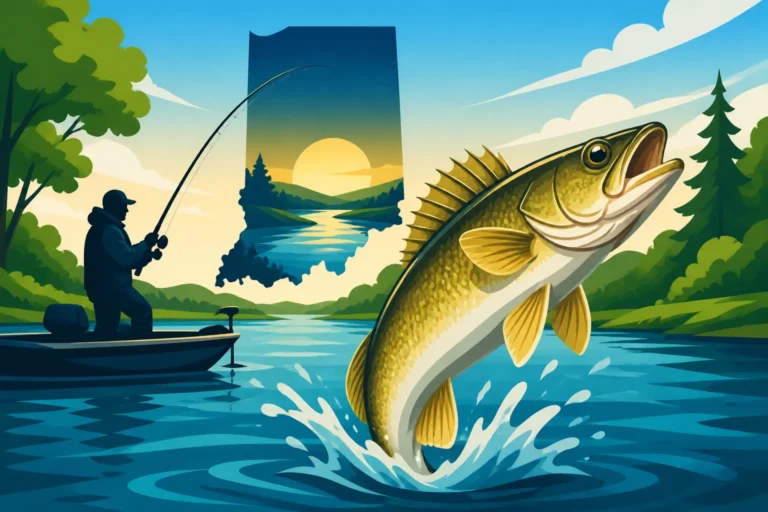
Ah, the walleye. Many anglers consider it the pinnacle of freshwater fishing in Indiana, a true trophy that takes skill and patience to land. They're renowned for their cunning, their preference for low light, and that distinctive pearlescent glow in their eyes. But beyond the mystique, there are concrete ways to identify this magnificent fish.
Key Identification Features of a Walleye
When you've got a walleye in hand, the first thing you'll likely notice is its overall sleek, elongated body. They're built for speed and stealth in deeper waters. Their coloration typically ranges from a dark olive green on the back, fading to a golden-yellow or brassy hue on their sides, and then a clean, milky white belly. You might see several dark, vertical bars or blotches along their sides, but these are often subtle and can fade or intensify depending on the water clarity and substrate.
Now, let's talk fins. The walleye has two dorsal fins. The first, or spiny dorsal fin, is generally clear or slightly cloudy, but it will not have distinct, dark spots scattered across it. This is a crucial detail we'll come back to. The second dorsal fin, which is soft-rayed, will also lack any prominent spots. Look closely at the lower lobe of the tail fin; a true walleye almost always has a distinct, milky-white tip on that lower lobe. This white tip is often considered the most reliable field mark for a pure walleye. Their mouth is fairly large, extending back to roughly the middle of the eye, and it's full of sharp, canine-like teeth—so be careful when unhooking! The eyes, as mentioned, are large and opaque, giving them their characteristic "walleye" or "glass eye" look, an adaptation for seeing in dim light. This eye shine is part of their charm and why they're so active at dawn, dusk, and even after dark. You can learn more about how water temperature affects their activity in How Water Temperature Affects Fish Activity.
Where Walleye Thrive in Indiana
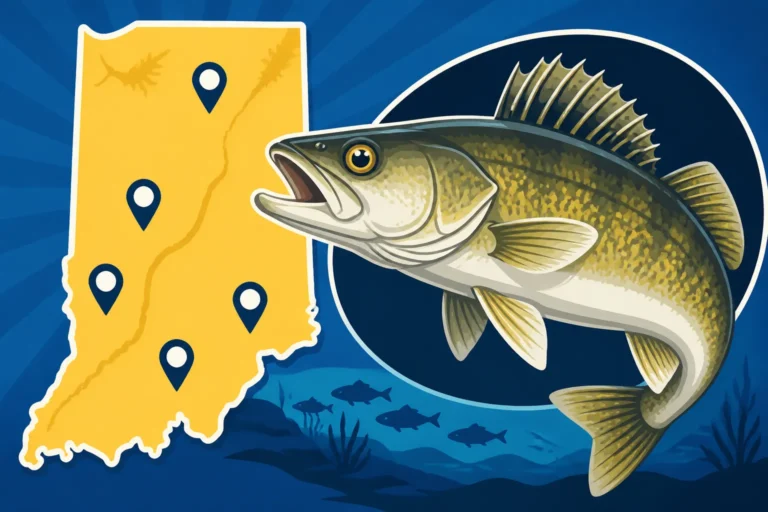
Walleye are cold-water loving fish that prefer clear, deep lakes and large river systems. In Indiana, you'll find healthy populations in a variety of places, from the vast expanse of Lake Erie's western basin (which borders Indiana) to our own beautiful glacial lakes up north and some of our larger reservoirs and rivers. These fish are structure-oriented, meaning they'll hang around submerged points, rock piles, drop-offs, and deep weed lines where they can ambush prey. They're often found hugging the bottom, especially during bright daylight hours, only moving shallower to feed when light conditions are low.
If you're targeting walleye, you're likely heading to places like the northeastern glacial lakes in Kosciusko and Steuben counties, or perhaps some of our larger reservoirs. They require specific habitat to thrive, generally preferring cooler temperatures than some of their hybrid cousins. Indiana Walleye Fishing: A Complete Guide can provide even more detail on where to find these beauties. Anglers often fish for them using jigs, crankbaits, or live bait rigs, particularly around transitions in depth or submerged structures. The specific Walleye Minimum Length North of State Road 26 applies to many of these prime walleye waters, making proper identification essential.
The Saugeye: A Hybrid Powerhouse
Now let's talk about the saugeye, a fantastic fish in its own right that often gets mistaken for its purebred relatives. The saugeye is a unique creation, a testament to fishery management, and a hard-fighting fish that provides excellent angling opportunities across Indiana.
Understanding the Saugeye's Hybrid Nature
The saugeye isn't a naturally occurring species. It's a hybrid, specifically a cross between a female walleye and a male sauger. The sauger is another member of the perch family, closely related to the walleye but generally smaller, more slender, and with more pronounced dark spots on its dorsal fin. Fishery biologists developed the saugeye to combine the best traits of both parents: the walleye's fast growth rate and larger size potential, and the sauger's adaptability to turbid (murkier) water conditions and slightly warmer temperatures. This means saugeye can thrive in environments where pure walleye might struggle, making them an excellent choice for stocking in many of Indiana's diverse waterways.
The result is a fish that grows quickly, fights hard, and is a bit more forgiving for anglers in a wider range of conditions. They often outcompete walleye in certain habitats, particularly in the more stained or turbid reservoirs. Understanding this hybrid origin is key to appreciating their unique characteristics and why they're such a successful sport fish in the state. What's the Difference Between Walleye and Saugeye? and Saugeye Identification: Spotting a Walleye-Sauger Hybrid offer a deeper dive into this fascinating hybrid.
Distinctive Marks of a Saugeye
At first glance, a saugeye looks very much like a walleye. They share that elongated, torpedo-shaped body and a similar overall coloration of dark backs and lighter bellies, though saugeye often have a more mottled or blotchy pattern on their sides, rather than distinct bars, and their colors can be a bit more muted or browner than the walleye's golden sheen.
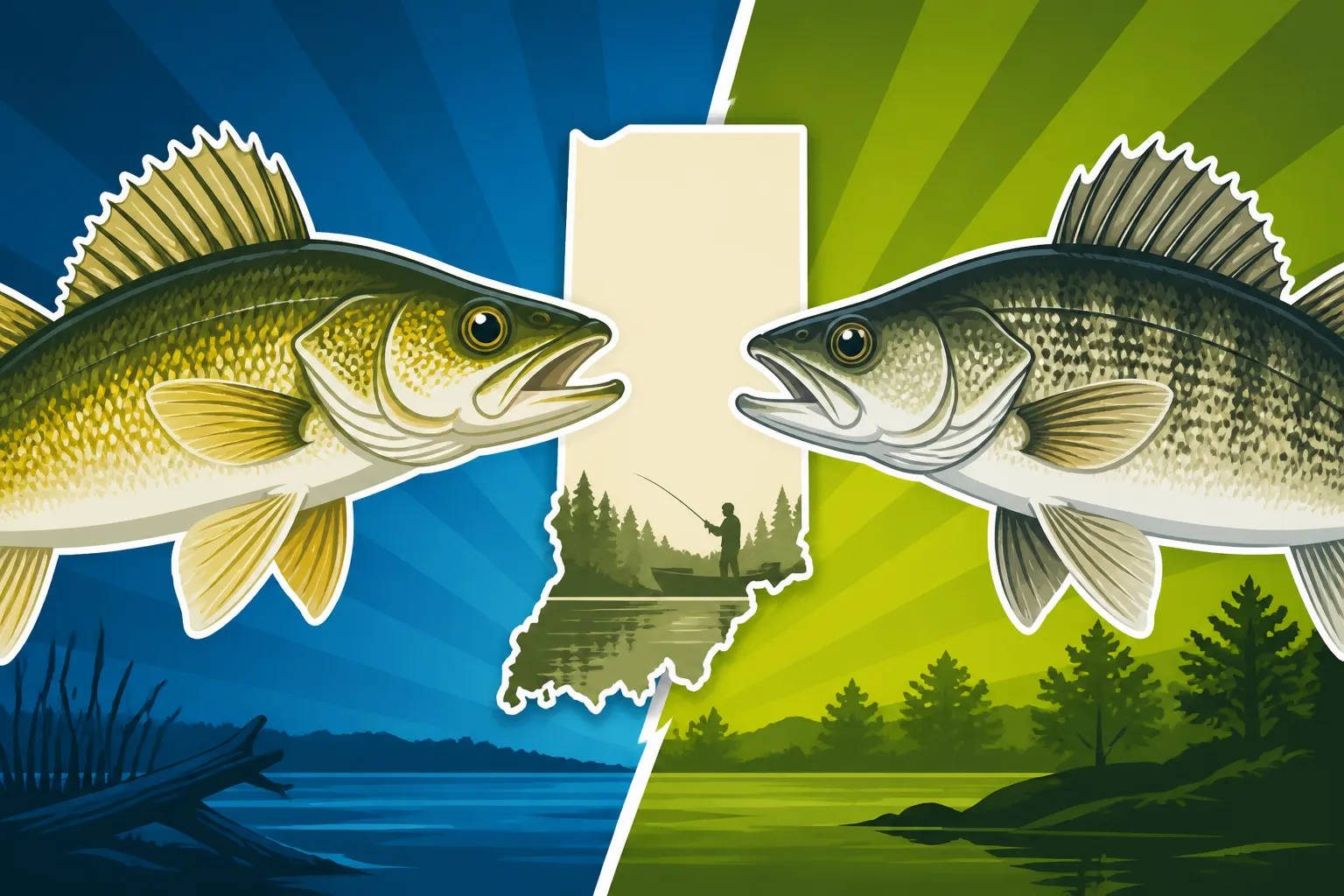
The absolute, unquestionable giveaway for a saugeye, however, lies in its fins. Specifically, look at the spiny dorsal fin. A saugeye will have very distinct, dark spots scattered irregularly across the membranes of this fin. These spots are inherited from its sauger parent. Unlike the clear dorsal fin of a walleye, or the banded dorsal fin of a sauger, the saugeye's spotted dorsal is its signature. While a pure sauger might have more organized rows of spots that form bands, the saugeye's spots are usually more random, but undeniably present.
Another clue can be found on the tail fin. While walleye have a pronounced white tip on the lower lobe, saugeye typically lack this white tip, or it will be very faint and less defined. Their body is often a bit more robust or chunky than a pure walleye of the same length, reflecting that faster growth rate. Like walleye, they have sharp teeth, so again, exercise caution when handling.
Where Saugeye Roam in Indiana
Because of their hardiness and adaptability, saugeye are frequently stocked in Indiana's large reservoirs and some river systems, particularly those that might be a bit murkier or warmer than what ideal walleye habitat demands. This includes popular fishing destinations like Brookville Lake, Patoka Lake, and Mississinewa Lake. These reservoirs often experience more fluctuating water levels and varying turbidity, conditions where the saugeye really shines.
Fisheries managers stock saugeye to provide excellent angling opportunities in waters where walleye stocking might be less successful. They are also known to tolerate higher boat traffic and a wider range of water temperatures, making them a more accessible target for many anglers. If you're fishing one of Indiana's major reservoirs, especially south of State Road 26, you have a very good chance of encountering saugeye. To dive deeper into specific locations, check out Saugeye Fishing in Indiana: A Complete Guide and Where Does Indiana Stock Saugeye?.
Side-by-Side: Spotting the Differences That Matter
Okay, so we've talked about them individually. Now, let's put them head-to-head and really highlight those critical differences that will help you make a positive identification on the water. This is where your keen observation skills come into play.
Dorsal Fin: The Dead Giveaway
Seriously, if you only remember one thing from this entire guide, let it be this: look at the spiny dorsal fin.
- Walleye: The spiny dorsal fin is mostly clear or translucent, perhaps a little cloudy, but it will not have distinct, dark spots on its membranes.
- Saugeye: The spiny dorsal fin will have noticeable, dark, irregular spots scattered across its membranes. These spots are often quite pronounced and easy to see.
This is the most reliable and consistent way to differentiate between the two. Once you train your eye for it, you'll be able to tell them apart almost instantly. If you're having trouble seeing it clearly, try holding the fish up against a lighter background or in natural light. Sometimes, wearing polarized sunglasses, which you can find on Amazon, can also help cut through glare and make these subtle markings stand out more.
Body Shape and Coloration Nuances
While the dorsal fin is the primary identifier, there are some other subtle differences you might notice, especially with experience:
- Tail Fin: Remember the white tip. Walleye typically have a very distinct, milky-white patch on the lower lobe of their tail fin. Saugeye usually lack this, or it's much fainter and less defined.
- Body Pattern: Walleye tend to have more defined, though sometimes faded, vertical bars on their sides. Saugeye often display a more mottled, splotchy, or worm-like pattern that can appear streaky or diffuse. Their overall color might also lean a bit more towards brown or grey than the walleye's golden tones.
- Overall Build: While variable, some anglers report that saugeye can sometimes appear a bit stockier or more robust for their length compared to the typically more slender walleye, particularly in similar environments.
Eye Shine: A Shared Trait, But Still Telling
Both walleye and saugeye possess that distinctive "eye shine" or "glassy eye" appearance due to a reflective layer behind their retina called the tapetum lucidum. This adaptation helps them see exceptionally well in low-light conditions. Because both species have this, the eye shine itself isn't a differentiating factor between walleye and saugeye. However, it is a key characteristic that sets them apart from many other freshwater fish you might catch, highlighting their predatory nature and preferred hunting times. So, while it won't tell you which one you have, it confirms you've got a member of the walleye/sauger family!
Here's a quick reference table to help solidify the differences:
| Feature | Walleye | Saugeye |
|---|---|---|
| Dorsal Fin | Spiny dorsal fin is mostly clear/translucent | Spiny dorsal fin has distinct, irregular dark spots |
| Tail Fin | Distinct white tip on lower lobe of tail fin | Lacks white tip on lower lobe, or it's very faint |
| Body Pattern | Often has subtle vertical bars or blotches | More mottled, splotchy, or worm-like pattern on sides |
| Coloration | Golden-yellow to brassy sides, olive back | Often browner/greyer, more muted overall |
| Origin | Pure species, native to certain Indiana waters | Hybrid (female Walleye x male Sauger), stocked |
| Eye Shine | Present (prominent "walleye eye") | Present (prominent "walleye eye") |
| Habitat Pref. | Colder, clearer, deeper lakes & rivers | More tolerant of turbid, slightly warmer waters; reservoirs |
Why Does It Matter? Regulations and Angler Experience
You might be thinking, "They look so similar, why does it really matter if I can tell the difference?" Well, for a few very good reasons, it truly does! Knowing your fish isn't just about bragging rights; it's about being a responsible and successful angler.
Impact on Indiana Fishing Regulations
This is perhaps the most critical reason to learn the distinction. While Indiana's fishing regulations for walleye and saugeye are often similar, or even combined in some specific waters, there can be subtle differences in length limits, bag limits, or season restrictions depending on the specific lake or river. For example, some bodies of water might have a statewide walleye limit, while others might have special regulations for saugeye to manage their populations effectively. Indiana Fishing Regulations and Bag Limits Guide is your go-to resource, but only if you know which fish you're looking at!
Misidentifying your catch could, at worst, lead to a citation for keeping an undersized fish or exceeding a bag limit. Imagine catching what you believe is a legal saugeye, only to find out later it was an undersized walleye with a different minimum length. It's an honest mistake, but ignorance of the law is generally not a valid defense. Always consult the most current Indiana fishing regulations published by the Indiana Department of Natural Resources (IDNR) for the specific body of water you're fishing. Being confident in your identification ensures you're complying with all local rules and doing your part to conserve Indiana's fisheries. If you're going after trout or salmon, remember to also check Indiana Trout and Salmon Stamp Requirements as that's an additional consideration.
Fishing Techniques and Habitat Preferences
Beyond regulations, understanding the differences between walleye and saugeye can significantly impact your fishing success. While they share many characteristics, their hybrid nature gives saugeye a slight edge in different environmental conditions, which informs where and how you might target them.
- Water Clarity and Turbidity: Saugeye, with their sauger parentage, are generally more tolerant of murky or stained water. This means if you're fishing a reservoir that's seen some heavy rains and the water is off-color, saugeye might be more active and easier to locate than walleye. Walleye, preferring clearer conditions, might be deeper or hugging structure more tightly in such scenarios.
- Temperature Tolerance: While both prefer cool water, saugeye can sometimes tolerate slightly warmer temperatures than pure walleye, expanding their active feeding windows in late spring or early fall.
- Location in Water Column: Saugeye often aren't as bottom-oriented as walleye and might suspend more in the water column, especially if there's baitfish present. This means techniques like trolling crankbaits through the mid-water column can be particularly effective for saugeye, whereas walleye might require a more bottom-hugging presentation.
Knowing these subtle behavioral differences allows you to adapt your approach. If you're on a clear, deep glacial lake, you're likely optimizing for walleye. If you're on a murky reservoir known for saugeye, you might adjust your lure colors to something brighter or increase your scent profile. You might also look for different types of structure, knowing saugeye are more mobile. Whether you're researching the best lures on Amazon or stocking up at your local tackle shop, having the right gear for the right species and conditions is crucial.
Ultimately, both walleye and saugeye are incredible sport fish that offer a thrilling challenge and a delicious reward. By taking the time to learn their distinguishing features, you'll not only enhance your angling knowledge but also ensure you're a responsible participant in Indiana's rich fishing tradition. So next time you land one, take a moment, check that dorsal fin, and celebrate your catch!
Disclaimer
This article is for general informational purposes only and does not constitute professional advice. Laws, prices and regulations vary by location and change over time. Consult a qualified professional for guidance on your specific situation.