Where to Catch Largemouth Bass in Indiana Ponds
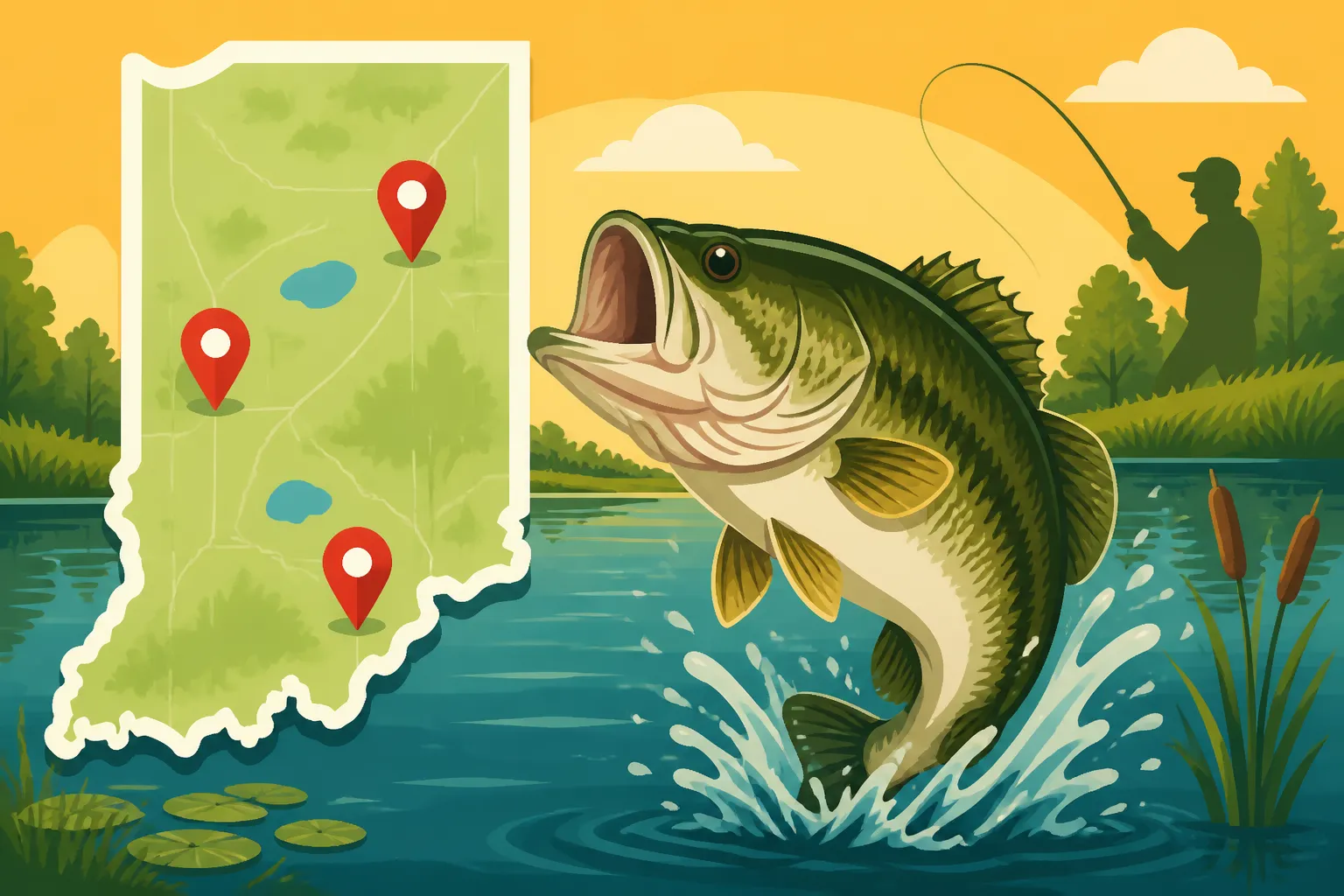
It's incredibly frustrating when you're itching to go bass fishing, but all the "best" spots seem to be crowded reservoirs or vast, intimidating lakes. You just want a quiet, accessible place to cast a line and feel that unmistakable thud of a largemouth hitting your lure. This guide is all about helping you discover those often-overlooked treasures: Indiana's countless ponds, which can be absolute goldmines for catching largemouth bass.
The Allure of Indiana's Hidden Pond Gems for Largemouth Bass
There's something uniquely satisfying about fishing a pond. It feels more intimate, more personal, and often less pressured than a major lake. For largemouth bass anglers in Indiana, ponds represent an incredible opportunity, offering both numbers of fish and, surprisingly often, some truly impressive lunkers. These smaller bodies of water can be bustling ecosystems, providing everything a bass needs to thrive, often right in your backyard or just a short drive away.
Why Ponds Are Prime Largemouth Habitat
Largemouth bass absolutely adore ponds because these environments naturally provide a rich tapestry of what they need: food, cover, and predictable conditions. Unlike vast lakes where bass can roam widely and become harder to pattern, ponds concentrate fish in smaller areas, making them more accessible and predictable for anglers. The shallower water in many ponds also tends to warm up faster in the spring, kicking off the bass bite earlier than in deeper, larger bodies of water. Think about those sunny spring days when the water's just starting to lose its chill – that's when pond bass really become active, moving into the shallows to feed and eventually, to spawn. This makes targeting them a real joy, especially for those who prefer to keep things local and simple. Largemouth Bass Fishing in Indiana: The Complete Guide offers more insight into their general behavior, but in ponds, these traits are often magnified.
Identifying Potential Bass Ponds
So, how do you find these elusive bass havens? It's not always about looking on official maps or consulting state park guides, though those can be a start. Many of the best bass ponds are privately owned farm ponds, quarry ponds, or even neighborhood retention ponds. Start by scouting around your local area – drive the back roads, look at satellite maps, and keep an eye out for water bodies, especially those with some vegetation, structure, or a good depth change. You'd be surprised how many small ponds exist that are rarely, if ever, fished. Local bait shops are also goldmines of information; often the folks working there know about smaller, less publicized spots. Just remember, a pond that looks great might not hold bass if it's too shallow, too muddy, or lacks sufficient food sources.
Accessing Private Ponds: The Golden Rule
This is perhaps the most crucial aspect of pond fishing: respect for private property. Most of the best bass ponds in Indiana are on private land. The golden rule, and one that cannot be stressed enough, is always ask permission before you fish. Showing up with a rod and reel and hoping for the best is a sure-fire way to get yourself in trouble and ruin opportunities for other anglers. Find the landowner, introduce yourself, explain your passion for fishing, and politely ask if you might be allowed to fish their pond. Offer to share your catch, clean up any trash, or even help with a chore. A friendly, respectful approach goes a long, long way. Many landowners are happy to share their slice of paradise, especially if they know their pond is being treated with care. Just imagine yourself as the landowner; you'd want to know who's on your property, right?
Key Characteristics of a Productive Bass Pond
Not all ponds are created equal when it comes to holding quality largemouth bass. While any water might surprise you, truly productive ponds share some common characteristics that contribute to a healthy, thriving bass population. Knowing what to look for can significantly increase your chances of success and save you time on unproductive waters. It's about understanding the bass's world and what makes them comfortable and well-fed.
Understanding Pond Structure and Cover
Just like in larger lakes, bass in ponds crave structure and cover. These are their ambush points, their resting spots, and their safety zones. In a pond, this can mean a variety of things:
- Submerged Trees and Brush: Fallen trees, brush piles, or old stumps are absolute magnets for bass. They provide shade, hide small baitfish, and create perfect ambush points.
- Aquatic Vegetation: Lily pads, cattails, submerged grasses, and hydrilla are fantastic cover. Bass will often hide in the dense mats, waiting for prey, or seek shelter from the sun. However, too much vegetation can choke out a pond and make fishing impossible, so look for a good balance.
- Depth Changes: Even subtle changes in depth, like a drop-off near the bank or a hump in the middle, can concentrate bass. These areas often serve as transition points where bass move from deeper, cooler water to shallower feeding areas.
- Docks and Man-Made Structures: If a pond has a dock, pier, or even an old culvert pipe, bass will almost certainly congregate around it. These structures offer shade and cover that fish find irresistible. When approaching a pond, take a few minutes to visually scan for these elements before making your first cast.
Water Quality and Its Impact on Bass
Water quality is paramount for any fish species, and largemouth bass are no exception. A healthy bass pond typically has:
- Clear to Moderately Stained Water: Bass are sight feeders, so clear water allows them to hunt effectively. However, overly clear water can make them skittish. A slight stain or tint is often ideal, providing a bit of camouflage for both predator and prey. Heavily muddy water, especially after heavy rains, can make fishing tough as bass struggle to see.
- Adequate Oxygen Levels: This is crucial. Ponds that are too shallow, become overgrown with algae, or suffer from nutrient runoff can experience oxygen depletion, especially in hot summer months. This can stress or even kill fish. A healthy pond should have good water circulation, possibly through a spring or inlet, and a balanced ecosystem.
- Stable Temperature Ranges: While ponds warm faster, they can also get too hot in summer. Deeper sections or shaded areas become vital refuges during extreme heat. Best Water Temperature for Bass Fishing in Indiana goes into more detail, but generally, bass prefer water in the 60s and 70s Fahrenheit. Ponds that maintain these conditions, even with varying depths or shade, will hold healthier bass.
Forage Base: What Bass Are Eating
A bass is only as healthy and as large as its food supply. A productive bass pond needs a robust forage base, meaning plenty of smaller fish, amphibians, and invertebrates for the bass to munch on.
- Bluegill and Sunfish: These are the primary food source in many Indiana ponds. A healthy population of bluegill means a healthy population of largemouth. They reproduce quickly and provide a continuous food supply. How Many Bluegill Can You Keep in Indiana? hints at their abundance.
- Shiners and Minnows: While often less numerous than sunfish, various minnow species can contribute significantly to a bass's diet.
- Frogs, Crawfish, and Insects: Don't underestimate the importance of these protein-rich snacks. Bass will readily eat a frog that falls in the water or a crawfish scuttling along the bottom. Ponds with good shoreline habitat and healthy insect populations contribute to a diverse food chain.
Knowing what the bass are eating can directly influence your lure selection. If you see bluegill schooling, a bluegill-imitating crankbait might be deadly. If you spot frogs near the edges, a topwater frog lure is a no-brainer.
Effective Techniques for Pond Bass Fishing
Pond fishing for largemouth bass requires a slightly different approach than fishing large lakes. The confined spaces, often abundant cover, and sometimes wary fish mean that precision, stealth, and thoughtful lure selection are key. Don't just cast blindly; observe, plan, and execute.
Lure Selection: Matching the Hatch (or the Pond)
When it comes to lures for pond bass, versatility and realism often win the day. You don't always need a giant tackle box; a few key baits can cover most situations.
- Soft Plastics: These are arguably the most effective pond baits. Texas-rigged worms, Senkos, creature baits, and jigs with plastic trailers are fantastic for probing cover, working slowly, and enticing wary bass. A green pumpkin or black-and-blue Senko is almost universally effective. You can find a huge variety of these on Amazon.
- Topwater Lures: When conditions are right (low light, calm water, mild temperatures), nothing beats the excitement of a topwater strike. Poppers, walking baits, and hollow-bodied frogs are excellent choices, especially around lily pads or matted vegetation. Early mornings and late evenings are prime time for these.
- Crankbaits and Spinnerbaits: Shallow-diving crankbaits and spinnerbaits can be great for covering water quickly and drawing reaction strikes, particularly when bass are actively chasing baitfish. Look for colors that mimic bluegill or crawfish.
- Jigs: Flipping and pitching jigs into heavy cover is a classic bass technique that works exceptionally well in ponds. Black and blue, or green pumpkin jigs, are usually reliable.
The key is to select a lure that matches the size and type of forage the bass are eating and that can be fished effectively in the pond's specific cover. Best Bait for Largemouth Bass in Indiana Lakes provides a good starting point, which can be adapted for ponds.
Fishing Strategies for Small Waters
Pond fishing demands a blend of stealth and strategic casting.
- Be Quiet and Approach Carefully: Sound travels easily on small bodies of water. Don't stomp down to the bank or make loud noises. Approach potential fishing spots quietly, especially if you're targeting shallow water or visible cover.
- Target the Edges and Cover First: Bass often patrol the edges of ponds and hold tight to any available cover. Start by systematically working around the shoreline, casting to every dock, fallen tree, brush pile, and weed line. Make multiple casts to a single piece of cover from different angles to ensure you've presented your lure effectively.
- Fan Casting: If there's no obvious cover, fan cast around your position, covering the water in a semi-circle before moving on. This helps you locate active fish or hidden structure.
- Vary Your Retrieve: Don't just reel in at a steady pace. Experiment with different retrieve speeds, pauses, twitches, and jerks. Sometimes a subtle change in action is all it takes to trigger a strike. Remember, you're trying to mimic injured bait or crawfish, so erratic movements can be very effective.
Seasonal Considerations for Pond Bass
Just like in larger waters, bass behavior in ponds is heavily influenced by the seasons. Understanding these patterns will help you know where to cast and what to throw.
- Spring (Pre-spawn & Spawn): As water temperatures rise, bass move shallower to feed aggressively before the spawn. They'll be found near warming banks, submerged grass, and any hard structure. This is a fantastic time for jigs, spinnerbaits, and even some early topwater action. Once they start spawning, they'll be on beds, usually in shallow, protected coves. Best Time to Bass Spawn in Indiana gives more details on this crucial period.
- Summer: When the water gets hot, bass often retreat to deeper, cooler water or seek dense shade under thick cover. This is a great time for working soft plastics slowly in shaded areas, under docks, or in the thickest lily pads. Early morning and late evening topwater bites can also be explosive. Night fishing can also be productive when allowed.
- Fall: As temperatures cool, bass become very active again, feeding heavily to bulk up for winter. They'll often chase baitfish aggressively. Crankbaits, spinnerbaits, and jerkbaits can be very effective as bass move to open water or secondary points to intercept schools of baitfish.
- Winter: Pond bass become much less active in cold water. They'll typically relate to the deepest parts of the pond or main lake points, often holding tight to bottom structure. Slow, subtle presentations with jigs or small plastics are your best bet.
Essential Gear for Your Indiana Pond Bass Adventure
One of the great things about pond fishing is that you don't necessarily need a ton of specialized, expensive gear. A basic, reliable setup can catch a lot of fish. However, having the right tools for the job can certainly make your experience more enjoyable and successful.
Rods, Reels, and Line: The Pond Trio
Your rod, reel, and line are the fundamental tools of any angler. For pond bass, versatility is key.
- Medium-Heavy Casting or Spinning Rod: A 6'6" to 7' medium-heavy action rod is a great all-around choice. It has enough backbone to pull bass out of cover but still offers enough sensitivity for detecting subtle bites. Whether you prefer a spinning setup (easier for beginners and lighter lures) or a baitcasting setup (better for heavier lures and precise casting into tight spots) is a matter of personal preference. A good quality rod and reel combo, often found on Amazon, will serve you well. Best Rods and Reels for Indiana Largemouth Bass provides more general advice.
- Matching Reel: Pair your rod with a reel that balances well. For spinning, a 2500-3000 series reel is standard. For baitcasting, look for a reel with a moderate gear ratio (around 6.4:1 to 7.1:1) that handles various lure types.
- Braided or Fluorocarbon Line (10-17 lb test): Braided line is excellent for pond fishing due to its strength, sensitivity, and resistance to abrasion from weeds and brush. You can tie a fluorocarbon leader (10-15 lb) to the braid for invisibility. Fluorocarbon main line is also a great choice because it's nearly invisible underwater and very sensitive. Monofilament (12-17 lb test) is a more budget-friendly option and has good knot strength, but it's less sensitive and more visible than fluorocarbon.
Basic Tackle Box Essentials
You don't need to haul a massive tackle box to a pond, especially if you're bank fishing. A small, organized Best Tackle Box Organizers for Anglers can hold everything you need. Here's a quick checklist of pond-specific essentials:
| Category | Essential Items | Notes |
|---|---|---|
| Soft Plastics | Texas-rigged worms (6-8"), Senkos (5"), creature baits, soft plastic frogs | Green pumpkin, black & blue, junebug colors. Assorted weights/hooks. |
| Hard Baits | Shallow-diving crankbaits, poppers, walking baits, spinnerbaits, hollow frogs | Bluegill, shad, crawfish, chartreuse colors. |
| Jigs | Flipping jigs (3/8-1/2 oz), swim jigs (3/8 oz) | Black & blue, green pumpkin with matching trailers. |
| Terminal Tackle | Assorted hooks (EWG, worm hooks), bullet weights, bobber stoppers, swivels | 1/8 oz to 1/2 oz bullet weights. |
| Tools | Pliers/forceps (for hook removal), line clippers, measuring tape, scale | Essential for safe fish handling and record keeping. |
| Safety/Comfort | Sunscreen, hat, polarized sunglasses, bug spray, water, small first-aid kit | Polarized sunglasses are crucial for spotting fish and cover. |
| Catch Care | Small cooler with ice if you plan to keep fish | Best Coolers for Keeping Fish Fresh on a Boat for larger options. |
Bank Fishing vs. Small Craft: Choosing Your Approach
Your choice of fishing platform largely depends on the pond itself and your access.
- Bank Fishing: Many ponds are perfectly suited for bank fishing, especially if they have clear, accessible shorelines and good casting lanes. This is the simplest and most accessible way to start. Just grab your rod and tackle box, and you're good to go. It forces you to be stealthy and precise with your casts, which are great skills to develop. However, bank fishing can limit your access to middle-of-the-pond structure or the far side of heavy cover.
- Small Craft (Kayak, Canoe, Belly Boat): If you're fortunate enough to have a small boat or a float tube, pond fishing opens up even more possibilities. A kayak or canoe allows you to quietly navigate into tight coves, reach submerged structures, and cover more water. This is particularly useful for ponds with thick vegetation along the banks. Make sure you check local regulations regarding boat launches and ensure you have all the necessary safety gear, including a life jacket. A small, inflatable belly boat is another fantastic option for pond anglers, offering mobility without the hassle of a larger vessel. Kayak Fishing Gear for Indiana Waters can provide more inspiration if you're considering this route.
Pond fishing for largemouth bass in Indiana offers a fantastic, often intimate, angling experience. By understanding where to find these hidden gems, what makes a pond productive, and how to approach them with the right techniques and gear, you can unlock some truly memorable fishing adventures. So, grab your rod, find a quiet pond, and enjoy the thrill of the chase.
Disclaimer
This article is for general informational purposes only and does not constitute professional advice. Laws, prices and regulations vary by location and change over time. Consult a qualified professional for guidance on your specific situation.