Best Bait for Largemouth Bass in Indiana Lakes
If you've ever stood on the shore of an Indiana lake, tackle box open, staring at an endless array of baits and wondering which one—the one—will finally entice a largemouth bass to strike, you're not alone. The sheer variety can be overwhelming, and what works today might be completely ignored tomorrow. This guide aims to cut through the confusion, offering a comprehensive look at the best baits for largemouth bass in Indiana lakes, helping you make more informed choices for a successful outing.
Understanding Largemouth Bass Behavior and Preferences
Before we even talk about specific baits, it’s crucial to understand what makes a largemouth bass tick. These fish are apex predators in most Indiana waters, driven by instinct to feed, protect their territory, and reproduce. They're primarily sight feeders, but they also rely heavily on vibrations and even scent to locate their next meal. Knowing their habits, especially how they react to different environmental cues, is the first step in choosing the right bait.
Key Factors Influencing Bass Bites
A bass's willingness to bite is a complex dance influenced by a myriad of environmental factors. Water temperature is probably the biggest one; it dictates their metabolism, where they hold in the water column, and how aggressive they are. In colder water, bass are sluggish, preferring slow-moving, subtle presentations. As the water warms, their metabolism kicks up, and they become much more active, chasing faster-moving baits.
Water clarity is another huge piece of the puzzle. In clear water, bass can see your bait from a distance, making natural colors and presentations more effective. Conversely, in murky or stained water, bass rely more on vibration and scent, so louder baits, flashier colors, or scent-infused options often outperform subtler ones. Don't forget about cover, either. Largemouth bass are ambush predators, so they love hanging around submerged logs, weed beds, docks, and rock piles, waiting to surprise their prey. Presenting your bait in or near these structures is always a good strategy. If you're really looking to dive deep into these patterns, our Largemouth Bass Fishing in Indiana: The Complete Guide offers even more insights.
Dietary Habits of Indiana Largemouth
What do Indiana largemouth bass naturally munch on? Their diet is quite varied, but typically includes smaller fish like shad, minnows, bluegill, and even smaller bass. Crayfish are a huge favorite, especially in rocky areas. Frogs, snakes, and even small rodents or birds that accidentally fall into the water can end up on a bass's menu. This natural diet gives us a fantastic roadmap for choosing baits. If it looks, swims, or smells like something they'd naturally eat, it's probably a good choice. Think about the local forage in the lake you're fishing. Are there lots of bluegill? Then a bluegill-patterned crankbait might be deadly. Are crayfish abundant? Then a soft plastic creature bait that mimics a crayfish could be your ticket to a big bite. Understanding How to Identify a Largemouth Bass in Indiana Waters can also help you tailor your approach to the specific fish you're targeting.
Top Live Baits for Natural Appeal
Sometimes, nothing beats the real thing. Live bait has an undeniable appeal because it looks, smells, and moves exactly like a bass's natural food source. While artificial lures have their place, live bait can be a game-changer on tough days or when targeting finicky fish.
Shiners and Minnows: The Agile Meal
Shiners and minnows are classic live baits for a reason: they are precisely what a largemouth bass loves to eat. They dart, flash, and wiggle, mimicking injured prey, which triggers a bass's predatory instincts. When using shiners or minnows, presentation is key. You can hook them through the lip for a natural swimming action or lightly through the back to keep them lively.
A simple setup involves a bobber to suspend the minnow at the desired depth, especially around weed lines or submerged structures. Alternatively, a free-lined minnow with no weight can be incredibly effective when bass are feeding on the surface or suspended in open water. Many anglers swear by a medium-heavy spinning or baitcasting rod with 8-12 pound test line for this. While not always readily available at every bait shop, finding a good local source for fresh, lively minnows is often worth the effort.
Worms and Crayfish: Bottom-Dwelling Delights
Beyond minnows, nature offers other irresistible options. Nightcrawlers, common earthworms, and especially crayfish, are bass magnets. Nightcrawlers, whether whole or in pieces, appeal to a wide range of fish, including bass, especially after a rain when they might naturally wash into the water. A simple worm rig, often on a Kahle or octopus hook with a small split shot weight, fished near the bottom or drifted under a bobber, can be incredibly effective.
Crayfish are an absolute delicacy for largemouth bass, particularly larger ones. Bass will actively hunt for crayfish in rocky areas and along hard bottom structures. A softshell crayfish, if you can find one, is practically irresistible. Hook them through the tail and let them crawl along the bottom. You can also use a small egg sinker above a swivel to keep them down. The key is to let the crayfish's natural movements do the work. If you're fishing in lakes with a strong crayfish population, like some of the Best Bass Fishing Lakes in Indiana, this can be a truly productive bait choice.
Essential Artificial Lures for Largemouth Bass
Artificial lures offer versatility, durability, and the ability to cover a lot of water quickly. They require a bit more skill in presentation to mimic natural prey, but once mastered, they can be incredibly rewarding. Plus, you can often find a huge selection of these lures on Amazon, making it easy to experiment with different styles and colors.
Soft Plastics: Versatility on a Hook
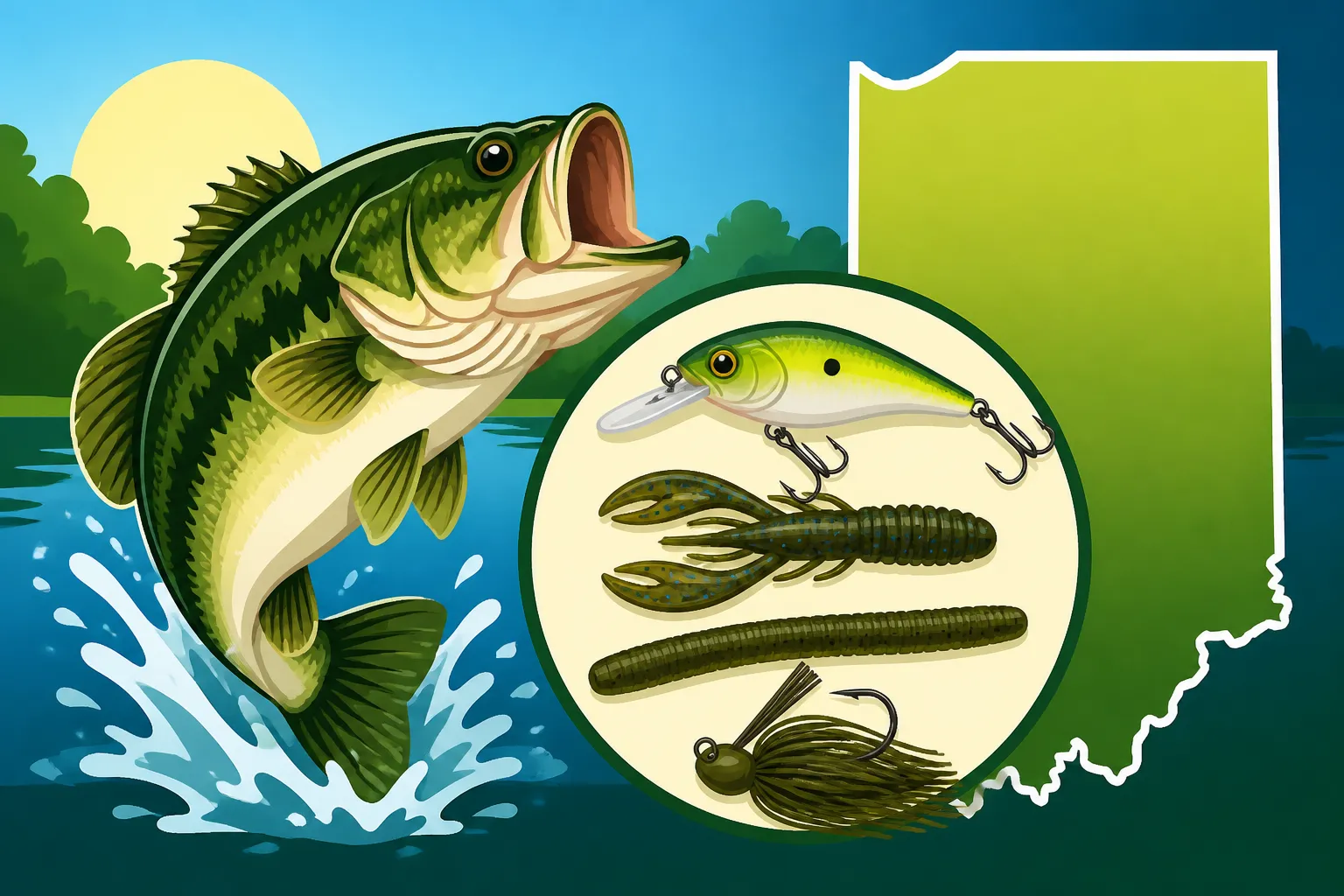
Soft plastics are perhaps the most versatile category of artificial lures for largemouth bass. They come in an astonishing array of shapes, sizes, and colors, designed to imitate worms, creature baits, crawfish, lizards, and baitfish.
- Plastic Worms (e.g., Senkos, Trick Worms): These are absolute staples. The Yamamoto Senko, for example, has a unique shimmy on the fall that bass simply can't resist. They are often fished weightless, Texas-rigged, or Carolina-rigged. The Texas rig, where the hook point is embedded in the worm to make it weedless, is fantastic for fishing through heavy cover like lily pads or submerged brush. For a detailed guide on How to Fish a Texas Rig for Bass, we've got you covered.
- Creature Baits: These baits often have appendages that flap and wiggle, mimicking crawfish or other critters. They're excellent for pitching into dense cover or flipping under docks. Their bulk often appeals to larger, more aggressive bass.
- Swim Baits: These soft plastics are designed to look and swim like a baitfish. They can be rigged on jig heads or with weighted hooks and are fantastic for tempting bass suspended in open water or cruising along weed edges.
The beauty of soft plastics is their subtle action and natural feel when a bass takes them, often leading to longer holding times, giving you more opportunity to set the hook. Many anglers even add scent to their soft plastics for an extra edge, and you can find a wide variety of these scented baits and treatments on Amazon.
Crankbaits and Spinnerbaits: Covering Water
When bass are active and scattered, or you need to cover a lot of water to find them, crankbaits and spinnerbaits are your go-to options.
- Crankbaits: These hard-bodied lures dive to various depths depending on the size and angle of their lip. Square bills are great for shallow, woody cover, deflecting off obstacles and often triggering a reaction strike. Deep-diving crankbaits are perfect for targeting bass holding on offshore humps or deep points. The retrieve is usually a steady reel, but adding pauses or jerks can make them even more enticing. Choosing the right color and diving depth is crucial, and you can often find excellent reviews for specific crankbait models on Amazon. For specific advice, check out Best Crankbaits for Indiana Largemouth Bass.
- Spinnerbaits: With their flashy blades and pulsating skirt, spinnerbaits create a lot of vibration and visual appeal. They're incredibly weedless and can be fished through heavy cover where other lures would snag. A slow, steady retrieve often works wonders, but varying your speed or "helicoptering" them on the fall can also be effective. They are especially good in stained or murky water where the flash and vibration help bass locate them.
These lures are fantastic for aggressive bass and can elicit powerful reaction strikes, making them exhilarating to fish.
Topwater Lures: The Thrill of the Strike
For sheer excitement, nothing beats a topwater strike. These lures float on the surface, mimicking injured baitfish, frogs, or struggling insects.
- Poppers: These lures have a cupped face that "pops" and sprays water when twitched, mimicking a struggling baitfish or frog. They're fantastic around docks, weed edges, and shoreline cover, especially in low light conditions like dawn or dusk.
- Walking Baits (e.g., Zara Spook): These cigar-shaped lures are designed to be retrieved with a specific "walk-the-dog" action, moving side-to-side in an enticing dance. It takes a bit of practice but can be incredibly effective at calling bass from a distance.
- Frogs and Toads: Soft plastic frog lures are designed to be fished directly over dense mats of lily pads or thick grass where other lures would snag. They are completely weedless, allowing you to present them right in a bass's living room. The key is to wait a moment after the strike before setting the hook, giving the bass time to fully inhale the bait.
- Buzzbaits: These lures feature a propeller blade that churns the water, creating a commotion that aggressive bass can't ignore. They are best fished quickly across the surface, especially over shallow cover.
Topwater action is often best in warmer water, during low light, or on cloudy days. The explosive strike is addicting and makes for unforgettable fishing experiences.
Jigs: Punching Through the Cover
Jigs are another incredibly versatile lure, particularly effective for targeting bass in heavy cover or deeper water.
- Flipping and Pitching Jigs: These jigs typically have a heavy head, a weed guard, and a skirt, often paired with a soft plastic trailer (like a craw or creature bait). They are designed to be "flipped" or "pitched" into tight spots like brush piles, laydowns, or dense vegetation. The heavy weight allows them to penetrate the cover, getting right into a bass's ambush point. This technique can be very productive for catching larger, more elusive bass.
- Swim Jigs: Lighter than flipping jigs, swim jigs are meant to be retrieved steadily through the water, mimicking a swimming baitfish or crawfish. They often have a paddle-tail or boot-tail trailer to enhance the swimming action. They excel around sparse cover, open water, and over submerged grass beds.
Jigs are a go-to for many pro anglers because they can be fished slowly and meticulously, allowing bass to really hone in on them. They're a fantastic choice for targeting big fish.
Tailoring Your Bait to Indiana's Seasons and Conditions
Understanding how bass react to changing seasons is paramount for choosing the right bait. What works in spring often won't be as effective in the dead of summer or the chilly late fall. Knowing the nuances of Indiana Fishing Seasons: A Month-by-Month Guide can drastically improve your catch rates.
Spring: Pre-Spawn and Spawn Tactics
Spring is a magical time for bass fishing in Indiana. As water temperatures begin to rise from the 40s into the 50s and 60s, bass move from their deep winter haunts to shallower areas to feed heavily and prepare for spawning. This "pre-spawn" period is arguably the best time to catch large bass, as they are actively gorging themselves.
During pre-spawn, focus on transition areas where bass can move easily between deep and shallow water, such as points, humps, and channel swings. Crankbaits that mimic shad or crawfish are excellent for covering water and triggering reaction strikes. Jigs and creature baits fished slowly along the bottom can also be deadly, especially when bass are staging near spawning flats. As water temperatures creep into the mid-50s to low-60s, bass will move onto their beds for the spawn itself. During this period, soft plastic lizards, creature baits, or even Texas-rigged worms fished slowly near visible beds can provoke protective strikes. It's an exciting time, and understanding Best Bait for Spring Bass Fishing is key.
Summer: Deep Water and Topwater Action
Once the spawn is over and water temperatures really climb into the 70s and 80s, Indiana bass will often seek cooler, deeper water during the day. This doesn't mean you can't catch them, but your tactics need to change. Look for bass congregated around deeper structures like ledges, humps, offshore brush piles, and the deepest parts of weed lines. Deep-diving crankbaits, Carolina-rigged soft plastics, and heavy jigs can be effective for targeting these deeper fish.
However, don't forget the early mornings, late evenings, and even nighttime! During these cooler periods, bass will often move shallow to feed, making it prime time for topwater lures. Buzzbaits, poppers, and walking baits can create explosive strikes as bass ambush prey from below. For specific lure ideas, check out Best Lures for Summer Fishing.
Fall: Feeding Frenzy Preparations
As summer transitions into fall, and water temperatures begin to drop again, Indiana largemouth bass enter another intense feeding period. They know winter is coming and need to bulk up. This is a fantastic time for action, as bass become more aggressive.
During early fall, bass will often follow schools of baitfish into the backs of coves and creek arms. Spinnerbaits, lipless crankbaits, and medium-diving crankbaits are excellent for imitating these fleeing baitfish. Later in the fall, as water cools further, bass will start to move deeper, much like in the pre-spawn. They'll often school up, making it possible to catch multiple fish from one spot if you find them. Jigs, slow-rolled spinnerbaits, and even large swimbait presentations can be very effective as bass key in on larger, easier meals. Our Best Bait and Lures for Fall Fishing guide offers even more specialized advice.
Winter: Slow Presentations
Winter fishing for largemouth bass in Indiana can be tough, but it's not impossible. With water temperatures in the 30s and 40s, bass are extremely sluggish and their metabolism is at its lowest. They will hold in the deepest, most stable water they can find, often near steep drops, deep points, or channels.
Success in winter requires patience and very slow, subtle presentations. Downsized jigs with small plastic trailers, blade baits, and suspending jerkbaits can be effective. The key is to fish these lures painfully slow, often with long pauses between movements. A bass won't chase a fast-moving bait in winter; they need it presented right in front of their face. While the action might be slower, winter can sometimes yield some of the biggest bass of the year, as larger fish tend to tolerate the cold better.
A Comparative Look at Lure Types
To help you visualize the scenarios where each lure shines, here's a quick comparison of common artificial lure types:
| Lure Type | Best Conditions | Target Depth | Typical Action | Key Benefit |
|---|---|---|---|---|
| Soft Plastics | Versatile; heavy cover, clear/stained water, all temps | All depths | Subtle, natural, slow fall | Weedless, natural feel, custom rigs |
| Crankbaits | Covering water, active fish, specific depths | Shallow to deep | Wobbly, erratic dive | Reaction strikes, depth control |
| Spinnerbaits | Stained/murky water, heavy cover, active fish | Shallow to mid | Flashy, vibrating, weedless | Vibration, visual appeal, cover penetration |
| Topwater Lures | Low light, calm water, warm temps, shallow areas | Surface | Popping, walking, buzzing | Exciting strikes, fish shallow cover |
| Jigs | Heavy cover, deeper water, vertical presentations | Mid to deep, bottom | Hopping, dragging, skirt pulsation | Penetrates cover, targets big fish |
Remember, the best bait is often the one you have confidence in and know how to fish effectively. Don't be afraid to experiment, and always pay attention to what the bass are telling you out on the water. Whether you're stocking up on your favorite soft plastics or trying a new crankbait, you'll find a wide selection of fishing tackle on Amazon. Understanding how fish like the Walleye vs Saugeye: How to Tell Them Apart behave can also provide clues about how other predatory species might react to your chosen baits. Happy fishing!
Disclaimer
This article is for general informational purposes only and does not constitute professional advice. Laws, prices and regulations vary by location and change over time. Consult a qualified professional for guidance on your specific situation.