Penalty for Fishing Without a License by County
There's nothing quite like the feeling of anticipation when you're headed to your favorite Indiana fishing spot, tackle box packed, and hopes high. But that blissful feeling can evaporate faster than morning mist if a conservation officer approaches and you realize you forgot one crucial detail: your fishing license. We've all heard the stories, or maybe even felt that pang of 'did I remember everything?' anxiety. This guide is here to unravel the often-confusing world of penalties for fishing without a license in Indiana, diving deep into what a violation really means for your wallet and your future fishing adventures.
The Harsh Reality of Fishing Without a License in Indiana
It’s easy to think, "What's the big deal? I just forgot it at home," or "I'm just drowning a worm for a few minutes, no harm done." But the Indiana Department of Natural Resources (DNR) sees it differently, and for good reason. Fishing licenses aren't just bureaucracy; they're vital to funding conservation efforts, stocking programs, and maintaining the incredible aquatic ecosystems we all love. When you fish without one, you're not contributing to that system, and the state takes that seriously.
The Basic Legal Classification of the Offense
In Indiana, fishing without a valid license is primarily classified as a Class C infraction for a first offense. Now, an "infraction" might sound less severe than a "misdemeanor," but don't let that fool you. An infraction still means a trip to court, a fine, and a mark on your record. It's not something you want to brush off. For repeat offenders, the consequences escalate, potentially moving up to a Class B misdemeanor, which carries even steeper fines and potentially more serious legal repercussions. This distinction is crucial to understanding the gravity of the situation. For a comprehensive look, check out our guide on the full Indiana Fishing License Requirements Explained.
Consider this: you're out on Lake Monroe, enjoying the peaceful morning, and a conservation officer pulls up. They ask for your license, and you come up empty. That's when the "Class C infraction" kicks in. It's not just a slap on the wrist; it's a formal charge that requires a court appearance and can lead to significant financial penalties. It's a real disruption to your day and your wallet, much more than the simple cost of a license would have been.
Immediate Consequences: On-the-Spot Enforcement
When a conservation officer finds you fishing without a license, the immediate consequence is usually a citation. This isn't just a warning; it's an official summons to appear in court. They'll ask for your identification, verify your lack of a license, and then issue the citation right there on the bank or in your boat. This process is generally quite professional but firm, and it can definitely cast a pall over an otherwise perfect day on the water.
Sometimes, depending on the severity of the situation or if there are other violations involved, an officer might even confiscate your fishing gear, especially if it's related to the illegal activity. Imagine having your prized rod and reel, bought after careful consideration (perhaps even from a reputable online retailer like Amazon, which offers a wide selection of fishing equipment), seized right there. It’s a stark reminder that these aren't just rules; they're laws with tangible enforcement. The goal of the DNR is to ensure compliance, and sometimes that means making an immediate and impactful statement.
Why You Can't Just "Plead Ignorance"
A common misconception is that if you "didn't know" you needed a license, or if you simply "forgot" it, you can get off scot-free. Unfortunately, that's almost never the case. In the eyes of the law, ignorance is rarely a valid excuse. It's your responsibility as an angler to know and abide by the regulations, including having the correct license for your age and residency.
Think of it like driving a car: you can't get out of a speeding ticket by claiming you didn't know the speed limit. The same principle applies to fishing. Before you even cast your first line, it's essential to understand the basics of Indiana Fishing Regulations and Bag Limits Guide and ensure you have all the necessary permits. This includes knowing when Indiana's Fishing License Year Runs April to March, so you’re always up to date. The onus is entirely on the individual angler to be compliant.
Understanding the Fines and Penalties Across Indiana Counties
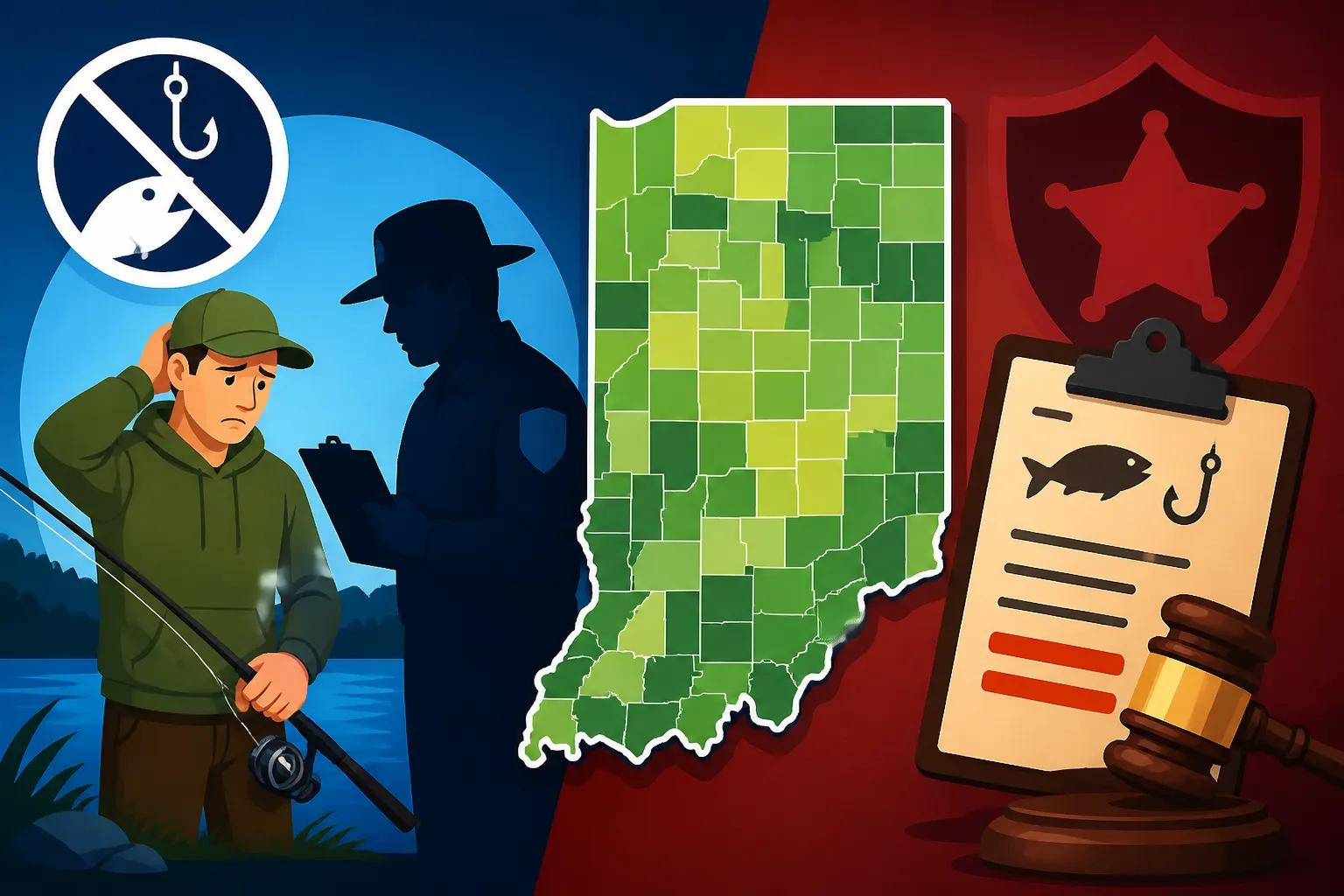
This is where the "by county" aspect really comes into play. While the state law sets the maximum fines for infractions and misdemeanors, the actual amount you'll pay can vary quite a bit depending on the specific county where you received the citation and the local court's discretion. There's no single, statewide fixed fine that every judge adheres to.
State Law vs. Local Court Discretion
Indiana Code Title 14, Article 22, Chapter 2 outlines the state's conservation laws. For a Class C infraction, the state sets a maximum fine of $500. However, most local courts rarely hit the maximum for a first offense of fishing without a license. Instead, judges often have a range they operate within, taking into account the circumstances, the angler's demeanor, and whether they've taken steps to rectify the situation (like purchasing a license immediately after being cited).
In one county, a judge might impose a fine of $50 plus court costs, effectively making the penalty slightly more than the cost of the actual license. In another, particularly if the county relies heavily on outdoor tourism and wants to send a strong message about compliance, the fine might be closer to $150 or $200, still well below the maximum but certainly a noticeable hit to the wallet. This variability means that a citation received in, say, Kosciusko County near the glacial lakes could have a different financial outcome than one received in Monroe County down south. It’s a good idea to research typical penalties for your specific region, as local court websites sometimes provide this information or you can call the clerk's office.
The Cost: From Standard Fines to Court Fees
So, what are you actually looking at financially? Let's break it down:
- The Base Fine: This is the amount the judge imposes for the infraction itself. As mentioned, this can range widely from a minimum set by the local court (often around $25-$75) up to the state maximum of $500 for a Class C infraction.
- Court Costs: This is the non-negotiable part. Every time you go to court for a citation, there are administrative fees associated with processing your case. These court costs are usually standardized within a given county and can add another $100 to $170 or even more on top of your fine. This is where the real sting often comes in, making a "small" fine much larger.
- Other Fees: Depending on the county, there might be additional fees, such as a law enforcement training fund fee or a public defender fee if you requested one. These typically add smaller amounts but contribute to the overall bill.
To illustrate, consider this table showing potential costs for a first-time fishing without a license infraction in Indiana:
| Penalty Component | Typical Low End (e.g., in a less strict county) | Typical High End (e.g., in a stricter county) | State Maximum |
|---|---|---|---|
| Base Fine | $50 | $200 | $500 |
| Standard Court Costs | $120 | $170 | Varies |
| Other Administrative Fees | $10 | $30 | Varies |
| Total Estimated Cost | $180 | $400 | $500+ |
Note: These are estimates. Actual costs can vary significantly by county and specific court rules.
As you can see, even a low-end scenario can easily cost you nearly $200, which is significantly more than the cost of an Indiana Resident Annual Fishing License Cost which is just $23. It really puts into perspective how much cheaper it is to just comply from the start.
Potential Additional Penalties: License Suspension and Seizure
Beyond the immediate financial hit, there are other potential penalties that can impact your ability to fish in the future. The state has the authority to suspend your fishing privileges. This means even if you eventually buy a license, you won't be allowed to use it for a specified period. This can be particularly frustrating if you had a big fishing trip planned or if fishing is a major part of your leisure time.
Furthermore, as briefly mentioned before, a conservation officer might seize your fishing equipment. This often happens if the violation is severe, if you're a repeat offender, or if the equipment itself was used in some other illegal activity (though less common for a simple "no license" offense). Having your rods, reels, and tackle box taken away is not only a financial loss but also a deeply personal one for dedicated anglers. It’s a serious consequence that truly highlights What Happens If You Fish Without a License in Indiana? and the extent of the penalties.
Beyond the Fine: Long-Term Repercussions and How to Avoid Them
Getting a citation for fishing without a license isn't just a one-time inconvenience. It can have ripple effects that make future fishing trips, and even daily life, more complicated. It’s always best to be prepared and ensure you’re legal before heading out.
The Impact on Future Fishing Privileges
While a first offense might not lead to an immediate, lengthy suspension of your fishing privileges, it does create a record. If you are cited again, that prior infraction will be factored into the new penalty, almost guaranteeing a harsher outcome. This could mean a longer suspension, higher fines, or even a move from an infraction to a misdemeanor charge. Understanding if Does a First Offense Cost Less Than a Repeat Violation? is crucial, and the answer is generally yes, but only to a point.
Imagine being told you can't fish for a year, especially during prime seasons like the spring crappie spawn or the fall salmon run on Lake Michigan. For passionate anglers, that's a truly devastating consequence that far outweighs the few dollars saved by skipping a license. The goal of these escalating penalties is to deter repeat violations and encourage consistent compliance.
The Importance of Staying Legal: Preventing Future Headaches
Staying legal is about more than just avoiding fines; it's about peace of mind. When you have your license, you can fish freely, knowing that a chance encounter with a conservation officer won't ruin your day. It also avoids potential complications if you plan to fish across state lines. For example, knowing the rules around Indiana Fishing License Reciprocity With Ohio can save you a lot of trouble when you’re near the border.
Furthermore, a clean record with the DNR helps ensure that if you ever need to apply for other permits or licenses (hunting, trapping, etc.), you won't have any past violations hindering your applications. It’s about building a reputation as a responsible and ethical angler, which ultimately benefits everyone who enjoys Indiana's natural resources.
Getting Your License: A Simple Solution
The good news is that avoiding all these penalties is incredibly easy: just get your fishing license! You can purchase an Indiana fishing license in several convenient ways:
- Online: The easiest and fastest way is through the Indiana DNR's official online portal. You can buy it from the comfort of your home, and it’s instantly valid. This makes Buying a Fishing License Online in Indiana a breeze. Many anglers even keep a digital copy on their phone for easy access.
- In Person: Licenses are sold at most bait and tackle shops, sporting goods stores (like your local Bass Pro Shops or Cabela's), and some county clerk offices across the state. This is a great option if you prefer a physical card or want to support a local business while you also pick up some new lures (perhaps even a new fishing book or specific outdoor gear you found on Amazon). Our guide on Where to Buy a Fishing License Near You can point you to specific locations.
- By Mail: While less common and slower, you can also print an application from the DNR website and mail it in.
Remember, even during Indiana Free Fishing Days Guide, you don't need a license, but these are specific dates and you must confirm them annually. For the rest of the year, a valid license is non-negotiable.
Don't let the thought of a fine or a ruined fishing trip hang over your head. Take a few minutes, get your license, and then truly enjoy the amazing fishing opportunities Indiana has to offer, without any worries about unexpected encounters with law enforcement.
Disclaimer
The information provided in this guide is for general informational purposes only and does not constitute legal advice. Fishing regulations and penalties can change, and interpretations of the law may vary by jurisdiction and specific circumstances. Always consult the most current Indiana Department of Natural Resources regulations or a legal professional for accurate and up-to-date information.