Does a First Offense Cost Less Than a Repeat Violation?
That moment of dread when a DNR officer approaches, eyes scanning for that little piece of paper—your fishing license. Many of us have felt that sudden lurch in our stomachs, realizing we might have left it behind, or worse, never actually purchased one. It’s a common scenario, and the thought of facing penalties for fishing without a license in Indiana can be incredibly stressful, especially if you’re unsure about what a first offense entails compared to a repeat violation. This guide aims to clear up that confusion, diving deep into the potential costs and consequences, and how the legal system in Indiana approaches these situations.
The Unnerving Encounter: What Happens When You're Caught Fishing Without a License in Indiana?
Let's face it, no one goes out planning to break the rules. Often, it's an honest mistake – maybe you forgot to renew your license, or you thought your old one was still valid. But when an Indiana Department of Natural Resources (DNR) officer asks for your license, and you don't have a valid one, that's where the reality hits. It's not just a polite request; it's a legal check, and the officer is empowered to enforce state regulations.
The On-Water Check: A Typical Scenario Unfolds
Picture this: you're enjoying a peaceful afternoon on Monroe Lake, casting for largemouth bass near a promising weed line. Suddenly, a patrol boat slowly idles up, or an officer on shore makes their way over. They're usually friendly, but firm. The first thing they'll typically ask for is your fishing license and a form of identification. This is standard procedure, and it's always best to be courteous and cooperative. They’re simply doing their job to protect Indiana’s natural resources and ensure fair play for all anglers.
If you have your license readily available, a quick check, a friendly chat, and you’re usually good to go. Most officers appreciate anglers who are following the rules. However, if that crucial piece of paper isn't in your wallet, or on your phone through the Indiana DNR’s official app, the conversation will shift. They’ll likely ask you for your name, date of birth, and address to check their records. This is where the truth about your license status will come to light.
If Your License Isn't Valid: Immediate Realization and Verification
When the officer determines you don't possess a valid Indiana fishing license, a wave of anxiety can easily wash over you. It's important to remain calm. They will verify your identity and check the statewide database to confirm your license status. This isn't just a simple ticket-writing process; fishing without a valid license in Indiana is classified as a Class C misdemeanor. That sounds a lot more serious than a parking ticket, doesn't it? It means you're dealing with a criminal offense under Indiana law.
The officer will then explain the violation and their next steps. Depending on the circumstances, they might issue a written warning, but more often, they will issue a citation. This citation will typically include information about the charge, the court date, and the potential penalties. It's a formal notice that you must appear in court or pay a fine, making it a legal matter that needs to be taken seriously.
Understanding the Fines for Fishing Without a License
It's one thing to hear "Class C misdemeanor," and another to understand what that actually means for your wallet and your record. The financial aspect of a fishing violation often catches people off guard because it’s not just the price of a license you missed.
The "Class C Misdemeanor" Classification
In Indiana, fishing without a license falls under Indiana Code 14-22-11-2, which states that a person who takes or attempts to take a fish, frog, or turtle in Indiana without a valid license commits a Class C misdemeanor. For those unfamiliar with legal classifications, a Class C misdemeanor in Indiana carries a maximum penalty of 60 days in jail and a fine of up to $500. While jail time for a simple fishing license violation is extremely rare, especially for a first offense, the potential is there, and the fine plus court costs can certainly add up quickly.
This isn't just an arbitrary rule; it's designed to fund conservation efforts and manage wildlife populations. The money collected from licenses and fines directly supports the Indiana DNR's work in stocking fish, maintaining public access sites, and protecting aquatic habitats. So, while it feels like a punishment, it's also part of a larger system designed to keep our state's fishing traditions alive for future generations.
Standard Fines and Court Costs: Why the Price Tag Varies
When you receive a citation, the amount listed might just be the base fine for the violation itself. However, what many people don’t realize is that court costs and administrative fees are almost always tacked on. These additional fees can often double or even triple the initial fine amount, pushing the total cost much higher than you might expect. For example, a base fine of $150 could easily become $300-$400 once all the various court and administrative fees are added.
The exact amount can also vary depending on the county where the violation occurred and even the specific judge overseeing your case. Some counties may have slightly different fee structures, and judges often have a degree of discretion in determining the final penalty. This means that two people committing the exact same infraction in different parts of the state might end up with slightly different financial outcomes. It’s definitely not a one-size-fits-all situation, and that unpredictability can be frustrating.
First Offense vs. Repeat Violations: The Cost Difference
This is the core of what many anglers want to know: is there leniency for a first-time mistake, or will the full weight of the law come down on you immediately? The answer, as with many legal matters, is nuanced, but one thing is clear: repeat offenses are taken much more seriously and carry significantly heavier penalties.
The Leniency of a First Offense (Sometimes)
For a genuine first offense, especially if you have a clean record and are respectful and cooperative with the DNR officer, there might be a slight chance for some leniency. Sometimes, an officer might issue a warning, though this is becoming less common as enforcement efforts increase. More typically, you will receive a citation, but the court might offer a lower fine, or in some cases, even allow you to simply purchase the license and show proof to mitigate the penalty. This isn’t a guarantee, however. You are still dealing with a Class C misdemeanor charge.
It’s often a learning experience. The judicial system, in some instances, aims to educate first-time offenders rather than just penalize them severely. This is particularly true if the violation was clearly an oversight rather than an intentional act of defiance. For example, if you simply forgot to renew your license, which costs about $23 for an Indiana resident annual fishing license, the court might be more understanding than if you’ve been fishing illegally for years. Always showing genuine remorse and a willingness to rectify the situation can go a long way.
The Hammer Drops: Repeat Offender Penalties
When it comes to repeat violations, the state of Indiana truly tightens its grip. The legal consequences for fishing without a license can escalate quickly, and the "leniency" you might have seen for a first offense disappears entirely. If you’re caught a second, third, or even fourth time, the penalties become significantly more severe, both financially and in terms of your fishing privileges.
A second offense, or subsequent offenses, can lead to the misdemeanor classification being elevated – potentially to a Class B or even Class A misdemeanor, depending on the number and nature of prior violations. This means the maximum fines can jump from $500 to $1,000 or even $5,000, and the potential jail time could increase to 180 days or even a full year. While, again, jail time for a fishing violation is rare, the higher classification means the courts have that power. You're no longer seen as someone who made an honest mistake, but rather as someone who is willingly disregarding state law.
Tracking Violations: How the Indiana DNR Keeps Records
You might wonder how the DNR knows if you're a repeat offender. It's simpler than you think. The Indiana DNR maintains a comprehensive database of all fishing and hunting license holders, as well as violations. When an officer issues a citation, it's logged into this system. This means that any DNR officer who stops you can quickly access your history and see if you have previous violations. There's no hiding past infractions, which is why cooperation and honest communication are always your best bet.
This system ensures that those who repeatedly violate fishing regulations face appropriate consequences. It's designed to protect Indiana's fisheries and ensure that everyone contributes to their conservation by purchasing the necessary licenses. Ignoring the rules ultimately impacts the resource for everyone else.
Here's a breakdown of how penalties can escalate, keeping in mind that these are general guidelines and actual outcomes can vary based on specific circumstances, county, and judicial discretion:
| Violation Type | Legal Classification | Max Fine (Approx.) | Potential Jail Time | License Suspension (Typical) |
|---|---|---|---|---|
| First Offense | Class C Misdemeanor | Up to $500 | Up to 60 days | 3 months to 1 year |
| Second Offense | Class B Misdemeanor | Up to $1,000 | Up to 180 days | 1 to 3 years |
| Subsequent Offenses | Class A Misdemeanor* | Up to $5,000 | Up to 1 year | 3+ years, or permanent |
Note: While specific statutes might not automatically elevate to Class A for just fishing without a license, repeated offenses, especially combined with other violations (like exceeding bag limits or fishing in closed areas), can lead to higher-tier misdemeanor charges. The most common charge for a first offense of fishing without a license remains a Class C misdemeanor.
Beyond the Fines: Other Consequences and How to Avoid Them
The monetary fines are just one piece of the puzzle. Fishing without a license can lead to several other serious repercussions that impact your ability to enjoy the outdoors in Indiana.
License Revocation and Suspension: Impact on Future Fishing
One of the most significant penalties for fishing without a license, especially for repeat offenders, is the suspension or revocation of your fishing privileges. This means you won't be able to legally purchase a fishing license for a specified period, ranging from a few months to several years. For avid anglers, this can be a heartbreaking consequence. Imagine not being able to cast a line in your favorite fishing spots, like Patoka Lake or Lake Wawasee, for a whole year or more.
The length of the suspension will depend on the severity of the violation and your prior record. A first offense might result in a shorter suspension, while multiple violations could lead to a multi-year ban. In very severe or persistent cases, your privileges could even be permanently revoked. The goal here isn't just to punish, but to ensure that individuals who consistently disregard the rules are prevented from engaging in activities that could further harm Indiana’s natural resources.
Equipment Confiscation: When and Why This Might Happen
While less common for a simple license violation, in some instances of severe or repeated offenses, the DNR has the authority to confiscate your fishing equipment. This could include your rods, reels, tackle box, and even your boat. While this is typically reserved for more serious violations like poaching or egregious disregard for regulations, it's a stark reminder of the DNR's enforcement powers.
Losing your cherished fishing gear – especially high-value items like specialized rods or an expensive fish finder you might have picked up from Amazon – would be a devastating blow. This consequence truly emphasizes that unlawful fishing is not taken lightly and that authorities are willing to take significant steps to deter illegal activity.
The Long-Term Record: More Than Just a Fishing Problem
Remember, fishing without a license is a Class C misdemeanor. This means it goes on your criminal record. While it's certainly not the same as a felony, any criminal record can have unforeseen long-term impacts. It might show up on background checks for certain jobs, complicate loan applications, or even affect your ability to travel internationally. It’s not just a "fishing problem" anymore; it’s a legal one with broader implications for your life.
This is often the most overlooked consequence, especially for younger anglers. What might seem like a minor infraction in the moment can follow you for years, making it incredibly important to always ensure you're compliant with all state fishing regulations.
The Simple Solution: Always Buy Your License
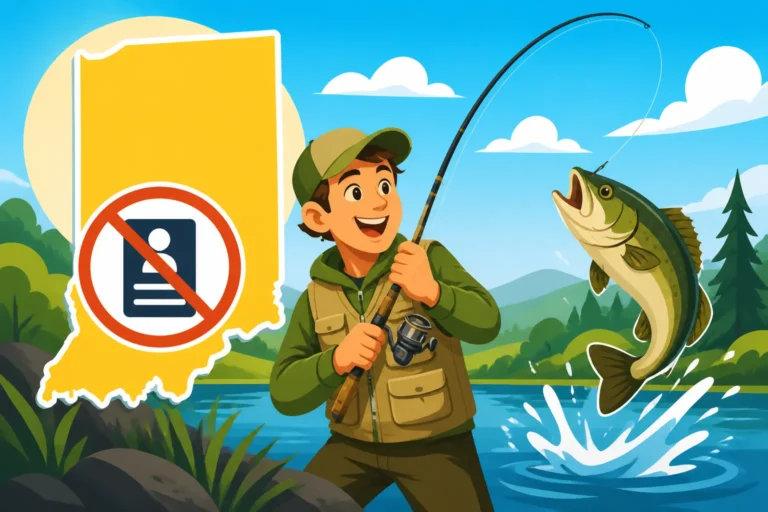
The best way to avoid all these headaches, stress, and financial penalties is incredibly simple: always purchase and carry a valid Indiana fishing license. The process is straightforward, and the cost is minimal compared to the fines and other consequences of getting caught without one.
You can easily get your Indiana fishing license online through the DNR's official website, or visit a licensed vendor like many bait and tackle shops, Walmart stores, or DNR offices. Many anglers find that purchasing their license online is the most convenient way to go. You can even keep a digital copy on your phone to show to an officer, which is a great backup if you forget the physical card. The Indiana Fishing License Costs for Residents and Nonresidents are quite reasonable, especially for the peace of mind and access it provides.
It's also crucial to remember that Indiana Anglers Need a New License Every April 1 as the Indiana's Fishing License Year Runs April to March. Don't let that deadline sneak up on you! Setting a reminder on your phone or marking your calendar can prevent an honest mistake from turning into a costly legal issue. Make sure to check out our guide on How to Get an Indiana Fishing License for step-by-step instructions.
Even if you're just visiting, there are short-term options available. For those planning a quick trip, a nonresident 1-day or 7-day license might be perfect. And don't forget to understand all the Indiana Fishing License Requirements Explained to ensure you're fully covered. By being prepared and informed, you can avoid becoming another statistic of Penalties and Fines for Fishing Without a License and truly enjoy the fantastic fishing opportunities Indiana has to offer.
Disclaimer
The information provided in this guide is for general informational purposes only and does not constitute legal advice. Fishing regulations and associated penalties are subject to change. Always consult the official Indiana Department of Natural Resources (DNR) regulations or seek legal counsel for the most accurate and up-to-date information regarding Indiana fishing laws.