Patoka Lake Crappie Fishing Spots
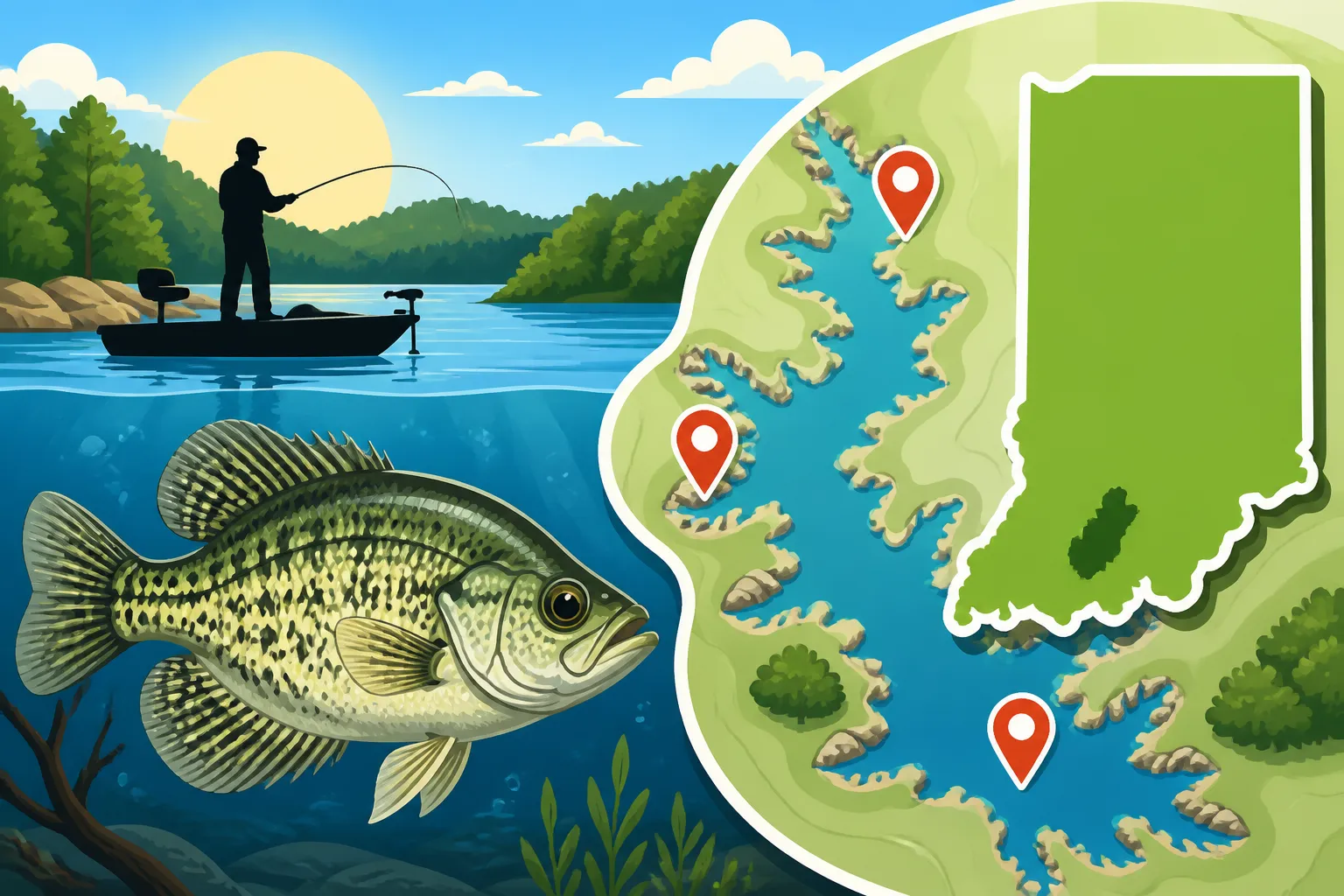
Patoka Lake is a behemoth, and for many anglers, especially those new to its vast waters, trying to pinpoint where the crappie are hiding can feel like searching for a needle in a haystack. This sprawling reservoir, with its endless coves, standing timber, and intricate creek channels, is a fantastic crappie fishery, but knowing where to cast your line is half the battle. This guide will meticulously break down the best spots and strategies to help you fill your livewell with Patoka Lake crappie.
Understanding Patoka Lake's Crappie Habitat
Crappie, those delightful panfish, are creatures of habit but their habits change with the seasons. Patoka Lake offers a diverse range of habitats that these fish utilize throughout the year, making it crucial to understand their seasonal movements if you want to consistently find them. It's not enough to just know "there are crappie here"; you need to know why they're there and when.
Where Crappie Hide Seasonally
Crappie are highly influenced by water temperature and light conditions, dictating whether they’ll be shallow or deep, in cover or suspended. Each season brings a new pattern, and adapting your approach is key to success on a large impoundment like Patoka Lake. Ignoring these patterns is a surefire way to spend more time looking than fishing.
In the spring, when the water temperature starts to creep into the low 50s and 60s Fahrenheit, crappie move into shallower waters for their annual spawn. This is arguably the easiest time to target them, as they concentrate in predictable areas. Look for them around fallen trees, submerged brush, and weed lines in coves and pockets protected from the main lake wind. These areas, typically 2 to 8 feet deep, provide the perfect nursery for their eggs. This is also when you'll find them aggressive as they protect their nests, making them easier to tempt with a jig or a minnow. Understanding the timing of this period is vital, so be sure to check out our guide on Crappie Spawn Timing on Indiana Lakes.
As summer fully sets in and water temperatures rise, crappie transition to deeper, cooler waters where they can find oxygen and baitfish. They’ll often hold tight to submerged timber, brush piles, old creek channels, and humps, usually at depths of 10 to 25 feet, sometimes even deeper during the hottest parts of the day. They might suspend over these structures, following schools of shad. Early mornings and late evenings might see them venture slightly shallower, but generally, summer means fishing deeper structure. This is when your electronics become your best friend, helping you locate these submerged havens.
When fall arrives and the water begins to cool, crappie start to become more active again, often mirroring their spring patterns but in reverse. They'll follow baitfish into shallower pockets and coves, feeding aggressively to fatten up for winter. Look for them around standing timber lines, points, and even flats where shad are congregating. The cooling water rejuvenates their bite, offering another fantastic opportunity for consistent action. They might not be as shallow as during the spawn, but they'll definitely be more spread out and feeding.
Finally, in winter, Patoka Lake crappie will retreat to the deepest parts of the lake. They often stack up in old river and creek channels, especially near submerged standing timber or pronounced drop-offs. Depths of 20 to 40 feet are common, and they’ll hold tight to structure, moving very little. A slow, precise approach is necessary during this cold period. While ice fishing opportunities on Patoka are limited due to its size and boat traffic, if safe ice forms, targeting these deep channels through the ice can be highly productive.
Key Patoka Lake Features for Crappie
Patoka Lake is renowned for its incredible underwater structure, much of it intentionally enhanced or naturally occurring. These features are magnets for crappie, providing everything from shelter to ambush points. Knowing what to look for on your sonar or by visually scouting can drastically improve your chances.
The Indiana Department of Natural Resources (IDNR) has invested heavily in creating and maintaining brush piles and fish attractors throughout Patoka Lake. These intentionally submerged trees and branches provide vital habitat for crappie, offering them protection from predators and a place to ambush baitfish. These piles are often mapped and sometimes even marked with buoys, making them prime targets. Many local anglers also add their own brush piles, often keeping their locations secret! If you're looking for information on public spots, the IDNR often publishes coordinates for fish habitat structures, which can be a treasure trove for crappie anglers.
Another defining feature of Patoka Lake is its extensive standing timber. Before the lake was impounded, vast forests stood in its basin. While much of it was cleared, significant areas of timber remain, particularly in the upper reaches of the creek arms. These skeletons of old trees, both visible and submerged, are absolutely vital crappie habitat. Crappie will suspend within the branches or hold tight to the trunks, especially when they're following baitfish. Vertical jigging or slow trolling around these areas is often incredibly effective.
The lake also boasts numerous old creek channels and roadbeds. When the valley was flooded, these historical routes became underwater highways and depressions. Crappie, particularly in deeper water during summer and winter, will use these channels as travel corridors and holding areas. Fish finders are essential for locating these subtle changes in depth and contour. Often, the edges of these channels where they meet shallower flats are particularly productive, as crappie move up and down to feed.
Finally, don't overlook areas around marinas and docks, especially during spring and fall, or for night fishing. The artificial structure provided by boat docks, along with the lights used for night fishing, can attract baitfish and, consequently, crappie. These areas offer easy access for shore anglers too, making them great options if you don't have a boat. The shade and cover these structures provide are irresistible to crappie.
Top Patoka Lake Crappie Fishing Spots
Patoka Lake's sheer size, covering over 8,800 acres, can be intimidating. However, certain areas consistently produce crappie year after year due to their ideal habitat and forage availability. Knowing these high-probability zones can save you hours of searching and put you on the fish faster.
Popular Productive Areas
These are the go-to spots that many local Patoka Lake anglers, and even those who book guides through platforms like FishingBooker, will tell you about. They're popular for a reason – they hold fish!
The Jackson Creek Area is a perennial favorite for crappie anglers. This major arm of the lake, located on the eastern side, features extensive standing timber and winding old creek beds. In spring, crappie move into the shallow coves and protected pockets within Jackson Creek, particularly where there's submerged brush or fallen trees. As the seasons progress, they'll retreat to the deeper timber and channel edges. It's a fantastic place to try spider rigging or vertical jigging around the tree lines. If you're looking for a launch point, the Jackson Creek Boat Ramp provides easy access to these prime areas.
Another highly productive arm is Lick Fork Creek, found on the lake's western side. Similar to Jackson Creek, Lick Fork boasts significant standing timber, brush piles, and a well-defined creek channel. This area is known for holding large numbers of crappie, especially during the spawn and again in the fall. The numerous coves and points along Lick Fork offer a variety of depths and cover, catering to crappie throughout the year. Anglers often find success by slowly trolling jigs or minnows along the creek channel edges.
Little Patoka Creek is yet another fantastic crappie haven, particularly noted for its early season action. This arm, located towards the northern end of the lake, warms up a bit faster than some of the deeper main lake areas, often drawing crappie into its shallower coves for the spawn sooner. It has excellent standing timber and submerged brush. As the water warms, crappie here will also transition to deeper channel bends and timber lines. It's a great spot for both boat and kayak anglers looking to explore quieter, more intricate waters.
The area around the Osborn Boat Ramp and the adjacent peninsula offers excellent crappie fishing access. This spot provides a mix of habitat, from shallower flats and coves near the ramp to deeper water around the main lake points. The peninsula itself extends into the lake, creating current breaks and depth changes that crappie adore. It’s also relatively easy to access for shore anglers or those with smaller boats. Anglers often find success casting jigs from the banks or slow trolling along the contours near the ramp. If you're just getting started and aren't quite ready for a full-day guided trip, this is a great spot to try from shore.
Lesser-Known Gems and Shoreline Access
While the popular spots are great, sometimes finding those untouched, quieter areas can lead to even bigger crappie and a more serene fishing experience. Patoka Lake has plenty of tucked-away treasures if you're willing to explore. Our guide to Remote Fishing Coves on Patoka Lake can provide even more ideas for peaceful angling.
Beyond the main creek arms, Patoka Lake is riddled with countless off-the-beaten-path coves and smaller tributaries that feed into the main body. These areas, often accessible only by smaller boats, kayaks, or a bit of a hike, can hold some incredible crappie, particularly if they haven't seen much fishing pressure. Look for coves with muddy bottoms, plenty of submerged wood, or those that have small feeder creeks bringing in warmer water during early spring. These can be goldmines for crappie looking for a quiet place to spawn or feed. Experimenting with different depths and presentations in these less-frequented spots can yield surprising results.
The Patoka Lake Dam area offers immediate access to deep water, which can be fantastic for crappie, especially during the summer and winter months. While you won't find the extensive timber of the creek arms, the dam itself and the surrounding rock rip-rap can attract baitfish, and crappie will often suspend in the deeper water nearby. It's a good area to explore with your fish finder, looking for suspended schools of crappie following bait. The currents near the dam can also concentrate fish, making it a unique challenge but potentially very rewarding.
For those who prefer to fish from shore, Patoka Lake offers several public access points that are suitable for crappie fishing. Beyond the Osborn Ramp, areas like the Patoka Lake Beach (outside of swimming season) and certain designated fishing piers or bank access points within the Patoka Lake State Park provide opportunities. Look for areas with access to fallen timber, docks, or rocky points that drop off into deeper water. While shore fishing can be more challenging for crappie, especially in a large lake, it's certainly possible, particularly during the spring spawn when fish are shallow. For broader access, check out Best Public Boat Ramps on Patoka Lake if you're planning to bring your own vessel.
Techniques and Tips for Patoka Lake Crappie Success
Catching crappie on Patoka Lake isn't just about finding the right spot; it's also about using the right tools and strategies. These fish can be finicky, and a slight adjustment in your approach can make all the difference between a slow day and a banner day.
Essential Gear and Bait
Having the right equipment is fundamental for Patoka Lake crappie fishing. It allows you to present your bait naturally, detect subtle bites, and effectively fight these papermouths without tearing their delicate mouths.
For rods and reels, light action spinning gear is the standard for crappie. A 6 to 7-foot light or ultralight spinning rod paired with a small, sensitive reel (like a 1000 or 2000 series) is ideal. This setup provides the sensitivity needed to feel the light "tap" of a crappie bite and the flexibility to prevent hooks from pulling out. The lighter rod also makes casting small crappie jigs much easier. Our detailed guide on Best Tackle for Crappie Fishing in Indiana can help you select the perfect setup.
When it comes to lines, light monofilament or fluorocarbon in the 4 to 6-pound test range is preferred. Monofilament offers some stretch, which can be forgiving when a crappie pulls hard, while fluorocarbon is virtually invisible underwater and offers excellent sensitivity. Avoid lines that are too heavy, as they can hinder your presentation and reduce your bait's action.
The choice of baits can be varied, but two stand out: live minnows and crappie jigs. Live minnows, fished under a bobber or on a tight line, are almost universally effective for crappie, especially when they're less active. Crappie jigs, ranging from 1/32 oz to 1/8 oz, are incredibly versatile. They can be tipped with a small minnow for added attraction or fished plain. Popular jig colors include chartreuse, white, pink, and black/chartreuse combinations, often depending on water clarity and light conditions. Don't be afraid to experiment with different sizes and colors until you find what the crappie are biting on that day.
Lastly, consider investing in good electronics, particularly a quality fish finder. On a large lake like Patoka, a fish finder is indispensable for locating submerged brush piles, standing timber, old creek channels, and even schools of suspended crappie. Features like Side Imaging or Down Imaging can give you a clear picture of the underwater landscape, allowing you to position your boat precisely over productive structure. This is especially true when fishing deeper water during the summer and winter months, when crappie are harder to find visually.
Effective Fishing Strategies
Once you have your gear sorted, it's time to put some strategies into action. Patoka Lake crappie can be caught in various ways, and mastering a few different techniques will make you a much more versatile and successful angler.
Jigging techniques are perhaps the most common and effective ways to catch crappie. This includes vertical jigging directly over a brush pile or suspended school of fish, gently raising and lowering your jig or minnow. Another popular method, especially from a boat, is spider rigging, which involves deploying multiple long rods from the bow of the boat, presenting baits at different depths and distances. This allows you to cover a wide area and pinpoint the crappie's preferred depth. For those learning the ropes, our guide on Crappie Jigging Techniques for Beginners offers a great starting point. Casting jigs to visible cover like fallen trees or docks is also highly effective, particularly in spring.
Slow trolling is another potent strategy on Patoka Lake. This involves moving your boat very slowly, either with a trolling motor or at the lowest possible speed with your main engine, while dragging jigs or minnow rigs behind the boat. This technique is excellent for covering large areas, especially along creek channels, timber lines, or over submerged flats, to locate scattered crappie. By varying your speed and depth, you can determine what the fish are responding to. Many anglers use multiple rods, each rigged with a different bait or set at a different depth, to maximize their chances.
Don't underestimate the power of night fishing for crappie on Patoka Lake. Crappie, like many other species, are often more active feeders after dark, especially in warmer months. By deploying submersible lights or lights hung over the side of your boat, you can attract plankton, which in turn draws in baitfish, and then the crappie follow. Fish the perimeter of the light, as crappie often lurk just outside the brightest illumination, ambushing baitfish that venture into the light. This can be an incredibly peaceful and productive way to catch them. For those who enjoy a nighttime adventure, consider booking a trip with a local guide on FishingBooker who specializes in night fishing on Patoka Lake.
Finally, the importance of mapping and scouting cannot be overstated. Before you even launch your boat, study a detailed lake map or use a modern marine chart on your electronics. Look for contour lines, old creek beds, roadbeds, and known brush pile locations. Once on the water, spend time idling and using your fish finder to locate schools of baitfish, submerged timber, and brush. Crappie are usually close to their food source and protective cover. Don't be afraid to move if you're not finding fish; crappie can be very localized. Keep a mental or GPS log of productive spots, as crappie often return to the same areas year after year.
Here's a quick reference table for some Patoka Lake crappie hotspots and typical depths:
| Spot Name | Primary Feature | Best Season | Typical Depth (feet) | Notes |
|---|---|---|---|---|
| Jackson Creek Area | Standing Timber, Creek Channel | Spring, Fall, Summer | 5-25 | Excellent for jigging and slow trolling |
| Lick Fork Creek | Standing Timber, Brush Piles | Spring, Fall | 5-20 | Consistently productive, good for spider rigging |
| Little Patoka Creek | Shallow Timber, Coves | Early Spring, Fall | 3-15 | Warms up faster, good for early spawn |
| Osborn Boat Ramp/Peninsula | Flats, Drop-offs, Shoreline | Spring, Summer (Night) | 5-15 | Accessible for shore anglers, varied depths |
| Deep Creek Channels | Submerged Riverbeds | Summer, Winter | 20-40+ | Requires fish finder, crappie stack up |
| Patoka Lake Dam Area | Deep Water, Rip-rap | Summer, Winter | 20-50+ | Look for suspended fish around structure |
Remember to always check the Indiana Fishing Regulations and Bag Limits Guide before you head out, and pay close attention to Indiana Panfish Daily Limits by Species to ensure you're fishing responsibly.
Disclaimer
All information provided in this guide is for general informational purposes only. Fishing conditions, regulations, and fish behavior can change rapidly. Always consult the latest official Indiana Department of Natural Resources (IDNR) regulations before fishing. Exercise caution and practice safe boating when on the water. The author and publisher are not responsible for any accidents, injuries, or legal infractions that may occur.