Patoka Lake Catfish Fishing Spots for Beginners
Heading out to Patoka Lake for some catfish action can feel a bit daunting, especially if you're new to the sport or this incredible body of water. You might be wondering where to even begin, what bait to use, or if you're going to spend all day just waiting for a nibble. This guide is designed to cut through that confusion, giving beginner anglers like yourself the insider tips on the best Patoka Lake catfish fishing spots, essential gear, and simple techniques to get you hooked up with some whiskered giants.
Understanding Patoka Lake's Catfish Scene
Patoka Lake, nestled in the scenic hills of southern Indiana, isn't just a beautiful place to visit; it's a thriving fishery, and arguably one of the best for catfish in the state. Its expansive waters and varied underwater structure create a perfect habitat for several species, making it an excellent destination for anglers of all skill levels, especially those just starting out.
The Types of Catfish You'll Find in Patoka Lake
When you cast a line in Patoka, you're likely to encounter a few different types of catfish, each with its own characteristics and preferred hangouts. Knowing what you're targeting can help you adjust your strategy and increase your chances of success.
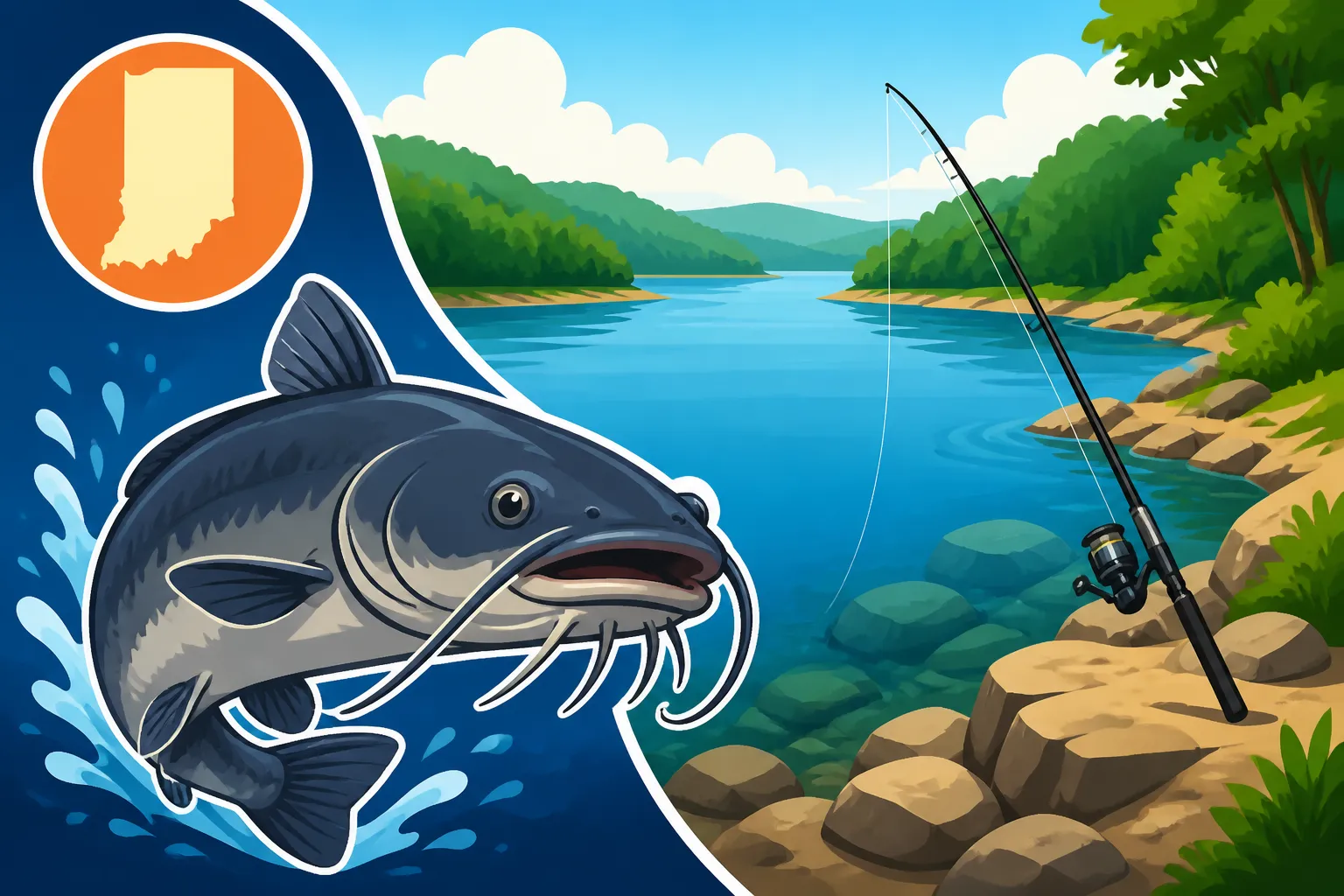
The most common catch, and often the easiest for beginners, is the channel catfish. These guys are plentiful, found throughout the lake, and are known for their strong fighting spirit and delicious white meat. They're identifiable by their olive-green to gray bodies, often with small black spots (though these fade as they get older), and a deeply forked tail. Channels aren't typically as large as their cousins, but a 5-10 pounder is a fantastic fight on light to medium tackle. They're scavengers and opportunists, making them relatively easy to tempt with a variety of baits.
Next up, you have the flathead catfish, the "river monster" of the catfish world, even though they thrive in large reservoirs like Patoka. Flatheads are solitary, ambush predators that prefer live bait and can grow to truly enormous sizes – we're talking 30, 40, even 50 pounds or more in Patoka. They have a flattened head, a lower jaw that protrudes beyond the upper jaw, and a square or slightly rounded tail, not forked like a channel cat. Finding them often means targeting areas with submerged timber, rock piles, or deep holes where they can hide and wait for prey. While a bit more challenging for a complete beginner, landing a big flathead is an unforgettable experience.
While less common than channel and flathead, there's also the potential for blue catfish in Patoka Lake. These powerful fish are known for their massive size potential and incredible strength. They typically have a more streamlined body than flatheads, a distinctly humped back, and a deeply forked tail, much like a channel cat but without the spots and generally a bluish-gray color. Blues often prefer open water and current breaks, feeding on a diet of smaller fish. Catching a blue catfish in Patoka would be a significant achievement for any angler, beginner or seasoned veteran.
Why Patoka Lake is a Great Place for Beginner Catfish Anglers
Patoka Lake truly shines as a destination for those just dipping their toes into the world of catfish angling. Its sheer size – over 8,800 acres of water and 164 miles of shoreline – means there's plenty of room for everyone without feeling overcrowded, even on busy weekends. This vastness also means a diverse range of habitats, from shallow coves and brushy shorelines to deep creek channels and submerged timber, all of which hold catfish.
The accessibility is a huge plus. Patoka Lake boasts numerous public access points, including well-maintained boat ramps, fishing piers, and extensive shoreline areas within Patoka Lake State Park and other recreation sites. You don't necessarily need a fancy boat to find good fishing; many productive spots are reachable with a simple walk along the bank. The lake's healthy fish populations, actively managed by the Indiana Department of Natural Resources (IDNR), ensure that there's a good chance of success, which is incredibly encouraging for beginners. Plus, it's not just catfish; Patoka is renowned for its excellent bass and crappie fishing, so you might even pick up some baitfish while you're there. To learn more about other species, check out our Patoka Lake Fishing Guide for Bass and Crappie.
Prime Patoka Lake Catfish Spots for New Anglers
Finding the right spot is half the battle, and at Patoka Lake, there are numerous locations that offer excellent opportunities for beginner catfish anglers. The key is to look for areas with structure, cover, or access to deeper water, as these are natural magnets for catfish.
Accessible Shoreline Locations
For those who prefer to keep their feet on solid ground or don't have a boat, Patoka Lake offers a wealth of accessible shoreline spots that can be incredibly productive for catfish. These areas typically have good public access, making it easy to set up your gear and start fishing.
One of the best places to start is around the Patoka Lake State Park area. The main boat ramp areas, while busy, often have adjacent shoreline that extends into deeper water, providing easy access to channel cats. Look for rocky points or submerged brush near these areas. The Newton-Stewart State Recreation Area within the park also has several excellent shoreline fishing locations. Specifically, the areas around the beach and picnic grounds, particularly if there are old submerged trees or points extending into the water, can hold good numbers of channel catfish. These spots are typically cleaned and well-maintained, making for a comfortable day of fishing.
Another fantastic option is the Painter Creek SRA, located on the northern side of the lake. This area features boat ramps, but also significant stretches of shoreline that are ripe for bank fishing. Painter Creek is known for its fluctuating water levels, and when the lake level drops slightly, new access points along the bank can emerge, leading to fresh spots where catfish might be cruising for food. Focus on the creek channel itself, which winds through the area, as catfish often follow these natural contours. You can learn more about finding these whiskered fish by looking into Indiana Channel Catfish: Where to Find Them.
Lastly, consider the various causeways and bridges that cross parts of Patoka Lake. Structures like the causeway on Highway 164, near the main dam, can be excellent. Catfish love to congregate around bridge pilings and causeway edges, as these structures create current breaks and attract baitfish. These spots often allow for deeper casts directly from the bank, getting your bait into prime catfish territory. Just be sure to watch for boat traffic if you're casting near a channel and always prioritize safety.
Beginner-Friendly Boat Fishing Areas
If you have access to a small boat, kayak, or canoe, Patoka Lake truly opens up, but you don't need to motor out to the deepest, most complex spots to find catfish. In fact, some of the most beginner-friendly boat fishing areas are those that mirror good shoreline spots but allow you to reach areas just a bit further out or corners that are less pressured.
The upper reaches of the Patoka River arm are excellent for boaters, especially in the spring and fall. As the Patoka River feeds into the lake, it creates a nutrient-rich environment that attracts baitfish, which in turn draws in catfish. Look for areas where the river channel winds near standing timber or brush piles. These can be easily navigated with a smaller boat, and the current is often gentler than in the main lake body. Targeting the edges of the old river channel, especially where it drops off into deeper water, is a proven strategy for both channel and flathead catfish.
Another great choice is the network of coves and creek arms throughout the lake, such as those found around Lick Fork SRA or Little Patoka Creek. These areas offer a bit more protection from wind and boat wakes, making for a more comfortable experience for new boaters. Catfish often patrol these coves, especially where smaller feeder creeks enter the lake, bringing in food. Anchor your boat near submerged logs, brush, or rocky points. Using a simple fish finder can help you locate these underwater structures, but even without one, visually identifying promising spots along the shoreline and casting nearby can yield results. For general information about where to find the best spots, check out Best Catfish Fishing Spots in Indiana.
Finally, the areas directly across from major boat ramps, particularly the Newton-Stewart main ramp, can be surprisingly productive. While the ramps themselves are busy, often the opposite shore or nearby submerged humps and old creek channels hold significant numbers of catfish. These spots are convenient to access, allowing you to quickly launch, motor a short distance, and start fishing without having to navigate far into the main body of the lake. Remember that early mornings or late evenings can be particularly fruitful, as catfish often become more active during low-light conditions.
Essential Gear and Bait for Patoka Catfish Beginners
You don't need to break the bank to start catching catfish at Patoka Lake. In fact, a simple, reliable setup and the right bait are far more important than the most expensive equipment. Focusing on functionality and ease of use will make your beginner experience much more enjoyable and successful.
Simple Rod, Reel, and Line Setup
For a beginner targeting catfish, a medium-heavy to heavy action spinning or baitcasting combo is ideal. These rods offer the backbone needed to handle a feisty channel cat or even a decent flathead, while still being versatile enough for other species you might encounter. Look for a rod in the 6.5 to 7.5-foot range. A longer rod can help with casting distance from the bank, while a slightly shorter one offers more leverage in a boat.
As for the reel, a good quality spinning reel in the 3000-5000 series or a baitcasting reel with a reliable drag system will serve you well. You want something that can hold a good amount of line, as catfish can make powerful runs. Spool your reel with 15-25 pound monofilament or braided line. Monofilament is more forgiving with stretch, which can be helpful for beginners learning to detect bites and set the hook. Braided line, while more expensive, offers superior strength for its diameter and virtually no stretch, allowing for better bite detection. For more details on choosing the right equipment, you can refer to Best Catfish Rods for Indiana Rivers, which often applies to lake fishing too.
Remember, the goal isn't necessarily to overpower the fish, but to have gear that can handle the unexpected. A sturdy rod and reel will give you the confidence to cast further, feel subtle bites, and bring in larger fish without fear of equipment failure.
Effective Baits That Catfish Can't Resist
When it comes to catfish, they're not picky eaters, which is fantastic news for beginners! You don't need exotic lures; often, the stinkier and simpler the bait, the better. This makes bait selection straightforward and cost-effective.
Cut bait is a perennial favorite for both channel and flathead catfish. Smaller panfish like bluegill or crappie (if legally caught and used according to Indiana fishing regulations) can be cut into strips or chunks. The oil and blood released from the cut bait are powerful attractants. Even readily available species like shad or skipjack, if you can net them, make excellent cut bait. If using game fish, be absolutely certain of the regulations for using them as bait. For example, if you catch some crappie, check out Patoka Lake Crappie Fishing Spots for insights on where to find them and always confirm local bait regulations.
Chicken livers are a classic catfish bait, and for good reason. They are incredibly bloody and smelly, two qualities that catfish absolutely adore. The downside is they can be soft and difficult to keep on the hook, especially with a strong cast. A trick is to put them in a piece of pantyhose or netting to hold them securely. You can buy these at most grocery stores, making them super convenient.
Worms, particularly nightcrawlers, are another simple yet effective option. They're easy to find, handle, and catfish love them. You can use a whole nightcrawler or even a few smaller worms threaded onto a hook. Worms are also excellent for catching baitfish if you want to try for fresh cut bait. For more detailed insights on this, read up on Best Bait for Channel Catfish in Indiana Rivers.
Finally, prepared "stink baits" or "dough baits" are specifically designed for catfish and are widely available at bait and tackle shops. Brands like Catfish Charlie, Sonny's, or Berkeley Gulp! often have strong scents that attract catfish from a distance. These come in various forms, from dips to pre-formed nuggets, and can be very effective, especially for channel catfish. Using a treble hook or a special bait holder spring hook can help keep these soft baits on your rig.
Beginner Catfish Fishing Techniques for Patoka Lake
Once you have your gear and bait ready, knowing a few simple techniques will dramatically improve your chances of success. Catfish fishing doesn't require overly complicated methods, making it perfect for beginners. The key is patience and understanding how catfish feed.
The Art of Bottom Fishing for Catfish
Bottom fishing is, hands down, the most effective technique for catfish, especially for beginners. Catfish are primarily bottom feeders, and presenting your bait directly on or near the lakebed is crucial. The most common and easiest rig to tie is a slip-sinker rig, often called a Carolina rig, though with a few modifications for static bottom fishing.
Here's how to set it up: First, thread an egg sinker (1/2 to 1 ounce is a good starting point, adjust for current or casting distance) onto your main line. Next, tie a barrel swivel to the end of your main line. This swivel acts as a stop for your sinker and prevents line twist. Finally, tie a 12-18 inch leader of slightly lighter line (e.g., 15-pound test for a 20-pound main line) to the other end of the swivel, and then tie a sturdy catfish hook (e.g., a 4/0 to 6/0 circle hook or an octopus hook) to the end of the leader. Circle hooks are highly recommended for beginners because they usually hook the fish in the corner of the mouth, making for easier release and reducing gut-hooking. When a fish bites, simply reel slowly until the rod loads up, and the circle hook does the rest of the work.
Once your rig is tied, cast it out to your chosen spot – whether it's near submerged timber, a drop-off, or a creek channel. Let the sinker take your bait to the bottom. Keep a slight tension on your line so you can feel bites, but don't hold it so tight that the fish feels resistance. Catfish bites can range from a gentle tap to a sudden, aggressive pull. Be patient; sometimes it takes a while for a catfish to find your bait and commit. For more on this, our guide on How to Bottom Fish for Channel Catfish is a great resource. You might also find tips on Best Catfish Rigs for Muddy Water useful, as Patoka can get murky after heavy rains.
Using a Bobber in Shallow Areas
While bottom fishing is the go-to, using a bobber can be surprisingly effective for channel catfish, especially in shallower coves or when fishing around brush piles where you want to keep your bait just off the bottom to avoid snags. This technique is also fantastic for younger anglers who love the visual thrill of watching a bobber disappear!
For a bobber rig, you'll need a slip bobber, a bobber stop (usually a small string tied to your line), a small weight (like a split shot or small egg sinker) to balance the bobber, and a hook. First, slide the bobber stop onto your main line and adjust it to set your desired fishing depth (e.g., 2-4 feet in a shallow cove). Then, slide your slip bobber onto the line. Below the bobber, tie on a small split shot weight a foot or so above your hook. The weight should be just enough to make the bobber sit correctly in the water, not pulling it completely under. Finally, tie on your catfish hook.
This setup allows your bait to drift naturally or sit suspended in the water column. Catfish often cruise shallower waters, particularly in the evenings or early mornings, looking for an easy meal. Presenting a juicy worm or piece of chicken liver under a bobber can be irresistible. This method is also excellent for fishing around boat docks or fallen trees where fish might be hiding just below the surface. Watching that bobber dip and disappear is a truly exciting moment for any angler, especially for kids learning the ropes!
Patoka Lake Regulations and Best Practices
Fishing at Patoka Lake is a fantastic experience, but it's important to do so responsibly and legally. Understanding the local regulations and adopting best practices not only helps conserve the fishery but also ensures a pleasant experience for everyone.
Understanding Bag and Size Limits for Catfish
Before you even make your first cast, you must have an Indiana fishing license if you're over the age of 18 (or if you're a nonresident and don't meet specific youth exemptions). You can find all the details you need in our comprehensive guide, Indiana Fishing License Requirements Explained. Once licensed, it's crucial to be aware of the specific bag and size limits for catfish in Indiana, as these can vary.
For channel catfish, statewide regulations often allow for a generous daily bag limit, usually 25 fish, with no minimum size limit. This means you can keep a good number of these delicious pan-sized cats for a fish fry. However, it's always wise to double-check the latest IDNR regulations, as they can change. For flathead catfish and blue catfish, the rules are typically more restrictive to protect these larger, slower-growing species. Often, there will be a lower daily bag limit, such as 10 fish in total for these species, and sometimes even a minimum size limit to ensure they have a chance to reproduce.
Patoka Lake generally follows these statewide guidelines, but it's always a good habit to check the current Indiana Fishing Regulations Guide, which is updated annually. You can usually find a copy at bait shops, online on the IDNR website, or even using apps like FishingBooker that sometimes have regulation summaries. Familiarizing yourself with these rules is essential to avoid penalties and fines for fishing without a license, or for violating bag limits. For a broader overview of state regulations, check out the Indiana Fishing Regulations and Bag Limits Guide.
Responsible Fishing for Sustainable Catfish Populations
Being a responsible angler goes beyond just following the rules; it's about contributing to the health and longevity of the Patoka Lake fishery. This involves adopting practices that ensure future generations can enjoy the same great fishing experiences we do today.
Catch and Release: While keeping some catfish for the table is perfectly fine, especially channel cats, practicing selective harvest and catch and release for larger flatheads and blues is highly encouraged. These big fish are the primary breeders and crucial for maintaining a healthy population. If you do release a fish, handle it carefully. Keep it in the water as much as possible, use wet hands to minimize damage to its protective slime coat, and revive it gently before letting it go. Avoid dragging fish on the bank or holding them by the lower jaw vertically if they are large, as this can cause internal damage.
Respect the Environment: Always pack out everything you pack in. This includes bait containers, fishing line, food wrappers, and anything else you bring to the lake. Litter not only harms wildlife but also detracts from the beauty of the natural environment. Dispose of old fishing line properly, as it can be deadly to birds and other animals. Many boat ramps and parks have designated recycling bins for fishing line. Additionally, be mindful of other anglers and lake users. Give plenty of space, keep noise levels down, and share the water respectfully.
Live Bait Management: If you're using live bait, especially minnows or other baitfish, ensure they are legally obtained and not invasive species. Never release unused baitfish into the lake, as this can introduce diseases or non-native species that disrupt the ecosystem. Dispose of any leftover bait in the trash. These small actions collectively make a huge difference in preserving Patoka Lake's excellent catfish fishing and its overall ecological balance. To ensure you have enough fishing rods on hand for your setup, consider How Many Rods Can You Fish With in Indiana?.
Disclaimer
Please note that fishing regulations, including licensing requirements, bag limits, and size restrictions, can change. Always consult the latest official Indiana Department of Natural Resources (IDNR) regulations before heading out to fish. The information provided in this guide is for general informational purposes only and should not be considered a substitute for official legal guidance.