How to Rig a Fishing Kayak for Indiana Waters
There's nothing quite like the peace and challenge of fishing from a kayak in Indiana's beautiful lakes and rivers, but let's be honest: a stock kayak often feels more like a blank slate than a fishing machine. You might find yourself juggling rods, losing tackle overboard, or struggling to stay in place against a current, which can quickly turn a relaxing day into a frustrating ordeal. This guide is all about transforming your fishing kayak into a personalized, efficient, and comfortable setup, specifically tailored for the diverse waters and angling styles you'll encounter here in the Hoosier State. We'll cover everything from the basic essentials to advanced customizations, helping you rig your kayak to conquer everything from peaceful farm ponds to the mighty Lake Michigan.
Getting Started with Your Kayak: The Essential Foundation
Before you even think about attaching rod holders or fancy electronics, you need to ensure your kayak itself is up to the task and that you have the foundational elements in place. Think of this as building a solid base before adding the bells and whistles. Rushing this step often leads to regrets down the line, trust me.
Choosing the Right Kayak Base for Indiana Fishing
Not all kayaks are created equal, especially when it comes to fishing. While almost any kayak can technically be fished from, a dedicated fishing kayak offers features that make rigging much easier and your experience far more enjoyable. For Indiana's varied waters, you'll want to consider stability, storage, and maneuverability. A wider, sit-on-top kayak generally provides superior stability, which is invaluable when you're casting, reeling in a big bass, or even just reaching for your tackle box. These are often easier to rig with track systems and flush-mount options.
If you're primarily exploring smaller, calmer farm ponds or slow-moving rivers, a shorter, lighter kayak might be perfect. It's easier to transport and launch by yourself. However, if you plan to tackle larger reservoirs like Monroe Lake or Patoka Lake, or even venture onto Lake Michigan, a longer, more stable kayak, possibly with pedal drive, will offer better tracking and speed, allowing you to cover more water with less effort. Think about the type of fishing you do most often and let that guide your initial choice. Don't be afraid to try out different models at a local outfitter or even rent one for a day to see what feels right. When you're ready to buy, places like Bass Pro Shops or even online retailers like Amazon offer a wide selection, but it's always best to get your hands on one in person if you can. For more options, check out our guide on Best Kayaks for Fishing Indiana Lakes.
Essential Safety Gear: More Than Just a PFD
Safety is paramount, especially when you're out on the water by yourself. While it might seem obvious, many new kayak anglers underestimate the importance of easily accessible safety gear. Your personal flotation device (PFD) is non-negotiable; Indiana law requires you to have one readily available. But don't just grab any old PFD. Invest in a fishing-specific PFD that has pockets and attachment points for small tools, a whistle, or even a small knife. This keeps essential items close at hand without cluttering your kayak's deck. For a deeper dive into PFDs, see Best Kayak Life Jackets for Paddlers.
Beyond the PFD, a whistle is legally required for kayaks in Indiana. It’s a small, inexpensive item that can make a huge difference in an emergency, especially for signaling other boaters or rescuers. Keep it clipped to your PFD. A bilge pump or sponge is also crucial, particularly for sit-inside kayaks, to remove any water that might accumulate. Even sit-on-tops can benefit from a sponge for drying off storage areas or bailing out a leaky hatch. Finally, consider a paddle leash. Losing your paddle miles from shore is a nightmare no one wants to experience, and a simple leash keeps it tethered to your kayak, even if you accidentally drop it while fighting a fish. For more on safety, see Do Kayak Anglers Need a Whistle in Indiana?.
Basic Storage Solutions: Keeping Your Gear Secure
One of the biggest frustrations for kayak anglers is gear management. There's limited space, and things tend to shift, slide, or even fall overboard if not properly secured. Start with simple, effective storage solutions. Bungee cords are your best friend for securing tackle boxes, dry bags, and coolers to your kayak's deck. Many kayaks come with bungee systems already installed in the bow and stern, but you can always add more with deck loops. Waterproof dry bags are essential for anything you absolutely cannot get wet—phone, car keys, wallet, extra clothes. Keep them in an easily accessible hatch or secured to the deck.
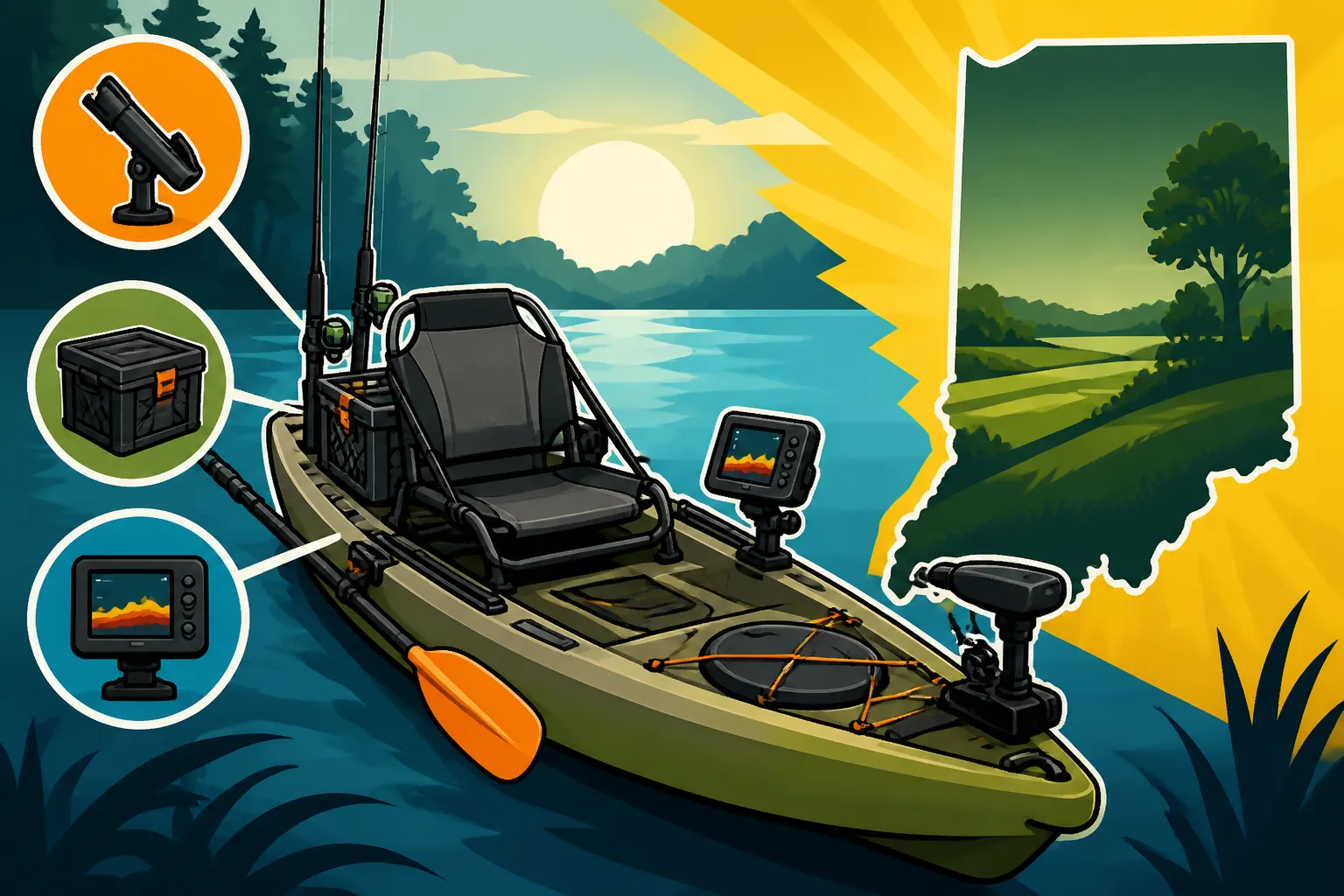
Milk crates, or specialized kayak crates, are fantastic for organizing tackle trays, a small cooler, and other bulky items in your stern well. You can even customize them by adding PVC pipe sections for vertical rod storage. When rigging, think about accessibility. What do you need most often? Keep those items within arm's reach. What can be stored away more securely? Plan your layout before you start drilling or adhering. Companies like YakAttack offer track systems that allow you to mount various accessories without permanent modifications, giving you flexibility to change your setup as your fishing style evolves.
Optimizing Your Fishing Kayak for Performance
Once you have the basics down, it’s time to think about rigging that directly impacts your fishing performance. These are the additions that will help you fish more efficiently, cover more water, and ultimately, catch more fish in Indiana’s diverse habitats.
Rod Holders: Placement and Types for Indiana Anglers
Rod holders are perhaps the most fundamental performance upgrade for a fishing kayak. You simply can't hold a rod constantly, especially when paddling, re-tying, or handling a fish. There are generally two main types: flush-mount and adjustable. Flush-mount rod holders are typically built into the kayak's hull or can be added for a clean, low-profile look, ideal for holding rods while paddling or when not actively fishing. They secure your rod but don't offer much in terms of aiming the tip.
Adjustable rod holders, often mounted on track systems or bases, are where the real versatility comes in. Brands like RAM Mounts and Scotty offer incredibly sturdy, adjustable holders that can be positioned to troll, hold a rod while you're baiting another, or even set for specific casting angles. For a multi-species angler in Indiana, having at least two adjustable rod holders is a game-changer. Imagine trolling a crankbait on Monroe Lake for bass with one rod, while jigging a soft plastic vertically with another. Or, on a river like the Tippecanoe, using one holder to secure your rod while you navigate a tricky stretch of current, then quickly grabbing it to cast at a prime smallmouth spot. Consider the angles you'll need and how they interact with your paddling stroke.
Fish Finders and Electronics: Seeing Beneath Indiana Waters
For serious kayak anglers, a fish finder is almost as essential as the rod itself. These compact units can reveal depth, water temperature, structure, and most importantly, fish. Even a basic model can give you a huge advantage on Indiana's lakes and reservoirs. Think about how much time you've spent casting blindly – a fish finder takes away that guesswork. You can spot submerged trees where crappie might be hiding or locate deeper channels where walleye linger. Brands like Humminbird and Garmin offer excellent portable options perfect for kayaks.
Mounting a fish finder on a kayak requires a few considerations. You'll need a way to power it (usually a small 12V battery, often stored in a dry box), a transducer mount, and a display mount. Many kayak anglers use a "ram mount" system that allows for easy attachment and removal of the display. Transducer mounting options vary from shooting through the hull (if your kayak plastic is thin enough) to external arm mounts that dip the transducer into the water. For smaller ponds or casual use, a simple castable fish finder that pairs with your smartphone might be enough. But for larger bodies of water, a dedicated unit is worth the investment. Explore Best Portable Fish Finders for Kayak Anglers for specific recommendations.
Anchor Systems: Staying Put on Lakes and Rivers
The wind and current are constant enemies of the kayak angler. Without an anchor system, you'll find yourself drifting away from prime fishing spots or struggling to hold position. While a traditional anchor might seem too bulky, there are excellent kayak-specific options. A grapple anchor (folding anchor) around 1.5-3 lbs is ideal for most Indiana lake conditions, especially in softer bottoms. For rocky areas or rivers with strong currents, a heavier anchor or a drag chain might be more effective.
The key to a good kayak anchor system is the deployment and retrieval. An anchor trolley system is a must-have. This simple rope and pulley system runs along the side of your kayak, allowing you to deploy your anchor from either the bow or the stern, and then position the anchor line anywhere along the length of your kayak. This lets you orient your kayak precisely where you want it relative to the wind or current, optimizing your casting angles and minimizing sway. Imagine trying to fish a brush pile in a brisk breeze on Mississinewa Lake without one – you'd constantly be paddling back into position. For more details on anchors, see Best Kayak Anchors for Small Ponds.
Comfort, Convenience, and Specialty Rigging
Fishing should be enjoyable, not a test of endurance or patience with tangled lines. These rigging tips focus on making your time on the water more comfortable, more organized, and ready for specific angling challenges in Indiana.
Seating Upgrades and Ergonomics for Long Days
One of the first things many kayak anglers realize after a few hours on the water is that the stock seat isn't always the most comfortable. Long days of paddling and fishing can take a toll on your back and rear. Upgrading your seat can drastically improve your comfort and extend your fishing trips. Many newer fishing kayaks come with elevated, adjustable, and framed seats that offer fantastic support and allow you to sit higher for better visibility and casting. If your kayak has a simpler, molded-in seat or a basic pad, consider an aftermarket seat with a proper backrest and thicker padding.
Beyond the seat itself, think about ergonomic placement of your most-used items. Keep your pliers, line cutters, and measuring board within easy reach. Small gear tracks on either side of your seat are perfect for this. Some anglers even attach small tool leashes to prevent dropping items overboard. The goal is to minimize unnecessary reaching and twisting, which not only saves energy but also keeps you focused on the fishing. A comfortable angler is a more patient and effective angler, especially when targeting wary fish like walleye or muskie.
Customizing Your Tackle Management and Bait Storage
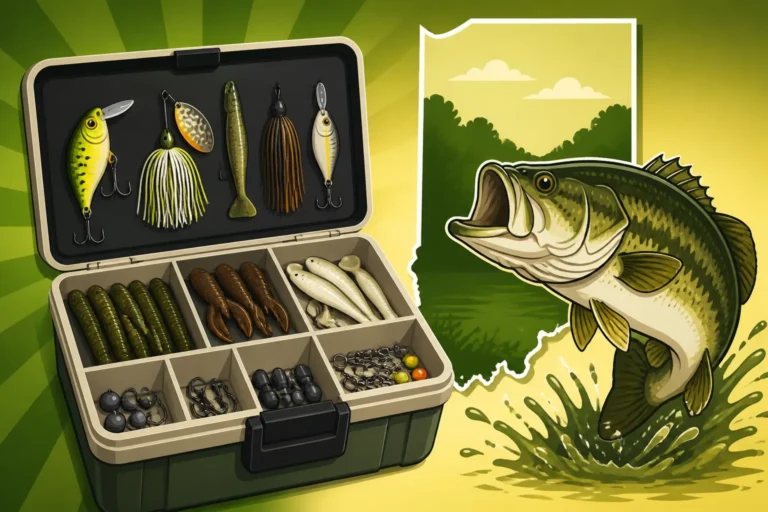
Nothing wastes time and patience like a disorganized tackle situation. When you need that specific jig or soft plastic, fumbling through a cluttered crate or bag is the last thing you want. Customizing your tackle management starts with using appropriately sized tackle trays that fit neatly into your kayak's hatches or a stern crate. Labeling these trays by lure type or target species can save precious minutes.
Many kayak anglers also build small "tackle towers" from PVC pipe or use pre-made organizers that sit on their gear tracks, allowing quick access to a few go-to lures. For live bait, a small aerated bait bucket is essential, especially when fishing for crappie or catfish with minnows or worms. These buckets can often be placed in a stern well and secured with bungees. Some kayaks even have built-in wells designed for bait. Think about the types of bait you typically use and how you can integrate that storage into your kayak's layout without compromising stability or space. For example, a specialized bait tank might be overkill for a casual bluegill trip, but invaluable for a tournament angler chasing bass on Patoka Lake.
Powering Your Kayak: Trolling Motors and Battery Considerations
For covering significant distances, fighting strong winds, or maintaining precise boat control, a trolling motor can be a game-changer. While traditionalists might scoff at motors on kayaks, they offer undeniable advantages, especially on large Indiana lakes where paddle fatigue can set in quickly. Brands like Old Town, Hobie, and Bixpy offer motors specifically designed for kayak integration. These can be bow-mounted, stern-mounted, or even integrate into pedal drive systems.
Adding a trolling motor means you'll also need to rig for a battery. Most kayak trolling motors run on a 12V marine battery. The key is finding a battery that offers a good balance of power, weight, and size. Lithium batteries are becoming increasingly popular for kayaks due to their lighter weight and longer run times, though they come at a higher initial cost. You'll need a waterproof battery box to protect it from the elements and secure it within your kayak. Proper wiring and fusing are critical for safety. While a trolling motor adds complexity and weight, the ability to quietly cruise to your next spot or hold steady against a stiff headwind can revolutionize your kayak fishing experience. If you’re considering this upgrade, take a look at Best Trolling Motors for Indiana Farm Ponds.
Legalities and Final Checks for Indiana Waters
Before you head out, it's crucial to ensure your rigged kayak complies with Indiana's boating regulations and that you've done a final safety check. This helps keep you safe and avoids any unexpected interactions with conservation officers.
Understanding Indiana Kayak Registration and Decal Rules
It's a common misconception that small, non-motorized boats like kayaks don't require registration. However, in Indiana, if your kayak is propelled by any mechanical means (like a trolling motor), or if it's over a certain length, it generally needs to be registered with the Bureau of Motor Vehicles (BMV). Even if it's not motorized, if you're venturing out on certain bodies of water, specific rules might apply. Make sure you understand the requirements for Do Kayaks Need to Be Registered in Indiana? and Indiana Watercraft Decal Rules for Kayaks and Canoes before you hit the water. It’s always better to be safe than sorry, and a quick check of the current regulations can save you from a citation.
If your kayak does need registration, you'll receive a hull identification number (HIN) and require decals to be displayed. Proper placement of these decals is important for identification. Even for non-motorized kayaks, it’s good practice to mark your kayak with your name and contact information. This can be invaluable if your kayak gets separated from you or goes adrift.
Pre-Launch Checklist and On-Water Etiquette
No matter how perfectly rigged your kayak is, a thorough pre-launch checklist is vital. Before every trip, take a few minutes to ensure:
- Your PFD is easily accessible and fits properly.
- Your paddle is secured, ideally with a leash.
- All hatches are sealed, and drain plugs are in place.
- Your anchor system is working freely.
- All electronic devices are fully charged and functioning.
- You have enough water, snacks, and sun protection.
- Your fishing rods are secured for transport.
On the water, practice good etiquette. Give other anglers and boaters plenty of space, especially when approaching prime fishing areas. Avoid making excessive noise or splashing. If you're using a trolling motor, be mindful of your wake and approach fishing spots slowly and quietly. Kayak fishing is often about stealth and respect for the environment and fellow outdoors enthusiasts. By being prepared and courteous, you contribute to a positive experience for everyone on Indiana's beautiful waterways.
Disclaimer
This article is for general informational purposes only and does not constitute professional advice. Laws, prices and regulations vary by location and change over time. Consult a qualified professional for guidance on your specific situation.