Trout and Salmon Stamp: Who Actually Needs One in Indiana
One of the most common head-scratchers for anglers in Indiana, especially those new to chasing specific species, is whether they need that extra "Trout and Salmon Stamp." It can feel confusing, an additional cost on top of your regular fishing license, and you really just want to know if it applies to you before you hit the water. This guide is here to clear up that mystery, detailing exactly who needs the stamp, what it covers, and when you can confidently leave it off your list.
Understanding the Indiana Trout and Salmon Stamp
Navigating the world of fishing regulations can sometimes feel like trying to untangle a particularly stubborn bird's nest of fishing line. You've got your main license, and then suddenly, there's talk of stamps and special permits. The Indiana Trout and Salmon Stamp is one of those pieces of the puzzle that often causes a moment of hesitation at the license counter or when you're clicking through an online purchase. Let's really dig into what this stamp is all about and why it even exists.
What Exactly Is This Stamp?
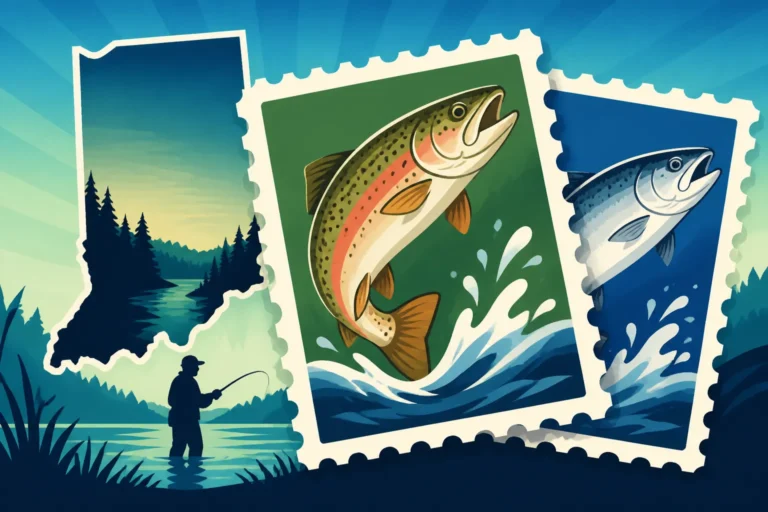
Think of the Indiana Trout and Salmon Stamp as an additional endorsement on your standard Indiana Fishing License Requirements Explained. It's not a standalone license, nor does it replace your need for a general fishing license if you're over the age limit (18 for residents, younger for non-residents). Instead, it's a specific permit that grants you the legal right to target and possess trout and salmon species within Indiana waters. It’s designed to ensure that those who are directly benefiting from the state’s management of these specific fisheries contribute to their upkeep and enhancement. If you're planning a trip to the northern parts of the state with dreams of a big trout or a feisty salmon, this is definitely something you'll want to have squared away.
The reason it's a separate stamp, rather than just being bundled into the general license, comes down to the specialized nature of trout and salmon management. These species often require specific stocking programs, habitat improvements, and intensive monitoring, especially in unique environments like Lake Michigan and its tributaries, or designated inland trout streams. The funds generated from the sale of these stamps go directly back into these dedicated programs, ensuring that future generations of anglers will have healthy trout and salmon populations to pursue. It's a way for the angling community to directly support the specific fish they love to catch, making it a valuable tool for conservation.
Why the Extra Cost? Protecting and Stocking Fisheries
Let's be honest, nobody likes an extra fee, right? You're already paying for your Indiana Resident Annual Fishing License Cost or perhaps even a more expensive Indiana Nonresident Annual Fishing License Cost, so why add another $11 for the Trout and Salmon Stamp? Well, it all boils down to the unique biology and management of trout and salmon. Unlike many native Indiana species that are self-sustaining, many of our trout and salmon populations rely heavily on stocking programs.
For example, the stunning Chinook and Coho salmon, and the hard-fighting steelhead and brown trout found in Indiana's Lake Michigan Salmon and Trout A Complete Guide, are primarily sustained through the Indiana Department of Natural Resources (IDNR) stocking efforts. Without these programs, these magnificent fisheries simply wouldn't exist or would be drastically diminished. The cost of raising these fish in hatcheries, transporting them, and stocking them into Lake Michigan or various inland streams is substantial. The Trout and Salmon Stamp directly funds these critical initiatives. This means your $11 isn't just a fee; it's an investment in the future of trophy trout and salmon fishing in the Hoosier State. It's about ensuring those thrilling battles with a leaping steelhead or a powerful king salmon remain a possibility for every angler.
Who Absolutely Needs the Trout and Salmon Stamp?
This is where the rubber meets the road. Many anglers wonder, "Do I really need that extra stamp, or can I just stick with my regular license?" It's a fair question, and the answer hinges entirely on what you're intending to fish for and where you plan to cast your line. The Indiana Department of Natural Resources (IDNR) is quite clear about the rules, and understanding them can save you a potential fine and a ruined fishing trip.
Targeting Lake Michigan's Prized Catches
If your fishing dreams involve battling the powerful salmon and trout of Lake Michigan, then yes, you absolutely need the Indiana Trout and Salmon Stamp. This includes pursuits for Chinook salmon, Coho salmon, steelhead (rainbow trout), and brown trout. These are the big game fish of Indiana's northern waters, and they are specifically managed through the programs funded by this stamp. Whether you're heading out on a charter boat from Michigan City, casting off the piers of Portage, or wading the tributaries during the famed Fall Salmon Run Fishing on Lake Michigan in Indiana, this stamp is a non-negotiable part of your tackle box.
Even if you're just visiting for a short trip, a nonresident needs to be aware of this. A Indiana Nonresident Fishing License Guide will walk you through the basic license, but if you want to experience the thrill of the salmon run, the stamp is a must-have addition. Imagine hooking into a massive king salmon off the coast of New Buffalo, right on the Indiana line, only to realize you don't have the proper stamp. That adrenaline rush would quickly turn into a sinking feeling. So, if Lake Michigan's magnificent salmon and trout are your target, consider the stamp as essential as your rod and reel.
Fishing Indiana's Inland Trout Streams
It's not just Lake Michigan that requires this special endorsement. Indiana has several designated inland trout streams that are regularly stocked with rainbow and brown trout by the IDNR. These streams, often found in the scenic northern and central parts of the state, offer a completely different kind of trout fishing experience – more akin to traditional stream fishing you might find in mountain regions. Popular spots might include portions of Curtis Creek, Turkey Creek, and Pigeon River, which are known for their picturesque settings and feisty trout.
If you are specifically heading to one of these designated trout waters with the intent to catch and keep, or even catch and release, trout, then you need the stamp. This means if you're tying on a tiny dry fly, drifting a worm, or casting a small spinner in these specific areas, that stamp better be in your possession. The reason is the same as for Lake Michigan: these inland fisheries are heavily reliant on stocking efforts to maintain fishable populations, and the stamp directly supports those efforts. It's a way of contributing to the continued availability of these unique angling opportunities in the state.
When Your Fishing Destination Dictates the Need
To make it easier, let's break down where the Trout and Salmon Stamp is unequivocally required. Essentially, if you are fishing in waters that are specifically managed for trout and salmon populations, you need it. This primarily covers two main types of waterways in Indiana:
- Lake Michigan and its tributaries: This includes the main body of Lake Michigan, plus any rivers, streams, or creeks that flow into it and are known to support migratory salmon and trout runs. Prime examples are Trail Creek in Michigan City, the St. Joseph River, and the Little Calumet River. These waters are popular for their Best Salmon Fishing Spots on Lake Michigan in Indiana and Steelhead Fishing in Indiana A Fall Run Guide.
- Designated Inland Trout Streams and Lakes: The IDNR maintains a list of specific inland waters that are stocked with trout. These are often cold-water streams or small lakes that can support trout populations. You won't find trout naturally reproducing in most Indiana inland waters due to temperature constraints, so these stocked locations are entirely dependent on active management. Always check the current Indiana Fishing Guide or the IDNR website for the most up-to-date list of designated trout waters before you go.
If you're unsure, it's always better to purchase the stamp. It's a small additional cost for peace of mind and ensures you're supporting the conservation of these incredible fish.
Situations Where You Might NOT Need the Stamp
It’s just as important to understand when you don't need the Indiana Trout and Salmon Stamp as it is to know when you do. Nobody wants to spend extra money needlessly, and sometimes the rules can feel a bit murky. Let's clarify some common scenarios where your regular fishing license is perfectly sufficient.
General Freshwater Fishing for Bass, Crappie, or Walleye
The vast majority of fishing in Indiana does not require a Trout and Salmon Stamp. If your passion lies in chasing the state's most popular warm-water species in inland lakes, reservoirs, and rivers, you can breathe a sigh of relief. Targeting largemouth bass, smallmouth bass, crappie, bluegill, catfish, or even walleye in lakes like Monroe, Patoka, or Wawasee means your standard Indiana Fishing License Costs for Residents and Nonresidents is all you need.
For example, if you're planning a weekend trip to Patoka Lake to try for some crappie, or heading to the Wabash River to hook into a big channel catfish, there's no need to add the trout and salmon stamp to your cart. These species thrive in different habitats and are managed under different programs than those specifically funded by the stamp. So, if your tackle box is filled with bass jigs, crappie minnows, or catfish stink baits, and you're not planning a foray into designated trout or salmon waters, you're good to go with just your standard license. It’s a common misconception that any fishing requires all licenses and stamps, but that’s simply not the case in Indiana.
Catching Trout or Salmon Accidentally
This is a scenario that often causes confusion: what if you're fishing for something else entirely, say bass on a Lake Michigan tributary, and you accidentally hook a steelhead? This happens more often than you might think, especially when fishing in areas where salmon and trout migrate, but where you're primarily targeting warm-water species that might also inhabit those waters. The general rule from the IDNR is that if you catch a trout or salmon incidentally while legally fishing for other species in non-designated trout waters, you do not need the stamp, provided you immediately release the fish.
However, there's a critical caveat: if you are fishing in designated trout or salmon waters (like Lake Michigan or one of the stocked inland trout streams) and you catch a trout or salmon, even if accidentally, and you wish to keep it, you must have the stamp. If you don't, you must release it immediately and unharmed. The intent to target them doesn't always matter as much as the location and the act of possession. So, if you're fishing in a spot where trout or salmon are known to be present, and you think there's even a slight chance you might want to keep one if you catch it, it's always safer and wiser to have the stamp. This is why many anglers who fish the Lake Michigan area year-round simply buy the stamp as a matter of course, just in case.
Special Exemptions and Free Fishing Days
There are a couple of specific situations where the Trout and Salmon Stamp (and sometimes even the general license itself) might not be required:
- Free Fishing Days: Indiana offers several Indiana Free Fishing Days Guide each year. During these designated days, Indiana residents and nonresidents can fish public waters without needing a fishing license. This is a fantastic opportunity for beginners, families, or those just looking to try out a new spot. But here's the kicker: while the general fishing license requirement is waived, the Trout and Salmon Stamp is still required if you are fishing for trout or salmon in designated waters. This means if you head out on Free Fishing Days: June 6 and 7, 2026 and plan to target Chinook salmon, you'll still need that stamp! It's an important distinction to remember. The state makes this clear by emphasizing, "Do Free Fishing Days Cover the Trout and Salmon Stamp?" No, they don't!
- Youth Anglers: In Indiana, residents under the age of 18 do not need a fishing license. This is a wonderful initiative to encourage young people to get into the sport. And the good news is, if they are under 18, they also do not need the Indiana Trout and Salmon Stamp to legally fish for or possess trout and salmon. This exemption covers both the general license and the specific stamp, making it incredibly easy for kids to enjoy all of Indiana's diverse fisheries.
So, while these exemptions exist, it's crucial to understand their specific limits. For adult anglers, the default is always to have the necessary licenses and stamps for the species and waters you intend to fish.
Getting Your Trout and Salmon Stamp and What It Costs
So, you've decided you're going after some feisty trout or a trophy salmon, and you know you need that stamp. Now what? Getting your stamp is just as easy as getting your regular fishing license, and understanding the minimal cost involved will help you budget for your next angling adventure.
Purchasing the Stamp
The process of acquiring your Indiana Trout and Salmon Stamp is straightforward and integrated with the general fishing license purchasing system. You have a few convenient options:
- Online: The easiest and most common way these days is to purchase your stamp online through the Indiana Department of Natural Resources (IDNR) website. You can typically add it as an "add-on" or "endorsement" when you're purchasing or renewing your annual fishing license. This method allows you to print your license and stamp immediately or save a digital copy on your phone, so you're ready to hit the water without delay.
- Retail Agents: Many bait shops, sporting goods stores, and county clerk offices throughout Indiana are licensed agents for selling fishing licenses and stamps. This is a great option if you prefer an in-person transaction, want to support a local business, or need to pick up some last-minute bait or tackle. Places like Bass Pro Shops or even smaller independent shops often offer this service. Just tell them you need the Trout and Salmon Stamp in addition to your regular license.
- By Mail or Phone: While less common now with online options, you can also obtain your license and stamp by mail or over the phone through the IDNR. Details for these methods are available on their official website.
When you're buying online, you'll see a clear option for the Indiana Trout and Salmon Stamp Requirements to add to your cart. The convenience of doing it from home means you can get your gear ready, perhaps order some specialized trout or salmon lures from Amazon, and have your license and stamp squared away before you even leave the house.
Breaking Down the Cost
Let's talk money, but don't worry, the Trout and Salmon Stamp is quite affordable, especially considering the value it brings to maintaining these unique fisheries.
The Indiana Trout and Salmon Stamp Cost: $11 for both residents and nonresidents. This flat fee is in addition to your base fishing license. So, if you're an Indiana resident, your total cost for an annual license plus the stamp would be $23 (resident annual license) + $11 (trout/salmon stamp) = $34. For a nonresident, it would be $60 (nonresident annual license) + $11 (trout/salmon stamp) = $71.
Here's a quick breakdown of typical costs:
| License Type | Base Cost (Resident) | Base Cost (Nonresident) | + Trout/Salmon Stamp | Total (Resident) | Total (Nonresident) |
|---|---|---|---|---|---|
| Annual Fishing License | $23 | $60 | $11 | $34 | $71 |
| 1-Day Fishing License | $10 | $9 | $11 | $21 | $20 |
| 7-Day Nonresident License | N/A | $20 | $11 | N/A | $31 |
Note: The 1-Day resident license is actually more expensive than the 1-Day nonresident license, which is unusual but accurate as of current IDNR pricing. Always double-check current pricing on the official IDNR website before purchase.
This small investment goes a long way. It directly supports the dedicated stocking and management programs that make Indiana a surprisingly good destination for cold-water species, especially the productive Lake Michigan fishery. Imagine planning a trip to the Best Fishing Spots Near South Bend, Indiana, specifically for salmon on the St. Joseph River. That $11 stamp is directly contributing to ensuring those salmon are there for you to catch. It's a small price to pay for access to some of the most exciting fishing Indiana has to offer. Make sure you grab yours, perhaps with a new fishing hat from Amazon, before your next adventure.
Disclaimer
The information provided in this guide is for general informational purposes only and is subject to change. Fishing regulations, license requirements, and fees can be updated by the Indiana Department of Natural Resources (IDNR). Always consult the official IDNR website or the current Indiana Fishing Guide for the most accurate and up-to-date regulations before engaging in any fishing activities. This guide does not constitute legal advice.